Back to Integrations
integrationAirtable node
integrationQuickBooks Online node

Airtable and QuickBooks Online integration

Save yourself the work of writing custom integrations for Airtable and QuickBooks Online and use n8n instead. Build adaptable and scalable Data & Storage, and Finance & Accounting workflows that work with your technology stack. All within a building experience you will love.

How to connect Airtable and QuickBooks Online

  • Step 1: Create a new workflow
  • Step 2: Add and configure nodes
  • Step 3: Connect
  • Step 4: Customize and extend your integration
  • Step 5: Test and activate your workflow

Step 1: Create a new workflow and add the first step

In n8n, click the "Add workflow" button in the Workflows tab to create a new workflow. Add the starting point – a trigger on when your workflow should run: an app event, a schedule, a webhook call, another workflow, an AI chat, or a manual trigger. Sometimes, the HTTP Request node might already serve as your starting point.
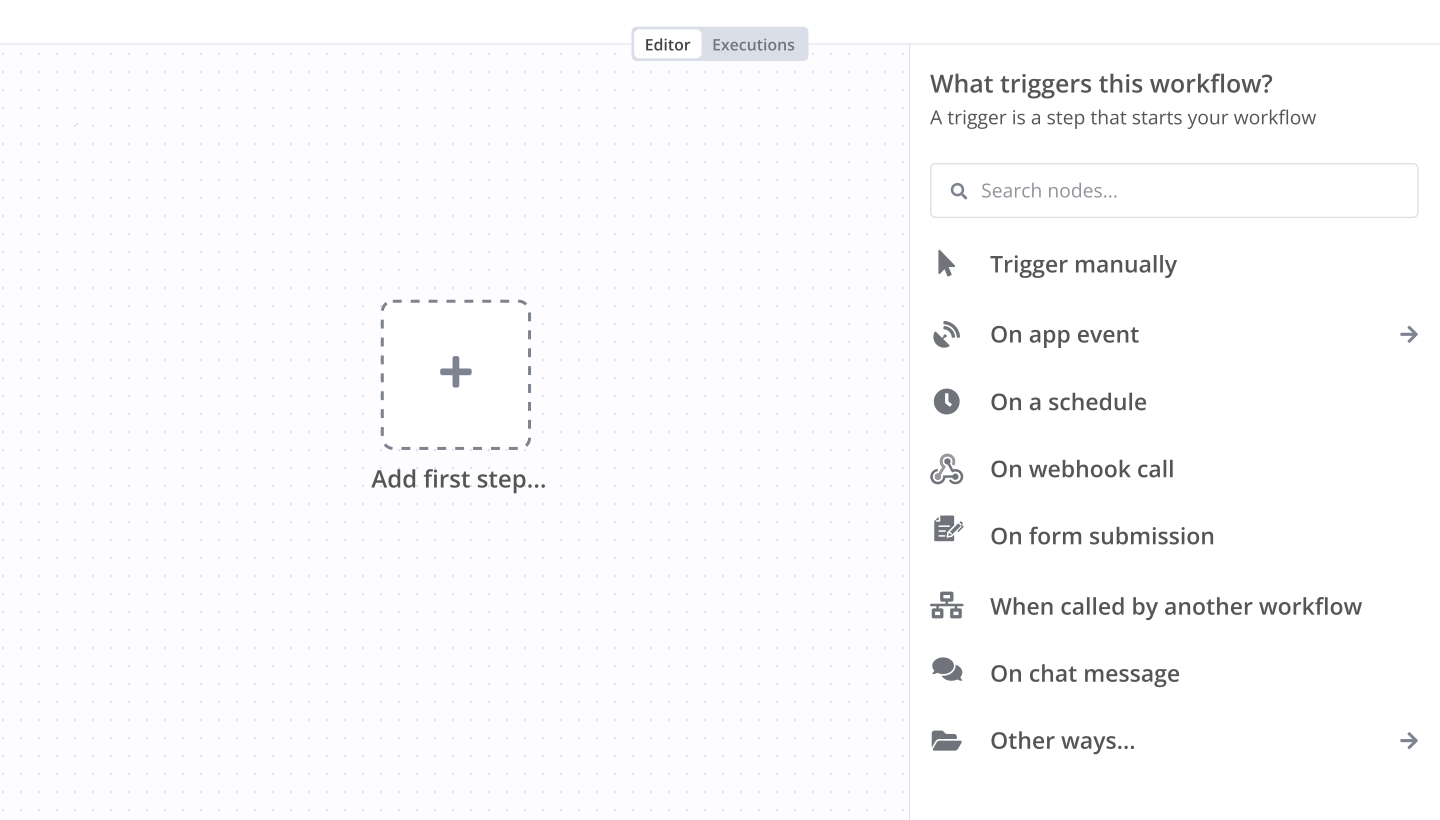
Airtable and QuickBooks Online integration: Create a new workflow and add the first step

Step 2: Add and configure Airtable and QuickBooks Online nodes

You can find Airtable and QuickBooks Online in the nodes panel. Drag them onto your workflow canvas, selecting their actions. Click each node, choose a credential, and authenticate to grant n8n access. Configure Airtable and QuickBooks Online nodes one by one: input data on the left, parameters in the middle, and output data on the right.

Airtable and QuickBooks Online integration: Add and configure Airtable and QuickBooks Online nodes

Step 3: Connect Airtable and QuickBooks Online

A connection establishes a link between Airtable and QuickBooks Online (or vice versa) to route data through the workflow. Data flows from the output of one node to the input of another. You can have single or multiple connections for each node.

Airtable and QuickBooks Online integration: Connect Airtable and QuickBooks Online

Step 4: Customize and extend your Airtable and QuickBooks Online integration

Use n8n's core nodes such as If, Split Out, Merge, and others to transform and manipulate data. Write custom JavaScript or Python in the Code node and run it as a step in your workflow. Connect Airtable and QuickBooks Online with any of n8n’s 1000+ integrations, and incorporate advanced AI logic into your workflows.

Airtable and QuickBooks Online integration: Customize and extend your Airtable and QuickBooks Online integration

Step 5: Test and activate your Airtable and QuickBooks Online workflow

Save and run the workflow to see if everything works as expected. Based on your configuration, data should flow from Airtable to QuickBooks Online or vice versa. Easily debug your workflow: you can check past executions to isolate and fix the mistake. Once you've tested everything, make sure to save your workflow and activate it.

Airtable and QuickBooks Online integration: Test and activate your Airtable and QuickBooks Online workflow

Full-cycle invoice automation: Airtable, QuickBooks & Stripe

This n8n template from Intuz provides a complete and automated solution for full-cycle invoicing, orchestrating a seamless flow between Airtable, QuickBooks, and Stripe.

This is the ultimate sales-to-cash automation. When a deal in Airtable is marked "Approved for Invoicing," this workflow intelligently syncs customer data across QuickBooks and Stripe (creating them if they don't exist), generates an official QuickBooks invoice, creates a Stripe payment link, and then updates the original Airtable record with all the new IDs and links. Eliminate manual data entry and keep your systems perfectly in sync.

Who's this workflow for?

Finance, Accounting, and Operations Teams
SalesOps and RevOps Teams
Small Business Owners and Founders
Agencies and Freelancers

How It Works:

  1. Airtable Trigger & Approval Gate: The workflow starts when a record in your Airtable base is updated. An If node immediately checks if the Status field is set to "Approved for Invoicing." If not, the workflow for that item stops.

  2. Customer Sync (QuickBooks & Stripe):
    The workflow searches for the customer in both QuickBooks and Stripe using the details from Airtable.
    Using If nodes, it intelligently checks if the customer exists. If a customer is not found in either platform, it creates a new one. This "find-or-create" logic prevents duplicate records.

  3. Update Airtable with IDs: Once the customer IDs from both QuickBooks and Stripe are secured (either found or newly created), the workflow updates the original Airtable record with these new IDs for future reference.

  4. Generate Financials:
    Stripe Payment Link: It sends an HTTP request to Stripe to create a unique, ready-to-use payment link for the specified amount.
    QuickBooks Invoice: It fetches your product list from QuickBooks, finds the matching item from the Airtable record, and generates a formal, detailed invoice.

  5. Close the Loop: In the final step, the workflow updates the Airtable record one last time to:
    Add the QuickBooks Invoice #.
    Add the Stripe Payment Link.
    Change the Status to "Invoiced."

Step-by-Step Setup Instructions
This is an advanced workflow. Follow these setup steps carefully.

  1. Connect Your Credentials
    Airtable: Create and connect a Personal Access Token with data.records:read and data.records:write scopes.
    QuickBooks: Connect your QuickBooks Online account using OAuth2 credentials.
    Stripe: Connect your Stripe account using your Secret Key.

  2. Airtable Base Setup (Crucial)
    Your Airtable base must have a table with the following columns. The names must match exactly:

Deal Name (Text)
Client Name (Text)
Client Email (Email)
Status (Single-select with options: Draft,
Approved for Invoicing, Invoiced)
QuickBooks Customer ID (Text)
Stripe Customer ID (Text)
Stripe Payment Link (URL)
QuickBooks Invoice # (Text)
Stripe Price Id (Text - The API ID of your price in Stripe, e.g., price_123...)
Quantity (Number)
Quickbooks Product Name (Text)
Created (Created Time) - This is used by the trigger.

  1. Configure the n8n Nodes
    All Airtable Nodes: In each Airtable node, select your Base and Table from the dropdown lists.
    Get all Quickbook products (HTTP Request Node):
    You must replace {YOUR_QUICKBOOKS_COMPANY_ID} in the URL with your actual QuickBooks Company ID (also known as a Realm ID).

  2. Activate the Workflow
    Save the workflow and toggle the Active switch to "on". The workflow will now trigger whenever the Created field is updated for a record in your Airtable base.

Customization Guidance
Changing the Trigger Status: If you use a different status than "Approved for Invoicing," simply update the value in the "IF - Status Check" node.
Modifying Invoice Details: You can customize the Description or other line item details in the "Create an invoice" (QuickBooks) node by pulling more fields from your Airtable record.
Adding Email Notifications: To notify a customer when their invoice is ready, add a Gmail or SendGrid node after the last Airtable Update node. You can include the Stripe Payment Link and a PDF of the QuickBooks invoice directly in the email.
Advanced Error Handling: For a production environment, consider connecting the false output of the various IF nodes or using the .onError() workflow setting to send a Slack or email alert if a customer can't be found or an API call fails.

Support
For further support, or to develop a custom workflow, reach out to:

Website: https://www.intuz.com/n8n-workflow-automation-templates
Email: [email protected]
LinkedIn: https://www.linkedin.com/company/intuz
Get Started: https://n8n.partnerlinks.io/intuz

For Custom Worflow Automation
Click here- Get Started

Nodes used in this workflow

Popular Airtable and QuickBooks Online workflows

Automate QuickBooks invoicing & customer creation from Airtable sales orders

This n8n template from Intuz provides a complete solution to automate your entire invoicing process. It intelligently syncs confirmed sales orders from your Airtable base to QuickBooks, automatically creating new customers if they don't exist before generating a perfectly matched invoice. It then logs all invoice details back into Airtable, creating a flawless, end-to-end financial workflow. Use Cases Accounting & Finance Teams: Automatically generate QuickBooks invoices from new orders confirmed in Airtable. Keep all invoices and customer details synced across systems in real time. Sales & Operations Teams: Track order status and billing progress directly from Airtable without switching platforms. Ensure every confirmed sale automatically triggers an invoice in QuickBooks. Business Owners / Admins: Eliminate double-entry between Airtable and QuickBooks. Maintain accurate, audit-ready financial records with minimal effort. How it works Trigger from Airtable: The workflow starts instantly when a sales order is ready to be invoiced in your Airtable base (triggered via a webhook). Check for Customer in QuickBooks: It searches your QuickBooks account to see if the customer from the sales order already exists. Create New Customer (If Needed): If the customer is not found, it automatically creates a new customer record in QuickBooks using the details from your Airtable Customers table. Create QuickBooks Invoice: Using the correct customer record (either existing or newly created), it gathers all order line items from Airtable and generates a detailed invoice in QuickBooks. Log Invoice Back to Airtable: After the invoice is successfully created, the workflow updates your Airtable base by adding a new record to your Invoices & Payments table and updating the original Confirmed Orders record with the new QuickBooks Invoice ID, marking it as synced. Key Requirements to Use This Template n8n Instance: An active n8n account (Cloud or self-hosted). Airtable Base: An Airtable base on a "Pro" plan or higher with tables for Confirmed Orders, Customers, Order Lines, Product & Service, and Invoices & Payments. Field names must match those in the setup guide. QuickBooks Online Account: An active QuickBooks Online account with API access. Step-by-Step Setup Instructions Step 1: Import and Configure the n8n Workflow Import Workflow:** In n8n, import the Client-Quickbook-Invoices-via-AirTable.json file. Get Webhook URL:** Click on the first node, "Webhook". Copy the "Test URL". Keep this n8n tab open. Configure Airtable Nodes:** There are six Airtable nodes. For each one, connect your Airtable credentials and select the correct Base and Table. Configure QuickBooks Nodes:** There are four QuickBooks-related nodes. For each one, connect your QuickBooks Online credentials. CRITICAL:** Click on the "Create Invoice URL" (HTTP Request) node. You must edit the URL and replace the placeholder number (9341455145770046) with your own QuickBooks Company ID. (Find this in your QuickBooks account settings under "Billing & Subscription"). Save and Activate**: Click "Save", then toggle the workflow to "Active". After activating, copy the new "Production URL" from the Webhook node. Customization Guide You can adapt this template for various workflows by tweaking a few nodes: Use a different Airtable Base:** Update the Base ID and Table ID in all Airtable nodes (Get Orders Records, Get Customer Details, Get Products, etc.). Switch from Sandbox to Live QuickBooks:** Replace the Sandbox company ID and endpoint in the “Create Invoice URL” node with your production QuickBooks company ID. Add more invoice details:** Edit the Code and Parse in HTTP nodes to include additional fields (like Tax, Shipping, or Notes). Support multiple currencies:** Add a “Currency” field mapping in both Airtable and QuickBooks nodes. Connect with us Website: https://www.intuz.com/n8n-workflow-automation-templates Email: [email protected] LinkedIn: https://www.linkedin.com/company/intuz Get Started: https://n8n.partnerlinks.io/intuz For Custom Workflow Automation Click here- Get Started

Full-cycle invoice automation: Airtable, QuickBooks & Stripe

This n8n template from Intuz provides a complete and automated solution for full-cycle invoicing, orchestrating a seamless flow between Airtable, QuickBooks, and Stripe. This is the ultimate sales-to-cash automation. When a deal in Airtable is marked "Approved for Invoicing," this workflow intelligently syncs customer data across QuickBooks and Stripe (creating them if they don't exist), generates an official QuickBooks invoice, creates a Stripe payment link, and then updates the original Airtable record with all the new IDs and links. Eliminate manual data entry and keep your systems perfectly in sync. Who's this workflow for? Finance, Accounting, and Operations Teams SalesOps and RevOps Teams Small Business Owners and Founders Agencies and Freelancers How It Works: Airtable Trigger & Approval Gate: The workflow starts when a record in your Airtable base is updated. An If node immediately checks if the Status field is set to "Approved for Invoicing." If not, the workflow for that item stops. Customer Sync (QuickBooks & Stripe): The workflow searches for the customer in both QuickBooks and Stripe using the details from Airtable. Using If nodes, it intelligently checks if the customer exists. If a customer is not found in either platform, it creates a new one. This "find-or-create" logic prevents duplicate records. Update Airtable with IDs: Once the customer IDs from both QuickBooks and Stripe are secured (either found or newly created), the workflow updates the original Airtable record with these new IDs for future reference. Generate Financials: Stripe Payment Link: It sends an HTTP request to Stripe to create a unique, ready-to-use payment link for the specified amount. QuickBooks Invoice: It fetches your product list from QuickBooks, finds the matching item from the Airtable record, and generates a formal, detailed invoice. Close the Loop: In the final step, the workflow updates the Airtable record one last time to: Add the QuickBooks Invoice #. Add the Stripe Payment Link. Change the Status to "Invoiced." Step-by-Step Setup Instructions This is an advanced workflow. Follow these setup steps carefully. Connect Your Credentials Airtable: Create and connect a Personal Access Token with data.records:read and data.records:write scopes. QuickBooks: Connect your QuickBooks Online account using OAuth2 credentials. Stripe: Connect your Stripe account using your Secret Key. Airtable Base Setup (Crucial) Your Airtable base must have a table with the following columns. The names must match exactly: Deal Name (Text) Client Name (Text) Client Email (Email) Status (Single-select with options: Draft, Approved for Invoicing, Invoiced) QuickBooks Customer ID (Text) Stripe Customer ID (Text) Stripe Payment Link (URL) QuickBooks Invoice # (Text) Stripe Price Id (Text - The API ID of your price in Stripe, e.g., price_123...) Quantity (Number) Quickbooks Product Name (Text) Created (Created Time) - This is used by the trigger. Configure the n8n Nodes All Airtable Nodes: In each Airtable node, select your Base and Table from the dropdown lists. Get all Quickbook products (HTTP Request Node): You must replace {YOUR_QUICKBOOKS_COMPANY_ID} in the URL with your actual QuickBooks Company ID (also known as a Realm ID). Activate the Workflow Save the workflow and toggle the Active switch to "on". The workflow will now trigger whenever the Created field is updated for a record in your Airtable base. Customization Guidance Changing the Trigger Status: If you use a different status than "Approved for Invoicing," simply update the value in the "IF - Status Check" node. Modifying Invoice Details: You can customize the Description or other line item details in the "Create an invoice" (QuickBooks) node by pulling more fields from your Airtable record. Adding Email Notifications: To notify a customer when their invoice is ready, add a Gmail or SendGrid node after the last Airtable Update node. You can include the Stripe Payment Link and a PDF of the QuickBooks invoice directly in the email. Advanced Error Handling: For a production environment, consider connecting the false output of the various IF nodes or using the .onError() workflow setting to send a Slack or email alert if a customer can't be found or an API call fails. Support For further support, or to develop a custom workflow, reach out to: Website: https://www.intuz.com/n8n-workflow-automation-templates Email: [email protected] LinkedIn: https://www.linkedin.com/company/intuz Get Started: https://n8n.partnerlinks.io/intuz For Custom Worflow Automation Click here- Get Started

Build your own Airtable and QuickBooks Online integration

Create custom Airtable and QuickBooks Online workflows by choosing triggers and actions. Nodes come with global operations and settings, as well as app-specific parameters that can be configured. You can also use the HTTP Request node to query data from any app or service with a REST API.


Airtable supported actions

Get Many
List all the bases
Get Schema
Get the schema of the tables in a base
Create
Create a new record in a table
Create or Update
Create a new record, or update the current one if it already exists (upsert)
Delete
Delete a record from a table
Get
Retrieve a record from a table
Search
Search for specific records or list all
Update
Update a record in a table

QuickBooks Online supported actions

Create
Delete
Get
Get Many
Update
Create
Get
Get Many
Update
Create
Get
Get Many
Update
Create
Delete
Get
Get Many
Send
Update
Create
Delete
Get
Get Many
Send
Update
Void
Get
Get Many
Create
Delete
Get
Get Many
Send
Update
Void
Get
Get Many
Get Report
Create
Get
Get Many
Update

FAQs

  • Can Airtable connect with QuickBooks Online?

  • Can I use Airtable’s API with n8n?

  • Can I use QuickBooks Online’s API with n8n?

  • Is n8n secure for integrating Airtable and QuickBooks Online?

  • How to get started with Airtable and QuickBooks Online integration in n8n.io?

Need help setting up your Airtable and QuickBooks Online integration?

Discover our latest community's recommendations and join the discussions about Airtable and QuickBooks Online integration.
Michael Wells

Looking to integrate Airtable and QuickBooks Online in your company?

Over 3000 companies switch to n8n every single week

Why use n8n to integrate Airtable with QuickBooks Online

Build complex workflows, really fast

Build complex workflows, really fast

Handle branching, merging and iteration easily.
Pause your workflow to wait for external events.

Code when you need it, UI when you don't

Simple debugging

Your data is displayed alongside your settings, making edge cases easy to track down.

Use templates to get started fast

Use 1000+ workflow templates available from our core team and our community.

Reuse your work

Copy and paste, easily import and export workflows.

Implement complex processes faster with n8n

red iconyellow iconred iconyellow icon