Back to Integrations
integrationAirtable node
integrationTrello node

Airtable and Trello integration

Save yourself the work of writing custom integrations for Airtable and Trello and use n8n instead. Build adaptable and scalable Data & Storage, and Productivity workflows that work with your technology stack. All within a building experience you will love.

How to connect Airtable and Trello

  • Step 1: Create a new workflow
  • Step 2: Add and configure nodes
  • Step 3: Connect
  • Step 4: Customize and extend your integration
  • Step 5: Test and activate your workflow

Step 1: Create a new workflow and add the first step

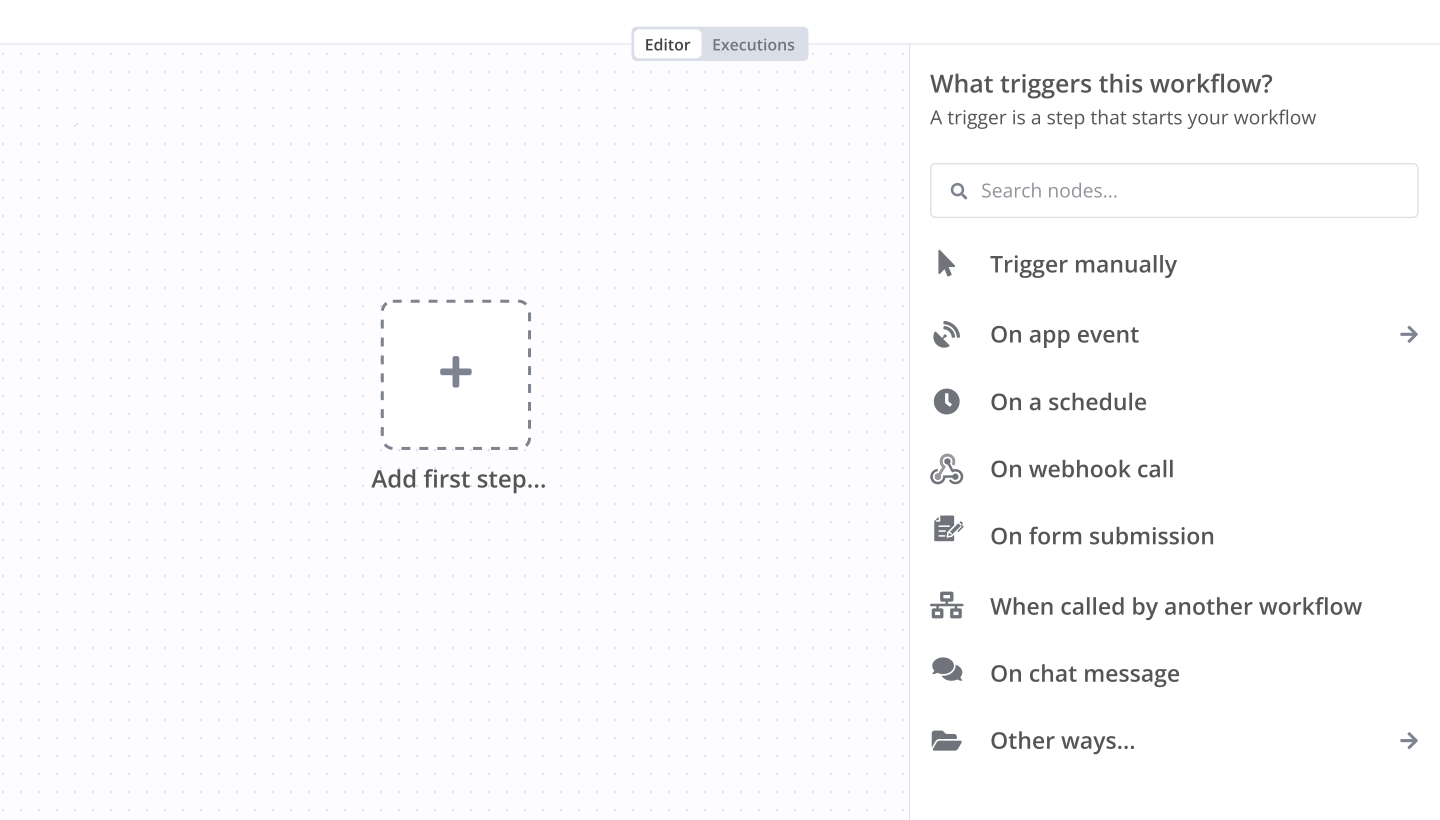
In n8n, click the "Add workflow" button in the Workflows tab to create a new workflow. Add the starting point – a trigger on when your workflow should run: an app event, a schedule, a webhook call, another workflow, an AI chat, or a manual trigger. Sometimes, the HTTP Request node might already serve as your starting point.

Airtable and Trello integration: Create a new workflow and add the first step

Step 2: Add and configure Airtable and Trello nodes

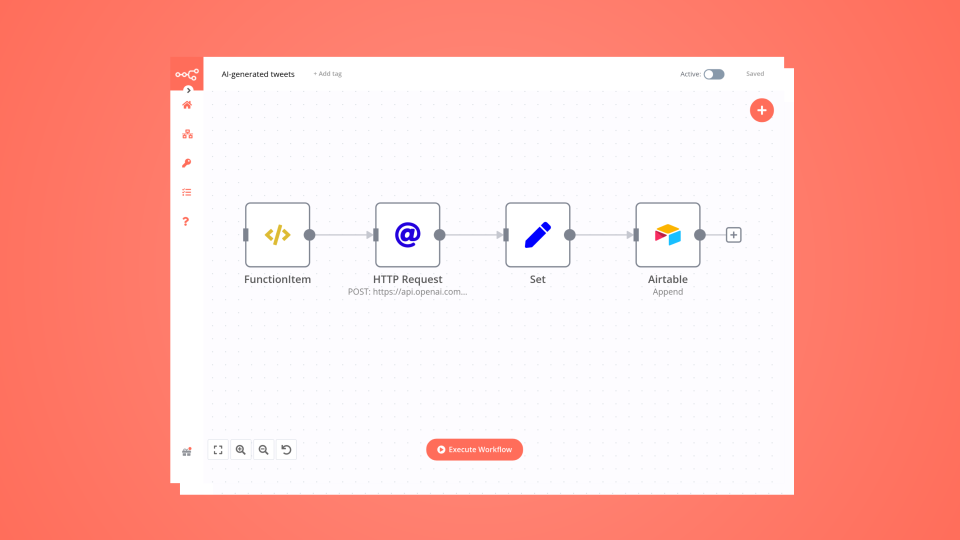
You can find Airtable and Trello in the nodes panel. Drag them onto your workflow canvas, selecting their actions. Click each node, choose a credential, and authenticate to grant n8n access. Configure Airtable and Trello nodes one by one: input data on the left, parameters in the middle, and output data on the right.

Airtable and Trello integration: Add and configure Airtable and Trello nodes

Step 3: Connect Airtable and Trello

A connection establishes a link between Airtable and Trello (or vice versa) to route data through the workflow. Data flows from the output of one node to the input of another. You can have single or multiple connections for each node.

Airtable and Trello integration: Connect Airtable and Trello

Step 4: Customize and extend your Airtable and Trello integration

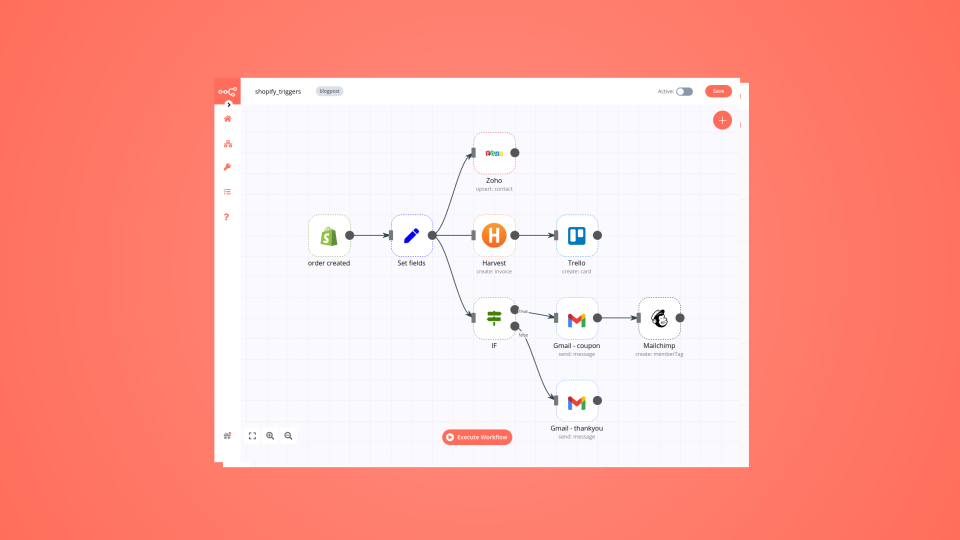
Use n8n's core nodes such as If, Split Out, Merge, and others to transform and manipulate data. Write custom JavaScript or Python in the Code node and run it as a step in your workflow. Connect Airtable and Trello with any of n8n’s 1000+ integrations, and incorporate advanced AI logic into your workflows.

Airtable and Trello integration: Customize and extend your Airtable and Trello integration

Step 5: Test and activate your Airtable and Trello workflow

Save and run the workflow to see if everything works as expected. Based on your configuration, data should flow from Airtable to Trello or vice versa. Easily debug your workflow: you can check past executions to isolate and fix the mistake. Once you've tested everything, make sure to save your workflow and activate it.

Airtable and Trello integration: Test and activate your Airtable and Trello workflow

Get product feedback and create ticket on Trello

Nodes used in this workflow

Popular Airtable and Trello workflows

+2

AI-Powered Feedback Triage: Jotform to Trello, Airtable & Slack with Gemini

Turn raw feedback into actionable product insights. This workflow collects feedback from both customers and staff via a single Jotform, uses Gemini AI to analyze and categorize it, then intelligently routes it: Actionable bugs and feature requests* become tasks in specific Trello* lists, tagged with source and priority. General feedback* is logged in a structured Airtable* base for later review. Urgent bugs* trigger instant Slack* alerts for your dev team. An optional confirmation email is sent via Gmail if the submitter provides their address. Stop manually sorting feedback and ensure nothing falls through the cracks. This workflow centralizes input, automates triage, and delivers structured data directly to your product and development teams. Features Unified Feedback Collection:** Uses a single Jotform for customers and staff. AI-Powered Triage:** Gemini AI categorizes feedback (Bug, Feature Request, General), suggests priority, and extracts keyword tags. Intelligent Filtering:** An IF node separates actionable tasks from general comments. Automated Task Creation:** Creates Trello cards in specific lists ("Bugs," "Feature Backlog") with relevant labels (Source, Urgent). Structured Logging:** Saves all general feedback to an Airtable base for review and trend analysis. Conditional Alerts:* Notifies a Slack channel *only for high-priority bugs. Optional Email Confirmation:** Sends a thank-you email if the submitter provides their address. Nodes Used 🟣 Jotform Trigger (Jotform Trigger) ✉️ Gmail (Send Confirmation Email) 🧠 AI Agent (AI Feedback Triage) 🃏 Trello (Create Trello Card) 📣 Slack (Alert Dev Team) 🗂️ Airtable (Log General Feedback to Airtable) 🔧 Set, **❓ IF, 🚫 No Operation, do nothing How to use this template Follow these steps to configure the workflow with your accounts and specific IDs. Set up Jotform, Trello, and Airtable (CRITICAL) Before starting, you must create the Jotform form, Trello board, and Airtable base exactly as described in the "Required Setup" section at the end of this document. Configure the Jotform Trigger Node Credentials:** Connect your Jotform account. Form:** Select your "Help us improve IdeaToBiz" form (replace the title with your company name). Resolve Data:* Ensure the "Resolve Data" toggle in the node's parameters is turned ON*. Configure the Config (Set) Node This node stores your Trello IDs. You must replace the placeholder values. Find Your IDs:** Open your Trello board, add .json to the URL, and press Enter. Search the JSON page for your List names ("Bugs," "Feature Backlog") and Label names ("Customer," "Staff," "Other," "Urgent") to find their corresponding "id" values. Action:** Paste your unique IDs into the value fields in this node. Configure the Email Provided? (IF) and Send Confirmation Email (Gmail) Nodes IF Node:** No configuration needed. Gmail Node:** Credentials: Connect your Gmail (or other email service) account. Customize: Edit the Subject and Body to match your company's voice. Configure the AI Feedback Triage Node Credentials:** Connect your Google AI (Gemini) credentials. Check Prompt:** Ensure the prompt correctly references your feedback field (e.g., {{ $('Jotform Trigger').item.json['Feedback Details'] }}). Check Schema:** Ensure the "Structured Output" JSON schema matches the required fields (task_title, category, suggested_priority, tags). Configure the Is it a Bug or Feature? (IF) Node No configuration needed. This node filters based on the AI output. Configure the Create Trello Card Node Credentials:** Connect your Trello credentials. Board ID:** Select your Product Feedback board. Check Expressions:** Verify that the expressions for List ID and Labels correctly pull the IDs from your Config node and data from the AI Feedback Triage and Jotform Trigger nodes. The template should be pre-filled, but double-check node names if you renamed them. Configure the Is it an Urgent Bug? (IF) Node No configuration needed. This checks the AI output before alerting Slack. Configure the Alert Dev Team (Slack) Node Credentials:** Connect your Slack credentials. Channel:** Select the channel for urgent bug alerts (e.g., #dev-alerts). Customize:** Edit the message text if desired. Ensure the Trello card URL expression ({{ $('Create Trello Card').item.json.shortUrl }}) is correct. Configure the Log General Feedback to Airtable Node Credentials:** Connect your Airtable credentials. Base ID:** Select your Product Feedback Log base. Table ID:** Select your Feedback Submissions table. Enable Typecast:* In the node's Options, ensure the *Typecast toggle is ON. This is crucial for allowing n8n to create new tag options in Airtable. Check Field Mappings:** Verify that the field mappings correctly reference the AI Feedback Triage and Jotform Trigger nodes. Activate Your Workflow! Once all credentials and IDs are configured, save and activate your workflow. How to Adapt the Template Change Task Destination:* Replace the Trello node with ClickUp, *Asana, Jira, or another task manager. You'll need to adapt the field mappings. Change Logging Destination:* Replace the Airtable node with Google Sheets, *Notion, or send logs via Email or Discord. Adjust AI Prompt:** Modify the prompt in the AI Feedback Triage node to change how feedback is categorized, prioritized, or tagged. Modify Filtering Logic:** Change the conditions in the Is it a Bug or Feature? IF node (e.g., maybe you also want "UI/UX Issue" to go to Trello). Refine Alerting:** Change the conditions in the Is it an Urgent Bug? IF node or send alerts for different categories (e.g., alert the design team for UI issues). Required Setup Jotform Form Setup Create Account: If needed, sign up at Jotform. Create Form: Build a form titled "Help us improve IdeaToBiz" (or similar). Add Fields: Radio Button: Label I am a..., Options Customer, Staff, Other (Required: ON). Email: Label Your Email (Optional) (Required: OFF). Long Text: Label Feedback Details (Required: ON). Submit Button: Label Submit Feedback. Trello Board Setup Create Board: Create a new Trello board named Product Feedback. Create Lists (Columns): Add at least these two lists: Feature Backlog Bugs Create Labels: Go to Menu -> More -> Labels and create: Urgent (Red recommended) Customer (Blue recommended) Staff (Green recommended) Other (Grey recommended) Airtable Base Setup Create Base: Create a new Airtable base named Product Feedback Log. Create Table: Name the table Feedback Submissions. Configure Fields: Rename the primary field (Name) to Feedback Summary (Type: Single line text). Rename Notes to Full Feedback (Type: Long text). Delete Assignee. Rename Status to Source (Type: Single select, Options: Customer, Staff, Other). Add Email field (Type: Email). Add AI Tags field (Type: Multiple select). Add Submitted At field (Type: Created time).

Analyze Sales Calls & Route Leads with GPT-4o, Airtable and Trello

AI Sales Analyst & Lead Router This n8n template handles the post-call process for your business. It uses the call recording to extract valuable data and handles the prospect based on their budget. Some use cases: Sales follow-ups, auto-qualifying leads based on budget, monetizing low-budget leads, and automatic data entry. How it works Ingestion: When a call recording is uploaded to a specific Google Drive folder, the workflow is triggered. Transcription: OpenAI's model transcribes the call recording. Analysis: The GPT-4o model analyzes the transcript and extracts crucial information. Lead classification: The extracted budget is checked against your defined threshold (e.g., $5,000). Hot leads (Budget > 5k): The workflow logs the data in Airtable (CRM), creates a high-priority task, and instantly alerts the team via a Slack channel. Warm leads (Budget < 5k): The workflow logs the data, creates a low-priority task, and emails the lead, offering a cheaper alternative. Logging: Every execution is logged in Airtable. How to use the workflow Configure Google Drive: Open the Trigger node and select the destination folder for the call recordings. Set your Threshold: Open the If node and set your desired budget (currently set to 5,000). Customize the email: Open the Gmail node in Phase 2B and modify the email according to your own preferences. Database mapping: Ensure that your Airtable base has the following columns: Client Name, Budget, Sentiment, Summary, Date, and Timeline. Test it out! Generate a sample audio file on ElevenLabs and upload it to your Google Drive folder. Requirements Google Drive** (For storing audio recordings) OpenAI API Key** (Access to OpenAI models) Airtable** (For CRM and System Logging) Trello** (For Task Management) Slack** (For Team Notifications) Gmail** (For sending automated emails)
+2

Streamline Client Onboarding with PDF, Trello, Slack, Gmail & Airtable

Automated Client Onboarding Workflow This n8n workflow automates the end-to-end client onboarding process: capturing client details, validating emails, assigning tiers, generating welcome packs, creating tasks, notifying teams, archiving records, and sending weekly reports. Who’s It For B2B SaaS companies** onboarding new customers Agencies** handling structured client setups Sales & customer success teams** needing automation Consulting firms** aiming for error-free onboarding ⚙️ How It Works Capture client details through a Webhook (connected to forms). Validate client’s email using Verifi Email. Log onboarding data into Google Sheets. Assign tier logic (Basic/Pro/Enterprise) via Function node. Create a Trello task card with onboarding steps. Generate a personalized Welcome Pack PDF with client details. Send Slack notification to internal team with client details. Download and attach PDF, then send personalized welcome email to the client. Archive structured onboarding data in Airtable. Weekly scheduled report: Collects Airtable onboarding data Processes weekly stats (plans, tiers, counts) Sends onboarding summary via email to the manager 🛠️ How to Set Up Webhook Setup Install & configure credentials: Verifi Email key Google Sheets OAuth2 Airtable OAuth2 Gmail OAuth2 Slack OAuth2 Trello API Optional: Customize the Welcome PDF template (HTML/CSS). Edit tier assignment logic inside the Assign Tier Logic node. Modify Slack & email templates to match your branding. Adjust schedule for weekly reports (default: Monday 9 AM IST). Test with sample payload: { "name": "Jane Doe", "email": "[email protected]", "company": "Acme Corp", "plan": "Pro" } 📋 Requirements Self-hosted or Cloud n8n Credentials: Verifi Email, Google Sheets, Airtable, Gmail, Slack, Trello Optional: API for company enrichment ⚠️ Note: The HTML/CSS to PDF node (used for report generation) has a limit of 10 free requests. For production usage, you’ll need an API plan. ⭐ Core Features Email Validation: Blocks fake/spam signups - **Tier Assignment: Auto-classifies clients into Basic/Pro/Enterprise Task Management**: Trello cards for onboarding checklist Welcome PDF Pack**: Branded, client-personalized PDF attachment Slack Notifications**: Real-time internal updates Airtable Archiving**: Permanent record-keeping Weekly Reports**: Automated onboarding summaries for managers 📈 Use Cases & Applications B2B SaaS**: Scale client onboarding without hiring more staff Agencies**: Deliver smooth onboarding experiences Sales Teams**: Reduce delays in CRM entry Customer Success**: Focus on relationship-building instead of admin ✅ Key Benefits Saves 5–6 hours of manual onboarding per client Ensures error-free onboarding with email validation Provides a professional, branded experience Improves collaboration with Slack + Trello integration Scales seamlessly as client volume grows 🔧 Customization Options Modify tier logic (e.g., budget, plan, company size) Customize Slack channel or Trello list for task routing Update PDF branding (logo, theme, styling) Add extra onboarding steps (e.g., Calendly call scheduling) Extend weekly reports (e.g., include ROI or CSM notes) ⚠️ Important Disclaimers For educational & automation purposes Ensure compliance with GDPR/CCPA before storing client data Always test workflow with dummy data before production Workflow Components Webhook Trigger** → Captures client form submissions Verifi Email** → Validates client email Google Sheets** → Logs onboarding entries Code Node** → Assigns tier & priority Trello** → Creates task card for CSM HTML/CSS to PDF** → Generates Welcome Pack PDF Slack** → Notifies team about new client Gmail** → Sends welcome email with PDF Airtable** → Archives full onboarding record Schedule Trigger* + Report* → Weekly summary to management
+2

Automated Recruitment Process with Slack, DocuSign, Trello & Gmail Notifications

How It Works & Setup Guide for the Automated Candidate Management & Feedback System This guide will walk you through setting up your n8n workflow. By the end, you'll have a fully automated system for managing your recruitment pipeline. How It Works: The Workflow Explained This workflow is designed in three logical phases to handle the entire post-interview process automatically. Phase 1: Trigger & Feedback Loop: The workflow triggers when an interview ends on your Google Calendar. It immediately sends a Slack message to the interviewer with a link to the feedback form. After a 2-hour wait, it checks if the feedback has been submitted. If not, it sends a reminder. Once feedback is received, it logs the data in Airtable and uses an If node to determine if the candidate has passed or failed. Phase 2: Automated Communication: Based on the candidate's status, the workflow sends a personalized and professional email using Gmail. For candidates who pass, it sends a follow-up invitation. For those who don't, it sends a polite rejection email crafted by a Code node. If a candidate is in the final stage and passes, the workflow automatically generates and sends an offer letter for signature via DocuSign. Phase 3: Onboarding & Reporting: Once a candidate accepts the offer (by signing the document), the workflow is triggered to create a new task list in Trello for the HR team. It sends a personalized welcome email to the new hire and a notification to the team on Slack. Finally, a Cron Trigger runs every Friday to collect all candidate data, calculate key recruitment metrics, log them in Google Sheets, and send a summary report to your team on Slack. Step-by-Step Setup Guide Follow these steps to configure the workflow in your n8n instance. Step 1: Prerequisites Before you begin, ensure you have the following accounts and a workspace set up: n8n Google Calendar, Google Sheets, Gmail Airtable Slack Trello DocuSign Step 2: Database & Form Preparation Airtable: Create a new Airtable base with two tables: Candidates Table: Create columns for Candidate Name, Email, Interviewer ID, Interview Date, and Status. Feedback Table: Create columns for Candidate Name, Overall Score, and Comments. Feedback Form: Create a feedback form (e.g., using Google Forms or Typeform) that collects the candidate's name, the interviewer's name, and a score/comments. Step 3: Import the Workflow In your n8n instance, click "New" and select "Import from File". Import the .json file you purchased. The entire workflow, with all nodes, will appear on your canvas. Step 4: Configure Credentials Click on any node with a red "!" icon (e.g., the Google Calendar Trigger or Slack node). In the right-hand panel, click "Create new credential". Follow the on-screen instructions to connect your accounts. Repeat this process for all nodes that require credentials. Step 5: Node-Specific Configuration Now, let's configure the specific details for each node to ensure it works for your company. Google Calendar Trigger: Click on the node and in the Calendar ID field, enter the ID of the calendar you use for scheduling interviews. Airtable Nodes: For every Airtable node in the workflow, enter the correct Base ID and Table Name (Candidates or Feedback) that you created in Step 2. Trello Node: Enter the Board ID and the specific List ID where you want new onboarding tasks to be created. Gmail Nodes: Customize the Subject and HTML Body of the emails to match your company's tone and branding. DocuSign Node: Enter your Account ID and the Template ID for your offer letter. Ensure your offer letter template includes the anchorString (e.g., /s1/) that the workflow uses to place the signature tag. Environment Variables: In your n8n settings, go to Environment Variables and add the following: FEEDBACK_FORM_URL: The URL of your feedback form. SCHEDULING_LINK: The URL for candidates to schedule their next interview. REPORTS_DASHBOARD_URL: A link to your Google Sheets report or a separate dashboard. Step 6: Final Step - Activating the Workflow Once all nodes are configured, click "Save" at the top of the canvas. Click the "Active" toggle in the top right corner. The workflow is now live! Final Tip: It's a good practice to test the system once by creating a test interview event on your calendar to ensure all steps run as expected.

Send Airtable data as tasks to Trello

In this workflow, we'll automate the export of all the submissions which have a total score greater than 15 for a final review on Trello. The workflow will also generate social media assets for the organizers and add them to the Trello card.

Build your own Airtable and Trello integration

Create custom Airtable and Trello workflows by choosing triggers and actions. Nodes come with global operations and settings, as well as app-specific parameters that can be configured. You can also use the HTTP Request node to query data from any app or service with a REST API.

Airtable supported actions

Get Many
List all the bases
Get Schema
Get the schema of the tables in a base
Create
Create a new record in a table
Create or Update
Create a new record, or update the current one if it already exists (upsert)
Delete
Delete a record from a table
Get
Retrieve a record from a table
Search
Search for specific records or list all
Update
Update a record in a table

Trello supported actions

Create
Create a new attachment for a card
Delete
Delete an attachment
Get
Get the data of an attachment
Get Many
Returns many attachments for the card
Create
Create a new board
Delete
Delete a board
Get
Get the data of a board
Update
Update a board
Add
Add member to board using member ID
Get Many
Get many members of a board
Invite
Invite a new member to a board via email
Remove
Remove member from board using member ID
Create
Create a new card
Delete
Delete a card
Get
Get the data of a card
Update
Update a card
Create
Create a comment on a card
Delete
Delete a comment from a card
Update
Update a comment on a card
Create
Create a new checklist
Create Checklist Item
Create a checklist item
Delete
Delete a checklist
Delete Checklist Item
Delete a checklist item
Get
Get the data of a checklist
Get Checklist Items
Get a specific checklist on a card
Get Completed Checklist Items
Get the completed checklist items on a card
Get Many
Returns many checklists for the card
Update Checklist Item
Update an item in a checklist on a card
Add to Card
Add a label to a card
Create
Create a new label
Delete
Delete a label
Get
Get the data of a label
Get Many
Returns many labels for the board
Remove From Card
Remove a label from a card
Update
Update a label
Archive
Archive/Unarchive a list
Create
Create a new list
Get
Get the data of a list
Get Cards
Get all the cards in a list
Get Many
Get many lists
Update
Update a list

FAQs

  • Can Airtable connect with Trello?

  • Can I use Airtable’s API with n8n?

  • Can I use Trello’s API with n8n?

  • Is n8n secure for integrating Airtable and Trello?

  • How to get started with Airtable and Trello integration in n8n.io?

Need help setting up your Airtable and Trello integration?

Discover our latest community's recommendations and join the discussions about Airtable and Trello integration.
Michael Wells

Looking to integrate Airtable and Trello in your company?

Over 3000 companies switch to n8n every single week

Why use n8n to integrate Airtable with Trello

Build complex workflows, really fast

Build complex workflows, really fast

Handle branching, merging and iteration easily.
Pause your workflow to wait for external events.

Code when you need it, UI when you don't

Simple debugging

Your data is displayed alongside your settings, making edge cases easy to track down.

Use templates to get started fast

Use 1000+ workflow templates available from our core team and our community.

Reuse your work

Copy and paste, easily import and export workflows.

Implement complex processes faster with n8n

red iconyellow iconred iconyellow icon