Back to Integrations
integrationAirtable node
integrationWooCommerce node

Airtable and WooCommerce integration

Save yourself the work of writing custom integrations for Airtable and WooCommerce and use n8n instead. Build adaptable and scalable Data & Storage, and Sales workflows that work with your technology stack. All within a building experience you will love.

How to connect Airtable and WooCommerce

  • Step 1: Create a new workflow
  • Step 2: Add and configure nodes
  • Step 3: Connect
  • Step 4: Customize and extend your integration
  • Step 5: Test and activate your workflow

Step 1: Create a new workflow and add the first step

In n8n, click the "Add workflow" button in the Workflows tab to create a new workflow. Add the starting point – a trigger on when your workflow should run: an app event, a schedule, a webhook call, another workflow, an AI chat, or a manual trigger. Sometimes, the HTTP Request node might already serve as your starting point.
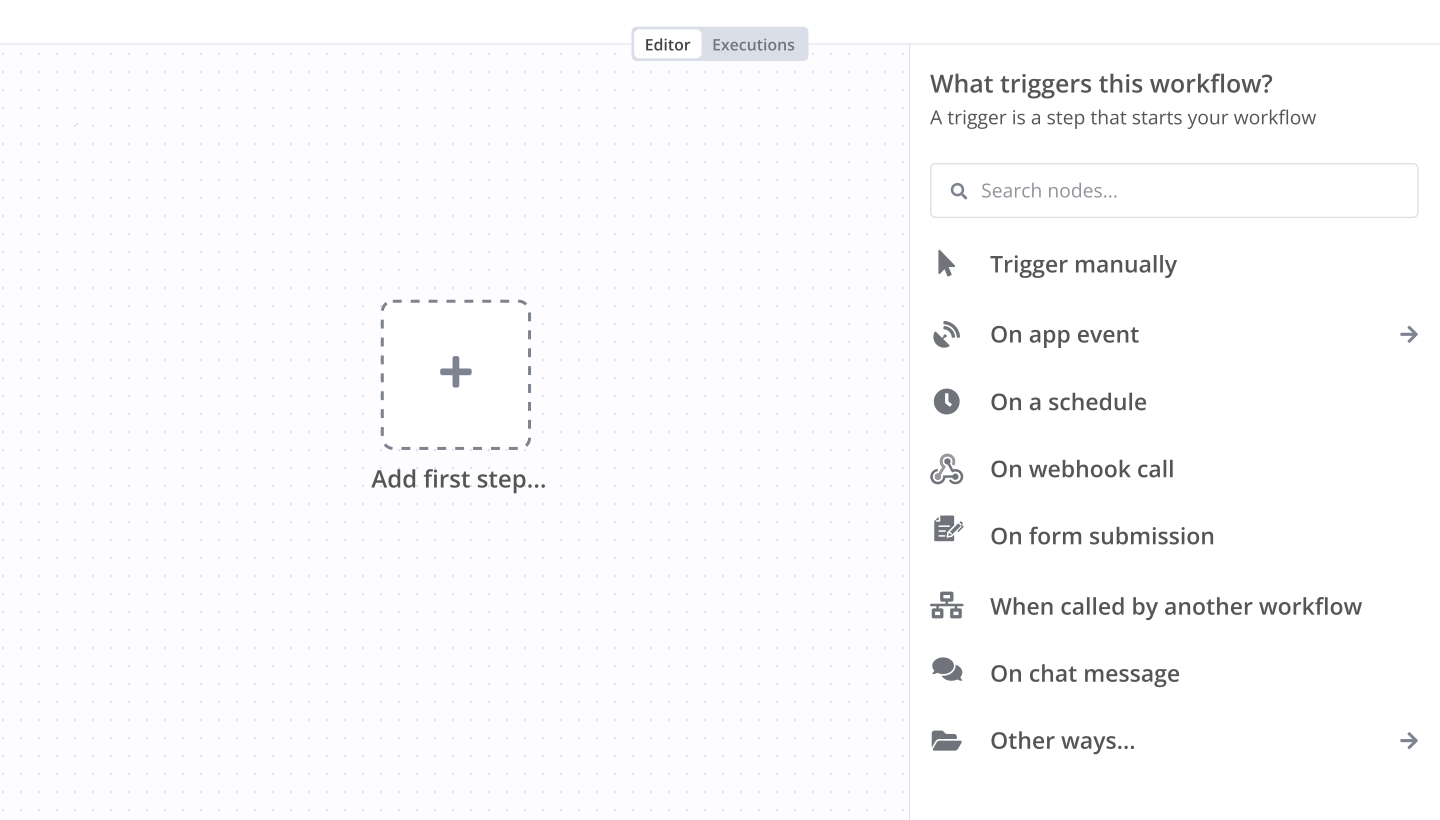
Airtable and WooCommerce integration: Create a new workflow and add the first step

Step 2: Add and configure Airtable and WooCommerce nodes

You can find Airtable and WooCommerce in the nodes panel. Drag them onto your workflow canvas, selecting their actions. Click each node, choose a credential, and authenticate to grant n8n access. Configure Airtable and WooCommerce nodes one by one: input data on the left, parameters in the middle, and output data on the right.

Airtable and WooCommerce integration: Add and configure Airtable and WooCommerce nodes

Step 3: Connect Airtable and WooCommerce

A connection establishes a link between Airtable and WooCommerce (or vice versa) to route data through the workflow. Data flows from the output of one node to the input of another. You can have single or multiple connections for each node.

Airtable and WooCommerce integration: Connect Airtable and WooCommerce

Step 4: Customize and extend your Airtable and WooCommerce integration

Use n8n's core nodes such as If, Split Out, Merge, and others to transform and manipulate data. Write custom JavaScript or Python in the Code node and run it as a step in your workflow. Connect Airtable and WooCommerce with any of n8n’s 1000+ integrations, and incorporate advanced AI logic into your workflows.

Airtable and WooCommerce integration: Customize and extend your Airtable and WooCommerce integration

Step 5: Test and activate your Airtable and WooCommerce workflow

Save and run the workflow to see if everything works as expected. Based on your configuration, data should flow from Airtable to WooCommerce or vice versa. Easily debug your workflow: you can check past executions to isolate and fix the mistake. Once you've tested everything, make sure to save your workflow and activate it.

Airtable and WooCommerce integration: Test and activate your Airtable and WooCommerce workflow

Analyze WooCommerce category sales over time with Airtable and Slack

WooCommerce Product Category Sales Performance Report

This workflow automatically analyzes sales data by product category, compares performance across time periods (daily, weekly or monthly), stores structured results in Airtable and sends a clear summary to Slack for quick decision-making.

This workflow pulls order data for two time periods (current and previous), groups sales by product category and calculates key metrics like revenue, units sold and share of total sales. Each category is then classified (Top Performer, Steady, Needs Attention, etc.) with a recommended action.

The results are saved to Airtable for tracking & history and a short, easy-to-read summary is sent to Slack so stakeholders can understand performance at a glance.

You get:

Automated sales comparison (daily / weekly / monthly)**
Category-wise performance classification**
Historical tracking in Airtable**
One clean Slack summary — no dashboards required**

Ideal for product, sales and operations teams who want fast, consistent insights without manual reporting.

Quick Start – Implementation Steps

Configure the date granularity (daily, weekly or monthly).
Connect your Orders data source (API, DB or platform node).
Connect and configure your Airtable base & table.
Connect your Slack workspace and choose a channel.
Activate the workflow — reports start running automatically.

What It Does

This workflow automates category-level sales analysis:

Builds current and previous date ranges dynamically.
Fetches orders for both time periods.
Normalizes and aggregates orders by product category.
Calculates key metrics:
Current revenue
Previous revenue
Units sold
Share of total sales
Classifies each category (Top Performer, Steady, At Risk, etc.).
Adds a recommended business action for each category.
Saves the final results to Airtable.
Generates a short summary message.
Sends a single Slack report to stakeholders.

This ensures consistent, repeatable insights with no manual effort.

Who’s It For

This workflow is ideal for:

Sales & revenue teams
Product managers
E-commerce operations teams
Business analysts
Startup founders & leadership
Anyone needing automated sales performance insights
Requirements to Use This Workflow

To run this workflow, you need:

n8n instance** (cloud or self-hosted)
Access to orders data (API, database or platform integration)
Airtable base** + Personal Access Token
Slack workspace** with API permissions
Basic understanding of sales metrics (revenue, units, categories)
How It Works

Scheduler Trigger – Workflow runs on a defined schedule.
Build Date Ranges – Calculates current and previous periods.
Fetch Orders (Current) – Pulls orders for the active period.
Fetch Orders (Previous) – Pulls orders for comparison.
Aggregate by Category – Groups sales and calculates metrics.
Classify Performance – Assigns tags and actions.
Save to Airtable – Stores structured results.
Build Slack Summary – Creates a readable summary message.
Send to Slack – Delivers insights to the team.
Setup Steps

Import the provided n8n workflow JSON.
Configure the Scheduler timing.
Set your preferred granularity (daily / weekly / monthly).
Connect and map your Orders data source.
Connect Airtable and map fields:
Category ID / Name
Current Revenue
Previous Revenue
Units
Share
Tag
Recommended Action
Connect Slack API credentials and select a channel.
Activate the workflow — done!
How To Customize Nodes

Change Time Period

Switch between daily, weekly or monthly comparisons.
Adjust rolling windows for testing or analysis.

Adjust Performance Thresholds

Modify revenue or share thresholds.
Change category labels or actions.

Customize Airtable Storage

Add optional fields such as:

Report date
Growth percentage
Notes or owner
Review status

Customize Slack Summary

You may add:

Emojis or highlights
Mentions (@channel, @team)
Links to Airtable records
Separate sections for risks or wins
Add-Ons (Optional Enhancements)

You can extend this workflow to:

Add Teams or Email notifications
Track trends over multiple periods
Generate charts or dashboards
Add alerts for sudden drops or spikes
Include AI-based insights or explanations
Export reports to Google Sheets or CSV
Use Case Examples

1. Weekly Sales Review

Automatically send category performance every week.

2. Product Decision Support

Identify which categories to promote or discontinue.

3. Leadership Updates

Share clear performance summaries with management.

4. E-commerce Optimization

Spot declining categories before revenue drops.

5. Historical Analysis

Track performance trends over time in Airtable.

Troubleshooting Guide

Issue Possible Cause Solution
No Slack message Slack node not connected Verify Slack credentials
No Airtable data Field mapping mismatch Match Airtable column names
Missing current orders Date range incorrect Check UTC date logic
Empty summary No category data Verify aggregation step
Workflow not running Trigger disabled Enable Scheduler node

Need Help?

If you need help extending or customizing this workflow with adding alerts, dashboards, AI insights or scaling it for production then our n8n workflow developers at WeblineIndia can assist with advanced automation and reporting solutions.

Nodes used in this workflow

Popular Airtable and WooCommerce workflows

Analyze WooCommerce category sales over time with Airtable and Slack

WooCommerce Product Category Sales Performance Report This workflow automatically analyzes sales data by product category, compares performance across time periods (daily, weekly or monthly), stores structured results in Airtable and sends a clear summary to Slack for quick decision-making. This workflow pulls order data for two time periods (current and previous), groups sales by product category and calculates key metrics like revenue, units sold and share of total sales. Each category is then classified (Top Performer, Steady, Needs Attention, etc.) with a recommended action. The results are saved to Airtable for tracking & history and a short, easy-to-read summary is sent to Slack so stakeholders can understand performance at a glance. You get: Automated sales comparison (daily / weekly / monthly)** Category-wise performance classification** Historical tracking in Airtable** One clean Slack summary — no dashboards required** Ideal for product, sales and operations teams who want fast, consistent insights without manual reporting. Quick Start – Implementation Steps Configure the date granularity (daily, weekly or monthly). Connect your Orders data source (API, DB or platform node). Connect and configure your Airtable base & table. Connect your Slack workspace and choose a channel. Activate the workflow — reports start running automatically. What It Does This workflow automates category-level sales analysis: Builds current and previous date ranges dynamically. Fetches orders for both time periods. Normalizes and aggregates orders by product category. Calculates key metrics: Current revenue Previous revenue Units sold Share of total sales Classifies each category (Top Performer, Steady, At Risk, etc.). Adds a recommended business action for each category. Saves the final results to Airtable. Generates a short summary message. Sends a single Slack report to stakeholders. This ensures consistent, repeatable insights with no manual effort. Who’s It For This workflow is ideal for: Sales & revenue teams Product managers E-commerce operations teams Business analysts Startup founders & leadership Anyone needing automated sales performance insights Requirements to Use This Workflow To run this workflow, you need: n8n instance** (cloud or self-hosted) Access to orders data (API, database or platform integration) Airtable base** + Personal Access Token Slack workspace** with API permissions Basic understanding of sales metrics (revenue, units, categories) How It Works Scheduler Trigger – Workflow runs on a defined schedule. Build Date Ranges – Calculates current and previous periods. Fetch Orders (Current) – Pulls orders for the active period. Fetch Orders (Previous) – Pulls orders for comparison. Aggregate by Category – Groups sales and calculates metrics. Classify Performance – Assigns tags and actions. Save to Airtable – Stores structured results. Build Slack Summary – Creates a readable summary message. Send to Slack – Delivers insights to the team. Setup Steps Import the provided n8n workflow JSON. Configure the Scheduler timing. Set your preferred granularity (daily / weekly / monthly). Connect and map your Orders data source. Connect Airtable and map fields: Category ID / Name Current Revenue Previous Revenue Units Share Tag Recommended Action Connect Slack API credentials and select a channel. Activate the workflow — done! How To Customize Nodes Change Time Period Switch between daily, weekly or monthly comparisons. Adjust rolling windows for testing or analysis. Adjust Performance Thresholds Modify revenue or share thresholds. Change category labels or actions. Customize Airtable Storage Add optional fields such as: Report date Growth percentage Notes or owner Review status Customize Slack Summary You may add: Emojis or highlights Mentions (@channel, @team) Links to Airtable records Separate sections for risks or wins Add-Ons (Optional Enhancements) You can extend this workflow to: Add Teams or Email notifications Track trends over multiple periods Generate charts or dashboards Add alerts for sudden drops or spikes Include AI-based insights or explanations Export reports to Google Sheets or CSV Use Case Examples 1\. Weekly Sales Review Automatically send category performance every week. 2\. Product Decision Support Identify which categories to promote or discontinue. 3\. Leadership Updates Share clear performance summaries with management. 4\. E-commerce Optimization Spot declining categories before revenue drops. 5\. Historical Analysis Track performance trends over time in Airtable. Troubleshooting Guide | Issue | Possible Cause | Solution | |-----------------------|--------------------------|------------------------------------------| | No Slack message | Slack node not connected | Verify Slack credentials | | No Airtable data | Field mapping mismatch | Match Airtable column names | | Missing current orders| Date range incorrect | Check UTC date logic | | Empty summary | No category data | Verify aggregation step | | Workflow not running | Trigger disabled | Enable Scheduler node | Need Help? If you need help extending or customizing this workflow with adding alerts, dashboards, AI insights or scaling it for production then our n8n workflow developers at WeblineIndia can assist with advanced automation and reporting solutions.

Build your own Airtable and WooCommerce integration

Create custom Airtable and WooCommerce workflows by choosing triggers and actions. Nodes come with global operations and settings, as well as app-specific parameters that can be configured. You can also use the HTTP Request node to query data from any app or service with a REST API.


Airtable supported actions

Get Many
List all the bases
Get Schema
Get the schema of the tables in a base
Create
Create a new record in a table
Create or Update
Create a new record, or update the current one if it already exists (upsert)
Delete
Delete a record from a table
Get
Retrieve a record from a table
Search
Search for specific records or list all
Update
Update a record in a table

WooCommerce supported actions

Create
Create a customer
Delete
Delete a customer
Get
Retrieve a customer
Get Many
Retrieve many customers
Update
Update a customer
Create
Create a order
Delete
Delete a order
Get
Get a order
Get Many
Get many orders
Update
Update a order
Create
Create a product
Delete
Delete a product
Get
Get a product
Get Many
Get many products
Update
Update a product

FAQs

  • Can Airtable connect with WooCommerce?

  • Can I use Airtable’s API with n8n?

  • Can I use WooCommerce’s API with n8n?

  • Is n8n secure for integrating Airtable and WooCommerce?

  • How to get started with Airtable and WooCommerce integration in n8n.io?

Need help setting up your Airtable and WooCommerce integration?

Discover our latest community's recommendations and join the discussions about Airtable and WooCommerce integration.
Michael Wells

Looking to integrate Airtable and WooCommerce in your company?

Over 3000 companies switch to n8n every single week

Why use n8n to integrate Airtable with WooCommerce

Build complex workflows, really fast

Build complex workflows, really fast

Handle branching, merging and iteration easily.
Pause your workflow to wait for external events.

Code when you need it, UI when you don't

Simple debugging

Your data is displayed alongside your settings, making edge cases easy to track down.

Use templates to get started fast

Use 1000+ workflow templates available from our core team and our community.

Reuse your work

Copy and paste, easily import and export workflows.

Implement complex processes faster with n8n

red iconyellow iconred iconyellow icon