Back to Integrations
integrationAirtable node
integrationWordpress node

Airtable and Wordpress integration

Save yourself the work of writing custom integrations for Airtable and Wordpress and use n8n instead. Build adaptable and scalable Data & Storage, and Marketing workflows that work with your technology stack. All within a building experience you will love.

How to connect Airtable and Wordpress

  • Step 1: Create a new workflow
  • Step 2: Add and configure nodes
  • Step 3: Connect
  • Step 4: Customize and extend your integration
  • Step 5: Test and activate your workflow

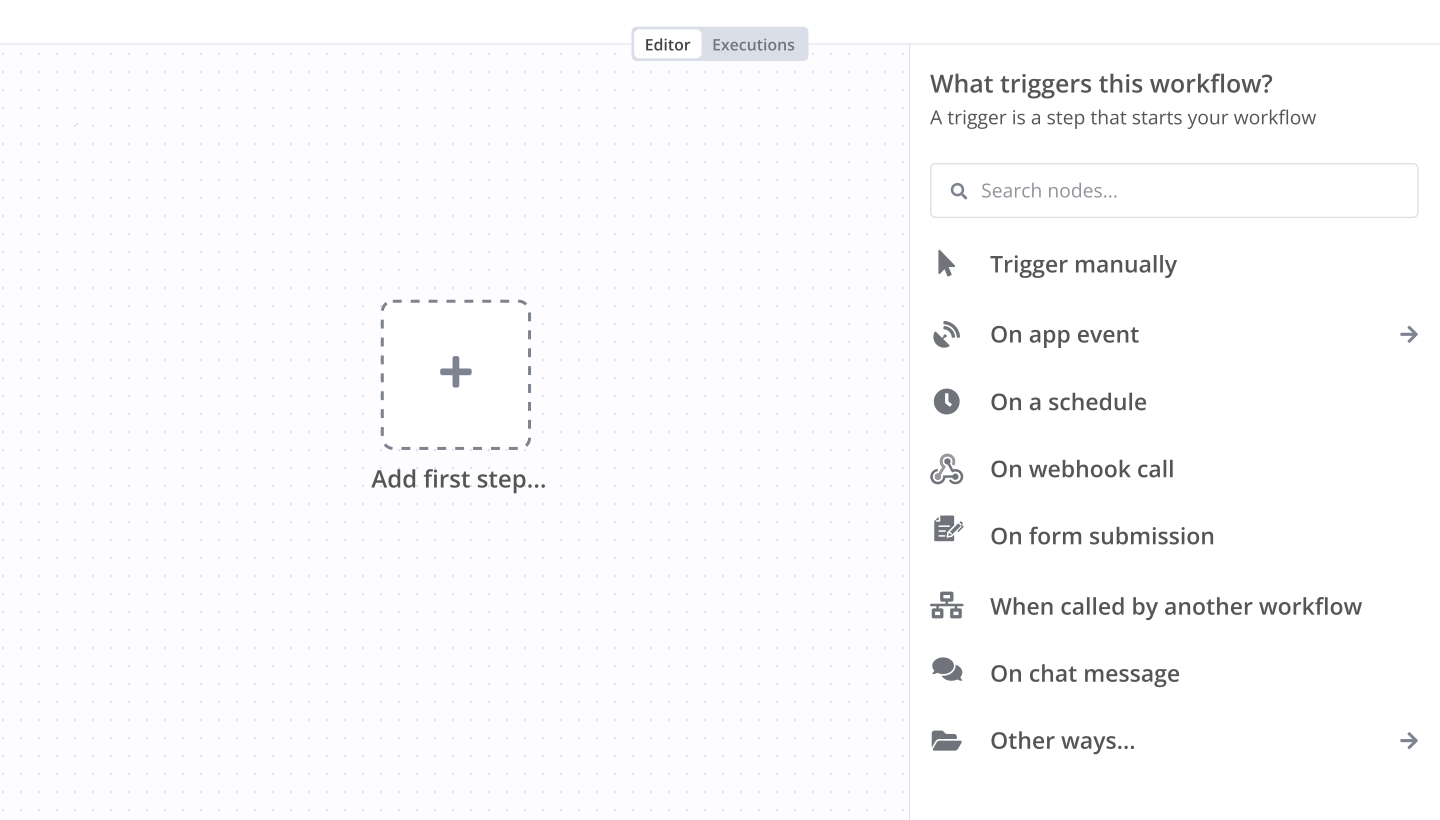
Step 1: Create a new workflow and add the first step

In n8n, click the "Add workflow" button in the Workflows tab to create a new workflow. Add the starting point – a trigger on when your workflow should run: an app event, a schedule, a webhook call, another workflow, an AI chat, or a manual trigger. Sometimes, the HTTP Request node might already serve as your starting point.

Airtable and Wordpress integration: Create a new workflow and add the first step

Step 2: Add and configure Airtable and Wordpress nodes

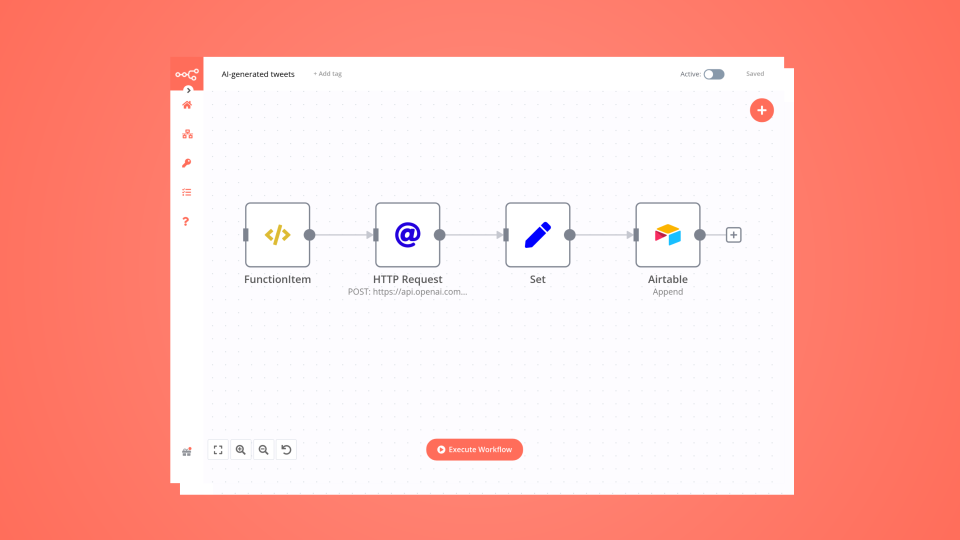
You can find Airtable and Wordpress in the nodes panel. Drag them onto your workflow canvas, selecting their actions. Click each node, choose a credential, and authenticate to grant n8n access. Configure Airtable and Wordpress nodes one by one: input data on the left, parameters in the middle, and output data on the right.

Airtable and Wordpress integration: Add and configure Airtable and Wordpress nodes

Step 3: Connect Airtable and Wordpress

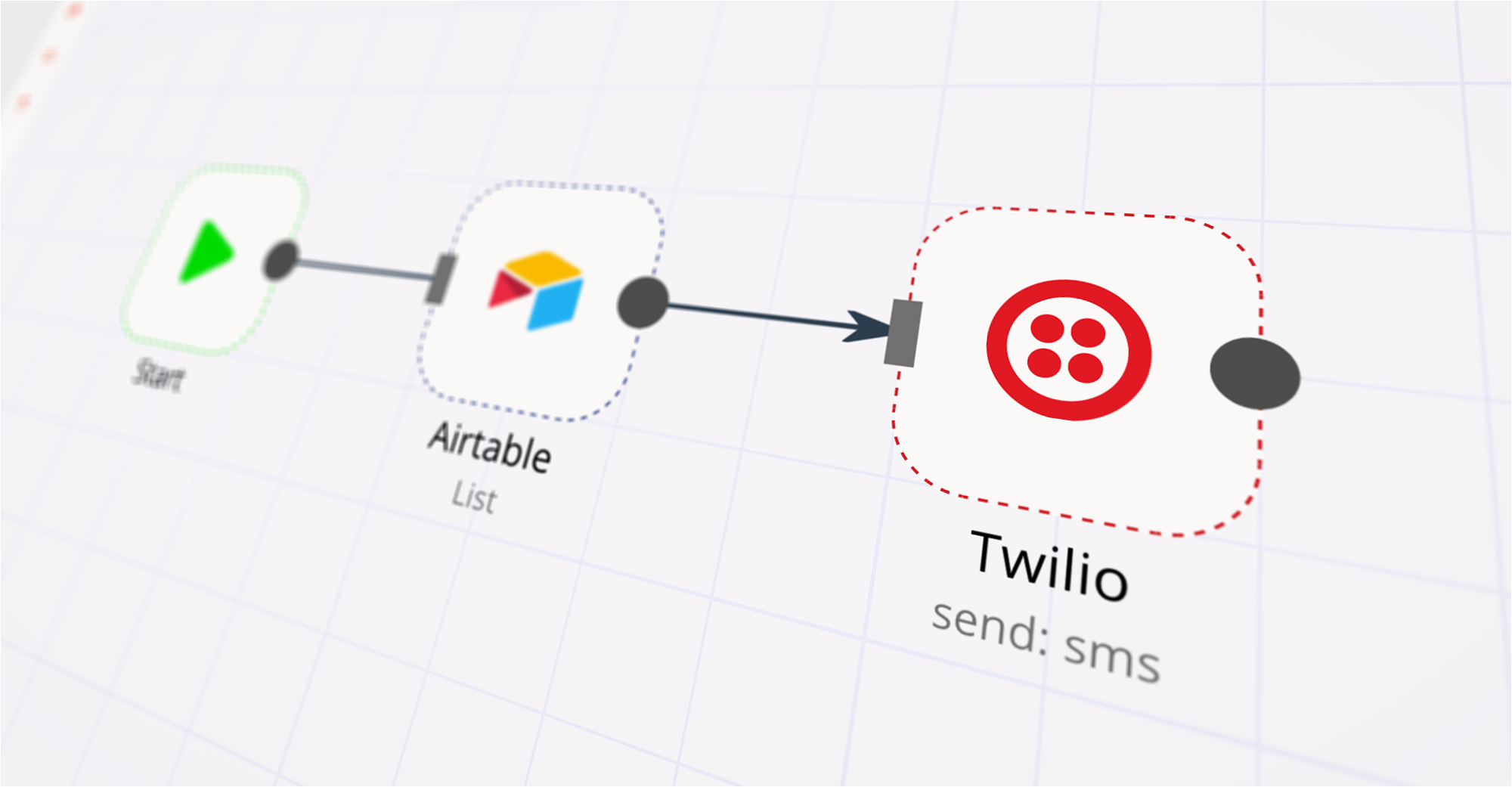
A connection establishes a link between Airtable and Wordpress (or vice versa) to route data through the workflow. Data flows from the output of one node to the input of another. You can have single or multiple connections for each node.

Airtable and Wordpress integration: Connect Airtable and Wordpress

Step 4: Customize and extend your Airtable and Wordpress integration

Use n8n's core nodes such as If, Split Out, Merge, and others to transform and manipulate data. Write custom JavaScript or Python in the Code node and run it as a step in your workflow. Connect Airtable and Wordpress with any of n8n’s 1000+ integrations, and incorporate advanced AI logic into your workflows.

Airtable and Wordpress integration: Customize and extend your Airtable and Wordpress integration

Step 5: Test and activate your Airtable and Wordpress workflow

Save and run the workflow to see if everything works as expected. Based on your configuration, data should flow from Airtable to Wordpress or vice versa. Easily debug your workflow: you can check past executions to isolate and fix the mistake. Once you've tested everything, make sure to save your workflow and activate it.

Airtable and Wordpress integration: Test and activate your Airtable and Wordpress workflow

Create new WordPress posts with a featured image with Airtable

This workflow is aimed to create new posts in wordpress automatically from an airtable dashboard.
When creating content in bulk, we can save time by automating how we can post and publish this content.

Usage
Get the content from Airtable. Since we have this as a markdown, we will have to convert it to a html format to make it easier to publish and manage on WordPress
Upload the blog post with the content, title and all other relevant information needed for an optimized blog
Once the post is posted, we need to upload the image and set it as a features image for the blogs

Happy productivity

Nodes used in this workflow

Popular Airtable and Wordpress workflows

+18

💅 AI Agents Generate Content & Automate Posting for Beauty Salon Social Media 📲

💅 AI Agents Generate Content & Automate Posting for Beauty Salon Social Media 📲 Who Is This For? This workflow is for beauty salons who want consistent, high‑quality social media content without writing every post manually. It also suits agencies and automation builders who manage multiple beauty brands and want a reusable, AI‑driven posting system they can adapt per client. What Problem Is This Workflow Solving? Many beauty businesses struggle to post regularly because research, copywriting, and design all take time and marketing skills. This workflow automates research, writing, image creation, and posting, so your channels stay active and relevant while you focus on clients and services. What This Workflow Does Generates short, engaging posts tailored to a beauty‑salon audience (hair, nails, skincare, make‑up, self‑care) using an AI agent. Uses Tavily Internet Search to pull up‑to‑date information and trends based on a reference link or topic. Turns each post into a detailed, photorealistic image prompt and creates a matching visual with an AI image model (for example, gpt‑image‑1 or other connected providers). Automatically sends the final text and image to Telegram, and can be extended to other social platforms from the Split Out node. How It Works Trigger the workflow Scheduled automatic generation:** Run the parent workflow on a schedule (for example, once per day at 9 AM) to publish new content regularly. Google Sheets trigger:** Generate content when a new row with a reference link or topic is added to your sheet. Use it when you manage ideas or briefs in Google Sheets and want the workflow to react as soon as a new idea appears. RSS Feed trigger:** Start the workflow when new items appear in a selected RSS feed. Ideal for turning fresh blog posts, news, or industry updates into social media content or automated summaries. Meta (Facebook/Instagram) webhook:** Use the Meta Reference trigger to fire the workflow on incoming webhooks from Meta (for example, new comments, messages, or events). Helpful when you want to auto‑respond, log activity, or generate follow‑up content from Meta activity. Airtable trigger:** Start the workflow when records in a selected Airtable base/table change (for example, a new idea, brief, or status update), so your posts react instantly to updates in your Airtable content board. Postgres trigger:** Fire the workflow when new rows are inserted or existing rows are updated in a connected PostgreSQL table, letting you drive content generation from events in your app database or Supabase‑style back end. Manual start:* Hit Execute workflow* whenever you want to spin up a batch of posts on demand, test new prompt settings, or debug the flow step by step. Research and generate copy The GENERATE TEXT agent calls Tavily to gather fresh information on the topic. It writes a post under 1024 characters with a hook, practical tips, relevant hashtags, and a closing line with your salon address and contact. Create the visual The GENERATE PROMPT agent converts the post into a single, clear description of the scene (client, service, salon interior, lighting, mood) with a strict “no text on image” rule. An image model such as gpt‑image‑1 or one of the HTTP image APIs renders a matching beauty visual. Distribute the content The Split Out node fans out the result so Telegram receives a photo post with the generated caption. Additional social or content nodes (for example Facebook, LinkedIn, X, template tools) can be wired after this step for multi‑channel posting. How to Customize This Workflow to Your Needs Brand voice** Edit the system message in the GENERATE TEXT node to adjust tone (luxury, friendly, clinical, playful), language, services, and city. Update the final address and phone line to match your salon details. Topics and triggers** Point the Google Sheets Trigger to your own document ID, sheet, and columns for ideas, links, or campaign themes. Use the Schedule Trigger for fully automatic posting or rely on the Manual Trigger for controlled, batch generation sessions. Models and providers** Swap GPT‑5 llm and the default image model for alternatives such as Mistral, Gemini, Anthropic, DeepSeek, or custom HTTP image APIs by enabling the corresponding nodes and adding credentials. Channels and outputs** Connect or remove social nodes after Split Out depending on which platforms you actively use. Add extra processing steps (for example resizing images or adding UTM parameters) before each channel if needed. Visual style** Tweak the GENERATE PROMPT instructions to control composition (close‑up vs. full‑body), color palette, lighting, and overall salon aesthetic, while keeping the constraint of no text or logos in the image.
+19

💾 Generate Blog Posts on Autopilot with GPT‑5, Tavily and WordPress

Who Is This For? This workflow is designed for marketers, content creators, agencies, and solo founders who want to publish long‑form posts with visuals on autopilot using n8n and AI agents. ​ Whether you run a blog, SaaS, personal brand, newsletter, or client accounts, this tool helps you keep a consistent content pipeline without manually writing every article, creating images, and posting to each platform one by one. ​ ​ 💪🏼 While the template is wired around classic blog + social media distribution, the underlying logic is universal. You can easily adapt it to any niche by editing prompts, swapping models, and re‑wiring nodes. You can plug in any LLM you like, from ChatGPT to Claude, Gemini, Mistral, DeepSeek, OpenRouter, or even local models through Ollama. ​ What Problem Is This Workflow Solving? 🤯 Most teams waste hours on the same repetitive loop: research a topic, gather links, write a blog post, craft social captions, generate visuals, upload everything to multiple platforms, and archive assets. ​ ​ 💎 This workflow solves that by automating the full content chain—from research and blog‑post generation to image creation, publishing across channels, and logging everything in your content database—so your feeds stay active while you focus on strategy, not busywork. ​ What This Workflow Does ✨ Generates in‑depth blog posts tailored to your topic and target audience, enriched with fresh references from the web via Tavily/SerpAPI search tools. ​ ✨ Creates an image prompt and title from the article, generates the visual with OpenAI Images (gpt-image-1), and converts it into a ready‑to‑use image file. ​ ✨ Automatically publishes content to your connected platforms (WordPress for blog posts, Telegram, X/Twitter, Facebook, LinkedIn) while saving images to Google Drive and logging each publication in Google Sheets for tracking. ​ How It Works? Surprisingly simple ☺️ The workflow is triggered by another n8n workflow or by one of several triggers (Facebook, RSS, Google Sheets, Airtable, Postgres) that pass in the blogTopic, targetAudience, and Telegram chatID. ​ ​ The Blog Post Agent (LLM with access to Tavily/SerpAPI) researches the topic, writes a structured article for the specified audience, and sends its output to the Image Prompt Agent, which turns the content into a visual prompt and title. ​ 🎯 The end result: you provide a topic, run the workflow, and receive a complete blog post, matching image, and ready‑made social posts shipped directly to your channels and archives—no manual copy‑paste. ​ How to Customize This Workflow to Your Needs 🎨 Switch AI models and fine‑tune prompts so the agent can handle your exact formats: tutorials, case studies, listicles, product updates, thought‑leadership pieces, or campaign landing posts. 🔍 Refine research sources inside Tavily/SerpAPI to prioritize the domains, blogs, and docs your audience trusts, keeping posts accurate and up to date. ⏰ Adjust posting cadence and schedules to align with peak engagement for your audience, mixing automated slots with manual “launch” runs for special announcements. 📱 Expand or trim channels as needed: keep just WordPress + LinkedIn, add Telegram as a content feed, or plug the workflow into additional automations like email campaigns or RSS feeds. 📊 Use Google Sheets as your content hub to store ideas, angles, CTAs, references, and performance notes so you can double‑down on topics and formats that perform best. 🎬 Swap images for video by replacing the image generation node with video tools (for example, Runway‑style APIs) if your strategy is video‑first while keeping the same prompt pipeline. 💾 Build a reusable prompt library in Sheets, Notion, or Airtable so you can rotate proven prompt patterns each month and keep quality high without reinventing the wheel. 🤖 The system will continuously generate blog posts, visuals, and social updates and publish them across your selected platforms while archiving everything in Drive and Sheets—keeping your brand visible, consistent, and professional with minimal ongoing effort.
+3

Ultimate Content Generator for WordPress

Overview This workflow automates the end-to-end process of creating, optimizing, and publishing content on WordPress. It integrates AI-powered tools, Airtable, and WordPress plugins to generate high-quality, on-brand posts effortlessly. Perfect for content creators, marketers, and business owners looking to save time and scale their content strategy. Features Content Creation: AI-Powered Content:** Generates SEO-friendly blog posts with structured headings, relevant keywords, and meta descriptions. Custom Prompts:** Tailor the AI-generated content to match your brand’s tone and voice. SEO Optimization: RankMath Plugin Integration:** Updates RankMath SEO with focus keywords and meta descriptions, ensuring your content is search-engine optimized. Content Management: Airtable Integration:** Organizes content ideas, drafts, and publishing schedules in one place. Easily scalable for teams or solo creators. Visuals: Branded Featured Images:** Automatically generates on-brand images for every post. Publishing: Effortless Formatting:** Adapts content to fit your WordPress theme and schedules it for publication. Workflow Steps Trigger: Initiated manually or on a schedule. Content Management: Retrieves and organizes ideas from Airtable. Content Generation: Generates AI-driven blog content tailored to your audience. SEO Optimization: Automatically updates RankMath with SEO details. Featured Image Creation: Produces on-brand images for the post. Publishing: Formats and schedules the post on WordPress. Prerequisites API Keys: OpenAI Airtable WordPress REST API RankMath SEO Plugin Custom Code: Add a small update to your WordPress theme’s functions.php file to enable seamless automation. Customization Replace Airtable with another content management system if preferred. Adjust AI prompts to reflect different tones, styles, or industries. Add integrations for additional plugins, analytics, or storage services. Usage Import the workflow into your n8n instance. Configure API credentials for WordPress, Airtable, OpenAI, and RankMath. Update your functions.php file with the provided code snippet. Customize prompts and Airtable structure for your content needs. Trigger the workflow manually or set it on a schedule. Notes Experiment with Airtable views or add filters for more granular control over your content pipeline. Extend the workflow to include social media posting or analytics tracking. For questions, refer to n8n documentation or reach out to the creator. Tools Used Airtable OpenAI GPT WordPress REST API RankMath SEO Plugin Feel free to adapt and extend this workflow to meet your specific needs! 🎉
+7

WordPress Content Automation Machine with HUMAN-IN-THE-LOOP & DEEP RESEARCH

HUMAN-IN-THE-LOOP Content Automation Pro with Deep Research & Airtable for Power Users \- Collaborative AI for WordPress Blog Automation The BEST n8n Content Automation workflow in the market is getting even better, now enabling you to have full control over the entire process. It’s time to unlock the power of true collaborative creation with GenAI\! Want to leverage AI automation but don't want to give up full control over the whole content creation process? Get the best of both worlds \- get “Human-in-the-Loop” with this supreme n8n workflow template\! This template blends the power of AI with the crucial oversight of human expertise and intervention, all managed through a central, streamlined Airtable interface. Say goodbye to generic content and hello to high-quality, deeply researched articles published directly to your WordPress site with full control. Check out my Youtube channel for a full walkthrough. What problem is this workflow solving? / Use cases Fully automated content generation tools often lack the nuance, accuracy, and strategic control necessary for truly impactful content. This workflow solves that critical gap by integrating powerful AI capabilities into a structured, human-supervised content creation process managed via a simple interface. It automates the most repetitive and time-consuming tasks – like research gathering, chapter ideations, domain copywriting – while strategically embedding essential human review points at critical junctures. Instead of simply providing a topic and receiving a finished article of uncertain quality, you actively guide the process step-by-step within an interface. You review, refine, and approve AI suggestions for chapters and content before finalizing and publishing. This approach makes it perfect for creating high-quality, deeply researched, and brand-aligned blog posts for WordPress more efficiently, without ever sacrificing essential editorial control. Who is this for? This workflow template is meticulously designed for individuals and teams deeply involved in content creation who seek a powerful blend of AI-driven efficiency and essential human-controlled quality assurance: Content Creators & Bloggers:** Who want to leverage AI for drafting and research but maintain full editorial control. Marketing Teams:** Looking to scale content production efficiently while ensuring brand voice and quality consistency. SEO Specialists:** Needing to produce well-researched, structured, and SEO-optimized content regularly. Agencies:** Managing content creation for multiple clients with a structured, repeatable process. Anyone who prefers a "human-in-the-loop" approach** over fully automated "black box" content generators. How this workflow works This template automates significant portions of the WordPress content creation process, utilizing Airtable as the central hub for management and user interaction, while leveraging AI for research and copywriting. The system is composed of four interconnected n8n flows, each handling a distinct stage of the content lifecycle. In addition, there is a sub-workflow dedicated to the research tool (Perplexity). Content Creation Process in Airtable The entire journey from idea to published post is managed within your Airtable base, offering transparency and control. Progress through each tab sequentially to complete the content creation process and produce a high-quality article that fulfills your requirements. Configure Settings (“Settings” Table): Define global parameters (website details, target audience, writing style, category IDs, about us, CTA etc.) in the “Settings” table. These serve as default inputs for the AI. Create Topics (“Create Topics“ Table): Add a record to the “Create Topics” table for each new blog post idea. Mark the topic as ready by setting its 'Status' field to “To Do” and ticking the 'Execute Flow' checkbox to initiate the first flow. Generate Chapters (“Generate Chapters“ Table): The first flow calls to the sub-workflow to do online research and generates potential chapter outlines based on your topic and settings, saving them to the “Generate Chapters” table. Select Chapters to Write (“Select Chapters“ Table): Review the suggested chapters in the “Select Chapters“ Table. Select the chapters you want to proceed with by setting their 'Status' to “To Do” and ticking the 'Execute Flow' checkbox. Generate Content for selected Chapters (“Generate Content“ Table): The second flow calls to the sub-workflow to research each selected chapter and generates draft content, saving it to the “Generate Content” table, where you have the opportunity to review and modify if necessary. Select Chapter Content (“Select Content“ Table): Review and edit the AI-generated text directly in Airtable. Approve the content for each chapter. Once all necessary content is approved, trigger the third flow for the final assembly by setting the status to “To Do” and ticking the 'Execute Flow' checkbox. Finalize Post (“Finalize Post“ Table): The third flow aggregates the approved content, generates the title, SEO metadata, tags, chapter images and featured image, placing all compiled information in the “Finalize Post” table for your final review. When the final article is ready to be published on your website, mark the status as "To Do" and check the "Ready to Publish" box to activate the fourth and final flow. Publish & Backup Post (“Backup Post“ Table): the fourth flow publishes the post to the website and creates a backup record in the “Backup Post” table, archiving key details including the live URL of the published article. n8n Workflow Functions (JSON Files) The automation is handled by four separate n8n flows, each triggered by specific changes in Airtable: Flow 1 (Topic Initiation & Chapter Generation): Trigger: Monitors the “Create Topics” table; activates when a record's 'Status' is "To Do" AND 'Execute Flow' checkbox is ticked. Action: Fetches settings from Settings. Performs initial research (e.g., via Perplexity). Uses AI to generate chapter outlines. Saves suggestions as new records in the “Generate Chapters” table. Flow 2 (Content Generation & Internal Linking): Trigger: Monitors the “Select Chapters” table; activates when a record's 'Status' is "To Do" AND 'Execute Flow' checkbox is ticked. Action: Fetches chapter details and settings. Gathers internal links (e.g., by parsing sitemap). Performs online/ deep research per chapter. Uses AI to write draft content, incorporating research and links. Saves drafts into corresponding records in the “Generate Content” table. Flow 3 (Post Assembly & Image Generation): Trigger: Monitors the “Select Content” table; activates when all content for a topic is approved and final assembly is triggered when a record's 'Status' is "To Do" AND 'Execute Flow' checkbox is ticked. Action: Fetches all content from the “Generate Content” table. Aggregates text. Uses AI for title, SEO metadata, tags, and image prompts. Generates chapter images and a featured cover image (e.g., via AI image model DALL-E). Converts content to HTML. Saves compiled data and image info into the “Finalize Post” table. Flow 4 (WordPress Publishing & Backup): Trigger: Monitors the “Finalize Post” table; activates when a record is marked Status' is "To Do" AND ‘Post to Website’ checkbox is ticked. Action: Fetches finalized data. Uploads images to WordPress. Creates WordPress post (status set to “published” by default) with content, metadata, tags, and image. Creates a record in the “Backup Post” table, with a link to the post on the website. This modular approach ensures each stage is handled distinctly, orchestrated via updates on Airtable interface. Unique Features Human-in-the-Loop Design:** Guarantees quality and relevance through mandatory user review and approval stages within Airtable for chapters, content, and the final post. Collaborative AI Partnership:** Leverages AI as a powerful assistant for research, structuring, and drafting, significantly boosting productivity while relying on human expertise for refinement and final judgment. Airtable as Interface & Control Center:** Utilizes Airtable as an intuitive interface and central database to manage the entire content lifecycle, offering clear progress tracking and facilitating team collaboration. Deep Research Integration:** Incorporates external research tools (like Perplexity) to ensure content is based on fresh, up-to-date information, crucial for accuracy and authority. Modular n8n Structure:** Simplifies complexity by dividing the process into four manageable, interconnected flows plus one sub-flows, making the system easier to understand, troubleshoot, and customize. Rate-limit Aware:** Includes built-in Wait nodes and logic designed to mitigate API rate limit issues from AI and research tools, enhancing workflow reliability during intensive use. Multiple-Image Generation:** Generates and adds images for each chapter, as well as a featured image for the article. Direct WordPress Integration:** Streamlines publication by automatically sending finalized, formatted content, metadata, tags, and the featured image directly to your WordPress site. Internal Linking:** Embeds internal website links strategically within each chapter and throughout the article, boosting SEO and enhancing user navigation. Integrated Backup:** Provides data security by automatically archiving key post details in Airtable and optionally saving text and image files to Google Drive. Future Features “Deeper Research”:** Plans for multi-level research capabilities to enable the creation of even more comprehensive reports or e-book length content. Content Sample:** Provide content samples for the AI to learn from and mimic in terms of writing style and guidelines. Category-Specific Styling:** Aiming to allow users to define styles per category for the AI to learn and imitate, ensuring greater brand consistency. Advanced Link Insertion:** Developing more sophisticated strategies for inserting relevant internal and external links, including automatic source citation and dynamic internal link density adjustments. Requirements Airtable Account: create a Airtable account for free. WordPress Website: Requires an Application Password with permissions to create posts and upload media. Must have the REST API enabled. OpenAI API Key: Or a key from another compatible AI provider for text and image generation (DALL-E is the default for images). Perplexity API Key: Or an API key for your chosen online research tool. Google Drive: for the optional backup feature to Google Drive. Setup Step-by-Step Import n8n Workflows: Download the .json workflow files and import them into your n8n instance. There is one main/ “month” workflow and one sub/ “child” workflow. Name the workflows to your needs. Get Airtable Base: Duplicate the companion Airtable Base template. Configure Credentials: Add new credentials in n8n for Airtable, WordPress (use Application Password), OpenAI API, PerplexityAI API, and Google (for Drive backup). Connect Workflow Nodes: Open each workflow in n8n and assign the correct credential to every node that requires authentication (Airtable, WordPress, AI, HTTP Request, Google nodes). Link the main workflow to the sub-workflow: Access the Research Tool nodes and establish a connection between the main workflow to sub-workflow. Configure Airtable Nodes: Update all Airtable nodes across all workflows. Verify that all 'Table' and 'Field' names in the nodes exactly match your duplicated base. Populate Airtable Settings: Fill in your specific details in the Settings table of your Airtable base (Website URL, Audience, Style, Category IDs, CTA, etc.). Test Connections: Run manual executions on key nodes within each flow to ensure connections and basic configurations are correct before activating. Activate Workflow: Toggle the "Active" switch ON for the main/ “mother” workflow in your n8n list. No need to activate the sub/ “child” workflow. Start Creating: Go to the Create Topics table in Airtable, add a new topic, go through the process and get amazed by AI magic\! Airtable Database Explanation Airtable is the central hub, acting as the database, user interface, and trigger mechanism for this workflow. Structure:** The base uses linked tables to manage the process: Settings: Global configurations. Create Topics: Initiates new content pieces. Generate Chapters: Stores AI-generated chapter outlines for review. Select Chapters: Facilitates user selection of chapters to write. Generate Content: Stores AI-generated draft content for selected chapters. Select Content: Manages user approval of drafted content before final assembly. Finalize Post: Holds the compiled post (text, metadata, image info) for final review and publish trigger. Backup Post: Archives data (including live URL) of successfully published posts. Workflow Interaction:** User updates trigger fields in Airtable (e.g., sets Status='To Do' & Execute Flow=true). n8n Airtable Trigger nodes detect these specific changes. The corresponding n8n flow runs, fetching data from Airtable. AI and other tools process data and generate outputs. Results are written back to the appropriate Airtable tables/fields. User reviews results in Airtable and triggers the next stage via status AND checkbox updates. Setup:* Using the exact* duplicated Airtable base template is mandatory, as n8n workflows expect specific table and field names. Tips for Pros AI Prompts:** Modify prompts in the AI nodes to refine tone, style, format, or incorporate specific instructions. AI Models:** the workflow is optimized for OpenAI's GPT-4o model due to its consistent performance. While you can replace the AI models in the nodes with alternatives (if you have the credentials for them), keep in mind that the workflow may not function. AI Research Model:** PerplexityAI is the tool of choice for research. The "sonar" model is the default for research in this workflow due to its speed and cost-effectiveness. However, you are welcome to explore Perplexity's other models, such as the "sonar-deep-research" model, which is specifically designed for in-depth research. AI Image Model:** The default AI model for image generation is OpenAI’s Dall-E. However, the outputs of this model are not impressive. While OpenAI's 4o multimodal is expected to be available via API soon, better/ superior image quality can be achieved in the meantime by using alternative AI image models (such as FLUX.1). Airtable Base:** Add or modify fields/tables to match your specific tracking needs, but remember to update corresponding n8n nodes accordingly. 3rd-party Integrations:** Replace research tools, image generators, or modify the final step to publish to a different CMS or add post-publication steps like social sharing. Error Handling:** For production reliability, incorporate an “Error Handling” workflow in n8n for this automation to catch failures and send notifications Important Considerations API Rate Limits:* AI and research tools have usage limits. High volume processing might cause errors. The included Wait* nodes help, but may need adjustment based on your API plans. Testing Costs:** API calls to AI models aren't free. To ensure the workflow runs correctly, start testing with OpenAI's GPT-4o. Once you've confirmed functionality, explore using other AI models which may be cheaper to keep costs down. Be aware that the workflow may not be as reliable with models other than GPT-4o. Keep an eye on your API provider's billing dashboard to monitor usage and costs. Sequential Processing:* The workflow processes one topic fully at a time to ensure stability and manage API limits. For fully automated, parallel processing from a list, consider the alternative template: [“\[n8n\] Content Automation Pro – with DEEP RESEARCH – WordPress Blog Automation”*](https://n8n.io/workflows/3041-wordpress-auto-blogging-pro-with-deep-research-content-automation-machine/).

+7

Content Generator for WordPress v3

UPDATE This is an updated version of the previous Ultimate Content Generator for WordPress v2. https://n8n.io/workflows/2737-ultimate-content-generator-for-wordpress/ It includes an additional workflow to generate content using Anthropic Claude in addition to OpenAI 4o. I also mofidied it to use the AI Agent Tool node with structured output for more consistent outputs. Lastly, the workflow updates a new table in AirTable with the published blog post url and featured image url. Overview- This workflow automates the end-to-end process of creating, optimizing, and publishing content on WordPress. It integrates AI-powered tools, Airtable, and WordPress plugins to generate high-quality, on-brand posts effortlessly. Perfect for content creators, marketers, and business owners looking to save time and scale their content strategy. Features Content Creation: AI-Powered Content: Generates SEO-friendly blog posts with structured headings, relevant keywords, and meta descriptions. Custom Prompts: Tailor the AI-generated content to match your brand’s tone and voice. SEO Optimization: RankMath Plugin Integration: Updates RankMath SEO with focus keywords and meta descriptions, ensuring your content is search-engine optimized. Content Management: Airtable Integration: Organizes content ideas, drafts, and publishing schedules in one place. Easily scalable for teams or solo creators. Visuals: Branded Featured Images: Automatically generates on-brand images for every post. Publishing: Effortless Formatting: Adapts content to fit your WordPress theme and schedules it for publication. Workflow Steps Trigger: Initiated manually or on a schedule. Content Management: Retrieves and organizes ideas from Airtable. Content Generation: Generates AI-driven blog content tailored to your audience. SEO Optimization: Automatically updates RankMath with SEO details. Featured Image Creation: Produces on-brand images for the post. Publishing: Formats and schedules the post on WordPress. Prerequisites API Keys: OpenAI Claude Airtable WordPress REST API Custom Code: Add a small update to your WordPress theme’s functions.php file to enable seamless automation. Customization Replace Airtable with another content management system if preferred. Adjust AI prompts to reflect different tones, styles, or industries. Add integrations for additional plugins, analytics, or storage services. Usage Import the workflow into your n8n instance. Configure API credentials for WordPress, Airtable, OpenAI, Claude and Slack. Update your functions.php file with the provided code snippet. Customize prompts and Airtable structure for your content needs. Trigger the workflow manually or set it on a schedule. Notes Experiment with Airtable views or add filters for more granular control over your content pipeline. Extend the workflow to include social media posting or analytics tracking. Feel free to adapt and extend this workflow to meet your specific needs! 🎉

Create new wordpress posts with a featured Image with Airtable

This workflow is aimed to create new posts in wordpress automatically from an airtable dashboard. When creating content in bulk, we can save time by automating how we can post and publish this content. Usage Get the content from Airtable. Since we have this as a markdown, we will have to convert it to a html format to make it easier to publish and manage on WordPress Upload the blog post with the content, title and all other relevant information needed for an optimized blog Once the post is posted, we need to upload the image and set it as a features image for the blogs Happy productivity

Build your own Airtable and Wordpress integration

Create custom Airtable and Wordpress workflows by choosing triggers and actions. Nodes come with global operations and settings, as well as app-specific parameters that can be configured. You can also use the HTTP Request node to query data from any app or service with a REST API.

Airtable supported actions

Get Many
List all the bases
Get Schema
Get the schema of the tables in a base
Create
Create a new record in a table
Create or Update
Create a new record, or update the current one if it already exists (upsert)
Delete
Delete a record from a table
Get
Retrieve a record from a table
Search
Search for specific records or list all
Update
Update a record in a table

Wordpress supported actions

Create
Create a post
Get
Get a post
Get Many
Get many posts
Update
Update a post
Create
Create a page
Get
Get a page
Get Many
Get many pages
Update
Update a page
Create
Create a user
Get
Get a user
Get Many
Get many users
Update
Update a user

FAQs

  • Can Airtable connect with Wordpress?

  • Can I use Airtable’s API with n8n?

  • Can I use Wordpress’s API with n8n?

  • Is n8n secure for integrating Airtable and Wordpress?

  • How to get started with Airtable and Wordpress integration in n8n.io?

Need help setting up your Airtable and Wordpress integration?

Discover our latest community's recommendations and join the discussions about Airtable and Wordpress integration.
Michael Wells

Looking to integrate Airtable and Wordpress in your company?

Over 3000 companies switch to n8n every single week

Why use n8n to integrate Airtable with Wordpress

Build complex workflows, really fast

Build complex workflows, really fast

Handle branching, merging and iteration easily.
Pause your workflow to wait for external events.

Code when you need it, UI when you don't

Simple debugging

Your data is displayed alongside your settings, making edge cases easy to track down.

Use templates to get started fast

Use 1000+ workflow templates available from our core team and our community.

Reuse your work

Copy and paste, easily import and export workflows.

Implement complex processes faster with n8n

red iconyellow iconred iconyellow icon