Back to Integrations
integrationAPITemplate.io node
integrationGmail node

APITemplate.io and Gmail integration

Save yourself the work of writing custom integrations for APITemplate.io and Gmail and use n8n instead. Build adaptable and scalable Marketing, Communication, and HITL workflows that work with your technology stack. All within a building experience you will love.

How to connect APITemplate.io and Gmail

  • Step 1: Create a new workflow
  • Step 2: Add and configure nodes
  • Step 3: Connect
  • Step 4: Customize and extend your integration
  • Step 5: Test and activate your workflow

Step 1: Create a new workflow and add the first step

In n8n, click the "Add workflow" button in the Workflows tab to create a new workflow. Add the starting point – a trigger on when your workflow should run: an app event, a schedule, a webhook call, another workflow, an AI chat, or a manual trigger. Sometimes, the HTTP Request node might already serve as your starting point.
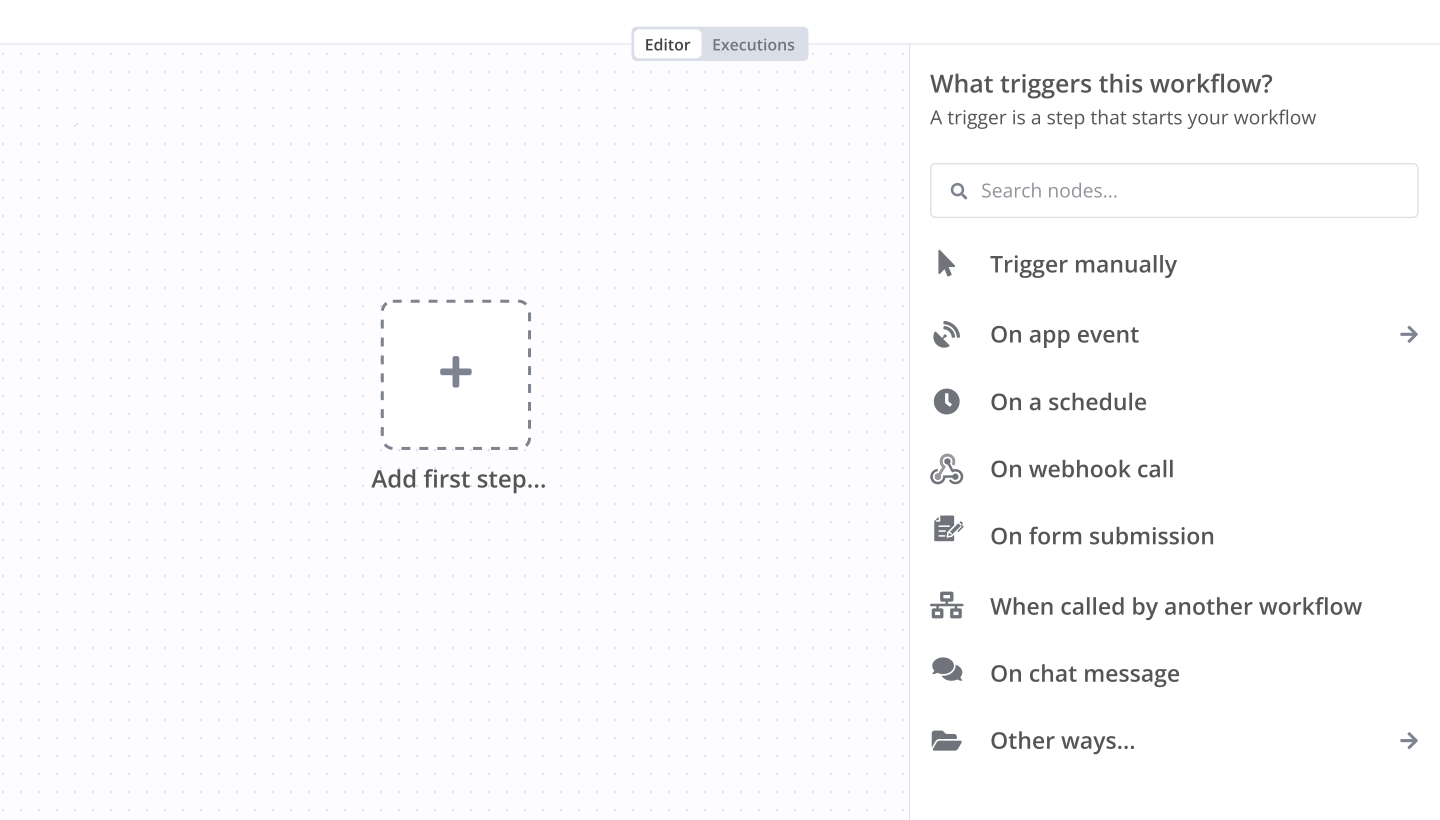
APITemplate.io and Gmail integration: Create a new workflow and add the first step

Step 2: Add and configure APITemplate.io and Gmail nodes

You can find APITemplate.io and Gmail in the nodes panel. Drag them onto your workflow canvas, selecting their actions. Click each node, choose a credential, and authenticate to grant n8n access. Configure APITemplate.io and Gmail nodes one by one: input data on the left, parameters in the middle, and output data on the right.

APITemplate.io and Gmail integration: Add and configure APITemplate.io and Gmail nodes

Step 3: Connect APITemplate.io and Gmail

A connection establishes a link between APITemplate.io and Gmail (or vice versa) to route data through the workflow. Data flows from the output of one node to the input of another. You can have single or multiple connections for each node.

APITemplate.io and Gmail integration: Connect APITemplate.io and Gmail

Step 4: Customize and extend your APITemplate.io and Gmail integration

Use n8n's core nodes such as If, Split Out, Merge, and others to transform and manipulate data. Write custom JavaScript or Python in the Code node and run it as a step in your workflow. Connect APITemplate.io and Gmail with any of n8n’s 1000+ integrations, and incorporate advanced AI logic into your workflows.

APITemplate.io and Gmail integration: Customize and extend your APITemplate.io and Gmail integration

Step 5: Test and activate your APITemplate.io and Gmail workflow

Save and run the workflow to see if everything works as expected. Based on your configuration, data should flow from APITemplate.io to Gmail or vice versa. Easily debug your workflow: you can check past executions to isolate and fix the mistake. Once you've tested everything, make sure to save your workflow and activate it.

APITemplate.io and Gmail integration: Test and activate your APITemplate.io and Gmail workflow

Repurpose long-form content into Instagram and LinkedIn posts with OpenAI and Teams

Who is this for

Content creators, solopreneurs, and marketing teams who produce long-form content (podcasts, newsletters, interviews, scripts) and want to automatically turn it into multiple social media assets -- Instagram carousels, LinkedIn carousels, LinkedIn text posts, and LinkedIn media posts -- with human-in-the-loop approval via Microsoft Teams.

What this workflow does

This workflow takes a long-form content file sent via email, extracts strategic content pillars using AI, then fans out into four parallel branches -- each producing a different social media format. Every draft is reviewed and approved in Microsoft Teams before images are generated, assets are saved to Google Drive, and posts are published via Blotato.

How it works

Email trigger -- A Gmail Trigger watches for emails with a specific subject line (e.g. "Content Repurposing"). The email contains a text attachment (podcast transcript, newsletter, etc.) and optionally a link to the original content.
File extraction & storage -- The attachment is extracted, saved as a Google Doc in a timestamped project subfolder on Google Drive, and the source URL is parsed from the email body.
AI content strategist -- The Repurpose Strategist agent (OpenAI) analyzes the full text and extracts 5 strategic content pillars, each with a hook headline, core insight, virality factor, and relevant quote. Results are logged in Google Sheets.
Four parallel content branches -- The 5 pillars feed into four specialized AI agents that each produce a different format:
Instagram/YouTube carousel -- 5 punchy one-liners (max 25 words each) + a social media caption
LinkedIn carousel -- 5 slide texts with hooks + a companion caption, plus a styled PDF carousel via HTML-to-PDF
LinkedIn text post -- A single strong LinkedIn post (max 100 words)
LinkedIn media post -- A post with a guiding statement rendered as an image
Human review loop -- Each branch sends its draft to Microsoft Teams for approval via a custom form (approve/reject with feedback). If rejected, feedback is routed back to the AI agent for targeted revisions.
Asset generation & storage -- On approval, carousel images are generated via APITemplate.io, all assets (images, post texts, PDFs) are saved to organized Google Drive subfolders, and results are logged back to Google Sheets.
Publishing -- Approved posts are published to Instagram and LinkedIn via Blotato, with status monitoring and Teams notifications on success or failure.

Setup steps

Gmail -- Create OAuth2 credentials. The trigger watches for emails with "Content Repurposing" in the subject. You can customize this filter.
Google Drive & Docs -- Create OAuth2 credentials. Set the target folder ID in the Google Drive Trigger node where project subfolders will be created.
Google Sheets -- Create a spreadsheet to serve as the content tracker. It will store pillars, carousel texts, post texts, and metadata. Update the Sheet ID in all Google Sheets nodes.
OpenAI -- Add your API key. Used by 5 AI agents (strategist + 4 content specialists).
Microsoft Teams -- Create OAuth2 credentials. Set the Teams chat ID in the 4 review nodes to route drafts to your approval channel.
APITemplate.io -- Create an account and design carousel slide templates. Set the template ID in the image generation nodes.
Blotato -- Connect your Instagram and LinkedIn accounts. Add the Blotato API credential and update account IDs in the publishing nodes.
HTML-to-PDF -- Install the community node n8n-nodes-htmlcsstopdf (self-hosted only). Customize the carousel slide HTML/CSS template with your branding (logo, colors, profile photo).

Requirements

Community nodes:**
@blotato/n8n-nodes-blotato
n8n-nodes-htmlcsstopdf
Self-hosted n8n only** (due to community nodes)
Gmail OAuth2 credentials
Google Drive, Docs & Sheets OAuth2 credentials
OpenAI API key
Microsoft Teams OAuth2 credentials
APITemplate.io account and template
Blotato account with connected Instagram and LinkedIn profiles

How to customize

AI prompts** -- Each of the 5 AI agents has a detailed system prompt you can adjust for tone, word count, language, or output structure.
Carousel design** -- Edit the HTML/CSS in the "HTML to PDF" node to match your brand (colors, fonts, logo, profile photo). Update the APITemplate.io template IDs for Instagram-style slides.
Platforms** -- Add or remove publishing branches. Currently supports Instagram (via Blotato) and LinkedIn (text post, carousel, media post).
Review channel** -- Change the Teams chat ID to route to different teams or channels.
Trigger** -- Swap Gmail for another trigger (e.g. Google Drive, webhook, or manual) depending on your content intake workflow.
Feedback loop** -- Each branch supports unlimited revision cycles. The AI applies feedback minimally without rewriting from scratch.

Nodes used in this workflow

Popular APITemplate.io and Gmail workflows

+7

Repurpose long-form content into Instagram and LinkedIn posts with OpenAI and Teams

Who is this for Content creators, solopreneurs, and marketing teams who produce long-form content (podcasts, newsletters, interviews, scripts) and want to automatically turn it into multiple social media assets -- Instagram carousels, LinkedIn carousels, LinkedIn text posts, and LinkedIn media posts -- with human-in-the-loop approval via Microsoft Teams. What this workflow does This workflow takes a long-form content file sent via email, extracts strategic content pillars using AI, then fans out into four parallel branches -- each producing a different social media format. Every draft is reviewed and approved in Microsoft Teams before images are generated, assets are saved to Google Drive, and posts are published via Blotato. How it works Email trigger -- A Gmail Trigger watches for emails with a specific subject line (e.g. "Content Repurposing"). The email contains a text attachment (podcast transcript, newsletter, etc.) and optionally a link to the original content. File extraction & storage -- The attachment is extracted, saved as a Google Doc in a timestamped project subfolder on Google Drive, and the source URL is parsed from the email body. AI content strategist -- The Repurpose Strategist agent (OpenAI) analyzes the full text and extracts 5 strategic content pillars, each with a hook headline, core insight, virality factor, and relevant quote. Results are logged in Google Sheets. Four parallel content branches -- The 5 pillars feed into four specialized AI agents that each produce a different format: Instagram/YouTube carousel -- 5 punchy one-liners (max 25 words each) + a social media caption LinkedIn carousel -- 5 slide texts with hooks + a companion caption, plus a styled PDF carousel via HTML-to-PDF LinkedIn text post -- A single strong LinkedIn post (max 100 words) LinkedIn media post -- A post with a guiding statement rendered as an image Human review loop -- Each branch sends its draft to Microsoft Teams for approval via a custom form (approve/reject with feedback). If rejected, feedback is routed back to the AI agent for targeted revisions. Asset generation & storage -- On approval, carousel images are generated via APITemplate.io, all assets (images, post texts, PDFs) are saved to organized Google Drive subfolders, and results are logged back to Google Sheets. Publishing -- Approved posts are published to Instagram and LinkedIn via Blotato, with status monitoring and Teams notifications on success or failure. Setup steps Gmail -- Create OAuth2 credentials. The trigger watches for emails with "Content Repurposing" in the subject. You can customize this filter. Google Drive & Docs -- Create OAuth2 credentials. Set the target folder ID in the Google Drive Trigger node where project subfolders will be created. Google Sheets -- Create a spreadsheet to serve as the content tracker. It will store pillars, carousel texts, post texts, and metadata. Update the Sheet ID in all Google Sheets nodes. OpenAI -- Add your API key. Used by 5 AI agents (strategist + 4 content specialists). Microsoft Teams -- Create OAuth2 credentials. Set the Teams chat ID in the 4 review nodes to route drafts to your approval channel. APITemplate.io -- Create an account and design carousel slide templates. Set the template ID in the image generation nodes. Blotato -- Connect your Instagram and LinkedIn accounts. Add the Blotato API credential and update account IDs in the publishing nodes. HTML-to-PDF -- Install the community node n8n-nodes-htmlcsstopdf (self-hosted only). Customize the carousel slide HTML/CSS template with your branding (logo, colors, profile photo). Requirements Community nodes:** @blotato/n8n-nodes-blotato n8n-nodes-htmlcsstopdf Self-hosted n8n only** (due to community nodes) Gmail OAuth2 credentials Google Drive, Docs & Sheets OAuth2 credentials OpenAI API key Microsoft Teams OAuth2 credentials APITemplate.io account and template Blotato account with connected Instagram and LinkedIn profiles How to customize AI prompts** -- Each of the 5 AI agents has a detailed system prompt you can adjust for tone, word count, language, or output structure. Carousel design** -- Edit the HTML/CSS in the "HTML to PDF" node to match your brand (colors, fonts, logo, profile photo). Update the APITemplate.io template IDs for Instagram-style slides. Platforms** -- Add or remove publishing branches. Currently supports Instagram (via Blotato) and LinkedIn (text post, carousel, media post). Review channel** -- Change the Teams chat ID to route to different teams or channels. Trigger** -- Swap Gmail for another trigger (e.g. Google Drive, webhook, or manual) depending on your content intake workflow. Feedback loop** -- Each branch supports unlimited revision cycles. The AI applies feedback minimally without rewriting from scratch.

Build your own APITemplate.io and Gmail integration

Create custom APITemplate.io and Gmail workflows by choosing triggers and actions. Nodes come with global operations and settings, as well as app-specific parameters that can be configured. You can also use the HTTP Request node to query data from any app or service with a REST API.

APITemplate.io supported actions

Get
Create
Create

Gmail supported actions

Add Label
Delete
Get
Get Many
Mark as Read
Mark as Unread
Remove Label
Reply
Send
Send and Wait for Response
Create
Delete
Get
Get Many
Create
Delete
Get
Get Many
Add Label
Delete
Get
Get Many
Remove Label
Reply
Trash
Untrash

FAQs

  • Can APITemplate.io connect with Gmail?

  • Can I use APITemplate.io’s API with n8n?

  • Can I use Gmail’s API with n8n?

  • Is n8n secure for integrating APITemplate.io and Gmail?

  • How to get started with APITemplate.io and Gmail integration in n8n.io?

Need help setting up your APITemplate.io and Gmail integration?

Discover our latest community's recommendations and join the discussions about APITemplate.io and Gmail integration.
jake chard
Jan Koch
Paul Kennard

Looking to integrate APITemplate.io and Gmail in your company?

Over 3000 companies switch to n8n every single week

Why use n8n to integrate APITemplate.io with Gmail

Build complex workflows, really fast

Build complex workflows, really fast

Handle branching, merging and iteration easily.
Pause your workflow to wait for external events.

Code when you need it, UI when you don't

Simple debugging

Your data is displayed alongside your settings, making edge cases easy to track down.

Use templates to get started fast

Use 1000+ workflow templates available from our core team and our community.

Reuse your work

Copy and paste, easily import and export workflows.

Implement complex processes faster with n8n

red iconyellow iconred iconyellow icon