Back to Integrations
integrationAWS S3 node
integrationGoogle Gemini Chat Model node

AWS S3 and Google Gemini Chat Model integration

Save yourself the work of writing custom integrations for AWS S3 and Google Gemini Chat Model and use n8n instead. Build adaptable and scalable Development, Data & Storage, AI, and Langchain workflows that work with your technology stack. All within a building experience you will love.

How to connect AWS S3 and Google Gemini Chat Model

  • Step 1: Create a new workflow
  • Step 2: Add and configure nodes
  • Step 3: Connect
  • Step 4: Customize and extend your integration
  • Step 5: Test and activate your workflow

Step 1: Create a new workflow and add the first step

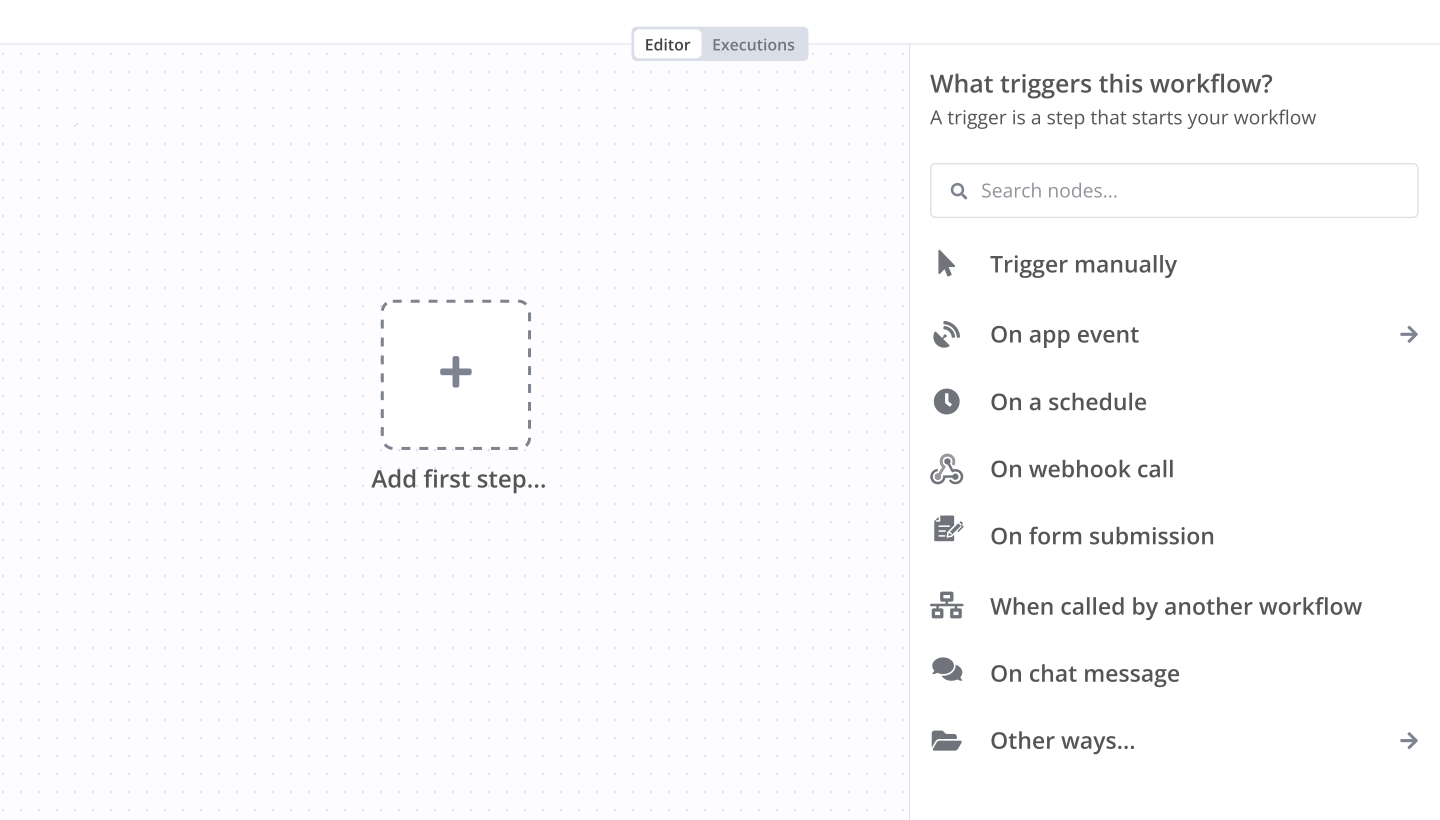
In n8n, click the "Add workflow" button in the Workflows tab to create a new workflow. Add the starting point – a trigger on when your workflow should run: an app event, a schedule, a webhook call, another workflow, an AI chat, or a manual trigger. Sometimes, the HTTP Request node might already serve as your starting point.

AWS S3 and Google Gemini Chat Model integration: Create a new workflow and add the first step

Step 2: Add and configure AWS S3 and Google Gemini Chat Model nodes

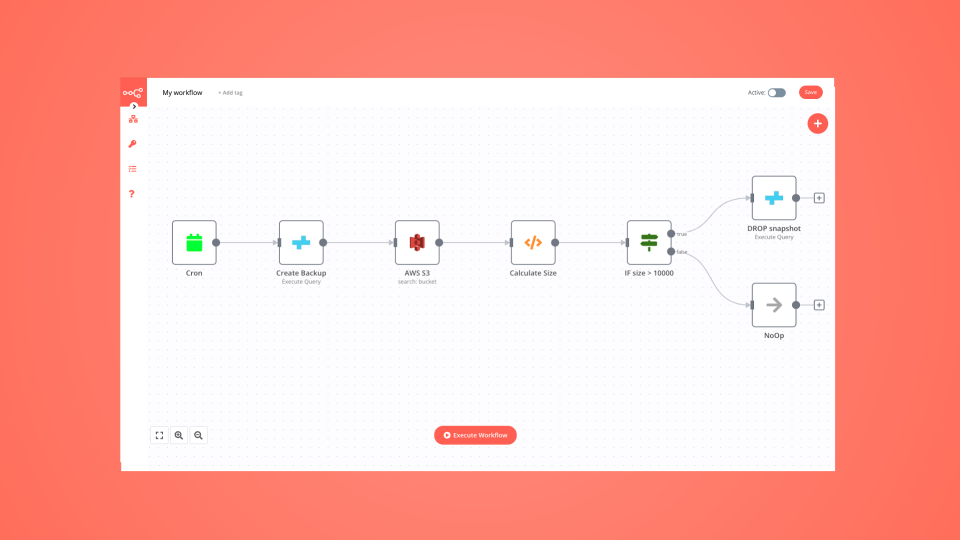
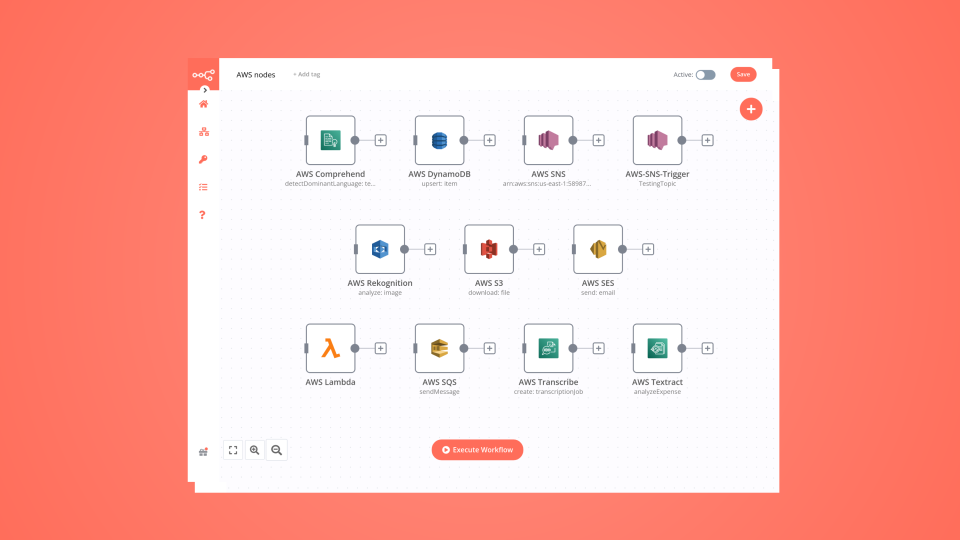
You can find AWS S3 and Google Gemini Chat Model in the nodes panel. Drag them onto your workflow canvas, selecting their actions. Click each node, choose a credential, and authenticate to grant n8n access. Configure AWS S3 and Google Gemini Chat Model nodes one by one: input data on the left, parameters in the middle, and output data on the right.

AWS S3 and Google Gemini Chat Model integration: Add and configure AWS S3 and Google Gemini Chat Model nodes

Step 3: Connect AWS S3 and Google Gemini Chat Model

A connection establishes a link between AWS S3 and Google Gemini Chat Model (or vice versa) to route data through the workflow. Data flows from the output of one node to the input of another. You can have single or multiple connections for each node.

AWS S3 and Google Gemini Chat Model integration: Connect AWS S3 and Google Gemini Chat Model

Step 4: Customize and extend your AWS S3 and Google Gemini Chat Model integration

Use n8n's core nodes such as If, Split Out, Merge, and others to transform and manipulate data. Write custom JavaScript or Python in the Code node and run it as a step in your workflow. Connect AWS S3 and Google Gemini Chat Model with any of n8n’s 1000+ integrations, and incorporate advanced AI logic into your workflows.

AWS S3 and Google Gemini Chat Model integration: Customize and extend your AWS S3 and Google Gemini Chat Model integration

Step 5: Test and activate your AWS S3 and Google Gemini Chat Model workflow

Save and run the workflow to see if everything works as expected. Based on your configuration, data should flow from AWS S3 to Google Gemini Chat Model or vice versa. Easily debug your workflow: you can check past executions to isolate and fix the mistake. Once you've tested everything, make sure to save your workflow and activate it.

AWS S3 and Google Gemini Chat Model integration: Test and activate your AWS S3 and Google Gemini Chat Model workflow

Generate SEO-optimized PWA website with Google Gemini and deploy to S3

Generate SEO-Optimized PWA Website with AI and Deploy to S3

Who's it for

This workflow is designed for agencies, freelancers, and businesses who want to generate production-ready static websites with built-in SEO optimization and PWA (Progressive Web App) capabilities — all without manual coding.

It is best suited for users who need landing pages, portfolios, event pages, or client microsites that are mobile-friendly, SEO-optimized, and installable as apps on any device.

What it does

This workflow collects website requirements via an n8n form, uses Google Gemini AI to generate a complete HTML page with SEO metadata and PWA components (service worker, manifest, offline support), assembles all files, uploads them to AWS S3, and sends the published URL via email.

Unlike basic AI website generators, this workflow produces three separate AI-generated outputs that are assembled into a complete, deployable package:

✅ SEO-optimized meta tags, Open Graph, and structured data (Schema.org)
✅ PWA manifest + service worker for offline support and "Add to Home Screen"
✅ Responsive, single-page website with embedded CSS and JavaScript
✅ All files deployed as a cohesive package to S3

How it works

Website Request Form — User fills out requirements (name, purpose, colors, content, keywords).
Process Form Data — Workflow structures the input for AI processing.
Generate SEO Metadata (Gemini AI) — Creates meta tags, Open Graph tags, Twitter cards, and JSON-LD structured data based on the site's purpose and keywords.
Generate Website HTML (Gemini AI) — Produces a complete, responsive HTML/CSS/JS page incorporating the SEO metadata.
Generate PWA Components — Creates manifest.json and service-worker.js for offline capability and app-like behavior.
Assemble All Files — Merges HTML, manifest, and service worker into a deployment-ready package.
Convert to Binary — Prepares all files for S3 upload.
Upload to S3 — Deploys all files (index.html, manifest.json, sw.js) with proper content types.
Build Response — Constructs the live URL and deployment summary.
Send Confirmation Email — Delivers the live URL, SEO report, and PWA installation instructions to the user.

Requirements

To use this workflow, you will need:

A Google Gemini API key (Gemini 1.5 Flash or Pro recommended)
An AWS account with S3 access
An S3 bucket configured for static website hosting
A Gmail account for sending confirmation emails (or replace with another email service)

AWS Setup Guide

Step 1: Create an IAM User for n8n

Go to AWS Console → IAM → Users → Create user
User name: n8n-s3-uploader
Attach the following custom policy:
{
"Version": "2012-10-17",
"Statement": [
{
"Sid": "S3WebsiteUpload",
"Effect": "Allow",
"Action": [
"s3:PutObject",
"s3:PutObjectAcl",
"s3:GetObject",
"s3:ListBucket"
],
"Resource": [
"arn:aws:s3:::YOUR_BUCKET_NAME",
"arn:aws:s3:::YOUR_BUCKET_NAME/*"
]
}
]
}

Create access key → Select "Application running outside AWS"
Save the Access Key ID and Secret Access Key for n8n credential setup

Step 2: Create an S3 Bucket

Go to AWS Console → S3 → Create bucket
Bucket name: Choose a globally unique name (e.g., my-ai-websites-12345)
Region: Select your preferred region
Object Ownership: Select "ACLs enabled" → "Bucket owner preferred"
Block Public Access: Uncheck "Block all public access" and acknowledge the warning
Create bucket

Step 3: Enable Static Website Hosting

Go to your bucket → Properties tab
Scroll to "Static website hosting" → Edit
Enable static website hosting
Index document: index.html
Error document: index.html (for PWA routing)
Save changes
Note the bucket website endpoint URL (e.g., http://YOUR_BUCKET_NAME.s3-website-REGION.amazonaws.com)

Step 4: Add Bucket Policy for Public Access

Go to your bucket → Permissions tab
Scroll to "Bucket policy" → Edit
Paste the following policy:
{
"Version": "2012-10-17",
"Statement": [
{
"Sid": "PublicReadGetObject",
"Effect": "Allow",
"Principal": "",
"Action": "s3:GetObject",
"Resource": "arn:aws:s3:::YOUR_BUCKET_NAME/
"
}
]
}

Replace YOUR_BUCKET_NAME with your actual bucket name
Save changes

Step 5: Configure n8n Credentials

In n8n, go to Credentials → Add credential → AWS
Enter the Access Key ID and Secret Access Key from Step 1
Set the region to match your S3 bucket region
Save the credential

Important limitations

Generated websites are single-page only (no multi-page navigation).
The AI may occasionally produce varying results depending on prompt complexity.
S3 bucket must have public access enabled for the websites to be viewable.
PWA "Add to Home Screen" requires HTTPS — use CloudFront for production deployments.
No custom domain support out of the box (requires additional CloudFront/Route53 setup).
Service worker caching is basic (cache-first strategy); for advanced caching, customize the generated sw.js.
AWS charges may apply based on S3 storage and data transfer usage.

How to set up

Complete the AWS Setup Guide above.
Add your Google Gemini API credential in n8n.
Add your AWS credential in n8n (from Step 5 above).
Update the S3 bucket name in the "Upload to S3" node.
Update the bucket URL in the "Build Response" node.
Configure Gmail OAuth2 credential (or replace with your email service).
Activate the workflow and share the form URL.

How to customize

AI Model**: Swap Google Gemini for OpenAI, Anthropic, or any LLM supported by n8n.
Form fields**: Add fields for target audience, language preference, or industry-specific requirements.
SEO depth**: Extend the SEO prompt to generate sitemaps, robots.txt, or additional structured data types.
PWA features**: Customize the service worker for push notifications, background sync, or advanced caching strategies.
Notifications**: Replace Gmail with Slack, Discord, or webhook notifications.
Storage**: Add a database node to track generated websites with analytics.
Domain**: Integrate with CloudFront + Route53 for custom domains with HTTPS.
Error handling**: Add error handling nodes and retry logic for production use.

What makes this different

Most AI website generators create a basic HTML file. This workflow goes further:

Feature Basic Generator This Workflow
HTML/CSS/JS
SEO Meta Tags ✅ (AI-generated)
Open Graph / Twitter Cards
Schema.org Structured Data ✅ (JSON-LD)
PWA Support ✅ (manifest + service worker)
Offline Capability
"Add to Home Screen"
Multiple AI Calls 1 2 (specialized prompts)
Deployment Files 1 (index.html) 3+ (html + manifest + sw.js)

Security Considerations

The generated websites are publicly accessible. Do not use this for sensitive content.
Consider adding authentication if you want to restrict who can generate websites.
Review AWS costs regularly to avoid unexpected charges.
For production use, set up CloudFront with HTTPS (required for full PWA functionality).
Service workers require HTTPS in production; localhost is exempt for testing.

Note:
This workflow was built using Google Gemini AI and AWS S3 static website hosting.
For production deployments, we recommend adding CloudFront for HTTPS, custom domains, and global CDN distribution.

Nodes used in this workflow

Popular AWS S3 and Google Gemini Chat Model workflows

Generate SEO-optimized PWA website with Google Gemini and deploy to S3

Generate SEO-Optimized PWA Website with AI and Deploy to S3 Who's it for This workflow is designed for agencies, freelancers, and businesses who want to generate production-ready static websites with built-in SEO optimization and PWA (Progressive Web App) capabilities — all without manual coding. It is best suited for users who need landing pages, portfolios, event pages, or client microsites that are mobile-friendly, SEO-optimized, and installable as apps on any device. What it does This workflow collects website requirements via an n8n form, uses Google Gemini AI to generate a complete HTML page with SEO metadata and PWA components (service worker, manifest, offline support), assembles all files, uploads them to AWS S3, and sends the published URL via email. Unlike basic AI website generators, this workflow produces three separate AI-generated outputs that are assembled into a complete, deployable package: ✅ SEO-optimized meta tags, Open Graph, and structured data (Schema.org) ✅ PWA manifest + service worker for offline support and "Add to Home Screen" ✅ Responsive, single-page website with embedded CSS and JavaScript ✅ All files deployed as a cohesive package to S3 How it works Website Request Form — User fills out requirements (name, purpose, colors, content, keywords). Process Form Data — Workflow structures the input for AI processing. Generate SEO Metadata (Gemini AI) — Creates meta tags, Open Graph tags, Twitter cards, and JSON-LD structured data based on the site's purpose and keywords. Generate Website HTML (Gemini AI) — Produces a complete, responsive HTML/CSS/JS page incorporating the SEO metadata. Generate PWA Components — Creates manifest.json and service-worker.js for offline capability and app-like behavior. Assemble All Files — Merges HTML, manifest, and service worker into a deployment-ready package. Convert to Binary — Prepares all files for S3 upload. Upload to S3 — Deploys all files (index.html, manifest.json, sw.js) with proper content types. Build Response — Constructs the live URL and deployment summary. Send Confirmation Email — Delivers the live URL, SEO report, and PWA installation instructions to the user. Requirements To use this workflow, you will need: A Google Gemini API key (Gemini 1.5 Flash or Pro recommended) An AWS account with S3 access An S3 bucket configured for static website hosting A Gmail account for sending confirmation emails (or replace with another email service) AWS Setup Guide Step 1: Create an IAM User for n8n Go to AWS Console → IAM → Users → Create user User name: n8n-s3-uploader Attach the following custom policy: { "Version": "2012-10-17", "Statement": [ { "Sid": "S3WebsiteUpload", "Effect": "Allow", "Action": [ "s3:PutObject", "s3:PutObjectAcl", "s3:GetObject", "s3:ListBucket" ], "Resource": [ "arn:aws:s3:::YOUR_BUCKET_NAME", "arn:aws:s3:::YOUR_BUCKET_NAME/*" ] } ] } Create access key → Select "Application running outside AWS" Save the Access Key ID and Secret Access Key for n8n credential setup Step 2: Create an S3 Bucket Go to AWS Console → S3 → Create bucket Bucket name: Choose a globally unique name (e.g., my-ai-websites-12345) Region: Select your preferred region Object Ownership: Select "ACLs enabled" → "Bucket owner preferred" Block Public Access: Uncheck "Block all public access" and acknowledge the warning Create bucket Step 3: Enable Static Website Hosting Go to your bucket → Properties tab Scroll to "Static website hosting" → Edit Enable static website hosting Index document: index.html Error document: index.html (for PWA routing) Save changes Note the bucket website endpoint URL (e.g., http://YOUR_BUCKET_NAME.s3-website-REGION.amazonaws.com) Step 4: Add Bucket Policy for Public Access Go to your bucket → Permissions tab Scroll to "Bucket policy" → Edit Paste the following policy: { "Version": "2012-10-17", "Statement": [ { "Sid": "PublicReadGetObject", "Effect": "Allow", "Principal": "*", "Action": "s3:GetObject", "Resource": "arn:aws:s3:::YOUR_BUCKET_NAME/*" } ] } Replace YOUR_BUCKET_NAME with your actual bucket name Save changes Step 5: Configure n8n Credentials In n8n, go to Credentials → Add credential → AWS Enter the Access Key ID and Secret Access Key from Step 1 Set the region to match your S3 bucket region Save the credential Important limitations Generated websites are single-page only (no multi-page navigation). The AI may occasionally produce varying results depending on prompt complexity. S3 bucket must have public access enabled for the websites to be viewable. PWA "Add to Home Screen" requires HTTPS — use CloudFront for production deployments. No custom domain support out of the box (requires additional CloudFront/Route53 setup). Service worker caching is basic (cache-first strategy); for advanced caching, customize the generated sw.js. AWS charges may apply based on S3 storage and data transfer usage. How to set up Complete the AWS Setup Guide above. Add your Google Gemini API credential in n8n. Add your AWS credential in n8n (from Step 5 above). Update the S3 bucket name in the "Upload to S3" node. Update the bucket URL in the "Build Response" node. Configure Gmail OAuth2 credential (or replace with your email service). Activate the workflow and share the form URL. How to customize AI Model**: Swap Google Gemini for OpenAI, Anthropic, or any LLM supported by n8n. Form fields**: Add fields for target audience, language preference, or industry-specific requirements. SEO depth**: Extend the SEO prompt to generate sitemaps, robots.txt, or additional structured data types. PWA features**: Customize the service worker for push notifications, background sync, or advanced caching strategies. Notifications**: Replace Gmail with Slack, Discord, or webhook notifications. Storage**: Add a database node to track generated websites with analytics. Domain**: Integrate with CloudFront + Route53 for custom domains with HTTPS. Error handling**: Add error handling nodes and retry logic for production use. What makes this different Most AI website generators create a basic HTML file. This workflow goes further: | Feature | Basic Generator | This Workflow | |---------|----------------|---------------| | HTML/CSS/JS | ✅ | ✅ | | SEO Meta Tags | ❌ | ✅ (AI-generated) | | Open Graph / Twitter Cards | ❌ | ✅ | | Schema.org Structured Data | ❌ | ✅ (JSON-LD) | | PWA Support | ❌ | ✅ (manifest + service worker) | | Offline Capability | ❌ | ✅ | | "Add to Home Screen" | ❌ | ✅ | | Multiple AI Calls | 1 | 2 (specialized prompts) | | Deployment Files | 1 (index.html) | 3+ (html + manifest + sw.js) | Security Considerations The generated websites are publicly accessible. Do not use this for sensitive content. Consider adding authentication if you want to restrict who can generate websites. Review AWS costs regularly to avoid unexpected charges. For production use, set up CloudFront with HTTPS (required for full PWA functionality). Service workers require HTTPS in production; localhost is exempt for testing. Note: This workflow was built using Google Gemini AI and AWS S3 static website hosting. For production deployments, we recommend adding CloudFront for HTTPS, custom domains, and global CDN distribution.

Build your own AWS S3 and Google Gemini Chat Model integration

Create custom AWS S3 and Google Gemini Chat Model workflows by choosing triggers and actions. Nodes come with global operations and settings, as well as app-specific parameters that can be configured. You can also use the HTTP Request node to query data from any app or service with a REST API.

AWS S3 supported actions

Create
Create a bucket
Delete
Delete a bucket
Get Many
Get many buckets
Search
Search within a bucket
Copy
Copy a file
Delete
Delete a file
Download
Download a file
Get Many
Get many files
Upload
Upload a file
Create
Create a folder
Delete
Delete a folder
Get Many
Get many folders
Use case

Save engineering resources

Reduce time spent on customer integrations, engineer faster POCs, keep your customer-specific functionality separate from product all without having to code.

Learn more

FAQs

  • Can AWS S3 connect with Google Gemini Chat Model?

  • Can I use AWS S3’s API with n8n?

  • Can I use Google Gemini Chat Model’s API with n8n?

  • Is n8n secure for integrating AWS S3 and Google Gemini Chat Model?

  • How to get started with AWS S3 and Google Gemini Chat Model integration in n8n.io?

Looking to integrate AWS S3 and Google Gemini Chat Model in your company?

Over 3000 companies switch to n8n every single week

Why use n8n to integrate AWS S3 with Google Gemini Chat Model

Build complex workflows, really fast

Build complex workflows, really fast

Handle branching, merging and iteration easily.
Pause your workflow to wait for external events.

Code when you need it, UI when you don't

Simple debugging

Your data is displayed alongside your settings, making edge cases easy to track down.

Use templates to get started fast

Use 1000+ workflow templates available from our core team and our community.

Reuse your work

Copy and paste, easily import and export workflows.

Implement complex processes faster with n8n

red iconyellow iconred iconyellow icon