Back to Integrations
integrationAWS S3 node
integrationOpenAI node

AWS S3 and OpenAI integration

Save yourself the work of writing custom integrations for AWS S3 and OpenAI and use n8n instead. Build adaptable and scalable Development, Data & Storage, AI, and Langchain workflows that work with your technology stack. All within a building experience you will love.

How to connect AWS S3 and OpenAI

  • Step 1: Create a new workflow
  • Step 2: Add and configure nodes
  • Step 3: Connect
  • Step 4: Customize and extend your integration
  • Step 5: Test and activate your workflow

Step 1: Create a new workflow and add the first step

In n8n, click the "Add workflow" button in the Workflows tab to create a new workflow. Add the starting point – a trigger on when your workflow should run: an app event, a schedule, a webhook call, another workflow, an AI chat, or a manual trigger. Sometimes, the HTTP Request node might already serve as your starting point.
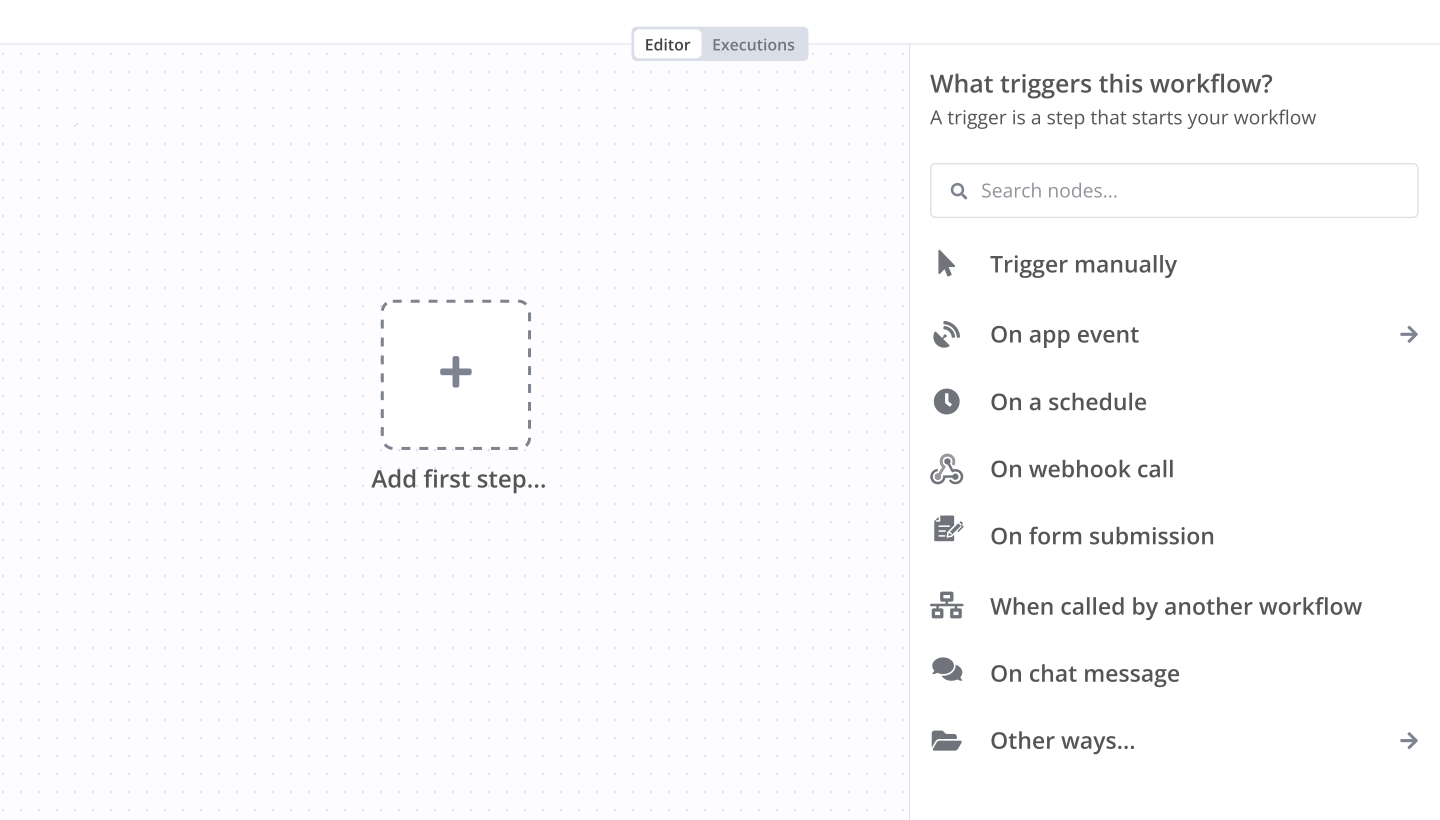
AWS S3 and OpenAI integration: Create a new workflow and add the first step

Step 2: Add and configure AWS S3 and OpenAI nodes

You can find AWS S3 and OpenAI in the nodes panel. Drag them onto your workflow canvas, selecting their actions. Click each node, choose a credential, and authenticate to grant n8n access. Configure AWS S3 and OpenAI nodes one by one: input data on the left, parameters in the middle, and output data on the right.

AWS S3 and OpenAI integration: Add and configure AWS S3 and OpenAI nodes

Step 3: Connect AWS S3 and OpenAI

A connection establishes a link between AWS S3 and OpenAI (or vice versa) to route data through the workflow. Data flows from the output of one node to the input of another. You can have single or multiple connections for each node.

AWS S3 and OpenAI integration: Connect AWS S3 and OpenAI

Step 4: Customize and extend your AWS S3 and OpenAI integration

Use n8n's core nodes such as If, Split Out, Merge, and others to transform and manipulate data. Write custom JavaScript or Python in the Code node and run it as a step in your workflow. Connect AWS S3 and OpenAI with any of n8n’s 1000+ integrations, and incorporate advanced AI logic into your workflows.

AWS S3 and OpenAI integration: Customize and extend your AWS S3 and OpenAI integration

Step 5: Test and activate your AWS S3 and OpenAI workflow

Save and run the workflow to see if everything works as expected. Based on your configuration, data should flow from AWS S3 to OpenAI or vice versa. Easily debug your workflow: you can check past executions to isolate and fix the mistake. Once you've tested everything, make sure to save your workflow and activate it.

AWS S3 and OpenAI integration: Test and activate your AWS S3 and OpenAI workflow

Store AI-generated images in AWS S3: OpenAI image creation & cloud storage

Automating AWS S3 Operations with n8n: Buckets, Folders, and Files
Watch the demo video below:

This tutorial walks you through setting up an automated workflow that generates AI-powered images from prompts and securely stores them in AWS S3. It leverages the new AI Tool Node and OpenAI models for prompt-to-image generation.

Who’s it for
This workflow is ideal for:
Designers & marketers** who need quick, on-demand AI-generated visuals.
Developers & automation builders* exploring AI-driven workflows* integrated with cloud storage.
Educators or trainers** creating tutorials or exercises on AI image generation.
Businesses* looking to automate image content pipelines* with AWS S3 storage.

How it works / What it does
Trigger: The workflow starts manually when you click “Execute Workflow”.
Edit Fields: You can provide input fields such as image description, resolution, or naming convention.
Create AWS S3 Bucket: Automatically creates a new S3 bucket if it doesn’t exist.
Create a Folder: Inside the bucket, a folder is created to organize generated images.
Prompt Generation Agent: An AI agent generates or refines the image prompt using the OpenAI Chat Model.
Generate an Image: The refined prompt is used to generate an image using AI.
Upload File to S3: The generated image is uploaded to the AWS S3 bucket for secure storage.

This workflow showcases how to combine AI + Cloud Storage seamlessly in an automated pipeline.

How to set up
Import the workflow into n8n.
Configure the following credentials:
AWS S3 (Access Key, Secret Key, Region).
OpenAI API Key (for Chat + Image models).
Update the Edit Fields node with your preferred input fields (e.g., image size, description).
Execute the workflow and test by entering a sample image prompt (e.g., “Futuristic city skyline in watercolor style”).
Check your AWS S3 bucket to verify the uploaded image.

Requirements
n8n** (latest version with AI Tool Node support).
AWS account** with S3 permissions to create buckets and upload files.
OpenAI API key** (for prompt refinement and image generation).
Basic familiarity with AWS S3 structure (buckets, folders, objects).

How to customize the workflow
Custom Buckets**: Replace the auto-create step with an existing S3 bucket.
Image Variations**: Generate multiple image variations per prompt by looping the image generation step.
File Naming**: Adjust file naming conventions (e.g., timestamp, user input).
Metadata**: Add metadata such as tags, categories, or owner info when uploading to S3.
Alternative Storage: Swap AWS S3 with **Google Cloud Storage, Azure Blob, or Dropbox.
Trigger Options: Replace manual trigger with **Webhook, Form Submission, or Scheduler for automation.

✅ This workflow is a hands-on example of how to combine AI prompt engineering, image generation, and cloud storage automation into a single streamlined process.

Nodes used in this workflow

Popular AWS S3 and OpenAI workflows

Store AI-Generated Images in AWS S3: OpenAI Image Creation & Cloud Storage

Automating AWS S3 Operations with n8n: Buckets, Folders, and Files Watch the demo video below: This tutorial walks you through setting up an automated workflow that generates AI-powered images from prompts and securely stores them in AWS S3. It leverages the new AI Tool Node and OpenAI models for prompt-to-image generation. Who’s it for This workflow is ideal for: Designers & marketers** who need quick, on-demand AI-generated visuals. Developers & automation builders* exploring AI-driven workflows* integrated with cloud storage. Educators or trainers** creating tutorials or exercises on AI image generation. Businesses* looking to automate image content pipelines* with AWS S3 storage. How it works / What it does Trigger: The workflow starts manually when you click “Execute Workflow”. Edit Fields: You can provide input fields such as image description, resolution, or naming convention. Create AWS S3 Bucket: Automatically creates a new S3 bucket if it doesn’t exist. Create a Folder: Inside the bucket, a folder is created to organize generated images. Prompt Generation Agent: An AI agent generates or refines the image prompt using the OpenAI Chat Model. Generate an Image: The refined prompt is used to generate an image using AI. Upload File to S3: The generated image is uploaded to the AWS S3 bucket for secure storage. This workflow showcases how to combine AI + Cloud Storage seamlessly in an automated pipeline. How to set up Import the workflow into n8n. Configure the following credentials: AWS S3 (Access Key, Secret Key, Region). OpenAI API Key (for Chat + Image models). Update the Edit Fields node with your preferred input fields (e.g., image size, description). Execute the workflow and test by entering a sample image prompt (e.g., “Futuristic city skyline in watercolor style”). Check your AWS S3 bucket to verify the uploaded image. Requirements n8n** (latest version with AI Tool Node support). AWS account** with S3 permissions to create buckets and upload files. OpenAI API key** (for prompt refinement and image generation). Basic familiarity with AWS S3 structure (buckets, folders, objects). How to customize the workflow Custom Buckets**: Replace the auto-create step with an existing S3 bucket. Image Variations**: Generate multiple image variations per prompt by looping the image generation step. File Naming**: Adjust file naming conventions (e.g., timestamp, user input). Metadata**: Add metadata such as tags, categories, or owner info when uploading to S3. Alternative Storage: Swap AWS S3 with **Google Cloud Storage, Azure Blob, or Dropbox. Trigger Options: Replace manual trigger with **Webhook, Form Submission, or Scheduler for automation. ✅ This workflow is a hands-on example of how to combine AI prompt engineering, image generation, and cloud storage automation into a single streamlined process.

Build an AI-Powered SMS Support System with Twilio, GPT-4 and PostgreSQL

How it works User Signup & Verification: The workflow starts when a user signs up. It generates a verification code and sends it via SMS using Twilio. Code Validation: The user replies with the code. The workflow checks the code and, if valid, creates a session for the user. Conversational AI: Incoming SMS messages are analyzed by Chat GPT AI for sentiment, intent, and urgency. The workflow stores the conversation context and generates smart, AI-powered replies. Escalation Handling: If the AI detects urgency or frustration, the workflow escalates the session—alerting your team and sending a supportive SMS to the user. Set up steps Estimated setup time:** 10–20 minutes for most users. What you’ll need:** A free n8n account (self-hosted or cloud) Free Twilio account (for SMS) OpenAI API key (for AI) A PostgreSQL database (Supabase, Neon, or local) Setup process:** Import this workflow into n8n. Add your Twilio and OpenAI credentials as environment variables or n8n credentials. Update webhook URLs in your Twilio console (for incoming SMS). (Optional) Adjust sticky notes in the workflow for detailed, step-by-step guidance.
+3

Create AI-Generated Books with GPT-4.1-mini, DALL-E, Google Drive and AWS S3

Multi-Agent Book Creation Workflow with AI Tool Node and GPT-4, DALL-E Who’s it for This workflow is designed for: Content creators** who want to generate books or structured documents automatically. Educators and trainers** who need quick course materials, eBooks, or study guides. Automation enthusiasts* exploring multi-agent systems using the newly released AI Tool Node* in n8n. Developers* looking for a reference template to understand orchestration of multiple AI agents* with structured output. How it works / What it does This template demonstrates a multi-agent orchestration system powered by AI Tool Nodes: Trigger: Workflow starts when a chat message is received. Book Brief Agent: Generates the initial book concept (title, subtitle, and outline). Book Writer Agent: Expands the outline into full content by collaborating with two sub-agents: Designer Agent → Provides layout/design suggestions. Content Writer Agent → Drafts and refines chapters. Generate Cover Image: AI generates a custom book cover image. Upload to AWS S3: Stores the cover image securely. Configure Metadata: Adds metadata for title, author, and description. Build Book HTML: Converts markdown-based content into HTML format. Upload to Google Drive: Saves the HTML content for processing. Convert to PDF: Transforms the book into a professional PDF. Archive to Google Drive: Final version is archived for safe storage. This workflow showcases multi-agent coordination, structured parsing, and seamless integration with cloud storage services. How to set up Import the workflow into n8n. Configure the following connections: OpenAI (for Book Brief, Book Writer, Designer, and Content Writer Agents). AWS S3 (for image storage). Google Drive (for document storage & archiving). Add your API keys and credentials in n8n credentials manager. Test the workflow by sending a sample chat message (e.g., “Write a book about AI in education”). Verify outputs in Google Drive (HTML + PDF) and AWS S3 (cover image). Requirements n8n* (latest version with AI Tool Node* support). OpenAI API key** (to power multi-agent models). AWS account** (with S3 bucket for storing images). Google Drive integration** (for document storage and archiving). Basic familiarity with workflow setup in n8n. How to customize the workflow Switch Models**: Replace gpt-4.1-mini with other models (faster, cheaper, or more powerful). Add More Agents: Introduce agents for **editing, fact-checking, or translation. Change Output Format: Export to **EPUB, DOCX, or Markdown instead of PDF. Branding Options: Modify the **cover generation prompt to include company logos or specific style. Extend Storage: Add **Dropbox, OneDrive, or Notion integration for additional archiving. Trigger Alternatives: Replace chat trigger with **form submission, webhook, or schedule-based runs. ✅ This workflow acts as a free, plug-and-play template to showcase how multi-agents + AI Tool Node can work together to automate complex content creation pipelines.

Transcribe & Translate Audio Between Languages with OpenAI & S3 Storage

This workflow automatically transcribes audio files, translates the content between languages, and generates natural-sounding speech from the translated text - all in one seamless process. Who's it for Content creators, educators, and businesses needing to make their audio content accessible across language barriers. Perfect for translating podcasts, voice messages, lectures, or any audio content while preserving the spoken format. How it works The workflow receives an audio file through a webhook, transcribes it using OpenAI's Whisper, translates and structures the text with GPT-4, generates new audio in the target language, and stores it in S3 for easy access. The entire process takes seconds and returns both the transcribed/translated text and a URL to the translated audio file. How to set up Configure OpenAI credentials - Add your OpenAI API key for Whisper transcription and GPT-4 translation Set up AWS S3 - Create a bucket with public read permissions for audio storage Update configuration - Replace 'YOUR-BUCKET-NAME' with your actual S3 bucket name Activate webhook - Deploy and copy your webhook URL for receiving audio files Send a POST request with: Binary audio file (as 'audiofile') Languages parameter (e.g., "English, Spanish") Requirements OpenAI API account with access to Whisper and GPT-4 AWS account with S3 bucket configured Basic understanding of webhooks and API requests How to customize Add language detection** - Automatically detect source language if not specified Customize voice settings** - Adjust speech speed, pitch, or select different voices Add file validation** - Implement size limits and format checks Enhance security** - Add webhook authentication and rate limiting Extend functionality** - Add subtitle generation or multiple output formats

Build your own AWS S3 and OpenAI integration

Create custom AWS S3 and OpenAI workflows by choosing triggers and actions. Nodes come with global operations and settings, as well as app-specific parameters that can be configured. You can also use the HTTP Request node to query data from any app or service with a REST API.

AWS S3 supported actions

Create
Create a bucket
Delete
Delete a bucket
Get Many
Get many buckets
Search
Search within a bucket
Copy
Copy a file
Delete
Delete a file
Download
Download a file
Get Many
Get many files
Upload
Upload a file
Create
Create a folder
Delete
Delete a folder
Get Many
Get many folders

OpenAI supported actions

Message a Model
Generate a model response with GPT 3, 4, 5, etc. using Responses API
Classify Text for Violations
Check whether content complies with usage policies
Analyze Image
Take in images and answer questions about them
Generate an Image
Creates an image from a text prompt
Edit Image
Edit an image
Generate Audio
Creates audio from a text prompt
Transcribe a Recording
Transcribes audio into text
Translate a Recording
Translates audio into text in English
Delete a File
Delete a file from the server
List Files
Returns a list of files that belong to the user's organization
Upload a File
Upload a file that can be used across various endpoints
Create
Create a conversation
Get
Get a conversation
Remove
Remove a conversation
Update
Update a conversation
Generate
Creates a video from a text prompt

AWS S3 and OpenAI integration details

Use case

Save engineering resources

Reduce time spent on customer integrations, engineer faster POCs, keep your customer-specific functionality separate from product all without having to code.

Learn more

FAQs

  • Can AWS S3 connect with OpenAI?

  • Can I use AWS S3’s API with n8n?

  • Can I use OpenAI’s API with n8n?

  • Is n8n secure for integrating AWS S3 and OpenAI?

  • How to get started with AWS S3 and OpenAI integration in n8n.io?

Need help setting up your AWS S3 and OpenAI integration?

Discover our latest community's recommendations and join the discussions about AWS S3 and OpenAI integration.
Artem
sérgio eduardo floresta filho
Andrew adawdad
PinkFloyd
Steve Warburton

Looking to integrate AWS S3 and OpenAI in your company?

Over 3000 companies switch to n8n every single week

Why use n8n to integrate AWS S3 with OpenAI

Build complex workflows, really fast

Build complex workflows, really fast

Handle branching, merging and iteration easily.
Pause your workflow to wait for external events.

Code when you need it, UI when you don't

Simple debugging

Your data is displayed alongside your settings, making edge cases easy to track down.

Use templates to get started fast

Use 1000+ workflow templates available from our core team and our community.

Reuse your work

Copy and paste, easily import and export workflows.

Implement complex processes faster with n8n

red iconyellow iconred iconyellow icon