Back to Integrations
integrationBaserow node
integrationOpenAI node

Baserow and OpenAI integration

Save yourself the work of writing custom integrations for Baserow and OpenAI and use n8n instead. Build adaptable and scalable Data & Storage, AI, and Langchain workflows that work with your technology stack. All within a building experience you will love.

How to connect Baserow and OpenAI

  • Step 1: Create a new workflow
  • Step 2: Add and configure nodes
  • Step 3: Connect
  • Step 4: Customize and extend your integration
  • Step 5: Test and activate your workflow

Step 1: Create a new workflow and add the first step

In n8n, click the "Add workflow" button in the Workflows tab to create a new workflow. Add the starting point – a trigger on when your workflow should run: an app event, a schedule, a webhook call, another workflow, an AI chat, or a manual trigger. Sometimes, the HTTP Request node might already serve as your starting point.
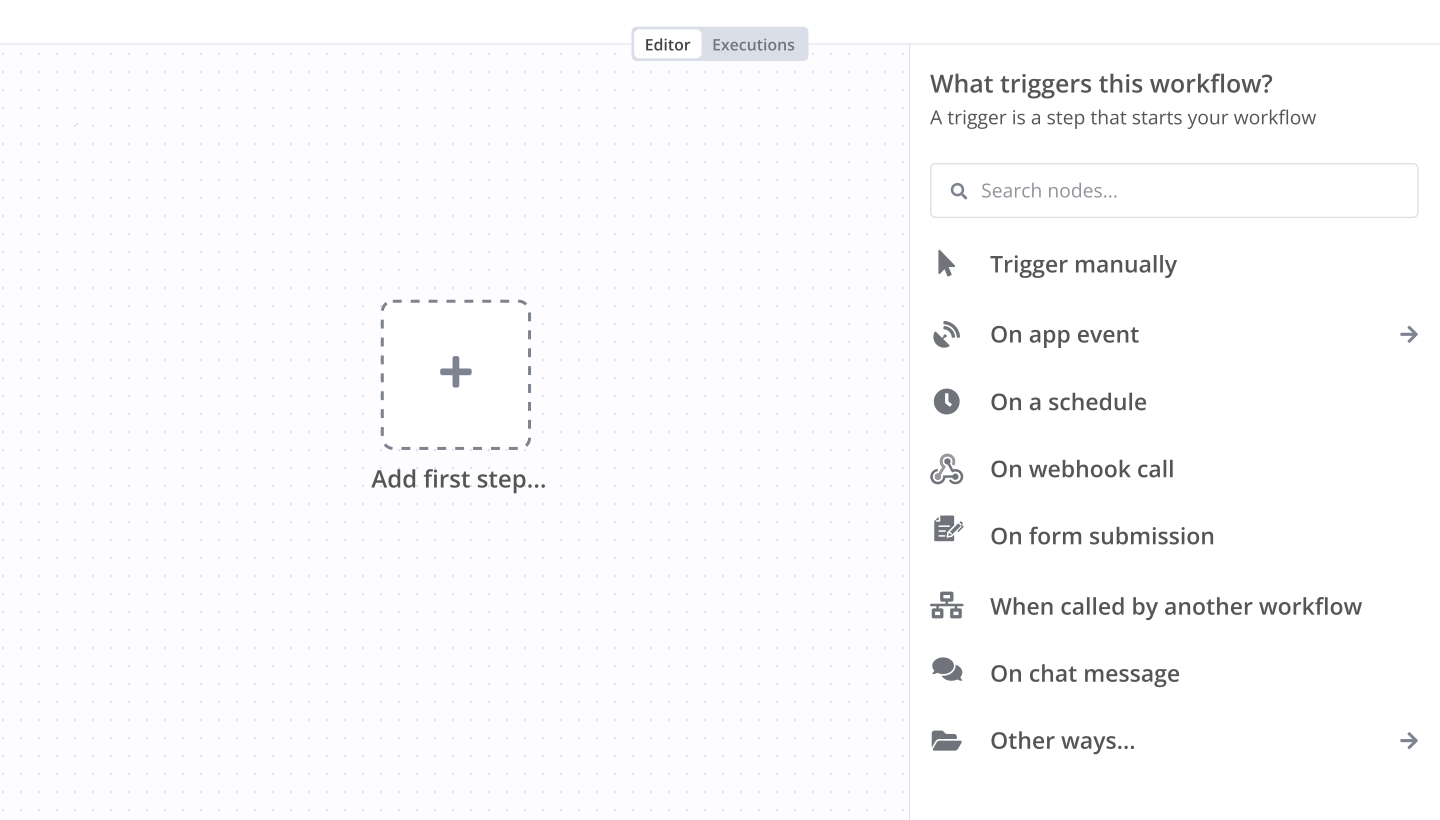
Baserow and OpenAI integration: Create a new workflow and add the first step

Step 2: Add and configure Baserow and OpenAI nodes

You can find Baserow and OpenAI in the nodes panel. Drag them onto your workflow canvas, selecting their actions. Click each node, choose a credential, and authenticate to grant n8n access. Configure Baserow and OpenAI nodes one by one: input data on the left, parameters in the middle, and output data on the right.

Baserow and OpenAI integration: Add and configure Baserow and OpenAI nodes

Step 3: Connect Baserow and OpenAI

A connection establishes a link between Baserow and OpenAI (or vice versa) to route data through the workflow. Data flows from the output of one node to the input of another. You can have single or multiple connections for each node.

Baserow and OpenAI integration: Connect Baserow and OpenAI

Step 4: Customize and extend your Baserow and OpenAI integration

Use n8n's core nodes such as If, Split Out, Merge, and others to transform and manipulate data. Write custom JavaScript or Python in the Code node and run it as a step in your workflow. Connect Baserow and OpenAI with any of n8n’s 1000+ integrations, and incorporate advanced AI logic into your workflows.

Baserow and OpenAI integration: Customize and extend your Baserow and OpenAI integration

Step 5: Test and activate your Baserow and OpenAI workflow

Save and run the workflow to see if everything works as expected. Based on your configuration, data should flow from Baserow to OpenAI or vice versa. Easily debug your workflow: you can check past executions to isolate and fix the mistake. Once you've tested everything, make sure to save your workflow and activate it.

Baserow and OpenAI integration: Test and activate your Baserow and OpenAI workflow

All-in-one Telegram/Baserow AI assistant 🤖🧠 Voice/Photo/Save notes/Long term mem

Telegram Personal Assistant with Long-Term Memory & Note-Taking

This n8n workflow transforms your Telegram bot into a powerful personal assistant that handles voice, photo, and text messages. The assistant uses AI to interpret messages, save important details as long-term memories or notes in a Baserow database, and recall information for future interactions.

🌟 How It Works

Message Reception & Routing
Telegram Integration: The workflow is triggered by incoming messages on your Telegram bot.
Dynamic Routing: A switch node inspects the message to determine whether it's voice, text, or photo (with captions) and routes it for the appropriate processing.

Content Processing
Voice Messages: Audio files are retrieved and sent to an AI transcription node to convert spoken words into text.
Text Messages: Text is directly captured and prepared for analysis.
Photos: If an image is received, the bot fetches the file (and caption, if provided) and uses an AI-powered image analysis node to extract relevant details.

AI-Powered Agent & Memory Management
The core AI agent (powered by GPT-4o-mini) processes the incoming message along with any previous conversation history stored in PostgreSQL memory buffers.
Long-Term Memory: When a message contains personal or noteworthy information, the assistant uses a dedicated tool to save this data as a long-term memory in Baserow.
Note-Taking: For specific instructions or reminders, the assistant saves concise notes in a separate Baserow table.
The AI agent follows defined rules to decide which details are saved as memories and which are saved as notes.

Response Generation
After processing the message and updating memory/notes as needed, the AI agent crafts a contextual and personalized response.
The response is sent back to the user via Telegram, ensuring smooth and natural conversation flow.

🚀 Key Features

Multimodal Input:**
Seamlessly handles voice, photo (with captions), and text messages.

Long-Term Memory & Note-Taking:**
Uses a Baserow database to store personal details and notes, enhancing conversational context over time.

AI-Driven Contextual Responses:**
Leverages an AI agent to generate personalized, context-aware replies based on current input and past interactions.

User Security & Validation:**
Incorporates validation steps to verify the user's Telegram ID before processing, ensuring secure and personalized interactions.

Easy Baserow Setup:**
Comes with a clear setup guide and sample configurations to quickly integrate Baserow for managing memories and notes.

🔧 Setup Guide

Telegram Bot Setup:
Create your bot via BotFather and obtain the Bot Token.
Configure the Telegram webhook in n8n with your bot's token and URL.

Baserow Database Configuration:
Memory Table:
Create a workspace titled "Memories and Notes".
Set up a table (e.g., "Memory Table") with at least two fields:
Memory (long text)
Date Added (US date format with time)
Notes Table:
Duplicate the Memory Table and rename it to "Notes Table".
Change the first field's name from "Memory" to "Notes".

n8n Workflow Import & Configuration:
Import the workflow JSON into your n8n instance.
Update credentials for Telegram, Baserow, OpenAI, and PostgreSQL (for memory buffering) as needed.
Adjust node settings if you need to customize AI agent prompts or memory management rules.

Testing & Deployment:
Test your bot by sending various message types (text, voice, photo) to confirm that the workflow processes them correctly, updates Baserow, and returns the appropriate response.
Monitor logs to ensure that memory and note entries are correctly stored and retrieved.

✨ Example Interactions

Voice Message Processing:**
User sends a voice note requesting a reminder.
Bot Response: "Thanks for your message! I've noted your reminder and saved it for future reference."

Photo with Caption:**
User sends a photo with the caption "Save this recipe for dinner ideas."
Bot Response: "Got it! I've saved this recipe along with the caption for you."

Text Message for Memory Saving:**
User: "I love hiking on weekends."
Bot Response: "Noted! I’ll remember your interest in hiking."

Retrieving Information:**
User asks: "What notes do I have?"
Bot Response: "Here are your latest notes: [list of saved notes]."

🛠️ Resources & Next Steps

Telegram Bot Configuration:** Telegram BotFather Guide
n8n Documentation:** n8n Docs
Community Forums:** Join discussions and share your customizations!

This workflow not only streamlines message processing but also empowers users with a personal AI assistant that remembers details over time. Customize the rules and responses further to fit your unique requirements and enjoy a more engaging, intelligent conversation experience on Telegram!

Nodes used in this workflow

Popular Baserow and OpenAI workflows

+2

All-in-One Telegram/Baserow AI Assistant 🤖🧠 Voice/Photo/Save Notes/Long Term Mem

Telegram Personal Assistant with Long-Term Memory & Note-Taking This n8n workflow transforms your Telegram bot into a powerful personal assistant that handles voice, photo, and text messages. The assistant uses AI to interpret messages, save important details as long-term memories or notes in a Baserow database, and recall information for future interactions. 🌟 How It Works Message Reception & Routing Telegram Integration: The workflow is triggered by incoming messages on your Telegram bot. Dynamic Routing: A switch node inspects the message to determine whether it's voice, text, or photo (with captions) and routes it for the appropriate processing. Content Processing Voice Messages: Audio files are retrieved and sent to an AI transcription node to convert spoken words into text. Text Messages: Text is directly captured and prepared for analysis. Photos: If an image is received, the bot fetches the file (and caption, if provided) and uses an AI-powered image analysis node to extract relevant details. AI-Powered Agent & Memory Management The core AI agent (powered by GPT-4o-mini) processes the incoming message along with any previous conversation history stored in PostgreSQL memory buffers. Long-Term Memory: When a message contains personal or noteworthy information, the assistant uses a dedicated tool to save this data as a long-term memory in Baserow. Note-Taking: For specific instructions or reminders, the assistant saves concise notes in a separate Baserow table. The AI agent follows defined rules to decide which details are saved as memories and which are saved as notes. Response Generation After processing the message and updating memory/notes as needed, the AI agent crafts a contextual and personalized response. The response is sent back to the user via Telegram, ensuring smooth and natural conversation flow. 🚀 Key Features Multimodal Input:** Seamlessly handles voice, photo (with captions), and text messages. Long-Term Memory & Note-Taking:** Uses a Baserow database to store personal details and notes, enhancing conversational context over time. AI-Driven Contextual Responses:** Leverages an AI agent to generate personalized, context-aware replies based on current input and past interactions. User Security & Validation:** Incorporates validation steps to verify the user's Telegram ID before processing, ensuring secure and personalized interactions. Easy Baserow Setup:** Comes with a clear setup guide and sample configurations to quickly integrate Baserow for managing memories and notes. 🔧 Setup Guide Telegram Bot Setup: Create your bot via BotFather and obtain the Bot Token. Configure the Telegram webhook in n8n with your bot's token and URL. Baserow Database Configuration: Memory Table: Create a workspace titled "Memories and Notes". Set up a table (e.g., "Memory Table") with at least two fields: Memory (long text) Date Added (US date format with time) Notes Table: Duplicate the Memory Table and rename it to "Notes Table". Change the first field's name from "Memory" to "Notes". n8n Workflow Import & Configuration: Import the workflow JSON into your n8n instance. Update credentials for Telegram, Baserow, OpenAI, and PostgreSQL (for memory buffering) as needed. Adjust node settings if you need to customize AI agent prompts or memory management rules. Testing & Deployment: Test your bot by sending various message types (text, voice, photo) to confirm that the workflow processes them correctly, updates Baserow, and returns the appropriate response. Monitor logs to ensure that memory and note entries are correctly stored and retrieved. ✨ Example Interactions Voice Message Processing:** User sends a voice note requesting a reminder. Bot Response: "Thanks for your message! I've noted your reminder and saved it for future reference." Photo with Caption:** User sends a photo with the caption "Save this recipe for dinner ideas." Bot Response: "Got it! I've saved this recipe along with the caption for you." Text Message for Memory Saving:** User: "I love hiking on weekends." Bot Response: "Noted! I’ll remember your interest in hiking." Retrieving Information:** User asks: "What notes do I have?" Bot Response: "Here are your latest notes: [list of saved notes]." 🛠️ Resources & Next Steps Telegram Bot Configuration:** Telegram BotFather Guide n8n Documentation:** n8n Docs Community Forums:** Join discussions and share your customizations! This workflow not only streamlines message processing but also empowers users with a personal AI assistant that remembers details over time. Customize the rules and responses further to fit your unique requirements and enjoy a more engaging, intelligent conversation experience on Telegram!

Build your own Baserow and OpenAI integration

Create custom Baserow and OpenAI workflows by choosing triggers and actions. Nodes come with global operations and settings, as well as app-specific parameters that can be configured. You can also use the HTTP Request node to query data from any app or service with a REST API.

Baserow supported actions

Batch Create
Create up to 200 rows in one request
Batch Delete
Delete up to 200 rows in one request
Batch Update
Update up to 200 rows in one request
Create
Create a row
Delete
Delete a row
Get
Retrieve a row
Get Many
Retrieve many rows
Update
Update a row

OpenAI supported actions

Message a Model
Generate a model response with GPT 3, 4, 5, etc. using Responses API
Classify Text for Violations
Check whether content complies with usage policies
Analyze Image
Take in images and answer questions about them
Generate an Image
Creates an image from a text prompt
Edit Image
Edit an image
Generate Audio
Creates audio from a text prompt
Transcribe a Recording
Transcribes audio into text
Translate a Recording
Translates audio into text in English
Delete a File
Delete a file from the server
List Files
Returns a list of files that belong to the user's organization
Upload a File
Upload a file that can be used across various endpoints
Create
Create a conversation
Get
Get a conversation
Remove
Remove a conversation
Update
Update a conversation
Generate
Creates a video from a text prompt

Baserow and OpenAI integration details

FAQs

  • Can Baserow connect with OpenAI?

  • Can I use Baserow’s API with n8n?

  • Can I use OpenAI’s API with n8n?

  • Is n8n secure for integrating Baserow and OpenAI?

  • How to get started with Baserow and OpenAI integration in n8n.io?

Need help setting up your Baserow and OpenAI integration?

Discover our latest community's recommendations and join the discussions about Baserow and OpenAI integration.
Artem
sérgio eduardo floresta filho
Isreal
Andrew adawdad
PinkFloyd

Looking to integrate Baserow and OpenAI in your company?

Over 3000 companies switch to n8n every single week

Why use n8n to integrate Baserow with OpenAI

Build complex workflows, really fast

Build complex workflows, really fast

Handle branching, merging and iteration easily.
Pause your workflow to wait for external events.

Code when you need it, UI when you don't

Simple debugging

Your data is displayed alongside your settings, making edge cases easy to track down.

Use templates to get started fast

Use 1000+ workflow templates available from our core team and our community.

Reuse your work

Copy and paste, easily import and export workflows.

Implement complex processes faster with n8n

red iconyellow iconred iconyellow icon