Back to Integrations
integrationDeepSeek Chat Model node
integrationDiscord node

DeepSeek Chat Model and Discord integration

Save yourself the work of writing custom integrations for DeepSeek Chat Model and Discord and use n8n instead. Build adaptable and scalable AI, Langchain, Communication, and HITL workflows that work with your technology stack. All within a building experience you will love.

How to connect DeepSeek Chat Model and Discord

  • Step 1: Create a new workflow
  • Step 2: Add and configure nodes
  • Step 3: Connect
  • Step 4: Customize and extend your integration
  • Step 5: Test and activate your workflow

Step 1: Create a new workflow and add the first step

In n8n, click the "Add workflow" button in the Workflows tab to create a new workflow. Add the starting point – a trigger on when your workflow should run: an app event, a schedule, a webhook call, another workflow, an AI chat, or a manual trigger. Sometimes, the HTTP Request node might already serve as your starting point.
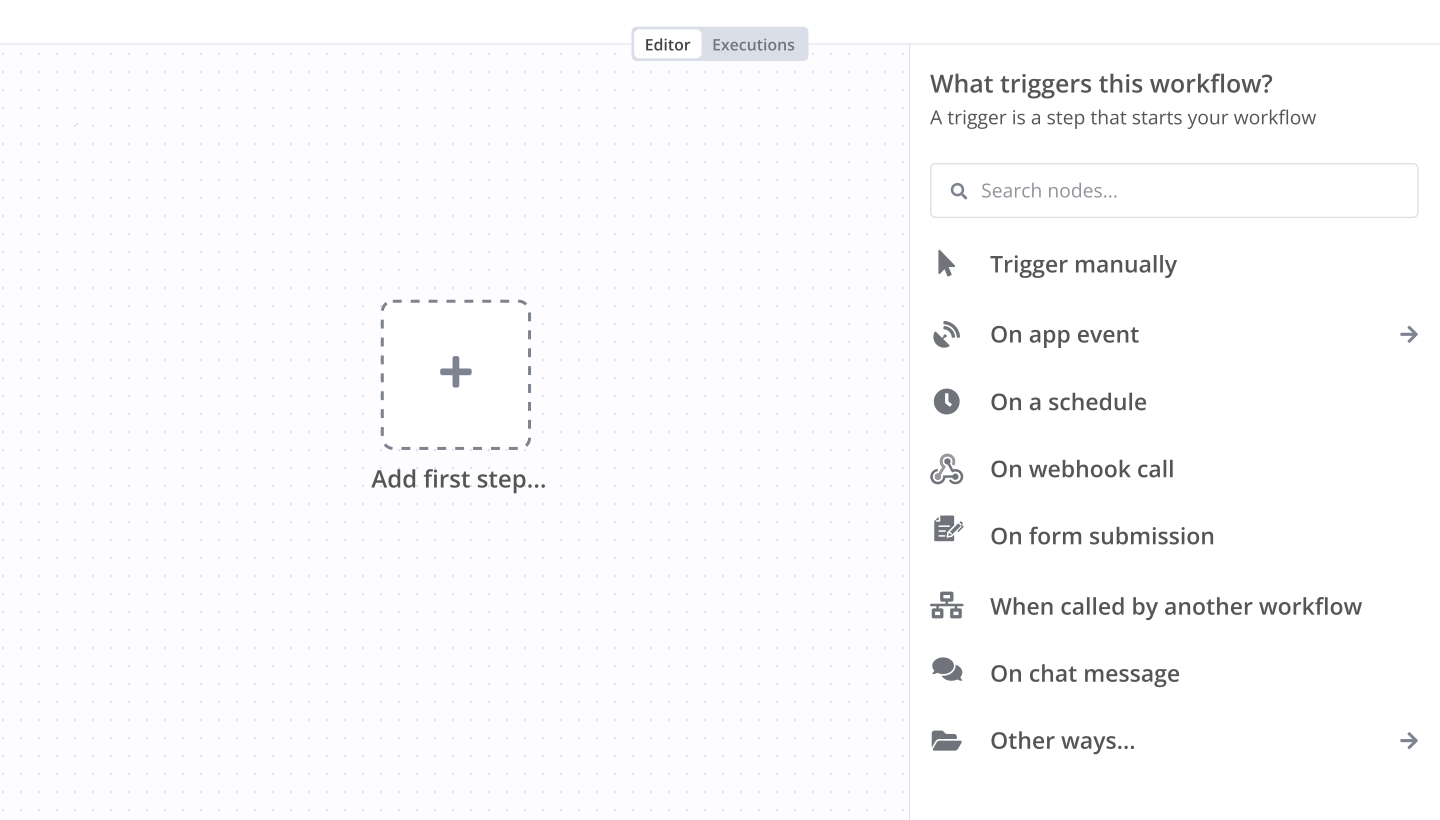
DeepSeek Chat Model and Discord integration: Create a new workflow and add the first step

Step 2: Add and configure DeepSeek Chat Model and Discord nodes

You can find DeepSeek Chat Model and Discord in the nodes panel. Drag them onto your workflow canvas, selecting their actions. Click each node, choose a credential, and authenticate to grant n8n access. Configure DeepSeek Chat Model and Discord nodes one by one: input data on the left, parameters in the middle, and output data on the right.

DeepSeek Chat Model and Discord integration: Add and configure DeepSeek Chat Model and Discord nodes

Step 3: Connect DeepSeek Chat Model and Discord

A connection establishes a link between DeepSeek Chat Model and Discord (or vice versa) to route data through the workflow. Data flows from the output of one node to the input of another. You can have single or multiple connections for each node.

DeepSeek Chat Model and Discord integration: Connect DeepSeek Chat Model and Discord

Step 4: Customize and extend your DeepSeek Chat Model and Discord integration

Use n8n's core nodes such as If, Split Out, Merge, and others to transform and manipulate data. Write custom JavaScript or Python in the Code node and run it as a step in your workflow. Connect DeepSeek Chat Model and Discord with any of n8n’s 1000+ integrations, and incorporate advanced AI logic into your workflows.

DeepSeek Chat Model and Discord integration: Customize and extend your DeepSeek Chat Model and Discord integration

Step 5: Test and activate your DeepSeek Chat Model and Discord workflow

Save and run the workflow to see if everything works as expected. Based on your configuration, data should flow from DeepSeek Chat Model to Discord or vice versa. Easily debug your workflow: you can check past executions to isolate and fix the mistake. Once you've tested everything, make sure to save your workflow and activate it.

DeepSeek Chat Model and Discord integration: Test and activate your DeepSeek Chat Model and Discord workflow

Analyze Google Ads search terms with AI and send wastage alerts

Who Is This For?
This workflow is designed for Google Ads advertisers, PPC managers, and marketing teams who want to automatically monitor and optimize their search term performance. It's particularly valuable for those running brand campaigns who need to identify and eliminate wasteful ad spend on non-brand keywords.

What This Workflow Does
This workflow functions as an automated Google Ads performance monitoring and optimization system that:
Fetches search term data from active Google Ads campaigns daily
Filters out brand terms and excluded search terms automatically
Analyzes performance metrics using AI to identify wasteful keywords
Generates optimization recommendations for negative keyword lists
Sends detailed reports through multiple communication platforms
Calculates ad wastage in USD for better budget management

Key Features
Automated Daily Monitoring** – Runs every day at 8 AM to check campaign performance
AI-Powered Analysis** – Uses multiple AI models (DeepSeek, OpenAI, xAI, Anthropic) for intelligent keyword categorization
Performance Metrics Calculation** – Automatically calculates CTR, CPC, conversions, and ad wastage
Multi-Channel Reporting** – Sends reports to Slack, Microsoft Teams, WhatsApp, and Discord
Smart Filtering** – Automatically excludes brand terms and excluded search terms
Cost Analysis** – Calculates total ad wastage in USD for budget optimization
14-Day Data Window** – Analyzes search terms from the past 14 days for comprehensive insights

Requirements & Setup
Google Ads API**: Required for fetching campaign and search term data
AI Model APIs**: DeepSeek, OpenAI, xAI, or Anthropic for keyword analysis
Communication APIs**: Slack, Microsoft Teams, WhatsApp (Rapiwa), Discord for report distribution
Scheduled Trigger**: Configured to run daily at 8 AM
Google Ads Manager and Client IDs**: For accessing specific campaign data

How It Works
Data Collection: Fetches active campaigns and extracts search term data from the past 14 days
Data Processing: Cleans and aggregates metrics by search term, campaign, and ad group
AI Analysis: Uses AI to categorize keywords into wasteful (zero conversions) and review-worthy (has conversions)
Report Generation: Creates structured reports with recommendations and cost analysis
Multi-Platform Distribution: Sends formatted reports to all configured communication channels

Support & Help
WhatsApp**: Chat on WhatsApp
Discord**: SpaGreen Community
Facebook Group**: SpaGreen Support
Website**: https://spagreen.net
Developer Portfolio**: Codecanyon SpaGreen

Nodes used in this workflow

Popular DeepSeek Chat Model and Discord workflows

+8

Analyze Google Ads search terms with AI and send wastage alerts

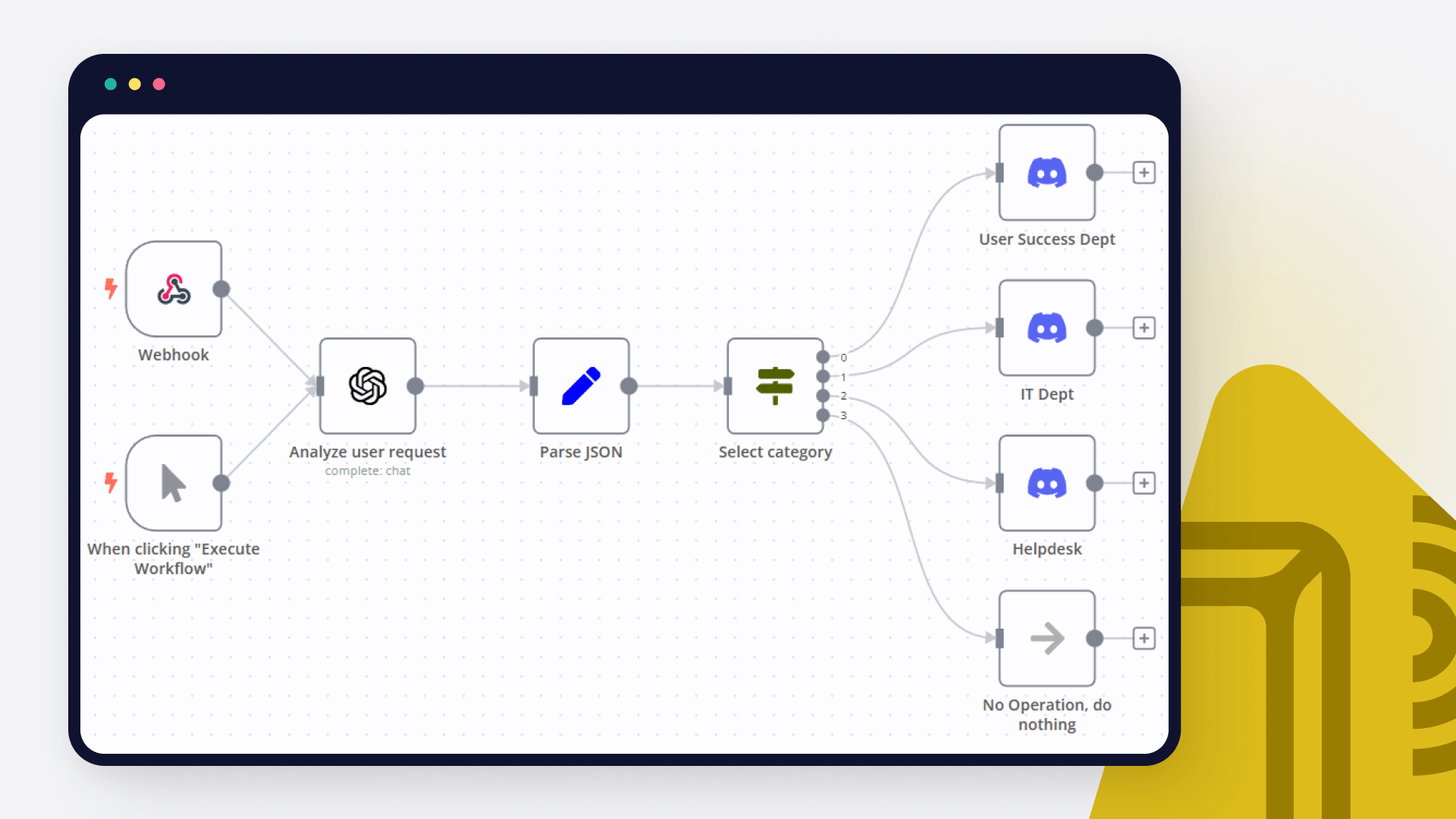
Who Is This For? This workflow is designed for Google Ads advertisers, PPC managers, and marketing teams who want to automatically monitor and optimize their search term performance. It's particularly valuable for those running brand campaigns who need to identify and eliminate wasteful ad spend on non-brand keywords. What This Workflow Does This workflow functions as an automated Google Ads performance monitoring and optimization system that: Fetches search term data from active Google Ads campaigns daily Filters out brand terms and excluded search terms automatically Analyzes performance metrics using AI to identify wasteful keywords Generates optimization recommendations for negative keyword lists Sends detailed reports through multiple communication platforms Calculates ad wastage in USD for better budget management Key Features Automated Daily Monitoring** – Runs every day at 8 AM to check campaign performance AI-Powered Analysis** – Uses multiple AI models (DeepSeek, OpenAI, xAI, Anthropic) for intelligent keyword categorization Performance Metrics Calculation** – Automatically calculates CTR, CPC, conversions, and ad wastage Multi-Channel Reporting** – Sends reports to Slack, Microsoft Teams, WhatsApp, and Discord Smart Filtering** – Automatically excludes brand terms and excluded search terms Cost Analysis** – Calculates total ad wastage in USD for budget optimization 14-Day Data Window** – Analyzes search terms from the past 14 days for comprehensive insights Requirements & Setup Google Ads API**: Required for fetching campaign and search term data AI Model APIs**: DeepSeek, OpenAI, xAI, or Anthropic for keyword analysis Communication APIs**: Slack, Microsoft Teams, WhatsApp (Rapiwa), Discord for report distribution Scheduled Trigger**: Configured to run daily at 8 AM Google Ads Manager and Client IDs**: For accessing specific campaign data How It Works Data Collection: Fetches active campaigns and extracts search term data from the past 14 days Data Processing: Cleans and aggregates metrics by search term, campaign, and ad group AI Analysis: Uses AI to categorize keywords into wasteful (zero conversions) and review-worthy (has conversions) Report Generation: Creates structured reports with recommendations and cost analysis Multi-Platform Distribution: Sends formatted reports to all configured communication channels Support & Help WhatsApp**: Chat on WhatsApp Discord**: SpaGreen Community Facebook Group**: SpaGreen Support Website**: https://spagreen.net Developer Portfolio**: Codecanyon SpaGreen
+4

Create and publish SEO blog posts using Google Sheets, Gemini/OpenAI, Ideogram, and WordPress

This workflow automates the complete blog publishing process. It removes manual work from content creation, image generation, category management, and WordPress publishing by using AI and n8n. It helps agencies, SEO teams, and content creators manage blogs at scale. Key Features Scheduled or manual blog publishing Automated topic research and content writing AI-generated featured and in-content images using Ideogram Dynamic WordPress category detection and creation Automatic media upload with SEO-friendly alt text Internal linking using sitemap data Google Sheets logging for published URLs Error notifications for failed executions What This Workflow Does Input Blog topics or keywords stored in Google Sheets Target WordPress site details Publishing rules and schedule Processing Triggers the workflow on a schedule or manual run Fetches blog posting data from Google Sheets Validates active projects or websites Performs topic and SEO research Writes long-form, SEO-optimized blog content Generates image prompts and creates images using Ideogram Uploads images to WordPress with alt text Detects or creates blog categories dynamically Publishes the blog post to WordPress Output Live published blog post URL Updated Google Sheet with publishing details Notification alerts if any step fails Setup Instructions Prerequisites n8n instance (cloud or self-hosted) WordPress site with REST API access Google Sheets access AI model credentials (Google Gemini, OpenAI, or DeepSeek) Ideogram API access Notification service (Discord or Slack) Step 1: Import the Workflow Download or copy the workflow JSON In n8n, go to Workflows → Import from file / JSON Import the workflow Step 2: Configure Credentials Set up the required credentials inside n8n's credential manager: Google Sheets OAuth**: For reading posting data and saving URLs WordPress API**: For publishing posts and uploading media AI Model**: Connect Google Gemini, OpenAI, or DeepSeek Ideogram API**: For AI image generation Discord/Slack Webhook**: For error notifications Important: No credentials are hardcoded. All must be connected via n8n's credential manager. Step 3: Configure Google Sheets Prepare a Google Sheet containing: Blog topic or keyword Target website or domain Publishing status fields Domain ID for tracking Update the Sheet ID inside the Get_Post_Data node after import. Step 4: Configure Website Access Update the PBN_Website_Access node with your WordPress site access endpoint or API. This node should return: Complete WordPress URL Basic authentication token Sitemap post URL Step 5: Configure Publishing & Schedule Adjust the Schedule Trigger if auto-publishing is required Modify publishing frequency or time zone Review WordPress post status (draft or publish) Step 6: Test & Activate Add one test row in Google Sheets Run the workflow manually Verify: Content creation Image generation WordPress publishing Sheet updates Activate the workflow Usage Guide Adding New Blog Posts Add a new row in the connected Google Sheet with the required blog topic and website details. The workflow will automatically process and publish the post on the next execution. Understanding the Output After execution, the workflow: Publishes a complete blog post on WordPress Attaches featured and in-content images Assigns the correct category Logs the live URL back to Google Sheets Workflow Node Breakdown Get_Post_Data Fetches blog posting details from Google Sheets based on the current day. It pulls keywords, landing pages, domain IDs, and posting websites. get_client_status Checks the client's project status from the project sheet. It verifies whether the client is active or inactive before proceeding further. This prevents publishing content for paused or stopped clients. PBN_Website_Access Fetches WordPress website access details such as site URL, authentication token, and sitemap URL. These details are required for publishing posts, uploading images, and managing categories. Do the Research on the Topic Performs deep SEO research on the target keyword. It analyzes search intent, content gaps, and audience needs. This ensures the generated content is informative, relevant, and SEO-optimized. sitemap_crawl (internal_linking) Crawls the website sitemap to collect internal URLs. These URLs are later used for internal linking inside the blog content. Internal links help improve SEO and site structure. write_content Uses AI to write an 800-1000 word SEO-optimized blog article based on research data. The content includes proper HTML formatting, internal links, and anchor keyword placement. extract_title_body Separates the H1 title from the blog body content for proper WordPress publishing format. classify_category Automatically determines the most suitable category for the blog post by analyzing the blog title and content context. This keeps the website's category structure clean and relevant. get_category & create_category Checks if the determined category exists in WordPress. If not, it creates a new category automatically. generate_image_prompt Analyzes the blog content and generates AI prompts for creating relevant images including thumbnail and in-content images. Thumbnail Image Generator & Blog Image Generator Generate high-quality images using Ideogram API based on AI-generated prompts. Images are created with proper resolution and rendering settings. Thumbnail Uploading & Blog Image Uploading Upload generated images to WordPress media library and retrieve media IDs for post attachment. Add Alt Text in Images Adds SEO-friendly alt text to uploaded images to improve accessibility and search engine optimization. Blog and Photo Merge Merges the generated images into the blog content at appropriate positions within the article. publish_blog Publishes the complete blog post to WordPress with title, content, category, featured image, and publish status. save_live_url Saves the live published blog URL back into Google Sheets along with keyword, website URL, and timestamp for tracking and reporting. If Error Existed Then Get Notified Sends instant Discord or Slack notifications when any error occurs during workflow execution, ensuring no failure goes unnoticed. Customization Options Change blog length or tone in the content generation node Modify image style or resolution in Ideogram nodes Add multi-site publishing using Switch nodes Replace notification channel (Discord to Slack or Email) Extend workflow to social media posting Troubleshooting Blog not published Check WordPress credentials and REST API permissions. Images not generated Verify Ideogram API credentials and prompt formatting. Sheet not updating Ensure correct Sheet ID and OAuth permissions. Workflow stopped Review execution logs and error notification messages. Use Cases SEO blog automation for agencies Content publishing for niche websites Scalable blog management AI-assisted content operations Hands-free WordPress publishing Final Notes This workflow is designed to be reusable, scalable, and creator-friendly. It follows n8n best practices, avoids hardcoded credentials, and is suitable for public sharing as a workflow template. For any questions or support, please contact: [email protected] or fill out this form: https://www.incrementors.com/contact-us/

Build your own DeepSeek Chat Model and Discord integration

Create custom DeepSeek Chat Model and Discord workflows by choosing triggers and actions. Nodes come with global operations and settings, as well as app-specific parameters that can be configured. You can also use the HTTP Request node to query data from any app or service with a REST API.

Discord supported actions

Create
Create a new channel
Delete
Delete a channel
Get
Get a channel
Get Many
Retrieve the channels of a server
Update
Update a channel
Delete
Delete a message in a channel
Get
Get a message in a channel
Get Many
Retrieve the latest messages in a channel
React with Emoji
React to a message with an emoji
Send
Send a message to a channel, thread, or member
Send and Wait for Response
Send a message and wait for response
Get Many
Retrieve the members of a server
Role Add
Add a role to a member
Role Remove
Remove a role from a member

FAQs

  • Can DeepSeek Chat Model connect with Discord?

  • Can I use DeepSeek Chat Model’s API with n8n?

  • Can I use Discord’s API with n8n?

  • Is n8n secure for integrating DeepSeek Chat Model and Discord?

  • How to get started with DeepSeek Chat Model and Discord integration in n8n.io?

Looking to integrate DeepSeek Chat Model and Discord in your company?

Over 3000 companies switch to n8n every single week

Why use n8n to integrate DeepSeek Chat Model with Discord

Build complex workflows, really fast
Build complex workflows, really fast

Handle branching, merging and iteration easily.
Pause your workflow to wait for external events.

Code when you need it, UI when you don't

Simple debugging

Your data is displayed alongside your settings, making edge cases easy to track down.

Use templates to get started fast

Use 1000+ workflow templates available from our core team and our community.

Reuse your work

Copy and paste, easily import and export workflows.

Implement complex processes faster with n8n

red iconyellow iconred iconyellow icon