Back to Integrations
integrationDiscord node
integrationPostgres node

Discord and Postgres integration

Save yourself the work of writing custom integrations for Discord and Postgres and use n8n instead. Build adaptable and scalable Communication, HITL, Development, and Data & Storage workflows that work with your technology stack. All within a building experience you will love.

How to connect Discord and Postgres

  • Step 1: Create a new workflow
  • Step 2: Add and configure nodes
  • Step 3: Connect
  • Step 4: Customize and extend your integration
  • Step 5: Test and activate your workflow

Step 1: Create a new workflow and add the first step

In n8n, click the "Add workflow" button in the Workflows tab to create a new workflow. Add the starting point – a trigger on when your workflow should run: an app event, a schedule, a webhook call, another workflow, an AI chat, or a manual trigger. Sometimes, the HTTP Request node might already serve as your starting point.
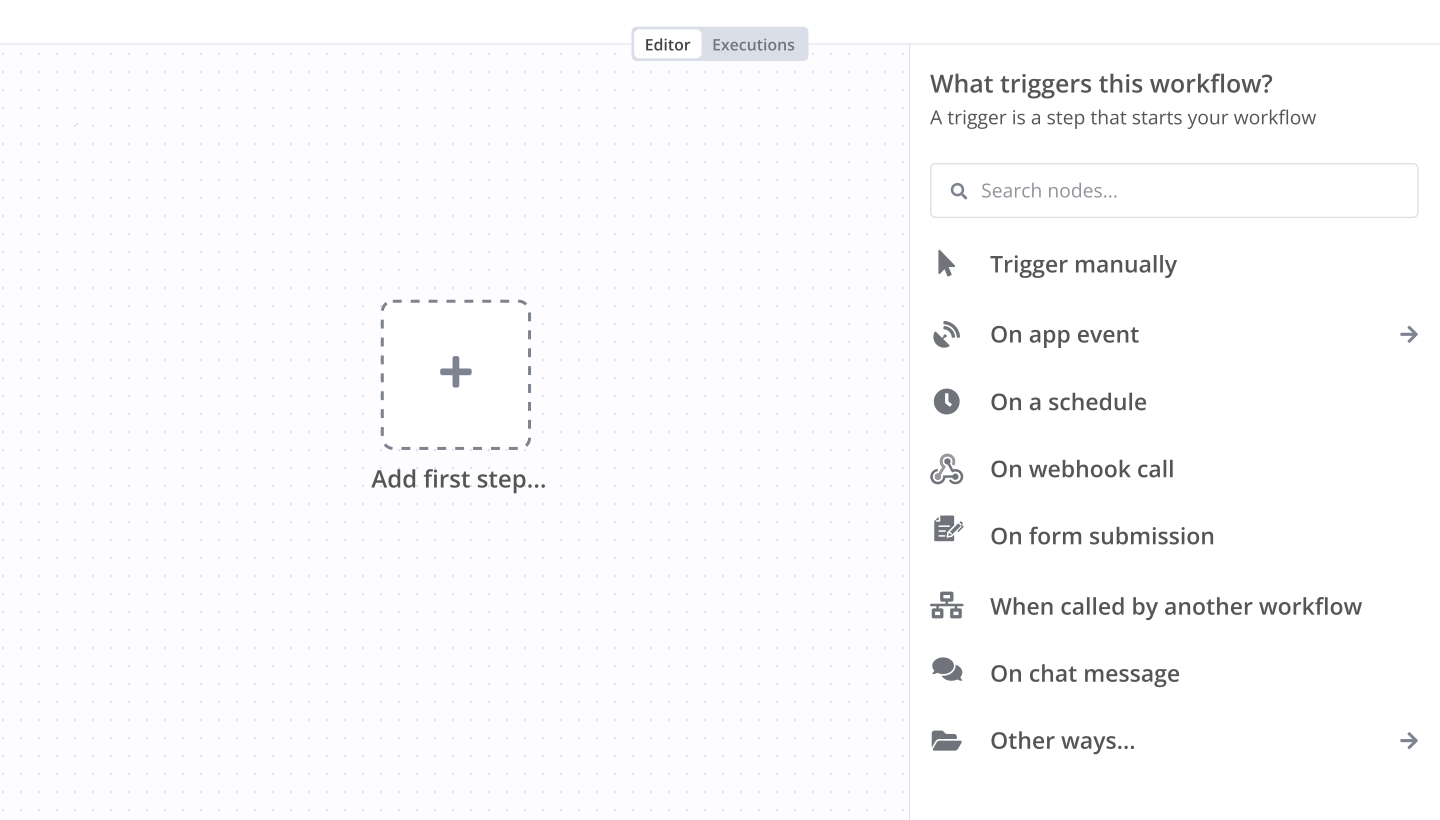
Discord and Postgres integration: Create a new workflow and add the first step

Step 2: Add and configure Discord and Postgres nodes

You can find Discord and Postgres in the nodes panel. Drag them onto your workflow canvas, selecting their actions. Click each node, choose a credential, and authenticate to grant n8n access. Configure Discord and Postgres nodes one by one: input data on the left, parameters in the middle, and output data on the right.

Discord and Postgres integration: Add and configure Discord and Postgres nodes

Step 3: Connect Discord and Postgres

A connection establishes a link between Discord and Postgres (or vice versa) to route data through the workflow. Data flows from the output of one node to the input of another. You can have single or multiple connections for each node.

Discord and Postgres integration: Connect Discord and Postgres

Step 4: Customize and extend your Discord and Postgres integration

Use n8n's core nodes such as If, Split Out, Merge, and others to transform and manipulate data. Write custom JavaScript or Python in the Code node and run it as a step in your workflow. Connect Discord and Postgres with any of n8n’s 1000+ integrations, and incorporate advanced AI logic into your workflows.

Discord and Postgres integration: Customize and extend your Discord and Postgres integration

Step 5: Test and activate your Discord and Postgres workflow

Save and run the workflow to see if everything works as expected. Based on your configuration, data should flow from Discord to Postgres or vice versa. Easily debug your workflow: you can check past executions to isolate and fix the mistake. Once you've tested everything, make sure to save your workflow and activate it.

Discord and Postgres integration: Test and activate your Discord and Postgres workflow

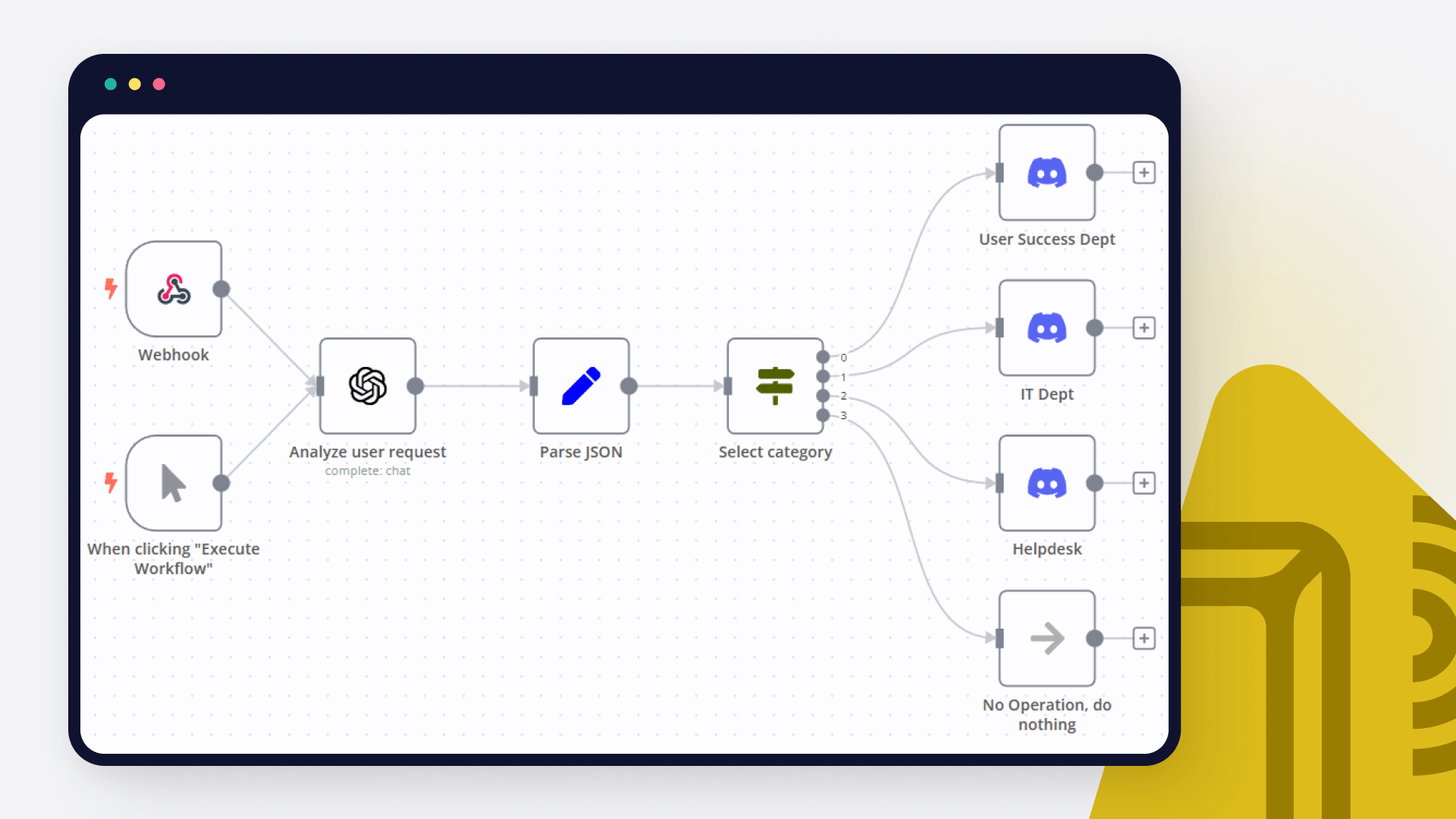
Route and analyze customer feedback with Qwen3-VL, Tally, PostgreSQL

Self-Hosted

This workflow provides a complete end-to-end system for capturing, analyzing, and routing customer feedback. By combining local multimodal AI processing with structured data storage, it allows teams to respond to customer needs in real-time without compromising data privacy.

Who is this for?

This is designed for Customer Success Managers, Product Teams, and Community Leads who need to automate the triage of high-volume feedback. It is particularly useful for organizations that handle sensitive customer data and prefer local AI processing over cloud-based API calls.

🛠️ Tech Stack

Tally.so**: For front-end feedback collection.
LM Studio**: To host the local AI models (Qwen3-VL).
PostgreSQL**: For persistent data storage and reporting.
Discord**: For real-time team notifications.

✨ How it works

Form Submission: The workflow triggers when a new submission is received from Tally.so.
Multimodal Analysis: The OpenAI node (pointing to LM Studio) processes the input using the Qwen3-VL model across three specific layers:
Sentiment Analysis: Evaluates the text to determine if the customer is Positive, Negative, or Neutral.
Zero-Shot Classification: Categorizes the feedback into pre-defined labels based on instructions in the prompt.
Vision Processing: Analyzes any attached images to extract descriptive keywords or identify UI elements mentioned in the feedback.
Data Storage: The PostgreSQL node logs the user's details, the original message, and all AI-generated insights.
AI-Driven Routing: The same Qwen3-VL model makes the routing decision by evaluating the classification results and determining the appropriate path for the data to follow.
Discord Notification: The Discord node sends a formatted message to the corresponding channel, ensuring the support team sees urgent issues while the marketing team sees positive testimonials.

📋 Requirements

LM Studio** running a local server on port 1234.
Qwen3-VL-4B** (GGUF) model loaded in LM Studio.
PostgreSQL** instance with a table configured for feedback data.
Discord Bot Token** and specific Channel IDs.

🚀 How to set up

Prepare your Local AI:
Open LM Studio and download the Qwen3-VL-4B model.
Start the Local Server on port 1234 and ensure CORS is enabled.
Disable the Require Authentication setting in the Local Server tab.
Configure PostgreSQL:
Ensure your database is running. Create a table named customer_feedback with columns for name, email_address, feedback_message, image_url, sentiment, category, and img_keywords.
Import the Workflow:
Import the JSON file into your n8n instance.
Link Services:
Update the Webhook node with your Tally.so URL.
In the Discord nodes, paste the relevant Channel IDs for your #support, #feedback, and #general channels.
Test and Activate:
Toggle the workflow to Active.
Send a test submission through your Tally form and verify the data appears in PostgreSQL and Discord.

🔑 Credential Setup

To run this workflow, you must configure the following credentials in n8n:

OpenAI API (Local):
Create a new OpenAI API credential.
API Key: Enter any placeholder text (e.g., lm-studio).
Base URL: Set this to your machine's local IP address (e.g., http://192.168.1.10:1234/v1) to ensure n8n can connect to the local AI server, especially if running within a Docker container.
PostgreSQL
:
Create a new PostgreSQL credential.
Enter your database Host, Database Name, User, and Password. If using the provided Docker setup, the host is usually db.
Discord Bot**:
Create a new Discord Bot API credential.
Paste your Bot Token obtained from the Discord Developer Portal.
Tally**:
Create a new Tally API credential.
Enter your API Key, which you can find in your Tally.so account settings.

⚙️ How to customize

Refine AI Logic**: Update the System Message in the AI node to change classification categories or sentiment sensitivity.
Switch to Cloud AI: If you prefer not to use a local model, you can swap the local **LM Studio connection for any 3rd party API, such as OpenAI (GPT-4o), Anthropic (Claude), or Google Gemini, by updating the node credentials and Base URL.
Expand Destinations: Add more **Discord nodes or integrate Slack to notify different departments based on the AI's routing decision.
Custom Triggers: Replace the Tally webhook with a **Typeform, Google Forms, or a custom Webhook trigger if your collection stack differs.

Nodes used in this workflow

Popular Discord and Postgres workflows

+2

Route and analyze customer feedback with Qwen3-VL, Tally, PostgreSQL

Self-Hosted This workflow provides a complete end-to-end system for capturing, analyzing, and routing customer feedback. By combining local multimodal AI processing with structured data storage, it allows teams to respond to customer needs in real-time without compromising data privacy. Who is this for? This is designed for Customer Success Managers, Product Teams, and Community Leads who need to automate the triage of high-volume feedback. It is particularly useful for organizations that handle sensitive customer data and prefer local AI processing over cloud-based API calls. 🛠️ Tech Stack Tally.so**: For front-end feedback collection. LM Studio**: To host the local AI models (Qwen3-VL). PostgreSQL**: For persistent data storage and reporting. Discord**: For real-time team notifications. ✨ How it works Form Submission: The workflow triggers when a new submission is received from Tally.so. Multimodal Analysis: The OpenAI node (pointing to LM Studio) processes the input using the Qwen3-VL model across three specific layers: Sentiment Analysis: Evaluates the text to determine if the customer is Positive, Negative, or Neutral. Zero-Shot Classification: Categorizes the feedback into pre-defined labels based on instructions in the prompt. Vision Processing: Analyzes any attached images to extract descriptive keywords or identify UI elements mentioned in the feedback. Data Storage: The PostgreSQL node logs the user's details, the original message, and all AI-generated insights. AI-Driven Routing: The same Qwen3-VL model makes the routing decision by evaluating the classification results and determining the appropriate path for the data to follow. Discord Notification: The Discord node sends a formatted message to the corresponding channel, ensuring the support team sees urgent issues while the marketing team sees positive testimonials. 📋 Requirements LM Studio** running a local server on port 1234. Qwen3-VL-4B** (GGUF) model loaded in LM Studio. PostgreSQL** instance with a table configured for feedback data. Discord Bot Token** and specific Channel IDs. 🚀 How to set up Prepare your Local AI: Open LM Studio and download the Qwen3-VL-4B model. Start the Local Server on port 1234 and ensure CORS is enabled. Disable the Require Authentication setting in the Local Server tab. Configure PostgreSQL: Ensure your database is running. Create a table named customer_feedback with columns for name, email_address, feedback_message, image_url, sentiment, category, and img_keywords. Import the Workflow: Import the JSON file into your n8n instance. Link Services: Update the Webhook node with your Tally.so URL. In the Discord nodes, paste the relevant Channel IDs for your #support, #feedback, and #general channels. Test and Activate: Toggle the workflow to Active. Send a test submission through your Tally form and verify the data appears in PostgreSQL and Discord. 🔑 Credential Setup To run this workflow, you must configure the following credentials in n8n: OpenAI API (Local)**: Create a new OpenAI API credential. API Key: Enter any placeholder text (e.g., lm-studio). Base URL: Set this to your machine's local IP address (e.g., http://192.168.1.10:1234/v1) to ensure n8n can connect to the local AI server, especially if running within a Docker container. PostgreSQL**: Create a new PostgreSQL credential. Enter your database Host, Database Name, User, and Password. If using the provided Docker setup, the host is usually db. Discord Bot**: Create a new Discord Bot API credential. Paste your Bot Token obtained from the Discord Developer Portal. Tally**: Create a new Tally API credential. Enter your API Key, which you can find in your Tally.so account settings. ⚙️ How to customize Refine AI Logic**: Update the System Message in the AI node to change classification categories or sentiment sensitivity. Switch to Cloud AI: If you prefer not to use a local model, you can swap the local **LM Studio connection for any 3rd party API, such as OpenAI (GPT-4o), Anthropic (Claude), or Google Gemini, by updating the node credentials and Base URL. Expand Destinations: Add more **Discord nodes or integrate Slack to notify different departments based on the AI's routing decision. Custom Triggers: Replace the Tally webhook with a **Typeform, Google Forms, or a custom Webhook trigger if your collection stack differs.

Monitor customer risk and AI feedback using PostgreSQL, Gmail and Discord

How it works This workflow monitors customer health by combining payment behavior, complaint signals, and AI-driven feedback analysis. It runs on daily and weekly schedules to evaluate risk levels, escalate high-risk customers, and generate structured product insights. High-risk cases are notified instantly, while detailed feedback and audit logs are stored for long-term analysis. Step-by-step Step 1: Triggers & mode selection** Daily Risk Check Trigger – Starts the workflow on a daily schedule. Weekly schedule1 – Triggers the workflow for weekly summary runs. Edit Fields3 – Sets flags for daily execution. Edit Fields2 – Sets flags for weekly execution. Switch1 – Routes execution based on daily or weekly mode. Step 2: Risk evaluation & escalation** Fetch Customer Risk Data – Pulls customer, payment, product, and complaint data from PostgreSQL. Is High Risk Customer? – Evaluates payment status and complaint count. Prepare Escalation Summary For Low Risk User – Assigns low-risk status and no-action details. Prepare Escalation Summary For High Risk User – Assigns high-risk status and escalation actions. Merge Risk Result – Combines low-risk and high-risk customer records. Send a message4 – Sends the customer risk summary via Gmail. Send a message5 – Sends the same risk summary to Discord. Code in JavaScript3 – Appends notification status and timestamps. Append or update row in sheet3 – Logs risk evaluations and notification status in Google Sheets. Step 3: AI feedback & reporting** Get row(s) in sheet1 – Fetches customer records for feedback analysis. Loop Over Items1 – Processes customers one by one. Prompt For Model1 – Builds a structured prompt for product feedback analysis. HTTP Request1 – Sends data to the AI model for insight generation. Code in JavaScript – Merges AI feedback with original customer data. Append or update row in sheet – Stores AI-generated feedback in Google Sheets. Wait1 – Controls execution pacing between records. Merge1 – Prepares consolidated feedback data. Send a message1 – Emails the final AI-powered feedback report. Why use this? Detect customer churn risk early using payment and complaint signals Automatically escalate high-risk customers without manual monitoring Convert raw customer issues into executive-ready product insights Keep a complete audit trail of risk, feedback, and notifications Align support, product, and leadership teams with shared visibility

Invoice Processing: Email to PostgreSQL Database with GPT-4o & Discord Alerts

AI-Powered Invoice Processing: from Email to Database & Chat Notifications Automatically process PDF invoices directly from your email inbox. This workflow uses AI to extract key data, saves it to a PostgreSQL database, and instantly notifies you about the new document in your preferred chat application. The workflow listens for new emails, fetches PDF attachments, and then passes their content to a Large Language Model (LLM) for intelligent recognition and data extraction. Finally, the information is securely archived in the database, and a summary of the invoice is sent as a notification. > 📝 This workflow is highly customizable. > It uses PostgreSQL, OpenAI (GPT), and Discord by default, but you can easily swap these components. > Feel free to use a different database like MySQL or Airtable, another AI model provider, or send notifications to Slack, MS Teams, or any other chat platform. > ⚠️ Note: If the workflow fails to extract data correctly from invoices issued by certain companies, you may need to adjust the prompt used in the Basic LLM Chain node to improve parsing accuracy. Use Case Automating accounts payable for small businesses and freelancers Centralizing financial documents without manual data entry Creating a searchable database of all incoming invoices Receiving real-time notifications for new financial commitments Features 📧 Email Trigger (IMAP):** Monitors a dedicated email inbox for new messages with attachments 📄 PDF Filtering:** Automatically identifies and processes only PDF attachments 🤖 AI-Powered Data Extraction:** Uses an LLM (e.g., GPT-4o-mini) to extract invoice number, buyer/seller details, amounts, currency, and due dates ⚙️ Structured Data Output:** Converts AI output to standardized JSON 🔍 Database Write Logic:** Prevents duplicates by checking invoice/company combo 🗄️ PostgreSQL Integration:** Stores extracted data into company and invoice tables 💬 Chat Notifications:** Sends invoice summary as message to a designated channel Setup Instructions ⚠️ API Access & Costs To use the AI extraction feature, you need an API key from a provider like OpenAI. Most providers charge for access to language models. You'll likely need a billing account. PostgreSQL Database Configuration Ensure your database has the following tables: -- Table for companies (invoice issuers) CREATE TABLE company ( id SERIAL PRIMARY KEY, tax_number VARCHAR(255) UNIQUE NOT NULL, name VARCHAR(255), address TEXT, created_at TIMESTAMP WITH TIME ZONE DEFAULT CURRENT_TIMESTAMP ); -- Table for invoices CREATE TABLE invoice ( id SERIAL PRIMARY KEY, company_id INTEGER REFERENCES company(id), invoice_number VARCHAR(255) NOT NULL, -- Add other fields: total_to_pay, currency, due_date created_at TIMESTAMP WITH TIME ZONE DEFAULT CURRENT_TIMESTAMP, UNIQUE(company_id, invoice_number) ); Then, in n8n, create a credential for your PostgreSQL DB. Email (IMAP) Configuration In n8n, add credentials for the email account that receives invoices: IMAP host IMAP port Username Password AI Provider Configuration Log in to OpenAI (or similar provider) Generate API key In n8n, create credentials and paste the key Chat Notification (Discord) Go to Discord > Server Settings > Integrations > Webhooks > New Webhook Select channel Copy Webhook URL In n8n, paste URL into the Discord node Placeholders and Fields to Fill | Placeholder | Description | Example | |---------------------------|-------------------------------------------|------------------------------------------| | YOUR_EMAIL_CREDENTIALS | Your IMAP email account in n8n | My Invoice Mailbox | | YOUR_OPENAI_CREDENTIALS | API credentials for AI model | My OpenAI Key | | YOUR_POSTGRES_CREDENTIALS| Your PostgreSQL DB credentials in n8n | My Production DB | | YOUR_DISCORD_WEBHOOK | Webhook URL for your chat system | https://discord.com/api/webhooks/... | Testing the Workflow Send a test invoice to the inbox as a PDF attachment Run the workflow manually in n8n and check if the IMAP node fetches the message Verify AI Extraction – inspect the LLM output (e.g., GPT node) and confirm structured JSON Check the DB – ensure new rows appear in company and invoice Check the chat – verify the invoice summary appears in the chosen channel Customization Tips Change the DB:** Use MySQL, Airtable, or Google Sheets instead of PostgreSQL Other notifications:** Swap Discord for Slack, MS Teams, Telegram, etc. Expand AI logic:** Extract line items, prices, etc. by customizing the prompt Add payment logic:** Allow marking invoices as paid via emoji or a separate webhook

Build your own Discord and Postgres integration

Create custom Discord and Postgres workflows by choosing triggers and actions. Nodes come with global operations and settings, as well as app-specific parameters that can be configured. You can also use the HTTP Request node to query data from any app or service with a REST API.

Discord supported actions

Create
Create a new channel
Delete
Delete a channel
Get
Get a channel
Get Many
Retrieve the channels of a server
Update
Update a channel
Delete
Delete a message in a channel
Get
Get a message in a channel
Get Many
Retrieve the latest messages in a channel
React with Emoji
React to a message with an emoji
Send
Send a message to a channel, thread, or member
Send and Wait for Response
Send a message and wait for response
Get Many
Retrieve the members of a server
Role Add
Add a role to a member
Role Remove
Remove a role from a member

Postgres supported actions

Delete
Delete an entire table or rows in a table
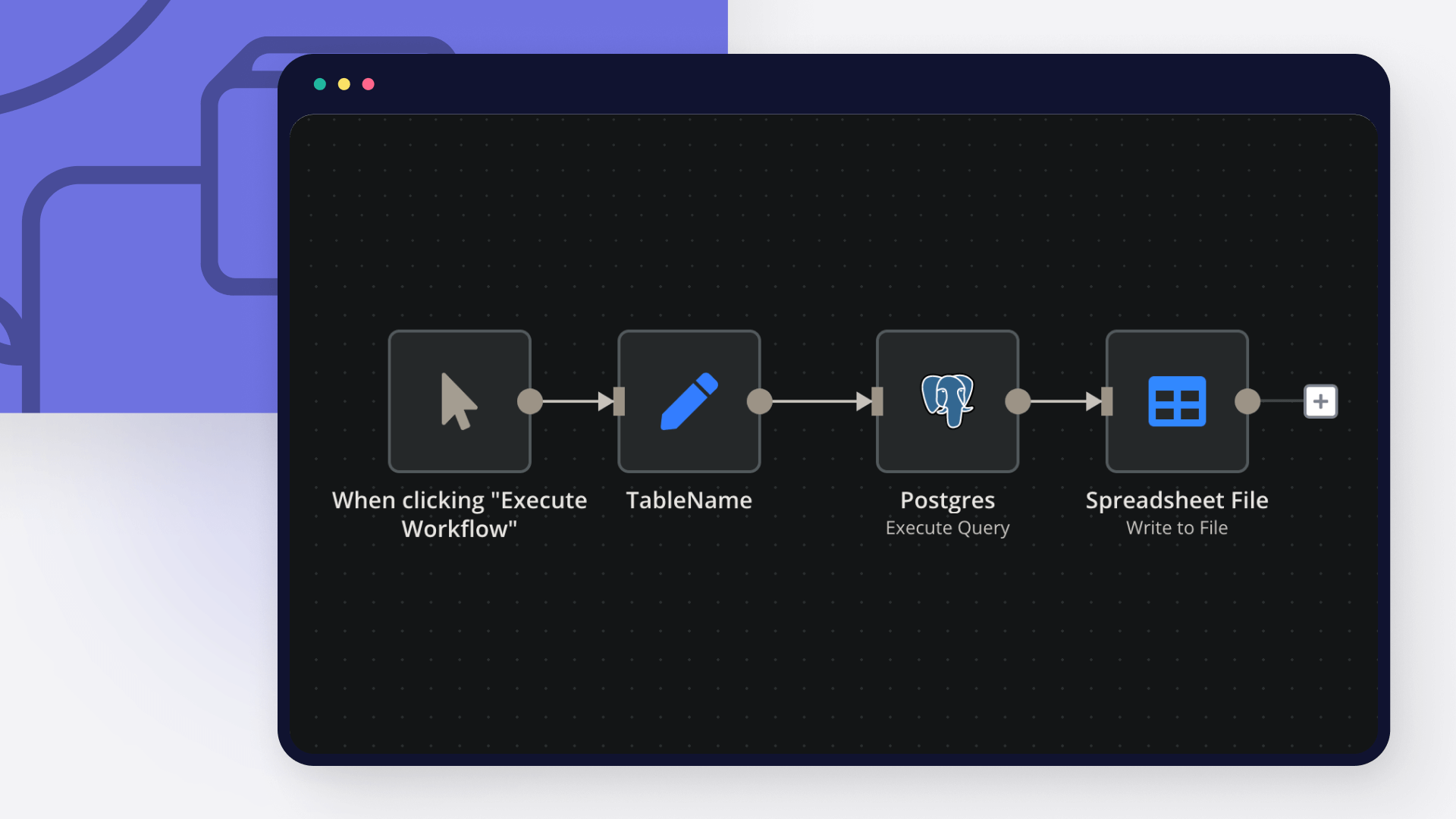
Execute Query
Execute an SQL query
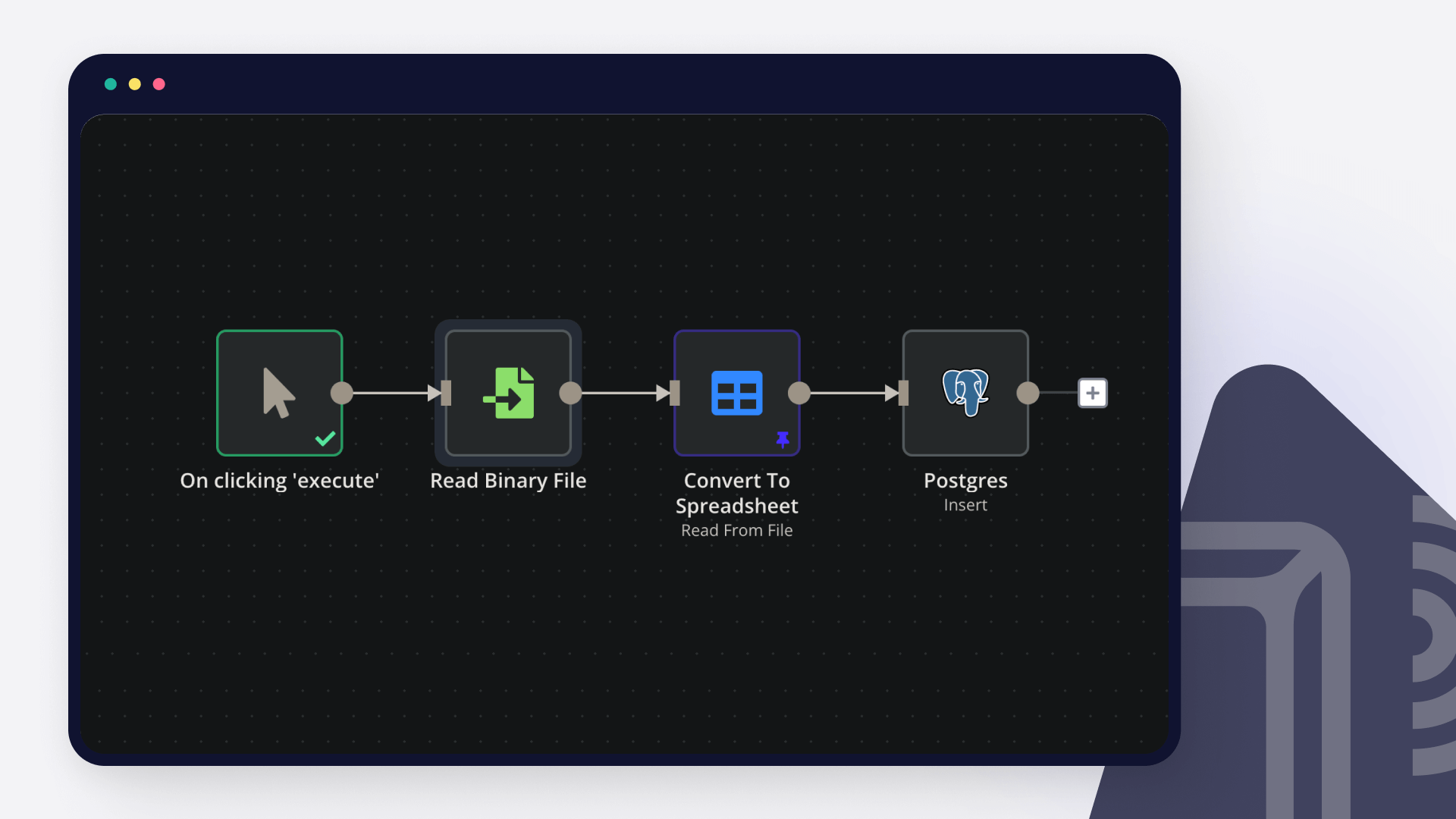
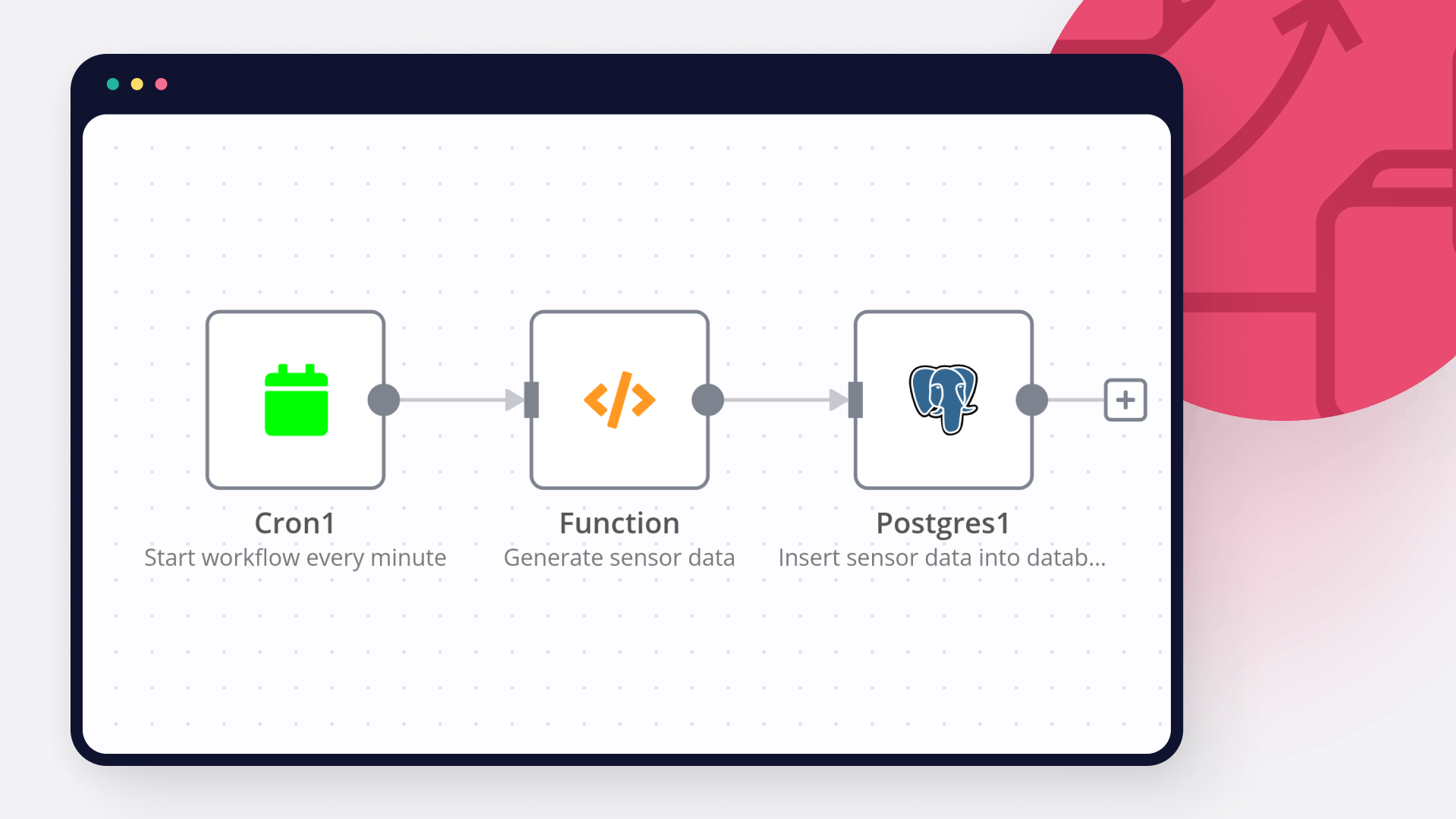
Insert
Insert rows in a table
Insert or Update
Insert or update rows in a table
Select
Select rows from a table
Update
Update rows in a table

FAQs

  • Can Discord connect with Postgres?

  • Can I use Discord’s API with n8n?

  • Can I use Postgres’s API with n8n?

  • Is n8n secure for integrating Discord and Postgres?

  • How to get started with Discord and Postgres integration in n8n.io?

Need help setting up your Discord and Postgres integration?

Discover our latest community's recommendations and join the discussions about Discord and Postgres integration.
Mikhail Savenkov
Honza Pav
Vyacheslav Karbovnichy
Dennis
Dennis

Looking to integrate Discord and Postgres in your company?

Over 3000 companies switch to n8n every single week

Why use n8n to integrate Discord with Postgres

Build complex workflows, really fast
Build complex workflows, really fast

Handle branching, merging and iteration easily.
Pause your workflow to wait for external events.

Code when you need it, UI when you don't

Simple debugging

Your data is displayed alongside your settings, making edge cases easy to track down.

Use templates to get started fast

Use 1000+ workflow templates available from our core team and our community.

Reuse your work

Copy and paste, easily import and export workflows.

Implement complex processes faster with n8n

red iconyellow iconred iconyellow icon