Back to Integrations
integrationDropbox node
integrationHTTP Request node

Dropbox and HTTP Request integration

Save yourself the work of writing custom integrations for Dropbox and HTTP Request and use n8n instead. Build adaptable and scalable Data & Storage, Development, and Core Nodes workflows that work with your technology stack. All within a building experience you will love.

How to connect Dropbox and HTTP Request

  • Step 1: Create a new workflow
  • Step 2: Add and configure nodes
  • Step 3: Connect
  • Step 4: Customize and extend your integration
  • Step 5: Test and activate your workflow

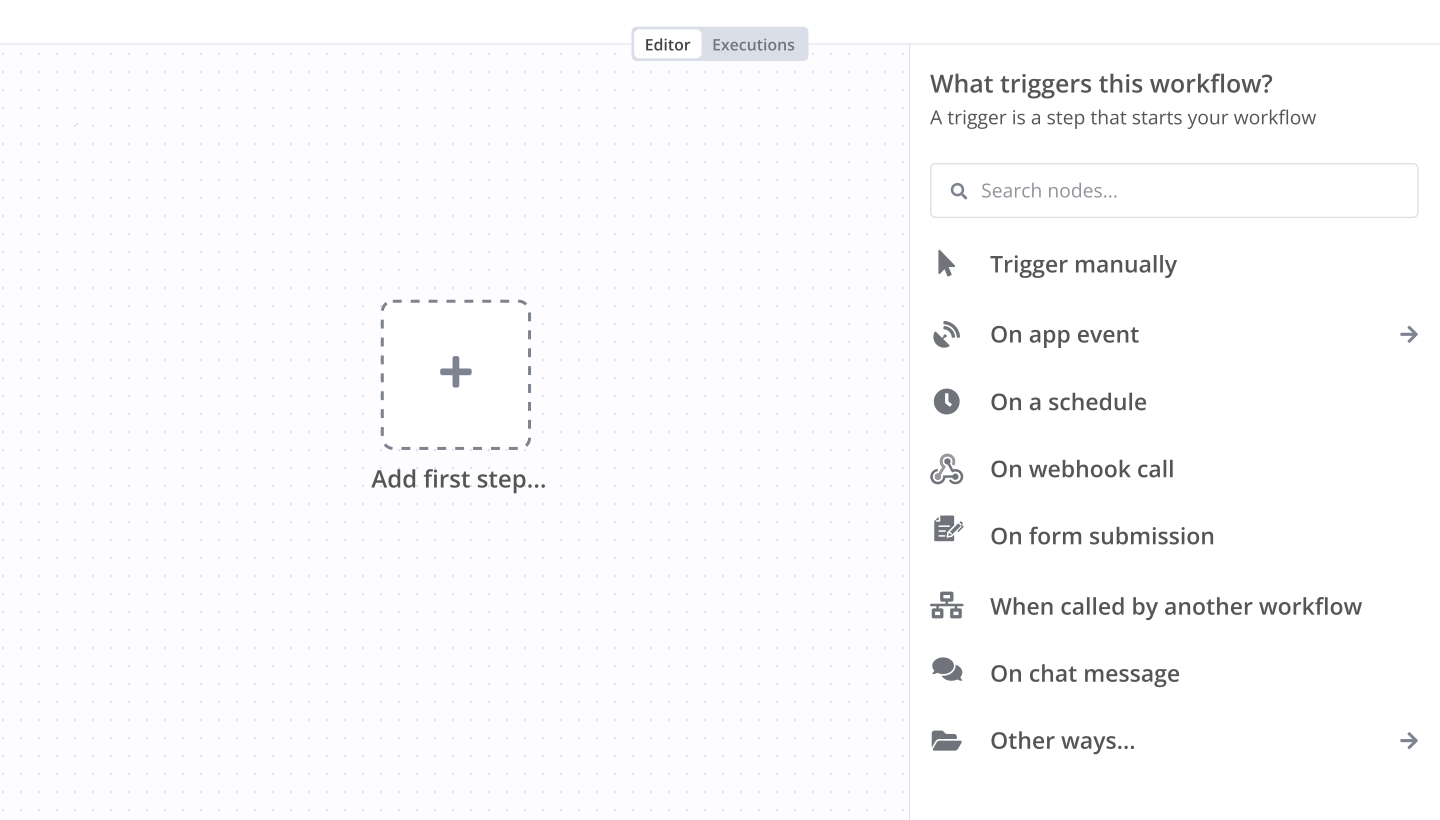
Step 1: Create a new workflow and add the first step

In n8n, click the "Add workflow" button in the Workflows tab to create a new workflow. Add the starting point – a trigger on when your workflow should run: an app event, a schedule, a webhook call, another workflow, an AI chat, or a manual trigger. Sometimes, the HTTP Request node might already serve as your starting point.

Dropbox and HTTP Request integration: Create a new workflow and add the first step

Step 2: Add and configure Dropbox and HTTP Request nodes

You can find Dropbox and HTTP Request in the nodes panel. Drag them onto your workflow canvas, selecting their actions. Click each node, choose a credential, and authenticate to grant n8n access. Configure Dropbox and HTTP Request nodes one by one: input data on the left, parameters in the middle, and output data on the right.

Dropbox and HTTP Request integration: Add and configure Dropbox and HTTP Request nodes

Step 3: Connect Dropbox and HTTP Request

A connection establishes a link between Dropbox and HTTP Request (or vice versa) to route data through the workflow. Data flows from the output of one node to the input of another. You can have single or multiple connections for each node.

Dropbox and HTTP Request integration: Connect Dropbox and HTTP Request

Step 4: Customize and extend your Dropbox and HTTP Request integration

Use n8n's core nodes such as If, Split Out, Merge, and others to transform and manipulate data. Write custom JavaScript or Python in the Code node and run it as a step in your workflow. Connect Dropbox and HTTP Request with any of n8n’s 1000+ integrations, and incorporate advanced AI logic into your workflows.

Dropbox and HTTP Request integration: Customize and extend your Dropbox and HTTP Request integration

Step 5: Test and activate your Dropbox and HTTP Request workflow

Save and run the workflow to see if everything works as expected. Based on your configuration, data should flow from Dropbox to HTTP Request or vice versa. Easily debug your workflow: you can check past executions to isolate and fix the mistake. Once you've tested everything, make sure to save your workflow and activate it.

Dropbox and HTTP Request integration: Test and activate your Dropbox and HTTP Request workflow

Hacker News to video content

Hacker News to Video Content

Overview
This workflow converts trending articles from Hacker News into engaging video content. It integrates AI-based tools to analyze, summarize, and generate multimedia content, making it ideal for content creators, educators, and marketers.

Features
Article Retrieval:
Pulls trending articles from Hacker News.
Limits the number of articles to process (configurable).

Content Analysis:
Uses OpenAI's GPT model to:
Summarize articles.
Assess their relevance to specific topics like automation or AI.
Extract key image URLs.

Image and Video Generation:
Leonardo.ai: Creates stunning AI-generated images based on extracted prompts.
RunwayML: Converts images into high-quality videos.

Structured Content Creation:
Parses content into structured formats for easy reuse.
Generates newsletter-friendly blurbs and social media-ready captions.

Cloud Integration:
Uploads generated assets to:
Dropbox
Google Drive
Microsoft OneDrive
MinIO

Social Media Posting (Optional):
Supports posting to YouTube, X (Twitter), LinkedIn, and Instagram.

Workflow Steps

  1. Trigger
    Initiated manually via the "Test Workflow" button.

  2. Fetch Articles
    Retrieves articles from Hacker News.
    Limits the results to avoid processing overload.

  3. Content Filtering
    Evaluates if articles are related to AI/Automation using OpenAI's language model.

  4. Image and Video Generation
    Generates:
    AI-driven image prompts via Leonardo.ai.
    Videos using RunwayML.

  5. Asset Management
    Saves the output to cloud storage services or uploads directly to social media platforms.

Prerequisites

API Keys**:
Hacker News
OpenAI
Leonardo.ai
RunwayML
Creatomate

n8n Installation**:
Ensure n8n is installed and configured locally or on a server.

Credentials**:
Set up credentials in n8n for all external services used in the workflow.

Customization
Replace Hacker News with any other data source node if needed.
Configure the "Article Analysis" node for different topics.
Adjust the cloud storage services or add custom storage options.

Usage
Import this workflow into your n8n instance.
Configure your API credentials.
Trigger the workflow manually or schedule it as needed.
Check the outputs in your preferred cloud storage or social media platform.

Notes
Extend this workflow further by automating social media posting or newsletter integration.
For any questions, refer to the official documentation or reach out to the creator.

About the Creator
This workflow was built by AlexK1919, an AI-native workflow automation architect. Check out the overview video for a quick demo.

Tools Used
Leonardo.ai**
RunwayML**
Creatomate**
Hacker News API**
OpenAI GPT**

Feel free to adapt and extend this workflow to meet your specific needs! 🎉

Nodes used in this workflow

Popular Dropbox and HTTP Request workflows

+43

Explore n8n Nodes in a Visual Reference Library

WATCH THE n8n STARTER GUIDE 👇 This template is featured in the n8n Starter Guide series. The template is free, but comes with two additional PDFs and a Quick Start video if you grab the full download pack on gumroad. How it works This template is a visual map of many useful n8n nodes. It groups nodes like Triggers, AI tools, and App connectors onto the canvas. Explore the sections to learn about different nodes and easily copy them for your own workflows. It acts as a handy visual reference guide. Set up steps • Setup takes about 5 minutes. • Import the template into your n8n instance. • Explore the node categories visually on the canvas. • A Quick Start video is included in the download pack, along with a prompts PDF and PDF with links to other awesome n8n templates here on the n8n template gallery.
+9

Hacker News to Video Content

Hacker News to Video Content Overview This workflow converts trending articles from Hacker News into engaging video content. It integrates AI-based tools to analyze, summarize, and generate multimedia content, making it ideal for content creators, educators, and marketers. Features Article Retrieval: Pulls trending articles from Hacker News. Limits the number of articles to process (configurable). Content Analysis: Uses OpenAI's GPT model to: Summarize articles. Assess their relevance to specific topics like automation or AI. Extract key image URLs. Image and Video Generation: Leonardo.ai: Creates stunning AI-generated images based on extracted prompts. RunwayML: Converts images into high-quality videos. Structured Content Creation: Parses content into structured formats for easy reuse. Generates newsletter-friendly blurbs and social media-ready captions. Cloud Integration: Uploads generated assets to: Dropbox Google Drive Microsoft OneDrive MinIO Social Media Posting (Optional): Supports posting to YouTube, X (Twitter), LinkedIn, and Instagram. Workflow Steps Trigger Initiated manually via the "Test Workflow" button. Fetch Articles Retrieves articles from Hacker News. Limits the results to avoid processing overload. Content Filtering Evaluates if articles are related to AI/Automation using OpenAI's language model. Image and Video Generation Generates: AI-driven image prompts via Leonardo.ai. Videos using RunwayML. Asset Management Saves the output to cloud storage services or uploads directly to social media platforms. Prerequisites API Keys**: Hacker News OpenAI Leonardo.ai RunwayML Creatomate n8n Installation**: Ensure n8n is installed and configured locally or on a server. Credentials**: Set up credentials in n8n for all external services used in the workflow. Customization Replace Hacker News with any other data source node if needed. Configure the "Article Analysis" node for different topics. Adjust the cloud storage services or add custom storage options. Usage Import this workflow into your n8n instance. Configure your API credentials. Trigger the workflow manually or schedule it as needed. Check the outputs in your preferred cloud storage or social media platform. Notes Extend this workflow further by automating social media posting or newsletter integration. For any questions, refer to the official documentation or reach out to the creator. About the Creator This workflow was built by AlexK1919, an AI-native workflow automation architect. Check out the overview video for a quick demo. Tools Used Leonardo.ai** RunwayML** Creatomate** Hacker News API** OpenAI GPT** Feel free to adapt and extend this workflow to meet your specific needs! 🎉

Automated Video Translation & Distribution with DubLab to Multiple Platforms

Automated n8n workflow: Receives videos via form, dubs/translates them to the selected languages, and—upon completion—uploads them to multiple social media channels and cloud drives, including Box, Dropbox, and YouTube, Telegram, Postiz (Facebook, Instagram, Tiktok, Reddit etc.) Workflows Via n8n form select files to dub for desired languages. Listen webhook and whenever dubbing finishes upload to desired platforms Used Stacks DubLab App (ApiKey, Webhook Setup Required) Optional (Upload) Telegram (Token Required) Box (Oauth2 Required) Dropbox (Oauth2 Required) Youtube (Oauth2 Required) Postiz (ApiKey Required)

Send YouTube Video Summaries to Obsidian via Dropbox

How it works This workflow runs on a schedule you set (default is every 10 minutes). It fetches all videos from a specific YouTube playlist, retrieves details and transcripts for each video using RapidAPI, cleans the transcript text, and then uses OpenAI (GPT models) to generate detailed notes, YAML frontmatter, and internal links formatted for Obsidian. Finally, it assembles everything into a Markdown file, saves it to your designated Dropbox folder, and removes the processed video from the source YouTube playlist. Set up steps Getting started should take about 5 minutes. A Quick Start Guide (PDF) is included in the download with step-by-step instructions! Here's a quick overview of the setup: Connect Credentials: Add your n8n credentials for YouTube (OAuth2), OpenAI, and Dropbox (OAuth2). Add API Keys: RapidAPI: You'll need a key for the yt-api service. The template uses ={{ $env["RAPIDAPI_API_KEY"] }}. You can either set up an environment variable in n8n named RAPIDAPI_API_KEY or simply delete that expression in the "Get Video Details" and "Get Video Transcript" nodes and paste your API key directly into the x-rapidapi-key field. Configure Nodes: Update the Playlist ID in the "Get Playlist Videos" node to your target YouTube playlist. (Optional) Adjust the Save Path in the "Save Note to Dropbox" node if you want to save files to a different folder. Activate: Turn on the workflow. > Bonus Trick: Symlink the Dropbox folder (using the Dropbox desktop app) to a folder in your Obsidian vault for beautifully organized YouTube summary notes!

Monitor and analyze competitor Facebook ads with Apify, GPT-4o, Gemini, and Google Sheets

Categories Marketing Intelligence, Ad Operations, Competitive Research, Creative Analysis Build a Facebook Ad Intelligence Pipeline with Apify, AI, and Google Sheets This workflow creates an end-to-end Facebook Ad Intelligence pipeline that automatically collects live ads from the Facebook Ad Library, analyzes their creative and messaging using AI, and stores structured insights in Google Sheets for reuse. The system continuously pulls ads from specified Facebook Ad Library URLs, filters for high-signal advertisers, classifies ads by format (video, image, or text), and applies AI analysis to extract strategy, positioning, and reusable creative angles. The result is a reliable, no-manual-work system that turns competitor ads into structured, reusable intelligence instead of screenshots and guesswork. Benefits Evidence-Based Creative Decisions Learn from ads that are already live and funded, not assumptions. Faster Creative Iteration Reuse proven angles, hooks, and formats without starting from zero. Centralized Ad Intelligence All insights are stored in a searchable Google Sheet. Format-Aware Analysis Images, videos, and text ads are analyzed using the correct method. Low Noise, High Signal Filters remove weak advertisers and surface serious spenders. How It Works Ad Data Collection (Apify) Scrapes Facebook Ad Library URLs automatically Retrieves raw ad snapshots including: Copy and headlines Media URLs Page metadata Engagement and page signals Signal Filtering Filters ads by page popularity, for example pages with more than 5,000 likes Ensures only proven advertisers move forward Creative Type Detection A switch node classifies ads as: Video Image Text only Each format is routed to its own processing path AI Creative Analysis Image ads** Converted to binary Visually analyzed Summarized and reverse-engineered Video ads** Downloaded and analyzed frame and content wise Described strategically Text ads** Summarized and rewritten directly Outputs include: Deep strategic summaries Repurposed ad copy Structured Intelligence Storage (Google Sheets) All insights are appended automatically Ads are deduplicated by ad archive ID Each row becomes a reusable asset: Summary Rewritten copy Image or video prompts Page and source data Required Setup Apify Active Apify account Access to the Facebook Ad Library scraping actor OpenAI API key with text and image analysis access Google Gemini API access for video analysis Google Sheets OAuth access Edit permissions on the target spreadsheet Dropbox (optional) OAuth access for video storage and reuse Business Use Cases Performance Marketers Identify winning creative patterns faster Media Buyers Reduce testing waste and creative fatigue Agencies Deliver competitive intelligence as a service Founders Validate messaging before launching campaigns Growth Teams Build creative systems instead of one-off ads Difficulty Level Intermediate Estimated Build Time 60–90 minutes Monthly Operating Cost Apify: Usage-based OpenAI: Usage-based Google Sheets: Free Dropbox: Free or paid plan n8n: Self-hosted or cloud Typical range: $20–60/month depending on volume Why This Workflow Works Live ads represent real budget decisions Filtering enforces signal quality Format-specific analysis improves insight accuracy Structured storage enables reuse at scale Automation replaces manual ad spying Possible Extensions Auto-tag ads by funnel stage Add spend or duration heuristics Track creative trends over time Generate landing page hypotheses Trigger creative briefs from winning ads

Upload Files to Dropbox and Generate Direct Download Links

How It Works This sub-workflow uploads files to Dropbox and returns a direct download link: Upload file - Receives file from parent workflow and uploads to Dropbox Check for existing link - Queries Dropbox API to see if a shared link already exists for this file Create or reuse link - If no link exists, creates a new public shared link; otherwise uses existing one Convert to direct link - Transforms Dropbox's standard sharing URL (dropbox.com) into a direct download URL (dl.dropboxusercontent.com) Return URL - Outputs the final direct download link for use in other workflows Important: File names must be unique, or you'll get links to old files with the same name. **Setup Steps Time estimate: ~25-30 minutes (first time)** Create Dropbox app - Register at https://www.dropbox.com/developers/apps and get App Key + App Secret. Grant "Files and folders" + "Collaboration" permissions Configure OAuth2 credentials - Add Dropbox OAuth2 credentials in n8n (2 places: "Upload a file" and "List Shared Links" nodes). Set redirect URI to your n8n instance Create data table - Make a table called "cred-Dropbox" with columns: id (value: 1) and token (your access token) Set up token refresh - Deploy the companion "Dropbox Token Refresher" workflow (referenced but not included as its a paid workflow) to auto-refresh tokens Customize upload path - Update the path in "Upload a file" node (currently /Automate/N8N/host/) Test with form - Use the included test workflow to verify everything works Pro tip: Generate your first access token manually in the Dropbox app console to test uploads before setting up auto-refresh.

Build your own Dropbox and HTTP Request integration

Create custom Dropbox and HTTP Request workflows by choosing triggers and actions. Nodes come with global operations and settings, as well as app-specific parameters that can be configured. You can also use the HTTP Request node to query data from any app or service with a REST API.

Dropbox supported actions

Copy
Copy a file
Delete
Delete a file
Download
Download a file
Move
Move a file
Upload
Upload a file
Copy
Copy a folder
Create
Create a folder
Delete
Delete a folder
List
Return the files and folders in a given folder
Move
Move a folder
Query
Use case

Save engineering resources

Reduce time spent on customer integrations, engineer faster POCs, keep your customer-specific functionality separate from product all without having to code.

Learn more

FAQs

  • Can Dropbox connect with HTTP Request?

  • Can I use Dropbox’s API with n8n?

  • Can I use HTTP Request’s API with n8n?

  • Is n8n secure for integrating Dropbox and HTTP Request?

  • How to get started with Dropbox and HTTP Request integration in n8n.io?

Need help setting up your Dropbox and HTTP Request integration?

Discover our latest community's recommendations and join the discussions about Dropbox and HTTP Request integration.
Moiz Contractor
theo
Jon
Dan Burykin
Tony

Looking to integrate Dropbox and HTTP Request in your company?

Over 3000 companies switch to n8n every single week

Why use n8n to integrate Dropbox with HTTP Request

Build complex workflows, really fast

Build complex workflows, really fast

Handle branching, merging and iteration easily.
Pause your workflow to wait for external events.

Code when you need it, UI when you don't

Simple debugging

Your data is displayed alongside your settings, making edge cases easy to track down.

Use templates to get started fast

Use 1000+ workflow templates available from our core team and our community.

Reuse your work

Copy and paste, easily import and export workflows.

Implement complex processes faster with n8n

red iconyellow iconred iconyellow icon