Back to Integrations
integrationFacebook Graph API node
integrationGoogle Docs node

Facebook Graph API and Google Docs integration

Save yourself the work of writing custom integrations for Facebook Graph API and Google Docs and use n8n instead. Build adaptable and scalable Development, and Miscellaneous workflows that work with your technology stack. All within a building experience you will love.

How to connect Facebook Graph API and Google Docs

  • Step 1: Create a new workflow
  • Step 2: Add and configure nodes
  • Step 3: Connect
  • Step 4: Customize and extend your integration
  • Step 5: Test and activate your workflow

Step 1: Create a new workflow and add the first step

In n8n, click the "Add workflow" button in the Workflows tab to create a new workflow. Add the starting point – a trigger on when your workflow should run: an app event, a schedule, a webhook call, another workflow, an AI chat, or a manual trigger. Sometimes, the HTTP Request node might already serve as your starting point.
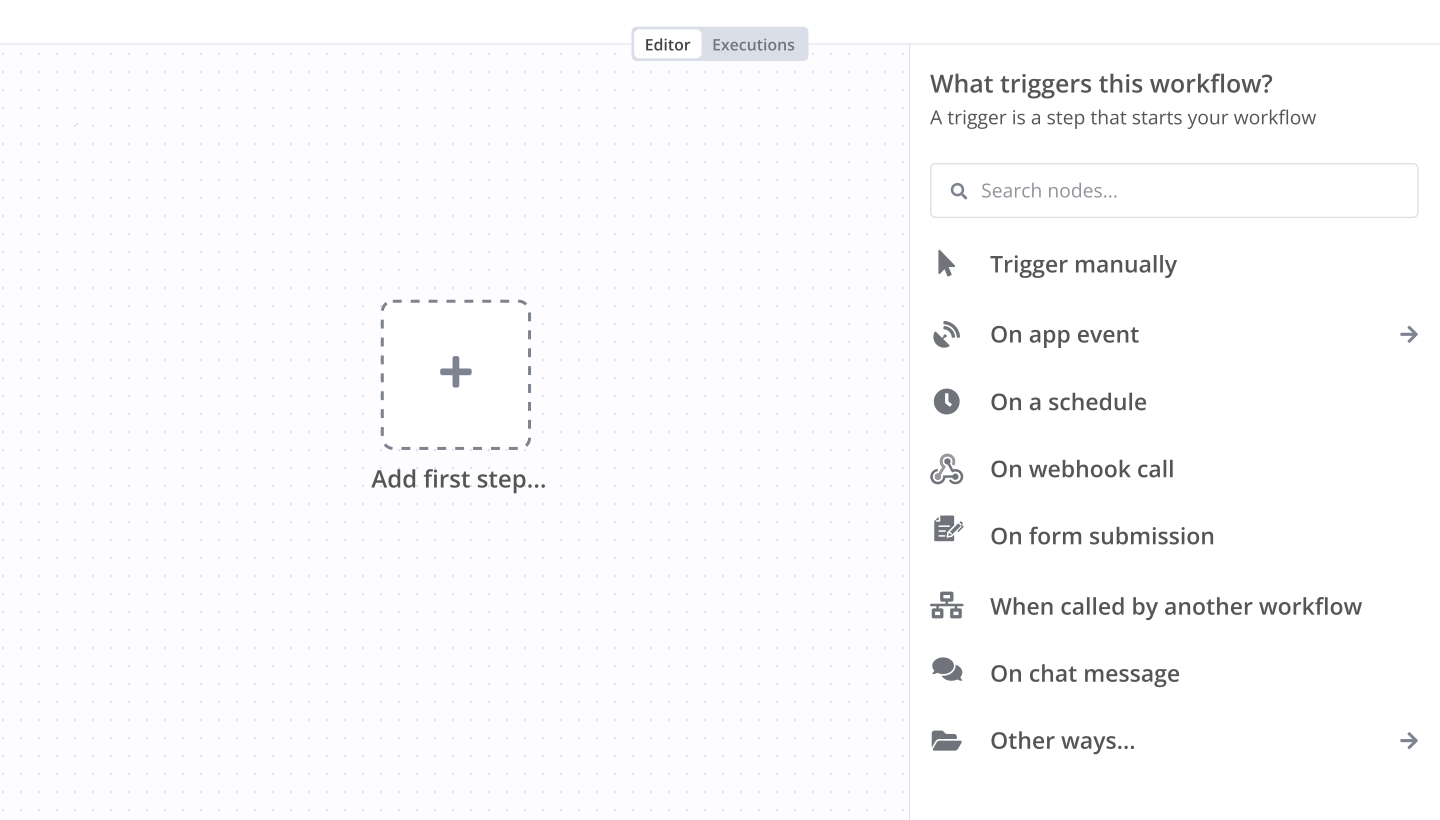
Facebook Graph API and Google Docs integration: Create a new workflow and add the first step

Step 2: Add and configure Facebook Graph API and Google Docs nodes

You can find Facebook Graph API and Google Docs in the nodes panel. Drag them onto your workflow canvas, selecting their actions. Click each node, choose a credential, and authenticate to grant n8n access. Configure Facebook Graph API and Google Docs nodes one by one: input data on the left, parameters in the middle, and output data on the right.

Facebook Graph API and Google Docs integration: Add and configure Facebook Graph API and Google Docs nodes

Step 3: Connect Facebook Graph API and Google Docs

A connection establishes a link between Facebook Graph API and Google Docs (or vice versa) to route data through the workflow. Data flows from the output of one node to the input of another. You can have single or multiple connections for each node.

Facebook Graph API and Google Docs integration: Connect Facebook Graph API and Google Docs

Step 4: Customize and extend your Facebook Graph API and Google Docs integration

Use n8n's core nodes such as If, Split Out, Merge, and others to transform and manipulate data. Write custom JavaScript or Python in the Code node and run it as a step in your workflow. Connect Facebook Graph API and Google Docs with any of n8n’s 1000+ integrations, and incorporate advanced AI logic into your workflows.

Facebook Graph API and Google Docs integration: Customize and extend your Facebook Graph API and Google Docs integration

Step 5: Test and activate your Facebook Graph API and Google Docs workflow

Save and run the workflow to see if everything works as expected. Based on your configuration, data should flow from Facebook Graph API to Google Docs or vice versa. Easily debug your workflow: you can check past executions to isolate and fix the mistake. Once you've tested everything, make sure to save your workflow and activate it.

Facebook Graph API and Google Docs integration: Test and activate your Facebook Graph API and Google Docs workflow

✨🩷Automated social media content publishing factory + system prompt composition

Social Media Content Publishing Factory for Streamlined Content Creation Across Platforms

Who is this for?
This workflow is designed for content creators, social media managers, and marketing teams who need to efficiently create and publish content across multiple social media platforms. It's perfect for businesses looking to maintain a consistent presence across X (Twitter), Instagram, Facebook, LinkedIn, Threads, and YouTube Shorts without spending hours crafting platform-specific content manually.

What problem is this workflow solving?
Creating tailored content for different social media platforms is time-consuming and requires understanding each platform's unique requirements and audience expectations. This workflow solves the challenge of:
Maintaining consistent messaging across platforms while respecting platform-specific formats
Generating optimized content that follows best practices for each platform
Creating accompanying visuals without graphic design skills
Streamlining the approval process before publishing
Reducing the time spent on repetitive content creation tasks

What this workflow does
This automated content factory takes your content idea and transforms it into platform-optimized posts for all major social media channels. The workflow:

Accepts your content idea or topic through a chat interface
Leverages AI to generate tailored content for each platform (X/Twitter, Instagram, Facebook, LinkedIn, Threads, YouTube Shorts)
Creates appropriate images using AI image generation
Sends content for approval via email before publishing
Publishes approved content to selected platforms
Maintains chat memory to improve future content generation

Setup
Connect your social media platform credentials (X/Twitter, Instagram, Facebook, LinkedIn)
Set up your email account for the approval process
Configure your OpenAI API key for AI content generation
Update the image generation service credentials (Pollinations.ai is used by default)
Customize the system prompts and schemas in the Google Docs nodes with your brand voice and content requirements

How to customize this workflow to your needs
Modify the system prompts in the Google Docs nodes to match your brand voice and content strategy
Adjust the social media schemas to include specific fields relevant to your content
Update the approval process to include additional stakeholders if needed
Add or remove social media platforms based on your marketing strategy
Customize the image generation prompts to better match your visual branding
Integrate with your existing content calendar or CRM systems

This workflow eliminates the need to manually craft different versions of the same content for each platform, saving hours of work while ensuring your social media presence remains consistent and optimized for maximum engagement.

Nodes used in this workflow

Popular Facebook Graph API and Google Docs workflows

+10

Automate Social Media Content with AI for Instagram, Facebook, LinkedIn & X

AI Social Media Content Automation – n8n Workflow This workflow is built for creators, solopreneurs, SaaS founders, and agencies looking to automate their social media content process from idea to publication. It combines the power of OpenAI, Google Sheets, and official APIs for Instagram, Facebook, X (Twitter), and LinkedIn to deliver fully automated, brand-consistent social media posts — including text, images, hashtags, CTAs, and scheduling. No more switching tools, rewriting content, or forgetting to post. Just set it up once and let your brand grow automatically. 🔧 What the Workflow Does Generates platform-specific post ideas based on your brand tone. Selects the best idea (or lets you manually input one). Writes tailored posts for Instagram, Facebook, X, and LinkedIn. Auto-generates platform-specific visuals using OpenAI (DALL·E) and uploads to Cloudinary. Publishes content directly using official platform APIs. Logs all actions to Google Sheets and optionally sends a summary email via Gmail. ⚙️ How It Works Trigger the workflow manually, on a schedule, or from a chatbot. AI generates multiple post ideas and filters the best one. Based on the selected idea, it generates full posts for each platform. Custom visuals are created using OpenAI and uploaded to Cloudinary. Final post content is merged and sent to Instagram, Facebook, X, and LinkedIn. Logs and optional reports are created in Google Sheets and Gmail. 🛠️ Setup Steps Set up your accounts and credentials: OpenAI, Cloudinary, Gmail, Meta, LinkedIn, X, and Google Sheets. Import the workflow and subworkflow (Get Brand Brief) into n8n. Replace all placeholders (sheet IDs, access tokens, profile/page IDs, brand brief URLs). Optionally personalize prompts and output templates to match your brand voice. Setup time: ~30–45 minutes (including credentials and testing). Detailed configuration notes are included in sticky nodes throughout the workflow. 📦 Included in Your Package JSON workflow file (main flow + brand brief subflow) Google Sheets templates for history logging Setup documentation (Markdown & PDF) Placeholder reference sheet
+9

✨🩷Automated Social Media Content Publishing Factory + System Prompt Composition

Social Media Content Publishing Factory for Streamlined Content Creation Across Platforms Who is this for? This workflow is designed for content creators, social media managers, and marketing teams who need to efficiently create and publish content across multiple social media platforms. It's perfect for businesses looking to maintain a consistent presence across X (Twitter), Instagram, Facebook, LinkedIn, Threads, and YouTube Shorts without spending hours crafting platform-specific content manually. What problem is this workflow solving? Creating tailored content for different social media platforms is time-consuming and requires understanding each platform's unique requirements and audience expectations. This workflow solves the challenge of: Maintaining consistent messaging across platforms while respecting platform-specific formats Generating optimized content that follows best practices for each platform Creating accompanying visuals without graphic design skills Streamlining the approval process before publishing Reducing the time spent on repetitive content creation tasks What this workflow does This automated content factory takes your content idea and transforms it into platform-optimized posts for all major social media channels. The workflow: Accepts your content idea or topic through a chat interface Leverages AI to generate tailored content for each platform (X/Twitter, Instagram, Facebook, LinkedIn, Threads, YouTube Shorts) Creates appropriate images using AI image generation Sends content for approval via email before publishing Publishes approved content to selected platforms Maintains chat memory to improve future content generation Setup Connect your social media platform credentials (X/Twitter, Instagram, Facebook, LinkedIn) Set up your email account for the approval process Configure your OpenAI API key for AI content generation Update the image generation service credentials (Pollinations.ai is used by default) Customize the system prompts and schemas in the Google Docs nodes with your brand voice and content requirements How to customize this workflow to your needs Modify the system prompts in the Google Docs nodes to match your brand voice and content strategy Adjust the social media schemas to include specific fields relevant to your content Update the approval process to include additional stakeholders if needed Add or remove social media platforms based on your marketing strategy Customize the image generation prompts to better match your visual branding Integrate with your existing content calendar or CRM systems This workflow eliminates the need to manually craft different versions of the same content for each platform, saving hours of work while ensuring your social media presence remains consistent and optimized for maximum engagement.
+9

AI-Powered Multi-Platform Social Media Content Factory with Dynamic System Prompts & GPT-4o

Automated Social Media Content Publishing Factory + System Prompt Composition This workflow is a powerful automation for creating and publishing social media content. It uses AI to generate content and images based on external prompts and schemas, and routes the final posts to various social media platforms. How it Works This workflow operates as a "Content Publishing Factory". It generates platform-optimized content for platforms like LinkedIn, Instagram, Facebook, X (Twitter), Threads, and YouTube Shorts. A key feature is its dynamic system prompt and output schema composition, which pulls content from external Google Docs to ensure consistency. The workflow can also create images to match the content and send the final draft for approval via email before publishing. Use Cases Centralized Content Management**: Store and manage all system prompts and schemas in Google Docs for easy team collaboration and version control. Brand Consistency**: Ensure a consistent brand voice across all social media platforms by centralizing brand guidelines and content rules. Automated Publishing**: Automate content creation, image generation, and publishing, reducing manual effort and design bottlenecks. Fact-checking and Contextual Relevance**: Incorporate real-time research and fact-checking into content to ensure accuracy and relevance. Setup Instructions Google Docs: Create two Google Docs: one for the social media schema and one for the system prompt, and update the respective node IDs in the workflow. API Credentials: Provide credentials for the following services: OpenAI: For the AI agents and content creation. SerpAPI: For the web search tool to perform research. Gmail: For sending content for approval and notifications. Google Drive: For archiving images and final posts. Social Media Platforms: You'll need credentials for the platforms you wish to publish to (X, Instagram, Facebook, LinkedIn, etc.). Image Hosting: The workflow uses imgbb.com to host generated images, requiring an API key. Workflow Logic Routing Agent: The Social Media Router Agent receives a user prompt and uses a toolWorkflow node to route the request to the appropriate content generation workflow. Prompt & Schema Composition: The workflow fetches the system prompt and platform-specific schemas from Google Docs, parses them, and composes a dynamic prompt for the AI agent. Content Creation: The Social Media Content Creator agent uses the composed prompt and a web search tool to generate platform-optimized content and an image suggestion. Image Generation & Archiving: The workflow generates an image from the AI suggestion using an external service and archives both the image and the final post content in Google Drive. Approval Process: The draft content is sent to a Gmail address for approval. Publishing: If the content is approved, the Social Media Publishing Router node directs the content to the correct publishing node for the specified platform (e.g., X Post, Instagram Image, Facebook Post, etc.). Node Descriptions | Node Name | Description | |-----------|-------------| | When chat message received | A trigger node that initiates the workflow based on a chat message. | | Social Media System Prompt | A Google Docs node that retrieves the main system prompt for the AI agent. | | Social Media Schema | A Google Docs node that retrieves the JSON schema for each social media platform's output. | | Social Media Content Creator | An AI agent that generates content based on user prompts, system prompts, and schemas, using a web search tool for research. | | pollinations.ai1 | An HTTP Request node that generates an image from a text prompt using an external service. | | Gmail User for Approval | Sends a draft of the social media post for approval and pauses the workflow until a decision is made. | | Social Media Publishing Router | A Switch node that routes the workflow to the correct publishing node based on the user's selected platform. | | X Post, Instagram Post, Facebook Post, LinkedIn Post | These nodes publish the final, approved content to their respective social media platforms. | Customization Tips You can replace the pollinations.ai image generation service with any other online service that produces an image file. Replace the gpt-4o and gpt-4o-mini models with other LLMs and web search tools to suit your needs. Adjust the content and parameters for each social media platform to better fit your brand and audience. Suggested Sticky Notes for Workflow Start Here**: "Update all Social Media Platform Credentials as required. Adjust parameters and content for each platform to suit your needs". External System Prompt and Schema**: "Create Google Doc for the Social Media Schema and copy the provided schema. Update the Google Doc ID in the Social Media Schema node.". Create Post Image**: "Replace pollinations.ai with any online image generation service that produces an image file you can download". Social Media Content Creator**: "Replace Chat model with other LLMs and test out the results. Add more tools or try other web search tools to suit your use case." Testing Tips Start the workflow with a manual trigger and verify that the social media content and a related image are generated and sent for approval via Gmail. Approve the content in the Gmail email to test the publishing side of the workflow. Check the specified social media accounts to confirm that the post was published correctly. Suggested Tags & Categories SocialMedia Automation AI ContentCreation Publishing GoogleDocs OpenAI
+9

Generate Platform-Optimized Social Media Content Across 6 Platforms with GPT-4o

Who’s it for This workflow is ideal for marketers, content creators, agencies, and small businesses that want to streamline the process of creating and publishing platform-optimized posts across multiple social media channels. How it works / What it does From a single user prompt, the workflow uses a custom system prompt and schema to generate tailored social media content for LinkedIn, Instagram, Facebook, Twitter (X), Threads, and YouTube Shorts. It creates platform-specific captions, hashtags, calls to action, and even AI-generated image suggestions, then routes the content to the correct publishing channel. How to set up Connect your social media platform credentials in n8n. Add your Google Docs links for the system prompt and content schema. Configure the IMGBB_API_KEY and any other required API credentials. Optionally connect Gmail and Telegram for approval workflows and notifications. Requirements n8n instance (self-hosted or cloud) API credentials for desired platforms Google Docs and Google Drive accounts How to customize the workflow Edit the system prompt and schema in Google Docs to adjust tone, style, and content format for each platform. Modify routing logic or add new platform integrations as needed.

Build your own Facebook Graph API and Google Docs integration

Create custom Facebook Graph API and Google Docs workflows by choosing triggers and actions. Nodes come with global operations and settings, as well as app-specific parameters that can be configured. You can also use the HTTP Request node to query data from any app or service with a REST API.

Google Docs supported actions

Create
Get
Update

Facebook Graph API and Google Docs integration details

integrationFacebook Graph API node
Facebook Graph API

Facebook needs no introduction. It is an online social networking and media service that gathers people from all parts of the world, from different backgrounds, and allows them to promote their businesses and services, share, react to and comment on all types of content, and communicate and message their friends.

Use case

Save engineering resources

Reduce time spent on customer integrations, engineer faster POCs, keep your customer-specific functionality separate from product all without having to code.

Learn more

FAQs

  • Can Facebook Graph API connect with Google Docs?

  • Can I use Facebook Graph API’s API with n8n?

  • Can I use Google Docs’s API with n8n?

  • Is n8n secure for integrating Facebook Graph API and Google Docs?

  • How to get started with Facebook Graph API and Google Docs integration in n8n.io?

Looking to integrate Facebook Graph API and Google Docs in your company?

Over 3000 companies switch to n8n every single week

Why use n8n to integrate Facebook Graph API with Google Docs

Build complex workflows, really fast
Build complex workflows, really fast

Handle branching, merging and iteration easily.
Pause your workflow to wait for external events.

Code when you need it, UI when you don't

Simple debugging

Your data is displayed alongside your settings, making edge cases easy to track down.

Use templates to get started fast

Use 1000+ workflow templates available from our core team and our community.

Reuse your work

Copy and paste, easily import and export workflows.

Implement complex processes faster with n8n

red iconyellow iconred iconyellow icon