Back to Integrations
integrationGmail node
integrationGoogle Ads node

Gmail and Google Ads integration

Save yourself the work of writing custom integrations for Gmail and Google Ads and use n8n instead. Build adaptable and scalable Communication, HITL, and Analytics workflows that work with your technology stack. All within a building experience you will love.

How to connect Gmail and Google Ads

  • Step 1: Create a new workflow
  • Step 2: Add and configure nodes
  • Step 3: Connect
  • Step 4: Customize and extend your integration
  • Step 5: Test and activate your workflow

Step 1: Create a new workflow and add the first step

In n8n, click the "Add workflow" button in the Workflows tab to create a new workflow. Add the starting point – a trigger on when your workflow should run: an app event, a schedule, a webhook call, another workflow, an AI chat, or a manual trigger. Sometimes, the HTTP Request node might already serve as your starting point.
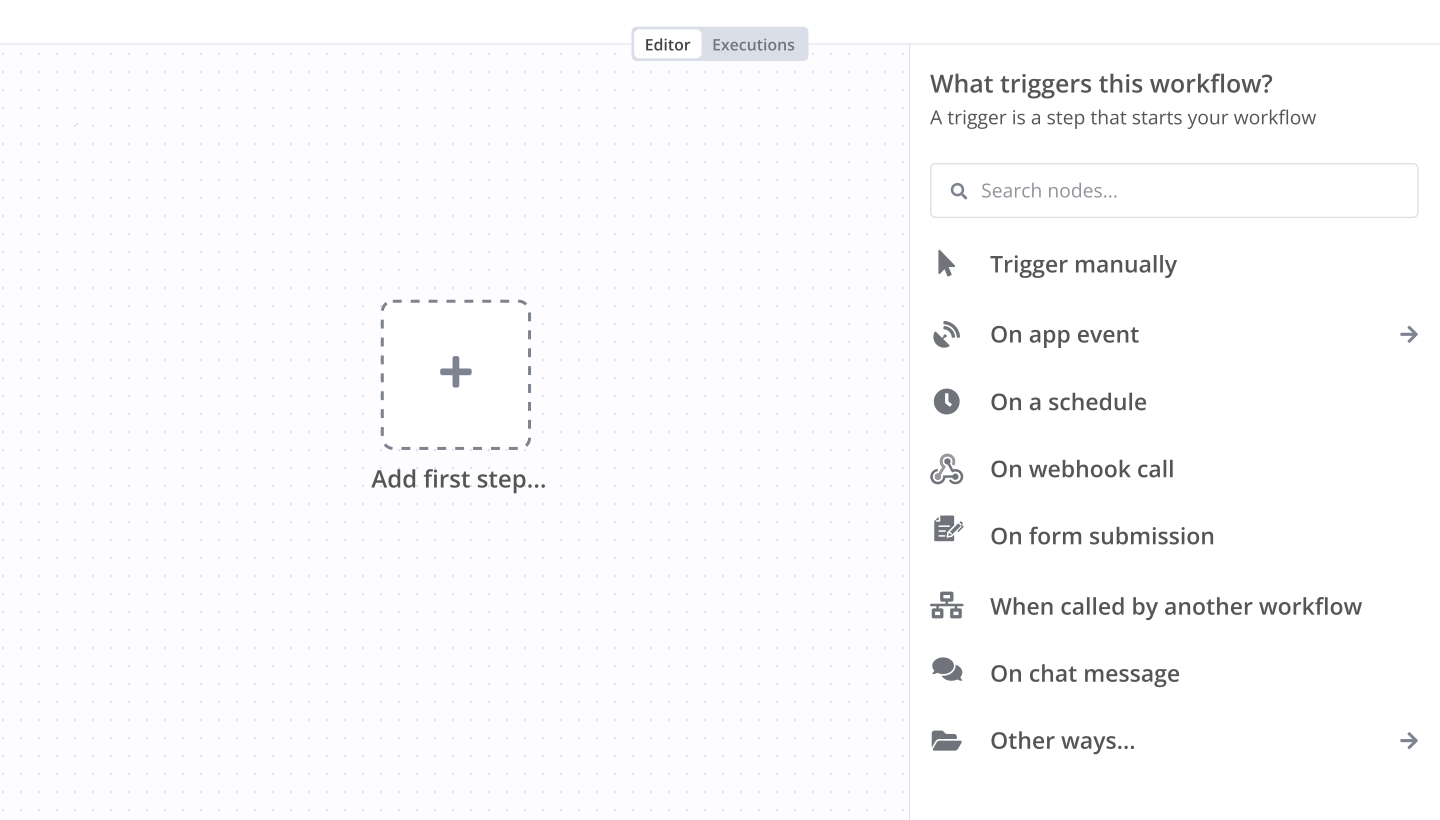
Gmail and Google Ads integration: Create a new workflow and add the first step

Step 2: Add and configure Gmail and Google Ads nodes

You can find Gmail and Google Ads in the nodes panel. Drag them onto your workflow canvas, selecting their actions. Click each node, choose a credential, and authenticate to grant n8n access. Configure Gmail and Google Ads nodes one by one: input data on the left, parameters in the middle, and output data on the right.

Gmail and Google Ads integration: Add and configure Gmail and Google Ads nodes

Step 3: Connect Gmail and Google Ads

A connection establishes a link between Gmail and Google Ads (or vice versa) to route data through the workflow. Data flows from the output of one node to the input of another. You can have single or multiple connections for each node.

Gmail and Google Ads integration: Connect Gmail and Google Ads

Step 4: Customize and extend your Gmail and Google Ads integration

Use n8n's core nodes such as If, Split Out, Merge, and others to transform and manipulate data. Write custom JavaScript or Python in the Code node and run it as a step in your workflow. Connect Gmail and Google Ads with any of n8n’s 1000+ integrations, and incorporate advanced AI logic into your workflows.

Gmail and Google Ads integration: Customize and extend your Gmail and Google Ads integration

Step 5: Test and activate your Gmail and Google Ads workflow

Save and run the workflow to see if everything works as expected. Based on your configuration, data should flow from Gmail to Google Ads or vice versa. Easily debug your workflow: you can check past executions to isolate and fix the mistake. Once you've tested everything, make sure to save your workflow and activate it.

Gmail and Google Ads integration: Test and activate your Gmail and Google Ads workflow

Automate unified marketing reports with Google Analytics, Google Ads, Meta Ads & HubSpot

How it works
This workflow runs on scheduled weekly and monthly triggers to generate unified marketing performance reports. It processes multiple websites by collecting analytics data, paid ads performance, and CRM leads, then calculates KPIs and insights automatically. The workflow sends structured reports via email and stores historical data in Google Sheets. It ensures consistent reporting without manual effort.

Step-by-step
Step 1: Trigger & report type detection**
Schedule Trigger2 – Triggers the workflow weekly at a predefined time.
Schedule Trigger3 – Triggers the workflow monthly at a predefined time.
check month and week1 – Identifies whether the run is weekly or monthly and sets flags.
Set Websites and Campaings1 – Defines websites, GA4 property IDs, and mapped ad campaigns.
Expand Websites1 – Expands the website array into individual website items.
Attach Run Flags1 – Attaches weekly or monthly flags to each website record.

Step 2: Website & ads data processing**
Loop Websites1 – Iterates through each website independently.
Get a report – Fetches website traffic and engagement metrics from analytics.
Get many campaigns – Retrieves Google Ads campaign data.
Fetch Meta Ads – Fetches Meta Ads performance data via API.
Filter Google Ads By Website1 – Filters Google Ads campaigns by website.
Filter Meta Ads By Website1 – Filters Meta Ads campaigns by website.
Merge1 – Merges analytics, Google Ads, and Meta Ads datasets.
Build Website Dataset1 – Builds a unified dataset per website.
Calculate KPIs & Campaign Insights1 – Calculates spend, CTR, CPA, CPL, conversions, and performance insights.
Append or update row in sheet2 – Stores website-level marketing metrics in Google Sheets.

Step 2.1: Marketing report generation**
Prepare Report Data2 – Combines all website datasets into a unified report object.
Switch – Routes execution based on weekly or monthly report type.
Send Weekly Marketing report2 – Sends the weekly marketing performance email.
Send Monthly Marketing Report2 – Sends the monthly marketing performance email.

Step 3: HubSpot lead analysis**
Fetch1 – Fetches leads from HubSpot CRM.
Filter Hubspot Leads – Filters leads based on weekly or monthly time range.
Summarize Hubspot Leads – Aggregates lead status and lifecycle metrics.
Prepare Report Data3 – Prepares CRM summary data for reporting.
Step 3.1: CRM reporting & storage**
Switch3 – Routes CRM reporting by report type.
Send Weekly Marketing report3 – Sends the weekly CRM summary email.
Send Monthly Marketing Report3 – Sends the monthly CRM summary email.
Code in JavaScript1 – Transforms CRM data for storage.
Append or update row in sheet3 – Stores CRM lead performance data in Google Sheets.
Switch3 – Routes CRM reporting by report type.
Send Weekly Marketing report3 – Sends the weekly CRM summary email.
Send Monthly Marketing Report3 – Sends the monthly CRM summary email.
Code in JavaScript1 – Transforms CRM data for storage.
Append or update row in sheet3 – Stores CRM lead performance data in Google Sheets.

Why use this?
Automates complex weekly and monthly marketing reporting.
Unifies website analytics, ad platforms, and CRM data in one flow.
Delivers consistent KPI calculations and insights every run.
Maintains historical performance logs in Google Sheets.
Scales easily across multiple websites and campaigns.

Nodes used in this workflow

Popular Gmail and Google Ads workflows

+2

Automate unified marketing reports with Google Analytics, Google Ads, Meta Ads & HubSpot

How it works This workflow runs on scheduled weekly and monthly triggers to generate unified marketing performance reports. It processes multiple websites by collecting analytics data, paid ads performance, and CRM leads, then calculates KPIs and insights automatically. The workflow sends structured reports via email and stores historical data in Google Sheets. It ensures consistent reporting without manual effort. Step-by-step Step 1: Trigger & report type detection** Schedule Trigger2 – Triggers the workflow weekly at a predefined time. Schedule Trigger3 – Triggers the workflow monthly at a predefined time. check month and week1 – Identifies whether the run is weekly or monthly and sets flags. Set Websites and Campaings1 – Defines websites, GA4 property IDs, and mapped ad campaigns. Expand Websites1 – Expands the website array into individual website items. Attach Run Flags1 – Attaches weekly or monthly flags to each website record. Step 2: Website & ads data processing** Loop Websites1 – Iterates through each website independently. Get a report – Fetches website traffic and engagement metrics from analytics. Get many campaigns – Retrieves Google Ads campaign data. Fetch Meta Ads – Fetches Meta Ads performance data via API. Filter Google Ads By Website1 – Filters Google Ads campaigns by website. Filter Meta Ads By Website1 – Filters Meta Ads campaigns by website. Merge1 – Merges analytics, Google Ads, and Meta Ads datasets. Build Website Dataset1 – Builds a unified dataset per website. Calculate KPIs & Campaign Insights1 – Calculates spend, CTR, CPA, CPL, conversions, and performance insights. Append or update row in sheet2 – Stores website-level marketing metrics in Google Sheets. Step 2.1: Marketing report generation** Prepare Report Data2 – Combines all website datasets into a unified report object. Switch – Routes execution based on weekly or monthly report type. Send Weekly Marketing report2 – Sends the weekly marketing performance email. Send Monthly Marketing Report2 – Sends the monthly marketing performance email. Step 3: HubSpot lead analysis** Fetch1 – Fetches leads from HubSpot CRM. Filter Hubspot Leads – Filters leads based on weekly or monthly time range. Summarize Hubspot Leads – Aggregates lead status and lifecycle metrics. Prepare Report Data3 – Prepares CRM summary data for reporting. Step 3.1: CRM reporting & storage** Switch3 – Routes CRM reporting by report type. Send Weekly Marketing report3 – Sends the weekly CRM summary email. Send Monthly Marketing Report3 – Sends the monthly CRM summary email. Code in JavaScript1 – Transforms CRM data for storage. Append or update row in sheet3 – Stores CRM lead performance data in Google Sheets. Switch3 – Routes CRM reporting by report type. Send Weekly Marketing report3 – Sends the weekly CRM summary email. Send Monthly Marketing Report3 – Sends the monthly CRM summary email. Code in JavaScript1 – Transforms CRM data for storage. Append or update row in sheet3 – Stores CRM lead performance data in Google Sheets. Why use this? Automates complex weekly and monthly marketing reporting. Unifies website analytics, ad platforms, and CRM data in one flow. Delivers consistent KPI calculations and insights every run. Maintains historical performance logs in Google Sheets. Scales easily across multiple websites and campaigns.
+2

Monitor Ad Performance Drops with Meta & Google Ads + Multi-channel Alerts

How it works This workflow monitors Meta Ads and Google Ads campaigns on a daily schedule to detect performance drops. It fetches yesterday’s campaign data, standardizes metrics, and calculates CTR and ROAS against fixed benchmarks. Campaigns that fall below thresholds are flagged automatically. Alerts are then sent across multiple channels and all results are logged in Google Sheets for tracking. Step-by-step Step 1: Fetch ad performance data** Schedule Trigger (Daily Ad Check2) – Runs the Meta Ads performance check at the scheduled time. HTTP Request (Fetch Meta Ads Data) – Retrieves campaign metrics from the Meta Ads API. Set (Set Benchmarks) – Normalizes Meta Ads data and assigns platform details. Schedule Trigger (Daily Ad Check3) – Runs the Google Ads performance check at a separate scheduled time. Google Ads (Get many campaigns) – Fetches campaign performance data from Google Ads. Set (Set Benchmarks4) – Normalizes Google Ads data and assigns platform details. Step 2: Detect performance drops** Code (Detect Performance Drop) – Calculates CTR and ROAS, compares them with predefined benchmarks, and flags drops. If – Filters only campaigns where a performance drop is detected. Split In Batches (Loop Over Items) – Processes each affected campaign individually. Step 3: Alert and log results** WhatsApp (Send message1) – Sends instant WhatsApp alerts for critical visibility. Slack (Send a message) – Posts detailed alerts to a Slack channel. Gmail (Send a message4) – Sends email notifications with full campaign metrics. Code (Code in JavaScript) – Recombines campaign data after notifications. Wait (Wait1) – Ensures alert delivery before logging. Google Sheets (your-google-sheets-name) – Appends or updates campaign records for reporting and audit history. Why use this? Catch CTR and ROAS drops before ad spend is wasted. Monitor Meta Ads and Google Ads in a single automated flow. Notify teams instantly via WhatsApp, Slack, and Email. Keep a centralized performance log for analysis and reporting. Reduce manual checks with consistent daily monitoring.
+2

AI-Powered Multi-Channel Customer Journey with Email, SMS & Retargeting using OpenAI

How It Works This workflow automates personalized customer journeys by analyzing CRM data, purchase history, chat interactions, and performance metrics to intelligently route customer actions through multiple channels (email, SMS, retargeting) via AI-optimized schemas. A webhook trigger initiates the process by fetching CRM customer data, which is then merged with historical records and interactions. OpenAI builds comprehensive customer state profiles, enabling intelligent routing to appropriate channels using optimized journey logic. The system aggregates performance metrics in real-time and updates the database to maintain synchronized customer information across all systems. Setup Steps Connect CRM credentials (source system) Add OpenAI API key for state builder Configure Gmail/SMS provider credentials Add Google Sheets connection for performance tracking Set Touchpoint Event Webhook URL Map database connection for customer state persistence Prerequisites OpenAI API key, CRM access, Gmail/SMS provider accounts, Google Sheets, database (PostgreSQL/MySQL), n8n instance with webhook enabled. Use Cases E-commerce personalization, SaaS customer retention, multi-touch marketing automation Customization Modify journey schemas in Journey Optimizer AI, adjust routing rules in Action Type Router Benefits Reduces manual campaign management 80%, improves conversion via AI personalization

Build your own Gmail and Google Ads integration

Create custom Gmail and Google Ads workflows by choosing triggers and actions. Nodes come with global operations and settings, as well as app-specific parameters that can be configured. You can also use the HTTP Request node to query data from any app or service with a REST API.

Gmail supported actions

Add Label
Delete
Get
Get Many
Mark as Read
Mark as Unread
Remove Label
Reply
Send
Send and Wait for Response
Create
Delete
Get
Get Many
Create
Delete
Get
Get Many
Add Label
Delete
Get
Get Many
Remove Label
Reply
Trash
Untrash

Google Ads supported actions

Get Many
Get many campaigns linked to the specified account
Get
Get a specific campaign

FAQs

  • Can Gmail connect with Google Ads?

  • Can I use Gmail’s API with n8n?

  • Can I use Google Ads’s API with n8n?

  • Is n8n secure for integrating Gmail and Google Ads?

  • How to get started with Gmail and Google Ads integration in n8n.io?

Need help setting up your Gmail and Google Ads integration?

Discover our latest community's recommendations and join the discussions about Gmail and Google Ads integration.
jake chard
Jan Koch
Paul Kennard
Du Ponce

Looking to integrate Gmail and Google Ads in your company?

Over 3000 companies switch to n8n every single week

Why use n8n to integrate Gmail with Google Ads

Build complex workflows, really fast

Build complex workflows, really fast

Handle branching, merging and iteration easily.
Pause your workflow to wait for external events.

Code when you need it, UI when you don't

Simple debugging

Your data is displayed alongside your settings, making edge cases easy to track down.

Use templates to get started fast

Use 1000+ workflow templates available from our core team and our community.

Reuse your work

Copy and paste, easily import and export workflows.

Implement complex processes faster with n8n

red iconyellow iconred iconyellow icon