Back to Integrations
integrationGmail node
integrationGoogle Cloud Storage node

Gmail and Google Cloud Storage integration

Save yourself the work of writing custom integrations for Gmail and Google Cloud Storage and use n8n instead. Build adaptable and scalable Communication, HITL, Development, and Data & Storage workflows that work with your technology stack. All within a building experience you will love.

How to connect Gmail and Google Cloud Storage

  • Step 1: Create a new workflow
  • Step 2: Add and configure nodes
  • Step 3: Connect
  • Step 4: Customize and extend your integration
  • Step 5: Test and activate your workflow

Step 1: Create a new workflow and add the first step

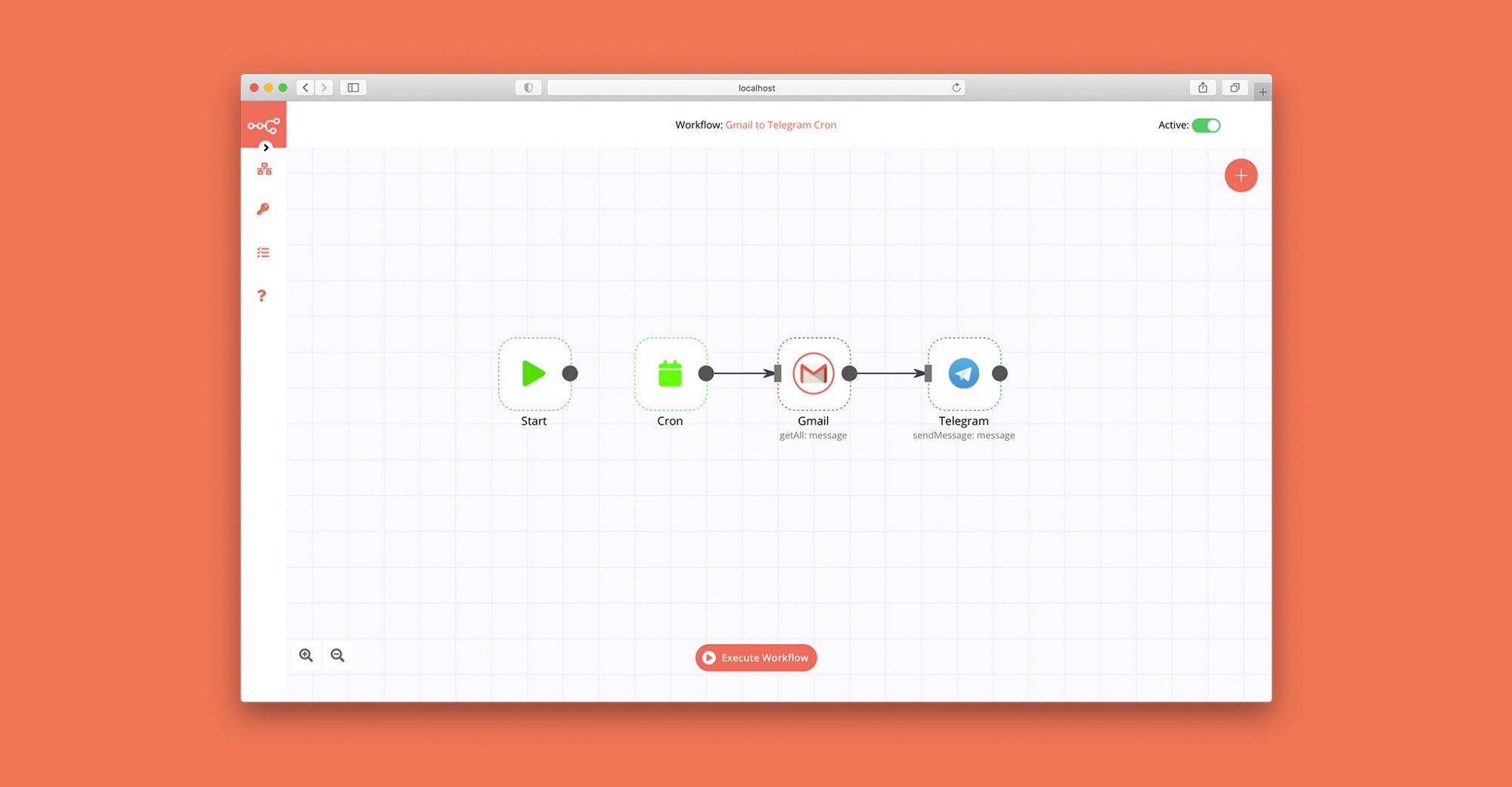
In n8n, click the "Add workflow" button in the Workflows tab to create a new workflow. Add the starting point – a trigger on when your workflow should run: an app event, a schedule, a webhook call, another workflow, an AI chat, or a manual trigger. Sometimes, the HTTP Request node might already serve as your starting point.
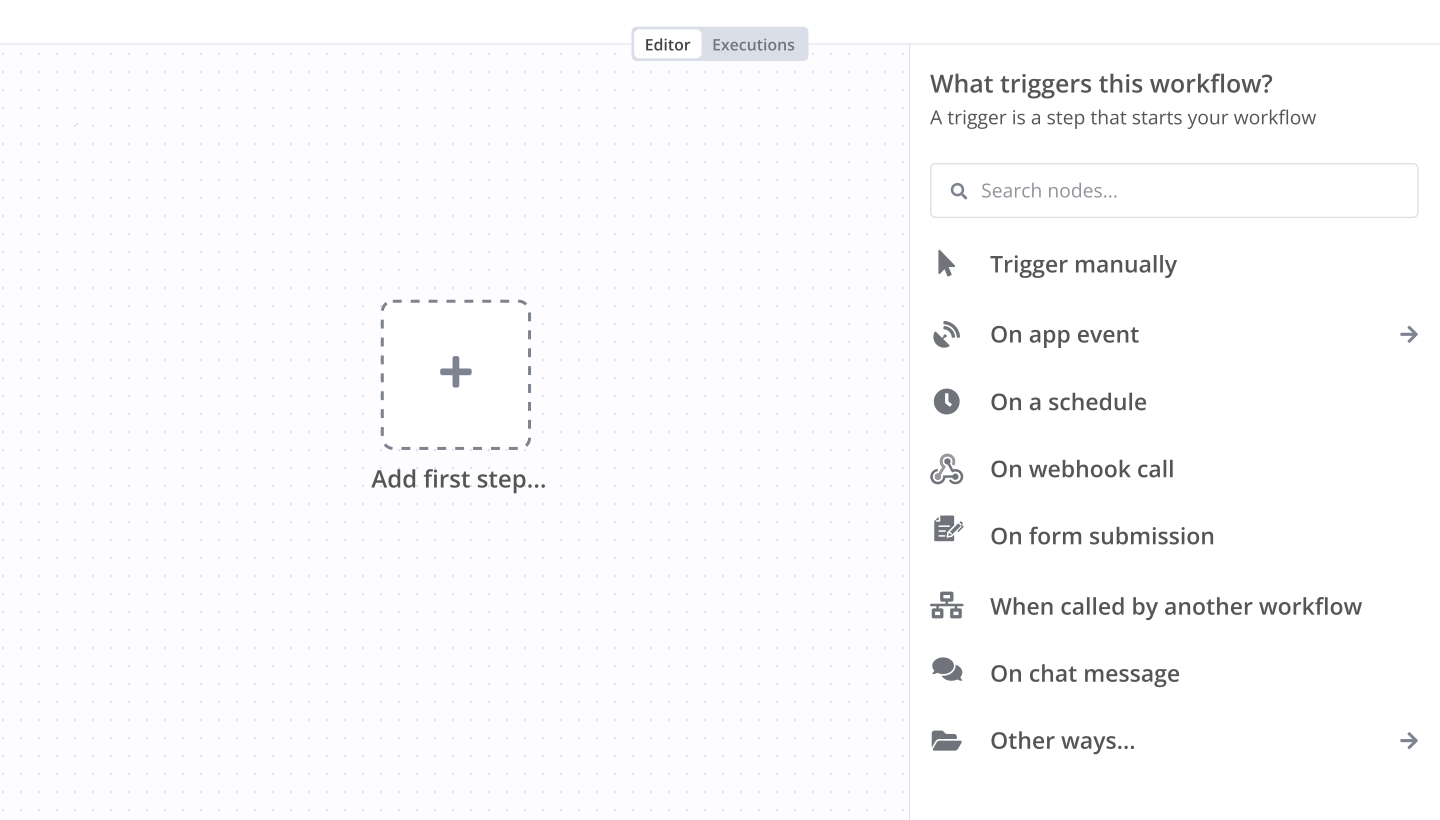
Gmail and Google Cloud Storage integration: Create a new workflow and add the first step

Step 2: Add and configure Gmail and Google Cloud Storage nodes

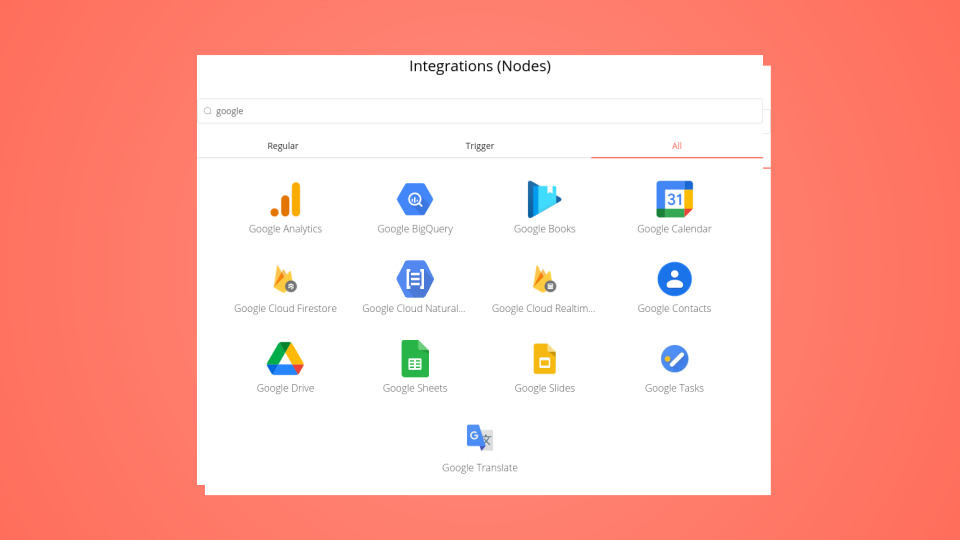
You can find Gmail and Google Cloud Storage in the nodes panel. Drag them onto your workflow canvas, selecting their actions. Click each node, choose a credential, and authenticate to grant n8n access. Configure Gmail and Google Cloud Storage nodes one by one: input data on the left, parameters in the middle, and output data on the right.

Gmail and Google Cloud Storage integration: Add and configure Gmail and Google Cloud Storage nodes

Step 3: Connect Gmail and Google Cloud Storage

A connection establishes a link between Gmail and Google Cloud Storage (or vice versa) to route data through the workflow. Data flows from the output of one node to the input of another. You can have single or multiple connections for each node.

Gmail and Google Cloud Storage integration: Connect Gmail and Google Cloud Storage

Step 4: Customize and extend your Gmail and Google Cloud Storage integration

Use n8n's core nodes such as If, Split Out, Merge, and others to transform and manipulate data. Write custom JavaScript or Python in the Code node and run it as a step in your workflow. Connect Gmail and Google Cloud Storage with any of n8n’s 1000+ integrations, and incorporate advanced AI logic into your workflows.

Gmail and Google Cloud Storage integration: Customize and extend your Gmail and Google Cloud Storage integration

Step 5: Test and activate your Gmail and Google Cloud Storage workflow

Save and run the workflow to see if everything works as expected. Based on your configuration, data should flow from Gmail to Google Cloud Storage or vice versa. Easily debug your workflow: you can check past executions to isolate and fix the mistake. Once you've tested everything, make sure to save your workflow and activate it.

Gmail and Google Cloud Storage integration: Test and activate your Gmail and Google Cloud Storage workflow

Automate research-based newsletters with Perplexity, GPT-4, and image generation

This n8n workflow automates the process of creating and sending high-quality newsletters with images generated by a GPT image generator. It is triggered on a schedule.

What is included?

1 n8n workflow (json)
1 Setup tutorial doc
1 video guidance on how to connect n8n with all Google products
1 video guidance on how to connect n8n with Google Cloud Storage

Who is this for?

This template is ideal for:

Content creators looking to automate their newsletter process.
Marketers seeking to efficiently produce engaging newsletters with AI-generated content and imagery.
Anyone wanting to create and send personalized newsletters on a schedule.

What problem is this workflow solving?

Manually creating and sending newsletters can be time-consuming, especially when including relevant and engaging content and imagery. This workflow automates the content generation (using AI and web search), image creation, and sending process, freeing up time and ensuring consistent communication with clients.

What this workflow does:

This workflow automates the following steps:

Scheduled Trigger: The workflow is triggered automatically on a predefined schedule.

Get Newsletter Topic: Retrieves the first unpublished newsletter topic from a Google Sheet titled "Newsletter Topics". It then updates the status of this topic and records the publication date to avoid duplication in future runs.

AI Newsletter & Image Generator: This is the core content creation step. It uses an AI agent (configured with OpenAI and Perplexity APIs) to generate an engaging newsletter and a detailed, ultra-realistic image prompt based on the selected topic and real-time web research.

GPT Image Generation: Uses the OpenAI API to generate an image based on the detailed image prompt created in the previous step.

Get Client List: Retrieves client names and email addresses from a Google Sheet titled "Clients".

Send Newsletter: Sends the personalized newsletter via Gmail to each client on the list, including the AI-generated title, content, and the uploaded image. The email body HTML is customizable.

Setup:

Configure the workflow's run frequency within the "Schedule Trigger" node.

Create a Google Sheet named "Newsletter Topics" and "Clients" in your Google Drive.

Enter your OpenAI and Perplexity API key in the 'Input' node.

Connect your Gmail account to the "SendNewsletter" node.

How to customize this workflow:

Adjust the prompt for your newsletter style in the "AI Agent" node.

Adjust the Email Body HTML for your newsletter style in the "SendNewsletter" node.

Optionally, enable the "Tavily WebSearch" node and configure it if you prefer to use Tavily instead of Perplexity for web search.

Category:

Marketing, Content Creation, Automation

Nodes used in this workflow

Popular Gmail and Google Cloud Storage workflows

+2

Automate Research-Based Newsletters with Perplexity, GPT-4, and Image Generation

This n8n workflow automates the process of creating and sending high-quality newsletters with images generated by a GPT image generator. It is triggered on a schedule. What is included? 1 n8n workflow (json) 1 Setup tutorial doc 1 video guidance on how to connect n8n with all Google products 1 video guidance on how to connect n8n with Google Cloud Storage Who is this for? This template is ideal for: Content creators looking to automate their newsletter process. Marketers seeking to efficiently produce engaging newsletters with AI-generated content and imagery. Anyone wanting to create and send personalized newsletters on a schedule. What problem is this workflow solving? Manually creating and sending newsletters can be time-consuming, especially when including relevant and engaging content and imagery. This workflow automates the content generation (using AI and web search), image creation, and sending process, freeing up time and ensuring consistent communication with clients. What this workflow does: This workflow automates the following steps: Scheduled Trigger: The workflow is triggered automatically on a predefined schedule. Get Newsletter Topic: Retrieves the first unpublished newsletter topic from a Google Sheet titled "Newsletter Topics". It then updates the status of this topic and records the publication date to avoid duplication in future runs. AI Newsletter & Image Generator: This is the core content creation step. It uses an AI agent (configured with OpenAI and Perplexity APIs) to generate an engaging newsletter and a detailed, ultra-realistic image prompt based on the selected topic and real-time web research. GPT Image Generation: Uses the OpenAI API to generate an image based on the detailed image prompt created in the previous step. Get Client List: Retrieves client names and email addresses from a Google Sheet titled "Clients". Send Newsletter: Sends the personalized newsletter via Gmail to each client on the list, including the AI-generated title, content, and the uploaded image. The email body HTML is customizable. Setup: Configure the workflow's run frequency within the "Schedule Trigger" node. Create a Google Sheet named "Newsletter Topics" and "Clients" in your Google Drive. Enter your OpenAI and Perplexity API key in the 'Input' node. Connect your Gmail account to the "SendNewsletter" node. How to customize this workflow: Adjust the prompt for your newsletter style in the "AI Agent" node. Adjust the Email Body HTML for your newsletter style in the "SendNewsletter" node. Optionally, enable the "Tavily WebSearch" node and configure it if you prefer to use Tavily instead of Perplexity for web search. Category: Marketing, Content Creation, Automation

Monitor backup and sync logs with Google Cloud Storage, GitHub, Gmail, OpenAI, and GLPI

Reliable Backup & Sync Execution Validation (Log-Driven) This workflow monitors filesystem sync and backup jobs by validating their execution logs, not by running or inspecting the jobs themselves. After purchase, you will receive a complete package including: workflow.json** – ready to be imported into n8n Shell script templates (.sh)** – reference sync job templates designed to generate structured logs fully compatible with the workflow Complete setup documentation** – step-by-step guide covering configuration, deployment, and operational requirements How it works (high level) Sync jobs are executed externally using standardized shell templates: rsync_job-Template.sh rclone_job-Template.sh Each job produces one deterministic log file per run Logs are uploaded daily to Google Cloud Storage This workflow runs on a schedule and: Verifies that all expected logs exist for the day (UTC) Optionally inspects their contents Sends alerts if logs are missing or report failures Key design principles Log-driven monitoring** (evidence-based, not assumption-based) One job = one log = one source of truth** No SSH, no server access, no execution coupling** Safe to run in untrusted or restricted environments Logging contract (required) Each log file must contain the following lifecycle events, in order: event=START event=RSYNC_END or event=RCLONE_END event=SUMMARY event=END If the END event is missing, the job is considered failed or interrupted. Configuration Expected jobs and log filenames are defined in sync-jobs.json. This workflow only validates presence and state of logs — it never assumes job success.

Build your own Gmail and Google Cloud Storage integration

Create custom Gmail and Google Cloud Storage workflows by choosing triggers and actions. Nodes come with global operations and settings, as well as app-specific parameters that can be configured. You can also use the HTTP Request node to query data from any app or service with a REST API.

Gmail supported actions

Add Label
Delete
Get
Get Many
Mark as Read
Mark as Unread
Remove Label
Reply
Send
Send and Wait for Response
Create
Delete
Get
Get Many
Create
Delete
Get
Get Many
Add Label
Delete
Get
Get Many
Remove Label
Reply
Trash
Untrash

Google Cloud Storage supported actions

Create
Create a new Bucket
Delete
Delete an empty Bucket
Get
Get metadata for a specific Bucket
Get Many
Get list of Buckets
Update
Update the metadata of a bucket
Create
Create an object
Delete
Delete an object
Get
Get object data or metadata
Get Many
Retrieve a list of objects
Update
Update an object's metadata

FAQs

  • Can Gmail connect with Google Cloud Storage?

  • Can I use Gmail’s API with n8n?

  • Can I use Google Cloud Storage’s API with n8n?

  • Is n8n secure for integrating Gmail and Google Cloud Storage?

  • How to get started with Gmail and Google Cloud Storage integration in n8n.io?

Need help setting up your Gmail and Google Cloud Storage integration?

Discover our latest community's recommendations and join the discussions about Gmail and Google Cloud Storage integration.
jake chard
Jan Koch
Paul Kennard

Looking to integrate Gmail and Google Cloud Storage in your company?

Over 3000 companies switch to n8n every single week

Why use n8n to integrate Gmail with Google Cloud Storage

Build complex workflows, really fast
Build complex workflows, really fast

Handle branching, merging and iteration easily.
Pause your workflow to wait for external events.

Code when you need it, UI when you don't

Simple debugging

Your data is displayed alongside your settings, making edge cases easy to track down.

Use templates to get started fast

Use 1000+ workflow templates available from our core team and our community.

Reuse your work

Copy and paste, easily import and export workflows.

Implement complex processes faster with n8n

red iconyellow iconred iconyellow icon