Back to Integrations
integrationGmail node
integrationHTTP Request node

Gmail and HTTP Request integration

Save yourself the work of writing custom integrations for Gmail and HTTP Request and use n8n instead. Build adaptable and scalable Communication, HITL, Development, and Core Nodes workflows that work with your technology stack. All within a building experience you will love.

How to connect Gmail and HTTP Request

  • Step 1: Create a new workflow
  • Step 2: Add and configure nodes
  • Step 3: Connect
  • Step 4: Customize and extend your integration
  • Step 5: Test and activate your workflow

Step 1: Create a new workflow and add the first step

In n8n, click the "Add workflow" button in the Workflows tab to create a new workflow. Add the starting point – a trigger on when your workflow should run: an app event, a schedule, a webhook call, another workflow, an AI chat, or a manual trigger. Sometimes, the HTTP Request node might already serve as your starting point.
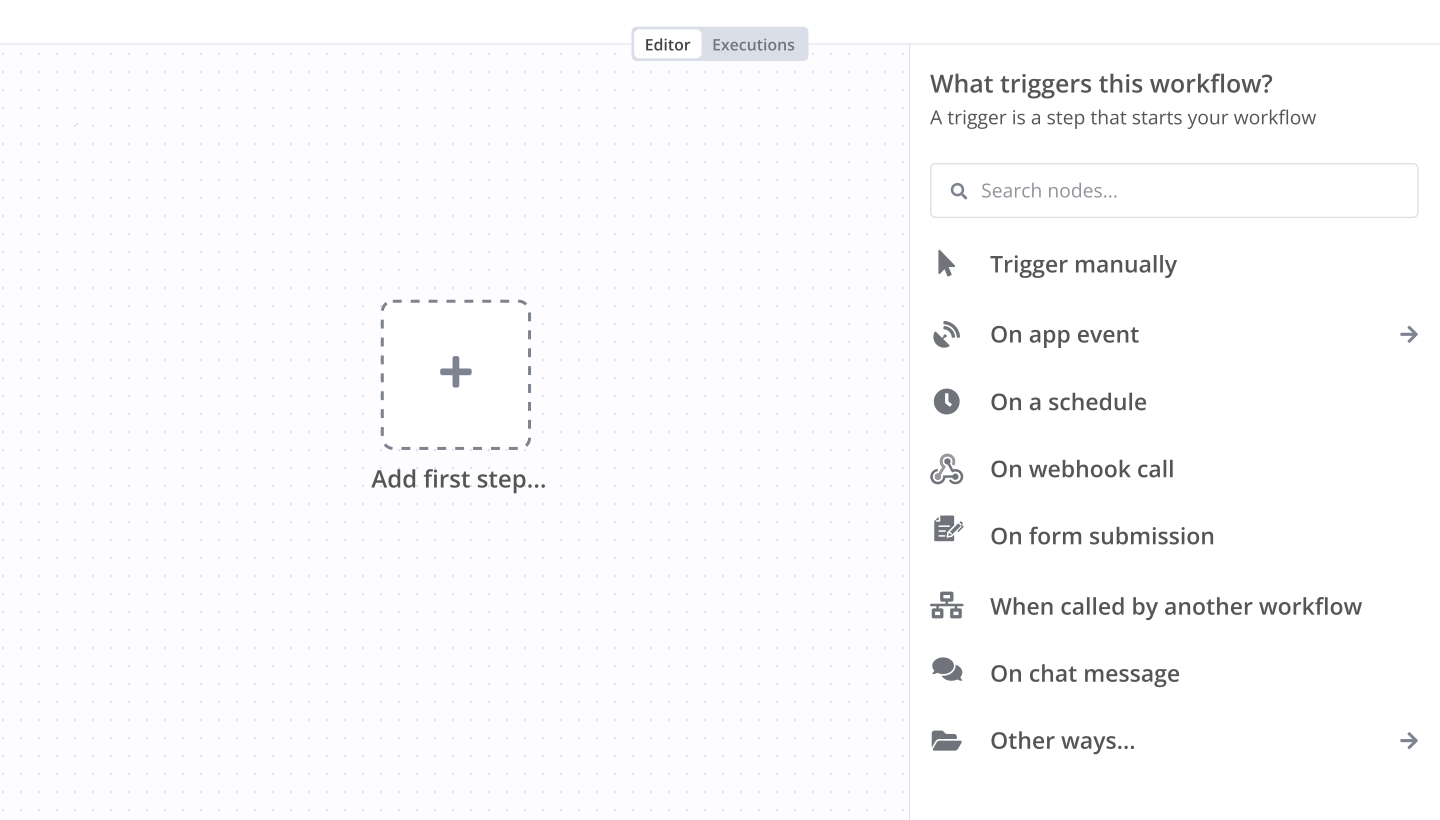
Gmail and HTTP Request integration: Create a new workflow and add the first step

Step 2: Add and configure Gmail and HTTP Request nodes

You can find Gmail and HTTP Request in the nodes panel. Drag them onto your workflow canvas, selecting their actions. Click each node, choose a credential, and authenticate to grant n8n access. Configure Gmail and HTTP Request nodes one by one: input data on the left, parameters in the middle, and output data on the right.

Gmail and HTTP Request integration: Add and configure Gmail and HTTP Request nodes

Step 3: Connect Gmail and HTTP Request

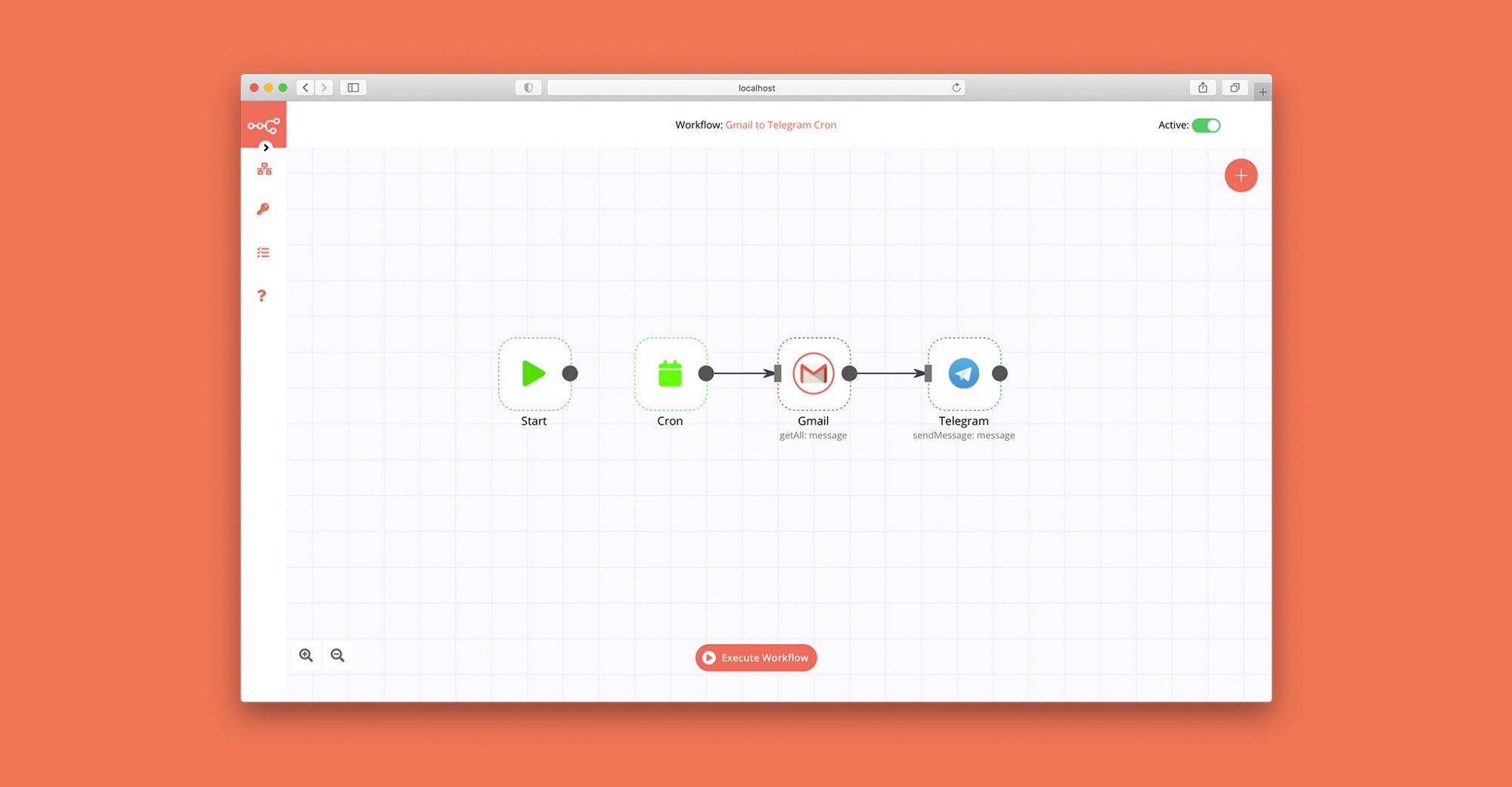
A connection establishes a link between Gmail and HTTP Request (or vice versa) to route data through the workflow. Data flows from the output of one node to the input of another. You can have single or multiple connections for each node.

Gmail and HTTP Request integration: Connect Gmail and HTTP Request

Step 4: Customize and extend your Gmail and HTTP Request integration

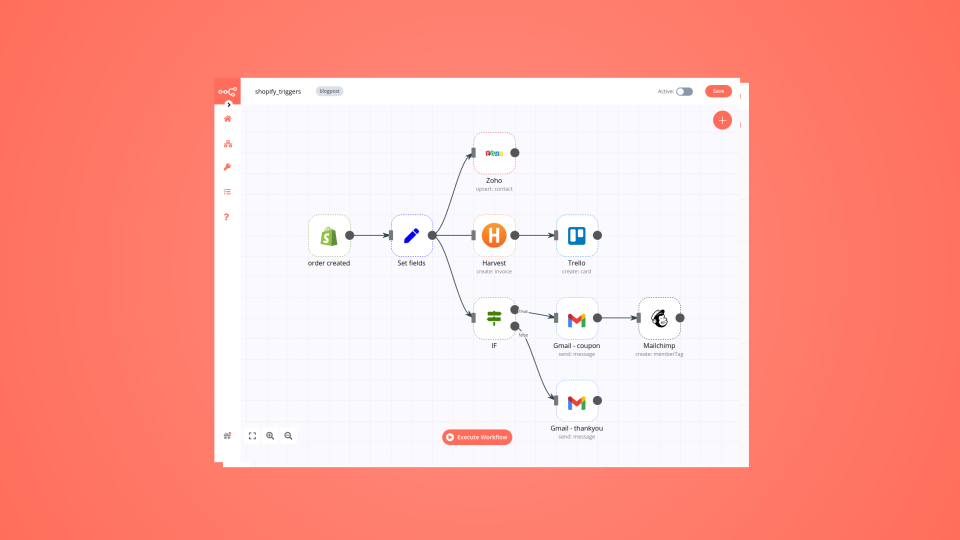
Use n8n's core nodes such as If, Split Out, Merge, and others to transform and manipulate data. Write custom JavaScript or Python in the Code node and run it as a step in your workflow. Connect Gmail and HTTP Request with any of n8n’s 1000+ integrations, and incorporate advanced AI logic into your workflows.

Gmail and HTTP Request integration: Customize and extend your Gmail and HTTP Request integration

Step 5: Test and activate your Gmail and HTTP Request workflow

Save and run the workflow to see if everything works as expected. Based on your configuration, data should flow from Gmail to HTTP Request or vice versa. Easily debug your workflow: you can check past executions to isolate and fix the mistake. Once you've tested everything, make sure to save your workflow and activate it.

Gmail and HTTP Request integration: Test and activate your Gmail and HTTP Request workflow

✨🤖Automate Multi-Platform Social Media Content Creation with AI

Automate Multi-Platform Social Media Content Creation with AI

Who is this for?
Social Media Managers and Digital Marketers seeking to streamline content production across 7+ platforms (X/Twitter, Instagram, LinkedIn, Facebook, TikTok, Threads, YouTube Shorts) using AI-powered automation.

What problem does this solve?
Creating platform-optimized content at scale while maintaining brand consistency across multiple channels, reducing manual work by 80% through AI generation and automated publishing.

What this workflow does
AI Content Generation:
Uses GPT-4/Gemini to create platform-specific posts
Automatically generates hashtags, CTAs, and emoji placement
Supports image/video suggestions and image creation using OpenAI or Pollinations.ai
Uses SERP api to search for relavent content

Approval Workflow:
Sends formatted HTML emails for human review
Implements double-approval system with Gmail integration

Cross-Platform Publishing:
One-click deployment to:
Instagram/Facebook (via Graph API)
X/Twitter (Official API)
LinkedIn (Sales Navigator integration)

Setup
Credentials:
OpenAI API key
Google Gemini API
Social media platform tokens (X, LinkedIn, Facebook)
ImgBB for image hosting
Gmail
SERP API
Telegram

Configuration:
Update all "your-unique-id" placeholders in API nodes
Set email recipients in Gmail nodes
Customize AI prompts

Customization:
Adjust character limits per platform
Modify approval thresholds
Add/remove social platforms as needed

How to customize
Content Style**: Edit prompt templates in the "Social Media Content Factory" agent node
Approval Process**: Modify email templates
Analytics**: Connect to Google Sheets for performance tracking
Image Generation**: Switch between Pollinations.ai/DALL-E/Midjourney

Nodes used in this workflow

Popular Gmail and HTTP Request workflows

+5

Create & Upload AI-Generated ASMR YouTube Shorts with Seedance, Fal AI, and GPT-4

//ASMR AI Workflow Who is this for? Content Creators, YouTube Automation Enthusiasts, and AI Hobbyists looking to autonomously generate and publish unique, satisfying ASMR-style YouTube Shorts without manual effort. What problem does this solve? This workflow solves the creative bottleneck and time-consuming nature of daily content creation. It fully automates the entire production pipeline, from brainstorming trendy ideas to publishing a finished video, turning your n8n instance into a 24/7 content factory. What this workflow does Two-Stage AI Ideation & Planning: Uses an initial AI agent to brainstorm a short, viral ASMR concept based on current trends. A second "Planning" AI agent then takes this concept and expands it into a detailed, structured production plan, complete with a viral-optimized caption, hashtags, and descriptions for the environment and sound. Multi-Modal Asset Generation: Video:* Feeds detailed scene prompts to the ByteDance Seedance* text-to-video model (via Wavespeed AI) to generate high-quality video clips. Audio:* Simultaneously calls the Fal AI* text-to-audio model to create custom, soothing ASMR sound effects that match the video's theme. Assembly:** Automatically sequences the video clips and sound into a single, cohesive final video file using an FFMPEG API call. Closed-Loop Publishing & Logging: Logging:** Initially logs the new idea to a Google Sheet with a status of "In Progress". Publishing:** Automatically uploads the final, assembled video directly to your YouTube channel, setting the title and description from the AI's plan. Updating:** Finds the original row in the Google Sheet and updates its status to "Done", adding a direct link to the newly published YouTube video. Notifications:** Sends real-time alerts to Telegram and/or Gmail with the video title and link, confirming the successful publication. Setup Credentials: You will need to create credentials in your n8n instance for the following services: OpenAI API Wavespeed AI API (for Seedance) Fal AI API Google OAuth Credential (enable YouTube Data API v3 and Google Sheets API in your Google Cloud Project) Telegram Bot Credential (Optional) Gmail OAuth Credential Configuration: This is an advanced workflow. The initial setup should take approximately 15-20 minutes. Google Sheet:* Create a Google Sheet with these columns: idea, caption, production_status, youtube_url. Add the Sheet ID* to the Google Sheets nodes in the workflow. Node Configuration:** In the Telegram Notification node, enter your own Chat ID. In the Gmail Notification node, update the recipient email address. Activate:** Once configured, save and set the workflow to "Active" to let it run on its schedule. How to customize Creative Direction:* To change the style or theme of the videos (e.g., from kinetic sand to soap cutting), simply edit the systemMessage in the "2. Enrich Idea into Plan" and "Prompts AI Agent"* nodes. Initial Ideas:* To influence the AI's starting concepts, modify the prompt in the "1. Generate Trendy Idea"* node. Video & Sound:* To change the video duration or sound style, adjust the parameters in the "Create Clips" and "Create Sounds"* nodes. Notifications:* Add or remove notification channels (like Slack or Discord) after the "Upload to YouTube"* node.

Automated Job Applications & Status Tracking with LinkedIn, Indeed & Google Sheets

Apply to jobs automatically from Google Sheets with status tracking Who's it for Job seekers who want to streamline their application process, save time on repetitive tasks, and never miss following up on applications. Perfect for anyone managing multiple job applications across different platforms. What it does This workflow automatically applies to jobs from a Google Sheet, tracks application status, and keeps you updated with notifications. It handles the entire application lifecycle from submission to status monitoring. Key features: Reads job listings from Google Sheets with filtering by priority and status Automatically applies to jobs on LinkedIn, Indeed, and other platforms Updates application status in real-time Checks application status every 2 days and notifies you of changes Sends email notifications for successful applications and status updates Prevents duplicate applications and manages rate limiting How it works The workflow runs on two main schedules: Daily Application Process (9 AM, weekdays): Reads your job list from Google Sheets Filters for jobs marked as "Not Applied" with Medium/High priority Processes each job individually to prevent rate limiting Applies to jobs using platform-specific APIs (LinkedIn, Indeed, etc.) Updates the sheet with application status and reference ID Sends confirmation email for each application Status Monitoring (Every 2 days at 10 AM): Checks all jobs with "Applied" status Queries job platforms for application status updates Updates the sheet if status has changed Sends notification emails for status changes (interviews, rejections, etc.) Requirements Google account with Google Sheets access Gmail account for notifications Resume stored online (Google Drive, Dropbox, etc.) API access to job platforms (LinkedIn, Indeed) - optional for basic version n8n instance (self-hosted or cloud) How to set up Step 1: Create Your Job Tracking Sheet Create a Google Sheet with these exact column headers: | Job_ID | Company | Position | Status | Applied_Date | Last_Checked | Application_ID | Notes | Job_URL | Priority | |--------|---------|----------|--------|--------------|--------------|----------------|-------|---------|----------| | JOB001 | Google | Software Engineer | Not Applied | | | | | https://careers.google.com/jobs/123 | High | | JOB002 | Microsoft | Product Manager | Not Applied | | | | | https://careers.microsoft.com/jobs/456 | Medium | Column explanations: Job_ID**: Unique identifier (JOB001, JOB002, etc.) Company**: Company name Position**: Job title Status**: Not Applied, Applied, Under Review, Interview Scheduled, Rejected, Offer Applied_Date**: Auto-filled when application is submitted Last_Checked**: Auto-updated during status checks Application_ID**: Platform reference ID (auto-generated) Notes**: Additional information or application notes Job_URL**: Direct link to job posting Priority**: High, Medium, Low (Low priority jobs are skipped) Step 2: Configure Google Sheets Access In n8n, go to Credentials → Add Credential Select Google Sheets OAuth2 API Follow the OAuth setup process to authorize n8n Test the connection with your job tracking sheet Step 3: Set Up Gmail Notifications Add another credential for Gmail OAuth2 API Authorize n8n to send emails from your Gmail account Test by sending a sample email Step 4: Update Workflow Configuration In the "Set Configuration" node, update these values: spreadsheetId**: Your Google Sheet ID (found in the URL) resumeUrl**: Direct link to your resume (make sure it's publicly accessible) yourEmail**: Your email address for notifications coverLetterTemplate**: Customize your cover letter template Step 5: Customize Application Logic For basic version (no API access): The workflow includes placeholder HTTP requests that you can replace with actual job platform integrations. For advanced version (with API access): Replace LinkedIn/Indeed HTTP nodes with actual API calls Add your API credentials to n8n's credential store Update the platform detection logic for additional job boards Step 6: Test and Activate Add 1-2 test jobs to your sheet with "Not Applied" status Run the workflow manually to test Check that the sheet gets updated and you receive notifications Activate the workflow to run automatically How to customize the workflow Adding New Job Platforms Update Platform Detection: Modify the "Check Platform Type" node to recognize new job board URLs Add New Application Node: Create HTTP request nodes for new platforms Update Status Checking: Add status check logic for the new platform Customizing Application Strategy Rate Limiting**: Add "Wait" nodes between applications (recommended: 5-10 minutes) Application Timing**: Modify the cron schedule to apply during optimal hours Priority Filtering**: Adjust the filter conditions to match your criteria Multiple Resumes**: Use conditional logic to select different resumes based on job type Enhanced Notifications Slack Integration**: Replace Gmail nodes with Slack for team notifications Discord Webhooks**: Send updates to Discord channels SMS Notifications**: Use Twilio for urgent status updates Dashboard Updates**: Connect to Notion, Airtable, or other productivity tools Advanced Features AI-Powered Personalization**: Use OpenAI to generate custom cover letters Job Scoring**: Implement scoring logic based on job requirements vs. your skills Interview Scheduling**: Auto-schedule interviews when status changes Follow-up Automation**: Send follow-up emails after specific time periods Important Notes Platform Compliance Always respect rate limits to avoid being blocked Follow each platform's Terms of Service Use official APIs when available instead of web scraping Don't spam job boards with excessive applications Data Privacy Store credentials securely using n8n's credential store Don't hardcode API keys or personal information in nodes Regularly review and clean up old application data Ensure your resume link is secure but accessible Quality Control Start with a small number of jobs to test the workflow Review application success rates and adjust strategy Monitor for errors and set up proper error handling Keep your job list updated and remove expired postings This workflow transforms job searching from a manual, time-consuming process into an automated system that maximizes your application efficiency while maintaining quality and compliance.

Generate Personalized Sales Emails with LinkedIn Data & Claude 3.7 via OpenRouter

How it works The automation loads rows from a Google Sheet of leads that you want to contact. It makes a Google search via Apify for LinkedIn links based on the First name / Last name / Company. Another Apify actor fetches the right LinkedIn profile based on the first profile which is retuned The same process is done for the company that the lead works for, giving extra context. If the lead has a current company listed on their LinkedIn, we use that URL to do the lookup, rather than doing a separate Google search. A call is made to OpenRouter to get an LLM to generate an email based on a prompt designed to do personalized outreach. An email is sent via a Gmail node. Set up steps Connect your Google Sheets + Gmail accounts to use these APIs. Make an account with Apify and enter your credentials. Set your details in the "Set My Data" node to customize the workflow to revolve around your company + value proposition. I would recommend changing the prompt in the "Generate Personalized Email" node to match the tone of voice that you want your agent to have. You can change the guidelines to e.g. change whether the agent introduces itself, and give more examples in the style you want to make the output better.

Lead Generation Agent

Who this is for This workflow is for digital marketing agencies or sales teams who want to automatically find business leads based on industry & location, gather their contact details, and send personalized cold emails — all from one form submission. What this workflow does This workflow starts every time someone submits the Lead Machine Form. It then: Scrapes business data* (company name, website, phone, address, category) using Apify* based on business type & location. Extracts the best email address* from each business website using Google Gemini AI*. Stores valid leads* in Google Sheets*. Generates cold email content** (subject + body) with AI based on your preferred tone (Friendly, Professional, Simple). Sends the cold email** via Gmail. Updates the sheet** with send status & timestamp. Setup To set this workflow up: Form Trigger – Customize the “Lead Machine” form fields if needed (Business Type, Location, Lead Number, Email Style). Apify API – Add your Apify Actor Endpoint URL in the HTTP Request node. Google Gemini – Add credentials for extracting email addresses. Google Sheets – Connect your sheet for storing leads & email status. OpenAI – Add your credentials for cold email generation. Gmail – Connect your Gmail account for sending cold emails. How to customize this workflow to your needs Change the AI email prompt to reflect your brand’s voice and offer. Add filters to only target leads that meet specific criteria (e.g., website must exist, email must be verified). Modify the Google Sheets structure to track extra info like “Follow-up Date” or “Lead Source”. Switch Gmail to another email provider if preferred.
+3

Create & track LinkedIn posts with Google Sheets, GPT-5.1, Unsplash, and Sona

Automate LinkedIn content creation by managing ideas in Google Sheets, generating professional AI-written posts, intelligently selecting relevant Unsplash images, sending drafts for email approval, and publishing directly to LinkedIn. How it works Step 1: Scheduled Sheet Check Workflow runs daily at midnight (customizable to hourly/weekly) Fetches posts from Google Sheet marked with Status = "Ready" Processes one post per run, updates status to "In Progress" Step 2: AI Content Generation GPT-5.1 creates engaging LinkedIn post based on your inputs Generates content with proper hashtags, formatting, and tone Follows your specified content type (tip, story, announcement, etc.) Step 3: Quality Validation Automatically checks character limits (3000 max) Validates minimum hashtag requirements (3+) Loops back to regenerate if quality checks fail Step 4: Email Approval Workflow Formats post as HTML email with professional styling Sends preview to your Gmail for review Waits for your approval response before proceeding Nothing posts without explicit confirmation Step 5: Smart Image Handling If you provided image URL: Downloads from Google Drive, Dropbox, or direct links If no URL is provided: Fetch 10 images from Unsplash and use AI to select the best one. If "Include Image?" is "No": Posts text-only content Automatically converts share links to downloadable formats Step 6: LinkedIn Publishing & Tracking Posts approved content directly to your LinkedIn profile Uses appropriate API endpoint based on whether image is included Updates Google Sheet status to "Posted" for successful posts Marks "Rejected" posts in sheet for review and editing What you'll get Batch content planning**: Queue multiple posts in advance via Google Sheets Consistent posting schedule**: Automated daily publishing without manual work Professional AI content**: GPT-5.1 generates engaging, platform-optimized posts Full approval control**: Review every post before it goes live Flexible image options**: Your images, AI-generated, or text-only Quality assurance**: Built-in checks prevent poorly formatted posts Status tracking**: Monitor what's ready, in progress, rejected, or posted Smart link conversion**: Automatically handles Google Drive and Dropbox share links Requirements Accounts & credentials: OpenAI API key (requires paid plan for GPT-5.1) Gmail account (for approval workflow) Google account (for Sheets integration) LinkedIn account (for publishing) Unsplash API key (for getting images) Google Sheet setup: Create a sheet with these columns: Topic/Subject (required) - Main idea for the post Content Type (required) - e.g., "Tip", "Story", "Announcement" Tone (required) - e.g., "Professional", "Casual", "Inspirational" Target Audience (optional) - Who you're writing for Additional Notes (optional) - Specific points to include Image link for your post (optional) - URL to your image Include Image? (required) - "Yes" or "No" Status (required) - "Ready" to trigger workflow Setup steps Import workflow - Click "Use workflow" to add to your n8n instance Connect credentials: Google Sheets: Authenticate and select your sheet from dropdown OpenAI: Add your API key in both AI nodes Gmail: Authenticate and update recipient email in approval node LinkedIn: Authenticate (your profile auto-populates) Create your content sheet - Add the required columns and fill with post ideas Test the workflow: Add one test row with Status = "Ready" Run workflow manually Check email for approval Verify post appears on LinkedIn Configure schedule - Default is daily at midnight; adjust Schedule Trigger node for different frequency Start batching - Add multiple ideas to your sheet and let automation handle the rest Tips for best results Be specific in Topic/Subject: "5 ways to improve team productivity" beats "productivity tips" Mix content types and tones to keep your feed engaging Use Additional Notes for data points, statistics, or specific examples. You can also include links that the AI can use for the posts. Start with text-only posts to validate content quality before adding images Review rejected posts carefully and refine your inputs Batch 10-20 ideas at once for weeks of automated content
+8

✨🤖Automate Multi-Platform Social Media Content Creation with AI

Automate Multi-Platform Social Media Content Creation with AI Who is this for? Social Media Managers and Digital Marketers seeking to streamline content production across 7+ platforms (X/Twitter, Instagram, LinkedIn, Facebook, TikTok, Threads, YouTube Shorts) using AI-powered automation. What problem does this solve? Creating platform-optimized content at scale while maintaining brand consistency across multiple channels, reducing manual work by 80% through AI generation and automated publishing. What this workflow does AI Content Generation: Uses GPT-4/Gemini to create platform-specific posts Automatically generates hashtags, CTAs, and emoji placement Supports image/video suggestions and image creation using OpenAI or Pollinations.ai Uses SERP api to search for relavent content Approval Workflow: Sends formatted HTML emails for human review Implements double-approval system with Gmail integration Cross-Platform Publishing: One-click deployment to: Instagram/Facebook (via Graph API) X/Twitter (Official API) LinkedIn (Sales Navigator integration) Setup Credentials: OpenAI API key Google Gemini API Social media platform tokens (X, LinkedIn, Facebook) ImgBB for image hosting Gmail SERP API Telegram Configuration: Update all "your-unique-id" placeholders in API nodes Set email recipients in Gmail nodes Customize AI prompts Customization: Adjust character limits per platform Modify approval thresholds Add/remove social platforms as needed How to customize Content Style**: Edit prompt templates in the "Social Media Content Factory" agent node Approval Process**: Modify email templates Analytics**: Connect to Google Sheets for performance tracking Image Generation**: Switch between Pollinations.ai/DALL-E/Midjourney

Build your own Gmail and HTTP Request integration

Create custom Gmail and HTTP Request workflows by choosing triggers and actions. Nodes come with global operations and settings, as well as app-specific parameters that can be configured. You can also use the HTTP Request node to query data from any app or service with a REST API.

Gmail supported actions

Add Label
Delete
Get
Get Many
Mark as Read
Mark as Unread
Remove Label
Reply
Send
Send and Wait for Response
Create
Delete
Get
Get Many
Create
Delete
Get
Get Many
Add Label
Delete
Get
Get Many
Remove Label
Reply
Trash
Untrash
Use case

Save engineering resources

Reduce time spent on customer integrations, engineer faster POCs, keep your customer-specific functionality separate from product all without having to code.

Learn more
FAQs

  • Can Gmail connect with HTTP Request?

  • Can I use Gmail’s API with n8n?

  • Can I use HTTP Request’s API with n8n?

  • Is n8n secure for integrating Gmail and HTTP Request?

  • How to get started with Gmail and HTTP Request integration in n8n.io?

Need help setting up your Gmail and HTTP Request integration?

Discover our latest community's recommendations and join the discussions about Gmail and HTTP Request integration.
Moiz Contractor
jake chard
theo
Jon
Dan Burykin

Looking to integrate Gmail and HTTP Request in your company?

Over 3000 companies switch to n8n every single week

Why use n8n to integrate Gmail with HTTP Request

Build complex workflows, really fast

Build complex workflows, really fast

Handle branching, merging and iteration easily.
Pause your workflow to wait for external events.

Code when you need it, UI when you don't

Simple debugging

Your data is displayed alongside your settings, making edge cases easy to track down.

Use templates to get started fast

Use 1000+ workflow templates available from our core team and our community.

Reuse your work

Copy and paste, easily import and export workflows.

Implement complex processes faster with n8n

red iconyellow iconred iconyellow icon