Back to Integrations
integrationGmail node
integrationJira Software node

Gmail and Jira Software integration

Save yourself the work of writing custom integrations for Gmail and Jira Software and use n8n instead. Build adaptable and scalable Communication, HITL, Development, and Productivity workflows that work with your technology stack. All within a building experience you will love.

How to connect Gmail and Jira Software

  • Step 1: Create a new workflow
  • Step 2: Add and configure nodes
  • Step 3: Connect
  • Step 4: Customize and extend your integration
  • Step 5: Test and activate your workflow

Step 1: Create a new workflow and add the first step

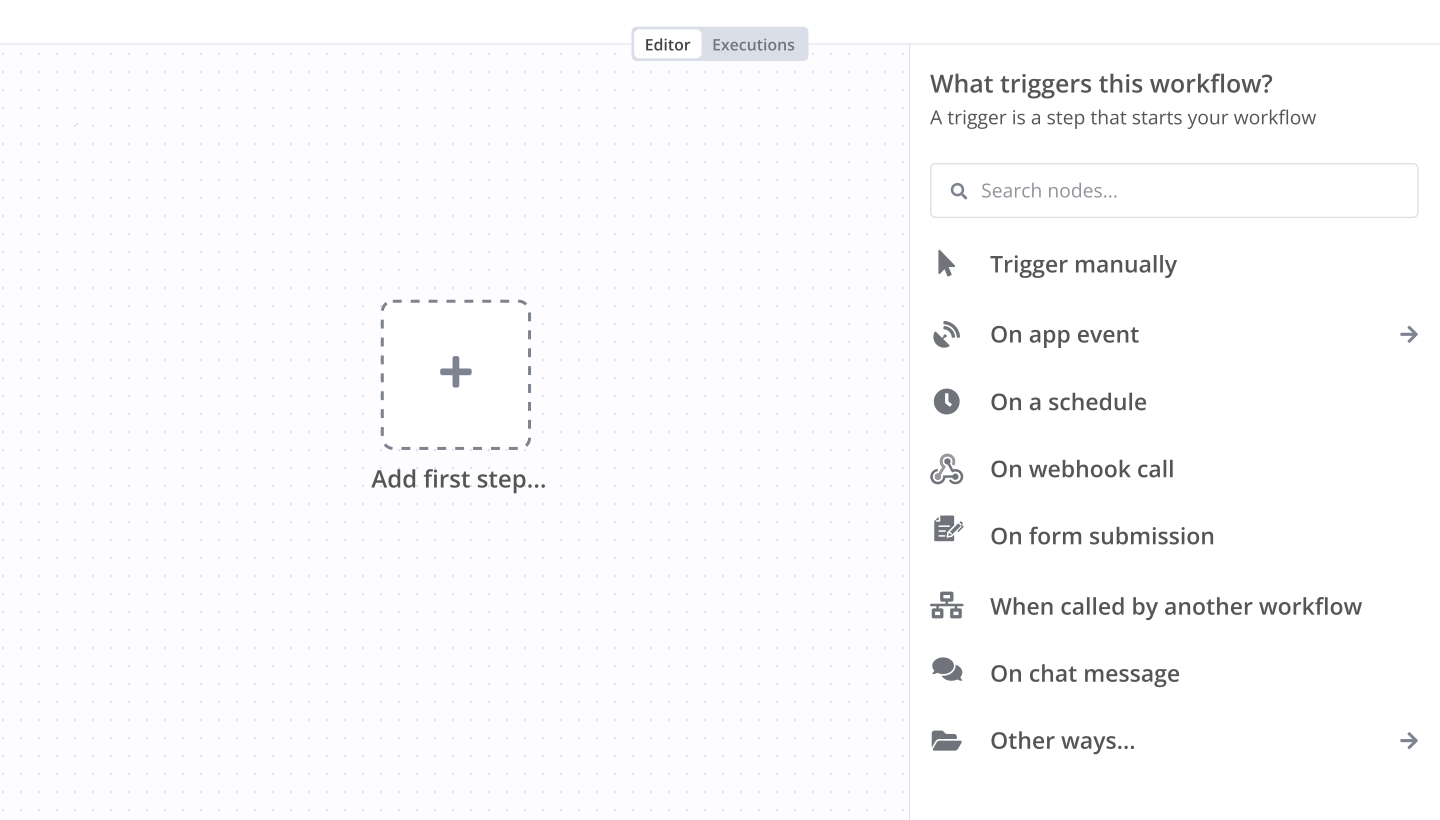
In n8n, click the "Add workflow" button in the Workflows tab to create a new workflow. Add the starting point – a trigger on when your workflow should run: an app event, a schedule, a webhook call, another workflow, an AI chat, or a manual trigger. Sometimes, the HTTP Request node might already serve as your starting point.

Gmail and Jira Software integration: Create a new workflow and add the first step

Step 2: Add and configure Gmail and Jira Software nodes

You can find Gmail and Jira Software in the nodes panel. Drag them onto your workflow canvas, selecting their actions. Click each node, choose a credential, and authenticate to grant n8n access. Configure Gmail and Jira Software nodes one by one: input data on the left, parameters in the middle, and output data on the right.

Gmail and Jira Software integration: Add and configure Gmail and Jira Software nodes

Step 3: Connect Gmail and Jira Software

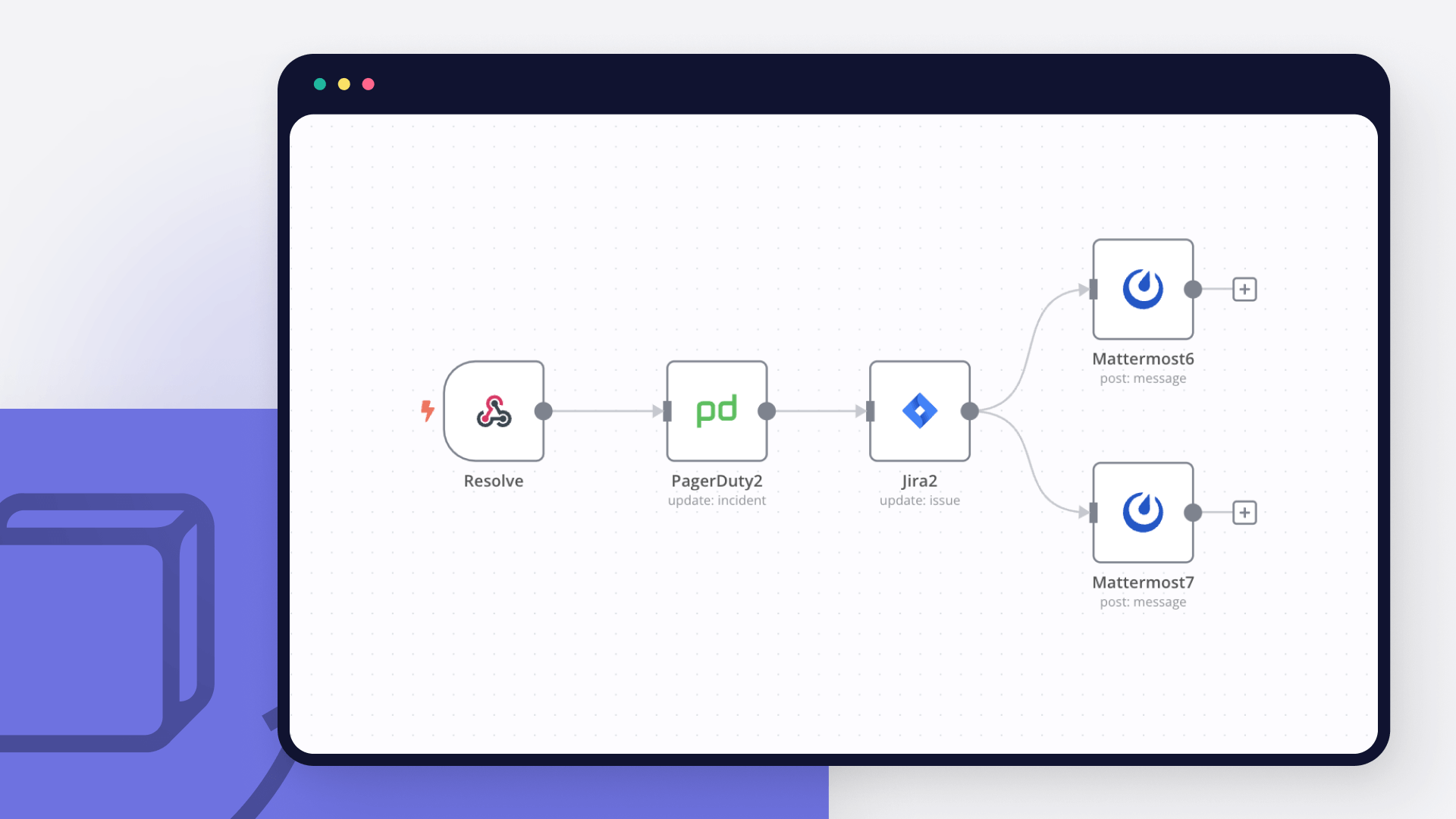
A connection establishes a link between Gmail and Jira Software (or vice versa) to route data through the workflow. Data flows from the output of one node to the input of another. You can have single or multiple connections for each node.

Gmail and Jira Software integration: Connect Gmail and Jira Software

Step 4: Customize and extend your Gmail and Jira Software integration

Use n8n's core nodes such as If, Split Out, Merge, and others to transform and manipulate data. Write custom JavaScript or Python in the Code node and run it as a step in your workflow. Connect Gmail and Jira Software with any of n8n’s 1000+ integrations, and incorporate advanced AI logic into your workflows.

Gmail and Jira Software integration: Customize and extend your Gmail and Jira Software integration

Step 5: Test and activate your Gmail and Jira Software workflow

Save and run the workflow to see if everything works as expected. Based on your configuration, data should flow from Gmail to Jira Software or vice versa. Easily debug your workflow: you can check past executions to isolate and fix the mistake. Once you've tested everything, make sure to save your workflow and activate it.

Gmail and Jira Software integration: Test and activate your Gmail and Jira Software workflow

Analyze & sort suspicious email contents with ChatGPT

Analyze & Sort Suspicious Email Contents with ChatGPT and Jira

Who is this for?
This workflow is tailored for IT security teams, managed service providers (MSPs), and organizations aiming to streamline the detection and reporting of phishing emails. It's especially useful for teams handling high email volumes and requiring quick, automated analysis.

What problem is this workflow solving?
Phishing emails pose a significant cybersecurity threat, and manual review processes are time-consuming and prone to human error. This workflow automates the identification of malicious emails, provides AI-driven insights, and generates structured reports, enabling faster and more efficient responses to email-based threats.

What this workflow does
This workflow integrates Gmail or Microsoft Outlook to monitor and capture incoming emails. It processes the email content and headers, converts the email's body to a visual screenshot for clarity, and uses ChatGPT's advanced AI to analyze the email for phishing indicators. Based on the analysis, it categorizes emails as potentially malicious or benign, creating detailed Jira tickets for each case. Attachments, including the email body and screenshots, are automatically uploaded for comprehensive reporting.

Key steps include:
Email Integration: Captures emails from Gmail or Microsoft Outlook.
Content Processing: Extracts and organizes email content and metadata.
AI Analysis: Uses ChatGPT to evaluate email content and headers.
Classification: Categorizes emails as malicious or benign.
Automated Reporting: Creates Jira tickets with detailed analysis and attachments.

Setup
Authentication: Configure Gmail or Microsoft Outlook credentials in n8n.
API Keys: Add credentials for the HTML screenshot service (hcti.io) and OpenAI.
Jira Configuration: Set up project and issue types in the Jira nodes.
Customization: Update sticky notes and nodes to fit your organizational requirements, such as modifying the AI prompt or Jira ticket fields.

How to customize this workflow to your needs
Adjust email triggers to include or exclude specific senders or subjects.
Refine the AI prompt in the ChatGPT node to tailor phishing detection criteria.
Modify Jira ticket content to include additional fields or match specific workflows.

This workflow is ideal for automating email threat detection, reducing response times, and enhancing overall cybersecurity processes. By leveraging AI-powered insights, it helps organizations stay ahead of phishing attacks.

Nodes used in this workflow

Popular Gmail and Jira Software workflows

Generate multi-pass Seedance AI roto mattes with QC and Nuke handoff

📘 Description This workflow is an AI-powered roto matte generation and first-pass compositing pipeline designed for VFX production. It transforms structured roto requests into multiple high-precision matte passes using AI, performs automated quality evaluation, generates production-ready Nuke scripts, and delivers fully organized assets and review tasks to the team—bridging the gap between manual rotoscoping and scalable AI-assisted matte generation. ⚙️ Step-by-Step Flow The workflow begins with a Google Sheets trigger that continuously monitors for new roto requests, acting as the intake layer for structured production data such as plate image URLs, subject descriptions, shot codes, subject type, and complexity. Once a new entry is detected, the system moves into a validation and extraction stage, where input fields are normalized, defaults are assigned, and essential attributes like sequence codes, frame ranges, QC thresholds, and project metadata are structured for downstream processing. The pipeline then performs prompt engineering and expands the request into four specialized roto passes: an alpha matte pass for clean silhouette extraction, an edge detail pass for fine hair and motion blur accuracy, a foreground isolation pass for compositing-ready subject separation, and a motion tracking reference pass enriched with tracking markers and velocity overlays. Each variation includes detailed instructions aligned with shot context and technical constraints to ensure precise AI-driven outputs. At the core of the workflow, an image-to-video generation layer constructs structured API requests and submits each variation as an independent job to the Seedance AI model, always using the plate image as a reference for accurate subject extraction. A polling mechanism continuously monitors each job at fixed intervals, ensuring that processing proceeds only after successful completion. Once rendering is complete, a metadata and automated QC layer evaluates each pass by assigning a quality score based on resolution and predefined thresholds, classifying outputs as either AI-approved or requiring manual intervention. A decision routing layer then determines the next stage—approved passes continue through the pipeline, while failed outputs trigger immediate Slack alerts for senior artist review and manual roto assignment. For approved outputs, the system generates a fully production-ready Nuke roto template, automatically configuring nodes for plate input, AI matte extraction, alpha application, edge refinement, and artist-level roto adjustments, along with structured EXR output paths and naming conventions. The pipeline then proceeds to asset handling, where generated videos are downloaded and distributed via email to requesters, while simultaneously creating Jira review tasks to ensure pipeline tracking and accountability. An aggregation layer consolidates all roto passes into a unified structured summary, combining QC results, video links, task references, and technical metadata. Finally, a team notification system delivers a comprehensive summary to the roto team via Telegram, including per-pass QC status, preview links, task tracking, output paths, and artist notes highlighting areas requiring refinement—ensuring seamless collaboration between AI outputs and human artists. 🚨 Error Handling • Global error trigger across the workflow • Instant Slack alerts with failure details • Prevents silent failures and ensures pipeline reliability 🧩 Prerequisites • Seedance API (AI video generation) • Google Sheets OAuth2 (trigger input) • Jira API (task tracking) • Gmail OAuth2 (asset delivery) • Slack OAuth2 (alerts & QC failures) • Telegram Bot (team notifications) 💡 Key Benefits ✔ Automated roto matte generation with AI-assisted precision ✔ Multiple specialized passes for production flexibility ✔ Built-in QC scoring and intelligent decision routing ✔ Auto-generated Nuke scripts with pre-configured nodes ✔ Integrated task tracking via Jira ✔ Seamless delivery via email and team notifications ✔ Scalable pipeline for high-volume roto workflows 👥 Perfect For Roto and paint teams in VFX studios Compositors working with Nuke pipelines Film and post-production environments AI-assisted rotoscoping workflows Studios handling high-volume shot processing
+5

Automate B2B SaaS Renewal Risk Management with CRM, Support & Usage Data

Description This workflow is designed for B2B/SaaS teams who want to secure renewals before it’s too late. It runs every day, identifies all accounts whose licenses are up for renewal in J–30, enriches them with CRM, product usage and support data, computes an internal churn risk level, and then triggers the appropriate playbook: HIGH risk** → full escalation (tasks, alerts, emails) MEDIUM risk** → proactive follow-up by Customer Success LOW risk** → light renewal touchpoint / monitoring Everything is logged into a database table so that you can build dashboards, run analysis, or plug additional automations on top. How it works Daily detection (J–30 renewals) A scheduled trigger runs every morning and queries your database (Postgres / Supabase) to fetch all active subscriptions expiring in 30 days. Each row includes the account identifier, name, renewal date and basic commercial data. Data enrichment across tools For each account, the workflow calls several business systems to collect context: HubSpot → engagement history Salesforce → account profile and segment Pipedrive → deal activities and associated products Analytics API → product feature usage and activity trends Zendesk → recent support tickets and potential friction signals All of this is merged into a single, unified item. Churn scoring & routing An internal scoring step evaluates the risk for each account based on multiple signals (engagement, usage, support, timing). The workflow then categorizes each account into one of three risk levels: HIGH – strong churn signals → needs immediate attention MEDIUM – some warning signs → needs proactive follow-up LOW – looks healthy → light renewal reminder A Switch node routes each account to the relevant playbook. Automated playbooks 🔴 HIGH risk Create a Trello card on a dedicated “High-Risk Renewals” board/list Create a Jira ticket for the CS / AM team Send a Slack alert in a designated channel Send a detailed email to the CSM and/or account manager 🟠 MEDIUM risk Create a Trello card in a “Renewals – Follow-up” list Send a contextual email to the CSM to recommend a proactive check-in 🟢 LOW risk Send a soft renewal email / internal note to keep the account on the radar Logging & daily reporting For every processed account, the workflow prepares a structured log record (account, renewal date, risk level, basic context). A Postgres node is used to insert the data into a churn_logs table. At the end of each run, all processed accounts are aggregated and a daily summary email is sent (for example to the Customer Success leadership team), listing the renewals and their risk levels. Requirements Database A table named churn_logs (or equivalent) to store workflow decisions and history. Example fields: account_id, account_name, end_date, riskScore, riskLevel, playbook, trello_link, jira_link, timestamp. External APIs HubSpot (engagement data) Salesforce (account profile) Pipedrive (deals & products) Zendesk (support tickets) Optional: product analytics API for usage metrics Communication & task tools Gmail (emails to CSM / AM / summary recipients) Slack (alert channel for high-risk cases) Trello (task creation for CS follow-up) Jira (escalation tickets for high-risk renewals) Configuration variables Thresholds are configured in the Init config & thresholds node: days_before_renewal churn_threshold_high churn_threshold_medium These parameters let you adapt the detection window and risk sensitivity to your own business rules. Typical use cases Customer Success teams who want a daily churn watchlist without exporting spreadsheets. RevOps teams looking to standardize renewal playbooks across tools. SaaS companies who need to prioritize renewals based on real risk signals rather than gut feeling. Product-led organizations that want to combine usage data + CRM + support into one automated process. Tutorial video Watch the Youtube Tutorial video About me : I’m Yassin a Project & Product Manager Scaling tech products with data-driven project management. 📬 Feel free to connect with me on Linkedin

AI-Powered Email to Jira Ticket Creation with Llama 3.2

This AI-powered workflow reads emails, understands the request using an LLM, and creates structured Jira issues. Key Insights Poll for new emails every 5 minutes; ensure Gmail/IMAP is properly configured. AI analysis requires a reliable LLM model (e.g., Chat Model or AI Tool). Workflow Process Trigger the workflow with the Check for New Emails Gmail Trigger node. Fetch full email content using the Fetch Full Email Content get message node. Analyze email content with the Analyze Email & Extract Tasks node using AI. Parse the AI-generated JSON output into tasks with the Parse JSON Output from AI node. Create the main Jira issue with the Jira - Create Main Issue create: issue node. Split subtasks from JSON and create them with the Split Subtasks JSON Items and Create Subtasks create: issue nodes. Usage Guide Import the workflow into n8n and configure Gmail and Jira credentials. Test with a sample email to ensure ticket creation and subtask assignment. Prerequisites Gmail/IMAP credentials for email polling Jira API credentials with issue creation permissions Customization Options Adjust the Analyze Email & Extract Tasks node to refine AI task extraction or modify the polling frequency in the trigger node.

Task Escalation System with Google Sheets, Gmail, Telegram & Jira Automation

Description This workflow sends an instant email alert when a task in a Google Sheet is marked as Urgent, and then sends a Telegram reminder notification after 2 hours if the task still hasn’t been updated. Then a Jira ticket is created so the task enters in the formal workflow and another Telegram message is sent with the details of the issue created. It helps teams avoid missed deadlines and ensures urgent tasks get attention — without requiring anyone to refresh or monitor the sheet manually. Context In shared task lists, urgent items can be overlooked if team members aren't actively checking the spreadsheet. This workflow solves that by: Sending an email as soon as a task becomes Urgent Waiting 2 hours Checking if the task is still open Sending a Telegram reminder only if action has not been taken Creating a Jira issue Sending a Telegram message with the details of the issue created This prevents both silence and spam, creating a smart and reliable alert system. Target Users Project Managers using Google Sheets Team leads managing shared task boards Remote teams needing lightweight coordination Anyone who wants escalation notifications without complex systems Technical Requirements Google Sheets credential Gmail credential Telegram Bot + Chat ID Google Sheet with a column named Priority Jira credential Workflow Steps Trigger: Google Sheets Trigger (on update in the “Priority” column) IF Node – Checks if Priority = Urgent Send Email – Sends alert email with task name, owner, status, deadline Mark Notified = Yes in the sheet Wait 2 hours IF Status is still not resolved Send Telegram reminder create an Issue on Jira based on the information provided Send Telegram message with the details of the ticket Key Features Real-time alerts on critical tasks Simple logic (no code required) Custom email body with dynamic fields Works on any Google Sheet with a “Priority” column Telegram notification ensures the task doesn’t get forgotten Expected Output Personalized email alert when a task is marked as "Urgent" Email includes task info: title, owner, deadline, status, next step Telegram message after 2 hours if the task is still open Automatic creation of a Jira issue with the higgest priority Telegram message to notify about the new Jira ticket How it works Trigger: Watches for “Priority” updates 🔍 Check: If Priority = Urgent AND Notified is empty 📧 Email: Sends a personalized alert ✏️ Sheet Update: Marks the task as already notified ⏳ Wait: 2-hour delay 🤖 Check Again: If Status hasn’t changed → send Telegram reminder, create Jira ticket and send the details. Tutorial video: Watch the Youtube Tutorial video About me : I’m Yassin a Project & Product Manager Scaling tech products with data-driven project management. 📬 Feel free to connect with me on Linkedin

Generate AI matte painting video variations with Seedance for VFX review

📘 Description This workflow is a fully automated AI matte painting generation system for VFX pipelines, designed to convert a single environment prompt into multiple cinematic background variations. It handles generation, validation, multi-variant rendering, compositing preparation, review workflows, and final delivery—eliminating manual coordination between artists, supervisors, and production systems. ⚙️ Step-by-Step Flow The process begins with a webhook trigger that serves as the shot request intake layer, receiving a POST request containing the environment prompt, shot code, optional plate image URL, and metadata such as project, sequence, and supervisor details. This input is then passed through a validation and normalization stage, ensuring all required fields are present while standardizing elements like sequence codes, project IDs, Slack channels, and timestamps. Once validated, the system fans out the request into four distinct cinematic variations—day (overcast realism), dusk (golden hour lighting), night (moonlit cinematic), and fog (atmospheric depth)—with each variant assigned a custom-engineered prompt. At the core of the workflow, a dynamic mode selection logic determines whether to use image-to-video generation (if a plate image is provided) or text-to-video generation (if no reference is available), while also configuring parameters such as audio generation, aspect ratio, and duration. Each variation is then submitted as an independent job to the Seedance API for AI video generation, returning unique job IDs for tracking. A polling loop handles asynchronous processing by checking the status of each job every 20 seconds until all reach a “succeeded” state, operating independently per variation. Once completed, the system constructs detailed metadata for each asset, including video URL, atmosphere type, variant ID, resolution, duration, and tags such as AI-generated and review status. In parallel, it generates an auto-configured Nuke compositing template with pre-built nodes for plate input, AI background, merge setup, color grading placeholders, and output writing. For production tracking, a Jira review task is created for each variation, while all assets are logged within the ClickUp system. An aggregation layer then consolidates all four variations into a single structured summary, formatted for seamless Slack delivery. A Slack notification is sent to the supervisor with the complete review package, including links to all variations, Jira tickets, inline Nuke scripts, and associated metadata. Finally, the system downloads the generated video assets and completes the workflow by sending an email to the requester with the video attachments and full production context, ensuring a smooth end-to-end delivery pipeline. 🚨 Error Handling • Global error trigger • Instant Slack alert • Prevents silent failures across pipeline 🧩 Prerequisites • Seedance API (video generation) • Slack OAuth2 • Gmail OAuth2 • Jira Cloud • ClickUp API • Webhook integration (input system) 💡 Key Benefits ✔ Parallel generation of multiple cinematic variations ✔ Automatic decision between image-to-video vs text-to-video ✔ Built-in compositing (Nuke script auto-generation) ✔ Full production pipeline (generation → review → delivery) ✔ Async-safe with polling loop ✔ Centralized asset tracking (Jira + ClickUp) ✔ Zero manual VFX coordination 👥 Perfect For VFX studios Film/TV production pipelines AI-driven matte painting workflows Previsualization teams Creative automation systems
+3

Automate Employee Onboarding with Slack, Jira, and Google Workspace Integration

Who is this for? This template is ideal for HR teams, startup founders, operations leads, remote-first companies, and freelancers managing onboarding manually or across multiple tools. Whether you’re hiring your first intern or streamlining onboarding for dozens of new team members, this workflow automates the entire trigger → task creation → onboarding delivery process using no-code tools connected via n8n. What problem does this solve? Employee onboarding is often fragmented and error-prone — involving Jira tasks, Slack DMs, file sharing, and email templates spread across different apps. This workflow connects it all, letting you create tasks, notify people, share folders, and message hires instantly — right when they’re marked as “Hired” in a Google Sheet or added to Slack. No more bouncing between 5 tabs. This is onboarding as a system. What this workflow does ✅ Watches a Google Sheet (or Slack trigger) for new hires 📋 Creates a Jira onboarding Epic with role-based subtasks 📂 Generates a Google Drive folder and shares it with the new hire 📬 Sends a personalized, HTML-formatted welcome email via Gmail 💬 Posts a Slack message in the #onboarding channel + DM to the hire 📊 Logs onboarding activity back to the Sheet (status, links, etc.) 🔁 Modular subtasks based on role/team (e.g. Dev vs Marketing vs Student) 🧠 Expressions, fallback logic, and Slack→Jira user ID mapping built-in Setup Create API credentials for: Slack Google Sheets Google Drive Jira Cloud Gmail (API or SMTP) Import the .json workflow into your n8n instance (Cloud or self-hosted) Replace placeholder values (e.g. Project ID, Issue Type ID, folder path) Customize onboarding messages, email HTML, and task logic Test with included mock data (sample hire, Slack user, Jira user) Activate your flow and start onboarding with one click 🗒 Color-coded workflow notes This workflow uses Innovatio’s sticky note system to guide you visually: 🟩 Green Notes → Main automation steps 🟦 Blue Notes → What to customize (IDs, prompts, expressions) 🟨 Yellow Notes → Optional logic and future upgrades 🟫 Gray Notes → Welcome + final “next steps” CTA Every group includes pre-filled nodes, dynamic expressions, and mock outputs so you can test quickly and scale confidently. How to customize this workflow? 📂 Swap Google Sheets for Airtable (better for teams or approvals) 📅 Add 30/60/90-day check-ins via Google Calendar 🤖 Plug in OpenAI to generate onboarding subtasks by role 📬 Auto-assign mentors or SlackBot reminders after 7 days 📊 Push Sheet logs into Notion or your HR dashboard Need custom logic? Email me at [email protected] Final notes This template was created by Velebit from Innovatio with modularity, scalability, and team experience in mind. All links included are official. No affiliate tracking, no sponsored content. 📜 A separate commercial license applies to the purchase via Gumroad, which includes extended rights, usage for client work, and scaling strategies.

Build your own Gmail and Jira Software integration

Create custom Gmail and Jira Software workflows by choosing triggers and actions. Nodes come with global operations and settings, as well as app-specific parameters that can be configured. You can also use the HTTP Request node to query data from any app or service with a REST API.

Gmail supported actions

Add Label
Delete
Get
Get Many
Mark as Read
Mark as Unread
Remove Label
Reply
Send
Send and Wait for Response
Create
Delete
Get
Get Many
Create
Delete
Get
Get Many
Add Label
Delete
Get
Get Many
Remove Label
Reply
Trash
Untrash

Jira Software supported actions

Changelog
Get issue changelog
Create
Create a new issue
Delete
Delete an issue
Get
Get an issue
Get Many
Get many issues
Notify
Create an email notification for an issue and add it to the mail queue
Status
Return either all transitions or a transition that can be performed by the user on an issue, based on the issue's status
Update
Update an issue
Add
Add attachment to issue
Get
Get an attachment
Get Many
Get many attachments
Remove
Remove an attachment
Add
Add comment to issue
Get
Get a comment
Get Many
Get many comments
Remove
Remove a comment
Update
Update a comment
Create
Create a new user
Delete
Delete a user
Get
Retrieve a user

FAQs

  • Can Gmail connect with Jira Software?

  • Can I use Gmail’s API with n8n?

  • Can I use Jira Software’s API with n8n?

  • Is n8n secure for integrating Gmail and Jira Software?

  • How to get started with Gmail and Jira Software integration in n8n.io?

Need help setting up your Gmail and Jira Software integration?

Discover our latest community's recommendations and join the discussions about Gmail and Jira Software integration.
jake chard
Jan Koch
Paul Kennard

Looking to integrate Gmail and Jira Software in your company?

Over 3000 companies switch to n8n every single week

Why use n8n to integrate Gmail with Jira Software

Build complex workflows, really fast

Build complex workflows, really fast

Handle branching, merging and iteration easily.
Pause your workflow to wait for external events.

Code when you need it, UI when you don't

Simple debugging

Your data is displayed alongside your settings, making edge cases easy to track down.

Use templates to get started fast

Use 1000+ workflow templates available from our core team and our community.

Reuse your work

Copy and paste, easily import and export workflows.

Implement complex processes faster with n8n

red iconyellow iconred iconyellow icon