Back to Integrations
integrationGmail node
integrationMailchimp node

Gmail and Mailchimp integration

Save yourself the work of writing custom integrations for Gmail and Mailchimp and use n8n instead. Build adaptable and scalable Communication, HITL, and Marketing workflows that work with your technology stack. All within a building experience you will love.

How to connect Gmail and Mailchimp

  • Step 1: Create a new workflow
  • Step 2: Add and configure nodes
  • Step 3: Connect
  • Step 4: Customize and extend your integration
  • Step 5: Test and activate your workflow

Step 1: Create a new workflow and add the first step

In n8n, click the "Add workflow" button in the Workflows tab to create a new workflow. Add the starting point – a trigger on when your workflow should run: an app event, a schedule, a webhook call, another workflow, an AI chat, or a manual trigger. Sometimes, the HTTP Request node might already serve as your starting point.
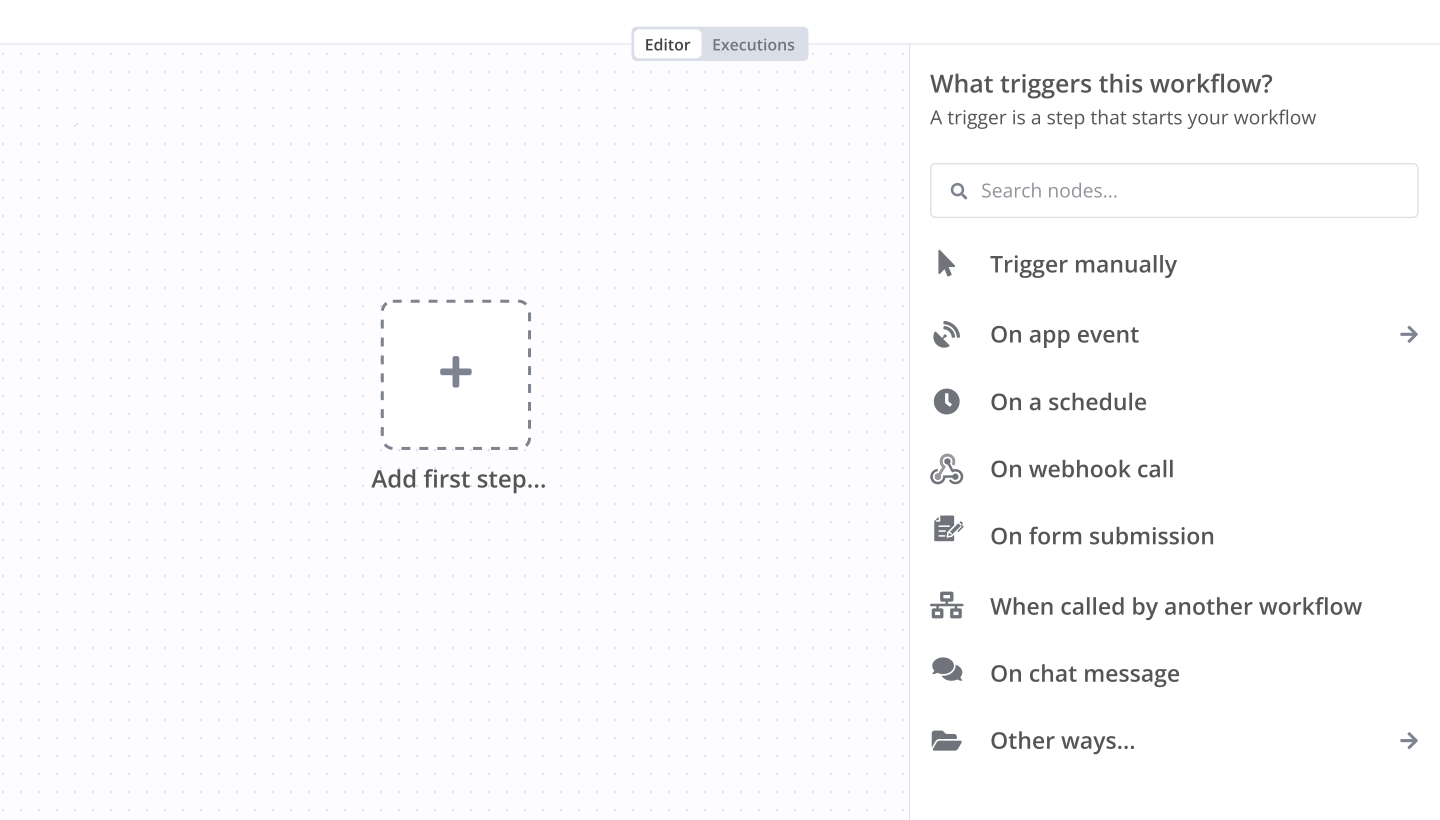
Gmail and Mailchimp integration: Create a new workflow and add the first step

Step 2: Add and configure Gmail and Mailchimp nodes

You can find Gmail and Mailchimp in the nodes panel. Drag them onto your workflow canvas, selecting their actions. Click each node, choose a credential, and authenticate to grant n8n access. Configure Gmail and Mailchimp nodes one by one: input data on the left, parameters in the middle, and output data on the right.

Gmail and Mailchimp integration: Add and configure Gmail and Mailchimp nodes

Step 3: Connect Gmail and Mailchimp

A connection establishes a link between Gmail and Mailchimp (or vice versa) to route data through the workflow. Data flows from the output of one node to the input of another. You can have single or multiple connections for each node.

Gmail and Mailchimp integration: Connect Gmail and Mailchimp

Step 4: Customize and extend your Gmail and Mailchimp integration

Use n8n's core nodes such as If, Split Out, Merge, and others to transform and manipulate data. Write custom JavaScript or Python in the Code node and run it as a step in your workflow. Connect Gmail and Mailchimp with any of n8n’s 1000+ integrations, and incorporate advanced AI logic into your workflows.

Gmail and Mailchimp integration: Customize and extend your Gmail and Mailchimp integration

Step 5: Test and activate your Gmail and Mailchimp workflow

Save and run the workflow to see if everything works as expected. Based on your configuration, data should flow from Gmail to Mailchimp or vice versa. Easily debug your workflow: you can check past executions to isolate and fix the mistake. Once you've tested everything, make sure to save your workflow and activate it.

Gmail and Mailchimp integration: Test and activate your Gmail and Mailchimp workflow

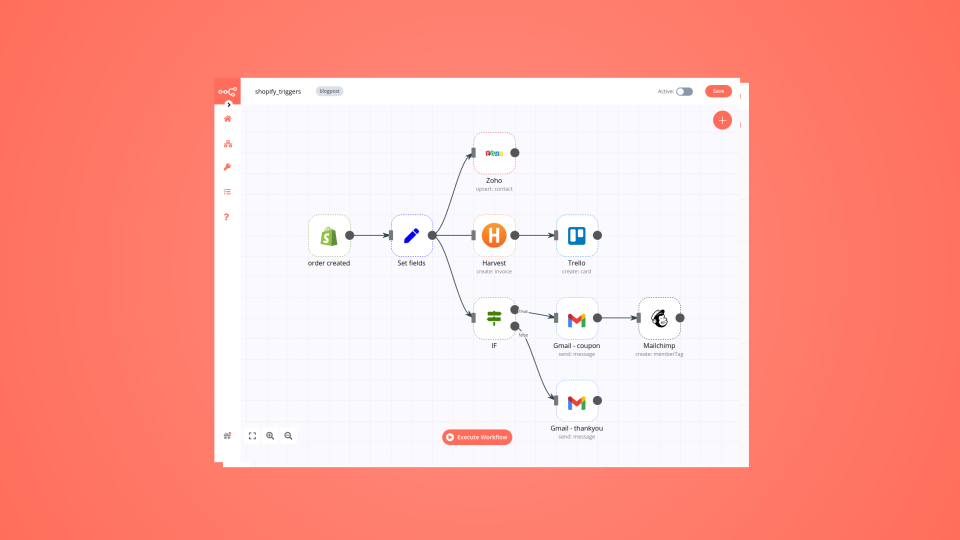
Process Shopify new orders with Zoho CRM and Harvest

This workflow is triggered when a new order is created in Shopify. Then:
the order information is stored in Zoho CRM,
an invoice is created in Harvest and stored in Trello,
if the order value is above 50, an email with a discount coupon is sent to the customer and they are added to a MailChimp campaign for high-value customers; otherwise, only a "thank you" email is sent to the customer.

Note that you need to replace the List ID in the Trello node with your own ID (see instructions in our docs). Same goes for the Account ID in the Harvest node (see instructions here).

Nodes used in this workflow

Popular Gmail and Mailchimp workflows

+5

AI-Powered Restaurant Newsletter Creator with Mailchimp and Telegram Approval

This workflow contains community nodes that are only compatible with the self-hosted version of n8n. Who is this for? This workflow is for restaurant owners, marketing managers, and any business owner who wants to automate the creation of high-quality, research-driven email newsletters. It's designed to save hours of manual work by leveraging AI to handle content generation, from initial idea to final send. If you want to consistently engage your customers with fresh, relevant content but lack the time for research and writing, this template is your all-in-one solution. What does this workflow do? This is a comprehensive, multi-agent system that automates the entire email marketing process. It begins with a simple prompt from you and ends with a polished newsletter sent to your Mailchimp subscribers. Initiates on a Schedule: A fully customizable Cron trigger starts the process by sending you a message on Telegram. Asks for Your Input: The Telegram bot asks you for a single topic for the upcoming newsletter (e.g., "healthy eating," "weekend specials," or "new cocktail menu"). Conducts AI-Powered Research: Once you reply, an AI agent researches your topic using Tavily, focusing on current industry trends, food culture, and customer interests to ensure your content is fresh and relevant. Plans the Content: The AI generates a complete table of contents for the newsletter, structuring it into engaging sections. Writes Each Section: A dedicated AI research team then writes detailed, engaging content for each section of the newsletter, weaving in your restaurant's unique brand voice. Assembles the Final Draft: The workflow aggregates all the generated sections into a complete newsletter draft, including a compelling subject line and a full body of text. Requests Final Approval: It sends the complete draft to you via Telegram for a final "Approved" or "Denied" confirmation. If you provide feedback, an AI editor will revise the draft. Sends to Mailchimp: Once approved, the workflow automatically creates a new campaign in Mailchimp and sends the final, polished email to your subscriber list. Setup To get this workflow running, you will need to configure a few credentials and settings. Set Up Credentials: In your n8n instance, add credentials for the following services: Telegram OpenAI Tavily Anthropic Mailchimp (using HTTP Basic Auth with any_string as the username and your Mailchimp API key as the password). Configure the Telegram Bot: Create a Telegram bot using BotFather and obtain its API token. Find your personal Chat ID by messaging a bot like @get_id_bot. In the HITL (Human in the Loop) Telegram node, insert your Chat ID. Configure Mailchimp: In the Create_Campaign HTTP Request node, find the recipients section and replace the placeholder list_id with your actual Mailchimp Audience ID. Customize the System Prompts: This is the most important step for personalization. Go into the AI Agent and OpenAI nodes (e.g., "Restaurant Newsletter Expert," "Newsletter Section Planner," "Restaurant Content Research Team"). In the system prompts, replace all instances of (insert restaurant name), (insert cuisine type), etc., with your own business details. This is where you inject your unique brand, menu, and voice into the AI. How to customize this workflow This template is powerful out of the box but is also designed to be highly flexible. Change the Schedule: Modify the Cron trigger to run at any interval you prefer (e.g., weekly, bi-weekly, or on specific days). Adjust the AI Models: You can easily swap the OpenAI or Anthropic models used in the workflow to different ones (e.g., change from GPT-4o-mini to GPT-4 Turbo) to balance cost and performance. Use a Different Notification Service: Replace the Telegram nodes with Slack, email, or another service for the approval process. Integrate a Different Email Platform: Adapt the final HTTP Request nodes to work with another email marketing provider like SendGrid, ConvertKit, or Brevo by changing the API endpoints and authentication. Refine the AI's Personality: The core of the workflow is in the system prompts. By editing the prompts in the AI nodes, you can completely change the tone, style, and output of the generated content to perfectly match your brand.
+2

Automate Lead Qualification & Follow-up with Gemini, HubSpot, Zoom & Mailchimp

Lead Qualification & Follow‑up (Gemini) Automate lead intake, AI qualification, and next‑step outreach. Qualified leads get a scheduled meeting, Zoom details, an email confirmation, CRM update, and Mailchimp enrollment. Not‑qualified leads receive a follow‑up sequence, CRM update, and a 30‑day reminder. What this workflow does AI qualifies leads as QUALIFIED or NOT QUALIFIED using Google Gemini. Supports two triggers: Webhook (wordpress-form) or n8n Form Trigger. QUALIFIED branch: AI phone call via VAPI Schedules Google Calendar event Creates Zoom meeting Sends confirmation email via Gmail Adds to Mailchimp audience Updates contact in HubSpot NOT QUALIFIED branch: AI phone call via VAPI Adds to Mailchimp audience Sends follow‑up email via Gmail Updates contact in HubSpot Creates 30‑day follow‑up calendar event Apps and credentials required Google Gemini (PaLM/Gemini API) Gmail HubSpot Zoom Google Calendar VAPI (for AI phone calls) Mailchimp Environment variables MAILCHIMP_LIST_ID_QUALIFIED=your_mailchimp_list_id_for_qualified MAILCHIMP_LIST_ID_FOLLOWUP=your_mailchimp_list_id_for_followup Triggers supported Webhook: path wordpress-form (POST) Form Trigger: built‑in n8n form Use only one in production. Keep the other disabled. Expected input (fields) name: string email: string message: string If using Webhook, send a JSON body with the fields above. Setup Connect credentials: Google Gemini (model: models/gemini-2.5-flash) Gmail HubSpot (OAuth) Zoom Google Calendar (select the target calendar) VAPI (HTTP header auth: Bearer token) Set env vars: MAILCHIMP_LIST_ID_QUALIFIED MAILCHIMP_LIST_ID_FOLLOWUP Choose your trigger: Webhook: enable and use the provided URL for wordpress-form Form Trigger: enable and publish the form Review timing: adjust Wait nodes for your timezone and SLA. Personalize messaging: edit Gmail subjects/bodies and Zoom topic. CRM and lists: confirm HubSpot properties and Mailchimp list IDs. How it works (at a glance) Intake → AI classifies (QUALIFIED / NOT QUALIFIED) QUALIFIED: VAPI call → Schedule Calendar → Create Zoom → Add to Mailchimp (qualified) → Gmail confirmation → HubSpot update NOT QUALIFIED: VAPI call → Add to Mailchimp (follow‑up) → Gmail follow‑up → HubSpot update → 30‑day calendar event Test the workflow (before going live) Submit a test via your chosen trigger with name, email, message. Confirm AI decision at the “Lead Decision” node. If QUALIFIED: VAPI call executed Calendar event created Zoom meeting created (join URL available) Mailchimp enrollment (qualified list) Gmail confirmation sent HubSpot contact created/updated If NOT QUALIFIED: VAPI call executed Mailchimp enrollment (follow‑up list) Gmail follow‑up sent HubSpot updated 30‑day calendar reminder created Open any failing HTTP nodes and review response codes/messages. Go‑live checklist All credentials connected (no warnings) MAILCHIMP_LIST_ID_QUALIFIED and MAILCHIMP_LIST_ID_FOLLOWUP set Timezone and delays validated Email copy approved Only one trigger enabled Final end‑to‑end test passed Toggle workflow Active Customization ideas Add a Slack or Microsoft Teams notification on QUALIFIED Enrich leads (Clearbit, ZoomInfo, etc.) before AI decision Swap Mailchimp for your ESP (Klaviyo, SendGrid Marketing) Add a second‑chance branch for ambiguous AI classifications Localize email copy by country or language Troubleshooting Webhook receives no data: ensure external form POSTs JSON to the n8n URL and network rules allow it. AI decision empty/garbled: verify Gemini credentials/model ID and input fields. Mailchimp errors: verify List IDs and that email is valid. Gmail send fails: check OAuth scopes and daily limits. Zoom/Calendar issues: re‑connect OAuth; verify calendar access. HubSpot errors: confirm OAuth scopes and property mappings. Security and scopes Gmail: send email Google Calendar: create events Zoom: create meetings HubSpot: read/write contacts Mailchimp: list membership VAPI: authenticated HTTP requests Gemini: model inference Use least‑privilege for each integration. Limits and notes Gmail and Mailchimp rate limits may apply during spikes. Zoom and Google Calendar API quotas apply for frequent scheduling. VAPI call timeouts are 30s by default; adjust as needed. Changelog 2025‑09‑15: Initial public template with dual triggers, Gemini qualification, VAPI calls, scheduling, Mailchimp, Gmail, and HubSpot updates.

Automate welcome emails with discount codes via Mailchimp and Gmail

This is an n8n template that Automate welcome emails with discount codes via Mailchimp and Gmail Who's it for Perfect for e-commerce businesses, SaaS companies, course creators, and service providers who want to automatically nurture new subscribers with personalized welcome emails and discount codes. If you're looking to boost conversions from your website signup forms and create a professional onboarding experience, this workflow is your solution. How it works This workflow creates a seamless subscriber onboarding process: Webhook receives signup data from your website form (name, email, timestamp, source) Mailchimp integration automatically adds the subscriber to your email list with their name Gmail sends personalized welcome email with a discount code and branded content Error handling ensures the welcome email sends even if Mailchimp fails The workflow is triggered instantly when someone submits your website signup form, creating a professional first impression that can significantly improve customer engagement and conversion rates. How to set up Requirements Mailchimp account** with an active audience/list Gmail account** with OAuth2 access Website or landing page with a signup form Basic HTML/CSS knowledge** for email customization (optional) Step-by-step setup Configure Mailchimp Integration Create or identify your Mailchimp audience Replace YOUR_MAILCHIMP_LIST_ID with your actual list ID Add your Mailchimp API credentials in n8n Set up any custom merge fields you need (FNAME is included by default) Set Up Gmail Credentials Add your Gmail OAuth2 credentials in n8n Ensure the sending email account has appropriate permissions Test email delivery to avoid spam folder issues Customize the Welcome Email Replace [Your Business Name] with your actual business name Update the discount code (WELCOME15) with your preferred offer Modify the shop URL (https://your-website.com/shop) to your store. Update social media links with your actual profiles Customize colors, fonts, and branding to match your business. Deploy Your Webhook Copy the webhook URL from the n8n workflow Add this URL to your website signup form as the POST endpoint Ensure your form sends JSON data with name and email fields Test the Complete Flow Submit a test signup through your website form Verify the contact appears in Mailchimp Check that the welcome email arrives with proper personalization How to customize the workflow Advanced Email Personalization Dynamic content blocks: Add conditional sections based on signup source or user preferences Custom merge fields: Capture additional data like company name, phone number, or interests in Mailchimp Segmented messaging: Create different email templates for different subscriber types Multi-language support: Detect user language from form data and send localized emails Webhook Integration Examples Google Forms Integration: Use Google Apps Script to POST form responses to your n8n webhook Map form fields to the expected JSON structure (name, email, source) Typeform Integration: Configure Typeform webhooks in Connect panel Set payload to include question responses in the required format Custom HTML Forms: // Example form submission code fetch('YOUR_N8N_WEBHOOK_URL', { method: 'POST', headers: {'Content-Type': 'application/json'}, body: JSON.stringify({ name: document.getElementById('name').value, email: document.getElementById('email').value, source: 'website' }) }); WordPress Contact Form 7: Use CF7 hooks to send form data to your webhook endpoint Install REST API plugins for seamless integration Workflow Logic Enhancements Data validation: Add If nodes to check email format and required fields before processing Duplicate prevention: Query Mailchimp first to avoid adding existing subscribers Source-based routing: Send different welcome emails based on signup source (blog, product page, etc.) Lead scoring: Assign scores based on signup source and send to appropriate lists Follow-up sequences: Add Wait nodes to create multi-step email campaigns Advanced Integrations CRM sync: Connect to Salesforce, HubSpot, or Pipedrive to create leads automatically Analytics tracking: Log conversions to Google Sheets or send events to Google Analytics Slack notifications: Alert your team about high-value signups or VIP customers SMS follow-up: Add Twilio integration for multi-channel welcome sequences Troubleshooting Common Issues and Solutions Emails going to spam folder: Configure SPF and DKIM records for your sending domain Use Gmail's "Send as" feature to authenticate your sending address Start with low volume and gradually increase to build sender reputation Include unsubscribe links and proper email headers Mailchimp API errors: Check your API key permissions and rate limits Verify the list ID is correct (found in Audience settings) Ensure required fields are properly mapped Review Mailchimp's compliance requirements for your region Webhook not triggering: Test the webhook URL directly using tools like Postman Check that your form sends POST requests with proper Content-Type headers Verify JSON payload structure matches expected format Review n8n execution logs for error details Personalization not working: Confirm form field names match the n8n node references Check that data is properly passed between workflow nodes Test with sample data to isolate mapping issues Use n8n's data inspection tools to debug payload structure Performance Optimization High-volume handling: Consider using Mailchimp's batch operations for multiple signups Implement queue systems for processing during traffic spikes Monitor workflow execution times and optimize slow nodes Set up error notifications to catch issues quickly Delivery improvements: Use dedicated email services like SendGrid or Mailgun for better deliverability Implement email warmup procedures for new sending domains A/B test subject lines and send times for better engagement Monitor bounce rates and remove invalid emails promptly.

Process Shopify new orders with Zoho CRM and Harvest

This workflow is triggered when a new order is created in Shopify. Then: the order information is stored in Zoho CRM, an invoice is created in Harvest and stored in Trello, if the order value is above 50, an email with a discount coupon is sent to the customer and they are added to a MailChimp campaign for high-value customers; otherwise, only a "thank you" email is sent to the customer. Note that you need to replace the List ID in the Trello node with your own ID (see instructions in our docs). Same goes for the Account ID in the Harvest node (see instructions here).

Build your own Gmail and Mailchimp integration

Create custom Gmail and Mailchimp workflows by choosing triggers and actions. Nodes come with global operations and settings, as well as app-specific parameters that can be configured. You can also use the HTTP Request node to query data from any app or service with a REST API.

Gmail supported actions

Add Label
Delete
Get
Get Many
Mark as Read
Mark as Unread
Remove Label
Reply
Send
Send and Wait for Response
Create
Delete
Get
Get Many
Create
Delete
Get
Get Many
Add Label
Delete
Get
Get Many
Remove Label
Reply
Trash
Untrash

Mailchimp supported actions

Delete
Delete a campaign
Get
Get a campaign
Get Many
Get many campaigns
Replicate
Replicate a campaign
Resend
Creates a Resend to Non-Openers version of this campaign
Send
Send a campaign
Get Many
Get many groups
Create
Create a new member on list
Delete
Delete a member on list
Get
Get a member on list
Get Many
Get many members on a list
Update
Update a new member on list
Create
Add tags from a list member
Delete
Remove tags from a list member

FAQs

  • Can Gmail connect with Mailchimp?

  • Can I use Gmail’s API with n8n?

  • Can I use Mailchimp’s API with n8n?

  • Is n8n secure for integrating Gmail and Mailchimp?

  • How to get started with Gmail and Mailchimp integration in n8n.io?

Need help setting up your Gmail and Mailchimp integration?

Discover our latest community's recommendations and join the discussions about Gmail and Mailchimp integration.
jake chard
Jan Koch
Paul Kennard

Looking to integrate Gmail and Mailchimp in your company?

Over 3000 companies switch to n8n every single week

Why use n8n to integrate Gmail with Mailchimp

Build complex workflows, really fast
Build complex workflows, really fast

Handle branching, merging and iteration easily.
Pause your workflow to wait for external events.

Code when you need it, UI when you don't

Simple debugging

Your data is displayed alongside your settings, making edge cases easy to track down.

Use templates to get started fast

Use 1000+ workflow templates available from our core team and our community.

Reuse your work

Copy and paste, easily import and export workflows.

Implement complex processes faster with n8n

red iconyellow iconred iconyellow icon