Back to Integrations
integrationGmail node
integrationMongoDB node

Gmail and MongoDB integration

Save yourself the work of writing custom integrations for Gmail and MongoDB and use n8n instead. Build adaptable and scalable Communication, HITL, Development, and Data & Storage workflows that work with your technology stack. All within a building experience you will love.

How to connect Gmail and MongoDB

  • Step 1: Create a new workflow
  • Step 2: Add and configure nodes
  • Step 3: Connect
  • Step 4: Customize and extend your integration
  • Step 5: Test and activate your workflow

Step 1: Create a new workflow and add the first step

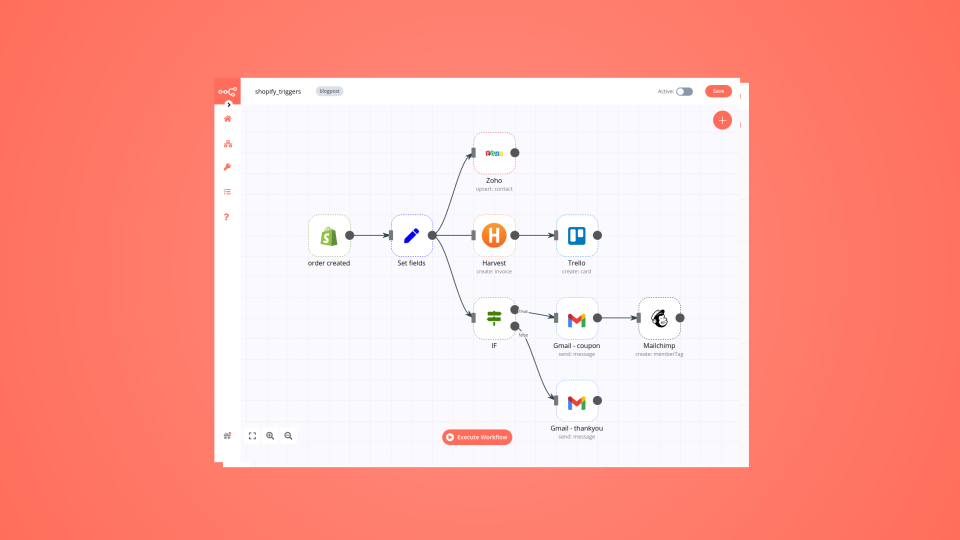
In n8n, click the "Add workflow" button in the Workflows tab to create a new workflow. Add the starting point – a trigger on when your workflow should run: an app event, a schedule, a webhook call, another workflow, an AI chat, or a manual trigger. Sometimes, the HTTP Request node might already serve as your starting point.

Gmail and MongoDB integration: Create a new workflow and add the first step

Step 2: Add and configure Gmail and MongoDB nodes

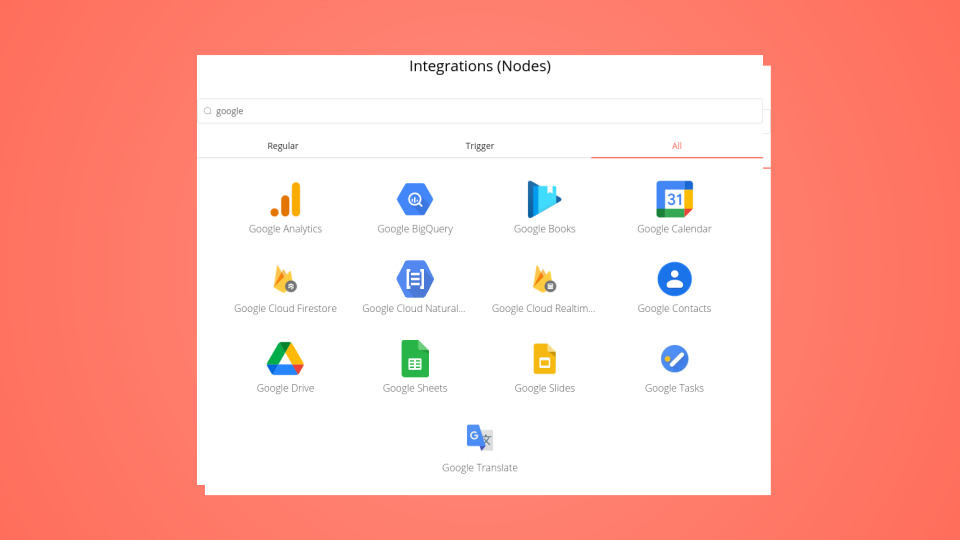
You can find Gmail and MongoDB in the nodes panel. Drag them onto your workflow canvas, selecting their actions. Click each node, choose a credential, and authenticate to grant n8n access. Configure Gmail and MongoDB nodes one by one: input data on the left, parameters in the middle, and output data on the right.

Gmail and MongoDB integration: Add and configure Gmail and MongoDB nodes

Step 3: Connect Gmail and MongoDB

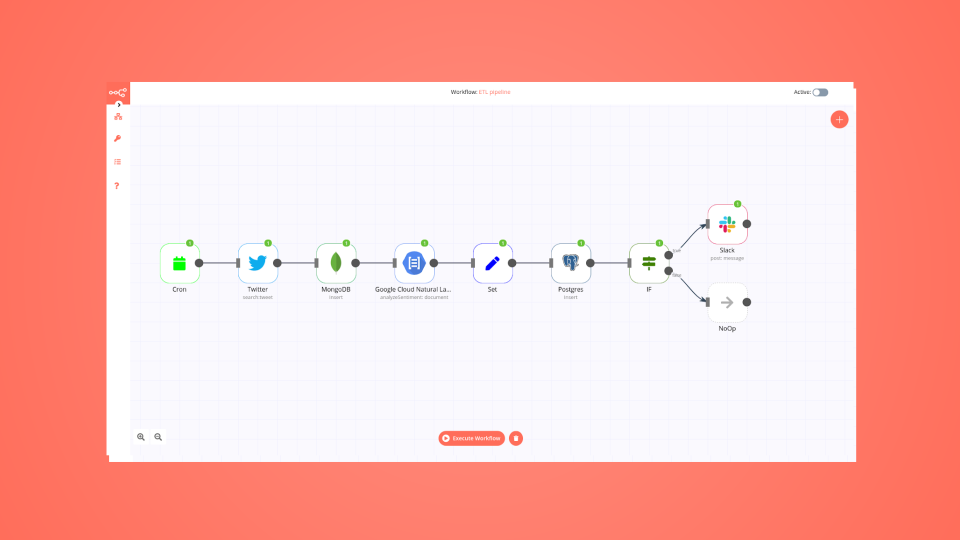
A connection establishes a link between Gmail and MongoDB (or vice versa) to route data through the workflow. Data flows from the output of one node to the input of another. You can have single or multiple connections for each node.

Gmail and MongoDB integration: Connect Gmail and MongoDB

Step 4: Customize and extend your Gmail and MongoDB integration

Use n8n's core nodes such as If, Split Out, Merge, and others to transform and manipulate data. Write custom JavaScript or Python in the Code node and run it as a step in your workflow. Connect Gmail and MongoDB with any of n8n’s 1000+ integrations, and incorporate advanced AI logic into your workflows.

Gmail and MongoDB integration: Customize and extend your Gmail and MongoDB integration

Step 5: Test and activate your Gmail and MongoDB workflow

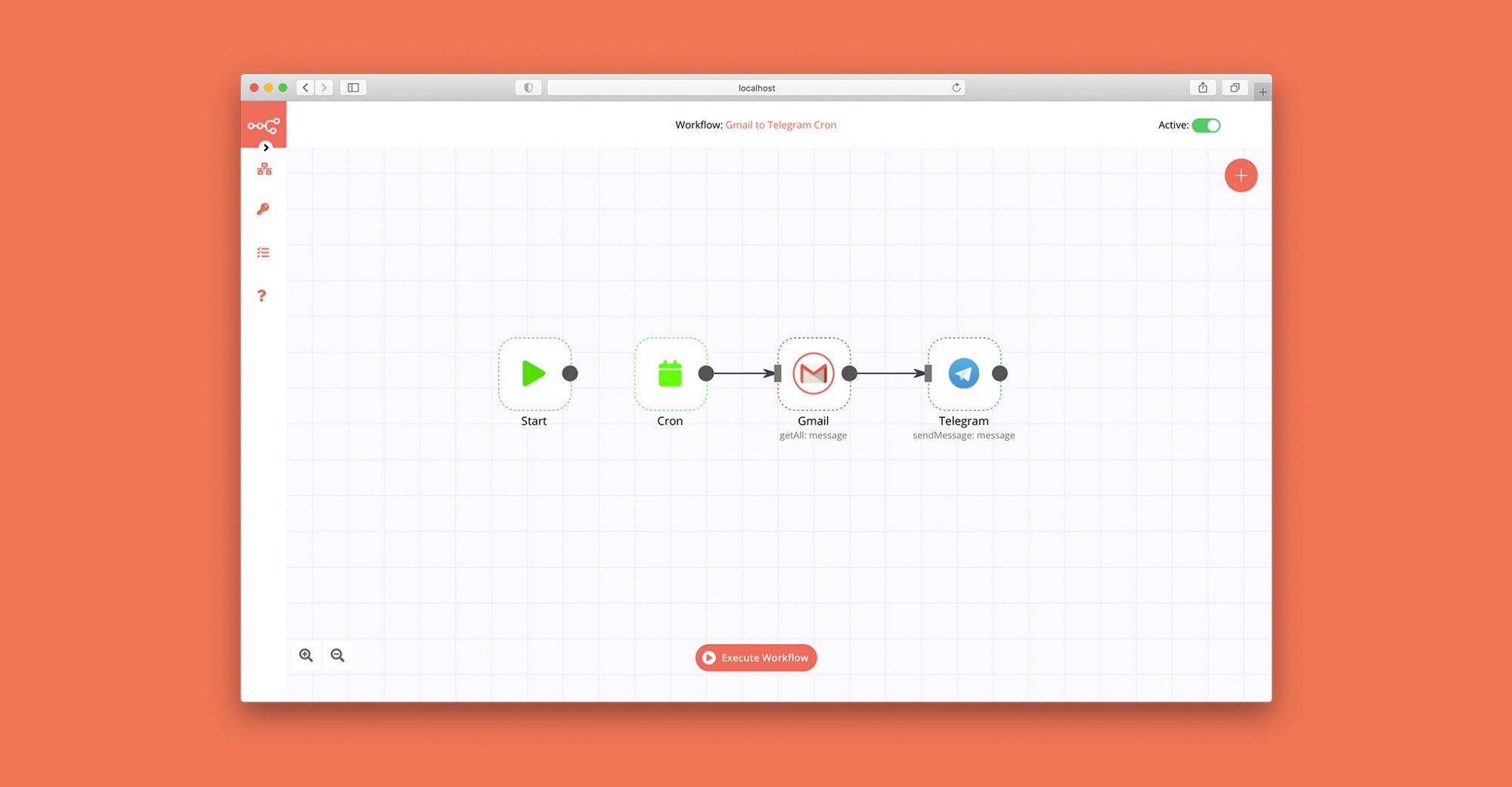
Save and run the workflow to see if everything works as expected. Based on your configuration, data should flow from Gmail to MongoDB or vice versa. Easily debug your workflow: you can check past executions to isolate and fix the mistake. Once you've tested everything, make sure to save your workflow and activate it.

Gmail and MongoDB integration: Test and activate your Gmail and MongoDB workflow

Send SaaS trial follow-up emails with MongoDB and Gmail

How it works
This workflow runs on a daily schedule to monitor users currently on a trial plan. It fetches user data from MongoDB, calculates their trial stage, and assigns a trigger label such as Day 3, Day 7, Day 13, or Last Day. Based on this stage, the workflow sends a targeted email using Gmail. This ensures consistent engagement and improves trial-to-paid conversion without manual effort.

Step-by-step

Fetch and filter trial users**
Schedule Trigger – Runs the workflow daily at a fixed time.
Find documents – Retrieves users with an active trial plan from MongoDB.
Code in JavaScript – Calculates trial progress and assigns a trigger type (day_3, day_7, day_13, last_day).

Send stage-based emails**
Loop Over Items – Iterates through each filtered user.
Switch – Routes users based on their trigger type.
Send day 3 email – Sends onboarding encouragement email.
Send day 7 mail – Sends mid-trial engagement email.
Send day 13 mail – Sends near-expiry reminder email.
Send Last day email – Sends final urgency email before trial ends.
Merge – Combines all branches and continues looping for remaining users.

Why use this?

Automates user engagement throughout the trial lifecycle
Improves activation and feature adoption with timely nudges
Increases conversion rates with strategic email timing
Eliminates manual tracking of trial users
Scales easily for large SaaS user bases

Nodes used in this workflow

Popular Gmail and MongoDB workflows

Send SaaS trial follow-up emails with MongoDB and Gmail

How it works This workflow runs on a daily schedule to monitor users currently on a trial plan. It fetches user data from MongoDB, calculates their trial stage, and assigns a trigger label such as Day 3, Day 7, Day 13, or Last Day. Based on this stage, the workflow sends a targeted email using Gmail. This ensures consistent engagement and improves trial-to-paid conversion without manual effort. Step-by-step Fetch and filter trial users** Schedule Trigger – Runs the workflow daily at a fixed time. Find documents – Retrieves users with an active trial plan from MongoDB. Code in JavaScript – Calculates trial progress and assigns a trigger type (day_3, day_7, day_13, last_day). Send stage-based emails** Loop Over Items – Iterates through each filtered user. Switch – Routes users based on their trigger type. Send day 3 email – Sends onboarding encouragement email. Send day 7 mail – Sends mid-trial engagement email. Send day 13 mail – Sends near-expiry reminder email. Send Last day email – Sends final urgency email before trial ends. Merge – Combines all branches and continues looping for remaining users. Why use this? Automates user engagement throughout the trial lifecycle Improves activation and feature adoption with timely nudges Increases conversion rates with strategic email timing Eliminates manual tracking of trial users Scales easily for large SaaS user bases

Daily News Aggregation with Perplexity AI & MongoDB Storage

This workflow contains community nodes that are only compatible with the self-hosted version of n8n. Workflow: *Daily News Aggregator & MongoDB Storage This workflow is designed to run seamlessly in the background, automating the full cycle of news aggregation, storage, and reporting with precision and reliability. Daily Trigger (Cron Node) The process kicks off every morning at 8:00 AM UTC. This scheduling ensures that fresh global news is captured consistently at the start of each day. Perplexity Node At the heart of the workflow, a Perplexity node queries the latest global news. The prompt specifies both the type of news and the JSON structure required, guaranteeing the output is ready for structured storage. The result is a clean feed of headlines, timestamps, sources, and URLs. Data Formatting (Code Node) Since Perplexity’s response is a string, the workflow includes a custom JavaScript function to clean and parse it into a valid JSON array. Each news item is then transformed into its own object, ready for iteration. MongoDB Insertion (Loop Node) Each news article is inserted into the daily_news collection in MongoDB. The workflow ensures that fields such as headline, timestamp, source, URL, and category are stored neatly, with additional metadata available for future filtering and analysis. Aggregation & Notification Prep (Code Node) Once all items are stored, the workflow aggregates the day’s results. This step prepares a digest of what was successfully processed, ensuring visibility into the pipeline’s performance. Email Notification (Gmail Node) Finally, a summary email is sent via Gmail. This message confirms the operation’s success and provides a quick snapshot of the news collected and stored that day. Workflow Flow Cron Trigger → Perplexity API → Format Data → MongoDB Insert → Aggregate Results → Send Email Notification This setup transforms what could be a manual, repetitive task into a streamlined daily routine. It not only guarantees timely and structured storage of news but also provides immediate confirmation, making it an elegant solution for automated information management.

Build your own Gmail and MongoDB integration

Create custom Gmail and MongoDB workflows by choosing triggers and actions. Nodes come with global operations and settings, as well as app-specific parameters that can be configured. You can also use the HTTP Request node to query data from any app or service with a REST API.

Gmail supported actions

Add Label
Delete
Get
Get Many
Mark as Read
Mark as Unread
Remove Label
Reply
Send
Send and Wait for Response
Create
Delete
Get
Get Many
Create
Delete
Get
Get Many
Add Label
Delete
Get
Get Many
Remove Label
Reply
Trash
Untrash

MongoDB supported actions

Create
Drop
List
Update
Aggregate
Aggregate documents
Delete
Delete documents
Find
Find documents
Find And Replace
Find and replace documents
Find And Update
Find and update documents
Insert
Insert documents
Update
Update documents

FAQs

  • Can Gmail connect with MongoDB?

  • Can I use Gmail’s API with n8n?

  • Can I use MongoDB’s API with n8n?

  • Is n8n secure for integrating Gmail and MongoDB?

  • How to get started with Gmail and MongoDB integration in n8n.io?

Need help setting up your Gmail and MongoDB integration?

Discover our latest community's recommendations and join the discussions about Gmail and MongoDB integration.
jake chard
João Textor
Jan Koch
Paul Kennard

Looking to integrate Gmail and MongoDB in your company?

Over 3000 companies switch to n8n every single week

Why use n8n to integrate Gmail with MongoDB

Build complex workflows, really fast

Build complex workflows, really fast

Handle branching, merging and iteration easily.
Pause your workflow to wait for external events.

Code when you need it, UI when you don't

Simple debugging

Your data is displayed alongside your settings, making edge cases easy to track down.

Use templates to get started fast

Use 1000+ workflow templates available from our core team and our community.

Reuse your work

Copy and paste, easily import and export workflows.

Implement complex processes faster with n8n

red iconyellow iconred iconyellow icon