Back to Integrations
integrationGmail node
integrationServiceNow node

Gmail and ServiceNow integration

Save yourself the work of writing custom integrations for Gmail and ServiceNow and use n8n instead. Build adaptable and scalable Communication, HITL, and Productivity workflows that work with your technology stack. All within a building experience you will love.

How to connect Gmail and ServiceNow

  • Step 1: Create a new workflow
  • Step 2: Add and configure nodes
  • Step 3: Connect
  • Step 4: Customize and extend your integration
  • Step 5: Test and activate your workflow

Step 1: Create a new workflow and add the first step

In n8n, click the "Add workflow" button in the Workflows tab to create a new workflow. Add the starting point – a trigger on when your workflow should run: an app event, a schedule, a webhook call, another workflow, an AI chat, or a manual trigger. Sometimes, the HTTP Request node might already serve as your starting point.
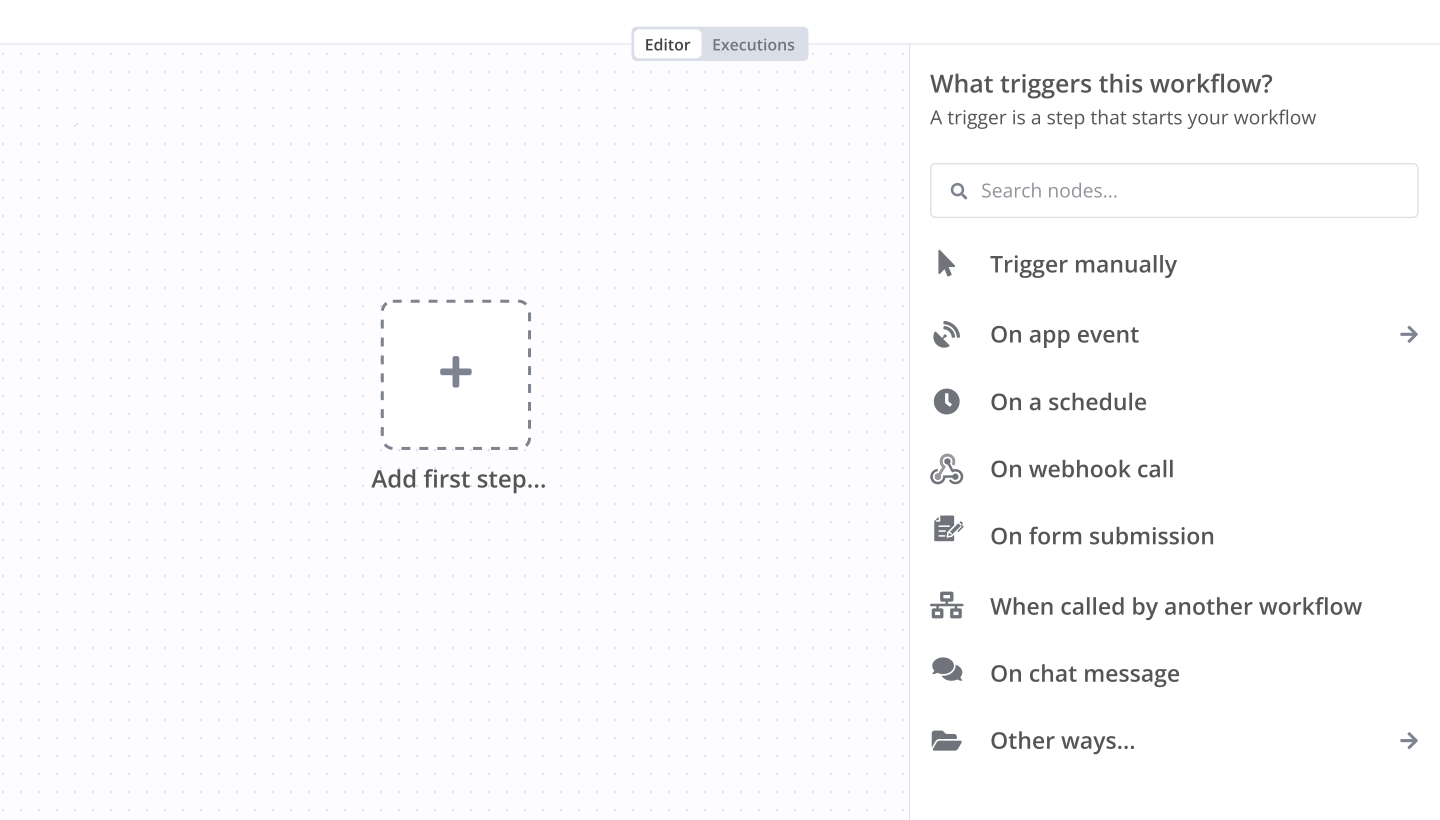
Gmail and ServiceNow integration: Create a new workflow and add the first step

Step 2: Add and configure Gmail and ServiceNow nodes

You can find Gmail and ServiceNow in the nodes panel. Drag them onto your workflow canvas, selecting their actions. Click each node, choose a credential, and authenticate to grant n8n access. Configure Gmail and ServiceNow nodes one by one: input data on the left, parameters in the middle, and output data on the right.

Gmail and ServiceNow integration: Add and configure Gmail and ServiceNow nodes

Step 3: Connect Gmail and ServiceNow

A connection establishes a link between Gmail and ServiceNow (or vice versa) to route data through the workflow. Data flows from the output of one node to the input of another. You can have single or multiple connections for each node.

Gmail and ServiceNow integration: Connect Gmail and ServiceNow

Step 4: Customize and extend your Gmail and ServiceNow integration

Use n8n's core nodes such as If, Split Out, Merge, and others to transform and manipulate data. Write custom JavaScript or Python in the Code node and run it as a step in your workflow. Connect Gmail and ServiceNow with any of n8n’s 1000+ integrations, and incorporate advanced AI logic into your workflows.

Gmail and ServiceNow integration: Customize and extend your Gmail and ServiceNow integration

Step 5: Test and activate your Gmail and ServiceNow workflow

Save and run the workflow to see if everything works as expected. Based on your configuration, data should flow from Gmail to ServiceNow or vice versa. Easily debug your workflow: you can check past executions to isolate and fix the mistake. Once you've tested everything, make sure to save your workflow and activate it.

Gmail and ServiceNow integration: Test and activate your Gmail and ServiceNow workflow

IP reputation check & SOC alerts with Splunk, VirusTotal and AlienVault

IP Reputation Check & Threat Summary using Splunk + VirusTotal + AlienVault + n8n

This workflow automates IP reputation analysis using Splunk alerts, enriches data via VirusTotal and AlienVault OTX, and generates actionable threat summaries for SOC teams — all without any coding.

What It Does

When a Splunk alert contains a suspicious IP:

Ingests the IP** from the Splunk alert via webhook.
Performs dual threat enrichment** using:
VirusTotal IP reputation & tags.
AlienVault OTX pulses, reputation & WHOIS.
Merges & processes** threat intel data.
Generates a rich HTML summary** for analyst review.
Routes action based on severity**:
Sends Slack alert for suspicious IPs.
Creates an incident in ServiceNow.
Emails a formatted HTML report to the SOC inbox.

Tech Stack Used

Splunk** – SIEM alert source
VirusTotal API** – Reputation check & analysis stats
AlienVault OTX API** – Community threat intel & pulse info
n8n** – For orchestration, merging, summary generation
Slack, Gmail, ServiceNow** – For SOC notifications and ticketing

Ideal Use Case

Perfect for security teams wanting to:

Automatically validate IP reputation from SIEM logs
Get quick context from multiple threat feeds
Generate email-ready reports and escalate high-risk IPs

Included Nodes

Webhook (Splunk)
Function nodes for IOC extraction and intel processing
HTTP Request (VirusTotal & AlienVault)
Merge + Switch nodes for conditional logic
Gmail, Slack, ServiceNow integration

Tips

Add your VirusTotal and AlienVault credentials in n8n's credential manager.
Use the Switch node to route based on your internal threat score logic.
Easily extend this to include AbuseIPDB or GreyNoise for deeper enrichment.

Nodes used in this workflow

Popular Gmail and ServiceNow workflows

IP Reputation Check & SOC Alerts with Splunk, VirusTotal and AlienVault

IP Reputation Check & Threat Summary using Splunk + VirusTotal + AlienVault + n8n This workflow automates IP reputation analysis using Splunk alerts, enriches data via VirusTotal and AlienVault OTX, and generates actionable threat summaries for SOC teams — all without any coding. What It Does When a Splunk alert contains a suspicious IP: Ingests the IP** from the Splunk alert via webhook. Performs dual threat enrichment** using: VirusTotal IP reputation & tags. AlienVault OTX pulses, reputation & WHOIS. Merges & processes** threat intel data. Generates a rich HTML summary** for analyst review. Routes action based on severity**: Sends Slack alert for suspicious IPs. Creates an incident in ServiceNow. Emails a formatted HTML report to the SOC inbox. Tech Stack Used Splunk** – SIEM alert source VirusTotal API** – Reputation check & analysis stats AlienVault OTX API** – Community threat intel & pulse info n8n** – For orchestration, merging, summary generation Slack, Gmail, ServiceNow** – For SOC notifications and ticketing Ideal Use Case Perfect for security teams wanting to: Automatically validate IP reputation from SIEM logs Get quick context from multiple threat feeds Generate email-ready reports and escalate high-risk IPs Included Nodes Webhook (Splunk) Function nodes for IOC extraction and intel processing HTTP Request (VirusTotal & AlienVault) Merge + Switch nodes for conditional logic Gmail, Slack, ServiceNow integration Tips Add your VirusTotal and AlienVault credentials in n8n's credential manager. Use the Switch node to route based on your internal threat score logic. Easily extend this to include AbuseIPDB or GreyNoise for deeper enrichment.

Malicious File Detection & Response: Wazuh to VirusTotal with Slack Alerts

Malicious File Detection & Threat Summary Automation using Wazuh + VirusTotal + n8n This workflow helps SOC teams automate the detection and reporting of potentially malicious files using Wazuh alerts, VirusTotal hash validation, and integrated summary/report generation. It's ideal for analysts who want instant context and communication for file-based threats — without writing a single line of code. What It Does When Wazuh detects a suspicious file: Ingests Wazuh Alert** A webhook node captures incoming alerts containing file hashes (SHA256/MD5). Parses IOCs** Extracts relevant indicators (file hash, filename, etc.). Validates with VirusTotal** Automatically checks the file hash reputation using VirusTotal's threat intelligence API. Generates Human-Readable Summary** Outputs a structured file report. Routes Alerts Based on Threat Level** Sends a formatted email with the file summary using Gmail. If the file is deemed malicious/suspicious: Creates a file-related incident ticket. Sends an instant Slack alert to notify the team. Tech Stack Used Wazuh** – For endpoint alerting VirusTotal API** – For real-time hash validation n8n** – To orchestrate, parse, enrich, and communicate Slack, Gmail, Incident Tool** – To notify and take action Ideal Use Case This template is designed for security teams looking to automate file threat triage, IOC validation, and alert-to-ticket escalation, with zero human delay. Included Nodes Webhook** (Wazuh) Function** (IOC extraction and summary) HTTP Request** (VirusTotal) If / Switch** (threat level check) Gmail, **Slack, Incident Creation Tips Make sure to add your VirusTotal API key in the HTTP node. Customize the incident creation node to fit your ticketing platform (Jira, ServiceNow, etc.). Add logic to enrich the file alert further using WHOIS or sandbox reports if needed.

Build your own Gmail and ServiceNow integration

Create custom Gmail and ServiceNow workflows by choosing triggers and actions. Nodes come with global operations and settings, as well as app-specific parameters that can be configured. You can also use the HTTP Request node to query data from any app or service with a REST API.

Gmail supported actions

Add Label
Delete
Get
Get Many
Mark as Read
Mark as Unread
Remove Label
Reply
Send
Send and Wait for Response
Create
Delete
Get
Get Many
Create
Delete
Get
Get Many
Add Label
Delete
Get
Get Many
Remove Label
Reply
Trash
Untrash

ServiceNow supported actions

Upload
Upload an attachment to a specific table record
Delete
Delete an attachment
Get
Get an attachment
Get Many
Get many attachments on a table
Get Many
Get Many
Get Many
Get Many
Create
Delete
Get
Get Many
Update
Create
Delete
Get
Get Many
Update
Create
Delete
Get
Get Many
Update
Get Many
Get Many

FAQs

  • Can Gmail connect with ServiceNow?

  • Can I use Gmail’s API with n8n?

  • Can I use ServiceNow’s API with n8n?

  • Is n8n secure for integrating Gmail and ServiceNow?

  • How to get started with Gmail and ServiceNow integration in n8n.io?

Need help setting up your Gmail and ServiceNow integration?

Discover our latest community's recommendations and join the discussions about Gmail and ServiceNow integration.
jake chard
Jan Koch
Paul Kennard

Looking to integrate Gmail and ServiceNow in your company?

Over 3000 companies switch to n8n every single week

Why use n8n to integrate Gmail with ServiceNow

Build complex workflows, really fast
Build complex workflows, really fast

Handle branching, merging and iteration easily.
Pause your workflow to wait for external events.

Code when you need it, UI when you don't

Simple debugging

Your data is displayed alongside your settings, making edge cases easy to track down.

Use templates to get started fast

Use 1000+ workflow templates available from our core team and our community.

Reuse your work

Copy and paste, easily import and export workflows.

Implement complex processes faster with n8n

red iconyellow iconred iconyellow icon