Back to Integrations
integrationGmail node
integrationShopify node

Gmail and Shopify integration

Save yourself the work of writing custom integrations for Gmail and Shopify and use n8n instead. Build adaptable and scalable Communication, HITL, and Sales workflows that work with your technology stack. All within a building experience you will love.

How to connect Gmail and Shopify

  • Step 1: Create a new workflow
  • Step 2: Add and configure nodes
  • Step 3: Connect
  • Step 4: Customize and extend your integration
  • Step 5: Test and activate your workflow

Step 1: Create a new workflow and add the first step

In n8n, click the "Add workflow" button in the Workflows tab to create a new workflow. Add the starting point – a trigger on when your workflow should run: an app event, a schedule, a webhook call, another workflow, an AI chat, or a manual trigger. Sometimes, the HTTP Request node might already serve as your starting point.
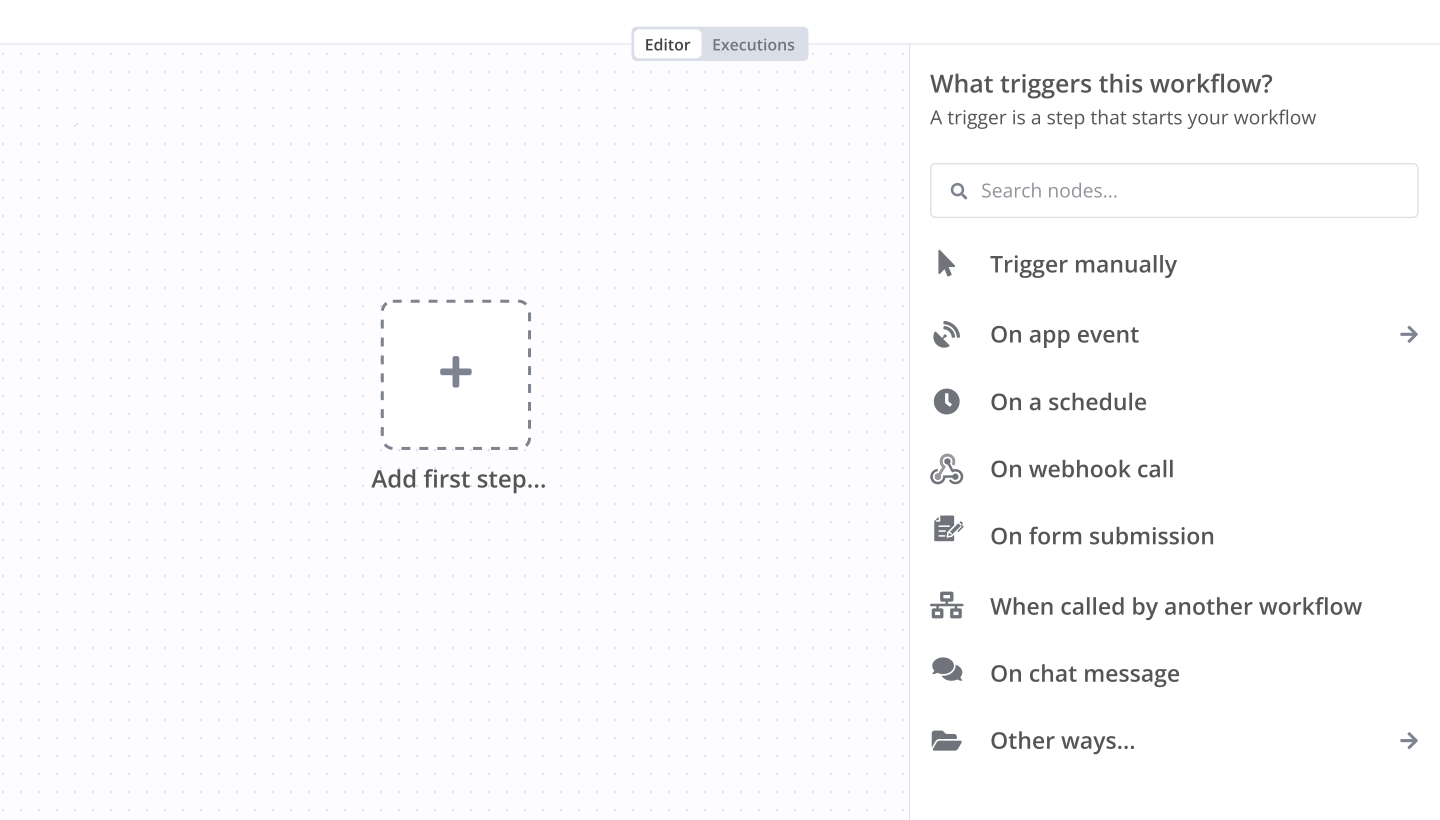
Gmail and Shopify integration: Create a new workflow and add the first step

Step 2: Add and configure Gmail and Shopify nodes

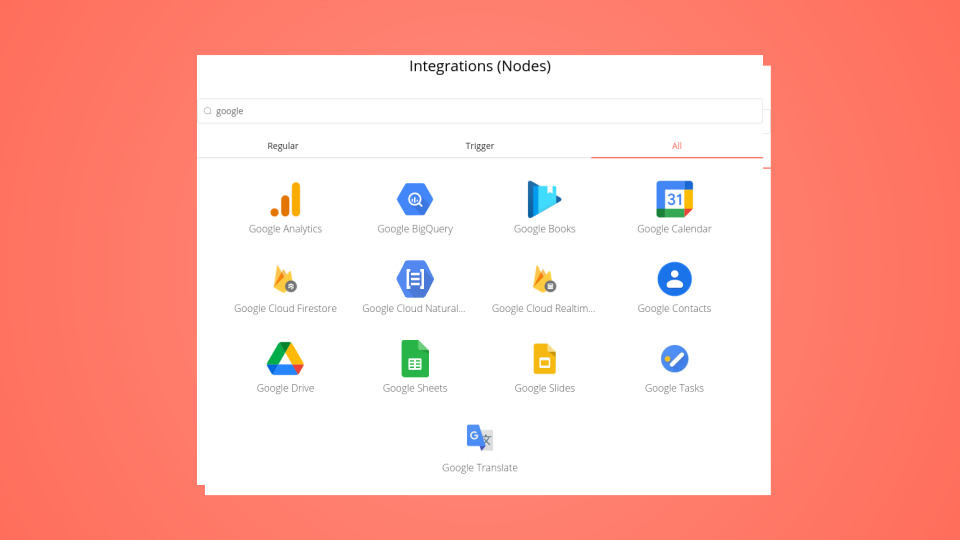
You can find Gmail and Shopify in the nodes panel. Drag them onto your workflow canvas, selecting their actions. Click each node, choose a credential, and authenticate to grant n8n access. Configure Gmail and Shopify nodes one by one: input data on the left, parameters in the middle, and output data on the right.

Gmail and Shopify integration: Add and configure Gmail and Shopify nodes

Step 3: Connect Gmail and Shopify

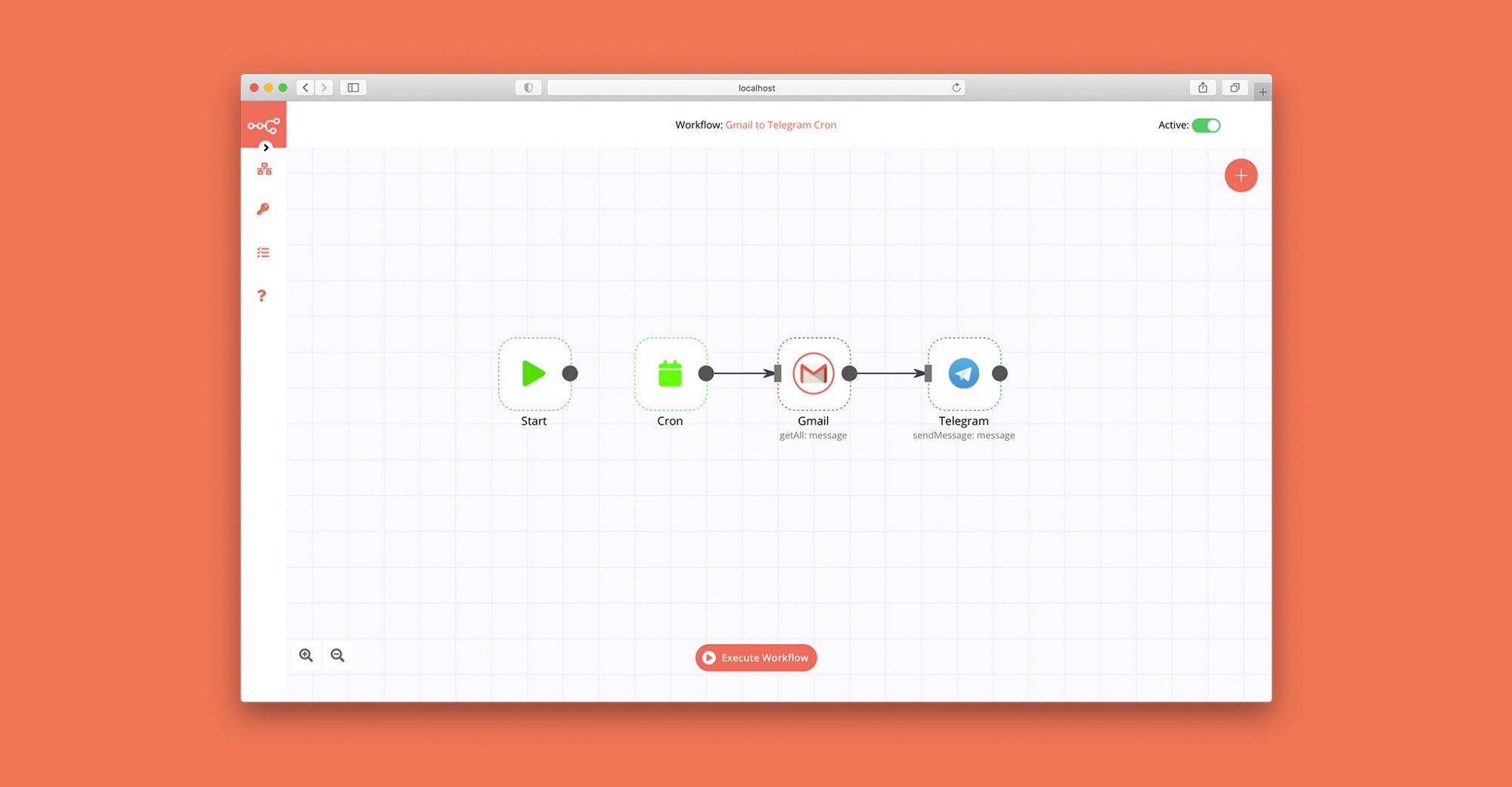
A connection establishes a link between Gmail and Shopify (or vice versa) to route data through the workflow. Data flows from the output of one node to the input of another. You can have single or multiple connections for each node.

Gmail and Shopify integration: Connect Gmail and Shopify

Step 4: Customize and extend your Gmail and Shopify integration

Use n8n's core nodes such as If, Split Out, Merge, and others to transform and manipulate data. Write custom JavaScript or Python in the Code node and run it as a step in your workflow. Connect Gmail and Shopify with any of n8n’s 1000+ integrations, and incorporate advanced AI logic into your workflows.

Gmail and Shopify integration: Customize and extend your Gmail and Shopify integration

Step 5: Test and activate your Gmail and Shopify workflow

Save and run the workflow to see if everything works as expected. Based on your configuration, data should flow from Gmail to Shopify or vice versa. Easily debug your workflow: you can check past executions to isolate and fix the mistake. Once you've tested everything, make sure to save your workflow and activate it.

Gmail and Shopify integration: Test and activate your Gmail and Shopify workflow

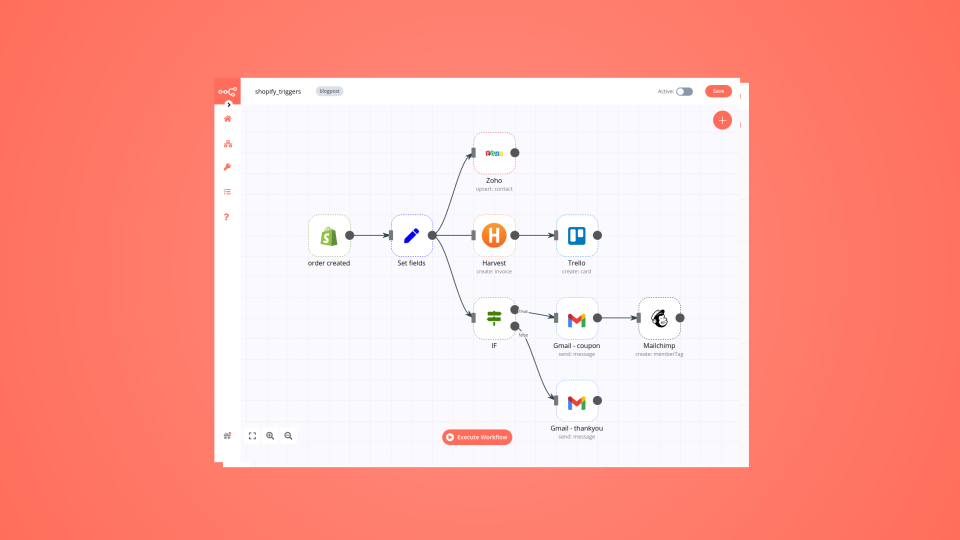
Process Shopify new orders with Zoho CRM and Harvest

This workflow is triggered when a new order is created in Shopify. Then:
the order information is stored in Zoho CRM,
an invoice is created in Harvest and stored in Trello,
if the order value is above 50, an email with a discount coupon is sent to the customer and they are added to a MailChimp campaign for high-value customers; otherwise, only a "thank you" email is sent to the customer.

Note that you need to replace the List ID in the Trello node with your own ID (see instructions in our docs). Same goes for the Account ID in the Harvest node (see instructions here).

Nodes used in this workflow

Popular Gmail and Shopify workflows

+3

Convert Shopify products into Blog content with DeepSeek and Sheets

Overview Stop struggling with content creation for your e-commerce store. This workflow acts as your automated AI Content Marketer, instantly transforming your Shopify product details into high-quality, SEO-optimized blog posts. It handles everything from reading product data to writing the article and uploading it directly to your store as a draft. What this workflow does Fetches Product Data: Automatically pulls product titles and descriptions directly from your Shopify store (configurable limit). Data Logging: Backs up the raw product data into Google Sheets for record-keeping before processing. AI SEO Writing: Uses a powerful LLM (via OpenRouter/DeepSeek) to write a complete, engaging blog post based on the product's features. It generates an SEO-friendly title and formats the body content in clean HTML (headings, bullet points, etc.). Smart Parsing: A custom Code node ensures the AI's output is strictly formatted as JSON, separating the Blog Title from the Blog Content to prevent errors. Auto-Drafting in Shopify: Uploads the generated article directly to your specific Shopify Blog ID as a "Draft" (so you can review it before publishing). Email Notification: Sends a confirmation email via Gmail to let you know your new blog posts are ready for review. Setup Requirements To run this workflow, you will need to set up credentials in n8n for the following services: Shopify Admin API: To fetch products and create articles. (You will need your Shop Name and an Access Token). OpenRouter (or OpenAI): To power the AI Agent. The template is configured for DeepSeek via OpenRouter, but can be swapped for OpenAI. Google Sheets: To log product data and generated blog content. Gmail: To send the completion notification. How to use Configure Variables: Double-click the "Variables" node (Set node) at the start of the workflow. Enter your shop name (e.g., my-store from my-store.myshopify.com) and your blogId (found in the URL when viewing your blog in Shopify Admin). Connect Google Sheets: Open the Google Sheets nodes and map them to a sheet in your Drive. Ensure your sheet has columns for ID, Title, and Description. Select AI Model: In the Chat Model node, ensure your API key is connected (OpenRouter is used by default for cost-efficiency). Run: Execute the workflow. It will process your products and populate your Shopify Blog with new drafts automatically. Video Tutorial Watch the full setup guide here: Guide

Abandoned cart recovery for Shopify via Gmail, Google Sheets & Twilio (no-code)

Who is this for? This template is ideal for solo store owners, eCommerce marketers, automation beginners, or anyone using Shopify and Gmail who wants to recover lost revenue without coding. What problem does this solve? Customers often leave items in their cart without completing the purchase. Manually chasing those sales is inefficient and inconsistent. This workflow automates the recovery process by sending emails (and optionally SMS) based on Shopify checkout activity. What this workflow does: ✅ Detects when a Shopify checkout is created but not completed, ⏳ Waits 1 hour, then checks if the cart was abandoned, 🧾 Pulls cart contents and applies a fallback discount, 📧 Sends a recovery email via Gmail, 🕓 After 24 hours, you can optionally send an SMS or WhatsApp reminder via Twilio, 📊 Logs each interaction to Google Sheets for tracking. Setup: Create Shopify, Gmail, Google Sheets, and Twilio credentials in your n8n instance, Import the JSON workflow file Replace the Shopify trigger with your store's webhook (set to “Checkout Create”), Set your wait time (default: 1 hour), Link your Gmail account and customize the email message, (Optional) Link Twilio to add a multi-channel reminder, Update the Google Sheets node with your own Sheet ID and headers. 🗒 Color-coded workflow notes: To make customization easier, this template includes a visual sticky note system inside the n8n canvas. You’ll find: 🟩 Green Notes → Main Steps Clear, essential stages of the automation (e.g. wait, check cart status, send email), 🟦 Blue Notes → Personalization Tips Small tweaks you can make to match your tone, store brand, or logic (e.g. email copy, discount logic), 🟨 Yellow Notes → Optional / Advanced Features that you can explore setting up: Twilio SMS, Airtable logging, human approval steps, etc. 👉 Look around each key node for quick tips, setup instructions, and TO-DO items. This system helps you understand and modify the workflow at a glance — whether you're a beginner or scaling a pro setup. How to customize this workflow? 🎯 Swap Shopify for WooCommerce or Stripe by replacing the trigger and cart-check logic, 💬 Localize and personalize each email message or add multilingual support via AI, 📈 Upgrade logging from Google Sheets to Airtable for CRM-style features, 🤝 Add manual approval steps for high-value discounts, 💡 Want a one-time unique code per user? Let us build that logic for you → [email protected] Final notes This template was designed by Velebit from Innovatio. External links in the workflow (e.g. support or upgrade options) are optional and purely informative, while only leading to the official company webiste with no affiliate or similar links included in the template itself. A separate license applies to the paid version on Gumroad, which includes additional modules and commercial use rights.
+2

Monitor Shopify low-stock items with OpenAI, Google Sheets, Slack and email

(Retail) Supplier Restock Request Trigger This workflow automatically monitors your Shopify inventory, detects low-stock products, generates smart alert messages, logs records in Google Sheets and sends priority-based notifications to Slack. This workflow checks your Shopify store every 5 hours, identifies products with low inventory (≤10 units), generates professional alert messages using AI, prevents duplicate alerts using Google Sheets, assigns priority based on stock level and notifies your team on Slack. You receive: Automated inventory checks every 5 hours** Google Sheet tracking for low-stock products** Priority-based Slack alerts (High / Medium / Low)** Ideal for teams that want proactive inventory visibility without manual stock checks. Quick Start – Implementation Steps Connect your Shopify account to fetch products and inventory. Connect OpenAI to generate alert messages. Connect a Google Sheet for tracking alerts. Connect Slack to receive notifications. Activate the workflow — monitoring starts automatically. What It Does This workflow automates low-stock monitoring for Shopify products: Runs automatically every 5 hours. Fetches all products and inventory levels from Shopify. Cleans and prepares product data (SKU, name, stock, vendor). Processes products in small batches to avoid overload. Filters only products with stock ≤ 10 units. Generates a professional alert message using AI. Checks Google Sheets to avoid duplicate records. Appends new records or updates existing ones. Assigns priority based on stock level: 2 units → High priority 6 units → Medium priority 10 units → Low priority Sends a clear Slack alert to the team. This ensures timely restocking with no duplicate alerts. Who’s It For This workflow is ideal for: E-commerce store owners Inventory & operations teams Shopify store managers Supply chain teams Startups managing limited stock Businesses wanting automated restock alerts Requirements to Use This Workflow To run this workflow, you need: n8n instance** (cloud or self-hosted) Shopify store** with API access OpenAI API key** Google Sheets** access Slack workspace** with API permissions No advanced technical knowledge required. How It Works Scheduled Check – Workflow runs every 5 hours. Fetch Products – Retrieves all Shopify products. Prepare Data – Extracts SKU, name, stock, vendor. Low-Stock Filter – Keeps only items ≤ 10 units. AI Message Creation – Generates alert text. Duplicate Check – Looks up Google Sheet records. Update or Insert – Keeps the sheet up to date. Priority Assignment – Sets urgency level. Slack Alert – Notifies the team instantly. Setup Steps Import the provided n8n workflow JSON. Open the Shopify nodes → connect your Shopify credentials. Add your OpenAI API key in the AI nodes. Connect your Google Sheets account and map fields. Connect Slack and select the alert channel. Adjust stock thresholds if needed. Activate the workflow — done! How To Customize Nodes Customize Stock Thresholds Modify the IF / Switch nodes to: Change low-stock limits Add more priority levels Customize Alert Messages Edit the AI prompt to: Change tone (urgent, friendly, formal) Add emojis or mentions Include pricing or vendor info Customize Google Sheet Fields You can add: Vendor name Last updated date Restock status Assigned team member Customize Slack Alerts Enhance messages with: @mentions Emojis Links to Shopify product pages Add-Ons (Optional Enhancements) You can extend this workflow to: Send email alerts Create weekly summary reports Add auto-restock triggers Integrate with ERP systems Track restock completion Add dashboards using Google Sheets Use Case Examples 1\. Inventory Monitoring Automatically track low-stock items. 2\. Restock Planning Prioritize restocking based on urgency. 3\. Team Alerts Notify operations instantly via Slack. 4\. Audit & Tracking Maintain a clean inventory alert log. 5\. Store Scaling Prevent stock-outs as order volume grows. Troubleshooting Guide | Issue | Possible Cause | Solution | |----------------------|----------------------|----------------------------------| | No Slack alerts | Slack not connected | Check Slack credentials | | Duplicate rows | SKU mismatch | Ensure SKU is consistent | | No low-stock items | Threshold too low | Adjust IF condition | | AI message empty | OpenAI key missing | Verify API key | | Workflow not running | Trigger disabled | Enable Schedule Trigger | Need Help? If you need help customizing or extending this workflow with advanced features like adding analytics, ERP integrations, advanced alerts or scaling it for high-volume stores, then our n8n workflow developers at WeblineIndia are happy to help.
+2

Predict Shopify stockouts with GPT-4o and email suppliers via Gmail

🚀 How it works Runs daily at 06:00 UTC, pulls every Shopify product variant's stock level, calculates real sales velocity from the last 7 days of orders, then uses GPT-4o to predict stockout dates and decide whether to reorder — automatically. 🛍️ Fetches all Shopify product variants and current inventory quantities 📦 Pulls the last 7 days of orders and computes units sold per variant ⚡ Calculates sales velocity (units/day) and estimated days until stockout 🤖 AI Agent classifies risk: critical / high / medium / low and recommends reorder quantity (30-day demand + 20% safety buffer) 📧 Sends a formatted reorder request email to your supplier for high-risk variants 📊 Logs every decision (reordered or skipped) to Google Sheets for inventory tracking 🛠️ Set up steps Estimated setup time: ~15 minutes Shopify — create a Custom App in your Shopify Admin → Apps → Develop Apps; enable read_products and read_orders scopes; copy the Admin API Access Token OpenAI — connect your OpenAI API credential (GPT-4o) Gmail — connect Gmail OAuth2; replace [email protected] with your real supplier address Google Sheets — connect Google Sheets OAuth2; replace YOUR_REORDER_LOG_SHEET_ID with your sheet ID; create a sheet tab named Reorder Log Follow the sticky notes inside the workflow for per-node guidance 📋 Prerequisites Shopify store (any plan with Admin API access) OpenAI API key Gmail account for supplier notifications Google Sheets for reorder log Custom Workflow Request with Personal Dashboard [email protected] https://www.smartflowcraft.com/contact More free templates https://www.smartflowcraft.com/n8n-templates

Analyze Shopify orders with Gemini AI and send weekly Slack insights

Who is this for E-commerce store owners and sales managers who want AI-powered insights from their Shopify data without manually crunching numbers every week. What it does This workflow automatically analyzes your Shopify sales performance every Monday morning and delivers intelligent insights via Slack and email. It pulls the last 7 days of orders, calculates key metrics (revenue, order count, average order value), and sends the data to Gemini AI for trend analysis and actionable recommendations. The AI identifies patterns in your sales data and provides specific suggestions for improving performance. All metrics are logged to Google Sheets for historical tracking, and the team receives instant alerts when revenue drops more than 20% compared to the previous week. How to set up Connect your Shopify store with order read permissions Add your Gemini API key for AI analysis Set up Slack integration and choose your target channels (#sales and #alerts) Configure Gmail credentials for stakeholder email reports Create a Google Sheets document with a "Weekly Metrics" tab for data tracking Update the email recipients and spreadsheet ID in the respective nodes Requirements Shopify store with API access Google Gemini API key Slack workspace Gmail account Google Sheets access How to customize Adjust the revenue drop threshold in the IF node (default: 20%), modify the schedule frequency, customize Gemini prompts for different analysis types, or add additional Slack channels for department-specific reports.

Send bulk WhatsApp promos for new Shopify products with OpenAI and Sheets

Who Is This For? This workflow is perfect for e-commerce store owners using Shopify who want to automatically announce new products to their customer base through personalized WhatsApp messages. It's ideal for businesses looking to increase product visibility and drive sales without manual outreach efforts. What This Workflow Does This workflow automatically sends WhatsApp product announcements whenever a new product is added to your Shopify store. It processes product data by extracting images, generating product links, and converting HTML descriptions into clean, bullet-point feature lists using OpenAI. Customer data is pulled from Shopify, formatted, and phone numbers are verified on WhatsApp via the Rapiwa API. Personalized messages with product images, features, and purchase links are sent only to verified numbers. All verification and messaging activity is logged in Google Sheets, clearly tracking which contacts were verified and successfully reached. Features Shopify Integration** that triggers automatically when new products are created Image Processing** to extract and filter valid product images from Shopify Product URL Generation** to create direct links to new products AI-Powered Description Conversion** using OpenAI to transform HTML descriptions into concise bullet points Customer Data Retrieval** from Shopify store via API WhatsApp Number Verification** using Rapiwa to check if customer numbers are valid WhatsApp accounts Personalized WhatsApp Messaging** with product details, features, and images Dual-Path Logging** to Google Sheets, tracking both verified (sent) and unverified (not sent) messages Batch Processing** to handle multiple customers efficiently Rate Limiting** with wait steps to avoid API restrictions Requirements Shopify Access Token API credentials** for accessing product and customer data OpenAI API credentials** for converting HTML descriptions to bullet points Rapiwa API credentials** for WhatsApp number verification and messaging Google Sheets OAuth2 credentials** for logging message delivery status Support & Help WhatsApp**: Chat on WhatsApp Discord**: SpaGreen Community Facebook Group**: SpaGreen Support Website**: https://spagreen.net Developer Portfolio**: Codecanyon SpaGreen

Build your own Gmail and Shopify integration

Create custom Gmail and Shopify workflows by choosing triggers and actions. Nodes come with global operations and settings, as well as app-specific parameters that can be configured. You can also use the HTTP Request node to query data from any app or service with a REST API.

Gmail supported actions

Add Label
Delete
Get
Get Many
Mark as Read
Mark as Unread
Remove Label
Reply
Send
Send and Wait for Response
Create
Delete
Get
Get Many
Create
Delete
Get
Get Many
Add Label
Delete
Get
Get Many
Remove Label
Reply
Trash
Untrash

Shopify supported actions

Create
Create an order
Delete
Delete an order
Get
Get an order
Get Many
Get many orders
Update
Update an order
Create
Create a product
Delete
Delete a product
Get
Get a product
Get Many
Get many products
Update
Update a product

FAQs

  • Can Gmail connect with Shopify?

  • Can I use Gmail’s API with n8n?

  • Can I use Shopify’s API with n8n?

  • Is n8n secure for integrating Gmail and Shopify?

  • How to get started with Gmail and Shopify integration in n8n.io?

Need help setting up your Gmail and Shopify integration?

Discover our latest community's recommendations and join the discussions about Gmail and Shopify integration.
jake chard
Jan Koch
Paul Kennard
Driss Talainte
Adriano Cantele

Looking to integrate Gmail and Shopify in your company?

Over 3000 companies switch to n8n every single week

Why use n8n to integrate Gmail with Shopify

Build complex workflows, really fast

Build complex workflows, really fast

Handle branching, merging and iteration easily.
Pause your workflow to wait for external events.

Code when you need it, UI when you don't

Simple debugging

Your data is displayed alongside your settings, making edge cases easy to track down.

Use templates to get started fast

Use 1000+ workflow templates available from our core team and our community.

Reuse your work

Copy and paste, easily import and export workflows.

Implement complex processes faster with n8n

red iconyellow iconred iconyellow icon