Back to Integrations
integrationGmail node
integrationZendesk node

Gmail and Zendesk integration

Save yourself the work of writing custom integrations for Gmail and Zendesk and use n8n instead. Build adaptable and scalable Communication, and HITL workflows that work with your technology stack. All within a building experience you will love.

How to connect Gmail and Zendesk

  • Step 1: Create a new workflow
  • Step 2: Add and configure nodes
  • Step 3: Connect
  • Step 4: Customize and extend your integration
  • Step 5: Test and activate your workflow

Step 1: Create a new workflow and add the first step

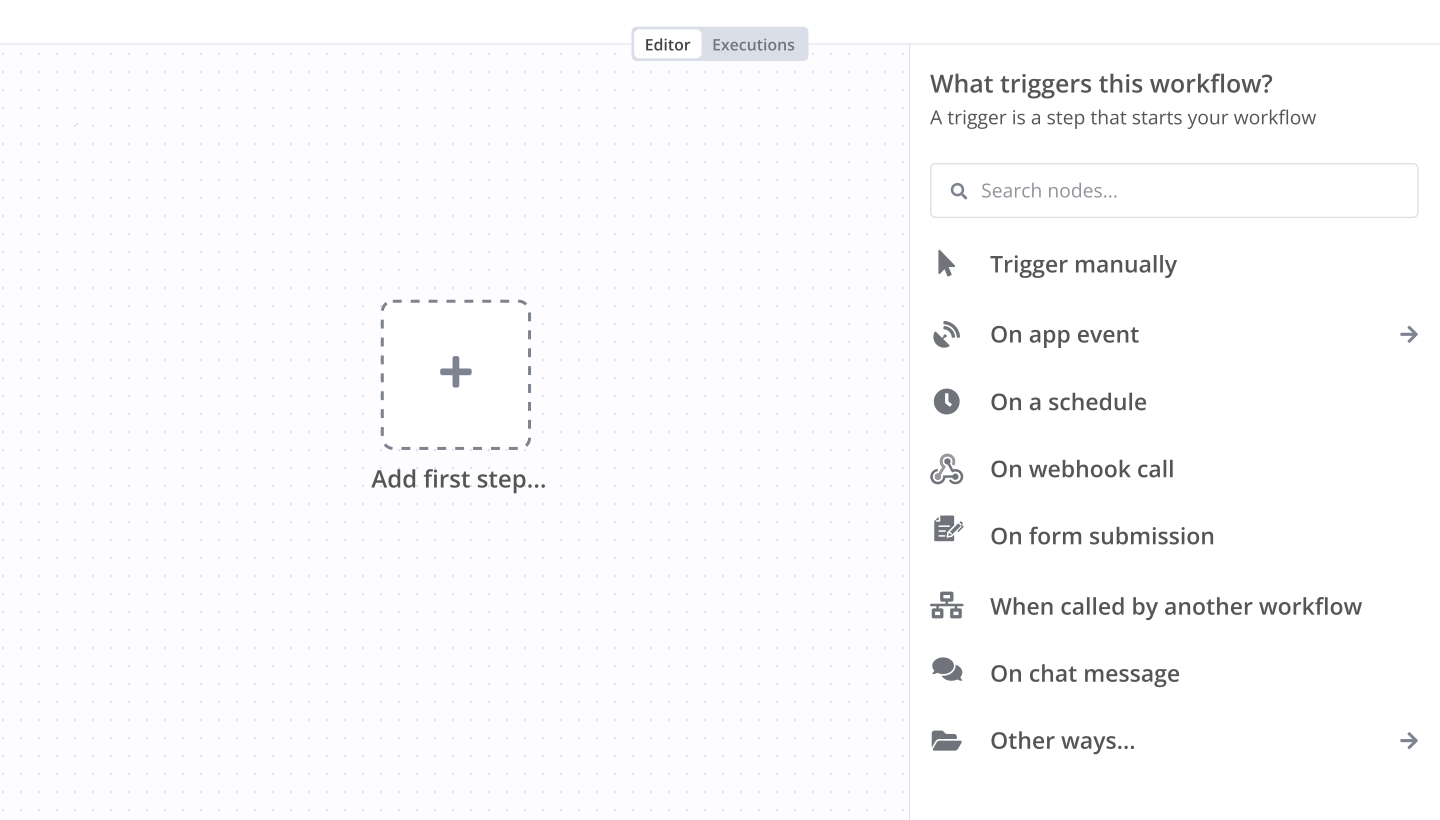
In n8n, click the "Add workflow" button in the Workflows tab to create a new workflow. Add the starting point – a trigger on when your workflow should run: an app event, a schedule, a webhook call, another workflow, an AI chat, or a manual trigger. Sometimes, the HTTP Request node might already serve as your starting point.

Gmail and Zendesk integration: Create a new workflow and add the first step

Step 2: Add and configure Gmail and Zendesk nodes

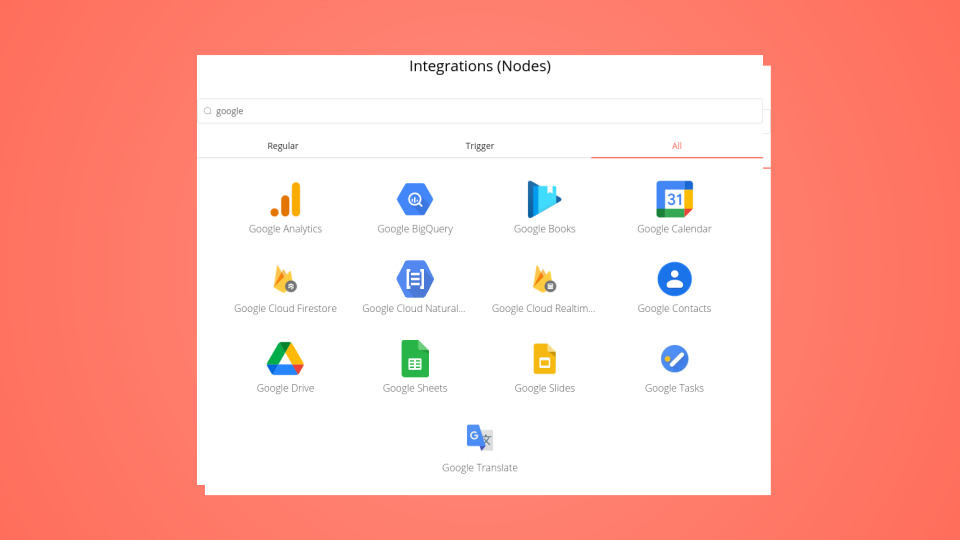
You can find Gmail and Zendesk in the nodes panel. Drag them onto your workflow canvas, selecting their actions. Click each node, choose a credential, and authenticate to grant n8n access. Configure Gmail and Zendesk nodes one by one: input data on the left, parameters in the middle, and output data on the right.

Gmail and Zendesk integration: Add and configure Gmail and Zendesk nodes

Step 3: Connect Gmail and Zendesk

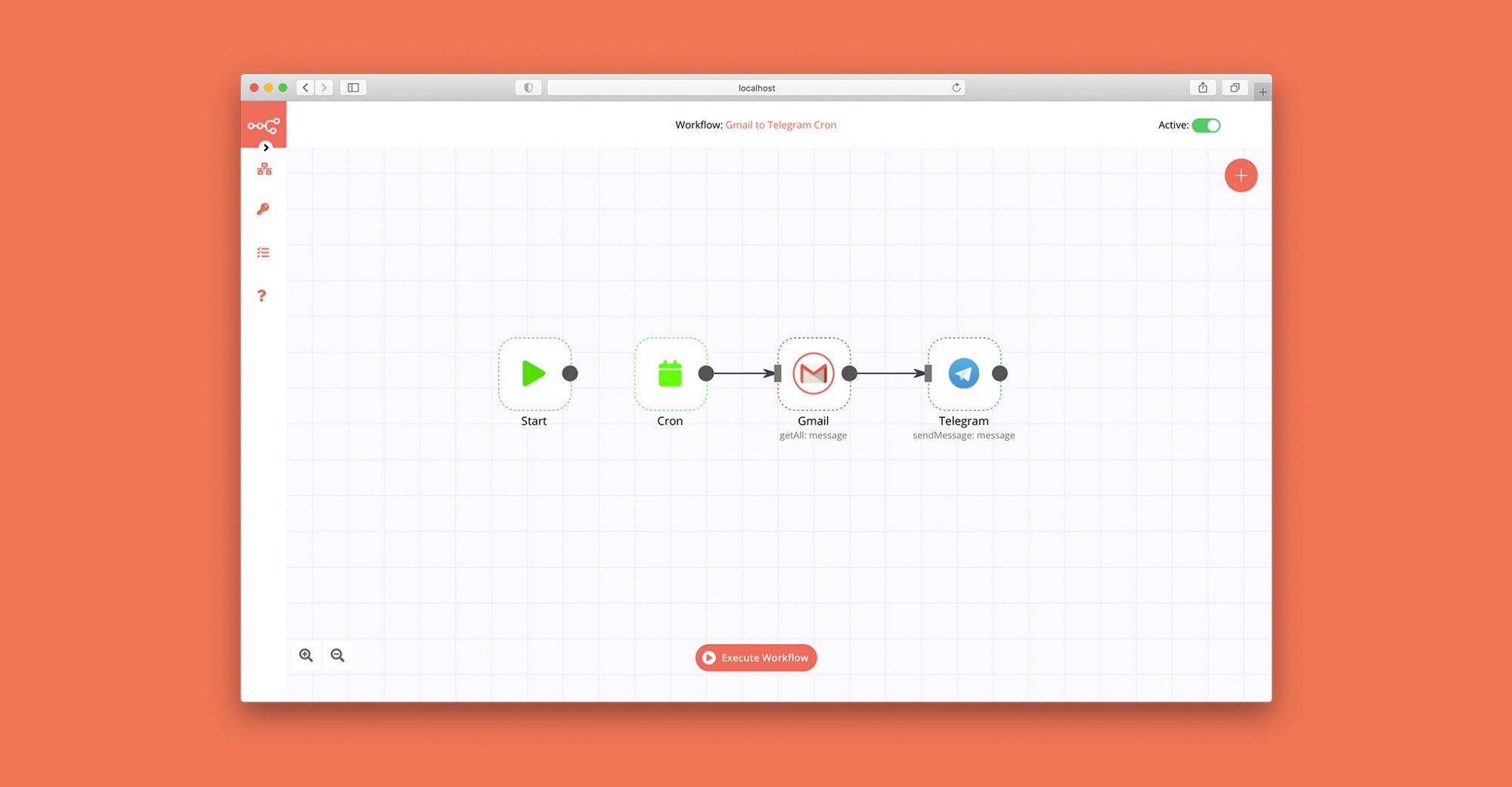
A connection establishes a link between Gmail and Zendesk (or vice versa) to route data through the workflow. Data flows from the output of one node to the input of another. You can have single or multiple connections for each node.

Gmail and Zendesk integration: Connect Gmail and Zendesk

Step 4: Customize and extend your Gmail and Zendesk integration

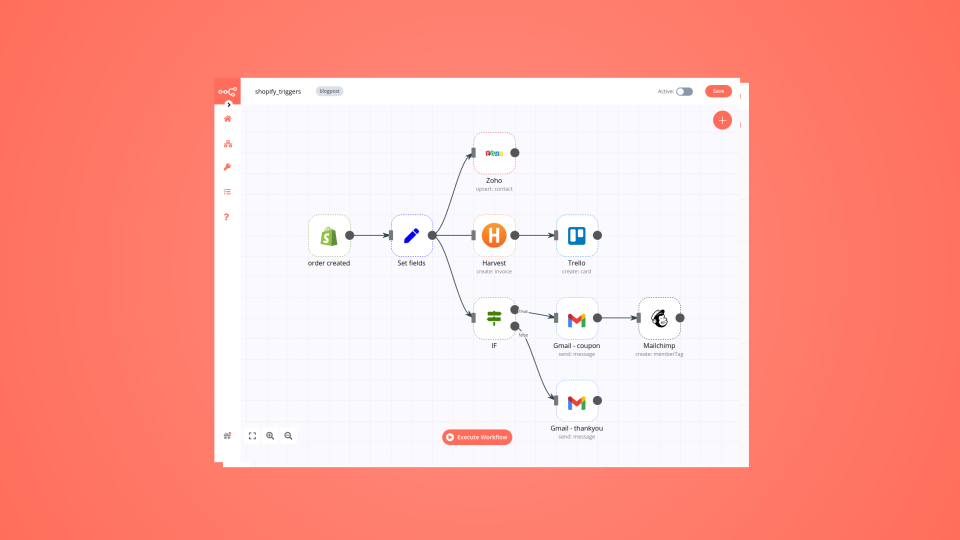
Use n8n's core nodes such as If, Split Out, Merge, and others to transform and manipulate data. Write custom JavaScript or Python in the Code node and run it as a step in your workflow. Connect Gmail and Zendesk with any of n8n’s 1000+ integrations, and incorporate advanced AI logic into your workflows.

Gmail and Zendesk integration: Customize and extend your Gmail and Zendesk integration

Step 5: Test and activate your Gmail and Zendesk workflow

Save and run the workflow to see if everything works as expected. Based on your configuration, data should flow from Gmail to Zendesk or vice versa. Easily debug your workflow: you can check past executions to isolate and fix the mistake. Once you've tested everything, make sure to save your workflow and activate it.

Gmail and Zendesk integration: Test and activate your Gmail and Zendesk workflow

Zendesk: visual summarization, sentiment analysis, and Slack integration

Analyze and Explore your ZenDesk Support Requests using AI-Powered Knowledge Graph

This template helps you create an interactive InfraNodus knowledge graph for your ZenDesk tickets using any search criteria (e.g. after a certain date, specific status, sender, keyword) that will automatically be sent to a selected Slack channel.

Here's an example of the InfraNodus graph that shows the main topics and gaps in ZenDesk support tickets:

You can use the workflow to:

Get an instant overview of the main topics your customers are talking about
Generate business and product ideas based on the blind spots identified using the InfraNodus AI
See which topics correlate to the negative / positive sentiment understanding the weak and strong sides of your product and support
Receive daily notifications on the main topics your customers are talking about via Slack / Telegram / Email and other channels
Perform detailed search using a password-protected web form for tickets filtered by a certain date, status, tag, sender, keyword.
Use the interactive graph to explore specific topics and concepts your customers are talking about — a great way to engage with their concerns in a non-linear way, bypassing the boring tabular interface
Use the graph to explore the support requests by specific segments — e.g. status, priority, sentiment, tags, urgency.
Use the graph generated as an AI expert available to your AI agents in other n8n workflows via InfraNodus GraphRAG. For instance, you could connect your knowledge base to the support tickets graph and let the agent discover possible solutions to your customers' most typical problems. See an sample template here.

How it works
You can start this workflow

manually,
with a daily / weekly trigger, or
via a password-protected web form, where you can provide search requests.

Once started, it will perform a ZenDesk tickets search with the default or your custom criteria. Then it will use the search results to generate an InfraNodus graph (or add the new data to an existing one), and — finally — use the InfraNodus AI endpoints to generate a topical summary and a product business idea based on the blind spots identified. The results are delivered a channel of your choice.

Here's a description step by step:

Start the workflow (manually or on schedule)
Assign values to variables (search criteria, graph name)
Perform ZenDesk support tickets search
Convert the data received and submit it to InfraNodus to generate a knowledge graph
Generate topical summary with InfraNodus
Generate a business idea with InfraNodus (you can also change the setting to generate a question instead)
Send a notification via Slack / Telegram / Email or back to the webform

How to use

You need an InfraNodus API account and key to use this workflow. You also need a ZenDesk account. It takes about 5 minutes to set everything up.

Create an InfraNodus account.
Get the API key at https://infranodus.com/api-access and create a Bearer authorization key for the InfraNodus HTTP nodes.
Add the authorization key to all the InfraNodus HTTP nodes in the template (Steps 3, 5, and 6).
Generate a ZenDesk authorization token following the instructions in n8n's ZenDesk node (Step 3).
Optionally: connect your Slack or Telegram or Gmail account to receive automated notifications with the link to the graph, once the workflow is ready (it takes about 30 seconds to run).
Run it with using the form to play around with the search criteria that works best for you (you can leave everything empty at first), then choose the parameters you like and activate the Daily Trigger node to receive executive summaries to a channel of your choice.
Open the graph in InfraNodus and use our customer feedback analysis guide to explore the graph and generate new insights.

Requirements

An InfraNodus account and API key
A ZenDesk API key
(Optional) — a Slack / Telegram / Gmail connection for notifications

FAQ

  1. What are the best use cases to try?

I love to set the graph to deliver me a daily visual briefing of what's happening in my support portal. It shows me the main topics and gaps and generates product ideas based on them. Great to keep the pulse on the business.

I also really like generating a graph for the past week manually, using the form, and then exploring the graph in InfraNodus directly using the customer feedback analysis workflow to:

discover main topics my customers are talking about?
understand the topics that have the most negative connotation for them (using the sentiment filter)?
discover some support tickets that need more attention or that talk about the topics I'm personally interested in and engage with the client
identify the gaps in your customers' discourse based on the blind spots — useful for generating ideas, see the graph below with a demo of how it works:

  1. Why use the graph and not just AI summary?

AI summary will just give you generic results. You'll see what you already know. Using the graph helps you deconstruct the discourse and get a much more nuanced understanding of the main pain points and interests of your customers. The auto-generated InfraNodus summary and business ideas have a direct explainable connection to the discourse, so you can always see where they are coming from and maintain the focus on all the topics, rather than the most prominent ones.

Additionally, having an interactive graph opens a possibility to explore your customers' concerns in a more engaging way, finding the topics and concepts that are relevant to your interests or to your agents' expertise, helping you find the conversations that you'd otherwise have missed.

  1. Is my customers' data safe?

Absolutely. InfraNodus' terms of use and privacy policy state that the customers' data and text graphs are not used in AI training and are not offered to any third parties. Its underlying API system uses the Open API which explicitly states that data is not used for training either. So all the customers' data are private and safe. As an extra precaution, you can always delete the graphs after you analyzed them, in which case there is no trace of this data left on the servers.

Customizing this workflow

Check out the complete setup guide for this workflow at https://support.noduslabs.com/hc/en-us/articles/20447530961308-Zendesk-Tickets-Summarization-Sentiment-Analysis-and-Slack-Integration-with-n8n-and-InfraNodus

For support with this template, please, contact
https://support.noduslabs.com

For more InfraNodus n8n workflows, please, see our creators page:
https://n8n.io/creators/infranodus/

To learn more about InfraNodus, GraphRAG, and knowledge graph analysis:
https://infranodus.com

Nodes used in this workflow

Popular Gmail and Zendesk workflows

+5

Automate B2B SaaS Renewal Risk Management with CRM, Support & Usage Data

Description This workflow is designed for B2B/SaaS teams who want to secure renewals before it’s too late. It runs every day, identifies all accounts whose licenses are up for renewal in J–30, enriches them with CRM, product usage and support data, computes an internal churn risk level, and then triggers the appropriate playbook: HIGH risk** → full escalation (tasks, alerts, emails) MEDIUM risk** → proactive follow-up by Customer Success LOW risk** → light renewal touchpoint / monitoring Everything is logged into a database table so that you can build dashboards, run analysis, or plug additional automations on top. How it works Daily detection (J–30 renewals) A scheduled trigger runs every morning and queries your database (Postgres / Supabase) to fetch all active subscriptions expiring in 30 days. Each row includes the account identifier, name, renewal date and basic commercial data. Data enrichment across tools For each account, the workflow calls several business systems to collect context: HubSpot → engagement history Salesforce → account profile and segment Pipedrive → deal activities and associated products Analytics API → product feature usage and activity trends Zendesk → recent support tickets and potential friction signals All of this is merged into a single, unified item. Churn scoring & routing An internal scoring step evaluates the risk for each account based on multiple signals (engagement, usage, support, timing). The workflow then categorizes each account into one of three risk levels: HIGH – strong churn signals → needs immediate attention MEDIUM – some warning signs → needs proactive follow-up LOW – looks healthy → light renewal reminder A Switch node routes each account to the relevant playbook. Automated playbooks 🔴 HIGH risk Create a Trello card on a dedicated “High-Risk Renewals” board/list Create a Jira ticket for the CS / AM team Send a Slack alert in a designated channel Send a detailed email to the CSM and/or account manager 🟠 MEDIUM risk Create a Trello card in a “Renewals – Follow-up” list Send a contextual email to the CSM to recommend a proactive check-in 🟢 LOW risk Send a soft renewal email / internal note to keep the account on the radar Logging & daily reporting For every processed account, the workflow prepares a structured log record (account, renewal date, risk level, basic context). A Postgres node is used to insert the data into a churn_logs table. At the end of each run, all processed accounts are aggregated and a daily summary email is sent (for example to the Customer Success leadership team), listing the renewals and their risk levels. Requirements Database A table named churn_logs (or equivalent) to store workflow decisions and history. Example fields: account_id, account_name, end_date, riskScore, riskLevel, playbook, trello_link, jira_link, timestamp. External APIs HubSpot (engagement data) Salesforce (account profile) Pipedrive (deals & products) Zendesk (support tickets) Optional: product analytics API for usage metrics Communication & task tools Gmail (emails to CSM / AM / summary recipients) Slack (alert channel for high-risk cases) Trello (task creation for CS follow-up) Jira (escalation tickets for high-risk renewals) Configuration variables Thresholds are configured in the Init config & thresholds node: days_before_renewal churn_threshold_high churn_threshold_medium These parameters let you adapt the detection window and risk sensitivity to your own business rules. Typical use cases Customer Success teams who want a daily churn watchlist without exporting spreadsheets. RevOps teams looking to standardize renewal playbooks across tools. SaaS companies who need to prioritize renewals based on real risk signals rather than gut feeling. Product-led organizations that want to combine usage data + CRM + support into one automated process. Tutorial video Watch the Youtube Tutorial video About me : I’m Yassin a Project & Product Manager Scaling tech products with data-driven project management. 📬 Feel free to connect with me on Linkedin
+2

Escalate payment issues with Azure OpenAI, Google Sheets, Slack and Zendesk

📘 Description This workflow automates payment-related customer support escalation by validating reported issues against transaction data and coordinating all downstream actions in a controlled, auditable way. It is designed for support teams that need to quickly separate valid payment failures from false or incomplete reports—while maintaining consistent customer communication and timely human intervention. The workflow is triggered via a webhook whenever an external system reports a customer issue. Incoming data is normalized and cross-checked against Google Sheets, which acts as the single source of truth for transaction status, payment confirmation, and order creation. An AI escalation engine then applies strict, rule-based logic to determine whether the issue is confirmed, needs clarification, or not valid, without assuming or inventing missing information. For confirmed cases, the workflow runs parallel actions: it generates a concise escalation summary for human support, logs full context to Slack, creates a Zendesk ticket for traceable resolution, and sends a calm, customer-safe email acknowledging the issue. Transaction records are then updated to reflect confirmation status. Robust error handling ensures any workflow failure is immediately surfaced in Slack. ⚙️ What This Workflow Does (Step-by-Step) 📥 Webhook Intake Receives structured payment issue data from external systems. 🧾 Normalize Incoming Payload Prepares a consistent data structure for processing. 📊 Transaction Lookup (Google Sheets) Fetches payment and order details from the source of truth. 🧠 AI Escalation Decision Validates the issue and classifies it as confirmed, needs clarification, or invalid. 🚨 Notify Human Support Sends escalation email and logs detailed context to Slack. ✉️ Send Customer-Facing Email Delivers a calm, professional acknowledgement to the customer. 🎫 Create Zendesk Ticket Opens a support ticket for confirmed cases requiring manual action. 📝 Update Transaction Record Marks confirmation status in Google Sheets for auditability. ⚠️ Error Handling → Slack Alert Immediately alerts the team if any workflow step fails. 🧩 Prerequisites • Webhook access for incoming issues • Google Sheets OAuth2 (source of truth) • Azure OpenAI credentials • Gmail OAuth2 for email delivery • Slack API access • Zendesk API access 💡 Key Benefits ✔ Prevents false or premature escalations ✔ Uses Google Sheets as an authoritative data source ✔ Consistent, customer-safe communication ✔ Parallel handling for speed and clarity ✔ Full audit trail across Sheets, Slack, Email, and Zendesk ✔ Strong error monitoring and reliability 👥 Perfect For Customer support teams Payment and order operations SaaS and transaction-heavy platforms Businesses handling high-volume support escalations

Zendesk: Visual Summarization, Sentiment Analysis, and Slack Integration

Analyze and Explore your ZenDesk Support Requests using AI-Powered Knowledge Graph This template helps you create an interactive InfraNodus knowledge graph for your ZenDesk tickets using any search criteria (e.g. after a certain date, specific status, sender, keyword) that will automatically be sent to a selected Slack channel. Here's an example of the InfraNodus graph that shows the main topics and gaps in ZenDesk support tickets: You can use the workflow to: Get an instant overview of the main topics your customers are talking about Generate business and product ideas based on the blind spots identified using the InfraNodus AI See which topics correlate to the negative / positive sentiment understanding the weak and strong sides of your product and support Receive daily notifications on the main topics your customers are talking about via Slack / Telegram / Email and other channels Perform detailed search using a password-protected web form for tickets filtered by a certain date, status, tag, sender, keyword. Use the interactive graph to explore specific topics and concepts your customers are talking about — a great way to engage with their concerns in a non-linear way, bypassing the boring tabular interface Use the graph to explore the support requests by specific segments — e.g. status, priority, sentiment, tags, urgency. Use the graph generated as an AI expert available to your AI agents in other n8n workflows via InfraNodus GraphRAG. For instance, you could connect your knowledge base to the support tickets graph and let the agent discover possible solutions to your customers' most typical problems. See an sample template here. How it works You can start this workflow manually, with a daily / weekly trigger, or via a password-protected web form, where you can provide search requests. Once started, it will perform a ZenDesk tickets search with the default or your custom criteria. Then it will use the search results to generate an InfraNodus graph (or add the new data to an existing one), and — finally — use the InfraNodus AI endpoints to generate a topical summary and a product business idea based on the blind spots identified. The results are delivered a channel of your choice. Here's a description step by step: Start the workflow (manually or on schedule) Assign values to variables (search criteria, graph name) Perform ZenDesk support tickets search Convert the data received and submit it to InfraNodus to generate a knowledge graph Generate topical summary with InfraNodus Generate a business idea with InfraNodus (you can also change the setting to generate a question instead) Send a notification via Slack / Telegram / Email or back to the webform How to use You need an InfraNodus API account and key to use this workflow. You also need a ZenDesk account. It takes about 5 minutes to set everything up. Create an InfraNodus account. Get the API key at https://infranodus.com/api-access and create a Bearer authorization key for the InfraNodus HTTP nodes. Add the authorization key to all the InfraNodus HTTP nodes in the template (Steps 3, 5, and 6). Generate a ZenDesk authorization token following the instructions in n8n's ZenDesk node (Step 3). Optionally: connect your Slack or Telegram or Gmail account to receive automated notifications with the link to the graph, once the workflow is ready (it takes about 30 seconds to run). Run it with using the form to play around with the search criteria that works best for you (you can leave everything empty at first), then choose the parameters you like and activate the Daily Trigger node to receive executive summaries to a channel of your choice. Open the graph in InfraNodus and use our customer feedback analysis guide to explore the graph and generate new insights. Requirements An InfraNodus account and API key A ZenDesk API key (Optional) — a Slack / Telegram / Gmail connection for notifications FAQ What are the best use cases to try? I love to set the graph to deliver me a daily visual briefing of what's happening in my support portal. It shows me the main topics and gaps and generates product ideas based on them. Great to keep the pulse on the business. I also really like generating a graph for the past week manually, using the form, and then exploring the graph in InfraNodus directly using the customer feedback analysis workflow to: discover main topics my customers are talking about? understand the topics that have the most negative connotation for them (using the sentiment filter)? discover some support tickets that need more attention or that talk about the topics I'm personally interested in and engage with the client identify the gaps in your customers' discourse based on the blind spots — useful for generating ideas, see the graph below with a demo of how it works: Why use the graph and not just AI summary? AI summary will just give you generic results. You'll see what you already know. Using the graph helps you deconstruct the discourse and get a much more nuanced understanding of the main pain points and interests of your customers. The auto-generated InfraNodus summary and business ideas have a direct explainable connection to the discourse, so you can always see where they are coming from and maintain the focus on all the topics, rather than the most prominent ones. Additionally, having an interactive graph opens a possibility to explore your customers' concerns in a more engaging way, finding the topics and concepts that are relevant to your interests or to your agents' expertise, helping you find the conversations that you'd otherwise have missed. Is my customers' data safe? Absolutely. InfraNodus' terms of use and privacy policy state that the customers' data and text graphs are not used in AI training and are not offered to any third parties. Its underlying API system uses the Open API which explicitly states that data is not used for training either. So all the customers' data are private and safe. As an extra precaution, you can always delete the graphs after you analyzed them, in which case there is no trace of this data left on the servers. Customizing this workflow Check out the complete setup guide for this workflow at https://support.noduslabs.com/hc/en-us/articles/20447530961308-Zendesk-Tickets-Summarization-Sentiment-Analysis-and-Slack-Integration-with-n8n-and-InfraNodus For support with this template, please, contact https://support.noduslabs.com For more InfraNodus n8n workflows, please, see our creators page: https://n8n.io/creators/infranodus/ To learn more about InfraNodus, GraphRAG, and knowledge graph analysis: https://infranodus.com

Escalate VIP Zendesk tickets with GPT-4, Slack alerts and email summaries

(Retail) VIP Customer Escalation Flow This workflow automatically monitors new Zendesk support tickets, identifies VIP customers, generates AI-based ticket summaries, alerts available support agents on Slack and sends a consolidated email for non-VIP tickets. This workflow listens for new Zendesk tickets and checks whether the customer is a VIP.VIP tickets are prioritized using AI summaries and instant Slack alerts, while non-VIP tickets are grouped and sent as a single email notification to the support team. You get: Instant VIP ticket alerts on Slack** AI-generated issue summary and next steps** Automatic agent availability check** One clean email for all non-VIP tickets** Ticket tracking stored for reporting** Ideal for support teams who want to prioritize high-value customers without manual effort. Quick Start – Implementation Steps Connect your Zendesk account and enable the Zendesk Trigger. Add your OpenAI API key for ticket summarization. Connect your Slack workspace and select users/channels. Configure Airtable to store VIP ticket data (optional but recommended). Connect Gmail to send non-VIP ticket summary emails. Activate the workflow — automation starts immediately. What It Does This workflow automates VIP ticket handling and notifications: Detects new Zendesk support tickets. Checks if the ticket belongs to a VIP customer. Uses AI to summarize VIP ticket issues and suggest next steps. Saves VIP ticket data for tracking and audits. Finds active support agents on Slack. Sends direct Slack alerts to active agents or a fallback channel. Collects non-VIP tickets into a single list. Sends one summary email for all non-VIP tickets. This prevents alert fatigue while ensuring VIP customers get fast attention. Who’s It For This workflow is ideal for: Customer support teams Helpdesk managers SaaS and e-commerce businesses High-touch B2B support teams Operations teams handling VIP customers Anyone needing smarter ticket prioritization Requirements to Use This Workflow To run this workflow, you need: n8n instance** (cloud or self-hosted) Zendesk account** with API access OpenAI API key** Slack workspace** with bot permissions Gmail account** (or SMTP alternative) Airtable account** (optional, for logging) How It Works Ticket Trigger – Workflow starts when a new Zendesk ticket is created. VIP Check – Verifies whether the ticket contains a VIP tag. AI Summary – AI reads the ticket and generates a short summary and next steps. Save VIP Ticket – VIP tickets are stored for tracking and reporting. Agent Availability Check – Slack users are checked for online presence. Slack Alert – Sends alert to an active agent or team channel. Non-VIP Collection – Non-VIP tickets are grouped together. Email Notification – One summary email is sent to the support team. Setup Steps Import the workflow JSON into n8n. Configure Zendesk Trigger with OAuth. Add your OpenAI credentials. Map fields in the Airtable node (if used). Connect Slack API and select users/channels. Configure Gmail recipient and email format. Test with a sample VIP and non-VIP ticket. Activate the workflow. How To Customize Nodes Customize VIP Logic You can enhance VIP detection by: Adding spend-based logic Checking customer lifetime value Using CRM or database lookups Customize Slack Alerts You may add: Emojis or mentions (@here, @team) Ticket priority highlighting Direct Zendesk ticket links Customize Email Content You can: Add branding Include SLA warnings Add escalation notes Customize AI Output Adjust the AI prompt to: Change summary length Add tone (urgent, polite, technical) Include troubleshooting steps Add-Ons (Optional Enhancements) You can extend this workflow to: Auto-assign tickets to senior agents Add SLA breach detection Log VIP interactions to CRM Add sentiment analysis Create dashboards using Airtable or Google Sheets Trigger SMS or WhatsApp alerts Add priority-based routing (VIP / High / Normal) Use Case Examples 1\. VIP Customer Escalation Ensure top customers always get instant attention. 2\. Support Load Management Reduce Slack and email noise with grouped notifications. 3\. AI-Assisted Support Help agents understand issues faster with AI summaries. 4\. Audit & Reporting Track VIP issues and resolutions over time. Troubleshooting Guide | Issue | Possible Cause | Solution | |-----------------------|--------------------------|-----------------------------------| | No Slack alert | No active users | Check fallback channel | | AI summary missing | OpenAI key invalid | Reconnect OpenAI credentials | | Multiple emails sent | Aggregate node missing | Ensure aggregation is enabled | | VIP not detected | Tag mismatch | Check tag name and case | | Airtable error | Field mismatch | Match column names exactly | Need Expert Help? If you need help extending this workflow with advanced features like adding CRM integration, advanced VIP logic, dashboards or scaling this for production then our n8n automation experts at WeblineIndia can help you build reliable, enterprise-ready automations.

Route Gmail support emails to Zendesk with spam filtering and duplicate checks

(Retail Automation) Gmail Trigger → Spam Filter → Duplicate Check → Zendesk Ticket Creation This workflow automatically converts incoming support emails from Gmail into structured Zendesk tickets. It filters spam, extracts key customer details, auto-tags issues, prevents duplicate tickets and creates clean, actionable support tickets in Zendesk. Quick Implementation Steps Connect your Gmail support inbox to the Gmail Trigger. Configure spam keywords and domains in the Spam Detection node. Map email fields in the Set node. Connect your Zendesk account. Activate the workflow. What It Does This workflow listens for new emails arriving in a Gmail support inbox and immediately processes them through a clean automation pipeline. Spam or suspicious emails are filtered early to keep the support system noise-free. Valid emails are normalized by extracting customer details such as name, email, subject, message content and thread ID. The workflow automatically tags tickets based on keywords like “refund” or “damaged” for better prioritization. Before creating a new ticket, the workflow checks existing Zendesk tickets to avoid duplicates. Only genuine, new requests are converted into Zendesk tickets with all required fields populated. Who’s It For Customer support teams using Gmail and Zendesk Small to mid-sized businesses handling email-based support Operations teams looking to reduce manual ticket creation Support managers who want clean, duplicate-free ticket queues Requirements n8n instance (self-hosted or cloud) Gmail account with access to the support inbox Zendesk account with API access enabled OAuth credentials for Gmail and Zendesk How It Works & How To Set Up Step-by-Step Setup Gmail Trigger Connect your Gmail account and monitor the support inbox for new emails. Spam Detection & Filtering Configure spam keywords and disposable email domains. Spam emails are stopped immediately. Extract & Normalize Email Data (Set Node) Extract customer name, email, subject, message snippet, thread ID, received time and initial tags. Auto-Tag Ticket Based on Email Content Scan the email body and apply tags like refund, damaged or late_delivery. Fetch Existing Zendesk Tickets Retrieve current tickets to provide historical context. Merge & Detect Duplicates Compare email subject with existing tickets to detect duplicates. Create Zendesk Ticket If no duplicate is found, create a new Zendesk ticket with structured data. How To Customize Nodes Spam Detection Node**: Add or remove keywords and domains. Tagging Code Node**: Extend keyword-to-tag mappings. Set Node**: Map additional email fields if needed. Zendesk Node**: Adjust priority, status or add custom fields. Add-ons Route VIP customers to priority queues. Assign tickets based on keywords or tags. Fetch order details from an eCommerce system. Send Slack or Email notifications to agents. Use Case Examples Converting customer order issues into Zendesk tickets. Filtering marketing or spam emails automatically. Preventing duplicate tickets from email replies. Auto-tagging refund and damaged item requests. Centralizing Gmail-based support into Zendesk. (There are many more ways this workflow can be extended.) Troubleshooting Guide | Issue | Possible Cause | Solution | |-----|--------------|----------| | Tickets not created | Duplicate detected | Check subject matching logic | | Spam emails passing through | Missing keywords | Add more spam keywords/domains | | Empty fields in Zendesk | Incorrect Set mappings | Verify field expressions | | OAuth errors | Expired credentials | Reconnect Gmail/Zendesk account | Need Help? Need help setting this up or extending it further? Our n8n workflow development experts at WeblineIndia can help you customize this workflow, add advanced automations or even build similar n8n workflows tailored to your business needs. Reach out to our experts to get started faster and smarter.

Match WooCommerce orders to new Zendesk tickets and send confirmation emails

Zendesk New Ticket → WooCommerce Order Matching, Tagging & Email Automation Automatically enrich Zendesk tickets with WooCommerce order details and reduce manual lookups. This workflow listens for new Zendesk tickets, fetches the ticket requester’s details, retrieves recent WooCommerce orders, matches them by customer email and updates the ticket with order information and relevant tags. If a matching order is marked as completed, it also sends a confirmation email to the customer. Quick Implementation Steps Connect Zendesk, WooCommerce and Gmail credentials in n8n. Import the workflow JSON and review node credentials. Adjust the WooCommerce order fetch limit if needed. Activate the workflow. That’s it — new tickets will now automatically include order context. What It Does This workflow bridges the gap between customer support and order management by linking Zendesk tickets with WooCommerce orders. When a new ticket is created, the workflow retrieves the requester’s profile to identify their email address, which is then used to find related orders in WooCommerce. Because direct email-based filtering is not available in the WooCommerce node, the workflow fetches the latest five orders and performs email matching internally within n8n. This ensures accurate matching while working around platform limitations. Once a matching order is found, the workflow extracts essential details such as order number, status, currency and purchased items. It updates the Zendesk ticket with a private internal note and applies clear order-status-based tags. If the order is marked as completed, the workflow also sends a confirmation email to the customer. Who’s It For Customer support teams using Zendesk and WooCommerce E-commerce businesses handling frequent order-related inquiries Support managers aiming to reduce manual order lookups Teams that want faster, more consistent ticket responses Requirements to Use This Workflow An active Zendesk account with API access A WooCommerce store with REST API credentials A Gmail account (OAuth2) for sending customer emails An active n8n instance Permission to update tickets and users in Zendesk How It Works & How To Set Up Workflow Logic Overview Trigger on New Ticket The workflow starts when a new Zendesk ticket is created with status new. Fetch Ticket Requester Details The requester’s user profile is retrieved to obtain their email address. Fetch Recent WooCommerce Orders The workflow retrieves the latest five orders from WooCommerce. Match Customer Email Each order’s billing email is compared with the Zendesk requester’s email. Only matching orders continue through the workflow. Generate Zendesk Tags Order status is evaluated and mapped to meaningful Zendesk tags. Prepare Ticket Update Payload Order details and tags are formatted for the Zendesk update. Update Zendesk Ticket A private internal note is added to the ticket, along with order-related tags. Check for Completed Orders If the order status is completed, the workflow proceeds to send an email. Send Confirmation Email The customer receives a confirmation email with their order details. Setup Instructions Update credentials in all Zendesk, WooCommerce and Gmail nodes. Review the WooCommerce order fetch limit (default: 5). Verify the email comparison logic in the IF node. Activate the workflow once testing is complete. How To Customize Nodes WooCommerce – Fetch Recent Orders** Increase or decrease the limit value to control how many recent orders are checked. Match Customer Email (IF Node)** Modify comparison logic (for example, make it case-insensitive). Generate Zendesk Tags (Code Node)** Add or change tags based on custom order statuses. Zendesk – Update Ticket** Customize the internal note format or add additional fields. Send Order Confirmation Email** Edit the email content or disable this node if emails are not required. Add-ons (Additional Features) SLA-based ticket prioritization Shipment tracking number enrichment Refund and cancellation detection Slack or Microsoft Teams notifications Extended reporting using Zendesk tags Use Case Examples Automatically attaching order details to “Where is my order?” tickets Speeding up refund or replacement requests Reducing agent time spent switching between Zendesk and WooCommerce Applying consistent order-status tags for analytics Sending proactive confirmation emails for completed orders There are many more possible use cases depending on how this workflow is extended or customized. Troubleshooting Guide | Issue | Possible Cause | Solution | |------|---------------|----------| | No order found | Customer used a different email | Ask the customer to confirm the checkout email | | Wrong order matched | Order not in recent fetch range | Increase the WooCommerce order fetch limit | | No email sent | Order status is not completed | Confirm order status or customize the IF condition | | Ticket not updated | Zendesk permission issue | Verify API credentials and scopes | | Tags missing | Code node not triggered | Check order status logic in the Code node | Need Help? If you need help setting up this workflow, customizing nodes or building additional automation, WeblineIndia is here to support you. Our team specializes in n8n workflow automation, Zendesk integrations and WooCommerce process optimization. Whether you want to extend this workflow or build a similar solution tailored to your business, feel free to reach out to WeblineIndia for expert assistance.

Build your own Gmail and Zendesk integration

Create custom Gmail and Zendesk workflows by choosing triggers and actions. Nodes come with global operations and settings, as well as app-specific parameters that can be configured. You can also use the HTTP Request node to query data from any app or service with a REST API.

Gmail supported actions

Add Label
Delete
Get
Get Many
Mark as Read
Mark as Unread
Remove Label
Reply
Send
Send and Wait for Response
Create
Delete
Get
Get Many
Create
Delete
Get
Get Many
Add Label
Delete
Get
Get Many
Remove Label
Reply
Trash
Untrash

Zendesk supported actions

Create
Create a ticket
Delete
Delete a ticket
Get
Get a ticket
Get Many
Get many tickets
Recover
Recover a suspended ticket
Update
Update a ticket
Get
Get a ticket field
Get Many
Get many system and custom ticket fields
Create
Create a user
Delete
Delete a user
Get
Get a user
Get Many
Get many users
Get Organizations
Get a user's organizations
Get Related Data
Get data related to the user
Search
Search users
Update
Update a user
Count
Count organizations
Create
Create an organization
Delete
Delete an organization
Get
Get an organization
Get Many
Get many organizations
Get Related Data
Get data related to the organization
Update
Update a organization

FAQs

  • Can Gmail connect with Zendesk?

  • Can I use Gmail’s API with n8n?

  • Can I use Zendesk’s API with n8n?

  • Is n8n secure for integrating Gmail and Zendesk?

  • How to get started with Gmail and Zendesk integration in n8n.io?

Need help setting up your Gmail and Zendesk integration?

Discover our latest community's recommendations and join the discussions about Gmail and Zendesk integration.
jake chard
Jan Koch
Rafael Serrano
Paul Kennard

Looking to integrate Gmail and Zendesk in your company?

Over 3000 companies switch to n8n every single week

Why use n8n to integrate Gmail with Zendesk

Build complex workflows, really fast

Build complex workflows, really fast

Handle branching, merging and iteration easily.
Pause your workflow to wait for external events.

Code when you need it, UI when you don't

Simple debugging

Your data is displayed alongside your settings, making edge cases easy to track down.

Use templates to get started fast

Use 1000+ workflow templates available from our core team and our community.

Reuse your work

Copy and paste, easily import and export workflows.

Implement complex processes faster with n8n

red iconyellow iconred iconyellow icon