Back to Integrations
integrationGoogle Calendar node
integrationGoogle Gemini Chat Model node

Google Calendar and Google Gemini Chat Model integration

Save yourself the work of writing custom integrations for Google Calendar and Google Gemini Chat Model and use n8n instead. Build adaptable and scalable Productivity, AI, and Langchain workflows that work with your technology stack. All within a building experience you will love.

How to connect Google Calendar and Google Gemini Chat Model

  • Step 1: Create a new workflow
  • Step 2: Add and configure nodes
  • Step 3: Connect
  • Step 4: Customize and extend your integration
  • Step 5: Test and activate your workflow

Step 1: Create a new workflow and add the first step

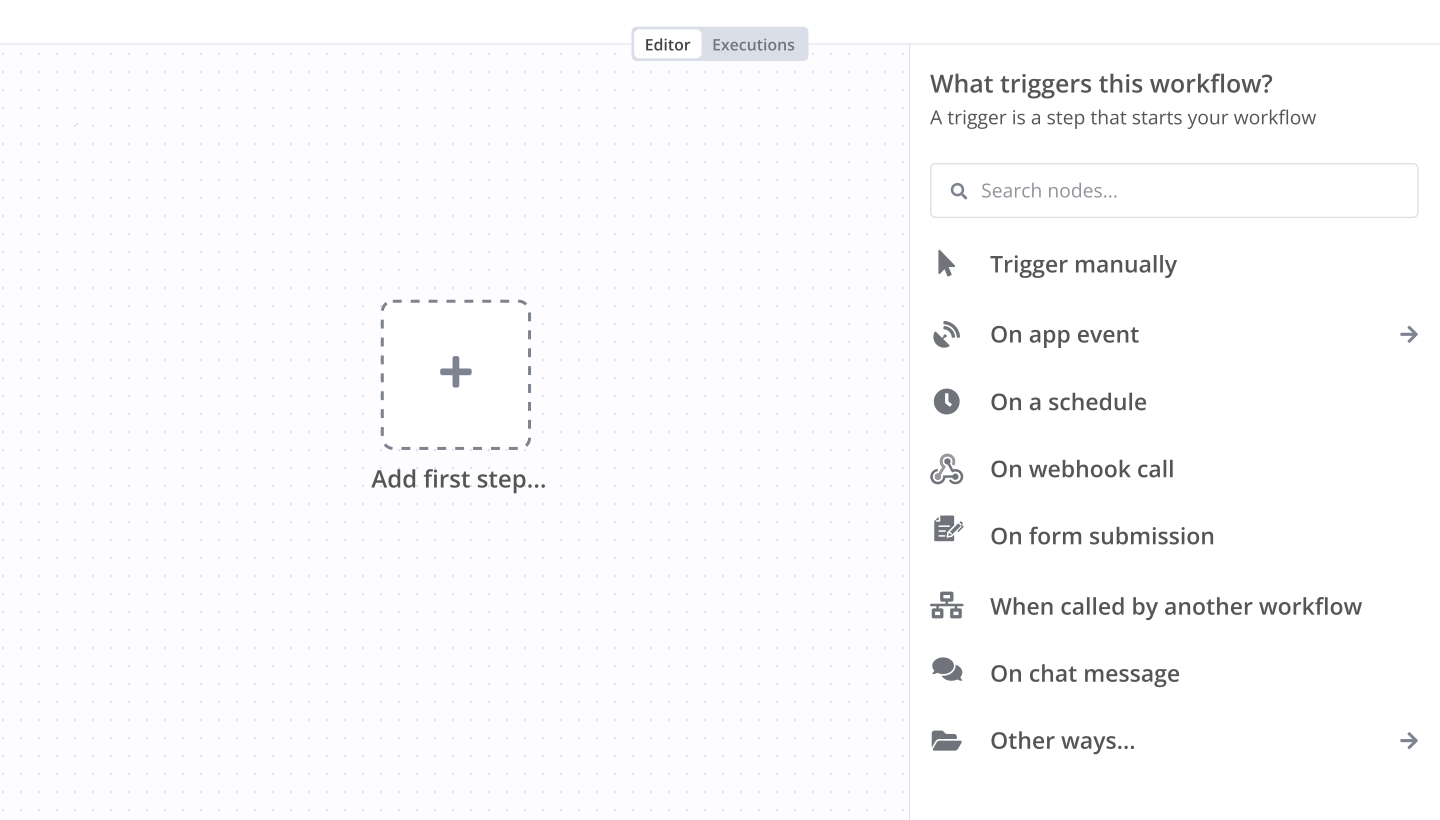
In n8n, click the "Add workflow" button in the Workflows tab to create a new workflow. Add the starting point – a trigger on when your workflow should run: an app event, a schedule, a webhook call, another workflow, an AI chat, or a manual trigger. Sometimes, the HTTP Request node might already serve as your starting point.

Google Calendar and Google Gemini Chat Model integration: Create a new workflow and add the first step

Step 2: Add and configure Google Calendar and Google Gemini Chat Model nodes

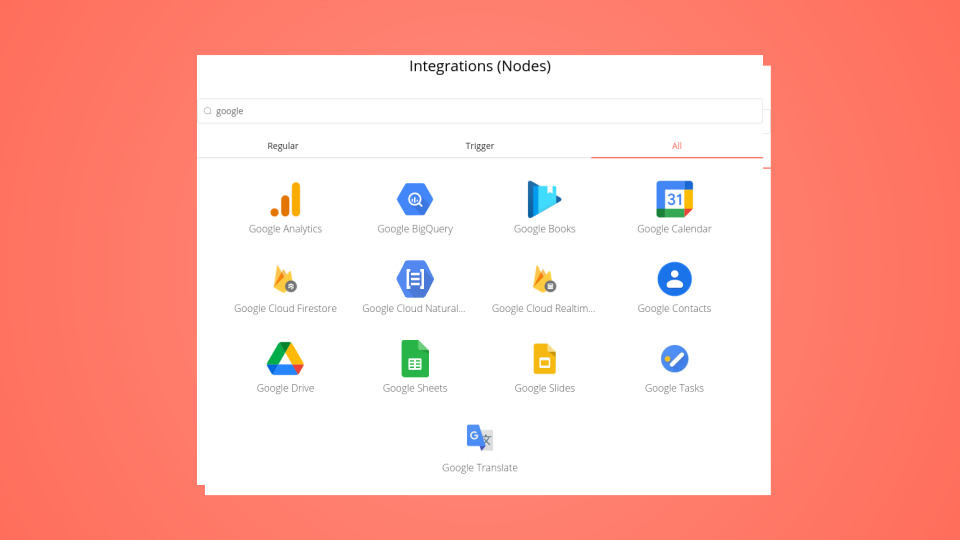
You can find Google Calendar and Google Gemini Chat Model in the nodes panel. Drag them onto your workflow canvas, selecting their actions. Click each node, choose a credential, and authenticate to grant n8n access. Configure Google Calendar and Google Gemini Chat Model nodes one by one: input data on the left, parameters in the middle, and output data on the right.

Google Calendar and Google Gemini Chat Model integration: Add and configure Google Calendar and Google Gemini Chat Model nodes

Step 3: Connect Google Calendar and Google Gemini Chat Model

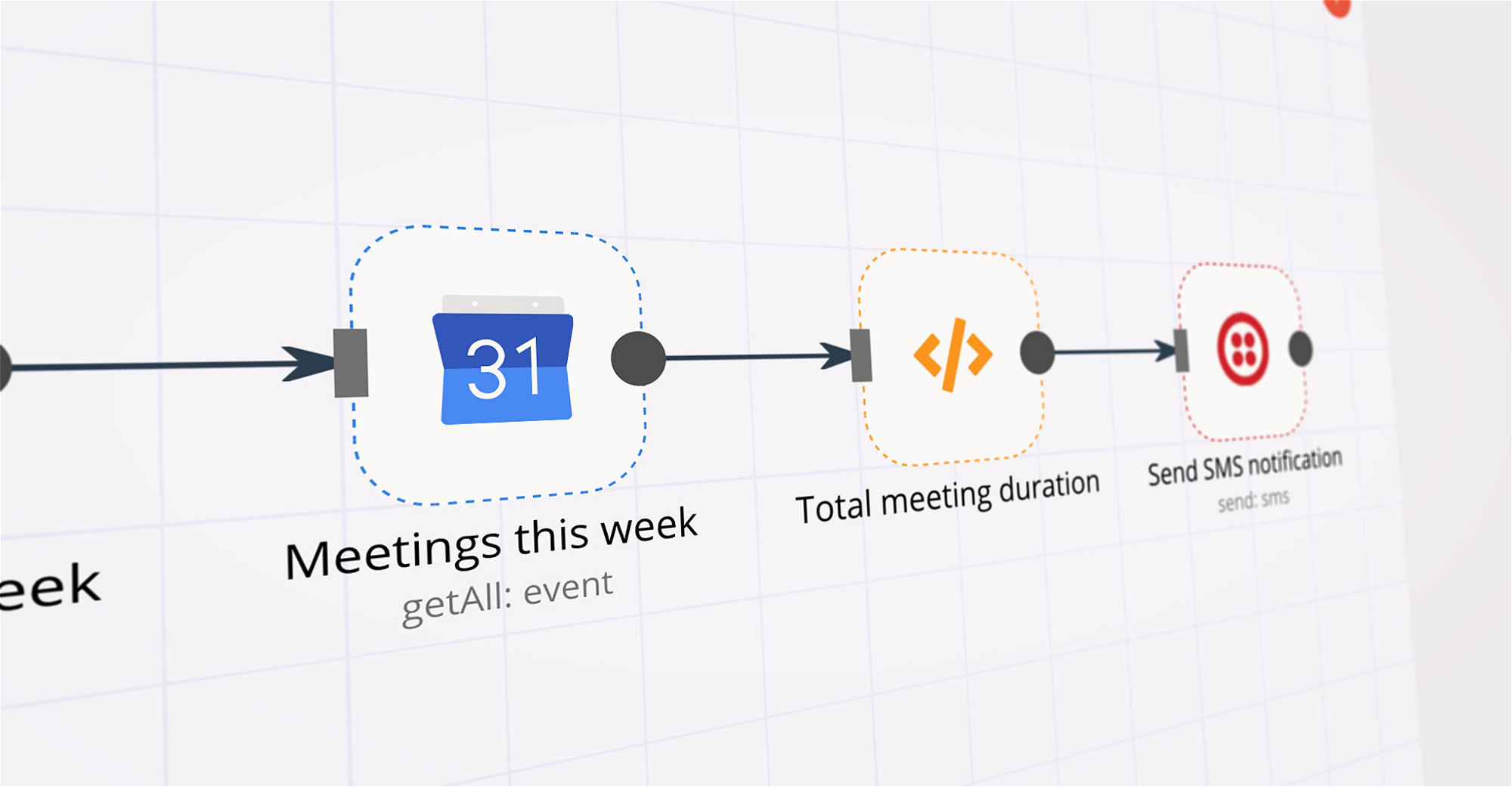
A connection establishes a link between Google Calendar and Google Gemini Chat Model (or vice versa) to route data through the workflow. Data flows from the output of one node to the input of another. You can have single or multiple connections for each node.

Google Calendar and Google Gemini Chat Model integration: Connect Google Calendar and Google Gemini Chat Model

Step 4: Customize and extend your Google Calendar and Google Gemini Chat Model integration

Use n8n's core nodes such as If, Split Out, Merge, and others to transform and manipulate data. Write custom JavaScript or Python in the Code node and run it as a step in your workflow. Connect Google Calendar and Google Gemini Chat Model with any of n8n’s 1000+ integrations, and incorporate advanced AI logic into your workflows.

Google Calendar and Google Gemini Chat Model integration: Customize and extend your Google Calendar and Google Gemini Chat Model integration

Step 5: Test and activate your Google Calendar and Google Gemini Chat Model workflow

Save and run the workflow to see if everything works as expected. Based on your configuration, data should flow from Google Calendar to Google Gemini Chat Model or vice versa. Easily debug your workflow: you can check past executions to isolate and fix the mistake. Once you've tested everything, make sure to save your workflow and activate it.

Google Calendar and Google Gemini Chat Model integration: Test and activate your Google Calendar and Google Gemini Chat Model workflow

Explore n8n nodes in a visual reference library

WATCH THE n8n STARTER GUIDE 👇

This template is featured in the n8n Starter Guide series. The template is free, but comes with two additional PDFs and a Quick Start video if you grab the full download pack on gumroad.

How it works

This template is a visual map of many useful n8n nodes. It groups nodes like Triggers, AI tools, and App connectors onto the canvas. Explore the sections to learn about different nodes and easily copy them for your own workflows. It acts as a handy visual reference guide.

Set up steps

• Setup takes about 5 minutes.
• Import the template into your n8n instance.
• Explore the node categories visually on the canvas.
• A Quick Start video is included in the download pack, along with a prompts PDF and PDF with links to other awesome n8n templates here on the n8n template gallery.

Nodes used in this workflow

Popular Google Calendar and Google Gemini Chat Model workflows

Smart Email Responder Workflow using AI

This project presents an intelligent email management system powered by advanced artificial intelligence. It utilizes Google's Gemini 2.0 AI model to automatically categorize incoming emails into queries, project updates, and feedback, and generates context-specific responses in real time. Approach: The system processes emails promptly, ensuring consistent and timely communication. In addition to crafting automated replies, it streamlines workflow efficiency by sending calendar invitations for meetings without manual intervention. Results: The Smart Email Auto-Responder enhances email management by marking emails as read, applying appropriate labels, and systematically logging correspondence. This significantly reduces manual workload while improving client engagement and operational productivity.
+2

Automate Lead Meeting Scheduling with Zoho CRM, Google Calendar & Gemini AI

Zoho CRM - Smart Meeting Scheduler This workflow automatically schedules meetings for new Zoho CRM leads by detecting their timezone, checking the sales rep’s Google Calendar, generating conflict-free time slots, creating a Zoom meeting and sending a personalized AI-generated email to the lead. If no slots are available, it sends a fallback message to the lead without updating Zoho CRM. When a meeting is created, all details are logged inside Zoho CRM for visibility. ⚡ Quick Implementation Steps (Fast Start Guide) Import the workflow JSON into n8n. Configure Zoho CRM, Google Calendar, Gmail, Zoom OAuth and Gemini AI credentials. Update meeting duration, working hours, buffer time and search window. Set email recipient to the lead’s email instead of test/static values. Add the webhook URL to Zoho CRM → Automation → Webhooks. Test with a new lead and activate the workflow. 📘 What It Does This workflow automates scheduling for new Zoho CRM leads. As soon as a lead is created, it retrieves full lead and owner details, detects the lead’s timezone and checks the assigned sales rep’s upcoming Google Calendar events. This helps identify when the rep is available. Using your settings—working hours, meeting duration, buffer before/after and days to evaluate—the system generates valid meeting time slots with no conflicts. If suitable slots exist, it authenticates with Zoom and creates a meeting for the earliest option, then generates a polished HTML invitation using Gemini AI and emails it to the lead. This ensures a fast, smart and personalized lead engagement process. If no slots exist, the workflow sends a fallback email informing the lead that no availability is open in the next few days. In this branch, Zoho CRM is not updated, because no meeting was scheduled. 🎯 Who’s It For This workflow is perfect for: Sales teams managing high inbound volume CRM managers automating lead qualification & engagement SaaS companies scheduling demos automatically Agencies booking consultation calls Any team struggling with timezone-based scheduling manually 🔧 Requirements to Use This Workflow Platform Requirements n8n (Cloud or self-hosted) Required Integrations Zoho CRM OAuth2 Google Calendar OAuth2 Gmail OAuth2 Zoom OAuth (account-level) Gemini AI / Google PaLM API Required Lead Fields Email (mandatory for sending the invite) Country / State (for timezone detection) Lead Owner (to fetch rep details) 🔄 How It Works Zoho CRM Webhook triggers when a new lead is created. Workflow fetches full lead and owner details. Detects the lead’s timezone using country/state mapping. Fetches the sales rep’s availability from Google Calendar. Generates valid time slots based on working hours, buffers and meeting duration. If slots exist: Authenticate with Zoom Create a Zoom meeting Generate personalized HTML invite using Gemini AI Send email to the lead Log meeting details in Zoho CRM If no slots exist: Generate fallback message Send fallback email to the lead (Zoho CRM is NOT updated in this path) 🛠️ Setup Steps (Configuration Guide) Import Workflow Go to: n8n → Workflows → Import and upload the JSON file. Add Required Credentials Configure the following inside n8n: Zoho CRM OAuth Google Calendar OAuth Gmail OAuth Zoom OAuth Gemini AI API key Update Workflow Configuration Node Set: Meeting duration Buffer before/after Working hours Days to look ahead Default meeting provider (Zoom) Fix Email Recipient In Send Meeting Invite node, set: sendTo = {{$('Detect Lead Timezone').item.json.Email}} yaml Copy code Update Google Calendar Email/ID Ensure the calendar ID matches the sales rep’s Google Calendar. Add Webhook in Zoho CRM Navigate to: Setup → Automation → Webhooks → Create Webhook → Lead Created Paste the webhook URL from n8n. Test the Automation Verify: Correct timezone detection Calendar availability check Zoom meeting creation AI email sent to the lead Zoho CRM updated only when meeting is created Activate Workflow Enable the workflow for live operation. 🧩 How To Customize Nodes Adjust Meeting Logic Modify the Workflow Configuration node to change: Slot duration Buffer time Working hour ranges Days to consider Expand Timezone Detection Edit the Detect Lead Timezone node to add new countries/states. Personalize Email Content Update the prompt inside the Generate Personalized Invite node. Add New Regions Duplicate timezone logic for new regions (Australia, Middle East, etc.) Replace Zoom Swap Zoom with Google Meet, Microsoft Teams or Zoho Meeting. ➕ Add-Ons (Optional Enhancements) Auto-book calendar events when lead confirms a slot WhatsApp notifications via Twilio or Gupshup Slack/Email internal alerts for reps Follow-up reminder emails Log lead activity to Google Sheets Attach downloadable ICS calendar file 💼 Use Case Examples SaaS demo scheduling Consultation & discovery calls Global timezone-based sales teams Onboarding/support calls Event follow-up scheduling (And many more…) 🩻 Troubleshooting Guide | Issue | Possible Cause | Solution | |-------|----------------|----------| | Lead not receiving email | Gmail OAuth expired / wrong email field | Reconnect Gmail OAuth & fix sendTo value | | Wrong time slots | Incorrect timezone detection | Update mapping in Detect Lead Timezone | | Zoom meeting not created | Invalid/expired Zoom OAuth | Reconnect Zoom credentials | | CRM not updated after fallback email | Expected behavior | No CRM update when slots don’t exist | | Workflow not triggering | Missing Zoho webhook | Re-add webhook | | Empty AI email | Gemini key incorrect | Reconfigure Gemini credentials | 🤝 Need Help? If you want assistance setting up, customizing or extending this workflow, the n8n automation team at WeblineIndia is here to help. We specialize in: Advanced automation workflows Multi-timezone scheduling systems CRM-integrated AI communication Custom Zoho + n8n development End-to-end automation architecture 👉 Contact WeblineIndia for expert workflow development and enhancements.

Automated Weekly Google Calendar Summary via Email with AI ✨🗓️📧

Workflow: Automated Weekly Google Calendar Summary via Email with AI ✨🗓️📧 Get a personalized, AI-powered summary of your upcoming week's Google Calendar events delivered straight to your inbox! This workflow automates the entire process, from fetching events to generating an intelligent summary and emailing it to you. 🌟 Overview This n8n workflow connects to your Google Calendar, retrieves events for the upcoming week (Monday to Sunday, based on the day the workflow runs), uses Google Gemini AI to create a well-structured and insightful summary, and then emails this summary to you. It's designed to help you start your week organized and aware of your commitments. Key Features: Automated Weekly Summary:** Runs on a schedule (default: weekly) to keep you updated. AI-Powered Insights:** Leverages Google Gemini to not just list events, but to identify important ones and offer a brief weekly outlook. Personalized Content:** Uses your specified timezone, locale, name, and city for accurate and relevant information. Clear Formatting:** Events are grouped by day and displayed chronologically with start and end times. Important events are highlighted. Email Delivery:** Receive your schedule directly in your inbox in a clean HTML format. Customizable:** Easily adapt to your specific calendar, AI preferences, and email settings. ⚙️ How It Works: Step-by-Step The workflow consists of the following nodes, working in sequence: weekly_schedule (Schedule Trigger): What it does: Initiates the workflow. Default: Triggers once a week at 12:00 PM. You can adjust this to your preference (e.g., Sunday evening or Monday morning). locale (Set Node): What it does: This is a crucial node for you to configure! It sets user-specific parameters like your preferred language/region (users-locale), timezone (users-timezone), your name (users-name), and your home city (users-home-city). These are used throughout the workflow for correct date/time formatting and personalizing the AI prompt. date-time (Set Node): What it does: Dynamically generates various date and time strings based on the current execution time and the locale settings. This is used to define the precise 7-day window (from the current day to 7 days ahead, ending at midnight) for fetching calendar events. get_next_weeks_events (Google Calendar Node): What it does: Connects to your specified Google Calendar and fetches all events within the 7-day window calculated by the date-time node. Requires: Google Calendar API credentials and the ID of the calendar you want to use. simplify_evens_json (Code Node): What it does: Runs a small JavaScript snippet to clean up the raw event data from Google Calendar. It removes several fields that aren't needed for the summary (like htmlLink, etag, iCalUID), making the data more concise for the AI. aggregate_events (Aggregate Node): What it does: Takes all the individual (and now simplified) event items and groups them into a single JSON array called eventdata. This is the format the AI agent expects for processing. Google Gemini (LM Chat Google Gemini Node): What it does: This node is the connection point to the Google Gemini language model. Requires: Google Gemini (or PaLM) API credentials. event_summary_agent (Agent Node): What it does: This is where the magic happens! It uses the Google Gemini model and a detailed system prompt to generate the weekly schedule summary. The Prompt Instructs the AI to: Start with a friendly greeting. Group events by day (Monday to Sunday) for the upcoming week, using the user's timezone and locale. Format event times clearly (e.g., 09:30 AM - 10:30 AM: Event Summary). Identify and prefix "IMPORTANT:" to events with keywords like "urgent," "deadline," "meeting," etc., in their summary or description. Conclude with a 1-2 sentence helpful insight about the week's schedule. Process the input eventdata (the JSON array of calendar events). Markdown (Markdown to HTML Node): What it does: Converts the text output from the event_summary_agent (which is generated in Markdown format for easy structure) into HTML. This ensures the email body is well-formatted with proper line breaks, lists, and emphasis. send_email (Email Send Node): What it does: Sends the final HTML summary to your specified email address. Requires: SMTP (email sending) credentials and your desired "From" and "To" email addresses. 🚀 Getting Started: Setup Instructions Follow these steps to get the workflow up and running: Import the Workflow: Download the workflow JSON file. In your n8n instance, go to "Workflows" and click the "Import from File" button. Select the downloaded JSON file. Configure Credentials: You'll need to set up credentials for three services. In n8n, go to "Credentials" on the left sidebar and click "Add credential." Google Calendar API: Search for "Google Calendar" and create new credentials using OAuth2. Follow the authentication flow. Once created, select these credentials in the get_next_weeks_events node. Google Gemini (PaLM) API: Search for "Google Gemini" or "Google PaLM" and create new credentials. You'll typically need an API key from Google AI Studio or Google Cloud. Once created, select these credentials in the Google Gemini node. SMTP / Email: Search for your email provider (e.g., "SMTP," "Gmail," "Outlook") and create credentials. This usually involves providing your email server details, username, and password/app password. Once created, select these credentials in the send_email node. ‼️ IMPORTANT: Customize User Settings in the locale Node: Open the locale node. Update the following values in the "Assignments" section: users-locale: Set your locale string (e.g., "en-AU" for English/Australia, "en-US" for English/United States, "de-DE" for German/Germany). This affects how dates, times, and numbers are formatted. users-timezone: Set your timezone string (e.g., "Australia/Sydney", "America/New_York", "Europe/London"). This is critical for ensuring event times are displayed correctly for your location. users-name: Enter your name (e.g., "Bob"). This is used to personalize the email greeting. users-home-city: Enter your home city (e.g., "Sydney"). This can be used for additional context by the AI. Configure the get_next_weeks_events (Google Calendar) Node: Open the node. In the "Calendar" parameter, you need to specify which calendar to fetch events from. The default might be a placeholder like c_4d9c2d4e139327143ee4a5bc4db531ffe074e98d21d1c28662b4a4d4da898866@group.calendar.google.com. Change this to your primary calendar (often your email address) or the specific Calendar ID you want to use. You can find Calendar IDs in your Google Calendar settings. Configure the send_email Node: Open the node. Set the fromEmail parameter to the email address you want the summary to be sent from. Set the toEmail parameter to the email address(es) where you want to receive the summary. You can also customize the subject line if desired. (Optional) Customize the AI Prompt in event_summary_agent: If you want to change how the AI summarizes events (e.g., different keywords for important events, a different tone, or specific formatting tweaks), you can edit the "System Message" within the event_summary_agent node's parameters. (Optional) Adjust the Schedule in weekly_schedule: Open the weekly_schedule node. Modify the "Rule" to change when and how often the workflow runs (e.g., a specific day of the week, a different time). Activate the Workflow: Once everything is configured, toggle the "Active" switch in the top right corner of the workflow editor to ON. 📬 What You Get You'll receive an email (based on your schedule) with a subject like "Next Week Calendar Summary : [Start Date] - [End Date]". The email body will contain: A friendly greeting. Your schedule for the upcoming week (Monday to Sunday), with events listed chronologically under each day. Event times displayed in your local timezone (e.g., 09:30 AM - 10:30 AM: Team Meeting). Priority events clearly marked (e.g., IMPORTANT: 02:00 PM - 03:00 PM: Project Deadline Review). A brief, insightful observation about your week's schedule. 🛠️ Troubleshooting & Notes Timezone is Key:** Ensure your users-timezone in the locale node is correct. This is the most common source of incorrect event times. Google API Permissions:** When setting up Google Calendar and Gemini credentials, make sure you grant the necessary permissions. AI Output Varies:** The AI-generated summary can vary slightly each time. The prompt is designed to guide it, but LLMs have inherent creativity. Calendar Event Details:** The quality of the summary (especially for identifying important events) depends on how detailed your calendar event titles and descriptions are. Including keywords like "meeting," "urgent," "prepare for," etc., in your events helps the AI. 💬 Feedback & Contributions Feel free to modify and enhance this workflow! If you have suggestions, improvements, or run into issues, please share them in the n8n community. Happy scheduling!

Personal Google Calendar & Reminder Bot on Telegram using Gemini & Whisper

The CA - Tele Assistant workflow is an intelligent Telegram bot designed to help you manage your Google Calendar effortlessly through natural language and voice commands. 💡 Why Use CA - Tele Assistant? Hands-free calendar management:** Manage your events via text or voice with zero manual calendar app usage Smart reminders:** Receive tailored, friendly reminders well in advance, helping you stay prepared Multifunctional AI assistant:** Create, view, update, or delete events simply by chatting naturally Seamless integration:** Combines Google Calendar, Telegram, OpenAI transcription, and Google Gemini model for powerful capabilities Context-aware messaging:** Personalized message tone, emoji use, and prep tips depending on event type and urgency ⚡ Who Is This For? Busy professionals:** Who want to manage their schedule quickly without opening multiple apps Remote teams:** Needing easy calendar coordination and friendly reminders via Telegram People who prefer voice commands:** Allows scheduling and querying via Indonesian voice messages Anyone overwhelmed by calendar clutter:** Automates reminders and event organization effortlessly ❓ What Problem Does It Solve? Manually juggling your calendar events—creating entries, checking your schedule, or remembering appointments—is time-consuming and error-prone. Traditional calendar apps require multiple interactions and can flood you with generic notifications that lack context or personality. Voice commands or natural chat to manage calendars are rarely supported natively. CA - Tele Assistant solves these issues by offering a chat-based, AI-powered interface that understands your natural language or voice, automates calendar operations, and sends smart reminders tailored to your event and preferences. This reduces the cognitive load, minimizes missed appointments, and makes calendar management seamless. 🔧 How This Workflow Works ⏱ Step 1: Incoming Telegram messages or voice messages trigger the workflow via Telegram Trigger node 📥 Step 2: Voice messages are automatically downloaded and transcribed into text using OpenAI 🔀 Step 3: A Switch node routes text and voice commands for unified processing ✍️ Step 4: The Google Gemini AI model processes natural language commands for calendar actions 🧠 Step 5: A Langchain AI agent ("Calendar Manage!") handles operations such as event creation, update, deletion, and fetching events using Google Calendar API tools. It uses session memory to keep contextual chat flow 🔔 Step 6: A scheduled trigger every 15 minutes retrieves upcoming calendar events (within 45-60 mins), filters duplicates, and an AI Reminder Message Agent crafts personalized reminder messages 💬 Step 7: Reminder messages are sent automatically to the user's Telegram chat, with typing indicators for a humanized feel 🛠 Step 8: All data flows and interactions are combined, ensuring seamless conversational experience with real-time calendar sync 🔐 Setup Instructions Import the provided JSON workflow into your n8n instance Set up credentials: Telegram API Bot credentials via BotFather Google Calendar OAuth2 credentials OpenAI API key (for voice transcription) Google Palm API credentials (for Gemini AI) Customize: Adjust chat IDs, timezone preferences, and reminder timing (default 45-60 minutes before events) Update: Replace placeholder chat IDs with your Telegram chat ID Test: Send test commands or voice messages through your Telegram bot to verify event creation, updates, and reminder delivery 🧩 Pre-Requirements Telegram Bot: Create bot via @BotFather Google Calendar: Setup OAuth2 credentials OpenAI API: For voice message transcription Google Gemini: For AI language model 📚 Useful Resources n8n Documentation Telegram Bot API Google Calendar API OpenAI API Docs 🛠️ Customize It Further Add support for additional languages in voice transcription or chat responses Integrate weather or traffic APIs for more enhanced reminder tips Enable multi-user support with dynamic chat ID handling for group chats Enhance personality or tone configurations for more formal or casual responses 🧠 Nodes Used Telegram Trigger** Telegram** (Send Typing Indicator, Send Message, Download Voice) OpenAI** (Audio transcription) Langchain Google Gemini Model** Langchain AI Agents** (Reminder Message Agent, Calendar Manage! agent) Google Calendar** node (Get Upcoming Events) Google Calendar Tools** (Create, Update, Delete, Get events) Remove Duplicates** node Merge** node Switch** node Set** node Schedule Trigger** Memory Buffer Window** node 📞 Support Made by: khaisa Studio Tag: AI, Google Calendar, Telegram, Reminder, Schedule, Voice, OpenAI, Gemini, Category: Productivity Automation Need a custom? contact khaisa for more tailored templates

+4

AI-Powered Dental Appointment System with Telegram, Google Calendar and Sheets

Overview This workflow is an AI-powered Dental Appointment Assistant that automates appointment booking, rescheduling, and cancellations through Telegram or a Webhook. It uses intelligent agents to understand user intent, gather details, manage Google Calendar events, update records in Google Sheets, and send confirmation emails — creating a fully automated and customizable booking system suitable for any business, not just dental clinics. How It Works User Interaction The workflow can be triggered via Telegram, Webhook, and can easily be extended to WhatsApp or Facebook Messenger. The Planning Agent starts the conversation and collects essential details like: Appointment type (book, update, or delete) Date and time preference Service type or reason for visit Personal details (name, email, etc.) Based on the user’s intent, it routes the conversation to the appropriate booking flow. Booking Flow The Booking Agent handles the actual scheduling logic. It interacts with Google Calendar to: Create new events for fresh appointments Update existing events for reschedules Delete events for cancellations It ensures proper validation (availability, overlaps, etc.) before confirming any calendar changes. Post-Booking Actions Once the booking action is completed: The Mail and Sheet Entry Agent updates the Google Sheet with user details such as: Name Email Appointment date & time Status (booked/updated/cancelled) Short description of the appointment Sends an email confirmation to the user (for all actions — create, update, or delete). Sends a final message via Telegram (or chosen platform) confirming the status of the appointment. How to Use Trigger the workflow via Telegram or a Webhook URL. The AI assistant will guide the user step-by-step through booking, updating, or cancelling an appointment. Once confirmed, the system: Updates Google Calendar automatically Logs the appointment details in Google Sheets Sends an email and chat confirmation message to the user Requirements To deploy this workflow, you’ll need: n8n account** (self-hosted or cloud) Telegram Bot Token**, or other chat integrations (WhatsApp / Facebook) OpenAI or OpenRouter API Key** (for AI conversation agents) Google Calendar API access** (to manage events) Google Sheets API access** (to store booking records) Gmail / SMTP credentials** (to send confirmation emails)
+43

Explore n8n Nodes in a Visual Reference Library

WATCH THE n8n STARTER GUIDE 👇 This template is featured in the n8n Starter Guide series. The template is free, but comes with two additional PDFs and a Quick Start video if you grab the full download pack on gumroad. How it works This template is a visual map of many useful n8n nodes. It groups nodes like Triggers, AI tools, and App connectors onto the canvas. Explore the sections to learn about different nodes and easily copy them for your own workflows. It acts as a handy visual reference guide. Set up steps • Setup takes about 5 minutes. • Import the template into your n8n instance. • Explore the node categories visually on the canvas. • A Quick Start video is included in the download pack, along with a prompts PDF and PDF with links to other awesome n8n templates here on the n8n template gallery.

Build your own Google Calendar and Google Gemini Chat Model integration

Create custom Google Calendar and Google Gemini Chat Model workflows by choosing triggers and actions. Nodes come with global operations and settings, as well as app-specific parameters that can be configured. You can also use the HTTP Request node to query data from any app or service with a REST API.

Google Calendar supported actions

Availability
If a time-slot is available in a calendar
Create
Add a event to calendar
Delete
Delete an event
Get
Retrieve an event
Get Many
Retrieve many events from a calendar
Update
Update an event

Google Calendar and Google Gemini Chat Model integration details

integrationGoogle Calendar node
Google Calendar

Google Calendar is a time-management and calendar service created by Google Workspace. It helps you schedule and organize events and meetings, send notifications, and synchronize with your team. It is widely used by both individuals and organizations.

FAQs

  • Can Google Calendar connect with Google Gemini Chat Model?

  • Can I use Google Calendar’s API with n8n?

  • Can I use Google Gemini Chat Model’s API with n8n?

  • Is n8n secure for integrating Google Calendar and Google Gemini Chat Model?

  • How to get started with Google Calendar and Google Gemini Chat Model integration in n8n.io?

Need help setting up your Google Calendar and Google Gemini Chat Model integration?

Discover our latest community's recommendations and join the discussions about Google Calendar and Google Gemini Chat Model integration.
jake chard

Looking to integrate Google Calendar and Google Gemini Chat Model in your company?

Over 3000 companies switch to n8n every single week

Why use n8n to integrate Google Calendar with Google Gemini Chat Model

Build complex workflows, really fast

Build complex workflows, really fast

Handle branching, merging and iteration easily.
Pause your workflow to wait for external events.

Code when you need it, UI when you don't

Simple debugging

Your data is displayed alongside your settings, making edge cases easy to track down.

Use templates to get started fast

Use 1000+ workflow templates available from our core team and our community.

Reuse your work

Copy and paste, easily import and export workflows.

Implement complex processes faster with n8n

red iconyellow iconred iconyellow icon