


Back to Integrations
integrationGoogle Drive node
integrationQuickBooks Online node

Google Drive and QuickBooks Online integration

Save yourself the work of writing custom integrations for Google Drive and QuickBooks Online and use n8n instead. Build adaptable and scalable Data & Storage, and Finance & Accounting workflows that work with your technology stack. All within a building experience you will love.

How to connect Google Drive and QuickBooks Online

  • Step 1: Create a new workflow
  • Step 2: Add and configure nodes
  • Step 3: Connect
  • Step 4: Customize and extend your integration
  • Step 5: Test and activate your workflow

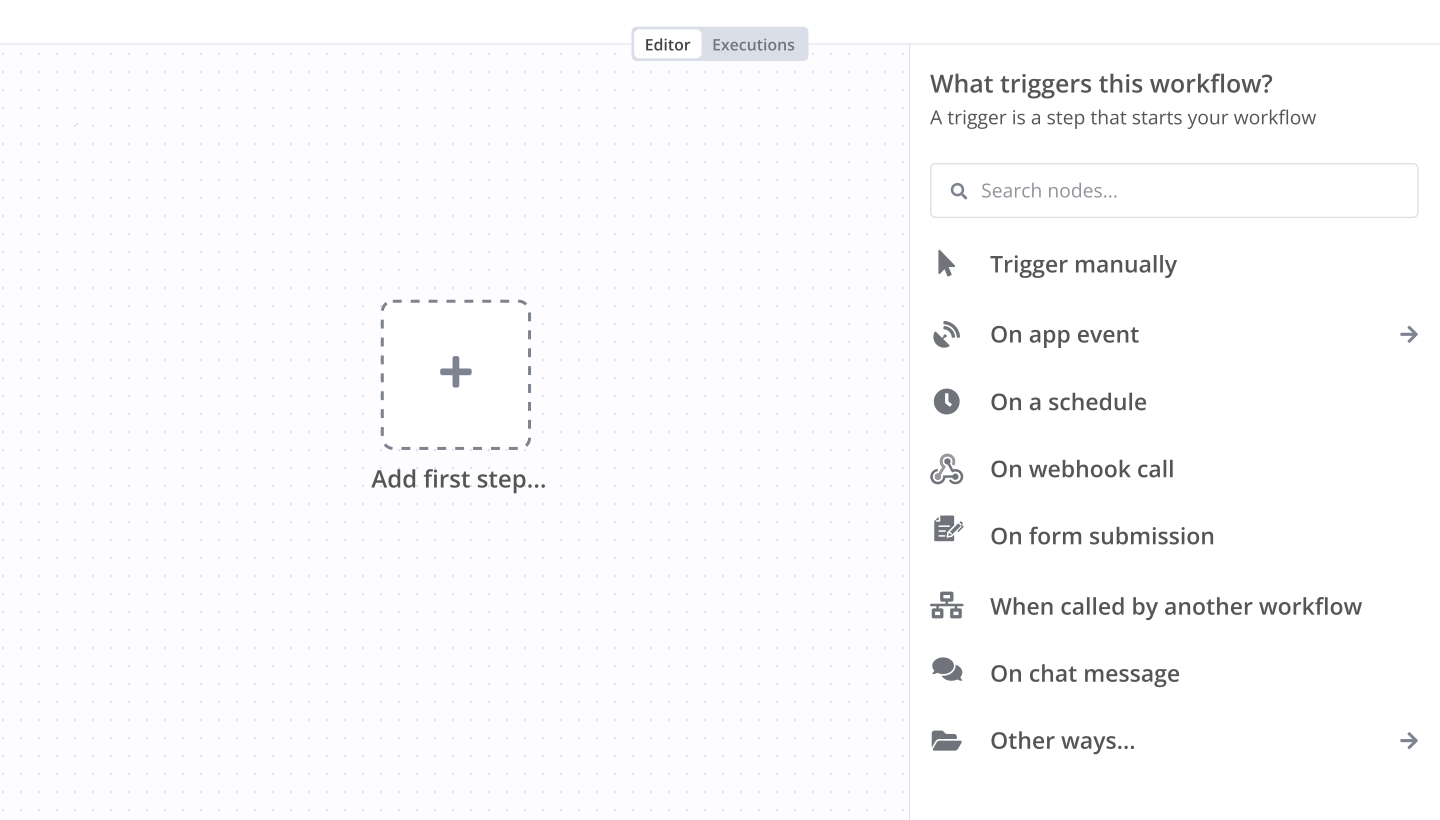
Step 1: Create a new workflow and add the first step

In n8n, click the "Add workflow" button in the Workflows tab to create a new workflow. Add the starting point – a trigger on when your workflow should run: an app event, a schedule, a webhook call, another workflow, an AI chat, or a manual trigger. Sometimes, the HTTP Request node might already serve as your starting point.

Google Drive and QuickBooks Online integration: Create a new workflow and add the first step

Step 2: Add and configure Google Drive and QuickBooks Online nodes

You can find Google Drive and QuickBooks Online in the nodes panel. Drag them onto your workflow canvas, selecting their actions. Click each node, choose a credential, and authenticate to grant n8n access. Configure Google Drive and QuickBooks Online nodes one by one: input data on the left, parameters in the middle, and output data on the right.

Google Drive and QuickBooks Online integration: Add and configure Google Drive and QuickBooks Online nodes

Step 3: Connect Google Drive and QuickBooks Online

A connection establishes a link between Google Drive and QuickBooks Online (or vice versa) to route data through the workflow. Data flows from the output of one node to the input of another. You can have single or multiple connections for each node.

Google Drive and QuickBooks Online integration: Connect Google Drive and QuickBooks Online

Step 4: Customize and extend your Google Drive and QuickBooks Online integration

Use n8n's core nodes such as If, Split Out, Merge, and others to transform and manipulate data. Write custom JavaScript or Python in the Code node and run it as a step in your workflow. Connect Google Drive and QuickBooks Online with any of n8n’s 1000+ integrations, and incorporate advanced AI logic into your workflows.

Google Drive and QuickBooks Online integration: Customize and extend your Google Drive and QuickBooks Online integration

Step 5: Test and activate your Google Drive and QuickBooks Online workflow

Save and run the workflow to see if everything works as expected. Based on your configuration, data should flow from Google Drive to QuickBooks Online or vice versa. Easily debug your workflow: you can check past executions to isolate and fix the mistake. Once you've tested everything, make sure to save your workflow and activate it.

Google Drive and QuickBooks Online integration: Test and activate your Google Drive and QuickBooks Online workflow

Automatically save QuickBooks invoice PDFs to Google Drive

This n8n template from Intuz provides a complete and automated solution for secure document archiving.

It automatically saves new QuickBooks invoice PDFs directly into Google Drive, creating a reliable backup system. For perfect organization, the workflow uses keywords from the invoice, like the client name or invoice number, to dynamically name the PDF files, ensuring you have a complete and easily searchable financial record.

Use Cases

  1. Automated Document Archiving: Eliminate the manual work of downloading and saving invoices. Set it up once and let it run.

  2. Compliance & Auditing: Maintain a clean, chronological, and separate record of all issued invoices for easy access during audits.

  3. Secure Backup: Create a redundant, secure backup of your critical financial documents in your own cloud storage.

  4. Enhanced Team Access: Share the Google Drive folder with accountants, bookkeepers, or team members who need access to invoices but not to your full QuickBooks account.

How It Works:

  1. Real-Time Invoice Trigger: The workflow starts the instant a new invoice is created in your QuickBooks account. A configured webhook sends a notification to n8n, kicking off the automation immediately.

  2. Fetch Invoice Metadata: The workflow uses the invoice ID from the webhook to retrieve the full invoice details, such as the customer's name and the transaction date. This information is used in the next steps.

  3. Generate the Invoice PDF: A crucial HTTP Request node makes a direct API call to QuickBooks, requesting a PDF version of the invoice. This ensures the archived document is the official, formatted PDF, exactly as it appears in QuickBooks.

  4. Upload and Archive in Google Drive: The final node takes the binary PDF data and uploads it to your specified Google Drive folder. It dynamically names the file for easy identification (e.g., CustomerName_TransactionDate.pdf), creating a perfectly organized and searchable archive.

Setup Instructions
To get this workflow running, follow these key setup steps:

  1. Credentials:
    QuickBooks: Connect your QuickBooks account credentials to n8n.
    Google: Connect your Google account using OAuth2 credentials and ensure the Google Drive API is enabled.

  2. QuickBooks Webhook Configuration:
    First, activate this n8n workflow to make the webhook URL live.
    Copy the Production URL from the QuickBooks Webhook node.
    In your Intuit Developer Portal, go to the webhooks section for your app, paste the URL, and subscribe to Invoice creation events.

  3. Node Configuration:
    Get an invoice & Generate PDF File: These nodes will use your configured QuickBooks credentials automatically.
    Upload file (Google Drive): In the parameters for this node, you must select the Folder ID where you want your invoices to be saved.

Support
If you need help setting up this workflow or require a custom version tailored to your specific use case, please feel free to reach out to the template author:

Website: https://www.intuz.com/n8n-workflow-automation-templates
Email: [email protected]
LinkedIn: https://www.linkedin.com/company/intuz
Get Started: https://n8n.partnerlinks.io/intuz

For Custom Worflow Automation
Click here- Get Started

Nodes used in this workflow

Popular Google Drive and QuickBooks Online workflows

+3

Convert emailed timesheets into QuickBooks invoices with OCR, AI, Gmail and Sheets

AI-Powered Timesheet → Invoice Automation (Gmail + OCR + AI + Google Sheets + QuickBooks) > Note: This workflow uses sticky notes extensively to document each logical section of the automation. Sticky notes are mandatory and already included to explain OCR, AI parsing, folder logic, duplicate handling, and QuickBooks steps. This workflow automates the full lifecycle of timesheet-based invoicing — from emailed timesheets to structured Google Sheets records and finalized invoices in QuickBooks Online. It is designed for real-world billing scenarios, including split weeks across months, zero-hour months, duplicate prevention, and first-week-of-year edge cases. What This Workflow Does Listens to Gmail for timesheet emails with attachments Splits and processes each attachment independently Extracts text using OCR (no hardcoded API keys) Uses AI to parse month-wise billable hours Correctly splits weeks spanning multiple months Looks up Customer and PO details from Google Sheets Organizes files in Client → Employee → Year folders in Google Drive Reuses existing invoice sheets or creates new ones Prevents duplicate invoice rows Automatically finds or creates customers in QuickBooks Creates invoices in QuickBooks using validated data High-Level Workflow Stages Gmail Intake and Attachment Loop OCR Text Extraction AI-Based Timesheet Parsing Month Normalization and Validation Customer & PO Lookup Drive Folder Discovery and Creation Invoice Sheet Reuse or Creation Duplicate and Edge-Case Handling Append Invoice Rows to Google Sheets Create / Update Customers in QuickBooks Create Invoices in QuickBooks Each of these stages is clearly documented with sticky notes inside the workflow canvas. Quick Setup Instructions Import the workflow JSON into your n8n instance Configure credentials for: Gmail Google Drive Google Sheets OpenAI or Google Gemini QuickBooks Online Verify the OCR HTTP node: Default URL: https://universal-file-to-text-extractor.vercel.app/extract No hardcoded API keys are used Configure Get Customer Info From PO Sheet: Spreadsheet ID Sheet name and column mappings Ensure the Client Invoices root folder exists in Google Drive Send a test timesheet email Execute the workflow once manually Activate the workflow Who This Workflow Is For Agencies and consultancies billing from emailed timesheets Finance and operations teams using Google Workspace + QuickBooks Staffing firms with monthly or bi-weekly contractor billing Teams that want a fully auditable, zero-manual invoice process Requirements n8n instance Gmail account receiving timesheet emails Google Drive and Google Sheets OpenAI or Google Gemini API OCR API endpoint (configurable) QuickBooks Online account Customer PO Google Sheet containing: Email Customer Name Company Name Customer Account Number PO Number Item Folder Name Invoice range Due Date Calculation How It Works (Detailed) Email Intake and Attachment Loop Gmail Trigger polls for timesheet emails Attachments are split so each file is processed independently Sticky notes explain the intake and loop logic OCR Extraction Each attachment is sent to the OCR API PDFs and images are converted to plain text OCR logic is documented via sticky notes AI Timesheet Parsing (Month-Wise) AI extracts data only from BILLABLE HOURS sections Outputs strict JSON: Employee Name Client Name Month Year Week Start Date Week End Date Total Billable Hours Special handling included: Split weeks across months Zero-hour months still included No guessed or inferred dates Month Normalization and Validation AI output is normalized into a month array Each month is processed independently Invalid or zero-hour entries are skipped Customer and PO Lookup Sender email is matched in the PO sheet Retrieved values drive: Folder structure Invoice logic Due date calculation Google Drive Folder Structure The workflow enforces a strict hierarchy: Client Invoices └── Client └── Employee └── Year Missing folders are created automatically. Invoice Sheet Naming and Search Sheet names are generated using: Employee Name Month Year Existing sheets are reused when found Supports monthly and 15-day billing cycles Duplicate Prevention and Edge Cases Duplicate invoice rows are detected and skipped January first-week edge case is handled explicitly Safe re-runs are supported Google Sheets Invoice Rows Each appended row includes: Customer Account Number Invoice Date Due Date PO Number Item Name Quantity (Total Hours) Period description QuickBooks Integration Searches for existing customers in QuickBooks Creates customers automatically if missing Creates invoices using: Customer reference Item Quantity Invoice date Due date All QuickBooks logic is documented with sticky notes. How To Customize Swap AI model (OpenAI ↔ Gemini) Extend prompts to extract: Project Cost center Approval status Add tax codes, currency, or unit pricing Modify folder naming rules Insert approval steps before invoice creation Common Use Cases Monthly contractor invoicing Agency billing across multiple clients Finance automation with audit-ready records Eliminating manual timesheet-to-invoice work Troubleshooting | Issue | Likely Cause | |------|-------------| | No invoices created | Gmail filter mismatch or email already read | | OCR output empty | Unsupported file or OCR endpoint issue | | Wrong month split | Review AI prompt and month logic | | Duplicate rows | Duplicate detection conditions | | Invoice missing in QuickBooks | Customer or item configuration issue | Notes on Community Guidelines Sticky notes are used throughout the workflow No hardcoded API keys are present Markdown is used (no HTML tags) This workflow is original and not copied Need Help or Customization? Digital Biz Tech can help tailor this workflow to your business. We offer free setup support, including credential configuration and deployment. Contact: [email protected] Website: https://www.digitalbiz.tech LinkedIn: https://www.linkedin.com/company/digital-biz-tech/ You can also DM us on LinkedIn for any help. You can also DM us on LinkedIn.

Automatically save QuickBooks invoice PDFs to Google Drive

This n8n template from Intuz provides a complete and automated solution for secure document archiving. It automatically saves new QuickBooks invoice PDFs directly into Google Drive, creating a reliable backup system. For perfect organization, the workflow uses keywords from the invoice, like the client name or invoice number, to dynamically name the PDF files, ensuring you have a complete and easily searchable financial record. Use Cases Automated Document Archiving: Eliminate the manual work of downloading and saving invoices. Set it up once and let it run. Compliance & Auditing: Maintain a clean, chronological, and separate record of all issued invoices for easy access during audits. Secure Backup: Create a redundant, secure backup of your critical financial documents in your own cloud storage. Enhanced Team Access: Share the Google Drive folder with accountants, bookkeepers, or team members who need access to invoices but not to your full QuickBooks account. How It Works: Real-Time Invoice Trigger: The workflow starts the instant a new invoice is created in your QuickBooks account. A configured webhook sends a notification to n8n, kicking off the automation immediately. Fetch Invoice Metadata: The workflow uses the invoice ID from the webhook to retrieve the full invoice details, such as the customer's name and the transaction date. This information is used in the next steps. Generate the Invoice PDF: A crucial HTTP Request node makes a direct API call to QuickBooks, requesting a PDF version of the invoice. This ensures the archived document is the official, formatted PDF, exactly as it appears in QuickBooks. Upload and Archive in Google Drive: The final node takes the binary PDF data and uploads it to your specified Google Drive folder. It dynamically names the file for easy identification (e.g., CustomerName_TransactionDate.pdf), creating a perfectly organized and searchable archive. Setup Instructions To get this workflow running, follow these key setup steps: Credentials: QuickBooks: Connect your QuickBooks account credentials to n8n. Google: Connect your Google account using OAuth2 credentials and ensure the Google Drive API is enabled. QuickBooks Webhook Configuration: First, activate this n8n workflow to make the webhook URL live. Copy the Production URL from the QuickBooks Webhook node. In your Intuit Developer Portal, go to the webhooks section for your app, paste the URL, and subscribe to Invoice creation events. Node Configuration: Get an invoice & Generate PDF File: These nodes will use your configured QuickBooks credentials automatically. Upload file (Google Drive): In the parameters for this node, you must select the Folder ID where you want your invoices to be saved. Support If you need help setting up this workflow or require a custom version tailored to your specific use case, please feel free to reach out to the template author: Website: https://www.intuz.com/n8n-workflow-automation-templates Email: [email protected] LinkedIn: https://www.linkedin.com/company/intuz Get Started: https://n8n.partnerlinks.io/intuz For Custom Worflow Automation Click here- Get Started

Build your own Google Drive and QuickBooks Online integration

Create custom Google Drive and QuickBooks Online workflows by choosing triggers and actions. Nodes come with global operations and settings, as well as app-specific parameters that can be configured. You can also use the HTTP Request node to query data from any app or service with a REST API.

Google Drive supported actions

Copy
Create a copy of an existing file
Create From Text
Create a file from a provided text
Delete
Permanently delete a file
Download
Download a file
Move
Move a file to another folder
Share
Add sharing permissions to a file
Update
Update a file
Upload
Upload an existing file to Google Drive
Search
Search or list files and folders
Create
Create a folder
Delete
Permanently delete a folder
Share
Add sharing permissions to a folder
Create
Create a shared drive
Delete
Permanently delete a shared drive
Get
Get a shared drive
Get Many
Get the list of shared drives
Update
Update a shared drive

QuickBooks Online supported actions

Create
Delete
Get
Get Many
Update
Create
Get
Get Many
Update
Create
Get
Get Many
Update
Create
Delete
Get
Get Many
Send
Update
Create
Delete
Get
Get Many
Send
Update
Void
Get
Get Many
Create
Delete
Get
Get Many
Send
Update
Void
Get
Get Many
Get Report
Create
Get
Get Many
Update

FAQs

  • Can Google Drive connect with QuickBooks Online?

  • Can I use Google Drive’s API with n8n?

  • Can I use QuickBooks Online’s API with n8n?

  • Is n8n secure for integrating Google Drive and QuickBooks Online?

  • How to get started with Google Drive and QuickBooks Online integration in n8n.io?

Need help setting up your Google Drive and QuickBooks Online integration?

Discover our latest community's recommendations and join the discussions about Google Drive and QuickBooks Online integration.
hubschrauber
Jon
David O'Neil

Looking to integrate Google Drive and QuickBooks Online in your company?

Over 3000 companies switch to n8n every single week

Why use n8n to integrate Google Drive with QuickBooks Online

Build complex workflows, really fast

Build complex workflows, really fast

Handle branching, merging and iteration easily.
Pause your workflow to wait for external events.

Code when you need it, UI when you don't

Simple debugging

Your data is displayed alongside your settings, making edge cases easy to track down.

Use templates to get started fast

Use 1000+ workflow templates available from our core team and our community.

Reuse your work

Copy and paste, easily import and export workflows.

Implement complex processes faster with n8n

red iconyellow iconred iconyellow icon