Back to Integrations
integrationGoogle Drive node
integrationQuickChart node

Google Drive and QuickChart integration

Save yourself the work of writing custom integrations for Google Drive and QuickChart and use n8n instead. Build adaptable and scalable Data & Storage, and Marketing workflows that work with your technology stack. All within a building experience you will love.

How to connect Google Drive and QuickChart

  • Step 1: Create a new workflow
  • Step 2: Add and configure nodes
  • Step 3: Connect
  • Step 4: Customize and extend your integration
  • Step 5: Test and activate your workflow

Step 1: Create a new workflow and add the first step

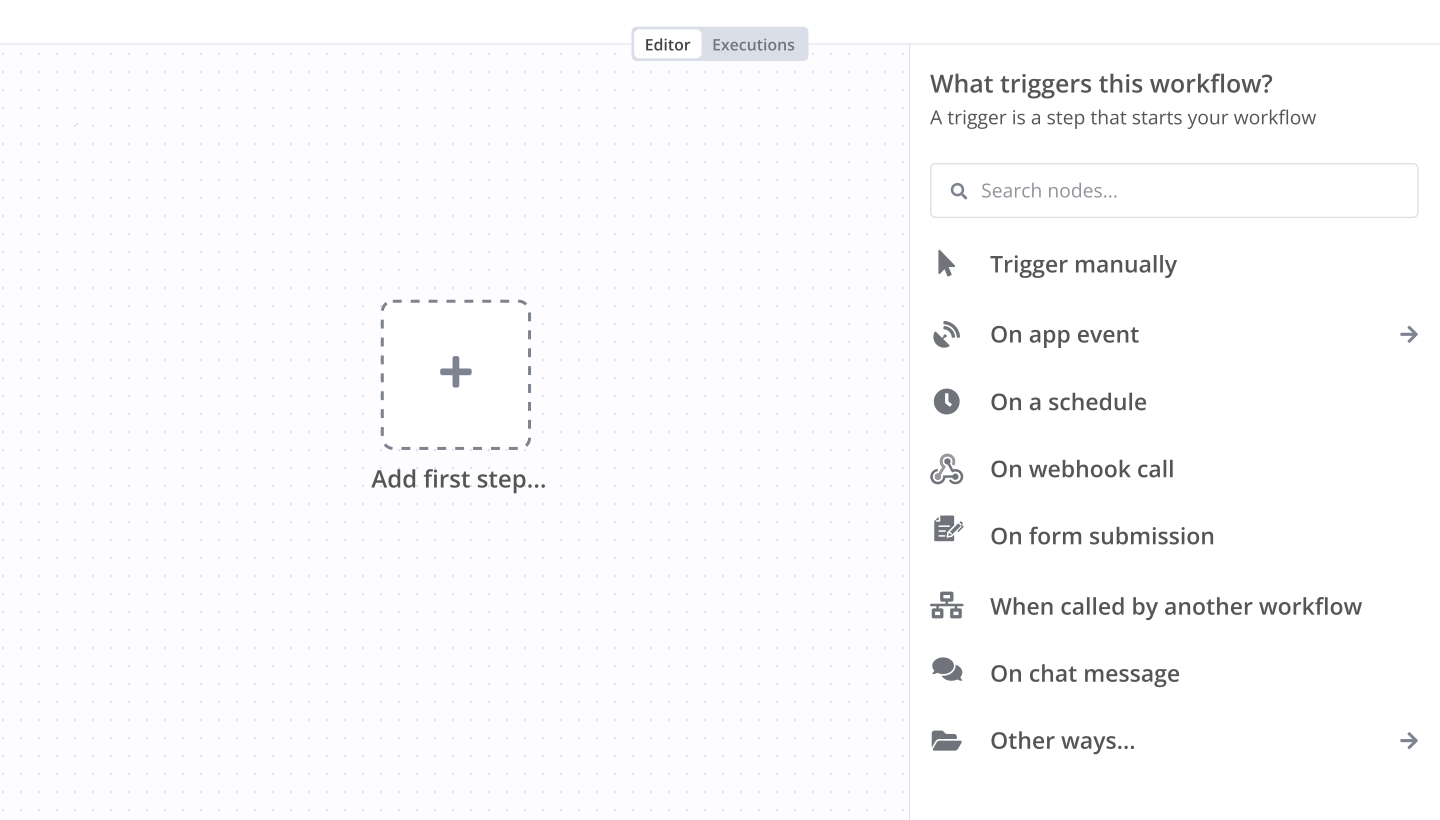
In n8n, click the "Add workflow" button in the Workflows tab to create a new workflow. Add the starting point – a trigger on when your workflow should run: an app event, a schedule, a webhook call, another workflow, an AI chat, or a manual trigger. Sometimes, the HTTP Request node might already serve as your starting point.

Google Drive and QuickChart integration: Create a new workflow and add the first step

Step 2: Add and configure Google Drive and QuickChart nodes

You can find Google Drive and QuickChart in the nodes panel. Drag them onto your workflow canvas, selecting their actions. Click each node, choose a credential, and authenticate to grant n8n access. Configure Google Drive and QuickChart nodes one by one: input data on the left, parameters in the middle, and output data on the right.

Google Drive and QuickChart integration: Add and configure Google Drive and QuickChart nodes

Step 3: Connect Google Drive and QuickChart

A connection establishes a link between Google Drive and QuickChart (or vice versa) to route data through the workflow. Data flows from the output of one node to the input of another. You can have single or multiple connections for each node.

Google Drive and QuickChart integration: Connect Google Drive and QuickChart

Step 4: Customize and extend your Google Drive and QuickChart integration

Use n8n's core nodes such as If, Split Out, Merge, and others to transform and manipulate data. Write custom JavaScript or Python in the Code node and run it as a step in your workflow. Connect Google Drive and QuickChart with any of n8n’s 1000+ integrations, and incorporate advanced AI logic into your workflows.

Google Drive and QuickChart integration: Customize and extend your Google Drive and QuickChart integration

Step 5: Test and activate your Google Drive and QuickChart workflow

Save and run the workflow to see if everything works as expected. Based on your configuration, data should flow from Google Drive to QuickChart or vice versa. Easily debug your workflow: you can check past executions to isolate and fix the mistake. Once you've tested everything, make sure to save your workflow and activate it.

Google Drive and QuickChart integration: Test and activate your Google Drive and QuickChart workflow

Generate dynamic line chart from JSON data to upload to Google Drive

What Does This Flow Do?

This workflow demonstrates how to dynamically generate a line chart using the QuickChart node based on data provided in a JSON object and then upload the resulting chart image to Google Drive.

Use Cases

You can use it in presentations or requesting for chart generation from a software with HTTP requests.
Automated report generation (e.g., daily sales charts).
Visualizing data fetched from APIs or databases.
Simple monitoring dashboards.
Adding charts to internal tools or notifications.

How it Works

Trigger: The workflow starts manually when you click 'Test workflow'.
Set Sample Data: A Set node (Edit Fields: Set JSON data to test) defines a sample JSON object named jsonData. This object contains:
reportTitle: A title (not used in the chart generation in this example, but useful for context).
labels: An array of strings representing the labels for the chart's X-axis (e.g., ["Q1", "Q2", "Q3", "Q4"]).
salesData: An array of numbers representing the data points for the chart's Y-axis (e.g., [1250, 1800, 1550, 2100]).
Generate Chart: The QuickChart node is configured to:
Create a line chart.
Dynamically read labels from the jsonData.labels array (Labels Mode: From Array).
Use the jsonData.salesData array as the input data (Note: This configuration places data in the top-level 'Data' field. For more complex charts with multiple datasets or specific dataset options, configure datasets under 'Dataset Options' instead).
The node outputs the generated chart image as binary data in a field named data.
Upload to Google Drive: The Google Drive node (Google Drive: Upload File):
Takes the binary data (data) from the QuickChart node.
Uploads the image to your specified Google Drive folder.
Dynamically names the file based on its extension (e.g., chart.png).

Setup Steps

Import: Import this template into your n8n instance.
Configure Google Drive Credentials:
Select the Google Drive: Upload File node.
You MUST configure your own Google Drive credentials. Click on the 'Credentials' dropdown and either select existing credentials or create new ones by following the authentication prompts.
(Optional) Customize Google Drive Folder: In the Google Drive: Upload File node, you can change the Drive ID and Folder ID to specify exactly where the chart should be uploaded.
Activate: Activate the workflow if you want it to run automatically based on a different trigger.

How to Use & Customize

Change Input Data:** Modify the labels and salesData arrays within the Edit Fields: Set JSON data to test node to use your own data. Ensure the number of labels matches the number of data points.
Use Real Data Sources:** Replace the Edit Fields: Set JSON data to test node with nodes that fetch data from real sources like:
HTTP Request (APIs)
Postgres / MongoDB nodes (Databases)
Google Sheets node
Ensure the output data from your source node is formatted similarly (providing labels and salesData arrays). You might need another Set node to structure the data correctly before the QuickChart node.
Change Chart Type:** In the QuickChart node, modify the Chart Type parameter (e.g., change from line to bar, pie, doughnut, etc.).
Customize Chart Appearance:** Explore the Chart Options parameter within the QuickChart node to add titles, change colors, modify axes, etc., using QuickChart's standard JSON configuration options.
Use Datasets (Recommended for Complex Charts):** For multiple lines/bars or more control, configure datasets explicitly in the QuickChart node:
Remove the expression from the top-level Data field.
Go to Dataset Options -> Add option -> Add dataset.
Set the Data field within the dataset using an expression like {{ $json.jsonData.salesData }}.
You can add multiple datasets this way.
Change Output Destination:** Replace the Google Drive: Upload File node with other nodes to handle the chart image differently:
Write Binary File: Save the chart to the local filesystem where n8n is running.
Slack / Discord / Telegram: Send the chart to messaging platforms.
Move Binary Data: Convert the image to Base64 to embed in HTML or return via webhook response.

Nodes Used

Manual Trigger
Set
QuickChart
Google Drive

Tags: (Suggestions for tags field)

QuickChart, Chart, Visualization, Line Chart, Google Drive, Reporting, Automation

Nodes used in this workflow

Popular Google Drive and QuickChart workflows

Generate Dynamic Line Chart from JSON Data to Upload to Google Drive

What Does This Flow Do? This workflow demonstrates how to dynamically generate a line chart using the QuickChart node based on data provided in a JSON object and then upload the resulting chart image to Google Drive. Use Cases You can use it in presentations or requesting for chart generation from a software with HTTP requests. Automated report generation (e.g., daily sales charts). Visualizing data fetched from APIs or databases. Simple monitoring dashboards. Adding charts to internal tools or notifications. How it Works Trigger: The workflow starts manually when you click 'Test workflow'. Set Sample Data: A Set node (Edit Fields: Set JSON data to test) defines a sample JSON object named jsonData. This object contains: reportTitle: A title (not used in the chart generation in this example, but useful for context). labels: An array of strings representing the labels for the chart's X-axis (e.g., ["Q1", "Q2", "Q3", "Q4"]). salesData: An array of numbers representing the data points for the chart's Y-axis (e.g., [1250, 1800, 1550, 2100]). Generate Chart: The QuickChart node is configured to: Create a line chart. Dynamically read labels from the jsonData.labels array (Labels Mode: From Array). Use the jsonData.salesData array as the input data (Note: This configuration places data in the top-level 'Data' field. For more complex charts with multiple datasets or specific dataset options, configure datasets under 'Dataset Options' instead). The node outputs the generated chart image as binary data in a field named data. Upload to Google Drive: The Google Drive node (Google Drive: Upload File): Takes the binary data (data) from the QuickChart node. Uploads the image to your specified Google Drive folder. Dynamically names the file based on its extension (e.g., chart.png). Setup Steps Import: Import this template into your n8n instance. Configure Google Drive Credentials: Select the Google Drive: Upload File node. You MUST configure your own Google Drive credentials. Click on the 'Credentials' dropdown and either select existing credentials or create new ones by following the authentication prompts. (Optional) Customize Google Drive Folder: In the Google Drive: Upload File node, you can change the Drive ID and Folder ID to specify exactly where the chart should be uploaded. Activate: Activate the workflow if you want it to run automatically based on a different trigger. How to Use & Customize Change Input Data:** Modify the labels and salesData arrays within the Edit Fields: Set JSON data to test node to use your own data. Ensure the number of labels matches the number of data points. Use Real Data Sources:** Replace the Edit Fields: Set JSON data to test node with nodes that fetch data from real sources like: HTTP Request (APIs) Postgres / MongoDB nodes (Databases) Google Sheets node Ensure the output data from your source node is formatted similarly (providing labels and salesData arrays). You might need another Set node to structure the data correctly before the QuickChart node. Change Chart Type:** In the QuickChart node, modify the Chart Type parameter (e.g., change from line to bar, pie, doughnut, etc.). Customize Chart Appearance:** Explore the Chart Options parameter within the QuickChart node to add titles, change colors, modify axes, etc., using QuickChart's standard JSON configuration options. Use Datasets (Recommended for Complex Charts):** For multiple lines/bars or more control, configure datasets explicitly in the QuickChart node: Remove the expression from the top-level Data field. Go to Dataset Options -> Add option -> Add dataset. Set the Data field within the dataset using an expression like {{ $json.jsonData.salesData }}. You can add multiple datasets this way. Change Output Destination:** Replace the Google Drive: Upload File node with other nodes to handle the chart image differently: Write Binary File: Save the chart to the local filesystem where n8n is running. Slack / Discord / Telegram: Send the chart to messaging platforms. Move Binary Data: Convert the image to Base64 to embed in HTML or return via webhook response. Nodes Used Manual Trigger Set QuickChart Google Drive Tags: (Suggestions for tags field) QuickChart, Chart, Visualization, Line Chart, Google Drive, Reporting, Automation

Build your own Google Drive and QuickChart integration

Create custom Google Drive and QuickChart workflows by choosing triggers and actions. Nodes come with global operations and settings, as well as app-specific parameters that can be configured. You can also use the HTTP Request node to query data from any app or service with a REST API.

Google Drive supported actions

Copy
Create a copy of an existing file
Create From Text
Create a file from a provided text
Delete
Permanently delete a file
Download
Download a file
Move
Move a file to another folder
Share
Add sharing permissions to a file
Update
Update a file
Upload
Upload an existing file to Google Drive
Search
Search or list files and folders
Create
Create a folder
Delete
Permanently delete a folder
Share
Add sharing permissions to a folder
Create
Create a shared drive
Delete
Permanently delete a shared drive
Get
Get a shared drive
Get Many
Get the list of shared drives
Update
Update a shared drive

FAQs

  • Can Google Drive connect with QuickChart?

  • Can I use Google Drive’s API with n8n?

  • Can I use QuickChart’s API with n8n?

  • Is n8n secure for integrating Google Drive and QuickChart?

  • How to get started with Google Drive and QuickChart integration in n8n.io?

Need help setting up your Google Drive and QuickChart integration?

Discover our latest community's recommendations and join the discussions about Google Drive and QuickChart integration.
hubschrauber
Jon
David O'Neil

Looking to integrate Google Drive and QuickChart in your company?

Over 3000 companies switch to n8n every single week

Why use n8n to integrate Google Drive with QuickChart

Build complex workflows, really fast

Build complex workflows, really fast

Handle branching, merging and iteration easily.
Pause your workflow to wait for external events.

Code when you need it, UI when you don't

Simple debugging

Your data is displayed alongside your settings, making edge cases easy to track down.

Use templates to get started fast

Use 1000+ workflow templates available from our core team and our community.

Reuse your work

Copy and paste, easily import and export workflows.

Implement complex processes faster with n8n

red iconyellow iconred iconyellow icon