Back to Integrations
integrationGoogle Drive node
integrationSendGrid node

Google Drive and SendGrid integration

Save yourself the work of writing custom integrations for Google Drive and SendGrid and use n8n instead. Build adaptable and scalable Data & Storage, Marketing, and Communication workflows that work with your technology stack. All within a building experience you will love.

How to connect Google Drive and SendGrid

  • Step 1: Create a new workflow
  • Step 2: Add and configure nodes
  • Step 3: Connect
  • Step 4: Customize and extend your integration
  • Step 5: Test and activate your workflow

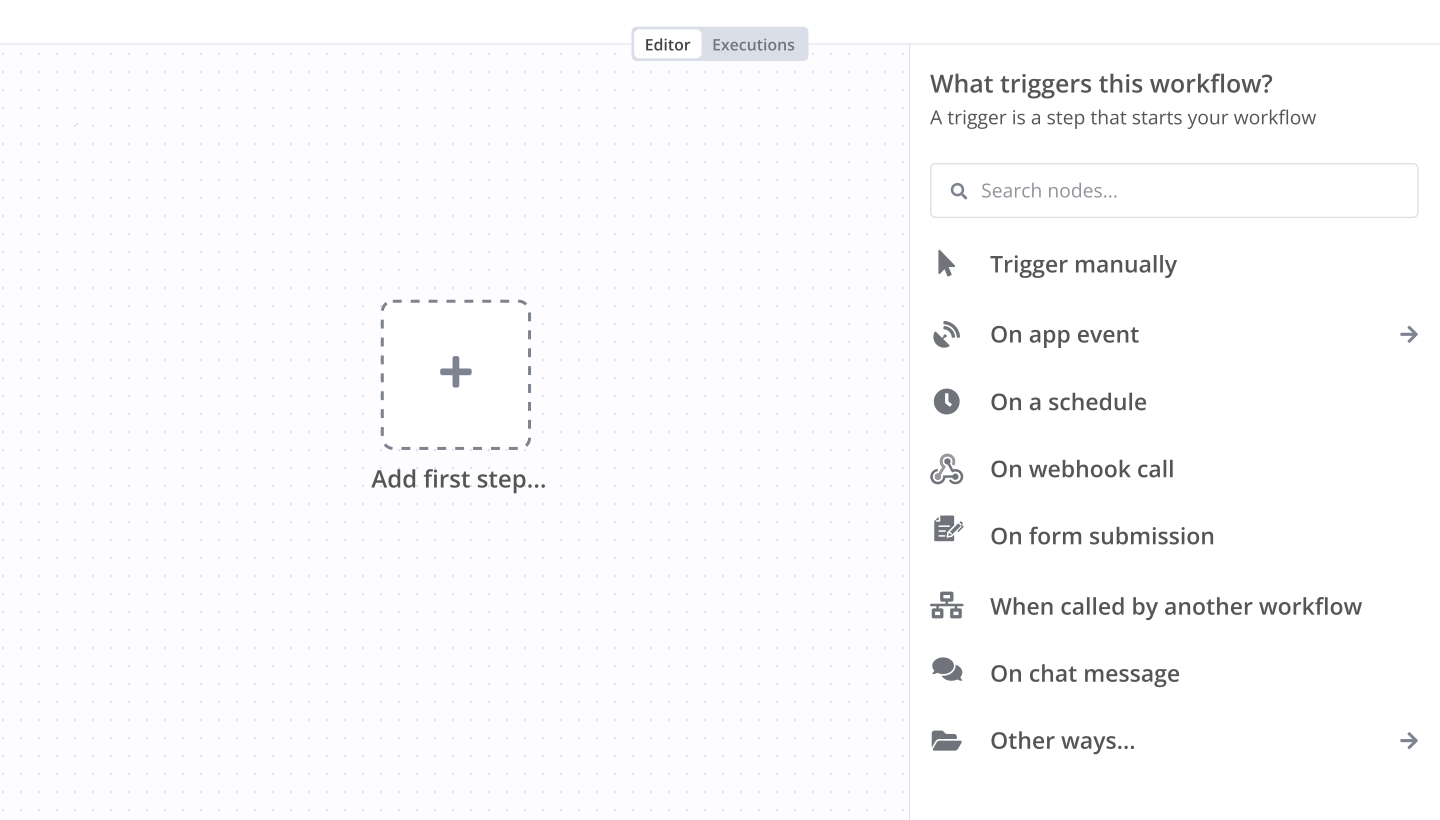
Step 1: Create a new workflow and add the first step

In n8n, click the "Add workflow" button in the Workflows tab to create a new workflow. Add the starting point – a trigger on when your workflow should run: an app event, a schedule, a webhook call, another workflow, an AI chat, or a manual trigger. Sometimes, the HTTP Request node might already serve as your starting point.

Google Drive and SendGrid integration: Create a new workflow and add the first step

Step 2: Add and configure Google Drive and SendGrid nodes

You can find Google Drive and SendGrid in the nodes panel. Drag them onto your workflow canvas, selecting their actions. Click each node, choose a credential, and authenticate to grant n8n access. Configure Google Drive and SendGrid nodes one by one: input data on the left, parameters in the middle, and output data on the right.

Google Drive and SendGrid integration: Add and configure Google Drive and SendGrid nodes

Step 3: Connect Google Drive and SendGrid

A connection establishes a link between Google Drive and SendGrid (or vice versa) to route data through the workflow. Data flows from the output of one node to the input of another. You can have single or multiple connections for each node.

Google Drive and SendGrid integration: Connect Google Drive and SendGrid

Step 4: Customize and extend your Google Drive and SendGrid integration

Use n8n's core nodes such as If, Split Out, Merge, and others to transform and manipulate data. Write custom JavaScript or Python in the Code node and run it as a step in your workflow. Connect Google Drive and SendGrid with any of n8n’s 1000+ integrations, and incorporate advanced AI logic into your workflows.

Google Drive and SendGrid integration: Customize and extend your Google Drive and SendGrid integration

Step 5: Test and activate your Google Drive and SendGrid workflow

Save and run the workflow to see if everything works as expected. Based on your configuration, data should flow from Google Drive to SendGrid or vice versa. Easily debug your workflow: you can check past executions to isolate and fix the mistake. Once you've tested everything, make sure to save your workflow and activate it.

Google Drive and SendGrid integration: Test and activate your Google Drive and SendGrid workflow

Bulk resume screening & JD matching with GPT-4 for HR teams

TalentFlow AI – Bulk Resume Screening with JD Matching

Automatically extract, evaluate, and shortlist multiple resumes against a selected job description using GPT-4. This smart, scalable n8n workflow helps HR/TA teams streamline hiring decisions while keeping results structured, auditable, and easy to share.

👤 Who’s it for

This workflow is designed for:
HR or Talent Acquisition (TA) teams handling multiple candidates per role
Recruiters who want AI-assisted resume screening to save time and reduce bias
Organizations that want to automatically log evaluations and keep stakeholders updated in real-time via Slack or Sheets

⚙️ How it works / What it does

HR/TA uploads multiple candidate resumes and selects a job role
Each resume is:
Uploaded to Google Drive
Parsed with GPT-4 to extract structured profile data
The job description for the selected role is:
Retrieved from Google Sheets
Downloaded from Drive and parsed
The profile + JD are sent to an AI agent to generate:
Fit score
Strengths & gaps
Final recommendation
Results are:
Appended to the evaluation tracking sheet
Optionally shared with the hiring team on Slack
Used to trigger emails to qualified or unqualified candidates

🛠️ How to set up

Clone or import the workflow into your n8n instance
Connect your integrations:
Google Sheets (positions & evaluation form)
Google Drive (CV & JD folders)
OpenAI API (GPT-4)
Slack (for notifications)
(Optional) SendGrid or SMTP for email notifications
Update Google Sheets structure:
Positions sheet: maps Job Role → JD file link
Evaluation form: stores evaluation results
Prepare Drive folders:
/cv folder for uploaded resumes
/jd folder for job description PDFs

📋 Requirements

✅ n8n (hosted or self-hosted)
✅ OpenAI GPT-4 account (used in Profile & JD evaluator agents)
✅ Google Drive + Google Sheets access
✅ Slack workspace + bot token
(Optional) SendGrid or email credentials for candidate follow-up

🎨 How to customize the workflow

Change the fit score threshold in the Candidate qualified? node
Edit Slack message content/formatting to match your company tone
Add additional candidate metadata to Sheets or Slack messages
Use a webhook trigger to integrate with your ATS or job board
Swap GPT-4 with Claude or Gemini if you prefer other AI services
Expand to include multi-position batch screening logic

Happy Hiring! 🚀
Automated with love using n8n

Nodes used in this workflow

Popular Google Drive and SendGrid workflows

+4

Bulk Resume Screening & JD Matching with GPT-4 for HR Teams

TalentFlow AI – Bulk Resume Screening with JD Matching Automatically extract, evaluate, and shortlist multiple resumes against a selected job description using GPT-4. This smart, scalable n8n workflow helps HR/TA teams streamline hiring decisions while keeping results structured, auditable, and easy to share. 👤 Who’s it for This workflow is designed for: HR or Talent Acquisition (TA) teams handling multiple candidates per role Recruiters who want AI-assisted resume screening to save time and reduce bias Organizations that want to automatically log evaluations and keep stakeholders updated in real-time via Slack or Sheets ⚙️ How it works / What it does HR/TA uploads multiple candidate resumes and selects a job role Each resume is: Uploaded to Google Drive Parsed with GPT-4 to extract structured profile data The job description for the selected role is: Retrieved from Google Sheets Downloaded from Drive and parsed The profile + JD are sent to an AI agent to generate: Fit score Strengths & gaps Final recommendation Results are: Appended to the evaluation tracking sheet Optionally shared with the hiring team on Slack Used to trigger emails to qualified or unqualified candidates 🛠️ How to set up Clone or import the workflow into your n8n instance Connect your integrations: Google Sheets (positions & evaluation form) Google Drive (CV & JD folders) OpenAI API (GPT-4) Slack (for notifications) (Optional) SendGrid or SMTP for email notifications Update Google Sheets structure: Positions sheet: maps Job Role → JD file link Evaluation form: stores evaluation results Prepare Drive folders: /cv folder for uploaded resumes /jd folder for job description PDFs 📋 Requirements ✅ n8n (hosted or self-hosted) ✅ OpenAI GPT-4 account (used in Profile & JD evaluator agents) ✅ Google Drive + Google Sheets access ✅ Slack workspace + bot token (Optional) SendGrid or email credentials for candidate follow-up 🎨 How to customize the workflow Change the fit score threshold in the Candidate qualified? node Edit Slack message content/formatting to match your company tone Add additional candidate metadata to Sheets or Slack messages Use a webhook trigger to integrate with your ATS or job board Swap GPT-4 with Claude or Gemini if you prefer other AI services Expand to include multi-position batch screening logic Happy Hiring! 🚀 Automated with love using n8n
+3

Generate SSL/TLS Certificate Expiry Reports with AWS ACM and AI for Slack & Email

Automated SSL/TLS Certificate Expiry Report for AWS > Automatically generates a weekly report of all AWS ACM certificates, including status, expiry dates, and renewal eligibility. The workflow formats the data into both Markdown (for PDF export to Slack) and HTML (for email summary), helping teams stay on top of certificate compliance and expiration risks. Who’s it for This workflow is designed for DevOps engineers, cloud administrators, and compliance teams who manage AWS infrastructure and need automated weekly visibility into the status of their SSL/TLS certificates in AWS Certificate Manager (ACM). It's ideal for teams that want to reduce the risk of expired certs, track renewal eligibility, and maintain reporting for audit or operational purposes. How it works / What it does This n8n workflow performs the following actions on a weekly schedule: Trigger: Automatically runs once a week using the Weekly schedule trigger. Fetch Certificates: Uses Get many certificates action from AWS Certificate Manager to retrieve all certificate records. Parse Data: Processes and reformats certificate data (dates, booleans, SANs, etc.) into a clean JSON object. Generate Reports: 📄 Markdown Report: Uses the Certificate Summary Markdown Agent (OpenAI) to generate a Markdown report for PDF export. 🌐 HTML Report: Uses the Certificate Summary HTML Agent to generate a styled HTML report for email. Deliver Reports: Converts Markdown to PDF and sends it to Slack as a file. Sends HTML content as a formatted email. How to set up Configure AWS Credentials in n8n to allow access to AWS ACM. Create a new workflow and use the following nodes in sequence: Schedule Trigger: Weekly (e.g., every Monday at 08:00 UTC) AWS ACM → Get many certificates Function Node → Parse ACM Data: Converts and summarizes certificate metadata OpenAI Chat Node (Markdown Agent) with a system/user prompt to generate Markdown Configure Metadata → Define file name and MIME type (.md) Create document file → Converts Markdown to document stream Convert to PDF Slack Node → Upload the PDF to a channel (Optional) Add a second OpenAI Chat Node for generating HTML and sending it via email Connect Output: Markdown report → Slack file upload HTML report → Email node with embedded HTML Requirements 🟩 n8n instance (self-hosted or cloud) 🟦 AWS account with access to ACM 🟨 OpenAI API key (for ChatGPT Agent) 🟥 Slack webhook or OAuth credentials (for file upload) 📧 Email integration (e.g., SMTP or SendGrid) 📝 Permissions to write documents (Google Drive / file node) How to customize the workflow Change report frequency**: Adjust the Weekly schedule trigger to daily or monthly as needed. Filter certificates**: Modify the function node to only include EXPIRED, IN_USE, or INELIGIBLE certs. Add tags or domains to include/exclude. Add visuals**: Enhance the HTML version with colored rows, icons, or company branding. Change delivery channels**: Replace Slack with Microsoft Teams, Discord, or Telegram. Send Markdown as email attachment instead of PDF. Integrate ticketing**: Create a JIRA/GitHub issue for each certificate that is EXPIRED or INELIGIBLE.



+5

Generate Business Requirement Documents with Multi-agent GPT & Google Workspace

Multi-agent RAG system for smarter BRD (Business Requirement Document) writing Who’s it for This workflow is designed for Business Analysts, Project Managers, and Operations Teams who need to automate the creation, tracking, and delivery of Business Requirements Documents (BRDs) from submitted forms and supporting materials. It’s ideal for organizations handling multiple BRD requests and looking to streamline document generation, archiving, and communication. How it works / What it does Trigger: The process begins when a BRD request form is submitted along with any supporting files. Sample supporting document PDF: Download URL Data Recording: Creates a BRD request record and appends it to a tracking Google Sheet. Handles multiple uploaded files, saving them to Google Drive. Creates supporting document records and updates the supporting documents tracking sheet. Content Extraction & Storage: Extracts text from uploaded PDF files. Inserts extracted content into a vector store for contextual retrieval by AI agents. Document Generation: Uses two specialized AI agents: General BRD Writer Agent for the overall document structure. Business Requirement Writer Agent for detailed business requirement sections. Both agents query the stored data and produce content, which is then merged. Metadata & File Creation: Configures metadata for the document. Creates a final document file (Google Docs). Finalization: Converts the document to PDF Sample output Archives the PDF in Google Drive. Sends a BRD response email to the requester with the completed document. Updates the request status in the Google Sheet as completed. How to set up Prepare Google Sheets: Create a BRD tracking sheet. Create a supporting document tracking sheet. Configure Google Drive: Set up folders for supporting documents and archived PDFs. Ensure the workflow has API access to upload and retrieve files. Form Integration: Connect your BRD request form to trigger the workflow. Vector Store: Configure a vector database or embedding store for extracted document text. AI Agents: Configure the General BRD Writer Agent and Business Requirement Writer Agent with your preferred OpenAI model. Link both agents to the Query Data Tool for retrieving embedded content. Email Setup: Configure email sending credentials to deliver final BRDs to requesters. Requirements Google Sheets API credentials. Google Drive API credentials. An OpenAI API key with access to the desired models. A form submission trigger (e.g., Google Forms, Typeform). Vector store or embedding database for contextual AI queries. Permissions for file uploads, downloads, and updates in Google Drive. How to customize the workflow Custom Templates**: Modify the AI agents’ system prompts to match your organization’s BRD format and tone. Metadata Fields**: Add custom fields (e.g., department, priority level) during metadata configuration. File Storage Paths**: Adjust Google Drive folder structure for project-specific storage. Approval Steps**: Insert an approval workflow between draft document creation and final archiving. Notification Channels**: Add Slack, Microsoft Teams, or other notification integrations in addition to email. AI Model Selection**: Swap the OpenAI model for another LLM or fine-tuned variant to improve BRD quality for your domain.
+4

AI Resume Screening & Evaluation for HR with GPT-4 & Google Workspace

Try It Out, HireMind – AI-Driven Resume Intelligence Pipeline! This n8n template demonstrates how to automate resume screening and evaluation using AI to improve candidate processing and reduce manual HR effort. A smart and reliable resume screening pipeline for modern HR teams. This workflow combines Google Drive (JD & CV storage), OpenAI (GPT-4-based evaluation), Google Sheets (position mapping + result log), and Slack/SendGrid integrations for real-time communication. Automatically extract, evaluate, and track candidate applications with clarity and consistency. How it works A candidate submits their application using a form that includes name, email, CV (PDF), and a selected job role. The CV is uploaded to Google Drive for record-keeping and later reference. The Profile Analyzer Agent reads the uploaded resume, extracts structured candidate information, and transforms it into a standardized JSON format using GPT-4 and a custom output parser. The corresponding job description PDF file is automatically retrieved from a Google Sheet based on the selected job role. The HR Expert Agent evaluates the candidate profile against the job description using another GPT-4 model, generating a structured assessment that includes strengths, gaps, and an overall recommendation. The evaluation result is parsed and formatted for output. The evaluation score will be used to mark candidate as qualified or unqualified, based on that an email will be sent to applicant or the message will be send to hiring team for the next process The final evaluation result will be stored in a Google Sheet for long-term tracking and reporting. Google drive structure ├── jd # Google drive folder to store your JD (pdf) │ ├── Backend_Engineer.pdf │ ├── Azure_DevOps_Lead.pdf │ └── ... │ ├── cv # Google drive folder, where workflow upload candidate resume │ ├── John_Doe_DevOps.pdf │ ├── Jane_Smith_FullStack.pdf │ └── ... │ ├── Positions (Sample: https://docs.google.com/spreadsheets/d/1pW0muHp1NXwh2GiRvGVwGGRYCkcMR7z8NyS9wvSPYjs/edit?usp=sharing) # 📋 Mapping Table: Job Role ↔ Job Description (Link) │ └── Columns: │ - Job Role │ - Job Description File URL (PDF in jd/) │ └── Evaluation form (Google Sheet) # ✅ Final AI Evaluation Results How to use Set up credentials and integrations: Connect your OpenAI account (GPT-4 API). Enable Google Cloud APIs: Google Sheets API (for reading job roles and saving evaluation results) Google Drive API (for storing CVs and job descriptions) Set up SendGrid (to send email responses to candidates) Connect Slack (to send messages to the hiring team) Prepare your Google Drive structure: Create a root folder, then inside it create: /jd → Store all job descriptions in PDF format /cv → This is where candidate CVs will be uploaded automatically Create a Google Sheet named Positions with the following structure: | Job Role | Job Description Link | |------------------------------|----------------------------------------| | Azure DevOps Engineer | https://drive.google.com/xxx/jd1.pdf | | Full-Stack Developer (.NET) | https://drive.google.com/xxx/jd2.pdf | Update your application form: Use the built-in form, or connect your own (e.g., Typeform, Tally, Webflow, etc.) Ensure the Job Role dropdown matches exactly the roles in the Positions sheet Run the AI workflow: When a candidate submits the form: Their CV is uploaded to the /cv folder The job role is used to match the JD from /jd The Profile Analyzer Agent extracts candidate info from the CV The HR Expert Agent evaluates the candidate against the matched JD using GPT-4 Distribute and store results: Store the evaluation results in the Evaluation form Google Sheet Optionally notify your team: ✉️ Send an email to the candidate using SendGrid 💬 Send a Slack message to the hiring team with a summary and next steps Requirements OpenAI GPT-4 account for both Profile Analyzer and HR Expert Agents Google Drive account (for storing CVs and evaluation sheet) Google Sheets API credentials (for JD source and evaluation results) Need Help? Join the n8n Discord or ask in the n8n Forum! Happy Hiring! 🚀

Build your own Google Drive and SendGrid integration

Create custom Google Drive and SendGrid workflows by choosing triggers and actions. Nodes come with global operations and settings, as well as app-specific parameters that can be configured. You can also use the HTTP Request node to query data from any app or service with a REST API.

Google Drive supported actions

Copy
Create a copy of an existing file
Create From Text
Create a file from a provided text
Delete
Permanently delete a file
Download
Download a file
Move
Move a file to another folder
Share
Add sharing permissions to a file
Update
Update a file
Upload
Upload an existing file to Google Drive
Search
Search or list files and folders
Create
Create a folder
Delete
Permanently delete a folder
Share
Add sharing permissions to a folder
Create
Create a shared drive
Delete
Permanently delete a shared drive
Get
Get a shared drive
Get Many
Get the list of shared drives
Update
Update a shared drive

SendGrid supported actions

Create or Update
Create a new contact, or update the current one if it already exists (upsert)
Delete
Delete a contact
Get
Get a contact by ID
Get Many
Get many contacts
Create
Create a list
Delete
Delete a list
Get
Get a list
Get Many
Get many lists
Update
Update a list
Send
Send an email

FAQs

  • Can Google Drive connect with SendGrid?

  • Can I use Google Drive’s API with n8n?

  • Can I use SendGrid’s API with n8n?

  • Is n8n secure for integrating Google Drive and SendGrid?

  • How to get started with Google Drive and SendGrid integration in n8n.io?

Need help setting up your Google Drive and SendGrid integration?

Discover our latest community's recommendations and join the discussions about Google Drive and SendGrid integration.
hubschrauber
Jon
David O'Neil

Looking to integrate Google Drive and SendGrid in your company?

Over 3000 companies switch to n8n every single week

Why use n8n to integrate Google Drive with SendGrid

Build complex workflows, really fast

Build complex workflows, really fast

Handle branching, merging and iteration easily.
Pause your workflow to wait for external events.

Code when you need it, UI when you don't

Simple debugging

Your data is displayed alongside your settings, making edge cases easy to track down.

Use templates to get started fast

Use 1000+ workflow templates available from our core team and our community.

Reuse your work

Copy and paste, easily import and export workflows.

Implement complex processes faster with n8n

red iconyellow iconred iconyellow icon