Back to Integrations
integrationGoogle Drive node
integrationShopify node

Google Drive and Shopify integration

Save yourself the work of writing custom integrations for Google Drive and Shopify and use n8n instead. Build adaptable and scalable Data & Storage, and Sales workflows that work with your technology stack. All within a building experience you will love.

How to connect Google Drive and Shopify

  • Step 1: Create a new workflow
  • Step 2: Add and configure nodes
  • Step 3: Connect
  • Step 4: Customize and extend your integration
  • Step 5: Test and activate your workflow

Step 1: Create a new workflow and add the first step

In n8n, click the "Add workflow" button in the Workflows tab to create a new workflow. Add the starting point – a trigger on when your workflow should run: an app event, a schedule, a webhook call, another workflow, an AI chat, or a manual trigger. Sometimes, the HTTP Request node might already serve as your starting point.
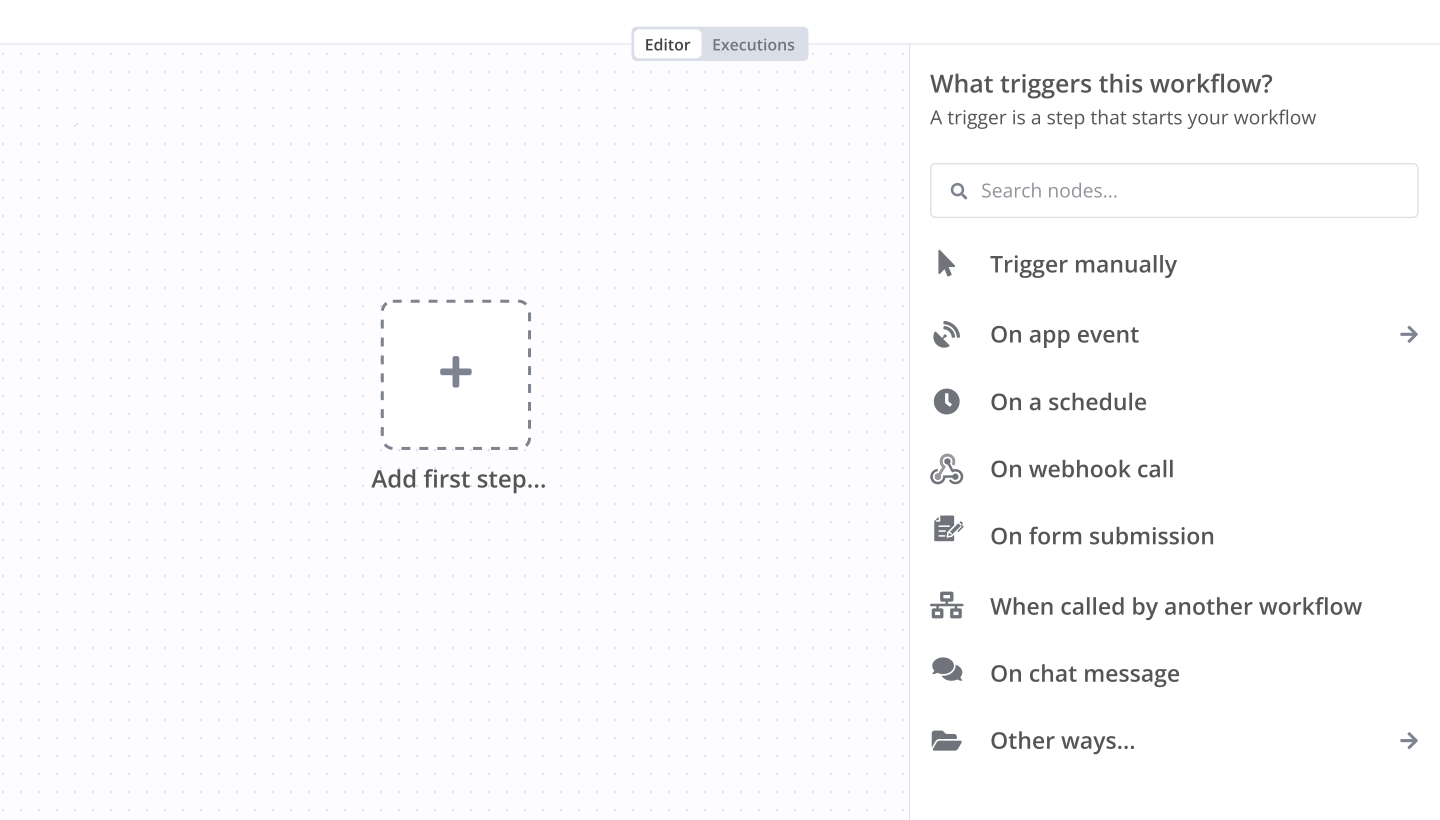
Google Drive and Shopify integration: Create a new workflow and add the first step

Step 2: Add and configure Google Drive and Shopify nodes

You can find Google Drive and Shopify in the nodes panel. Drag them onto your workflow canvas, selecting their actions. Click each node, choose a credential, and authenticate to grant n8n access. Configure Google Drive and Shopify nodes one by one: input data on the left, parameters in the middle, and output data on the right.

Google Drive and Shopify integration: Add and configure Google Drive and Shopify nodes

Step 3: Connect Google Drive and Shopify

A connection establishes a link between Google Drive and Shopify (or vice versa) to route data through the workflow. Data flows from the output of one node to the input of another. You can have single or multiple connections for each node.

Google Drive and Shopify integration: Connect Google Drive and Shopify

Step 4: Customize and extend your Google Drive and Shopify integration

Use n8n's core nodes such as If, Split Out, Merge, and others to transform and manipulate data. Write custom JavaScript or Python in the Code node and run it as a step in your workflow. Connect Google Drive and Shopify with any of n8n’s 1000+ integrations, and incorporate advanced AI logic into your workflows.

Google Drive and Shopify integration: Customize and extend your Google Drive and Shopify integration

Step 5: Test and activate your Google Drive and Shopify workflow

Save and run the workflow to see if everything works as expected. Based on your configuration, data should flow from Google Drive to Shopify or vice versa. Easily debug your workflow: you can check past executions to isolate and fix the mistake. Once you've tested everything, make sure to save your workflow and activate it.

Google Drive and Shopify integration: Test and activate your Google Drive and Shopify workflow

Generate Shopify product listings from images with Gemini AI and Airtable

Shopify Digital Product Automation
(from just and image to complete Shopify product page.)

This Shopify Digital Product Automation is an advanced n8n-powered workflow that leverages AI (Google Gemini), Airtable, and Shopify API to generate product details from images and automatically post them to Shopify. It fully automates the process — from uploading images to publishing Shopify products — with minimal manual effort.

💡 Key Advantages
Our Shopify Digital Product Automation offers five core advantages:

🔗 Shopify Product Sync — Automatically posts product details including title, description, SEO fields, and matched category to Shopify.
✍️ AI-Powered Product Generation — Gemini analyzes uploaded images and generates engaging, SEO-friendly product titles, descriptions, and metadata.
🗂️ Structured Output — Outputs JSON-ready product data compatible with Shopify, ensuring smooth automation.
📄 Airtable Integration — Tracks uploaded images, analyzed data, and generated products to prevent duplication.
📤 End-to-End Automation — Handles the complete workflow from image upload to Shopify posting without manual intervention.

⚙️ How It Works
The workflow follows a step-by-step automated process:

Step-by-Step Process
Upload Images – Add your digital artwork or poster images to Google Drive and record them in Airtable.
Image Analysis – AI fetches new images and analyzes visual elements like characters, series, poster text, and style.
Store Analysis Results – Updates analyzed data in Airtable and marks images as Used.
Fetch Shopify Collections – Retrieves current collections from your Shopify store for category matching.
Generate Product Details – Gemini generates product title, description, matched category, SEO page title, meta description, and URL handle.
Save Generated Products – Stores generated product details in Airtable and marks them as generated.
Post Products to Shopify – Automatically creates new products in Shopify using the API.
Update Status – Marks products as posted in Airtable after successful posting.

🛠️ Setup Steps

Required Node Configuration
To implement this workflow, configure the following n8n nodes:

Trigger Node** – Start workflow manually or via scheduler.
Airtable Node** – Fetch raw images and store processed product details.
Google Drive Node** – Access image files.
HTTP Request Node** – Fetch Shopify collections.
Code Node** – Refine AI outputs and format product data.
Split & Limit Nodes** – Process images and products in batches.
LangChain / Gemini Node** – Generate product titles, descriptions, and SEO data.
Shopify Node** – Create products via Shopify API.
Status Update Node** – Update Airtable with processing and posting status.

🔐 Credentials Required
Before running the workflow, ensure you have the following credentials configured:

Shopify Access Token** – For posting products and fetching collections.
Gemini API Key** – For AI-powered product generation.
Airtable API Key** – For storing and tracking workflow data.
Google Drive OAuth** – To access image files.

👤 Ideal For
This automation workflow is designed for:

Shopify store owners managing hundreds of digital products
Ecommerce teams automating product listings
Marketing teams needing scalable, AI-driven product content workflows

💬 Bonus Tip
The workflow is fully modular and customizable. You can extend it to:

Automatically assign prices or discounts
Multi-language product description generation
Social media promotion of new products
Email campaign integration

All extensions can be implemented within the same n8n flow, making it a complete digital product automation solution.

Nodes used in this workflow

Popular Google Drive and Shopify workflows

+5

Generate Shopify Product Listings from Images with Gemini AI and Airtable

Shopify Digital Product Automation (from just and image to complete Shopify product page.) This Shopify Digital Product Automation is an advanced n8n-powered workflow that leverages AI (Google Gemini), Airtable, and Shopify API to generate product details from images and automatically post them to Shopify. It fully automates the process — from uploading images to publishing Shopify products — with minimal manual effort. 💡 Key Advantages Our Shopify Digital Product Automation offers five core advantages: 🔗 Shopify Product Sync — Automatically posts product details including title, description, SEO fields, and matched category to Shopify. ✍️ AI-Powered Product Generation — Gemini analyzes uploaded images and generates engaging, SEO-friendly product titles, descriptions, and metadata. 🗂️ Structured Output — Outputs JSON-ready product data compatible with Shopify, ensuring smooth automation. 📄 Airtable Integration — Tracks uploaded images, analyzed data, and generated products to prevent duplication. 📤 End-to-End Automation — Handles the complete workflow from image upload to Shopify posting without manual intervention. ⚙️ How It Works The workflow follows a step-by-step automated process: Step-by-Step Process Upload Images – Add your digital artwork or poster images to Google Drive and record them in Airtable. Image Analysis – AI fetches new images and analyzes visual elements like characters, series, poster text, and style. Store Analysis Results – Updates analyzed data in Airtable and marks images as Used. Fetch Shopify Collections – Retrieves current collections from your Shopify store for category matching. Generate Product Details – Gemini generates product title, description, matched category, SEO page title, meta description, and URL handle. Save Generated Products – Stores generated product details in Airtable and marks them as generated. Post Products to Shopify – Automatically creates new products in Shopify using the API. Update Status – Marks products as posted in Airtable after successful posting. 🛠️ Setup Steps Required Node Configuration To implement this workflow, configure the following n8n nodes: Trigger Node** – Start workflow manually or via scheduler. Airtable Node** – Fetch raw images and store processed product details. Google Drive Node** – Access image files. HTTP Request Node** – Fetch Shopify collections. Code Node** – Refine AI outputs and format product data. Split & Limit Nodes** – Process images and products in batches. LangChain / Gemini Node** – Generate product titles, descriptions, and SEO data. Shopify Node** – Create products via Shopify API. Status Update Node** – Update Airtable with processing and posting status. 🔐 Credentials Required Before running the workflow, ensure you have the following credentials configured: Shopify Access Token** – For posting products and fetching collections. Gemini API Key** – For AI-powered product generation. Airtable API Key** – For storing and tracking workflow data. Google Drive OAuth** – To access image files. 👤 Ideal For This automation workflow is designed for: Shopify store owners managing hundreds of digital products Ecommerce teams automating product listings Marketing teams needing scalable, AI-driven product content workflows 💬 Bonus Tip The workflow is fully modular and customizable. You can extend it to: Automatically assign prices or discounts Multi-language product description generation Social media promotion of new products Email campaign integration All extensions can be implemented within the same n8n flow, making it a complete digital product automation solution.
+5

Consolidate Stripe, PayPal, Shopify and bank revenue and prepare tax filings with OpenAI

How It Works Consolidates daily revenue from Stripe, PayPal, Shopify, and bank feeds into a single system. The workflow automatically normalizes data across payment sources, uses AI to categorize income transactions, calculates reporting-period totals, and generates tax-compliant CSV and XML submissions. Designed for e-commerce businesses, SaaS companies, and multi-channel retailers managing complex revenue streams, it eliminates manual reconciliation, reduces filing errors, and speeds up financial reporting by automating the entire pipeline from data collection to government submission. Setup Steps Connect Stripe/PayPal/Shopify accounts with API keys to respective nodes. Configure bank feed authentication Set OpenAI credentials for AI Income Categorizer node. Link Google Drive and Gmail Add government tax API endpoint and authentication credentials. Prerequisites Stripe, PayPal, Shopify, or bank APIs; OpenAI account; Google Workspace; Use Cases Quarterly tax preparation for e-commerce; multi-channel revenue reconciliation; Customization Modify normalization rules per jurisdiction; add expense categories to AI prompt; Benefits Eliminates manual reconciliation; reduces tax filing time by 80%; improves accuracy;
+5

Automated Tax Filing with Multi-Platform Revenue Analysis using GPT-4

How It Works This workflow automates monthly revenue aggregation from multiple financial sources, including Stripe, PayPal, Shopify, and bank feeds, while delivering intelligent tax forecasting through GPT-4–based structured analysis. It systematically retrieves revenue data, consolidates disparate datasets into a unified view, and applies GPT-4 to predict upcoming tax obligations with greater accuracy. The system then generates clearly formatted, audit-ready reports and automatically distributes tax projections to designated agents via Gmail, while securely storing all outputs in Google Sheets to maintain traceable audit trails. Designed for tax professionals, accounting firms, and finance teams, it enables accurate predictive tax planning and supports a proactive compliance strategy without the need for manual calculations or spreadsheet-driven analysis. Setup Steps Connect Stripe, PayPal, Shopify credentials via n8n authentication. Configure OpenAI GPT-4 API key for structured tax analysis. Connect Gmail account for report distribution and Google Sheets. Set monthly trigger schedule and customize tax category rules. Prerequisites Stripe, PayPal, Shopify, or bank feed accounts; OpenAI API key; Gmail account; Google Sheets. Use Cases Accounting firms automating quarterly tax prep for multiple clients Customization Modify revenue sources, adjust GPT-4 prompts for specific tax scenarios Benefits Eliminates manual tax calculations, reduces forecasting errors

Automate Print-on-Demand: Design to Shopify with AI, Mockups & Social Promotion

Who’s it for This template is designed for Print-on-Demand (POD) business owners, independent artists, and e-commerce managers who want to automate the process of turning raw design files into listed products without manual data entry. How it works This workflow acts as an automated merchandise factory that handles everything from image processing to marketing. Trigger: The workflow starts when a new design file is uploaded to a specific Google Drive folder. Analyze: OpenAI Vision analyzes the image to determine the subject, mood, and color palette, and assesses copyright risk. Process: The image background is removed using Remove.bg, and the clean asset is uploaded to Cloudinary. Mockup: The workflow generates realistic product mockups (e.g., T-shirts, Tote bags) by overlaying the design onto base product images using Cloudinary transformations. Copywriting: OpenAI writes an SEO-friendly product title, description, and tags based on the visual analysis. Draft: A draft product is created in Shopify with the generated details and mockup image. Approval: A message is sent to Slack with the product details and mockup. The workflow pauses and waits for a human to click "Approve" or "Reject". Publish & Promote: If approved, the product is published to Shopify and automatically posted to Instagram and Pinterest. If rejected, a notification is sent to Slack. How to set up Base Images: Upload your blank product images (e.g., a white t-shirt, a tote bag) to your Cloudinary account and note their Public IDs. Configuration: Open the Workflow Configuration node and fill in all the required fields, including your API keys and the Cloudinary Public IDs for your base products. Credentials: Configure the credentials for Google Drive, OpenAI, Shopify, Slack, Instagram, and Pinterest in their respective nodes. Folder ID: Update the Google Drive Trigger node with the ID of the folder you want to watch. Requirements n8n (Self-hosted or Cloud) Google Drive account OpenAI API key (Access to GPT-4o model recommended for Vision capabilities) Remove.bg API key Cloudinary account Shopify store Slack workspace Instagram Business account Pinterest account How to customize Mockups: You can modify the Code - Generate Mockup URLs node to add more product types (e.g., Hoodies, Mugs) by adding their Cloudinary Public IDs. Prompt Engineering: Adjust the system prompt in the OpenAI - SEO Copywriting node to match your brand voice or language style. Social Channels: Add or remove nodes to support other platforms like Twitter (X) or Facebook Pages.

Build your own Google Drive and Shopify integration

Create custom Google Drive and Shopify workflows by choosing triggers and actions. Nodes come with global operations and settings, as well as app-specific parameters that can be configured. You can also use the HTTP Request node to query data from any app or service with a REST API.

Google Drive supported actions

Copy
Create a copy of an existing file
Create From Text
Create a file from a provided text
Delete
Permanently delete a file
Download
Download a file
Move
Move a file to another folder
Share
Add sharing permissions to a file
Update
Update a file
Upload
Upload an existing file to Google Drive
Search
Search or list files and folders
Create
Create a folder
Delete
Permanently delete a folder
Share
Add sharing permissions to a folder
Create
Create a shared drive
Delete
Permanently delete a shared drive
Get
Get a shared drive
Get Many
Get the list of shared drives
Update
Update a shared drive

Shopify supported actions

Create
Create an order
Delete
Delete an order
Get
Get an order
Get Many
Get many orders
Update
Update an order
Create
Create a product
Delete
Delete a product
Get
Get a product
Get Many
Get many products
Update
Update a product

FAQs

  • Can Google Drive connect with Shopify?

  • Can I use Google Drive’s API with n8n?

  • Can I use Shopify’s API with n8n?

  • Is n8n secure for integrating Google Drive and Shopify?

  • How to get started with Google Drive and Shopify integration in n8n.io?

Need help setting up your Google Drive and Shopify integration?

Discover our latest community's recommendations and join the discussions about Google Drive and Shopify integration.
hubschrauber
Jon
David O'Neil
Driss Talainte
Adriano Cantele

Looking to integrate Google Drive and Shopify in your company?

Over 3000 companies switch to n8n every single week

Why use n8n to integrate Google Drive with Shopify

Build complex workflows, really fast

Build complex workflows, really fast

Handle branching, merging and iteration easily.
Pause your workflow to wait for external events.

Code when you need it, UI when you don't

Simple debugging

Your data is displayed alongside your settings, making edge cases easy to track down.

Use templates to get started fast

Use 1000+ workflow templates available from our core team and our community.

Reuse your work

Copy and paste, easily import and export workflows.

Implement complex processes faster with n8n

red iconyellow iconred iconyellow icon