Back to Integrations
integrationGoogle Gemini Chat Model node
integrationYouTube node

Google Gemini Chat Model and YouTube integration

Save yourself the work of writing custom integrations for Google Gemini Chat Model and YouTube and use n8n instead. Build adaptable and scalable AI, Langchain, and Marketing workflows that work with your technology stack. All within a building experience you will love.

How to connect Google Gemini Chat Model and YouTube

  • Step 1: Create a new workflow
  • Step 2: Add and configure nodes
  • Step 3: Connect
  • Step 4: Customize and extend your integration
  • Step 5: Test and activate your workflow

Step 1: Create a new workflow and add the first step

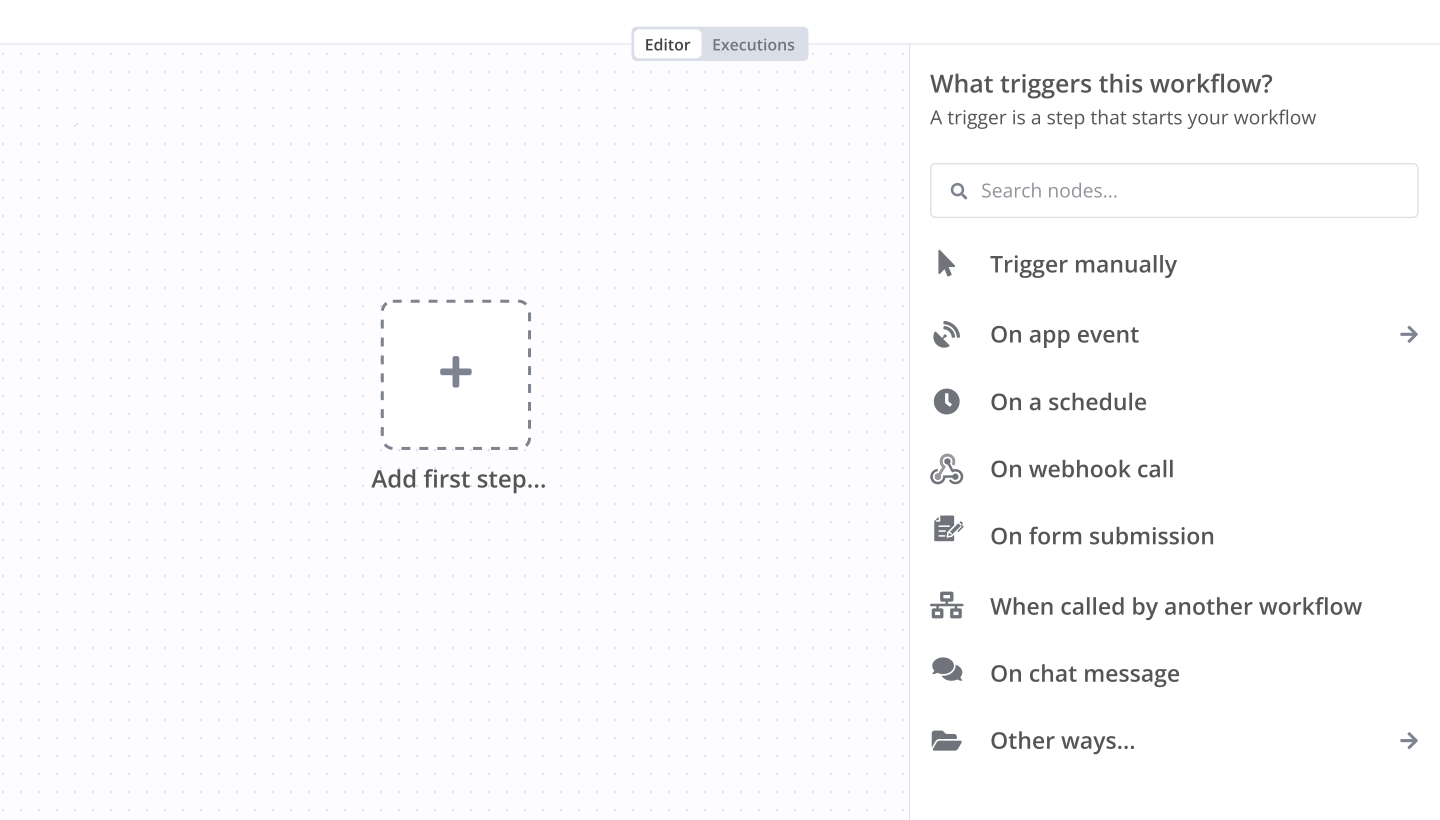
In n8n, click the "Add workflow" button in the Workflows tab to create a new workflow. Add the starting point – a trigger on when your workflow should run: an app event, a schedule, a webhook call, another workflow, an AI chat, or a manual trigger. Sometimes, the HTTP Request node might already serve as your starting point.

Google Gemini Chat Model and YouTube integration: Create a new workflow and add the first step

Step 2: Add and configure Google Gemini Chat Model and YouTube nodes

You can find Google Gemini Chat Model and YouTube in the nodes panel. Drag them onto your workflow canvas, selecting their actions. Click each node, choose a credential, and authenticate to grant n8n access. Configure Google Gemini Chat Model and YouTube nodes one by one: input data on the left, parameters in the middle, and output data on the right.

Google Gemini Chat Model and YouTube integration: Add and configure Google Gemini Chat Model and YouTube nodes

Step 3: Connect Google Gemini Chat Model and YouTube

A connection establishes a link between Google Gemini Chat Model and YouTube (or vice versa) to route data through the workflow. Data flows from the output of one node to the input of another. You can have single or multiple connections for each node.

Google Gemini Chat Model and YouTube integration: Connect Google Gemini Chat Model and YouTube

Step 4: Customize and extend your Google Gemini Chat Model and YouTube integration

Use n8n's core nodes such as If, Split Out, Merge, and others to transform and manipulate data. Write custom JavaScript or Python in the Code node and run it as a step in your workflow. Connect Google Gemini Chat Model and YouTube with any of n8n’s 1000+ integrations, and incorporate advanced AI logic into your workflows.

Google Gemini Chat Model and YouTube integration: Customize and extend your Google Gemini Chat Model and YouTube integration

Step 5: Test and activate your Google Gemini Chat Model and YouTube workflow

Save and run the workflow to see if everything works as expected. Based on your configuration, data should flow from Google Gemini Chat Model to YouTube or vice versa. Easily debug your workflow: you can check past executions to isolate and fix the mistake. Once you've tested everything, make sure to save your workflow and activate it.

Google Gemini Chat Model and YouTube integration: Test and activate your Google Gemini Chat Model and YouTube workflow

Automated YouTube video scheduling & AI metadata generation 🎬

👥 Who Is This For?
Content creators, marketing teams, and channel managers who need to streamline video publishing with optimized metadata and scheduled releases across multiple videos.

🛠 What Problem Does This Solve?
Manual YouTube video publishing is time-consuming and often results in inconsistent descriptions, tags, and scheduling. This workflow fully automates:
Extracting video transcripts via Apify for metadata generation
Creating SEO-optimized descriptions and tags for each video
Setting videos to private during initial upload (critical for scheduling)
Implementing scheduled publishing at strategic times
Maintaining consistent branding and formatting across all content

🔄 Node-by-Node Breakdown

Step Node Purpose
1 Every Day (Scheduler)
2 Get Videos to Harmonize
3 Get Video IDs (Unpublished)
4 Loop over Video IDs
5 Get Video Data
6 Loop over Videos with Parameter IS
7 Set Videos to Private
8 Apify: Get Transcript
9 Fetch Latest Videos
10 Loop Over Items
11 Generate Description, Tags, etc.
12 AP Clean ID
13 Retrieve Generated Data
14 Adjust Transcript Format
15 Update Video's Metadata

⚙️ Pre-conditions / Requirements
n8n with YouTube API credentials configured
Apify account with API access for transcript extraction
YouTube channel with upload permissions
Master templates for description formatting
Videos must be initially set to private for scheduling to work

⚙️ Setup Instructions
Import this workflow into your n8n instance.
Configure YouTube API credentials with proper channel access.
Set up Apify integration with appropriate actor for transcript extraction.
Define scheduling parameters in the Every Day node.
Configure description templates with placeholders for dynamic content.
Set default tags and customize tag generation rules.
Test with a single video before batch processing.

🎨 How to Customize
Adjust prompt templates for description generation to match your brand voice.
Modify tag selection algorithms based on your channel's SEO strategy.
Create multiple publishing schedules for different content categories.
Integrate with analytics tools to optimize publishing times.
Add notification nodes to alert when videos are successfully scheduled.

⚠️ Important Notes
Videos MUST be uploaded as private initially - the Publish At logic only works for private videos that haven't been published before.
Publishing schedules require videos to remain private until their scheduled time.
Transcript quality affects metadata generation results.
Consider YouTube API quotas when scheduling large batches of videos.

🔐 Security and Privacy
API credentials are stored securely within n8n.
Transcripts are processed temporarily and not stored permanently.
Webhook URLs should be protected to prevent unauthorized triggering.
Access to the workflow should be limited to authorized team members only.

Nodes used in this workflow

Popular Google Gemini Chat Model and YouTube workflows

Automated YouTube Video Scheduling & AI Metadata Generation 🎬

👥 Who Is This For? Content creators, marketing teams, and channel managers who need to streamline video publishing with optimized metadata and scheduled releases across multiple videos. 🛠 What Problem Does This Solve? Manual YouTube video publishing is time-consuming and often results in inconsistent descriptions, tags, and scheduling. This workflow fully automates: Extracting video transcripts via Apify for metadata generation Creating SEO-optimized descriptions and tags for each video Setting videos to private during initial upload (critical for scheduling) Implementing scheduled publishing at strategic times Maintaining consistent branding and formatting across all content 🔄 Node-by-Node Breakdown | Step | Node Purpose | |------|--------------| | 1 | Every Day (Scheduler) | Trigger workflow on a regular schedule | | 2 | Get Videos to Harmonize | Retrieve videos requiring metadata enhancement | | 3 | Get Video IDs (Unpublished) | Filter for videos that need publishing | | 4 | Loop over Video IDs | Process each video individually | | 5 | Get Video Data | Retrieve metadata for the current video | | 6 | Loop over Videos with Parameter IS | Set parameters for processing | | 7 | Set Videos to Private | Ensure videos are private (required for scheduling) | | 8 | Apify: Get Transcript | Extract video transcript via Apify | | 9 | Fetch Latest Videos | Get most recent channel content | | 10 | Loop Over Items | Process each video item | | 11 | Generate Description, Tags, etc. | Create optimized metadata from transcript | | 12 | AP Clean ID | Format identifiers | | 13 | Retrieve Generated Data | Collect the enhanced metadata | | 14 | Adjust Transcript Format | Format transcript for better processing | | 15 | Update Video's Metadata | Apply generated description and tags to video | ⚙️ Pre-conditions / Requirements n8n with YouTube API credentials configured Apify account with API access for transcript extraction YouTube channel with upload permissions Master templates for description formatting Videos must be initially set to private for scheduling to work ⚙️ Setup Instructions Import this workflow into your n8n instance. Configure YouTube API credentials with proper channel access. Set up Apify integration with appropriate actor for transcript extraction. Define scheduling parameters in the Every Day node. Configure description templates with placeholders for dynamic content. Set default tags and customize tag generation rules. Test with a single video before batch processing. 🎨 How to Customize Adjust prompt templates for description generation to match your brand voice. Modify tag selection algorithms based on your channel's SEO strategy. Create multiple publishing schedules for different content categories. Integrate with analytics tools to optimize publishing times. Add notification nodes to alert when videos are successfully scheduled. ⚠️ Important Notes Videos MUST be uploaded as private initially - the Publish At logic only works for private videos that haven't been published before. Publishing schedules require videos to remain private until their scheduled time. Transcript quality affects metadata generation results. Consider YouTube API quotas when scheduling large batches of videos. 🔐 Security and Privacy API credentials are stored securely within n8n. Transcripts are processed temporarily and not stored permanently. Webhook URLs should be protected to prevent unauthorized triggering. Access to the workflow should be limited to authorized team members only.

Multilingual YouTube Metadata Translator with Gemini AI and Google Sheets

Translating your YouTube video titles and descriptions into multiple languages is one of the simplest ways to expand your channel's global reach. But doing it manually is super tedious and time-consuming. This n8n workflow automates the entire process: from detecting your latest video, translating its metadata into multiple languages using AI, to publishing the translated versions directly to YouTube - all managed and tracked through a connected Google Sheet only. What Problem Is This Workflow Solving? Manually translating YouTube metadata—titles, descriptions, and tags—is both time-consuming and costly, especially as your video library grows. For example, let's say you want to translate the metadata of 50 videos into 5 languages, and if you spend 10 minutes on each video, it could take over 40 hours of manual work. This workflow automates the localization of your YouTube metadata, making it fast and efficient to translate large volumes of content. Instead of spending days on translations, you can handle bulk updates in minutes: Save Time and Resources**: Instantly translate metadata for dozens or hundreds of videos, freeing you from repetitive, manual tasks. Expand Your Global Reach**: Enable your videos to appear in search results across multiple languages, reaching new audiences worldwide. Boost Engagement and SEO**: Localized metadata helps your videos get discovered and increases viewer engagement, leading to higher watch times and better performance. Make Content More Accessible**: Welcome viewers from different linguistic backgrounds, making your channel inclusive and inviting. Who Is This For? Use cases are many: This workflow is perfect for YouTubers who want to automate multilingual metadata updates and eliminate repetitive manual tasks. It’s especially useful for creators whose content is visually driven and easy to follow, such as: DIY and How-to Channels Travel and Nature Channels Fitness and Workout Channels Cooking Channels Art and Craft Channels How It Works Phase 1: Prepare Values & Auto Crawl Mode Set up a Schedule Trigger: In the **Schedule Trigger node in n8n, define your preferred interval to automatically run the workflow on a recurring schedule; no manual execution needed. Set Required Parameters: In the **Prepare Values node in n8n, you must enter the following: spreadsheet_id: to link the workflow to your connected Google Sheet channel_name: to specify which tab of the Google Sheet contains the video URLs to process channel_id: to define the YouTube channel the workflow will act upon Set Target Languages: In the **Languages tab of your connected Google Sheet, list all languages you'd like to generate translated titles and descriptions for. These will be used later during the translation phase. Choose Crawling Mode: In the **Auto tab of your Google Sheet, configure the Auto Crawl setting in Column B based on your preferred method: Select No (Turn off Auto Crawl): You must manually input the video URL(s) in the channel_name tab and set the status to Ready for 1 video only. Select Yes (Turn on Auto Crawl): The workflow will automatically fetch one of the latest videos from your connected YouTube channel (based on channel_id) into the channel_name tab in your Google Sheet. Phase 2: Trigger The Process Once everything is properly set up, the workflow in n8n can be activated - either manually or automatically via the Schedule Trigger, which runs based on the interval you’ve configured earlier. The tool then checks the Auto Crawl status in Column B in the Auto tab of your connected Google Sheet to determine the route: If Auto Crawl = No: The workflow skips auto-fetching and proceeds directly to the next phase, expecting that the video URL is already entered manually and marked as Ready in its status. If Auto Crawl = Yes: The tool connects to your YouTube channel using the predefined channel_id. It fetches one of the latest videos and checks whether that video’s ID already exists in the list of processed videos. If the video has not been processed yet, its URL will be inserted into the channel_name tab, and its status in Column A will automatically be set to Ready, ensuring it proceeds to the next step. If it already exists, the video is skipped to avoid reprocessing. ⚠️ Important: When Auto Crawl = Yes, do not manually add another URL and set its status to Ready in the channel_name tab in the Google Sheet. Doing so may trigger the same video twice, causing data conflicts and redundant processing. Phase 3: Collect Video Information Once a new video URL appears in your connected Google Sheet and its status is set Ready in Column A (under the specified channel_name tab), the workflow picks it up automatically. Then, it extracts the Video ID from the URL and sends a GET request to the YouTube API to retrieve that video’s title and description in your channel’s default language for the next steps. Phase 4: Generate Translated Metadata In Preset Languages The tool reads your target languages from the Languages tab in your connected Google Sheet. A loop runs through each language code one at a time. For each language, the tool sends your original title and description to Google Gemini’s Chat Model. Then, the AI returns the content translated into the target language. The output is returned in JSON data, then restructured to ensure each language’s data is clearly separated and ready for the next step. Phase 5: Update Translated Metadata On YouTube & Log Status All translated titles and descriptions from previous steps are combined into one structured format. The tool sends a PUT request to the YouTube API to update the video’s metadata directly with the new multilingual-translated content. If the update is successful, the video's status in Column A in the channel_name tab in the connected Google Sheet is marked as Success. If the update fails, the video’s status is marked as Error for later review or retry. How To Set Up Download the working package. Import the package into your n8n interface. Duplicate the Youtube - Update Video Metadata in Multi-Languages Google Sheet template into your Google Sheets account. For the channel_name tab in the template, you can rename it with your actual YouTube channel's name for easier tracking. Set up necessary credentials in Google Cloud Console for tools access and usability: For Google Sheets access, please ensure connection in the following nodes: Node Get Auto Crawl Status → connected to the Auto tab Node Check Latest Video ID → connected to the channel_name tab Node Insert Video Info → connected to the channel_name tab Node Get Video URL → connected to the channel_name tab Node Get Language List → connected to the Languages tab Node Update Status - Success → connected to the channel_name tab Node Update Status - Error → connected to the channel_name tab For YouTube access, ensure connection to YouTube API in the following nodes: Node YouTube - Get Latest Video Node Get Video Info Node Update Video Metadata with Selected Languages For Google Gemini access, ensure connection to Google Gemini API in the following node: Node Google Gemini’s Chat Model Set a Schedule Trigger in n8n to run the workflow automatically at your preferred interval. Define necessary parameters in Node Prepare Values in your n8n workflow: spreadsheet_id: your connected Google Sheet ID channel_name: the tab in your connected Google Sheet contains the video URLs and receives process updates (should be renamed with your actual YouTube channel’s name for easy tracking) channel_id: your YouTube channel ID Check the status of the Auto Crawl function in the Auto tab in your connected Google Sheet: By default, its status is No: You’ll manually insert a video URL and mark its row as Ready. In case you want to turn it on, please change it to Yes: The tool will automatically fetch the latest video(s) from your channel. Activate the workflow in n8n. To manually update a video: Set Auto Crawl to No Insert the video URL into the channel_name tab Set the status to Ready To automate with Auto Crawl: Set Auto Crawl to Yes The tool will auto-fetch one of the new videos and set its status to Ready Track results of the original row in the channel_name tab of your Google Sheet and YouTube: If the row’s status is Success, the metadata is updated on YouTube with all the set languages and you can check things out on the platform directly. If the row’s status is Error, you can do manual review or retry. Requirements Basic setup in Google Cloud Console with OAuth2 credentials in the following configurations: Google Sheets API enabled, with edit permissions on the connected spreadsheet YouTube API enabled, with an account that has Owner or Editor role on the target channel API access to Google Gemini for generating multilingual translated content via AI. How To Customize Adjust the trigger interval: Change the schedule in the **Schedule Trigger node to fit your needs (e.g. every 10 minutes, hourly, etc.). Add or remove target languages: Simply update the **Languages tab in your connected Google Sheet. No changes in n8n are required. Customize the translation style: You can edit the prompt inside the **AI node to change the tone, format, or style of the translations. However, do not modify the output structure format - doing so will break the workflow. Add alerts or notifications when finished**: Feel free to integrate additional nodes (like Telegram or Email) to notify you and your team when updates succeed or fail. FAQs: Can I use this workflow for more than one YouTube channel? Not directly. This workflow is currently designed to connect to a single YouTube channel ID at a time. However, if you’d like to manage multiple YouTube channels within one Google Sheet and a unified n8n interface, we can customize the setup for you. Feel free to reach out to Agent Circle for a tailored setup and guidance. What happens if I manually enter a video URL while Auto Crawl is ON? Avoid this. Manually adding a URL with status Ready in the channel_name tab while Auto Crawl = Yes may cause duplicate processing, API conflicts, or data overwrites. How many languages can I translate into at once? There's no strict limit. You can list as many languages as needed in the Languages tab in your connected Google Sheet. Refer to the All Languages tab in the Google Sheet template for valid languages and language codes (e.g., en, fr, es, de). Do I need to change anything in n8n when I add more languages? No - simply update the Languages tab in your connected Google Sheet. No work in n8n is needed for this. Can I change the AI model from Google Gemini to something else? Yes. You can replace the Google Gemini Chat Model node with another chat model, such as OpenAI GPT-4, or any compatible LLM provider. What happens if the metadata update to YouTube fails? The video's status in Column A of the channel_name tab in your connected Google Sheet will be marked Error. You can then review, fix, and re-run the process. Can I edit the translation prompt in the AI node for my own brand tone? Absolutely. You can customize the translation prompt in the AI node to adjust tone, format, or even brand voice. Just make sure the structure of the returned JSON remains intact. Is the workflow GDPR or YouTube policy-compliant? Yes - as long as you're the owner or have editor access to the YouTube channel and use the official YouTube API with proper OAuth2 authentication. Can I schedule this workflow to run every day? Yes. In the Schedule Trigger node in n8n, set your preferred interval - e.g., daily, every 12 hours, etc. Does this work with unlisted or private videos? No - YouTube API typically returns data only for public videos. For private/unlisted videos, additional permissions and scopes are required. If you need support for this case, feel free to contact Agent Circle for personalized consultation and setup assistance. Need Help? If you need a step-by-step guide to set up this workflow or want it customized for your specific business needs, feel free to reach out to Agent Circle. We’re always here to support and help you to bring automation ideas to life. Join our community on different platforms for assistance, inspiration and tips from others. Website: https://www.agentcircle.ai/ Etsy: https://www.etsy.com/shop/AgentCircle Gumroad: http://agentcircle.gumroad.com/ Discord Global: https://discord.gg/d8SkCzKwnP FB Page Global: https://www.facebook.com/agentcircle/ FB Group Global: https://www.facebook.com/groups/aiagentcircle/ X: https://x.com/agent_circle YouTube: https://www.youtube.com/@agentcircle LinkedIn: https://www.linkedin.com/company/agentcircle
+2

Automate YouTube Uploads with AI-Generated Metadata from Google Drive

👥 Who Is This For? Content creators, marketing teams, and channel managers who want a simple, hands‑off solution to upload videos and automatically generate optimized metadata from video transcripts. 🛠 What Problem Does This Solve? Manual video uploads with proper metadata creation is time‑consuming and repetitive. This workflow fully automates: Monitoring a specific Google Drive folder for new video uploads Seamless YouTube upload processing Transcript extraction for context understanding AI‑powered generation of titles, descriptions, and tags Metadata application to uploaded videos without manual intervention 🔄 Node‑by‑Node Breakdown | Step | Node Purpose | |------|---------------------------------------------------------------------| | 1 | New Video? (Trigger) – Monitors specified Google Drive folder | | 2 | Download New Video – Retrieves the video file from Google Drive | | 3 | Upload to YouTube – Uploads the video to YouTube with initial settings | | 4 | Get Transcript – Extracts transcript from the uploaded video | | 5 | Adjust Transcript Format – Formats raw transcript for processing | | 6 | Create Description – Generates SEO‑optimized description | | 7 | YT Tags (Message Model) – Creates relevant tags based on content | | 8 | YT Title (Message Model) – Generates compelling title | | 9 | Define File Path Upload Format (Optional) – Structures data paths | | 10 | Update Video’s Metadata – Applies generated title, description, tags| ⚙️ Pre‑conditions / Requirements n8n with Google Drive and YouTube API credentials configured (stored as n8n credentials/variables; no hard‑coded IDs) Dedicated Google Drive folder for video uploads YouTube channel with proper upload permissions AI service access for transcript processing and metadata generation Sufficient storage for temporary video handling ⚙️ Setup Instructions Import this workflow into your n8n instance. Configure Google Drive credentials; reference folder ID via n8n variable (do not hard‑code). Set up YouTube API credentials with upload and edit permissions. Specify the target Google Drive folder ID in the New Video? trigger node (via variable). Configure AI service credentials for transcript and metadata generation. Adjust message templates for title, description, and tag creation. Test with a small video file before production use. 🎨 How to Customize Modify AI prompts to match your channel’s tone and style. Add conditional logic based on video categories or naming conventions. Implement notification systems to alert when uploads complete. Create custom metadata templates for different content types. Include timestamps or chapter markers based on transcript analysis. Add social media sharing nodes to announce new uploads. ⚠️ Important Notes Video quality is preserved through the upload process. Consider YouTube API quotas when handling multiple uploads. Transcript quality affects metadata generation results. Videos are initially uploaded without visibility adjustments. Processing time depends on video length and transcript complexity. 🔐 Security and Privacy Store API credentials and folder IDs as n8n Credentials/Variables—remove any hard‑coded tokens or IDs. Video files are processed temporarily and not stored permanently. Limit Google Drive folder access to authorized users only. Manage YouTube upload permissions carefully (use OAuth/service accounts). Ensure compliance with organizational data‑handling policies.


Generate & Publish AI Faceless Videos to YouTube Shorts using Sora 2

How it Works This workflow lets you auto-generate cinematic faceless YouTube Shorts — completely on autopilot. It uses a custom automation setup to create short-form AI videos much cheaper than the standard Sora 2 video generation process. Perfect for running a fully automated Shorts or Reels channel that posts new videos daily — without showing your face or editing manually. Workflow Overview Schedule Trigger Automatically runs at your chosen times (e.g., twice per day). AI Prompt Generator Creates detailed, creative video ideas based on your chosen niche. You only need to adjust the system prompt (e.g., Travel Facts, Tech Visuals, Dream Loops, Mini-Facts, Nature Illusions). Output includes: Video Prompt (for Sora 2) AI-Generated Title & Description Social Caption with hashtags AI Video Generation Generates 9:16 vertical short-form videos optimized for YouTube Shorts, TikTok, and Instagram Reels. Runs via a cost-efficient automation layer, offering cinematic results at a fraction of Sora 2’s standard cost. Publishing Automation Uploads automatically to YouTube Shorts (title, description, and hashtags included). Can also post to Telegram or Instagram Reels with a small modification. Why Use This Workflow? 🎬 Faceless Content Made Easy Ideal for automated channels that post AI-generated visuals and storytelling — no filming or voice needed. 💸 Cheaper Than Sora 2’s Direct API Uses a custom route that drastically reduces costs while keeping near-cinematic quality. ⚙️ Full Automation From idea → video → upload — all handled automatically. You decide the posting frequency (e.g., 1–5 Shorts per day). 🌍 Multi-Niche Ready Works for any theme — facts, surreal visuals, art loops, mini documentaries, motivational clips, and more. 🚀 Cross-Platform Scaling Native support for YouTube & Telegram. Optional integrations for Instagram Reels or TikTok uploads. Setup Steps API Keys & Credentials Sora 2 access (or connected API key) YouTube API credentials (Optional) Telegram or Instagram API Define Schedule Choose how many videos to post per day. Adjust Prompts Customize the AI agent prompt to your niche. Launch & Scale Watch your faceless channel grow while everything runs automatically. Tips & Notes Start with one niche to test engagement, then duplicate the workflow for more channels. Add subtitles or trending sound layers for higher virality. The workflow is built for long-term, hands-off scalability — ideal for faceless automation entrepreneurs. ⚡ Summary Create an AI-powered faceless Shorts machine that works 24/7. Just pick your niche, adjust the prompt, and let automation handle video generation, upload, and growth — smarter and cheaper than doing it manually with Sora 2.
+2

Auto-Translate YouTube Video Content with Google Gemini AI

If you want to reach a wider audience, having your video titles and descriptions in multiple languages can help you connect with more viewers. This template provides the configuration needed to generate translations and update them directly on YouTube. How it works Defines Video ID and Languages** You can get the ID from the video URL. If you’re unsure, click the Share button, it will provide the ID at between the "/" and the "?si=" Fetches video information** As long as the workflow has the video ID, it can retrieve the video information, whether the video is published or not. Check languages to translate** If no default language is set in the video details, the workflow will assume "en" (English) as the default. To overwrite the default language, replace 'en' in line 2 of the code. AI Agent Translator**: You can improve results by refining the prompt. Feel free to experiment, just don’t change the formatting structure. Updates Video Localization** The API requires to send current default version again along with the translations in the Body. Output URL** returns the URL for the video’s localization. It may take a few seconds to appear—refresh and try again if needed. ⚠ The translation will overwrite any existing translations for the same language. How to Use (First time only) Set up credentials for your user. Edit the node "Defines Video ID and Languages". Click the Execute Workflow button. Enjoy your translated video titles and descriptions! More details can be found in the sticky notes under each node. Requirements To implement this workflow, you will need to configure credentials for the following nodes: Fetch Video Information**: YouTube Auth This of course, assumes that you have a YouTube account. The account creation and setup takes time, but luckily it's the only slow part, once done, you are good to go. AI Agent Translator**: Google Gemini (PaLM) API Both credentials can be created directly inside the node by clicking it, then selecting “Create Credential to Connect With” and following the instructions provided by the n8n Assistant. If you already have the credentials, simply select them! No paid plan is required, free tiers are sufficient. Keep in mind the request limits if you extend or modify this workflow to do multiple videos at once.
+43

Explore n8n Nodes in a Visual Reference Library

WATCH THE n8n STARTER GUIDE 👇 This template is featured in the n8n Starter Guide series. The template is free, but comes with two additional PDFs and a Quick Start video if you grab the full download pack on gumroad. How it works This template is a visual map of many useful n8n nodes. It groups nodes like Triggers, AI tools, and App connectors onto the canvas. Explore the sections to learn about different nodes and easily copy them for your own workflows. It acts as a handy visual reference guide. Set up steps • Setup takes about 5 minutes. • Import the template into your n8n instance. • Explore the node categories visually on the canvas. • A Quick Start video is included in the download pack, along with a prompts PDF and PDF with links to other awesome n8n templates here on the n8n template gallery.

Build your own Google Gemini Chat Model and YouTube integration

Create custom Google Gemini Chat Model and YouTube workflows by choosing triggers and actions. Nodes come with global operations and settings, as well as app-specific parameters that can be configured. You can also use the HTTP Request node to query data from any app or service with a REST API.

YouTube supported actions

Get
Retrieve a channel
Get Many
Retrieve many channels
Update
Update a channel
Upload Banner
Upload a channel banner
Create
Create a playlist
Delete
Delete a playlist
Get
Get a playlist
Get Many
Retrieve many playlists
Update
Update a playlist
Add
Add an item to a playlist
Delete
Delete a item from a playlist
Get
Get a playlist's item
Get Many
Retrieve many playlist items
Delete
Delete a video
Get
Get a video
Get Many
Retrieve many videos
Rate
Rate a video
Update
Update a video
Upload
Upload a video
Get Many
Retrieve many video categories
Use case

Automate lead management

Using too many marketing tools? n8n lets you orchestrate all your apps into one cohesive, automated workflow.

Learn more

FAQs

  • Can Google Gemini Chat Model connect with YouTube?

  • Can I use Google Gemini Chat Model’s API with n8n?

  • Can I use YouTube’s API with n8n?

  • Is n8n secure for integrating Google Gemini Chat Model and YouTube?

  • How to get started with Google Gemini Chat Model and YouTube integration in n8n.io?

Need help setting up your Google Gemini Chat Model and YouTube integration?

Discover our latest community's recommendations and join the discussions about Google Gemini Chat Model and YouTube integration.
Jan Koch

Looking to integrate Google Gemini Chat Model and YouTube in your company?

Over 3000 companies switch to n8n every single week

Why use n8n to integrate Google Gemini Chat Model with YouTube

Build complex workflows, really fast

Build complex workflows, really fast

Handle branching, merging and iteration easily.
Pause your workflow to wait for external events.

Code when you need it, UI when you don't

Simple debugging

Your data is displayed alongside your settings, making edge cases easy to track down.

Use templates to get started fast

Use 1000+ workflow templates available from our core team and our community.

Reuse your work

Copy and paste, easily import and export workflows.

Implement complex processes faster with n8n

red iconyellow iconred iconyellow icon