Back to Integrations
integrationGoogle Sheets node
integrationGoogle Slides node

Google Sheets and Google Slides integration

Save yourself the work of writing custom integrations for Google Sheets and Google Slides and use n8n instead. Build adaptable and scalable Data & Storage, Productivity, and Marketing workflows that work with your technology stack. All within a building experience you will love.

How to connect Google Sheets and Google Slides

  • Step 1: Create a new workflow
  • Step 2: Add and configure nodes
  • Step 3: Connect
  • Step 4: Customize and extend your integration
  • Step 5: Test and activate your workflow

Step 1: Create a new workflow and add the first step

In n8n, click the "Add workflow" button in the Workflows tab to create a new workflow. Add the starting point – a trigger on when your workflow should run: an app event, a schedule, a webhook call, another workflow, an AI chat, or a manual trigger. Sometimes, the HTTP Request node might already serve as your starting point.
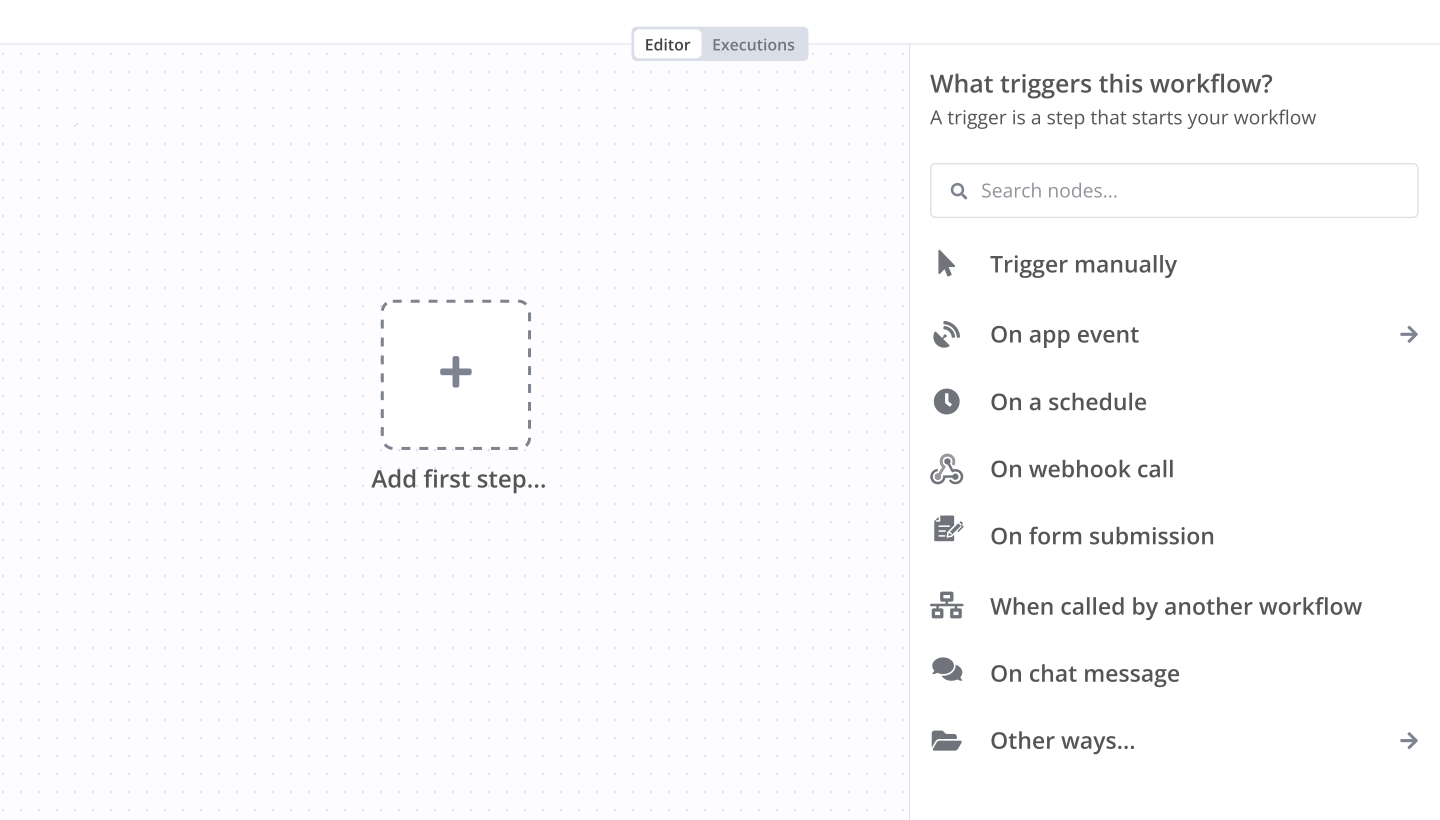
Google Sheets and Google Slides integration: Create a new workflow and add the first step

Step 2: Add and configure Google Sheets and Google Slides nodes

You can find Google Sheets and Google Slides in the nodes panel. Drag them onto your workflow canvas, selecting their actions. Click each node, choose a credential, and authenticate to grant n8n access. Configure Google Sheets and Google Slides nodes one by one: input data on the left, parameters in the middle, and output data on the right.

Google Sheets and Google Slides integration: Add and configure Google Sheets and Google Slides nodes

Step 3: Connect Google Sheets and Google Slides

A connection establishes a link between Google Sheets and Google Slides (or vice versa) to route data through the workflow. Data flows from the output of one node to the input of another. You can have single or multiple connections for each node.

Google Sheets and Google Slides integration: Connect Google Sheets and Google Slides

Step 4: Customize and extend your Google Sheets and Google Slides integration

Use n8n's core nodes such as If, Split Out, Merge, and others to transform and manipulate data. Write custom JavaScript or Python in the Code node and run it as a step in your workflow. Connect Google Sheets and Google Slides with any of n8n’s 1000+ integrations, and incorporate advanced AI logic into your workflows.

Google Sheets and Google Slides integration: Customize and extend your Google Sheets and Google Slides integration

Step 5: Test and activate your Google Sheets and Google Slides workflow

Save and run the workflow to see if everything works as expected. Based on your configuration, data should flow from Google Sheets to Google Slides or vice versa. Easily debug your workflow: you can check past executions to isolate and fix the mistake. Once you've tested everything, make sure to save your workflow and activate it.

Google Sheets and Google Slides integration: Test and activate your Google Sheets and Google Slides workflow

Create customized Google Slides presentations from CSV data for cold outreach 🚀

👥 Who Is This For?

Sales and marketing teams seeking efficient, hands‑free generation of personalized slide decks for each prospect from CSV lead lists.

🛠 What Problem Does This Solve?

Manually editing presentation decks for large lead lists is slow and error‑prone. This workflow fully automates:

Importing and parsing CSV lead data
Logging leads and outputs in Google Sheets
Duplicating a master Slides template per lead
Injecting lead‑specific variables into slides

🔄 Node‑by‑Node Breakdown

Step Node Purpose
1 New Leads Arrived Detect new CSV uploads in Drive
2 File Type? Filter for .csv files only
3 Download by ID Download the CSV content
4 Create new Sheet Create a Google Sheet to record lead data
5 Combine Empty New Document with CSV Data Structure each lead record for slide creation
6 Merge Data for new Lead Document Map template placeholders to lead values
7 Get all Leads Retrieve sheet rows to iterate through each lead
8 MoveToLeadListFolder Move processed CSV to an archive folder
9 Copy Slides Template Make a copy of the master Slides deck
10 Create Custom Presentation Replace placeholders in the copied deck with lead data
11 Add Presentation ID to Lead Write the generated presentation URL back into the Sheet

⚙️ Pre‑conditions / Requirements

n8n with Google Drive, Sheets, and Slides credentials
A master Google Slides deck with placeholder tokens (e.g. {{Name}}, {{Company}})
A Drive folder for incoming CSV lead files

⚙️ Setup Instructions

Import this workflow into your n8n instance.
Configure the New Leads Arrived node to watch your CSV folder.
Enter your Google credentials in the Drive, Sheets, and Slides nodes.
Specify the master Slides template ID in the Copy Slides Template node.
In Create Custom Presentation, map slide tokens to sheet column names.
Disable “Keep Binary Data” in Copy Slides Template to conserve memory.
Upload a sample CSV (with headers like Name, Company, Metric) to test.

🎨 How to Customize

Add or remove variables by editing the CSV headers and updating the mapping in Merge Data for new Lead Document.
Insert an AI/natural‑language node before slide creation to generate more advanced and personalized text blocks.
Use SplitInBatches to throttle API calls and avoid rate‑limit errors.
Add error‑handling branches to capture and log failed operations.

🔐 Security and Privacy

The workflow uses placeholder variables for file and folder IDs, so no actual IDs are exposed in the template.
Ensure OAuth scopes are limited to only the required Google APIs.

Nodes used in this workflow

Popular Google Sheets and Google Slides workflows

Create Customized Google Slides Presentations from CSV Data for Cold Outreach 🚀

👥 Who Is This For? Sales and marketing teams seeking efficient, hands‑free generation of personalized slide decks for each prospect from CSV lead lists. 🛠 What Problem Does This Solve? Manually editing presentation decks for large lead lists is slow and error‑prone. This workflow fully automates: Importing and parsing CSV lead data Logging leads and outputs in Google Sheets Duplicating a master Slides template per lead Injecting lead‑specific variables into slides 🔄 Node‑by‑Node Breakdown | Step | Node | Purpose | | ---- | ---------------------------------------- | -------------------------------------------------------- | | 1 | New Leads Arrived | Detect new CSV uploads in Drive | | 2 | File Type? | Filter for .csv files only | | 3 | Download by ID | Download the CSV content | | 4 | Create new Sheet | Create a Google Sheet to record lead data | | 5 | Combine Empty New Document with CSV Data | Structure each lead record for slide creation | | 6 | Merge Data for new Lead Document | Map template placeholders to lead values | | 7 | Get all Leads | Retrieve sheet rows to iterate through each lead | | 8 | MoveToLeadListFolder | Move processed CSV to an archive folder | | 9 | Copy Slides Template | Make a copy of the master Slides deck | | 10 | Create Custom Presentation | Replace placeholders in the copied deck with lead data | | 11 | Add Presentation ID to Lead | Write the generated presentation URL back into the Sheet | ⚙️ Pre‑conditions / Requirements n8n with Google Drive, Sheets, and Slides credentials A master Google Slides deck with placeholder tokens (e.g. {{Name}}, {{Company}}) A Drive folder for incoming CSV lead files ⚙️ Setup Instructions Import this workflow into your n8n instance. Configure the New Leads Arrived node to watch your CSV folder. Enter your Google credentials in the Drive, Sheets, and Slides nodes. Specify the master Slides template ID in the Copy Slides Template node. In Create Custom Presentation, map slide tokens to sheet column names. Disable “Keep Binary Data” in Copy Slides Template to conserve memory. Upload a sample CSV (with headers like Name, Company, Metric) to test. 🎨 How to Customize Add or remove variables by editing the CSV headers and updating the mapping in Merge Data for new Lead Document. Insert an AI/natural‑language node before slide creation to generate more advanced and personalized text blocks. Use SplitInBatches to throttle API calls and avoid rate‑limit errors. Add error‑handling branches to capture and log failed operations. 🔐 Security and Privacy The workflow uses placeholder variables for file and folder IDs, so no actual IDs are exposed in the template. Ensure OAuth scopes are limited to only the required Google APIs.
+3

Generate and publish Instagram carousels with Gemini and Google Slides

Generate and publish Instagram carousels automatically Turn a single topic into a published Instagram Carousel in minutes. Creating educational carousel posts usually takes hours: writing the script, designing the slides in Figma/Canva, exporting images, and scheduling. This workflow automates the entire pipeline using Gemini AI, Google Slides, and the Meta Graph API. It generates the content, designs the visuals by manipulating a template, and publishes the carousel directly to your Instagram Business account. 🚀 What this workflow does Script Generation: Runs daily (or on demand) to prompt Google Gemini to write a 6-slide educational script (Hook, Mistake, Why It Matters, Value, Tip, CTA). Design Automation: Copies a master Google Slides template. Uses a "Find & Replace" operation to insert the AI-generated text into the correct placeholders. Generates thumbnail images for each slide. Image Hosting: Uploads the slide images to ImgBB to get public URLs (required by Meta's API). Publishing: Creates a carousel container on Instagram using the Meta Graph API. Checks the container status until it is "FINISHED". Publishes the media to your feed. Logging: Records the post details, captions, and status in Google Sheets. 💡 Key Features True Design Automation:** Doesn't just overlay text on images; it uses real Google Slides templates, allowing for complex layouts and branding. Smart Polling:** Includes a "Wait & Check" loop to ensure the media container is fully processed by Facebook before attempting to publish (prevents API errors). Structured Content:** The AI is prompted to follow a proven "Viral Educational" framework (Hook -> Value -> Action). Asset Management:** Automatically organizes generated slide images and links in Google Sheets for your archives. 🛠️ Prerequisites Google Cloud:** Enabled APIs for Drive, Slides, Sheets, and Gemini. Meta Developer App:** An Instagram Business account connected to a Facebook Page, with a System User token (instagram_basic, instagram_content_publish, pages_read_engagement). ImgBB Account:** A free API key for temporary image hosting. Templates:** A Google Sheet and Google Slide template (links provided in the workflow sticky notes). 📝 Setup Instructions Resources: Copy the provided Google Sheet and Slide templates to your Drive. Credentials: Authenticate Google, Meta, and ImgBB in n8n. Configuration: Update the Google Drive node with your Slide Template ID. Update the Google Sheets nodes with your Sheet ID. Update the HTTP Request nodes with your ImgBB API Key and Instagram Account ID. Run: Activate the schedule or click "Execute" to generate your first post! Need help setting this up or want a custom automation for your agency? I specialize in building agentic workflows for consultants and agencies. 📧 Contact me: [email protected]

Generate & Email Personalized Certificates from Google Forms with Score Threshold

Description This workflow automatically generates personalized certificates in Google Slides and emails them to respondents only if they meet a minimum score threshold, using data submitted via Google Forms (stored in Google Sheets). Ideal for: Online courses Quizzes and workshops Event participation certificates Sheet Requirements Your connected Google Sheet (from the Google Form) must contain: Full Name – The name to appear on the certificate. Email – Recipient’s email address. Score – The test/quiz score used for threshold logic. Setup Instructions Connect Google Sheets – Make sure your Form responses are linked to a Sheet with the columns mentioned above. Set Score Threshold – Modify the If node to your desired minimum score (e.g., >= 80). Customize Certificate Template – Use a Google Slides file with text placeholders like {{Full Name}}. Connect Gmail & Google Drive – For sending emails and saving generated certificates. Update File IDs – Replace any placeholder Slide and Drive file IDs with your own. Services Used Google Sheets (Form responses) Google Slides (Certificate template) Google Drive (Storage) Gmail (Email delivery) Troubleshooting Issue: "Cannot read property 'Score'" → Ensure your column names match exactly (Score, Full Name, etc.). Slides not replacing placeholders → Double-check placeholder format ({{Full Name}}) and capitalization. Emails not sending → Verify Gmail authentication and make sure the If node is correctly filtering results.

Send AI sales proposals and Stripe payment links after Calendly calls

Meeting → Proposal → Payment → Follow-up Automation Categories: Sales Automation, AI Proposals, Revenue Ops This workflow automatically turns a booked sales call into a customized proposal, a Stripe payment link, and a follow-up email — without manual work. It’s designed to handle everything after a sales call so momentum doesn’t die. Booked call → proposal → payment → done. What This Workflow Does This automation runs the moment a sales call is booked and executes a complete post-call sales flow: Looks up the lead in a lightweight CRM Generates a tailored proposal using AI Creates a Google Slides proposal deck Creates a unique Stripe checkout link Sends a personalized follow-up email with proposal + payment No manual copy-pasting. No delays. No forgotten follow-ups. Why This Exists Most deals are lost after the call — not during it. This system removes: Manual proposal writing Post-call follow-up delays Inconsistent sales ops Awkward “just following up” emails It replaces all of that with a single, reliable close flow. Human on the outside. Fully automated underneath. How It Works (High Level) Calendly Trigger (Sales Call Booked) Workflow starts immediately after a meeting is scheduled Ensures proposals are sent while context is still fresh CRM Lookup (Google Sheets) Finds the lead using email or company name Works even if the lead is unqualified or incomplete Simple, transparent CRM (no heavy tooling required) AI Proposal Generation Uses structured inputs (problem, solution, scope, urgency, cost) Outputs a complete proposal as strict JSON Written in a clear, spartan, professional tone Google Slides Proposal Creation Copies a proposal template Auto-fills all sections using AI output Generates one unique proposal per lead Shareable link created automatically Stripe Checkout Session Creates a unique payment link per lead Attaches metadata (lead, company, package) No manual invoicing required Follow-up Email Sends proposal + payment link immediately Personalized with name and company Keeps the close frictionless Tools Used n8n** — workflow orchestration OpenAI** — proposal generation Google Sheets** — lightweight CRM Google Slides** — proposal delivery Stripe** — payment collection Email (Gmail / SMTP)** — follow-up delivery Calendly** — trigger source Who This Is For Automation & no-code agencies Consultants and service businesses Freelancers selling repeatable offers Sales-led teams that want speed + consistency Anyone tired of manual proposals and follow-ups Customization Notes Swap Google Sheets for Airtable, HubSpot, or Notion Proposal tone and structure are fully prompt-driven Stripe metadata can be extended for analytics or CRM sync Can support multiple triggers (Calendly, forms, manual intake) Difficulty & Cost Difficulty:** Intermediate (conceptually simple, operationally solid) Estimated setup time:** 30–45 minutes Ongoing cost:** OpenAI + Stripe fees only Summary This is not just a proposal generator. It’s a post-call revenue system that turns intent into action automatically. > Meeting → proposal → payment → follow-up > No manual steps. No dropped balls.

Generate client proposals with OpenAI, Google Sheets, Slides, Gmail, and Drive

🧾 AI Proposal Generator Engine An n8n-based automation that generates client proposals from a form, lets you review everything in one place, and sends the proposal only when you approve it. ⚙️ What It Does The AI Proposal Generator Engine creates proposals directly from an n8n Form. All proposal content and a draft email are generated automatically using OpenAI. Google Sheets is used only as a database, where you: Review the generated proposal Review the draft email Control when the proposal is sent by updating the status No proposal is sent until it is manually marked as READY. 💡 Use Cases | Use Case | Description | | --------------------- | ---------------------------------------------------------- | | Sales Calls | Generate proposals immediately after a call using the form | | Freelancers | Create clean, repeatable proposals without manual writing | | Agencies | Standardize proposals while keeping them client-specific | | Approval Flow | Review proposal and email before sending | | Fast Turnaround Deals | Reduce proposal creation time from hours to minutes | | Team Workflows | Use Sheets as a simple approval and tracking layer | 🔧 Setup 1️⃣ Google Credentials Go to Google Cloud Console and create a Web App (OAuth). Enable these APIs: Google Sheets Google Drive Gmail In n8n, select this Google credential inside: Google Sheets nodes Google Drive nodes Gmail nodes Use the same credential everywhere. 2️⃣ Google Drive Structure Create this folder setup in Google Drive. You can use the provided templates or your own. Proposal Generator Engine/ ├── Template 1 (Slides) ├── Template 2 (Slides) ├── Template 3 (Slides) ├── Proposal Generation Tracker (Sheets) └── Generated Proposals/ 3️⃣ Google Sheets Node Open the Proposal Generation Tracker and copy the Sheet ID from the URL. Paste this ID into the Google Sheets node in n8n. This sheet is used only to: Store generated proposal links Store email drafts Control send status 4️⃣ Slides and Drive Nodes Copy the Slides template ID you want to use and paste it into the Copy Template node. Copy the folder ID of Generated Proposals and paste it into the Move File / Folder field. 5️⃣ OpenAI Key Create an OpenAI credential in n8n using your API key. Select this credential in all GPT nodes. You can edit prompts to match your proposal style and tone. 🔁 Workflow Summary Proposal details are collected using an n8n Form OpenAI generates structured proposal content A Google Slides template is copied and filled A proposal email draft is generated Proposal link and email draft are saved in Google Sheets with status WAITING You review the proposal and email Status is changed to READY Proposal is converted to PDF and sent via Gmail Proposal is stored in Google Drive and status is updated to SENT 📞 Support & Contact 📧 Email: [email protected] 🔗 LinkedIn: https://www.linkedin.com/in/atharva-jaiswal/ 📅 Book a support call: https://calendly.com/atharvapj5/30min
+2

Marketing Analytics Reports with Google Analytics, Sheets, Slides & Email Alerts

Automate and Distribute Weekly and Monthly Marketing Analytics Reports Who's it for? This workflow is designed for marketing teams, data analysts, and business owners who need to consistently track key performance indicators (KPIs). It saves hours of manual data collection and reporting, ensuring stakeholders receive timely updates automatically. What it does This workflow automates the entire process of creating and distributing regular analytics reports. On a recurring weekly and monthly schedule, it: Fetches Data: Gathers the latest data from Google Analytics (users, sessions, conversions), your advertising platform (ad spend), and your CRM (new customers, revenue). Calculates KPIs: Processes the raw data to calculate essential business metrics, including Monthly Active Users (MAU), Customer Acquisition Cost (CAC), Lifetime Value (LTV), LTV:CAC ratio, and conversion rates. Logs Historical Data: Appends the newly calculated KPIs to a Google Sheet, creating a historical record for trend analysis. Generates a Report: Creates a new Google Slides presentation to serve as the main report. Distributes the Report: Emails a summary of the key metrics to a predefined list of recipients, including a link to the full Google Slides report. Provides Error Alerts: If any step in the process fails, it sends an immediate notification to a designated Slack channel so you can address the issue quickly. How to set up Configure Credentials: Add your credentials for Google Analytics, Google Sheets, Google Slides, Gmail, Slack, and the HTTP Request nodes (for your ad platform and CRM). Fill in Placeholders: In the "Workflow Configuration" node, replace all placeholder values with your specific information: gaPropertyId: Your Google Analytics Property ID. adPlatformApiUrl: The API endpoint for your advertising platform. crmApiUrl: The API endpoint for your CRM. reportSpreadsheetId: The ID of the Google Sheet where data will be stored. slidesTemplateId: The ID of your Google Slides report template. reportRecipients: A comma-separated list of email addresses for report distribution. slackChannel: The Slack channel ID for error notifications. Activate Workflow: Turn the workflow on. It will now run based on the schedule defined in the "Weekly/Monthly Schedule" trigger node. How to customize the workflow Adjust Schedule:** Modify the "Weekly/Monthly Schedule" node to change the reporting frequency (e.g., daily, bi-weekly). Change Reporting Period:** In the "Workflow Configuration" node, change the reportPeriodDays value to adjust the lookback window (e.g., set to 30 for a monthly report). Customize KPIs:** Edit the Javascript in the "Calculate KPIs (MAU, LTV, CAC)" node to add or modify metrics. Enhance the Report:** Expand the "Create Google Slides Report" node to dynamically add charts and data from the calculated KPIs into the slides.

Build your own Google Sheets and Google Slides integration

Create custom Google Sheets and Google Slides workflows by choosing triggers and actions. Nodes come with global operations and settings, as well as app-specific parameters that can be configured. You can also use the HTTP Request node to query data from any app or service with a REST API.

Google Sheets supported actions

Create
Create a spreadsheet
Delete
Delete a spreadsheet
Append or Update Row
Append a new row or update an existing one (upsert)
Append Row
Create a new row in a sheet
Clear
Delete all the contents or a part of a sheet
Create
Create a new sheet
Delete
Permanently delete a sheet
Delete Rows or Columns
Delete columns or rows from a sheet
Get Row(s)
Retrieve one or more rows from a sheet
Update Row
Update an existing row in a sheet

Google Slides supported actions

Get
Get a page
Get Thumbnail
Get a thumbnail
Create
Create a presentation
Get
Get a presentation
Get Slides
Get presentation slides
Replace Text
Replace text in a presentation

FAQs

  • Can Google Sheets connect with Google Slides?

  • Can I use Google Sheets’s API with n8n?

  • Can I use Google Slides’s API with n8n?

  • Is n8n secure for integrating Google Sheets and Google Slides?

  • How to get started with Google Sheets and Google Slides integration in n8n.io?

Need help setting up your Google Sheets and Google Slides integration?

Discover our latest community's recommendations and join the discussions about Google Sheets and Google Slides integration.
Sergey Komardenkov
sérgio eduardo floresta filho
Julian
therealJMT
Guilherme

Looking to integrate Google Sheets and Google Slides in your company?

Over 3000 companies switch to n8n every single week

Why use n8n to integrate Google Sheets with Google Slides

Build complex workflows, really fast

Build complex workflows, really fast

Handle branching, merging and iteration easily.
Pause your workflow to wait for external events.

Code when you need it, UI when you don't

Simple debugging

Your data is displayed alongside your settings, making edge cases easy to track down.

Use templates to get started fast

Use 1000+ workflow templates available from our core team and our community.

Reuse your work

Copy and paste, easily import and export workflows.

Implement complex processes faster with n8n

red iconyellow iconred iconyellow icon