


How to use Google Sheets as a database
Dive into the versatility of Google Sheets as a database with our in-depth comparison of Python scripting and n8n automation. Get 7 free workflows to set up your Google Sheets database in n8n!



Save yourself the work of writing custom integrations for Google Sheets and LinkedIn and use n8n instead. Build adaptable and scalable Data & Storage, Productivity, Marketing, and Communication workflows that work with your technology stack. All within a building experience you will love.
In n8n, click the "Add workflow" button in the Workflows tab to create a new workflow. Add the starting point – a trigger on when your workflow should run: an app event, a schedule, a webhook call, another workflow, an AI chat, or a manual trigger. Sometimes, the HTTP Request node might already serve as your starting point.

You can find Google Sheets and LinkedIn in the nodes panel. Drag them onto your workflow canvas, selecting their actions. Click each node, choose a credential, and authenticate to grant n8n access. Configure Google Sheets and LinkedIn nodes one by one: input data on the left, parameters in the middle, and output data on the right.

A connection establishes a link between Google Sheets and LinkedIn (or vice versa) to route data through the workflow. Data flows from the output of one node to the input of another. You can have single or multiple connections for each node.

Use n8n's core nodes such as If, Split Out, Merge, and others to transform and manipulate data. Write custom JavaScript or Python in the Code node and run it as a step in your workflow. Connect Google Sheets and LinkedIn with any of n8n’s 1000+ integrations, and incorporate advanced AI logic into your workflows.

Save and run the workflow to see if everything works as expected. Based on your configuration, data should flow from Google Sheets to LinkedIn or vice versa. Easily debug your workflow: you can check past executions to isolate and fix the mistake. Once you've tested everything, make sure to save your workflow and activate it.

Overview
This comprehensive n8n workflow automatically transforms trending Google search queries into engaging LinkedIn posts using AI. The system runs autonomously, discovering viral topics, researching content, and publishing professionally formatted posts to grow your social media presence.
Workflow Description
Automate your entire social media content pipeline - from trend discovery to publication. This workflow monitors Google Trends, selects high-potential topics, creates human-like content using advanced AI, and publishes across multiple social platforms with built-in tracking.
Key Features
Automated Trend Discovery**: Pulls trending topics from Google Trends API with customizable filters
Intelligent Topic Selection**: AI chooses the most relevant trending topic for your niche
Multi-AI Content Generation**: Combines Perplexity for research and OpenAI for content curation
Human-Like Writing**: Advanced prompts eliminate AI detection markers
LinkedIn Optimization**: Proper formatting with Unicode characters, emojis, and engagement hooks
Multi-Platform Support**: Ready for LinkedIn, Twitter/X, and Facebook posting
Automated Scheduling**: Configurable posting times (default: 6 AM & 6 PM daily)
Performance Tracking**: Automatic logging to Google Sheets with timestamps and metrics
Error Handling**: Built-in delays and retry mechanisms for API stability
Technical Implementation
Workflow Architecture
Schedule Trigger: Automated execution at specified intervals
Google Trends API: Fetches trending search queries with geographical filtering
Data Processing: JavaScript code node filters high-volume keywords (30+ search volume)
Topic Selection: OpenAI GPT-3.5 evaluates and selects optimal trending topic
Content Research: Perplexity AI researches selected topic for current information
Content Generation: Advanced prompt engineering creates LinkedIn-optimized posts
Content Distribution: Multi-platform posting with platform-specific formatting
Analytics Tracking: Google Sheets integration for performance monitoring
Node Breakdown
Schedule Trigger**: Configurable timing for automated execution
HTTP Request (Google Trends): SerpAPI integration for trend data
Set Node: Structures trending data for processing
Code Node**: JavaScript filtering for high-volume keywords
OpenAI Node**: Intelligent topic selection based on relevance and trend strength
HTTP Request (Perplexity): Advanced AI research with anti-detection prompts
Wait Node: Rate limiting and API respect
Split Out**: Prepares content for multi-platform distribution
LinkedIn Node**: Authenticated posting with community management
Google Sheets Node**: Automated tracking and analytics
Social Media Nodes**: Twitter/X, LinkedIn and Facebook ready for activation
Use Cases
Content Creators**: Maintain consistent posting schedules with trending content
Marketing Agencies**: Scale content creation across multiple client accounts
Business Development**: Build thought leadership with timely industry insights
Personal Branding**: Establish authority by commenting on trending topics
SEO Professionals**: Create content around high-search-volume keywords
Configuration Requirements
API Integrations
SerpAPI**: Google Trends data access
Perplexity AI**: Advanced content research capabilities
OpenAI**: Content curation and topic selection
LinkedIn Community Management API**: Professional posting access
Google Sheets API**: Analytics and tracking
Authentication Setup
LinkedIn OAuth2 community management credentials
Google Sheets OAuth2 integration
HTTP header authentication for AI services
Customization Options
Industry Targeting**: Modify prompts for specific business verticals
Posting Schedule**: Adjust timing based on audience activity
Content Tone**: Customize voice and style through prompt engineering
Platform Selection**: Enable/disable specific social media channels
Trend Filtering**: Adjust search volume thresholds and geographic targeting
Content Length**: Modify character limits for different platforms
Advanced Features
Anti-AI Detection**: Sophisticated prompts create human-like content
Rate Limit Management**: Built-in delays prevent API throttling
Error Recovery**: Robust error handling with retry mechanisms
Content Deduplication**: Prevents posting duplicate content
Engagement Optimization**: LinkedIn-specific formatting for maximum reach
Performance Metrics
Time Savings**: Eliminates 10+ hours of weekly content creation
Consistency**: Maintains regular posting schedule without manual intervention
Relevance**: Content always based on current trending topics
Engagement**: Optimized formatting increases social media interaction
Scalability**: Single workflow manages multiple platform posting
Installation Notes
Import JSON workflow file into n8n instance
Configure all required API credentials
Set up Google Sheets tracking document
Test workflow execution with manual trigger
Enable schedule trigger for automated operation
Best Practices
Monitor API usage to stay within rate limits
Regularly update prompts based on content performance
Review and adjust trending topic filters for your niche
Maintain backup of workflow configuration
Test content output before enabling automation
Support & Updates
Comprehensive setup documentation included
Configuration troubleshooting guide provided
Regular workflow updates for API changes
Community support through n8n forums
Tags
social-media content-automation linkedin ai-generation google-trends perplexity openai marketing trend-analysis content-creation
Compatibility
n8n Version: 1.0+
Node Requirements: Standard n8n installation
External Dependencies: API access to listed services
Hosting: Compatible with cloud and self-hosted n8n instances
Nodes used in this workflow


Create custom Google Sheets and LinkedIn workflows by choosing triggers and actions. Nodes come with global operations and settings, as well as app-specific parameters that can be configured. You can also use the HTTP Request node to query data from any app or service with a REST API.






Using too many marketing tools? n8n lets you orchestrate all your apps into one cohesive, automated workflow.
Learn more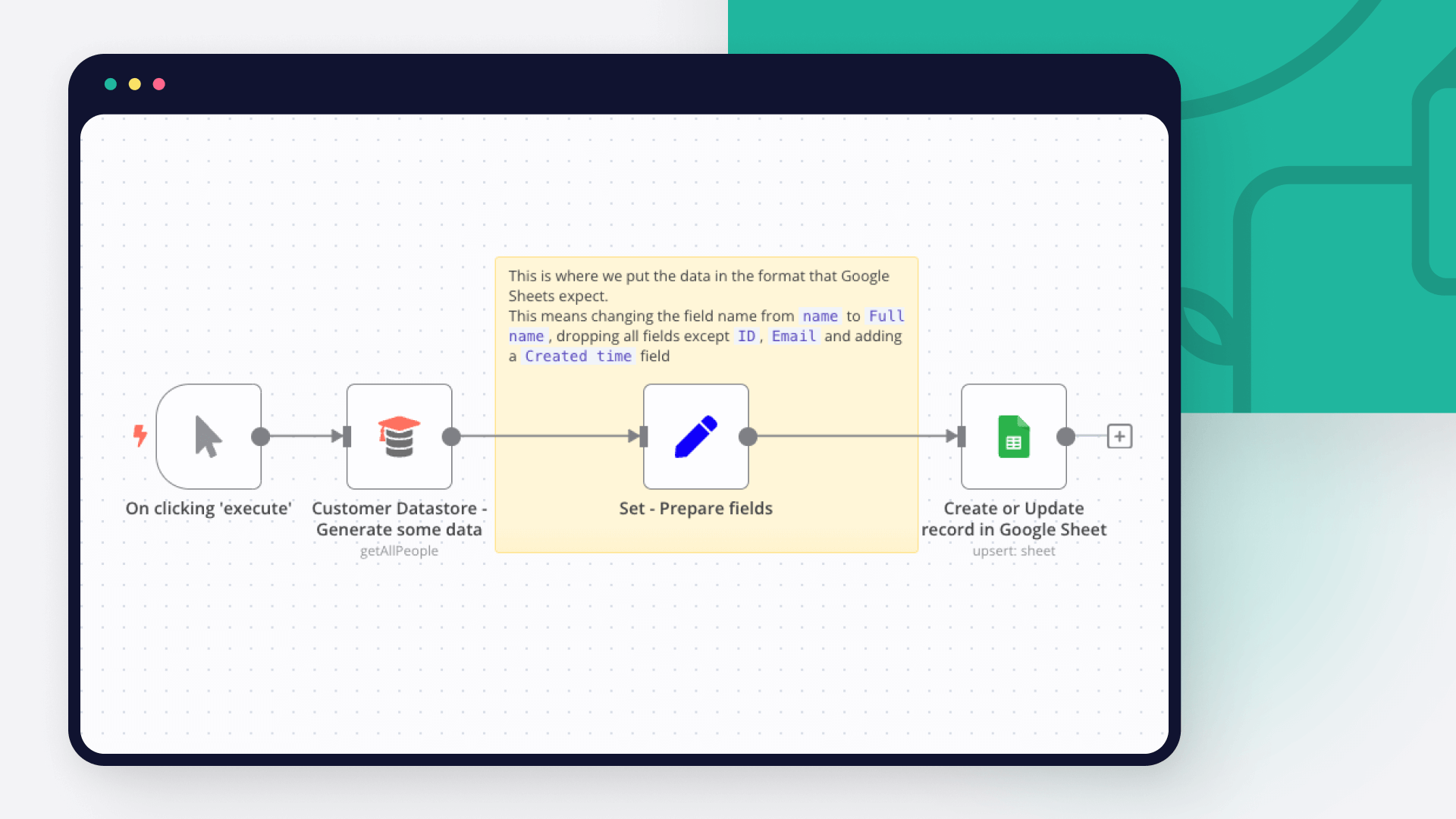
Dive into the versatility of Google Sheets as a database with our in-depth comparison of Python scripting and n8n automation. Get 7 free workflows to set up your Google Sheets database in n8n!
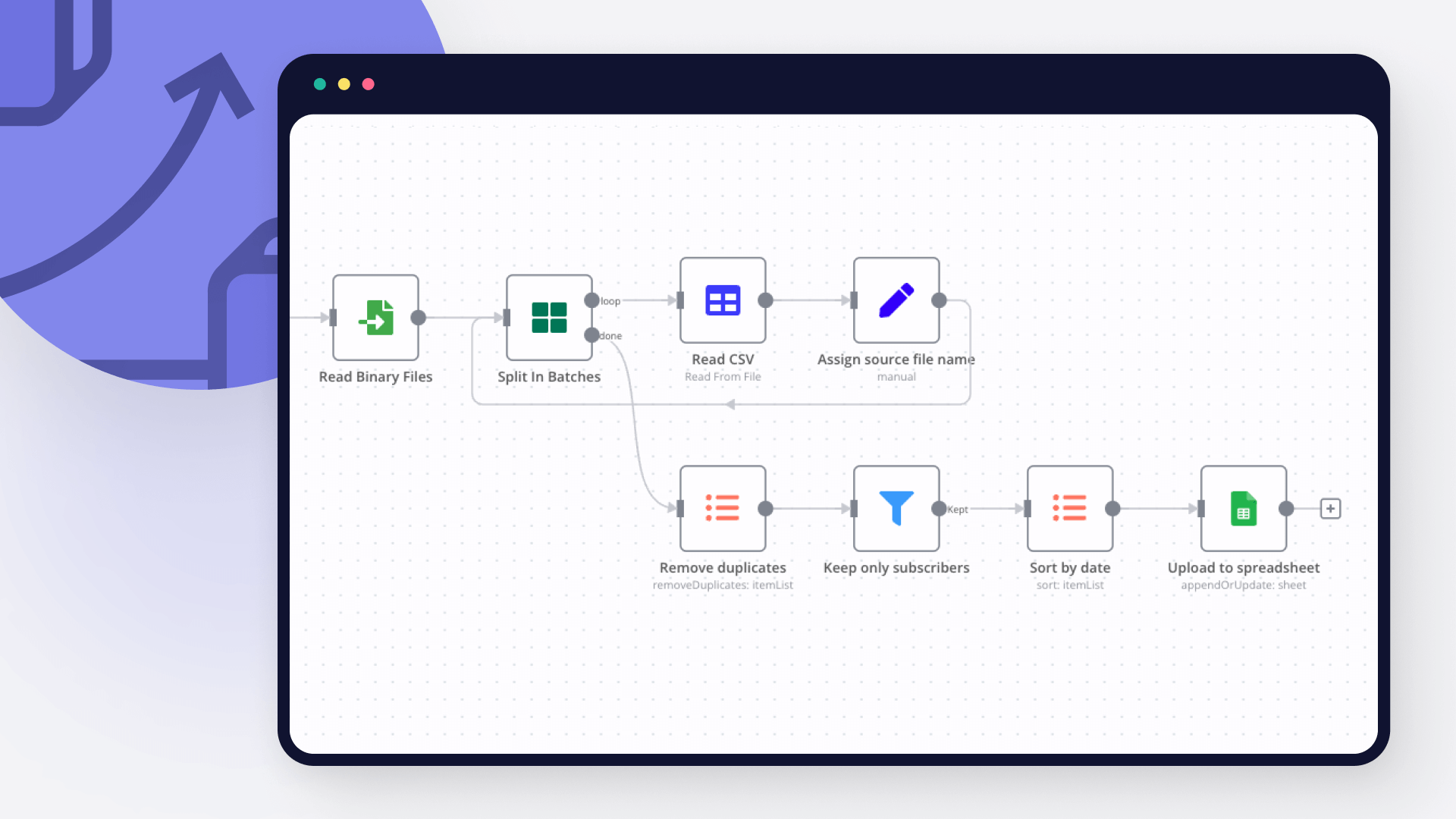
Explore 3 efficient methods for importing CSV files into Google Sheets, comparing n8n's automated workflow with the manual import via native Google Sheets interface and the programmatic import via Python.
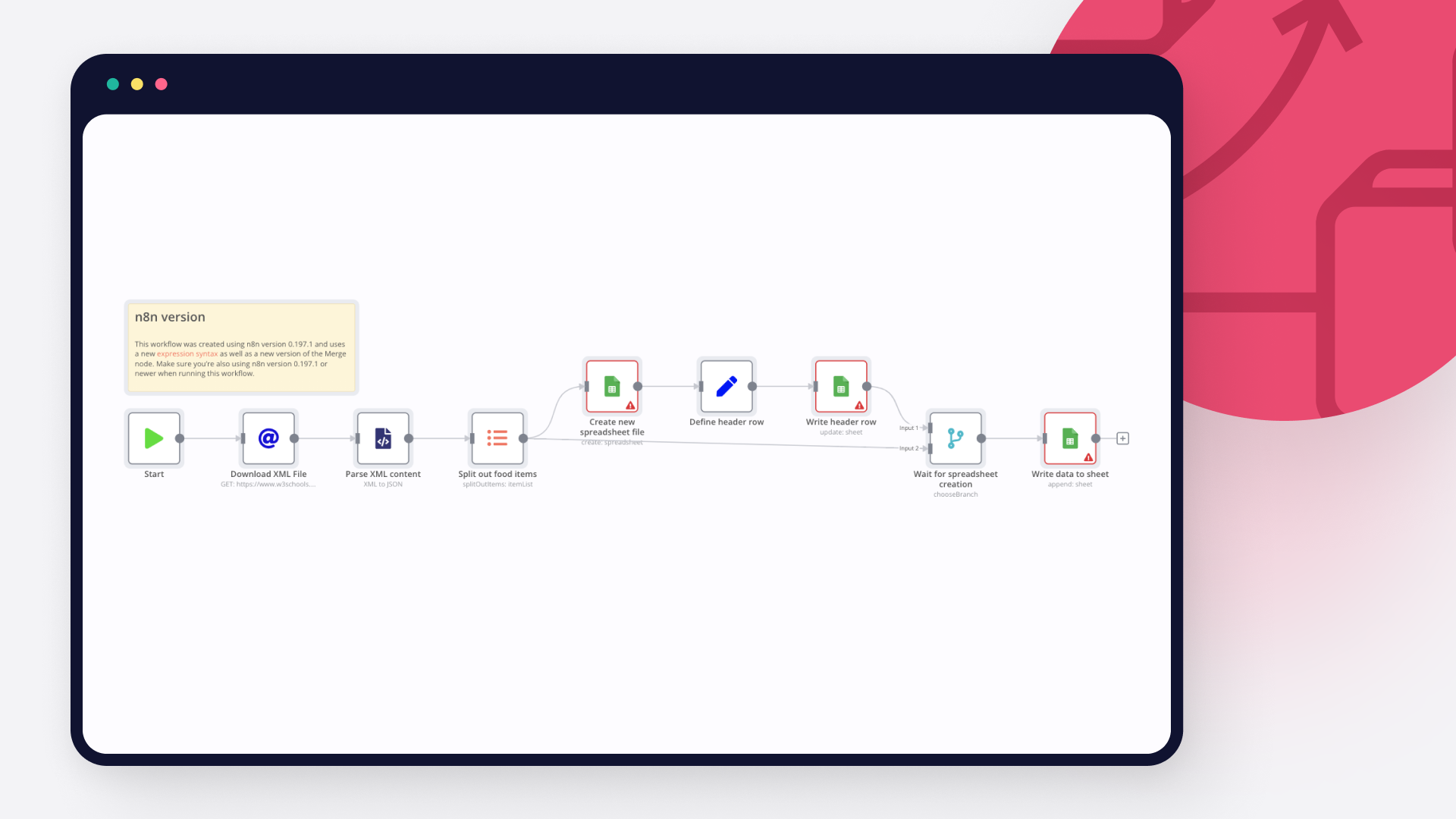
Learn three different ways to import XML to Google sheets: with Google sheet’s IMPORTXML function, with Google AppScript and automation with n8n.
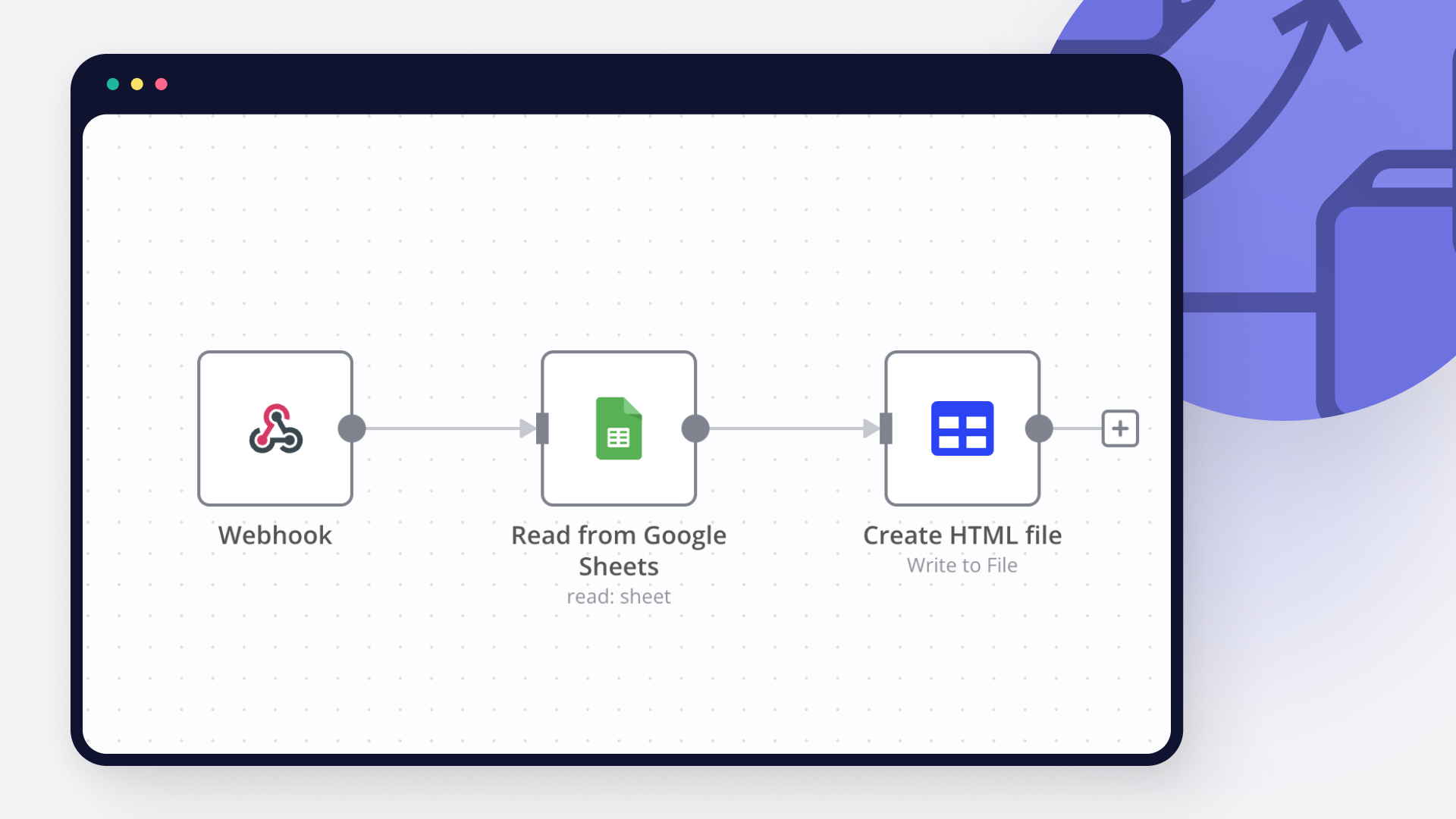
Learn how to pull data from Google Spreadsheet to HTML using Google Apps Script and n8n automation tool.
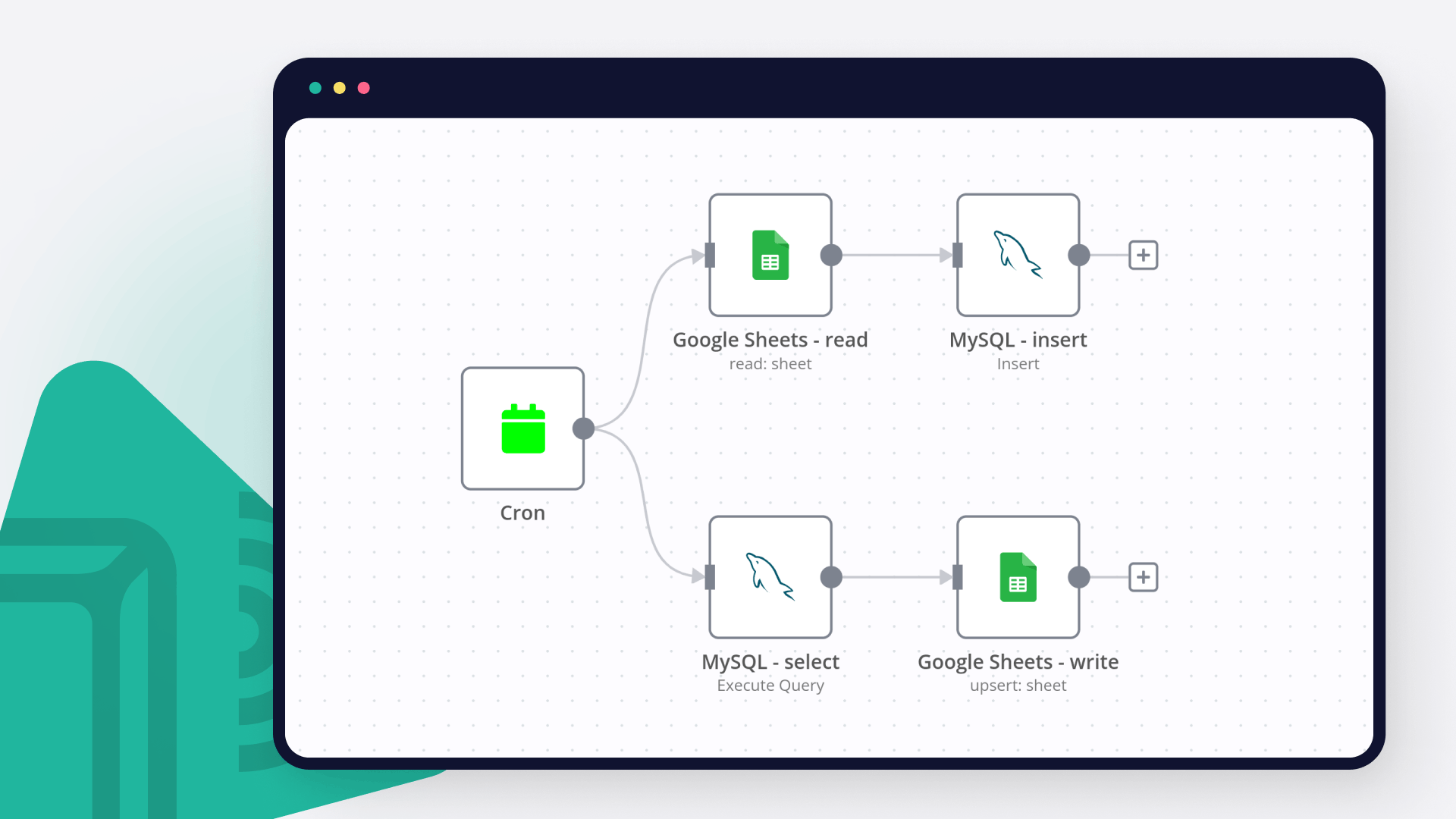
Discover two ways to connect MySQL with Google Sheets, and learn to build no-code workflows for automating it.
Discover three ways to import JSON data into Google Sheets or a CSV file, and five no-code workflows for automatically moving data between JSON and spreadsheets.
Yes, Google Sheets can connect with LinkedIn using n8n.io. With n8n, you can create workflows that automate tasks and transfer data between Google Sheets and LinkedIn. Configure nodes for Google Sheets and LinkedIn in the n8n interface, specifying actions and triggers to set up their connection.
Yes, with n8n, you can programmatically interact with Google Sheets’s API via pre-defined supported actions or raw HTTP requests. With the HTTP Request node, you create a REST API call. You need to understand basic API terminology and concepts.
Yes, with n8n, you can programmatically interact with LinkedIn’s API via pre-defined supported actions or raw HTTP requests. With the HTTP Request node, you create a REST API call. You need to understand basic API terminology and concepts.
Yes, it is safe to use n8n to integrate Google Sheets and LinkedIn. n8n offers various features to ensure the safe handling of your data. These include encrypted data transfers, secure credential storage, RBAC functionality, and compliance with industry-standard security practices (SOC2 compliant). For hosted plans, data is stored within the EU on servers located in Frankfurt, Germany. You can also host it on your own infrastructure for added control.
Learn more about n8n’s security practices here.
To start integrating Google Sheets and LinkedIn in n8n, you have different options depending on how you intend to use it:
Unlike other platforms that charge per operation, step, or task, n8n charges only for full workflow executions. This approach guarantees predictable costs and scalability, no matter the complexity or volume of your workflows.


Looking to integrate Google Sheets and LinkedIn in your company?









Build complex workflows, really fast

Handle branching, merging and iteration easily.
Pause your workflow to wait for external events.
Your data is displayed alongside your settings, making edge cases easy to track down.
Use 1000+ workflow templates available from our core team and our community.
Copy and paste, easily import and export workflows.
Report a vulnerability
© 2024 n8n | All rights reserved.






