Back to Integrations
integrationGoogle Sheets node
integrationMicrosoft Excel 365 node

Google Sheets and Microsoft Excel 365 integration

Save yourself the work of writing custom integrations for Google Sheets and Microsoft Excel 365 and use n8n instead. Build adaptable and scalable Data & Storage, and Productivity workflows that work with your technology stack. All within a building experience you will love.

How to connect Google Sheets and Microsoft Excel 365

  • Step 1: Create a new workflow
  • Step 2: Add and configure nodes
  • Step 3: Connect
  • Step 4: Customize and extend your integration
  • Step 5: Test and activate your workflow

Step 1: Create a new workflow and add the first step

In n8n, click the "Add workflow" button in the Workflows tab to create a new workflow. Add the starting point – a trigger on when your workflow should run: an app event, a schedule, a webhook call, another workflow, an AI chat, or a manual trigger. Sometimes, the HTTP Request node might already serve as your starting point.
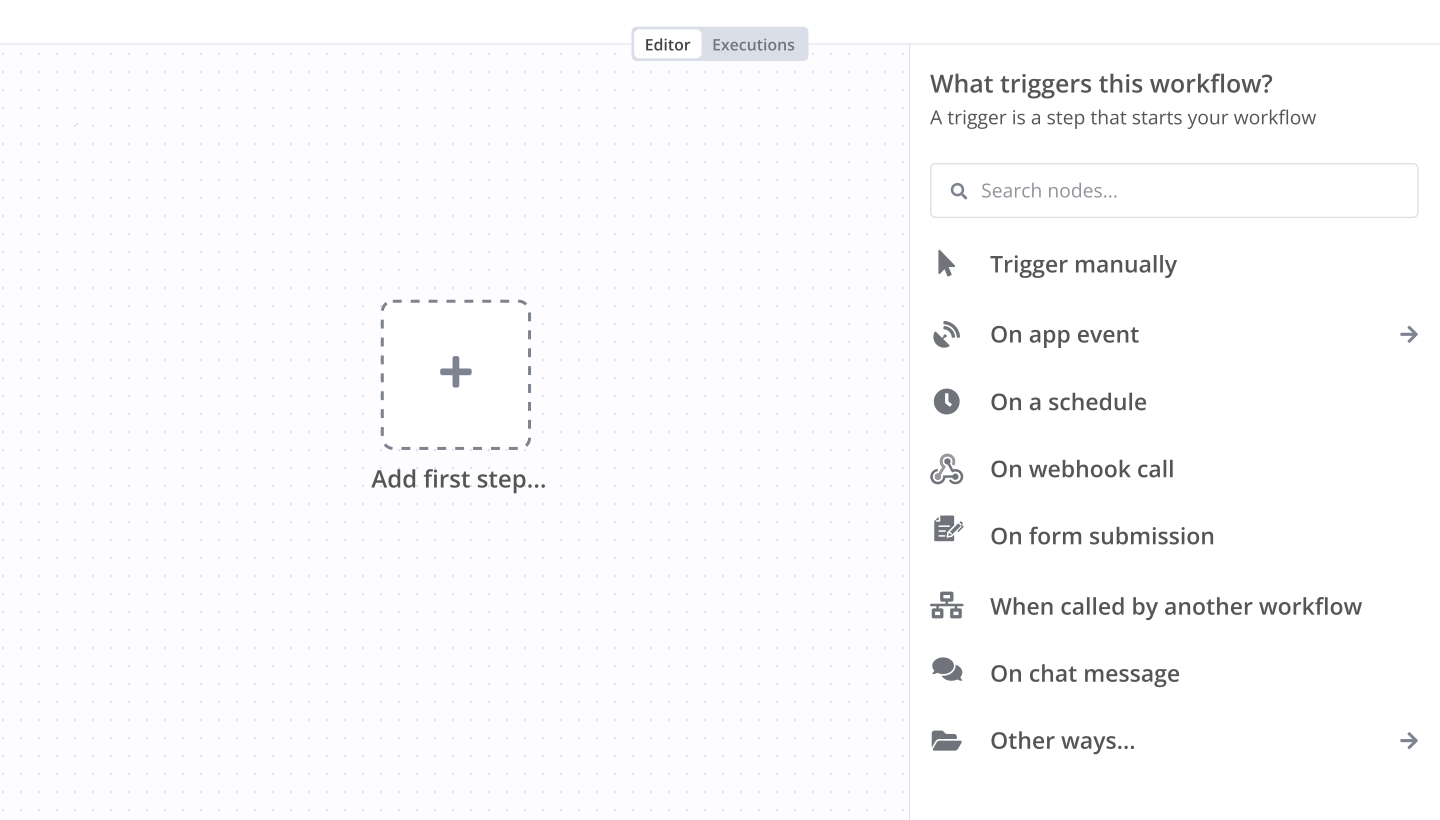
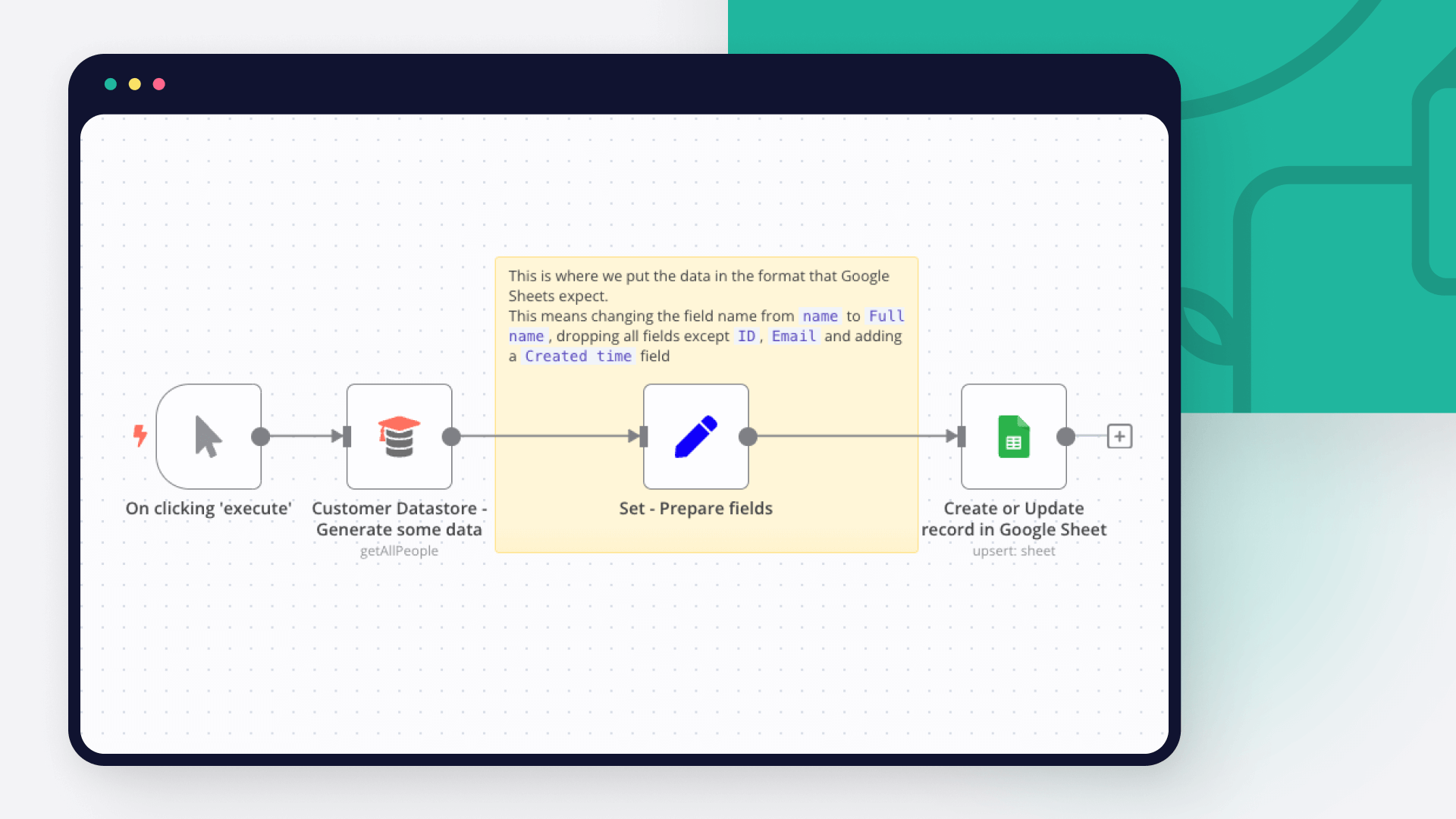
Google Sheets and Microsoft Excel 365 integration: Create a new workflow and add the first step

Step 2: Add and configure Google Sheets and Microsoft Excel 365 nodes

You can find Google Sheets and Microsoft Excel 365 in the nodes panel. Drag them onto your workflow canvas, selecting their actions. Click each node, choose a credential, and authenticate to grant n8n access. Configure Google Sheets and Microsoft Excel 365 nodes one by one: input data on the left, parameters in the middle, and output data on the right.

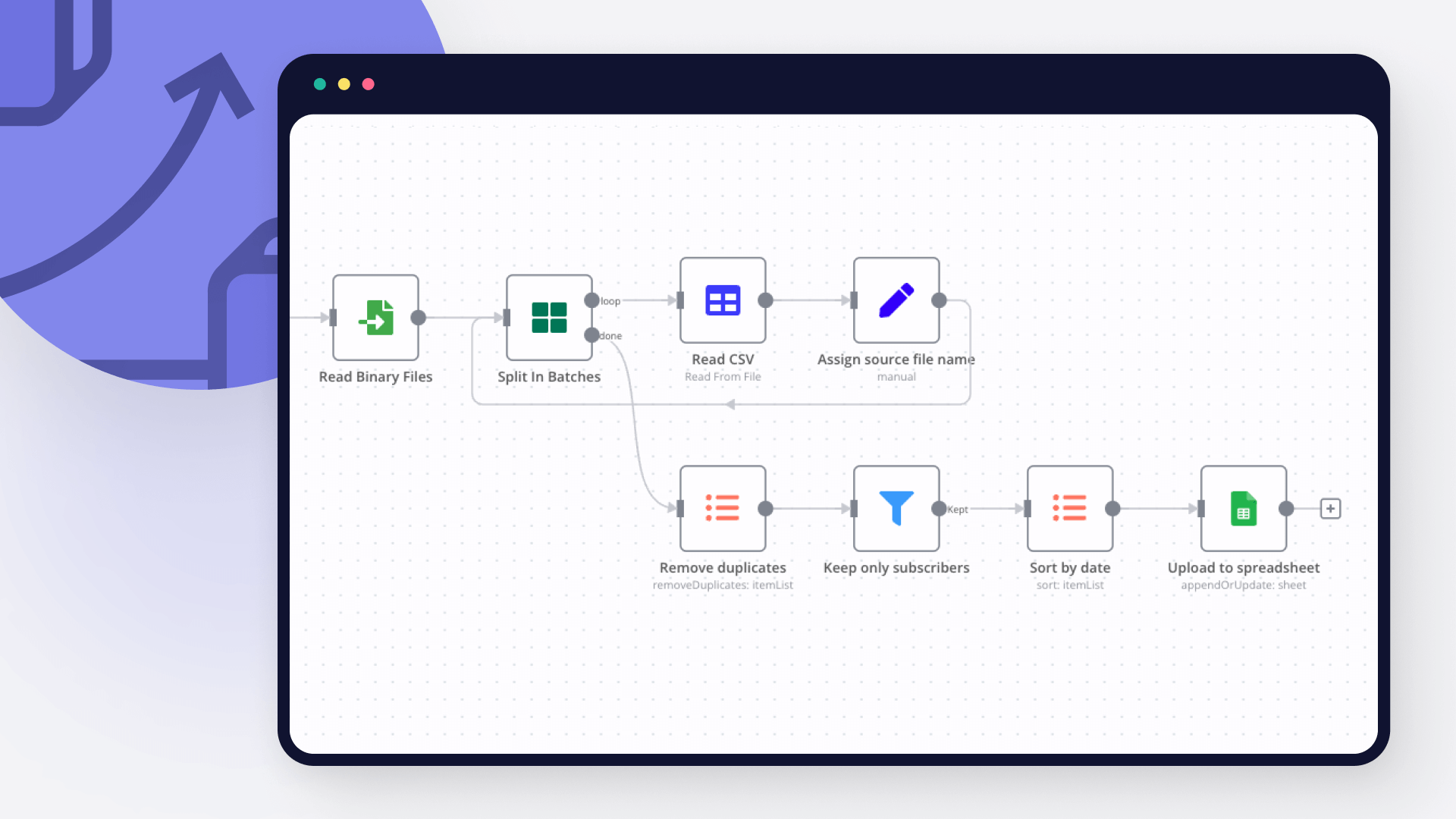
Google Sheets and Microsoft Excel 365 integration: Add and configure Google Sheets and Microsoft Excel 365 nodes

Step 3: Connect Google Sheets and Microsoft Excel 365

A connection establishes a link between Google Sheets and Microsoft Excel 365 (or vice versa) to route data through the workflow. Data flows from the output of one node to the input of another. You can have single or multiple connections for each node.

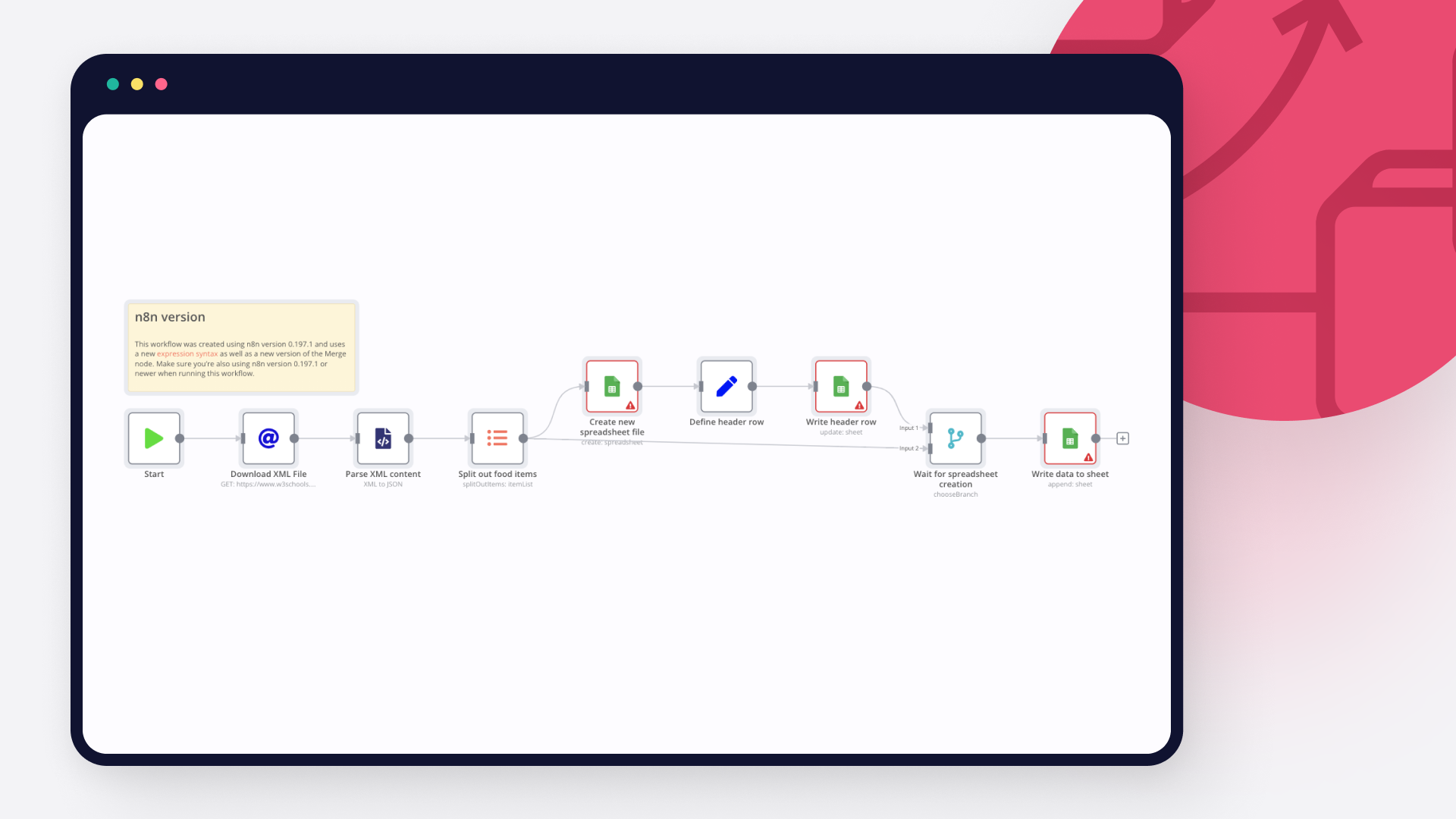
Google Sheets and Microsoft Excel 365 integration: Connect Google Sheets and Microsoft Excel 365

Step 4: Customize and extend your Google Sheets and Microsoft Excel 365 integration

Use n8n's core nodes such as If, Split Out, Merge, and others to transform and manipulate data. Write custom JavaScript or Python in the Code node and run it as a step in your workflow. Connect Google Sheets and Microsoft Excel 365 with any of n8n’s 1000+ integrations, and incorporate advanced AI logic into your workflows.

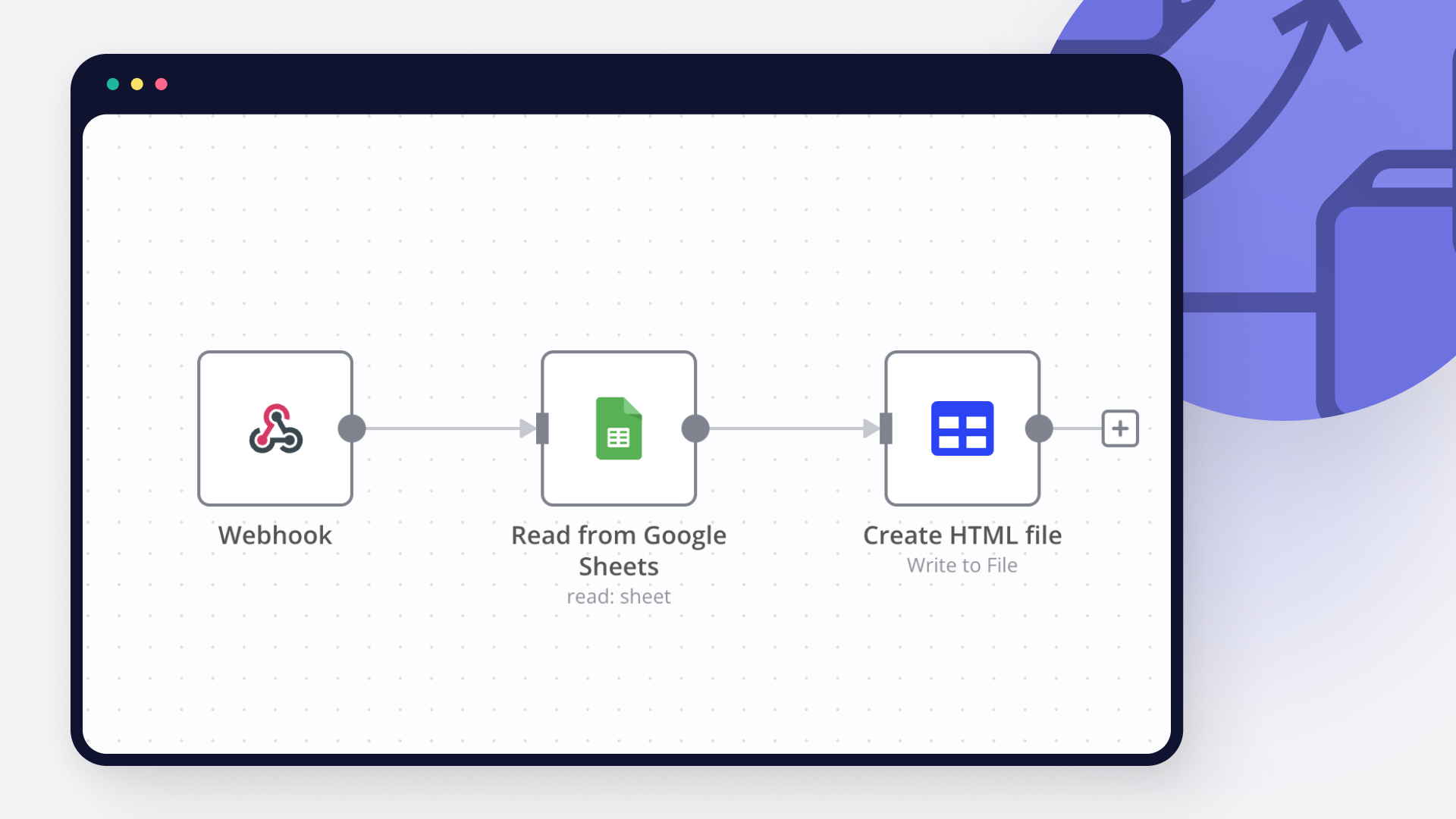
Google Sheets and Microsoft Excel 365 integration: Customize and extend your Google Sheets and Microsoft Excel 365 integration

Step 5: Test and activate your Google Sheets and Microsoft Excel 365 workflow

Save and run the workflow to see if everything works as expected. Based on your configuration, data should flow from Google Sheets to Microsoft Excel 365 or vice versa. Easily debug your workflow: you can check past executions to isolate and fix the mistake. Once you've tested everything, make sure to save your workflow and activate it.

Google Sheets and Microsoft Excel 365 integration: Test and activate your Google Sheets and Microsoft Excel 365 workflow

Automated web scraping: email a CSV, save to Google Sheets & Microsoft Excel

How it works:
The workflow starts by sending a request to a website to retrieve its HTML content.
It then parses the HTML extracting the relevant information
The extracted data is storted and converted into a CSV file.
The CSV file is attached to an email and sent to your specified address.
The data is simultaneously saved to both Google Sheets and Microsoft Excel for further analysis or use.

Set-up steps:
Change the website to scrape in the "Fetch website content" node
Configure Microsoft Azure credentials with Microsoft Graph permissions (required for the Save to Microsoft Excel 365 node)
Configure Google Cloud credentials with access to Google Drive, Google Sheets and Gmail APIs (the latter is required for the Send CSV via e-mail node).

Nodes used in this workflow

Popular Google Sheets and Microsoft Excel 365 workflows

Automated Web Scraping: email a CSV, save to Google Sheets & Microsoft Excel

How it works: The workflow starts by sending a request to a website to retrieve its HTML content. It then parses the HTML extracting the relevant information The extracted data is storted and converted into a CSV file. The CSV file is attached to an email and sent to your specified address. The data is simultaneously saved to both Google Sheets and Microsoft Excel for further analysis or use. Set-up steps: Change the website to scrape in the "Fetch website content" node Configure Microsoft Azure credentials with Microsoft Graph permissions (required for the Save to Microsoft Excel 365 node) Configure Google Cloud credentials with access to Google Drive, Google Sheets and Gmail APIs (the latter is required for the Send CSV via e-mail node).

Track Excel 365 changes and approvals with Telegram and Google Sheets logging

Track changes and approvals in Excel 365 📌 Overview This workflow monitors an Excel 365 sheet every minute and detects new, updated, and deleted rows using a unique ID column. It compares the current dataset with the previous snapshot and identifies field-level differences. When changes are detected, the workflow filters rows that require approval (Status = “Waiting Approval”), sends structured notifications, and optionally logs every field-level change into an audit sheet (Excel or Google Sheets). The configuration layer allows you to define the ID column, ignored fields, and audit logging behavior without modifying the comparison logic. This template is suitable for approval tracking, operational monitoring, and lightweight compliance logging. How it works Runs every minute using a schedule trigger Reads rows from Excel 365 Normalizes and stores a snapshot Compares with the previous state Detects new, updated, and deleted rows Filters rows with “Waiting Approval” status Sends structured notifications Logs changes if audit logging is enabled Setup steps Configure Microsoft Excel credentials Ensure your sheet contains a unique ID column Update the Environment Config node 4.(Optional) Configure Google Sheets credentials for audit logging Activate the workflow 🚀 Features ⏱ Scheduled Monitoring Runs automatically every 1 minute Near real-time Excel monitoring Prevents unnecessary execution when no changes are detected 🔍 Row-Level Change Detection Detects: ✅ New rows ✏️ Updated rows ❌ Deleted rows Uses a unique ID field per row for accurate tracking. ⸻ 🧠 Field-Level Comparison Compares previous vs current values Identifies exactly which fields changed Outputs structured change data Prevents false positives via data normalization ⸻ ⚙️ Environment Configuration Layer Centralized configuration node allows easy customization without modifying core logic. Configurable options include: idField ignoreFields monitorOnly firstRunSilent enableAuditLog No hardcoded logic required. ⸻ 🛑 Approval Validation Layer Filters rows where Status = "Waiting Approval" Sends notifications only for relevant approval cases Prevents unnecessary alerts ⸻ 🔔 Smart Notification System Sends formatted change notifications Includes: Change Type (NEW / UPDATED / DELETED) Row ID Field-level old → new values Fully customizable message formatting. ⸻ 📊 Optional Audit Logging If enabled in the Environment Config: Converts each field-level change into structured audit rows Appends logs to: Excel 365 (Audit Sheet) Google Sheets (External Log) Audit Log Structure | Timestamp | ChangeType | RowID | Field | OldValue | New Value | |-------------|--------------|--------|------|----------|------------| Designed for compliance and tracking purposes. 📦 Use Cases Internal approval tracking Financial data monitoring Sales pipeline control Procurement workflows Excel-based compliance systems SME automation systems 🧩 Requirements Microsoft 365 (Excel Online – Business) n8n (Cloud or Self-hosted) Microsoft credentials configured in n8n Telegram Bot (Optional) Google Sheets credentials for audit logging 🔧 Configuration Guide All system behavior is controlled from the Environment Config node. Example configuration structure: { CONFIG: { idField: "ID", ignoreFields: ["UpdatedAt", "LastModified"], monitorOnly: null, firstRunSilent: true, enableAuditLog: true } } You can customize: Which column acts as unique ID Which fields to ignore Which fields to monitor exclusively Whether to enable audit logging Whether first run should be silent 🟢 First Run Behavior On first execution: The workflow initializes internal snapshot storage No mass notification is sent (if firstRunSilent = true) This prevents false “NEW row” alerts during setup. 🏢 Who Is This For? Operations teams Finance departments SMEs using Excel as core system Automation consultants Businesses requiring lightweight audit tracking ⸻ 💡 Why This Workflow? Unlike simple Excel polling workflows, this solution: Tracks changes at field level Supports approval-based filtering Includes structured audit logging Avoids duplicate alerts Is fully configurable Designed for production usage This is not just an Excel notifier — it is a structured Change Tracking & Approval Monitoring System built on n8n.

Build your own Google Sheets and Microsoft Excel 365 integration

Create custom Google Sheets and Microsoft Excel 365 workflows by choosing triggers and actions. Nodes come with global operations and settings, as well as app-specific parameters that can be configured. You can also use the HTTP Request node to query data from any app or service with a REST API.

Google Sheets supported actions

Create
Create a spreadsheet
Delete
Delete a spreadsheet
Append or Update Row
Append a new row or update an existing one (upsert)
Append Row
Create a new row in a sheet
Clear
Delete all the contents or a part of a sheet
Create
Create a new sheet
Delete
Permanently delete a sheet
Delete Rows or Columns
Delete columns or rows from a sheet
Get Row(s)
Retrieve one or more rows from a sheet
Update Row
Update an existing row in a sheet

Microsoft Excel 365 supported actions

Append
Add rows to the end of the table
Convert to Range
Convert a table to a range
Create
Add a table based on range
Delete
Delete a table
Get Columns
Retrieve a list of table columns
Get Rows
Retrieve a list of table rows
Lookup
Look for rows that match a given value in a column
Add Sheet
Add a new sheet to the workbook
Delete
Delete workbook
Get Many
Get workbooks
Append
Append data to sheet
Append or Update
Append a new row or update the current one if it already exists (upsert)
Clear
Clear sheet
Delete
Delete sheet
Get Many
Get a list of sheets
Get Rows
Retrieve a list of sheet rows
Update
Update rows of a sheet or sheet range

FAQs

  • Can Google Sheets connect with Microsoft Excel 365?

  • Can I use Google Sheets’s API with n8n?

  • Can I use Microsoft Excel 365’s API with n8n?

  • Is n8n secure for integrating Google Sheets and Microsoft Excel 365?

  • How to get started with Google Sheets and Microsoft Excel 365 integration in n8n.io?

Need help setting up your Google Sheets and Microsoft Excel 365 integration?

Discover our latest community's recommendations and join the discussions about Google Sheets and Microsoft Excel 365 integration.
Sergey Komardenkov
sérgio eduardo floresta filho
Julian
therealJMT
Guilherme

Looking to integrate Google Sheets and Microsoft Excel 365 in your company?

Over 3000 companies switch to n8n every single week

Why use n8n to integrate Google Sheets with Microsoft Excel 365

Build complex workflows, really fast

Build complex workflows, really fast

Handle branching, merging and iteration easily.
Pause your workflow to wait for external events.

Code when you need it, UI when you don't

Simple debugging

Your data is displayed alongside your settings, making edge cases easy to track down.

Use templates to get started fast

Use 1000+ workflow templates available from our core team and our community.

Reuse your work

Copy and paste, easily import and export workflows.

Implement complex processes faster with n8n

red iconyellow iconred iconyellow icon