Back to Integrations
integrationGoogle Sheets node
integrationStripe node

Google Sheets and Stripe integration

Save yourself the work of writing custom integrations for Google Sheets and Stripe and use n8n instead. Build adaptable and scalable Data & Storage, Productivity, Finance & Accounting, and Sales workflows that work with your technology stack. All within a building experience you will love.

How to connect Google Sheets and Stripe

  • Step 1: Create a new workflow
  • Step 2: Add and configure nodes
  • Step 3: Connect
  • Step 4: Customize and extend your integration
  • Step 5: Test and activate your workflow

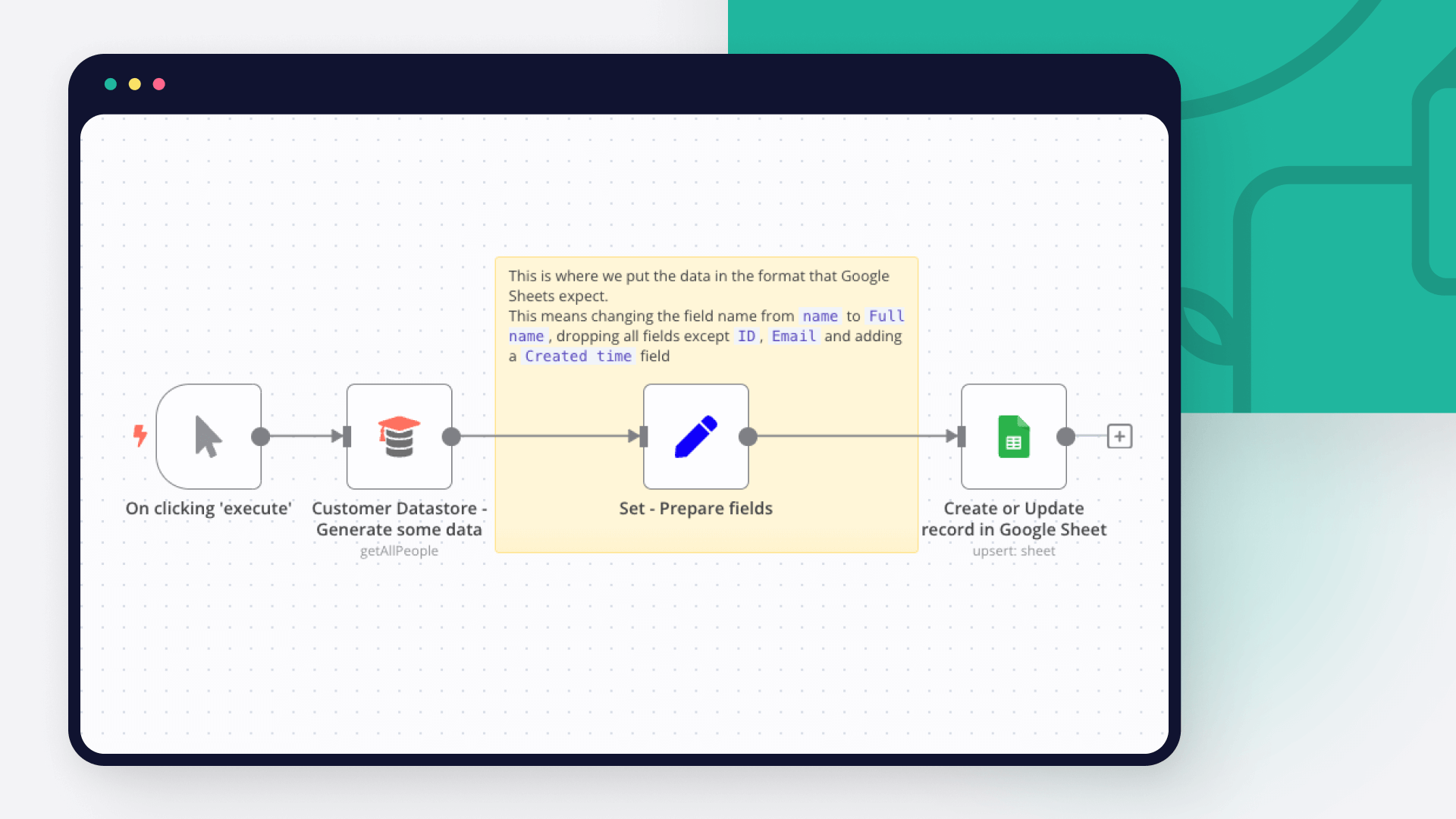
Step 1: Create a new workflow and add the first step

In n8n, click the "Add workflow" button in the Workflows tab to create a new workflow. Add the starting point – a trigger on when your workflow should run: an app event, a schedule, a webhook call, another workflow, an AI chat, or a manual trigger. Sometimes, the HTTP Request node might already serve as your starting point.
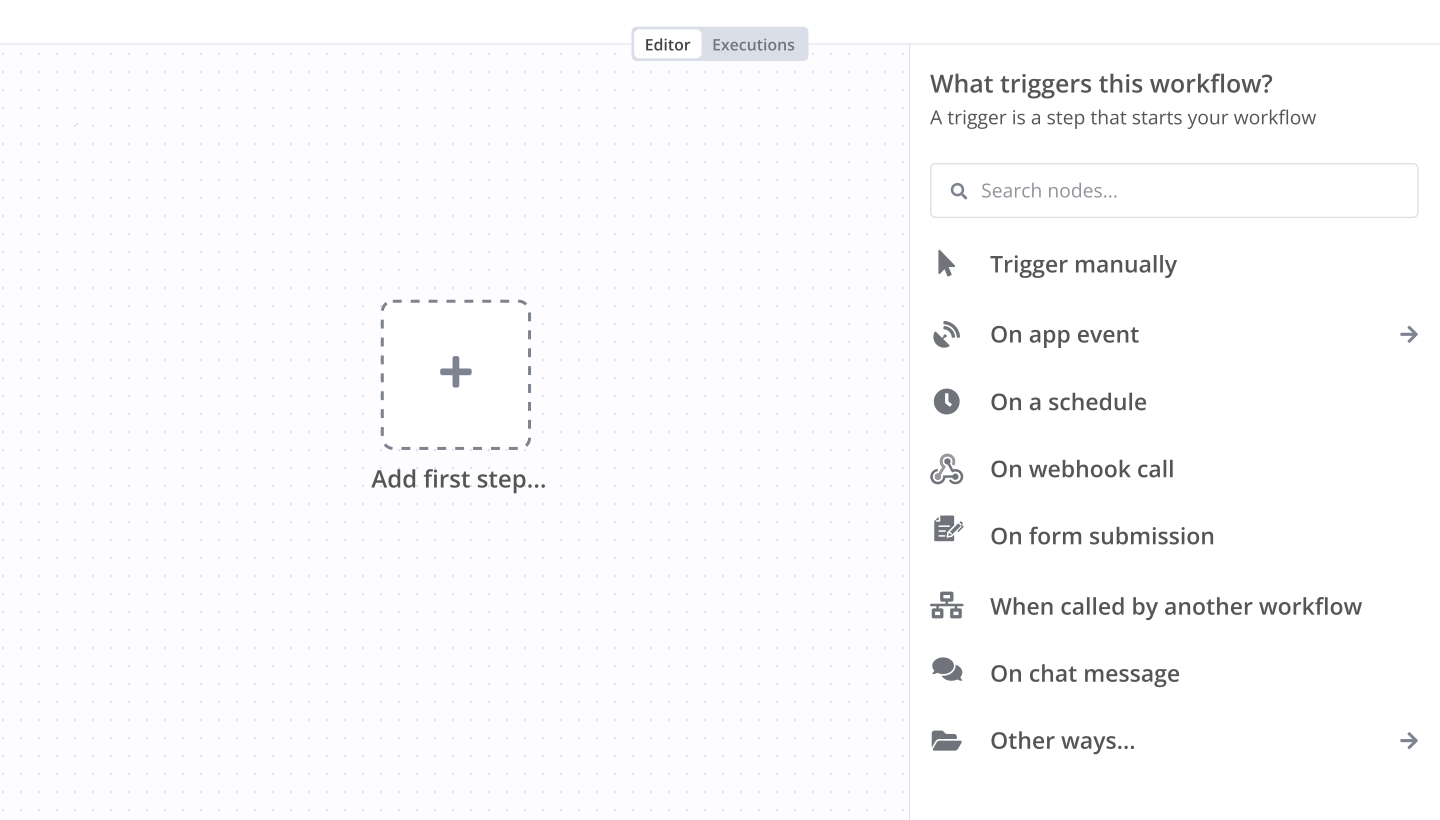
Google Sheets and Stripe integration: Create a new workflow and add the first step

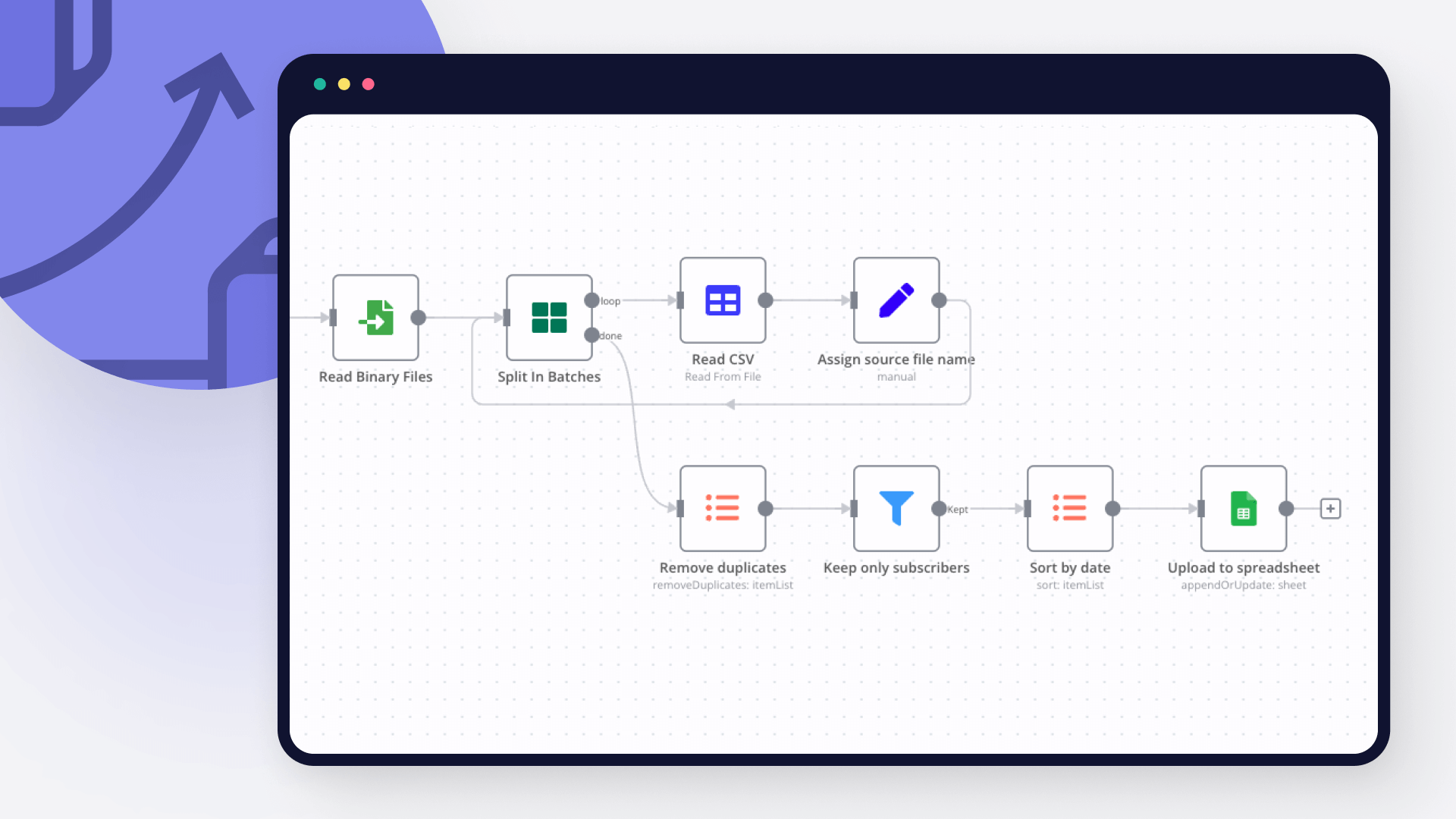
Step 2: Add and configure Google Sheets and Stripe nodes

You can find Google Sheets and Stripe in the nodes panel. Drag them onto your workflow canvas, selecting their actions. Click each node, choose a credential, and authenticate to grant n8n access. Configure Google Sheets and Stripe nodes one by one: input data on the left, parameters in the middle, and output data on the right.

Google Sheets and Stripe integration: Add and configure Google Sheets and Stripe nodes

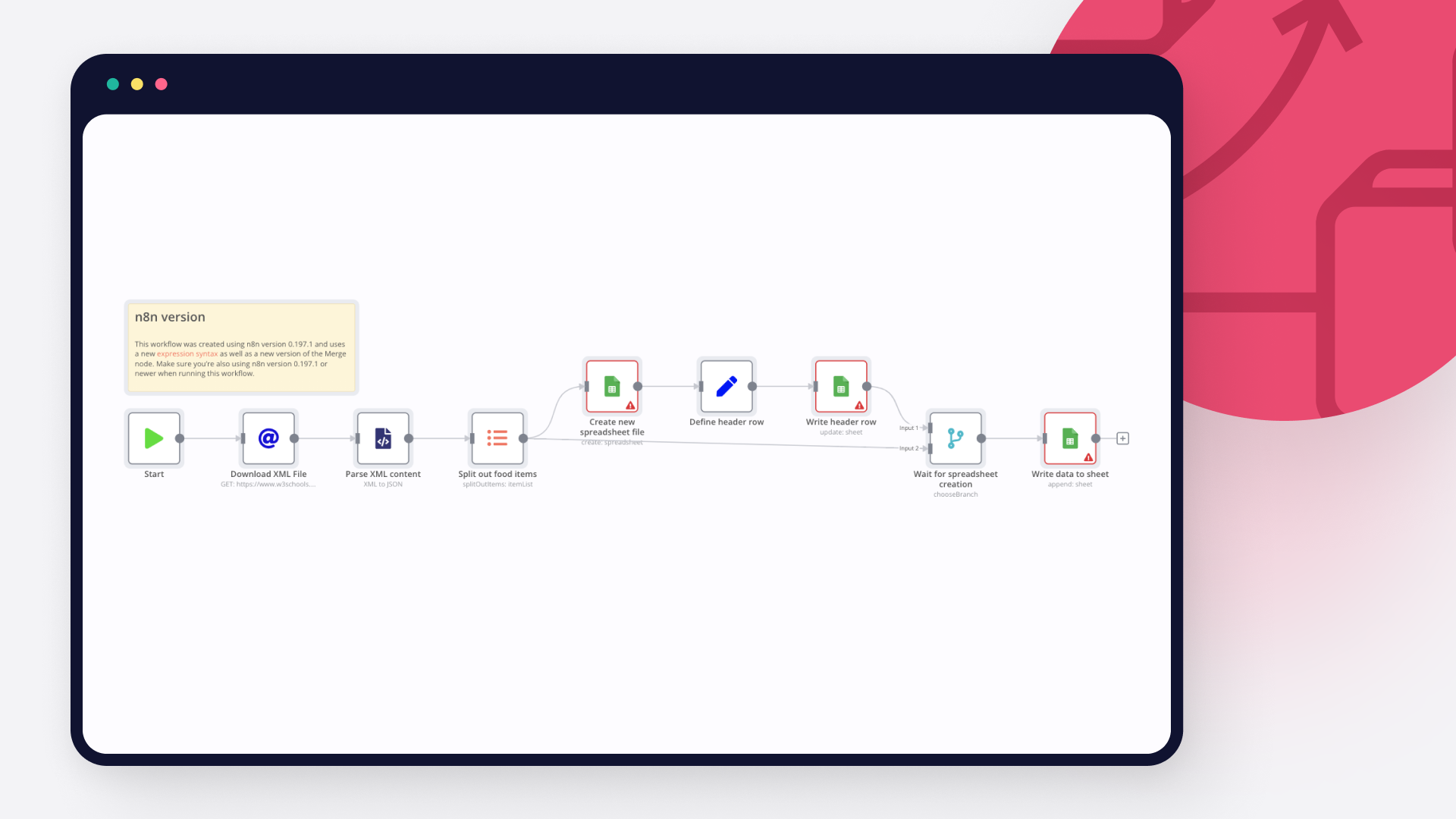
Step 3: Connect Google Sheets and Stripe

A connection establishes a link between Google Sheets and Stripe (or vice versa) to route data through the workflow. Data flows from the output of one node to the input of another. You can have single or multiple connections for each node.

Google Sheets and Stripe integration: Connect Google Sheets and Stripe

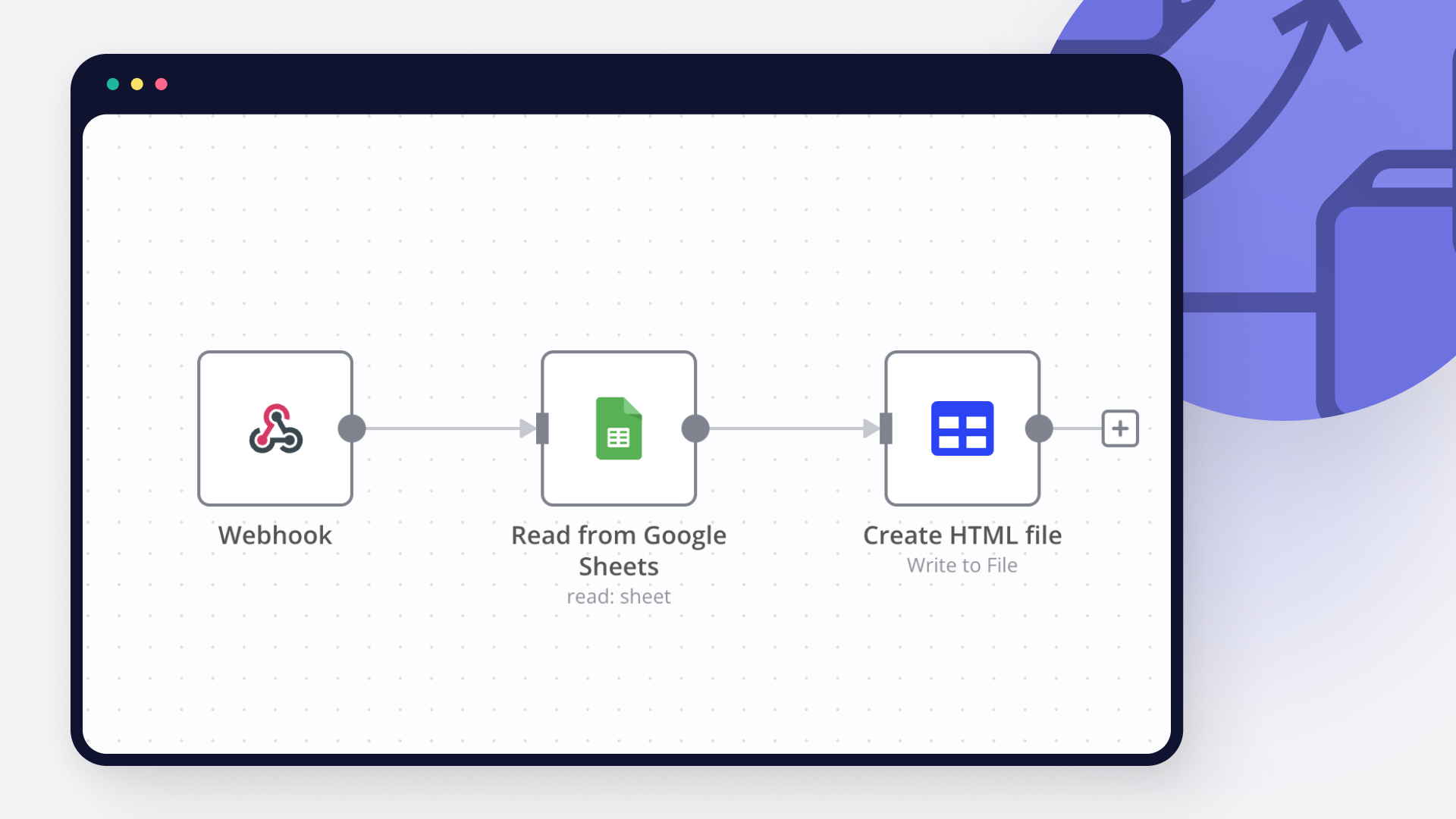
Step 4: Customize and extend your Google Sheets and Stripe integration

Use n8n's core nodes such as If, Split Out, Merge, and others to transform and manipulate data. Write custom JavaScript or Python in the Code node and run it as a step in your workflow. Connect Google Sheets and Stripe with any of n8n’s 1000+ integrations, and incorporate advanced AI logic into your workflows.

Google Sheets and Stripe integration: Customize and extend your Google Sheets and Stripe integration

Step 5: Test and activate your Google Sheets and Stripe workflow

Save and run the workflow to see if everything works as expected. Based on your configuration, data should flow from Google Sheets to Stripe or vice versa. Easily debug your workflow: you can check past executions to isolate and fix the mistake. Once you've tested everything, make sure to save your workflow and activate it.

Google Sheets and Stripe integration: Test and activate your Google Sheets and Stripe workflow

Streamline your Zoom meetings with secure, automated Stripe payments

🎉 Do you want to master AI automation, so you can save time and build cool stuff?

I’ve created a welcoming Skool community for non-technical yet resourceful learners.

👉🏻 Join the AI Atelier 👈🏻

Unlock streamlined Zoom Meeting organization and exclusive access management with this n8n workflow. Designed for educators, event organizers, and businesses, this tool automates your event logistics, so you can focus on delivering valuable content.

Features
Zoom Meetings Creation:** Instantly generate new Zoom meetings with the n8n built-in form.
Collect Payments Using Stripe:** Effortlessly monetize your events with secure, automatically created Stripe payment pages for each meeting.
Exclusive Gated Access:** Ensure your content remains exclusive by sending Zoom meeting passwords only to verified subscribers who have completed their payment through Stripe.
Participants Email Notifications:** Automate the distribution of Zoom meeting details post-payment, eliminating the need for manual email management and ensuring participants are promptly informed.
Instant and Easy Participants Overview:** Manage and track your event registrations with ease. All related data is stored in a Google Sheets document that you own. You're notified via email with each new subscription, simplifying participant management.

Set Up Steps
Connect your Zoom, Stripe, Gmail and Google Sheet credentials.
Create an empty Google Sheet in your Google Drive.
Fill the config node (Sheet URL, email and currency).
Edit email text.

This n8n workflow template is designed to minimize setup time and maximize efficiency, allowing you to focus on delivering value to your subscribers. With just a few clicks, you can automate the entire process of organizing and monetizing your Zoom meetings.

Created by the n8ninja.

Nodes used in this workflow

Popular Google Sheets and Stripe workflows

🚀 Automated Stripe Payment Recovery: Track Failures & Follow-Up Emails

🚀 Automated Stripe Payment Recovery Workflow (n8n) Detect failed payments, log them, and send polite follow-up emails to recover revenue — all automated with n8n. ✅ Part A – Detect & log failed payments What it does: Listens for failed Stripe payments. Extracts customer & payment info. Logs them neatly in Google Sheets for follow-up. 🧩 Nodes: 1️⃣ Stripe Trigger Listens to: payment_intent.payment_failed 2️⃣ Set node Extracts & maps fields: Name, Email, Amount (in cents), Currency payment\_intent\_id added\_at → {{ $now }} email\_sent\_count → 0 3️⃣ Remove Duplicates Keeps the sheet clean (avoids duplicate rows). 4️⃣ Google Sheets node Append or update row: Name, Email, Amount/100, Currency, payment\_intent\_id, added\_at, email\_sent\_count > 📌 This builds your “failed payments queue” to drive the follow-up emails later. 🔁 Part B – Daily follow-up emails What it does: Runs daily. Checks which users haven’t received 2 emails yet. Sends reminder emails and tracks how many were sent. 🧩 Nodes: 1️⃣ Schedule Trigger Runs every day at 10 AM (0 10 * * *) 2️⃣ Get Payment Failure Leads Reads rows from Google Sheet. 3️⃣ Switch node (Check for no. of emails sent) If email_sent_count < 1 → send first email. Else if email_sent_count < 2 → send second email. Else → mark as "quit sending emails". 4️⃣ Send First Email Sends a gentle reminder with billing page button. 5️⃣ Update Email Count Increments email_sent_count by +1 in Google Sheets. 6️⃣ Send Second Email Sends final, urgent reminder. 7️⃣ Quit Sending Emails to these Leads Marks that no more emails should be sent. 📝 Headline > 🚀 Automated Stripe Payment Recovery: Track Failures & Send Follow-Up Emails via n8n ✅ Why this matters: Catch failed payments automatically. Log every attempt & follow-up count. Recover lost revenue while staying polite and respectful. Avoid spamming by capping follow-ups to 2 emails.
+2

Send personalized SaaS welcome emails with Stripe, Pinecone, GPT-4o, and Gmail

Who it's for SaaS founders and developers who want to automate their customer onboarding experience from payment to welcome email, without any manual work. How it works A Stripe Trigger listens for successful payment events. The payment amount is converted and used to identify the subscription tier. Customer details are extracted from the Stripe payload. The AI Agent queries Pinecone to retrieve the correct plan details and generates a personalised HTML welcome email with the renewal date calculated automatically. The email is parsed and sent via Gmail. Customer details and subscription info are logged to Google Sheets for renewal tracking. Set up steps Connect your Stripe account and point it to listen for checkout.session.completed events. Store your tier information as chunks in Pinecone. Add your OpenAI credentials for the AI Agent and Embeddings nodes. Connect Gmail as your sending account. Create a Google Sheet with columns: Name, Email, Amount, Tier, Renewal Date, Status. Requirements Stripe account Pinecone account with tier knowledge base uploaded OpenAI account Gmail account Google Sheets
+3

Automated Template Delivery System with Stripe, GPT-4o & Gmail

📊 Description Automate post-purchase workflows by instantly fetching successful Stripe payments, matching them to corresponding automation templates in Google Sheets, and sending customers personalized access emails using AI-generated content. This system ensures each buyer receives their digital template, password, and onboarding details automatically after payment. 💳📩🤖 What This Template Does Step 1: Triggers daily at 7:00 AM IST to fetch all successful payment charges from Stripe. ⏰ Step 2: Retrieves payment intent and product details for each successful charge to enrich context. 💰 Step 3: Validates required fields (order reference, product name, customer name, email). ✅ Step 4: Matches purchased product with the automation record in Google Sheets via AI lookup. 🔍 Step 5: Combines Stripe and Sheet data into one record, ensuring accuracy and completeness. 🔄 Step 6: Filters out already-processed customers to avoid duplicate sends. 🧮 Step 7: Generates a personalized thank-you email using Azure OpenAI (GPT-4o-mini) including access links, password, and onboarding tips. 💌 Step 8: Sends the email through Gmail to the customer automatically. 📧 Step 9: Logs each transaction and email delivery into Google Sheets for tracking and auditing. 📊 Key Benefits ✅ Fully automated Stripe-to-email delivery flow ✅ Zero manual intervention — instant template delivery ✅ AI-personalized HTML emails with customer details ✅ Centralized purchase logging and analytics ✅ Eliminates duplicates and ensures smooth customer experience Features Scheduled daily trigger (7:00 AM IST) Stripe API integration for payment and product details Google Sheets lookup for automation files and passwords GPT-powered email content generation Gmail API integration for delivery Google Sheets logging for audit trail Requirements Stripe API credentials Google Sheets OAuth2 credentials Gmail OAuth2 credentials Azure OpenAI API credentials Target Audience SaaS or digital product sellers using Stripe Automation template marketplaces Small teams delivering digital assets via email Businesses seeking instant customer fulfillment
+4

Automated Revenue Predictions from Stripe Data with GPT-4 and Google Sheets

CFO Forecasting Agent - Marketplace Listing Headlines (Choose Your Favorite) Option 1 - Direct & Professional "AI-Powered CFO Forecasting Agent: Automated Revenue Predictions from Stripe Data" Option 2 - Benefit-Focused "Automate Your Financial Forecasting: Daily Revenue Predictions with AI Intelligence" Option 3 - Action-Oriented "Transform Stripe Sales Data into Intelligent 3-Month Revenue Forecasts Automatically" Marketplace Description 🚀 AI-Powered Financial Forecasting on Autopilot Turn your Stripe sales data into intelligent revenue forecasts with this comprehensive CFO Forecasting Agent. This workflow automatically analyzes your transaction history, identifies trends, and generates professional 3-month revenue predictions using OpenAI's GPT-4. ✨ What This Workflow Does: 📊 Automated Data Collection**: Fetches and processes all Stripe charges daily 🤖 AI-Powered Analysis**: Uses OpenAI GPT-4 to analyze trends and predict future revenue 📈 Structured Forecasting**: Generates monthly forecasts with confidence levels and insights 💾 Multi-Platform Storage**: Saves results to both Supabase database and Google Sheets 🕒 Scheduled Execution**: Runs automatically every day to keep forecasts current 🧠 Smart Context**: Optional Pinecone integration for historical context and improved accuracy 🔧 Key Features: Daily automated execution** at 9 AM Structured JSON output** with forecasts, trends, and confidence levels Dual storage system** for data backup and easy reporting RAG-enabled** for enhanced forecasting with historical context Professional CFO-grade insights** and trend analysis 📋 Prerequisites: Stripe account with API access OpenAI API key (GPT-4 recommended) Google Sheets API credentials Supabase account (optional) Pinecone account (optional, for enhanced context) 🎯 Perfect For: SaaS companies tracking subscription revenue E-commerce businesses needing sales forecasts Startups requiring investor-ready financial projections Finance teams automating reporting workflows 📦 What You Get: Complete n8n workflow with all nodes configured Detailed documentation and setup instructions Sample data structure and output formats Ready-to-use Google Sheets template 💡 Need Help or Want to Learn More? Created by Yaron Been - Automation & AI Specialist 📧 Support: [email protected] 🎥 YouTube Tutorials: https://www.youtube.com/@YaronBeen/videos 💼 LinkedIn: https://www.linkedin.com/in/yaronbeen/ Get more automation tips, tutorials, and advanced workflows on my channels! 🏷️ Tags: AI, OpenAI, Stripe, Forecasting, Finance, CFO, Automation, Revenue, Analytics, GPT-4
+5

Monitor agency profitability with Facebook Ads, Shopify, Stripe, Clockify, Google Sheets, Slack and Gemini

Overview Stop guessing your agency's actual margins. This workflow acts as a centralized financial brain for digital marketing agencies. It aggregates real-time data from your time-tracking, ad platforms, and payment processors to calculate precise profitability metrics (Gross Profit, Net Margin, ROAS, and Efficiency). It doesn't just crunch numbers; it uses Google Gemini to act as a virtual CFO, analyzing the data and sending an executive summary to Slack with actionable insights, while simultaneously archiving the data to Google Sheets for historical trending. Key Features Multi-Source Aggregation: Pulls data from Facebook Ads, Google Ads, Shopify, Stripe, and Clockify. Smart Cost Allocation: Automatically calculates overhead (default 30%) and software costs against your gross revenue. AI Analysis: Uses Google Gemini to review the calculated metrics and draft a "Human-readable" executive summary for Slack. Dual Output: Sends instant alerts to Slack and logs granular data to Google Sheets. How to Setup Configure Credentials Ensure you have authenticated credentials for: Clockify Stripe & Shopify Facebook Marketing API & Google Ads Google Sheets & Google Gemini (PaLM) Slack Prepare Google Sheet Create a new Google Sheet with the following headers in Row 1: timestamp, date, totalRevenue, totalAdSpend, facebookAdSpend, googleAdSpend, totalTimeCost, grossProfit, profitMargin, roas. Adjust Logic Configuration Open the "Code in JavaScript" node. At the very top, you will see a CONFIG object. Edit these values to match your agency's model: const CONFIG = { platformFeeRate: 0.029, // Stripe/Shopify fees monthlySoftwareCosts: 500, // Fixed monthly SaaS costs overheadRate: 0.30, // Overhead % (rent, admin, etc) minProfitMargin: 20 // Target margin % }; Remove Mock Data The template includes "Set" nodes with mock data for testing purposes. Simply bypass these nodes and connect the API nodes directly to the "Merge" node when you are ready to go live.

Kick off client projects after Stripe payment with Google Drive, ClickUp, Gmail, Sheets, and Slack

Create Job Folders, Tasks, Alerts, and Onboarding Emails After Stripe Payment with Google Drive, ClickUp, and Slack Categories: Payments, Project Operations, Client Onboarding This workflow creates a complete payment → project kickoff system for service-based businesses. Once a client pays via Stripe, the system automatically provisions project infrastructure, records the order, notifies the team, and sends clear next steps to the client. Built for operational reliability rather than flash, this workflow proves that strong client experiences come from consistent execution, not manual coordination. Benefits Instant Project Kickoff** – Projects are fully set up the moment payment clears Operational Consistency** – Every client starts with the same clean structure Fail‑Loud Safeguards** – Critical errors stop execution and alert the team Reduced Manual Ops** – No copying data across tools after payment Professional Client Experience** – Immediate confirmation and next steps Fully Customizable** – Folder structures and tasks are examples, not constraints How It Works Payment & Validation Listens for successful Stripe payments Verifies required customer and package data Prevents partial setup if data is missing Client & Order Identification Locates the client in your CRM using email Creates an internal order record as a source of truth Project Infrastructure Provisioning Creates a project folder structure in Google Drive (example configuration) Creates a ClickUp project list with default tasks (example configuration) Communication & Handoff Sends a welcome email with onboarding instructions to the client Notifies the internal team in Slack that work can begin Error Handling Critical failures stop execution and surface alerts Non‑critical failures alert the team but allow progress This staged approach keeps the workflow easy to reason about and safe to operate at scale. Required Setup Configuration Core Configuration Update the Workflow Configuration node: intakeFormUrl – Your onboarding or intake form parentFolderId – Google Drive folder where client projects live Required Integrations Stripe Google Drive Google Sheets (CRM + Orders) ClickUp Gmail Slack Once credentials are connected and configuration values are set, the workflow is ready for testing. Project Structure (Example Configuration) The structures below are examples only. They demonstrate how the workflow provisions infrastructure automatically. You can freely rename, remove, or replace folders and tasks to match any service or industry. Google Drive Example folder structure: YYYY-MM — Client Name — Package ├─ 01-Intake ├─ 02-Logo ├─ 03-Brand Kit ├─ 04-Website └─ 05-Final Delivery ClickUp Example default tasks: Brand Questionnaire Review Logo Concepts Brand Kit Website Build All task names, counts, and priorities are customizable. Business Use Cases Agencies delivering repeatable services Productized service businesses Freelancers managing multiple paid engagements Internal teams onboarding clients or stakeholders If work begins after payment, this workflow fits. Business Impact Faster project start times Fewer setup errors Clear ownership between sales and delivery Improved client confidence after payment Reduced operational overhead as volume scales The payment moment becomes a clean handoff instead of an operational bottleneck. Difficulty & Cost Difficulty Level:** Intermediate Estimated Setup Time:** 30–45 minutes Monthly Operating Cost:** ~$0–$10 (API usage dependent) Installation Steps Connect all required credentials Update the Workflow Configuration node Run a test Stripe payment Verify folders, tasks, email, and Slack alerts Activate the workflow Customization & Extensions This workflow is designed to plug cleanly into a larger end‑to‑end sales → delivery automation system. If you are building multiple automations, this template typically sits in the middle of the lifecycle. How It Fits Into a Larger System Common upstream and downstream integrations include: Lead & Opportunity Pipelines** When combined with lead scraping, enrichment, and qualification workflows, this automation acts as the handoff point where a qualified opportunity becomes a paid project. Proposal & Payment Flows** This workflow is commonly triggered after an automated proposal + Stripe checkout flow, ensuring that once payment clears, production begins immediately with no manual coordination. Client Intake & Brief Generation** The welcome email can link directly into automated intake form workflows that convert responses into structured briefs, creative direction, or production instructions. Production & Delivery Pipelines** Project folders and tasks created here can act as triggers for downstream workflows such as approvals, revision tracking, asset delivery, or website launches. Typical Expansion Path For fast ROI, many teams implement these stages in order: Payment → Project Kickoff (this workflow) Intake Form → Structured Brief Production Pipelines (Design / Website / Delivery) Additional layers such as lead scraping, outbound outreach, and nurture engines can be added before this workflow once delivery operations are stable. If you’re curious, I’ve built other templates that cover the steps before and after this one (lead gen, proposals, intake, production, etc.). You can find those on my profile — they’re designed to work together, but each one stands on its own.

Build your own Google Sheets and Stripe integration

Create custom Google Sheets and Stripe workflows by choosing triggers and actions. Nodes come with global operations and settings, as well as app-specific parameters that can be configured. You can also use the HTTP Request node to query data from any app or service with a REST API.

Google Sheets supported actions

Create
Create a spreadsheet
Delete
Delete a spreadsheet
Append or Update Row
Append a new row or update an existing one (upsert)
Append Row
Create a new row in a sheet
Clear
Delete all the contents or a part of a sheet
Create
Create a new sheet
Delete
Permanently delete a sheet
Delete Rows or Columns
Delete columns or rows from a sheet
Get Row(s)
Retrieve one or more rows from a sheet
Update Row
Update an existing row in a sheet

Stripe supported actions

Get
Get a balance
Create
Create a charge
Get
Get a charge
Get Many
Get many charges
Update
Update a charge
Create
Create a coupon
Get Many
Get many coupons
Create
Create a customer
Delete
Delete a customer
Get
Get a customer
Get Many
Get many customers
Update
Update a customer
Add
Add a customer card
Get
Get a customer card
Remove
Remove a customer card
Create
Create a meter event
Create
Create a source
Delete
Delete a source
Get
Get a source
Create
Create a token

FAQs

  • Can Google Sheets connect with Stripe?

  • Can I use Google Sheets’s API with n8n?

  • Can I use Stripe’s API with n8n?

  • Is n8n secure for integrating Google Sheets and Stripe?

  • How to get started with Google Sheets and Stripe integration in n8n.io?

Need help setting up your Google Sheets and Stripe integration?

Discover our latest community's recommendations and join the discussions about Google Sheets and Stripe integration.
Sergey Komardenkov
sérgio eduardo floresta filho
Julian
therealJMT
Guilherme

Looking to integrate Google Sheets and Stripe in your company?

Over 3000 companies switch to n8n every single week

Why use n8n to integrate Google Sheets with Stripe

Build complex workflows, really fast

Build complex workflows, really fast

Handle branching, merging and iteration easily.
Pause your workflow to wait for external events.

Code when you need it, UI when you don't

Simple debugging

Your data is displayed alongside your settings, making edge cases easy to track down.

Use templates to get started fast

Use 1000+ workflow templates available from our core team and our community.

Reuse your work

Copy and paste, easily import and export workflows.

Implement complex processes faster with n8n

red iconyellow iconred iconyellow icon