Back to Integrations
integrationGoogle Sheets node
integrationurlscan.io node

Google Sheets and urlscan.io integration

Save yourself the work of writing custom integrations for Google Sheets and urlscan.io and use n8n instead. Build adaptable and scalable Data & Storage, Productivity, Development, and Utility workflows that work with your technology stack. All within a building experience you will love.

How to connect Google Sheets and urlscan.io

  • Step 1: Create a new workflow
  • Step 2: Add and configure nodes
  • Step 3: Connect
  • Step 4: Customize and extend your integration
  • Step 5: Test and activate your workflow

Step 1: Create a new workflow and add the first step

In n8n, click the "Add workflow" button in the Workflows tab to create a new workflow. Add the starting point – a trigger on when your workflow should run: an app event, a schedule, a webhook call, another workflow, an AI chat, or a manual trigger. Sometimes, the HTTP Request node might already serve as your starting point.
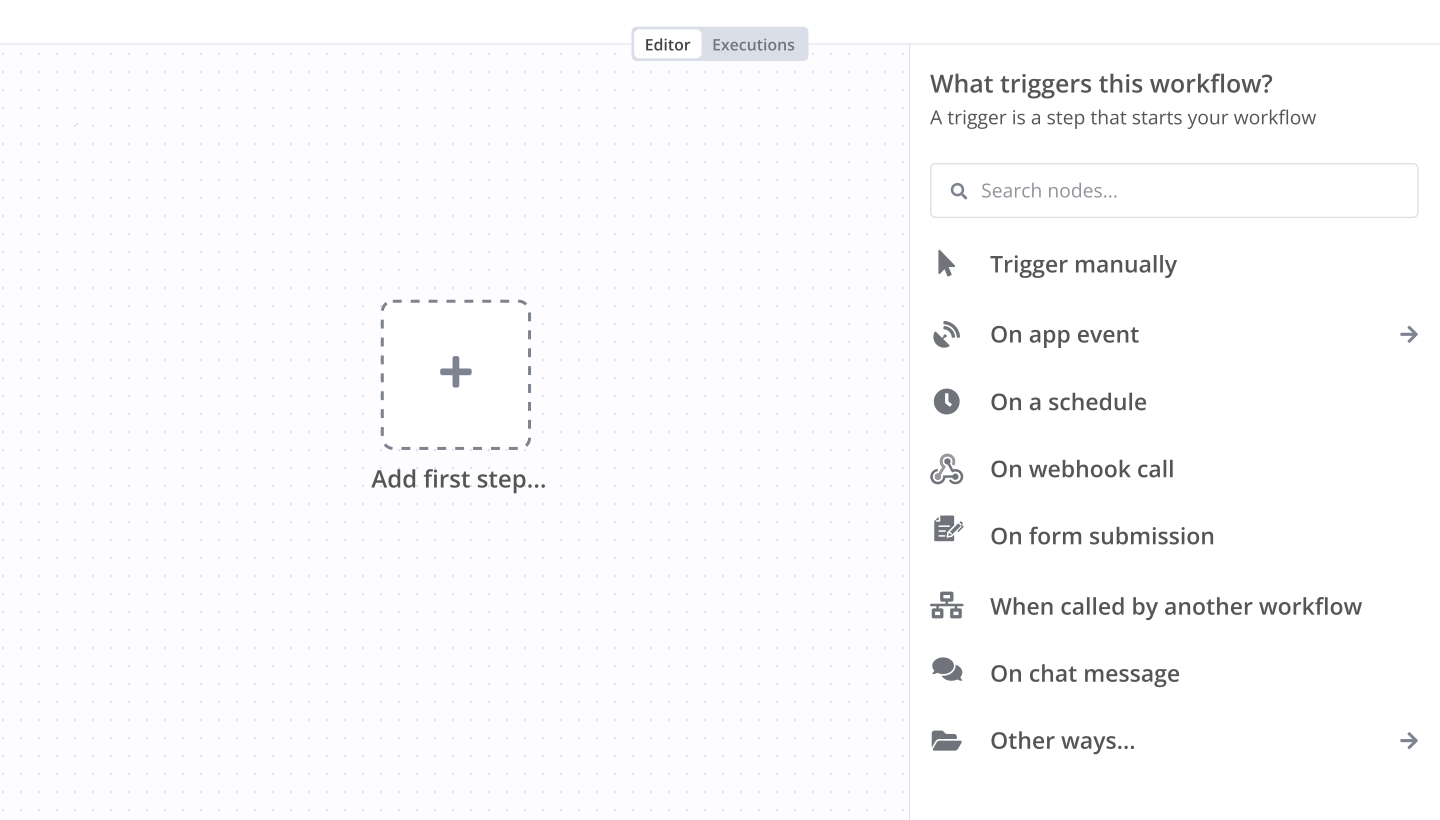
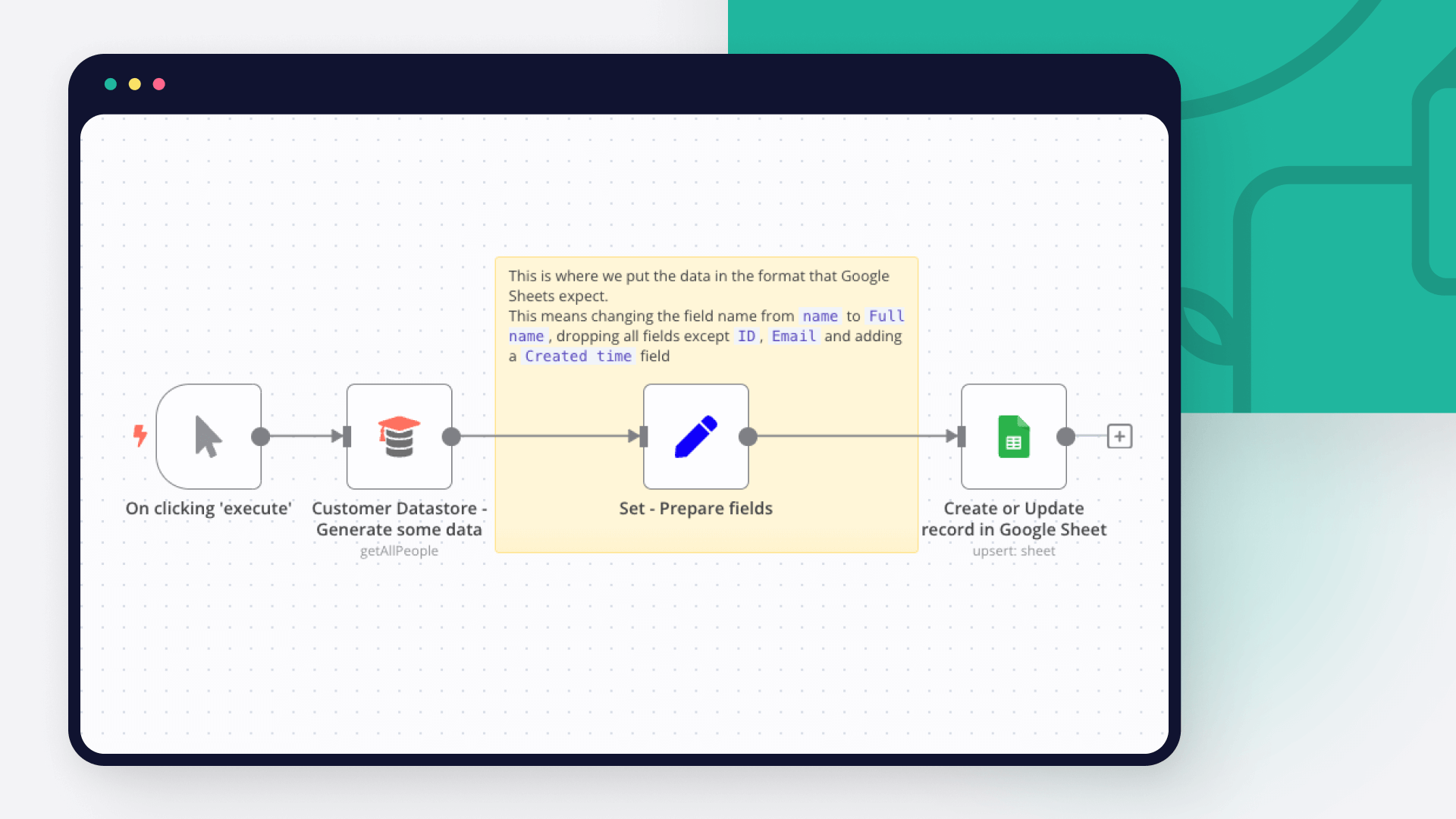
Google Sheets and urlscan.io integration: Create a new workflow and add the first step

Step 2: Add and configure Google Sheets and urlscan.io nodes

You can find Google Sheets and urlscan.io in the nodes panel. Drag them onto your workflow canvas, selecting their actions. Click each node, choose a credential, and authenticate to grant n8n access. Configure Google Sheets and urlscan.io nodes one by one: input data on the left, parameters in the middle, and output data on the right.

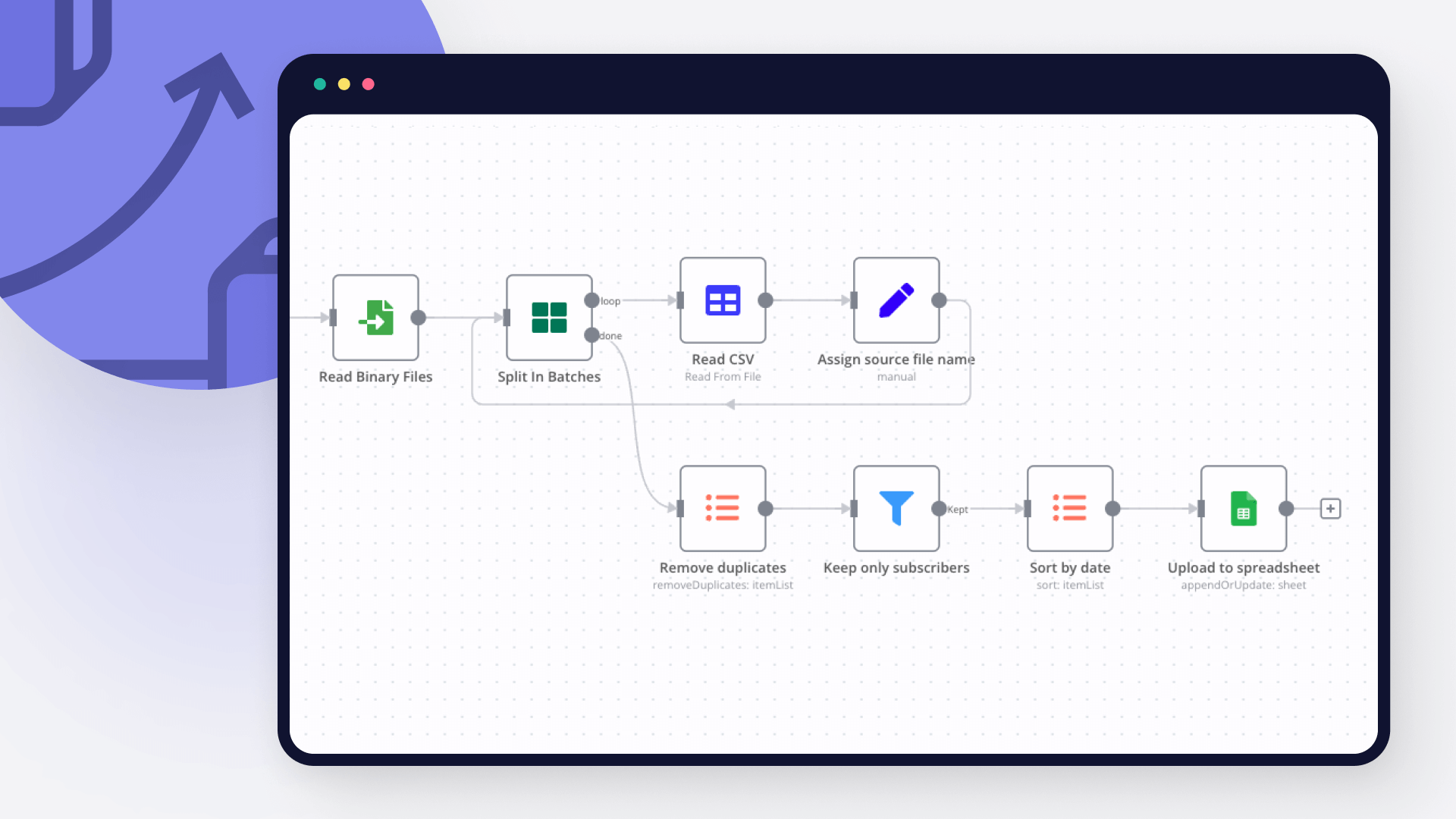
Google Sheets and urlscan.io integration: Add and configure Google Sheets and urlscan.io nodes

Step 3: Connect Google Sheets and urlscan.io

A connection establishes a link between Google Sheets and urlscan.io (or vice versa) to route data through the workflow. Data flows from the output of one node to the input of another. You can have single or multiple connections for each node.

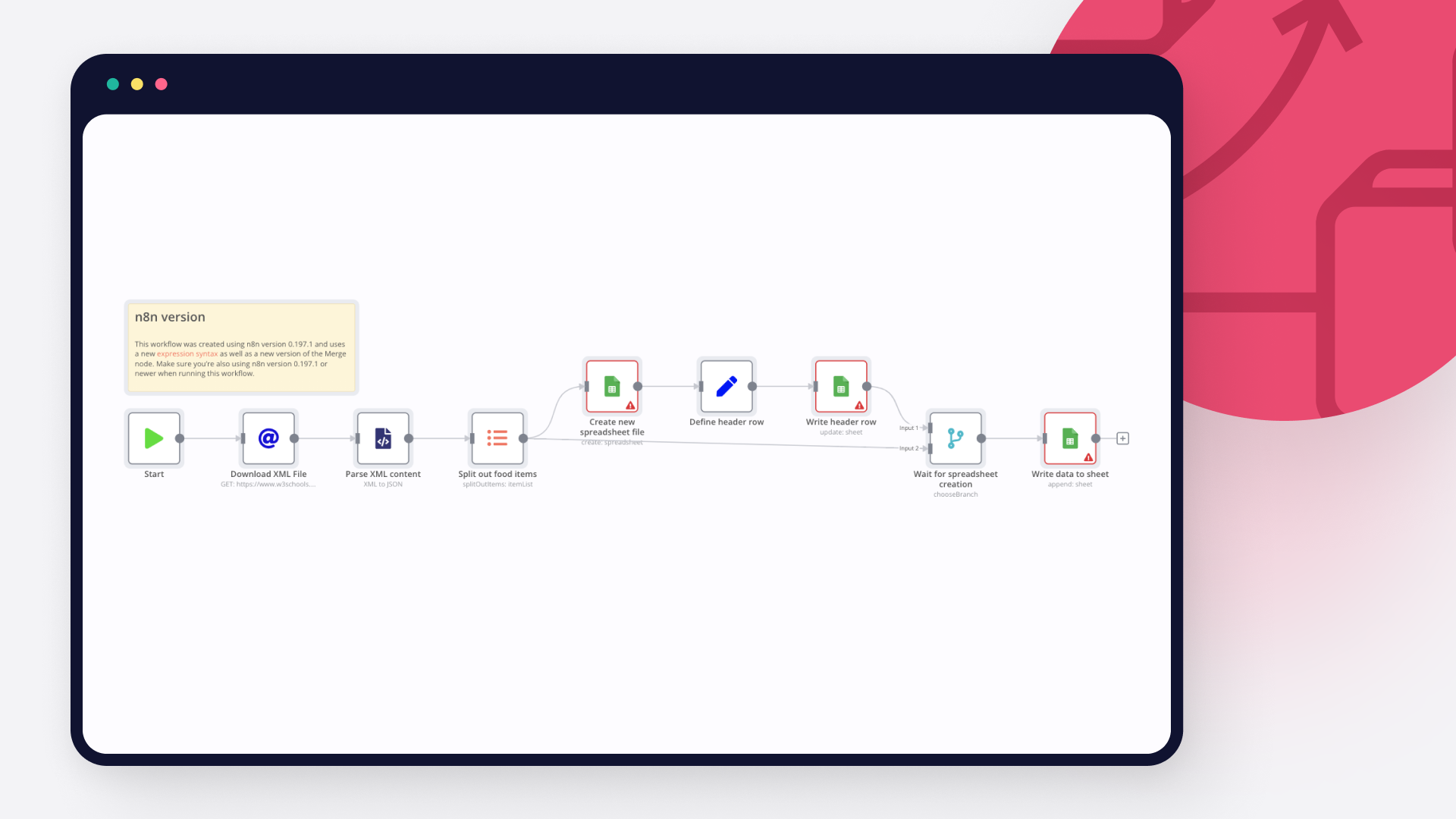
Google Sheets and urlscan.io integration: Connect Google Sheets and urlscan.io

Step 4: Customize and extend your Google Sheets and urlscan.io integration

Use n8n's core nodes such as If, Split Out, Merge, and others to transform and manipulate data. Write custom JavaScript or Python in the Code node and run it as a step in your workflow. Connect Google Sheets and urlscan.io with any of n8n’s 1000+ integrations, and incorporate advanced AI logic into your workflows.

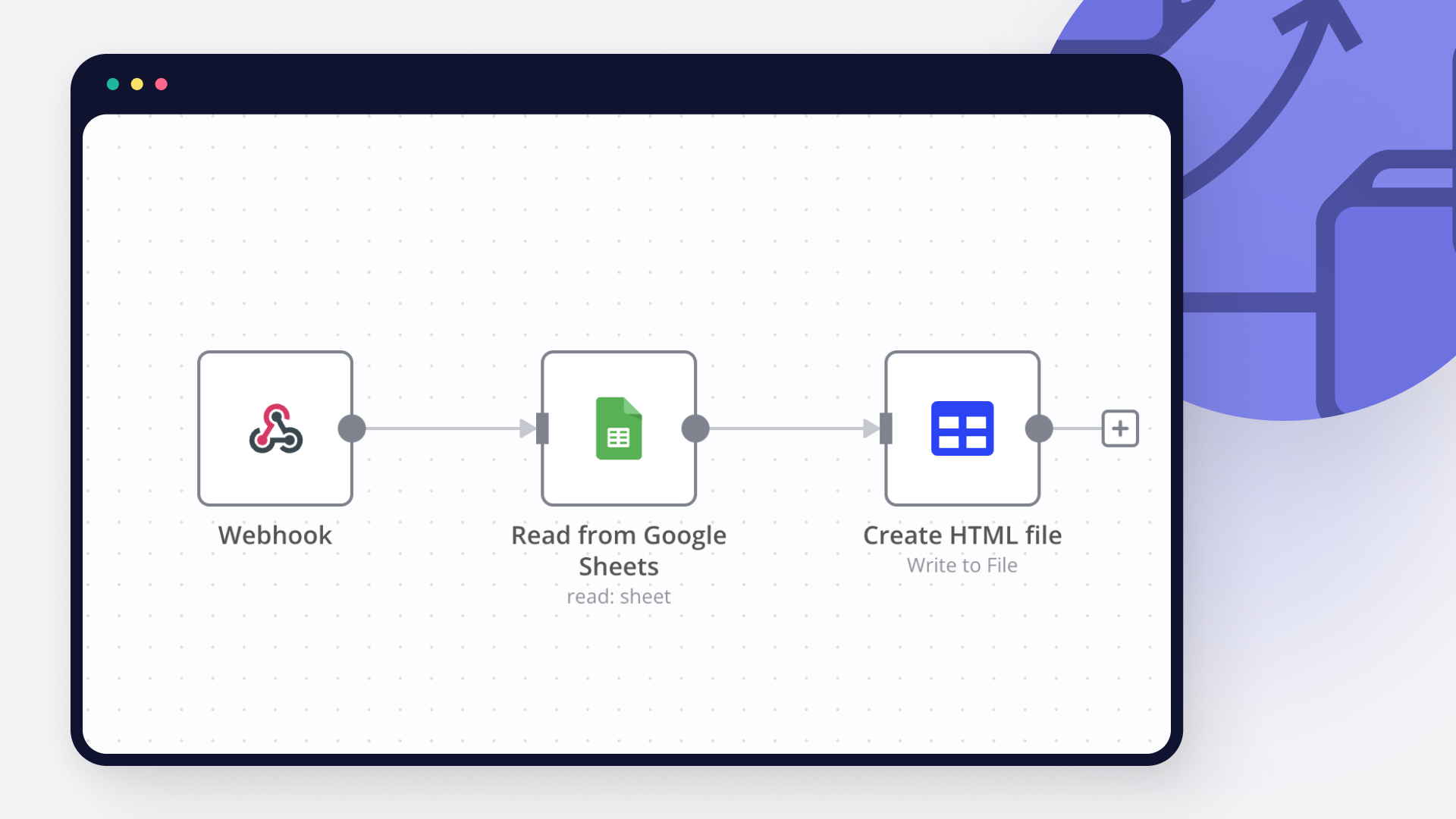
Google Sheets and urlscan.io integration: Customize and extend your Google Sheets and urlscan.io integration

Step 5: Test and activate your Google Sheets and urlscan.io workflow

Save and run the workflow to see if everything works as expected. Based on your configuration, data should flow from Google Sheets to urlscan.io or vice versa. Easily debug your workflow: you can check past executions to isolate and fix the mistake. Once you've tested everything, make sure to save your workflow and activate it.

Google Sheets and urlscan.io integration: Test and activate your Google Sheets and urlscan.io workflow

Check suspicious links via Telegram with GPT-4 analysis of VirusTotal & urlscan.io results

Workflow Purpose
The workflow is designed to scan submitted URLs using urlscan.io and VirusTotal, combine the results into a single structured summary, and send the report via Telegram.

I built this workflow for people who primarily work from their phones and receive a constant stream of emails throughout the day. If a user gets an email asking them to sign a document, review a report, or take any action where the link looks suspicious, they can simply open the Telegram bot and quickly check whether the URL is safe before clicking it.

Key Components

  1. Input / Trigger
    Accepts URLs that need to be checked.
    Initiates requests to VirusTotal and urlscan.io.

  2. VirusTotal Scan
    Always returns results if the URL is reachable.
    Provides reputation, malicious/clean flags, and scan metadata.

  3. urlscan.io Scan
    Returns details on how the URL behaves when loaded (domains, requests, resources, etc.).
    Sometimes fails due to blocks or restrictions.

  4. Error Handling with Code Node
    Checks whether urlscan.io responded successfully.
    Ensures the workflow always produces a summary, even if urlscan.io fails.

  5. Summary Generation
    If both scans succeed → summarize combined findings from VirusTotal + urlscan.io.
    If urlscan.io fails → state clearly in the summary “urlscan.io scan was blocked/failed. Relying on VirusTotal results.”
    Ensures user still gets a complete security report.

  6. Telegram Output
    Final formatted summary is delivered to a Telegram chat via the bot.
    Chat ID issue was fixed after the Code Node restructuring.

Outcome
The workflow now guarantees a consistent, user-friendly summary regardless of urlscan.io failures.
It leverages VirusTotal as the fallback source of truth.
The Telegram bot provides real-time alerts with clear indications of scan success/failure.

Prequisites
Telegram
In Telegram, start a chat with @BotFather.
Send /newbot, pick a name and a unique username.
Copy the HTTP API token BotFather returns (store securely)
Start a DM with your bot and send any message.
Call getUpdates and read the chat.id

urlscan.io
Create/log into your urlscan.io account.
Go to Settings & API → New API key and generate a key.
(Recommended) In Settings & API, set Default Scan Visibility to Unlisted to avoid exposing PII in public scans.
Save the key securely (env var or n8n Credentials).
Rate limits note: urlscan.io enforces per-minute/hour/day quotas; exceeding them returns HTTP 429. You can view your personal quotas on their dashboard/quotas endpoint

Virustotal
Sign up / sign in to VirusTotal Community.
Open My API key (Profile menu) and copy your Public API key.
Store it securely (env var or n8n Credentials).
For a more reliable connection with VirusTotal and improved scanning results, enable the Header section in the node settings. Add a header parameter with a clear name (e.g., x-apikey), and then paste your API key into the Value field.
Rate limits (Public API): 4 requests/minute, 500/day; not for commercial workflows. Consider Premium if you’ll exceed this.

How to Customize the Workflow
This workflow is designed to be highly customizable, allowing users to adapt it to their specific needs and use cases. For example, additional malicious website scanners can be integrated through HTTP Request nodes. To make this work, the user simply needs to update the Merge node so that all information flows correctly through the workflow.

In addition, users can connect either Gmail or Outlook nodes to automatically test URLs, binary attachments, and other types of information received via email—helping them evaluate data before opening it.

Users can also customize how they receive reports. For instance, results can be sent through Telegram (as in the default setup), Slack, Microsoft Teams, or even saved to Google Drive or a Google Sheet for recordkeeping and audit purposes.

For consulting and support, or if you have questions, please feel free to connect with me on Linkedin or via email.

Nodes used in this workflow

Popular Google Sheets and urlscan.io workflows

+3

Check Suspicious Links via Telegram with GPT-4 Analysis of VirusTotal & urlscan.io Results

Workflow Purpose The workflow is designed to scan submitted URLs using urlscan.io and VirusTotal, combine the results into a single structured summary, and send the report via Telegram. I built this workflow for people who primarily work from their phones and receive a constant stream of emails throughout the day. If a user gets an email asking them to sign a document, review a report, or take any action where the link looks suspicious, they can simply open the Telegram bot and quickly check whether the URL is safe before clicking it. Key Components Input / Trigger Accepts URLs that need to be checked. Initiates requests to VirusTotal and urlscan.io. VirusTotal Scan Always returns results if the URL is reachable. Provides reputation, malicious/clean flags, and scan metadata. urlscan.io Scan Returns details on how the URL behaves when loaded (domains, requests, resources, etc.). Sometimes fails due to blocks or restrictions. Error Handling with Code Node Checks whether urlscan.io responded successfully. Ensures the workflow always produces a summary, even if urlscan.io fails. Summary Generation If both scans succeed → summarize combined findings from VirusTotal + urlscan.io. If urlscan.io fails → state clearly in the summary “urlscan.io scan was blocked/failed. Relying on VirusTotal results.” Ensures user still gets a complete security report. Telegram Output Final formatted summary is delivered to a Telegram chat via the bot. Chat ID issue was fixed after the Code Node restructuring. Outcome The workflow now guarantees a consistent, user-friendly summary regardless of urlscan.io failures. It leverages VirusTotal as the fallback source of truth. The Telegram bot provides real-time alerts with clear indications of scan success/failure. Prequisites Telegram In Telegram, start a chat with @BotFather. Send /newbot, pick a name and a unique username. Copy the HTTP API token BotFather returns (store securely) Start a DM with your bot and send any message. Call getUpdates and read the chat.id urlscan.io Create/log into your urlscan.io account. Go to Settings & API → New API key and generate a key. (Recommended) In Settings & API, set Default Scan Visibility to Unlisted to avoid exposing PII in public scans. Save the key securely (env var or n8n Credentials). Rate limits note: urlscan.io enforces per-minute/hour/day quotas; exceeding them returns HTTP 429. You can view your personal quotas on their dashboard/quotas endpoint Virustotal Sign up / sign in to VirusTotal Community. Open My API key (Profile menu) and copy your Public API key. Store it securely (env var or n8n Credentials). For a more reliable connection with VirusTotal and improved scanning results, enable the Header section in the node settings. Add a header parameter with a clear name (e.g., x-apikey), and then paste your API key into the Value field. Rate limits (Public API): 4 requests/minute, 500/day; not for commercial workflows. Consider Premium if you’ll exceed this. How to Customize the Workflow This workflow is designed to be highly customizable, allowing users to adapt it to their specific needs and use cases. For example, additional malicious website scanners can be integrated through HTTP Request nodes. To make this work, the user simply needs to update the Merge node so that all information flows correctly through the workflow. In addition, users can connect either Gmail or Outlook nodes to automatically test URLs, binary attachments, and other types of information received via email—helping them evaluate data before opening it. Users can also customize how they receive reports. For instance, results can be sent through Telegram (as in the default setup), Slack, Microsoft Teams, or even saved to Google Drive or a Google Sheet for recordkeeping and audit purposes. For consulting and support, or if you have questions, please feel free to connect with me on Linkedin or via email.

Build your own Google Sheets and urlscan.io integration

Create custom Google Sheets and urlscan.io workflows by choosing triggers and actions. Nodes come with global operations and settings, as well as app-specific parameters that can be configured. You can also use the HTTP Request node to query data from any app or service with a REST API.

Google Sheets supported actions

Create
Create a spreadsheet
Delete
Delete a spreadsheet
Append or Update Row
Append a new row or update an existing one (upsert)
Append Row
Create a new row in a sheet
Clear
Delete all the contents or a part of a sheet
Create
Create a new sheet
Delete
Permanently delete a sheet
Delete Rows or Columns
Delete columns or rows from a sheet
Get Row(s)
Retrieve one or more rows from a sheet
Update Row
Update an existing row in a sheet

urlscan.io supported actions

Get
Get Many
Perform
Use case

Save engineering resources

Reduce time spent on customer integrations, engineer faster POCs, keep your customer-specific functionality separate from product all without having to code.

Learn more

FAQs

  • Can Google Sheets connect with urlscan.io?

  • Can I use Google Sheets’s API with n8n?

  • Can I use urlscan.io’s API with n8n?

  • Is n8n secure for integrating Google Sheets and urlscan.io?

  • How to get started with Google Sheets and urlscan.io integration in n8n.io?

Need help setting up your Google Sheets and urlscan.io integration?

Discover our latest community's recommendations and join the discussions about Google Sheets and urlscan.io integration.
Sergey Komardenkov
sérgio eduardo floresta filho
Julian
therealJMT
Guilherme

Looking to integrate Google Sheets and urlscan.io in your company?

Over 3000 companies switch to n8n every single week

Why use n8n to integrate Google Sheets with urlscan.io

Build complex workflows, really fast

Build complex workflows, really fast

Handle branching, merging and iteration easily.
Pause your workflow to wait for external events.

Code when you need it, UI when you don't

Simple debugging

Your data is displayed alongside your settings, making edge cases easy to track down.

Use templates to get started fast

Use 1000+ workflow templates available from our core team and our community.

Reuse your work

Copy and paste, easily import and export workflows.

Implement complex processes faster with n8n

red iconyellow iconred iconyellow icon