Back to Integrations
integrationHTTP Request node
integrationMailchimp node

HTTP Request and Mailchimp integration

Save yourself the work of writing custom integrations for HTTP Request and Mailchimp and use n8n instead. Build adaptable and scalable Development, Core Nodes, Marketing, and Communication workflows that work with your technology stack. All within a building experience you will love.

How to connect HTTP Request and Mailchimp

  • Step 1: Create a new workflow
  • Step 2: Add and configure nodes
  • Step 3: Connect
  • Step 4: Customize and extend your integration
  • Step 5: Test and activate your workflow

Step 1: Create a new workflow and add the first step

In n8n, click the "Add workflow" button in the Workflows tab to create a new workflow. Add the starting point – a trigger on when your workflow should run: an app event, a schedule, a webhook call, another workflow, an AI chat, or a manual trigger. Sometimes, the HTTP Request node might already serve as your starting point.
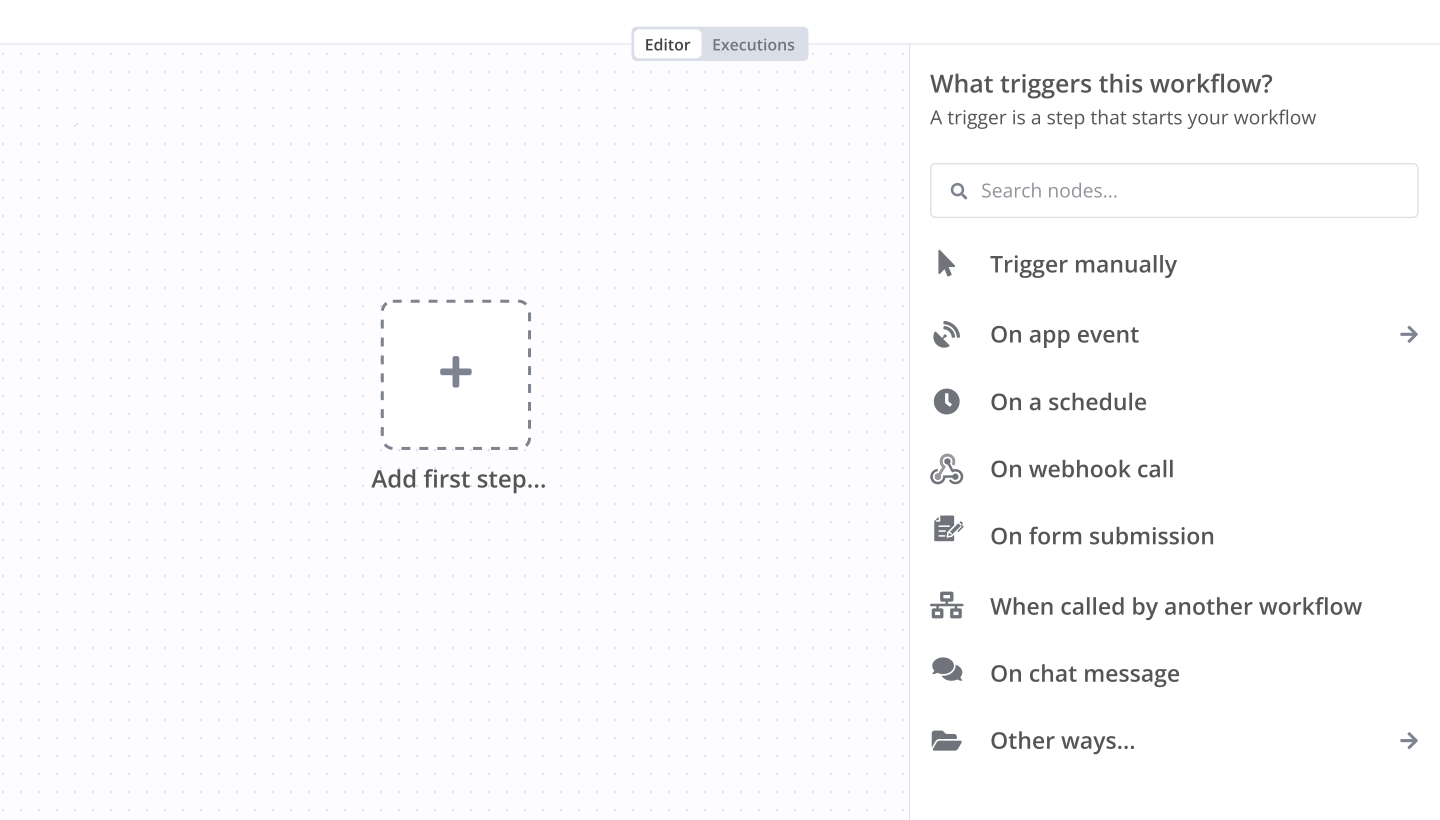
HTTP Request and Mailchimp integration: Create a new workflow and add the first step

Step 2: Add and configure HTTP Request and Mailchimp nodes

You can find HTTP Request and Mailchimp in the nodes panel. Drag them onto your workflow canvas, selecting their actions. Click each node, choose a credential, and authenticate to grant n8n access. Configure HTTP Request and Mailchimp nodes one by one: input data on the left, parameters in the middle, and output data on the right.

HTTP Request and Mailchimp integration: Add and configure HTTP Request and Mailchimp nodes

Step 3: Connect HTTP Request and Mailchimp

A connection establishes a link between HTTP Request and Mailchimp (or vice versa) to route data through the workflow. Data flows from the output of one node to the input of another. You can have single or multiple connections for each node.

HTTP Request and Mailchimp integration: Connect HTTP Request and Mailchimp

Step 4: Customize and extend your HTTP Request and Mailchimp integration

Use n8n's core nodes such as If, Split Out, Merge, and others to transform and manipulate data. Write custom JavaScript or Python in the Code node and run it as a step in your workflow. Connect HTTP Request and Mailchimp with any of n8n’s 1000+ integrations, and incorporate advanced AI logic into your workflows.

HTTP Request and Mailchimp integration: Customize and extend your HTTP Request and Mailchimp integration

Step 5: Test and activate your HTTP Request and Mailchimp workflow

Save and run the workflow to see if everything works as expected. Based on your configuration, data should flow from HTTP Request to Mailchimp or vice versa. Easily debug your workflow: you can check past executions to isolate and fix the mistake. Once you've tested everything, make sure to save your workflow and activate it.

HTTP Request and Mailchimp integration: Test and activate your HTTP Request and Mailchimp workflow

Ai-powered restaurant newsletter creator with Mailchimp and Telegram approval

This workflow contains community nodes that are only compatible with the self-hosted version of n8n.

Who is this for?
This workflow is for restaurant owners, marketing managers, and any business owner who wants to automate the creation of high-quality, research-driven email newsletters. It's designed to save hours of manual work by leveraging AI to handle content generation, from initial idea to final send.

If you want to consistently engage your customers with fresh, relevant content but lack the time for research and writing, this template is your all-in-one solution.

What does this workflow do?
This is a comprehensive, multi-agent system that automates the entire email marketing process. It begins with a simple prompt from you and ends with a polished newsletter sent to your Mailchimp subscribers.

Initiates on a Schedule: A fully customizable Cron trigger starts the process by sending you a message on Telegram.

Asks for Your Input: The Telegram bot asks you for a single topic for the upcoming newsletter (e.g., "healthy eating," "weekend specials," or "new cocktail menu").

Conducts AI-Powered Research: Once you reply, an AI agent researches your topic using Tavily, focusing on current industry trends, food culture, and customer interests to ensure your content is fresh and relevant.

Plans the Content: The AI generates a complete table of contents for the newsletter, structuring it into engaging sections.

Writes Each Section: A dedicated AI research team then writes detailed, engaging content for each section of the newsletter, weaving in your restaurant's unique brand voice.

Assembles the Final Draft: The workflow aggregates all the generated sections into a complete newsletter draft, including a compelling subject line and a full body of text.

Requests Final Approval: It sends the complete draft to you via Telegram for a final "Approved" or "Denied" confirmation. If you provide feedback, an AI editor will revise the draft.

Sends to Mailchimp: Once approved, the workflow automatically creates a new campaign in Mailchimp and sends the final, polished email to your subscriber list.

Setup
To get this workflow running, you will need to configure a few credentials and settings.

Set Up Credentials: In your n8n instance, add credentials for the following services:

Telegram

OpenAI

Tavily

Anthropic

Mailchimp (using HTTP Basic Auth with any_string as the username and your Mailchimp API key as the password).

Configure the Telegram Bot:

Create a Telegram bot using BotFather and obtain its API token.

Find your personal Chat ID by messaging a bot like @get_id_bot.

In the HITL (Human in the Loop) Telegram node, insert your Chat ID.

Configure Mailchimp:

In the Create_Campaign HTTP Request node, find the recipients section and replace the placeholder list_id with your actual Mailchimp Audience ID.

Customize the System Prompts: This is the most important step for personalization.

Go into the AI Agent and OpenAI nodes (e.g., "Restaurant Newsletter Expert," "Newsletter Section Planner," "Restaurant Content Research Team").

In the system prompts, replace all instances of (insert restaurant name), (insert cuisine type), etc., with your own business details. This is where you inject your unique brand, menu, and voice into the AI.

How to customize this workflow
This template is powerful out of the box but is also designed to be highly flexible.

Change the Schedule: Modify the Cron trigger to run at any interval you prefer (e.g., weekly, bi-weekly, or on specific days).

Adjust the AI Models: You can easily swap the OpenAI or Anthropic models used in the workflow to different ones (e.g., change from GPT-4o-mini to GPT-4 Turbo) to balance cost and performance.

Use a Different Notification Service: Replace the Telegram nodes with Slack, email, or another service for the approval process.

Integrate a Different Email Platform: Adapt the final HTTP Request nodes to work with another email marketing provider like SendGrid, ConvertKit, or Brevo by changing the API endpoints and authentication.

Refine the AI's Personality: The core of the workflow is in the system prompts. By editing the prompts in the AI nodes, you can completely change the tone, style, and output of the generated content to perfectly match your brand.

Nodes used in this workflow

Popular HTTP Request and Mailchimp workflows

Sync Zoom Webinar Attendees to Mailchimp with Double Opt-in and Email Filtering

Description Use this workflow to automatically sync Zoom webinar registrants into Mailchimp, filter out internal contacts, and send double opt-in confirmation emails. Ideal for keeping your newsletter audiences clean, accurate, and enriched with new leads—without manual export/import steps. About Workflow This workflow connects Zoom Webinars with Mailchimp via API to automate the onboarding of webinar attendees into your marketing audience. It retrieves registrant data from Zoom (based on Webinar ID and Occurrence ID), extracts attendee emails, filters out internal domains, checks whether the contact already exists in Mailchimp, and then creates or updates each record. New contacts receive a double opt-in confirmation email, and all newly added leads are tagged for segmentation inside Mailchimp. Use Case Perfect for marketing teams running webinars who need to transfer participants into Mailchimp quickly and reliably. This automation streamlines attendee follow-up, ensures compliance with double opt-in requirements. How it works Manual Trigger – Execute workflow** The workflow starts manually. You can optionally replace the manual trigger with a Schedule Trigger if you want to automate recurring webinars. Manual Input – Set Webinar ID and Occurrence ID** The workflow includes a Set node that requires you to enter: webinar_id occurence_id These define which Zoom webinar instance will be synced. Zoom API – Get Webinar Attendees** Retrieves registrants for the selected webinar occurrence using the Zoom API. Code Node – Extract Registrant Emails** Processes the Zoom API response and extracts the email addresses of all registrants. Filter Node – Filter Out Internal Emails** Removes internal/company email addresses by checking that they do not contain your domain. (This is fully configurable.) Mailchimp – Update a Member** Attempts to update the contact in Mailchimp based on their email address. This determines whether the contact already exists. IF Node – If ID Doesn’t Exist** Checks if Mailchimp returned an id during the update attempt. If Mailchimp did not return an ID, the contact is treated as new and continues through the creation + confirmation path. Code Node – MD5 Hash Email** Hashes the email using MD5. Mailchimp uses this hash as the unique identifier for list members. Mailchimp – Send Double Opt-In Email** Creates the contact with “pending” status and sends a double opt-in email. Mailchimp – Add Leads Tag** Tags the contact with "Leads" immediately as part of the creation process. How to Use Import the workflow into your n8n instance Configure credentials: Zoom OAuth2 credential Mailchimp HTTP Basic Auth credential Enter webinar details: Set webinar_id and occurence_id in the Type in IDs node Adjust internal email filtering: Update the domain in the “Filter Out Internal Emails” node (e.g., change @yourcompanydomain.com) Configure Mailchimp nodes: Replace LIST_ID_HERE with your Mailchimp Audience/List ID Adjust tags if needed Test the workflow: Run it with a real webinar and confirm behavior: internal emails are excluded existing contacts are updated new contacts receive the double opt-in email tags are applied correctly Example Use Cases Automated lead generation from webinar attendance Keeping marketing lists clean and external-only Recurring webinars with scheduled syncing Easy double opt-in compliance with no manual steps Requirements Zoom account** with API access Mailchimp account** with API access n8n instance** with correctly configured credentials Optional Enhancements Replace the manual trigger with a Webhook for recurring syncs Auto-detect the latest webinar ID using a Zoom API call Add additional filters (e.g., job title, country, language) Add Slack/email notifications summarizing new leads Add error-handling paths for retrying failed API calls
+5

AI-Powered Restaurant Newsletter Creator with Mailchimp and Telegram Approval

This workflow contains community nodes that are only compatible with the self-hosted version of n8n. Who is this for? This workflow is for restaurant owners, marketing managers, and any business owner who wants to automate the creation of high-quality, research-driven email newsletters. It's designed to save hours of manual work by leveraging AI to handle content generation, from initial idea to final send. If you want to consistently engage your customers with fresh, relevant content but lack the time for research and writing, this template is your all-in-one solution. What does this workflow do? This is a comprehensive, multi-agent system that automates the entire email marketing process. It begins with a simple prompt from you and ends with a polished newsletter sent to your Mailchimp subscribers. Initiates on a Schedule: A fully customizable Cron trigger starts the process by sending you a message on Telegram. Asks for Your Input: The Telegram bot asks you for a single topic for the upcoming newsletter (e.g., "healthy eating," "weekend specials," or "new cocktail menu"). Conducts AI-Powered Research: Once you reply, an AI agent researches your topic using Tavily, focusing on current industry trends, food culture, and customer interests to ensure your content is fresh and relevant. Plans the Content: The AI generates a complete table of contents for the newsletter, structuring it into engaging sections. Writes Each Section: A dedicated AI research team then writes detailed, engaging content for each section of the newsletter, weaving in your restaurant's unique brand voice. Assembles the Final Draft: The workflow aggregates all the generated sections into a complete newsletter draft, including a compelling subject line and a full body of text. Requests Final Approval: It sends the complete draft to you via Telegram for a final "Approved" or "Denied" confirmation. If you provide feedback, an AI editor will revise the draft. Sends to Mailchimp: Once approved, the workflow automatically creates a new campaign in Mailchimp and sends the final, polished email to your subscriber list. Setup To get this workflow running, you will need to configure a few credentials and settings. Set Up Credentials: In your n8n instance, add credentials for the following services: Telegram OpenAI Tavily Anthropic Mailchimp (using HTTP Basic Auth with any_string as the username and your Mailchimp API key as the password). Configure the Telegram Bot: Create a Telegram bot using BotFather and obtain its API token. Find your personal Chat ID by messaging a bot like @get_id_bot. In the HITL (Human in the Loop) Telegram node, insert your Chat ID. Configure Mailchimp: In the Create_Campaign HTTP Request node, find the recipients section and replace the placeholder list_id with your actual Mailchimp Audience ID. Customize the System Prompts: This is the most important step for personalization. Go into the AI Agent and OpenAI nodes (e.g., "Restaurant Newsletter Expert," "Newsletter Section Planner," "Restaurant Content Research Team"). In the system prompts, replace all instances of (insert restaurant name), (insert cuisine type), etc., with your own business details. This is where you inject your unique brand, menu, and voice into the AI. How to customize this workflow This template is powerful out of the box but is also designed to be highly flexible. Change the Schedule: Modify the Cron trigger to run at any interval you prefer (e.g., weekly, bi-weekly, or on specific days). Adjust the AI Models: You can easily swap the OpenAI or Anthropic models used in the workflow to different ones (e.g., change from GPT-4o-mini to GPT-4 Turbo) to balance cost and performance. Use a Different Notification Service: Replace the Telegram nodes with Slack, email, or another service for the approval process. Integrate a Different Email Platform: Adapt the final HTTP Request nodes to work with another email marketing provider like SendGrid, ConvertKit, or Brevo by changing the API endpoints and authentication. Refine the AI's Personality: The core of the workflow is in the system prompts. By editing the prompts in the AI nodes, you can completely change the tone, style, and output of the generated content to perfectly match your brand.

Sync CRM contacts with Mailchimp and Pipedrive

CRM Contact Sync with Mailchimp and Pipedrive This workflow keeps your contact records perfectly aligned between your CRM (e.g. HubSpot / Salesforce / Pipedrive) and Mailchimp. Whenever a contact is created or updated in one system, the automation propagates the change to the other platform, ensuring every email address, phone number and custom field stays in sync. Pre-conditions/Requirements Prerequisites n8n instance (self-hosted or cloud) Community nodes: Pipedrive, Mailchimp A dedicated service account in each platform with permission to read & write contacts Basic understanding of how webhooks work (for CRM → n8n triggers) Required Credentials Pipedrive API Token** – Used for creating, updating and searching contacts in Pipedrive Mailchimp API Key** – Grants access to lists/audiences and contact operations CRM Webhook Secret** (optional) – If your CRM supports signing webhook payloads Specific Setup Requirements | Environment Variable | Description | Example | |----------------------|--------------------------------------|---------------------------------| | PIPEDRIVE_API_KEY | Stored in n8n credential manager | 123abc456def | | MAILCHIMP_API_KEY | Stored in n8n credential manager | us-1:abcd1234efgh5678 | | MAILCHIMP_DC | Mailchimp Datacenter (sub-domain) | us-1 | | CRM_WEBHOOK_URL | Generated by the Webhook node | https://n8n.myserver/webhook/... | How it works This workflow keeps your contact records perfectly aligned between your CRM (e.g. HubSpot / Salesforce / Pipedrive) and Mailchimp. Whenever a contact is created or updated in one system, the automation propagates the change to the other platform, ensuring every email address, phone number and custom field stays in sync. Key Steps: Inbound Webhook**: Receives contact-change events from the CRM. Split in Batches**: Processes contacts in chunks to stay within API rate limits. Mailchimp Upsert**: Adds or updates each contact in the specified Mailchimp audience. Pipedrive Upsert**: Mirrors the same change in Pipedrive (or vice-versa). Merge & IF nodes**: Decide whether to create or update a contact by checking existence. Error Trigger**: Captures any API failures and posts them to the configured alert channel. Set up steps Setup Time: 15-25 minutes Create credentials • In n8n, add new credentials for Pipedrive and Mailchimp using your API keys. • Name them clearly (e.g. “Pipedrive Main”, “Mailchimp Main”). Import the workflow • Download or paste the JSON template into n8n. • Save the workflow. Configure the Webhook node • Set HTTP Method to POST. • Copy the generated URL and register it as a webhook in your CRM’s contact-update events. Map CRM fields • Open the first Set node and match CRM field names (firstName, lastName, email, etc.) to the standard keys used later in the flow. Select Mailchimp Audience • In the Mailchimp node, choose the audience/list that should receive the contacts. Define Pipedrive Person Fields • If you have custom fields, add them in the Pipedrive node’s Additional Fields section. Enable the workflow • Turn the workflow from “Inactive” to “Active”. • Send a test update from the CRM to verify that contacts appear in both Mailchimp and Pipedrive. Node Descriptions Core Workflow Nodes: Webhook** – Accepts contact-change payloads from the CRM. Set** – Normalises field names to a common schema. SplitInBatches** – Loops through contacts in controllable group sizes. HTTP Request** – Generic calls (e.g. HubSpot/Salesforce look-ups when required). Pipedrive** – Searches for existing persons; creates or updates accordingly. Mailchimp** – Performs contact upsert into an audience. If** – Branches logic on “contact exists?”. Merge** – Re-assembles branch data back into a single execution line. Code** – Small JS snippets for complex field transformations. Error Trigger** – Listens for any node failure and routes it to alerts. StickyNote** – Documentation hints inside the workflow. Data Flow: Webhook → Set (Normalise) → SplitInBatches SplitInBatches → Mailchimp (Get) → If (Exists?) → Mailchimp (Upsert) SplitInBatches → Pipedrive (Search) → If (Exists?) → Pipedrive (Upsert) Merge → End / Success Customization Examples Add a Tag to Mailchimp contacts // Place inside a Code node before the Mailchimp Upsert item.tags = ['Synced from CRM', 'High-Value']; return item; Apply a Deal Stage in Pipedrive // Pipedrive node → Additional Fields "deal": { "title": "New Lead from Mailchimp", "stage_id": 2 } Data Output Format The workflow outputs structured JSON data: { "id": 1472, "status": "updated", "email": "[email protected]", "source": "CRM", "synced": { "pipedrive": "success", "mailchimp": "success" }, "timestamp": "2024-04-27T10:15:00Z" } Troubleshooting Common Issues HTTP 401 Unauthorized – Verify that the API keys are still valid and have not been revoked. Webhook receives no data – Double-check that the CRM webhook URL matches exactly and that the event is enabled. Performance Tips Batch contacts in groups of 50-100 to respect Mailchimp & Pipedrive rate limits. Use Continue On Fail in non-critical nodes to prevent the entire run from stopping. Pro Tips: Map your CRM’s custom fields once in the Set node to avoid touching each downstream node. Use Merge+If pattern to keep “create vs update” logic tidy. Enable workflow execution logs only in development to reduce storage usage. *Community Template Disclaimer: This workflow is provided by the n8n community “as is”. n8n GmbH makes no warranties regarding its performance, security or compliance. Always review and test in a development environment before using it in production.*

Send meeting summaries with Mailchimp and MongoDB

Meeting Notes Distributor – Mailchimp and MongoDB This workflow automatically converts raw meeting recordings or written notes into concise summaries, stores them in MongoDB for future reference, and distributes the summaries to all meeting participants through Mailchimp. It is ideal for teams that want to keep everyone aligned without manual copy-and-paste or email chains. Pre-conditions/Requirements Prerequisites n8n instance (self-hosted or cloud) Audio transcription service or written notes available via HTTP endpoint MongoDB database (cloud or self-hosted) Mailchimp account with an existing Audience list Required Credentials MongoDB** – Connection string with insert permission Mailchimp API Key** – To send campaigns (Optional) HTTP Service Auth** – If your transcription/notes endpoint is secured Specific Setup Requirements | Component | Example Value | Notes | |------------------|--------------------------------------------|-----------------------------------------------------| | MongoDB Database | meeting_notes | Database in which summaries will be stored | | Collection Name | summaries | Collection automatically created if it doesn’t exist| | Mailchimp List | Meeting Participants | Audience list containing participant email addresses| | Notes Endpoint | https://example.com/api/meetings/{id} | Returns raw transcript or note text (JSON) | How it works This workflow automatically converts raw meeting recordings or written notes into concise summaries, stores them in MongoDB for future reference, and distributes the summaries to all meeting participants through Mailchimp. It is ideal for teams that want to keep everyone aligned without manual copy-and-paste or email chains. Key Steps: Schedule Trigger**: Fires daily (or on-demand) to check for new meeting notes. HTTP Request**: Downloads raw notes or transcript from your endpoint. Code Node**: Uses an AI or custom function to generate a concise summary. If Node**: Skips processing if the summary already exists in MongoDB. MongoDB**: Inserts the new summary document. Split in Batches**: Splits participants into Mailchimp-friendly batch sizes. Mailchimp**: Sends personalized summary emails to each participant. Wait**: Ensures rate limits are respected between Mailchimp calls. Merge**: Consolidates success/failure results for logging or alerting. Set up steps Setup Time: 15-25 minutes Clone the workflow: Import or copy the JSON into your n8n instance. Configure Schedule Trigger: Set the cron expression (e.g., every weekday at 18:00). Set HTTP Request URL: Replace placeholder with your transcription/notes endpoint. Add auth headers if needed. Add MongoDB Credentials: Enter your connection string in the MongoDB node. Customize Summary Logic: Open the Code node to tweak summarization length, language, or model. Mailchimp Credentials: Supply your API key and select the correct Audience list. Map Email Fields: Ensure participant emails are supplied from transcription metadata or external source. Test Run: Execute once manually to verify MongoDB insert and email delivery. Activate Workflow: Enable the workflow so it runs on its defined schedule. Node Descriptions Core Workflow Nodes: Schedule Trigger** – Initiates the workflow at predefined intervals. HTTP Request** – Retrieves the latest meeting data (transcript or notes). Code** – Generates a summarized version of the meeting content. If** – Checks MongoDB for duplicates to avoid re-sending. MongoDB** – Stores finalized summaries for archival and audit. SplitInBatches** – Breaks participant list into manageable chunks. Mailchimp** – Sends summary emails via campaigns or transactional messages. Wait** – Pauses between batches to honor Mailchimp rate limits. Merge** – Aggregates success/failure responses for logging. Data Flow: Schedule Trigger → HTTP Request → Code → If If summary is new: MongoDB → SplitInBatches → Mailchimp → Wait Merge collates all results Customization Examples Change Summary Length // Inside the Code Node const rawText = items[0].json.text; const maxSentences = 5; // adjust to 3, 7, etc. items[0].json.summary = summarize(rawText, maxSentences); return items; Personalize Mailchimp Subject // In the Set node before Mailchimp items[0].json.subject = Recap: ${items[0].json.meetingTitle} – ${new Date().toLocaleDateString()}; return items; Data Output Format The workflow outputs structured JSON data: { "meetingId": "abc123", "meetingTitle": "Quarterly Planning", "summary": "Key decisions on roadmap, budget approvals...", "participants": [ "[email protected]", "[email protected]" ], "mongoInsertId": "65d9278fa01e3f94b1234567", "mailchimpBatchIds": ["2024-01-01T12:00:00Z#1", "2024-01-01T12:01:00Z#2"] } Troubleshooting Common Issues Mailchimp rate-limit errors – Increase Wait node delay or reduce batch size. Duplicate summaries – Ensure the If node correctly queries MongoDB using meeting ID as a unique key. Performance Tips Keep batch sizes under 500 to stay well within Mailchimp limits. Offload AI summarization to external services if Code node execution time is high. Pro Tips: Store full transcripts in MongoDB GridFS for future reference. Use environment variables in n8n for all API keys to simplify workflow export/import. Add a notifier (e.g., Slack node) after Merge to alert admins on failures. This is a community template provided “as-is” without warranty. Always validate the workflow in a test environment before using it in production.
+2

Automate Lead Qualification & Follow-up with Gemini, HubSpot, Zoom & Mailchimp

Lead Qualification & Follow‑up (Gemini) Automate lead intake, AI qualification, and next‑step outreach. Qualified leads get a scheduled meeting, Zoom details, an email confirmation, CRM update, and Mailchimp enrollment. Not‑qualified leads receive a follow‑up sequence, CRM update, and a 30‑day reminder. What this workflow does AI qualifies leads as QUALIFIED or NOT QUALIFIED using Google Gemini. Supports two triggers: Webhook (wordpress-form) or n8n Form Trigger. QUALIFIED branch: AI phone call via VAPI Schedules Google Calendar event Creates Zoom meeting Sends confirmation email via Gmail Adds to Mailchimp audience Updates contact in HubSpot NOT QUALIFIED branch: AI phone call via VAPI Adds to Mailchimp audience Sends follow‑up email via Gmail Updates contact in HubSpot Creates 30‑day follow‑up calendar event Apps and credentials required Google Gemini (PaLM/Gemini API) Gmail HubSpot Zoom Google Calendar VAPI (for AI phone calls) Mailchimp Environment variables MAILCHIMP_LIST_ID_QUALIFIED=your_mailchimp_list_id_for_qualified MAILCHIMP_LIST_ID_FOLLOWUP=your_mailchimp_list_id_for_followup Triggers supported Webhook: path wordpress-form (POST) Form Trigger: built‑in n8n form Use only one in production. Keep the other disabled. Expected input (fields) name: string email: string message: string If using Webhook, send a JSON body with the fields above. Setup Connect credentials: Google Gemini (model: models/gemini-2.5-flash) Gmail HubSpot (OAuth) Zoom Google Calendar (select the target calendar) VAPI (HTTP header auth: Bearer token) Set env vars: MAILCHIMP_LIST_ID_QUALIFIED MAILCHIMP_LIST_ID_FOLLOWUP Choose your trigger: Webhook: enable and use the provided URL for wordpress-form Form Trigger: enable and publish the form Review timing: adjust Wait nodes for your timezone and SLA. Personalize messaging: edit Gmail subjects/bodies and Zoom topic. CRM and lists: confirm HubSpot properties and Mailchimp list IDs. How it works (at a glance) Intake → AI classifies (QUALIFIED / NOT QUALIFIED) QUALIFIED: VAPI call → Schedule Calendar → Create Zoom → Add to Mailchimp (qualified) → Gmail confirmation → HubSpot update NOT QUALIFIED: VAPI call → Add to Mailchimp (follow‑up) → Gmail follow‑up → HubSpot update → 30‑day calendar event Test the workflow (before going live) Submit a test via your chosen trigger with name, email, message. Confirm AI decision at the “Lead Decision” node. If QUALIFIED: VAPI call executed Calendar event created Zoom meeting created (join URL available) Mailchimp enrollment (qualified list) Gmail confirmation sent HubSpot contact created/updated If NOT QUALIFIED: VAPI call executed Mailchimp enrollment (follow‑up list) Gmail follow‑up sent HubSpot updated 30‑day calendar reminder created Open any failing HTTP nodes and review response codes/messages. Go‑live checklist All credentials connected (no warnings) MAILCHIMP_LIST_ID_QUALIFIED and MAILCHIMP_LIST_ID_FOLLOWUP set Timezone and delays validated Email copy approved Only one trigger enabled Final end‑to‑end test passed Toggle workflow Active Customization ideas Add a Slack or Microsoft Teams notification on QUALIFIED Enrich leads (Clearbit, ZoomInfo, etc.) before AI decision Swap Mailchimp for your ESP (Klaviyo, SendGrid Marketing) Add a second‑chance branch for ambiguous AI classifications Localize email copy by country or language Troubleshooting Webhook receives no data: ensure external form POSTs JSON to the n8n URL and network rules allow it. AI decision empty/garbled: verify Gemini credentials/model ID and input fields. Mailchimp errors: verify List IDs and that email is valid. Gmail send fails: check OAuth scopes and daily limits. Zoom/Calendar issues: re‑connect OAuth; verify calendar access. HubSpot errors: confirm OAuth scopes and property mappings. Security and scopes Gmail: send email Google Calendar: create events Zoom: create meetings HubSpot: read/write contacts Mailchimp: list membership VAPI: authenticated HTTP requests Gemini: model inference Use least‑privilege for each integration. Limits and notes Gmail and Mailchimp rate limits may apply during spikes. Zoom and Google Calendar API quotas apply for frequent scheduling. VAPI call timeouts are 30s by default; adjust as needed. Changelog 2025‑09‑15: Initial public template with dual triggers, Gemini qualification, VAPI calls, scheduling, Mailchimp, Gmail, and HubSpot updates.

Build your own HTTP Request and Mailchimp integration

Create custom HTTP Request and Mailchimp workflows by choosing triggers and actions. Nodes come with global operations and settings, as well as app-specific parameters that can be configured. You can also use the HTTP Request node to query data from any app or service with a REST API.

Mailchimp supported actions

Delete
Delete a campaign
Get
Get a campaign
Get Many
Get many campaigns
Replicate
Replicate a campaign
Resend
Creates a Resend to Non-Openers version of this campaign
Send
Send a campaign
Get Many
Get many groups
Create
Create a new member on list
Delete
Delete a member on list
Get
Get a member on list
Get Many
Get many members on a list
Update
Update a new member on list
Create
Add tags from a list member
Delete
Remove tags from a list member
Use case

Save engineering resources

Reduce time spent on customer integrations, engineer faster POCs, keep your customer-specific functionality separate from product all without having to code.

Learn more
Use case

Automate lead management

Using too many marketing tools? n8n lets you orchestrate all your apps into one cohesive, automated workflow.

Learn more

FAQs

  • Can HTTP Request connect with Mailchimp?

  • Can I use HTTP Request’s API with n8n?

  • Can I use Mailchimp’s API with n8n?

  • Is n8n secure for integrating HTTP Request and Mailchimp?

  • How to get started with HTTP Request and Mailchimp integration in n8n.io?

Need help setting up your HTTP Request and Mailchimp integration?

Discover our latest community's recommendations and join the discussions about HTTP Request and Mailchimp integration.
Moiz Contractor
theo
Jon
Dan Burykin
Tony

Looking to integrate HTTP Request and Mailchimp in your company?

Over 3000 companies switch to n8n every single week

Why use n8n to integrate HTTP Request with Mailchimp

Build complex workflows, really fast
Build complex workflows, really fast

Handle branching, merging and iteration easily.
Pause your workflow to wait for external events.

Code when you need it, UI when you don't

Simple debugging

Your data is displayed alongside your settings, making edge cases easy to track down.

Use templates to get started fast

Use 1000+ workflow templates available from our core team and our community.

Reuse your work

Copy and paste, easily import and export workflows.

Implement complex processes faster with n8n

red iconyellow iconred iconyellow icon