Back to Integrations
integrationHTTP Request node
integrationMailjet node

HTTP Request and Mailjet integration

Save yourself the work of writing custom integrations for HTTP Request and Mailjet and use n8n instead. Build adaptable and scalable Development, Core Nodes, and Communication workflows that work with your technology stack. All within a building experience you will love.

How to connect HTTP Request and Mailjet

  • Step 1: Create a new workflow
  • Step 2: Add and configure nodes
  • Step 3: Connect
  • Step 4: Customize and extend your integration
  • Step 5: Test and activate your workflow

Step 1: Create a new workflow and add the first step

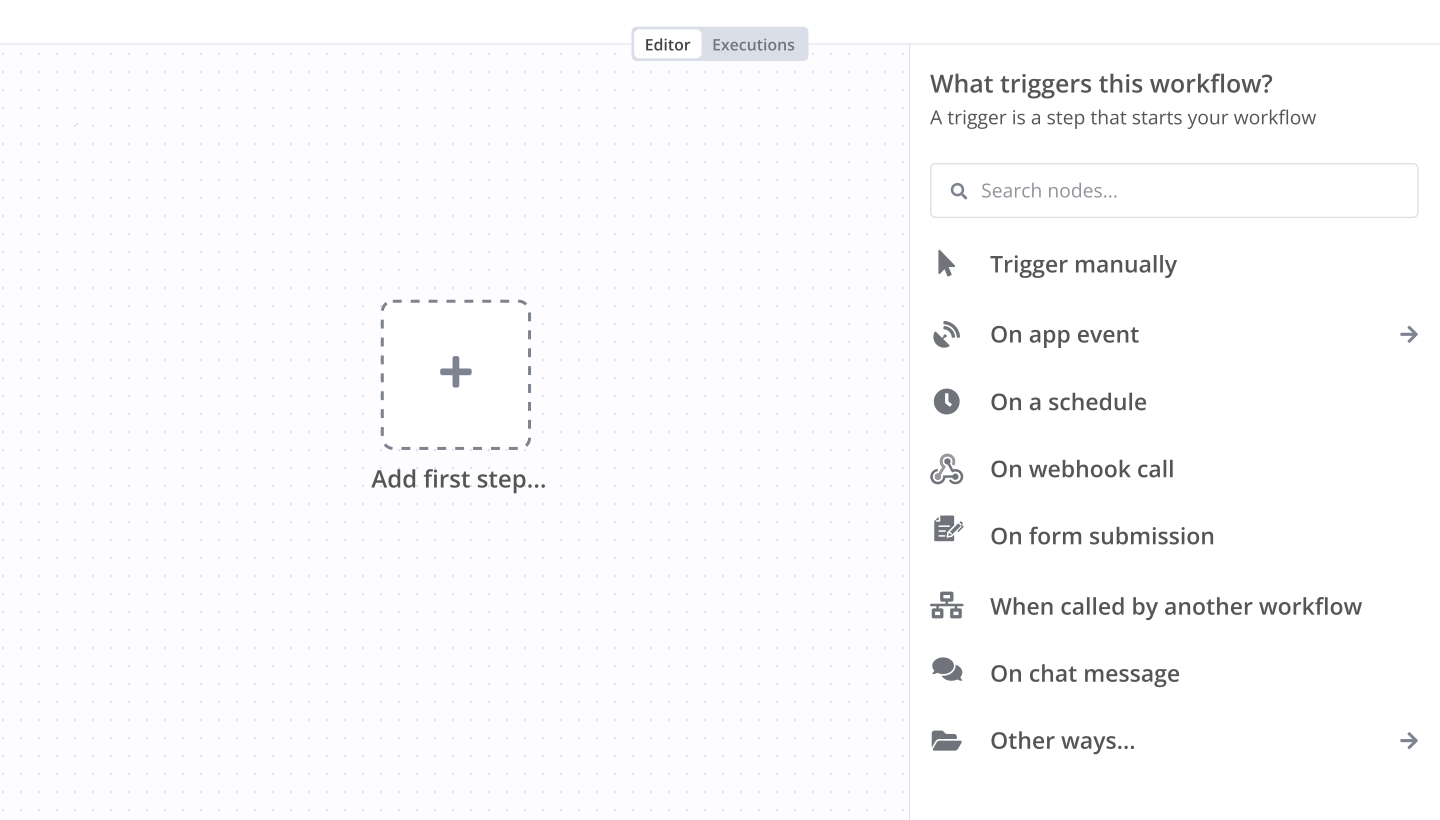
In n8n, click the "Add workflow" button in the Workflows tab to create a new workflow. Add the starting point – a trigger on when your workflow should run: an app event, a schedule, a webhook call, another workflow, an AI chat, or a manual trigger. Sometimes, the HTTP Request node might already serve as your starting point.

HTTP Request and Mailjet integration: Create a new workflow and add the first step

Step 2: Add and configure HTTP Request and Mailjet nodes

You can find HTTP Request and Mailjet in the nodes panel. Drag them onto your workflow canvas, selecting their actions. Click each node, choose a credential, and authenticate to grant n8n access. Configure HTTP Request and Mailjet nodes one by one: input data on the left, parameters in the middle, and output data on the right.

HTTP Request and Mailjet integration: Add and configure HTTP Request and Mailjet nodes

Step 3: Connect HTTP Request and Mailjet

A connection establishes a link between HTTP Request and Mailjet (or vice versa) to route data through the workflow. Data flows from the output of one node to the input of another. You can have single or multiple connections for each node.

HTTP Request and Mailjet integration: Connect HTTP Request and Mailjet

Step 4: Customize and extend your HTTP Request and Mailjet integration

Use n8n's core nodes such as If, Split Out, Merge, and others to transform and manipulate data. Write custom JavaScript or Python in the Code node and run it as a step in your workflow. Connect HTTP Request and Mailjet with any of n8n’s 1000+ integrations, and incorporate advanced AI logic into your workflows.

HTTP Request and Mailjet integration: Customize and extend your HTTP Request and Mailjet integration

Step 5: Test and activate your HTTP Request and Mailjet workflow

Save and run the workflow to see if everything works as expected. Based on your configuration, data should flow from HTTP Request to Mailjet or vice versa. Easily debug your workflow: you can check past executions to isolate and fix the mistake. Once you've tested everything, make sure to save your workflow and activate it.

HTTP Request and Mailjet integration: Test and activate your HTTP Request and Mailjet workflow

Monitor SEO keyword rankings with LLaMA AI & Apify Google SERP scraping

Who is this template for?

This SEO Keyword Monitoring workflow template is perfect for SEO professionals, digital marketing agencies, website owners, and content strategists who need to track their search rankings and get actionable insights when they're not performing well. Whether you're managing multiple client sites, monitoring your own brand's visibility, or conducting competitive analysis, this automation provides comprehensive rank tracking with AI-powered recommendations.

What problem does this workflow solve?

Manual keyword rank tracking is time-consuming and often provides limited actionable insights. SEO professionals typically struggle with:

Manually checking search rankings across different countries and languages
Identifying why a website isn't ranking for target keywords
Getting specific, actionable recommendations for SEO improvements
Tracking competitor performance and market positioning
Scaling rank monitoring across multiple keywords and domains
Generating professional reports for clients or stakeholders

What this workflow does

This n8n workflow automates comprehensive SEO keyword monitoring with intelligent analysis and reporting. It tracks your rankings in Google search results and provides AI-powered insights when your site isn't performing as expected.

Here's what it includes:

Multi-language web form** that accepts keyword, domain, country (24 options), and language (12 options)
Intelligent localization** that converts country/language selections into proper API codes
Real-time Google SERP scraping** using Apify's Google Search API (up to 100 results per query)
Automated rank detection** that checks if your domain appears in the search results
Dual email reporting system:**
Success reports: Beautiful HTML tables showing your rankings, competitor positions, titles, URLs, and descriptions
AI-powered improvement reports: When your site doesn't rank, an AI agent (LLaMA 70B) analyzes the search results and provides specific, actionable SEO recommendations
Professional email formatting** with HTML markup for easy sharing with clients or teams

Setup

Getting started is straightforward:

Connect your Apify account

Sign up for a free Apify account 🡥
Get your Personal API Token from Settings → API & Integrations
Replace YOUR_API_TOKEN in the HTTP Request node with your actual token

Configure the AI model

The workflow uses Groq AI with LLaMA 70B by default
Connect your Groq account or replace with OpenAI, Claude, or another LLM
The AI agent analyzes search results and provides tailored SEO recommendations

Set up email delivery / data export

Configure the Mailjet nodes with your email credentials
Or replace with Gmail, Outlook, SMTP, or other email providers
Or replace with/add Google Sheets, Airtable, Notion or similar service, for data storage
Set your sender and recipient email addresses

Test the workflow

Click "Test workflow" to access the web form
Enter a keyword, domain, country, and language
Check your email for either ranking results or AI-powered recommendations

Activate the workflow

Turn on the trigger so you can access the form anytime
Share the form URL with team members or clients

How to customize this workflow

This template is highly flexible and can be adapted for various SEO monitoring needs:

Scale up monitoring:** Add loops to track multiple keywords simultaneously
Alternative outputs:* Replace email nodes with Google Sheets, Airtable, or Notion for data storage
Team notifications:
Connect to Slack, Discord, or Microsoft Teams for instant alerts
Scheduled monitoring:
Add cron triggers
for daily, weekly, or monthly automated checks
Enhanced analysis:
Integrate additional AI models for deeper competitive analysis
Custom reporting:
* Modify the HTML templates to match your brand or client requirements
Data persistence:* Add database connections* to store historical ranking data
Competitor tracking:** Expand the logic to monitor multiple domains for the same keywords

Key features

24 country support:** Track rankings in major markets worldwide
12 language options:** Monitor multilingual SEO performance
AI-powered insights:** Get specific recommendations when rankings are low
Professional reporting:** HTML-formatted emails ready for client delivery
Competitor analysis:** See who's ranking above you with full SERP data
Scalable architecture:** Easy to extend for enterprise-level monitoring

This workflow transforms manual rank checking into an intelligent, automated system that not only tracks your performance but actively helps you improve it with AI-driven recommendations. Developed by Gegenfeld 🡥 and codecope 🡥 in Berlin, Germany.

Nodes used in this workflow

Popular HTTP Request and Mailjet workflows

Monitor SEO Keyword Rankings with LLaMA AI & Apify Google SERP Scraping

Who is this template for? This SEO Keyword Monitoring workflow template is perfect for SEO professionals, digital marketing agencies, website owners, and content strategists who need to track their search rankings and get actionable insights when they're not performing well. Whether you're managing multiple client sites, monitoring your own brand's visibility, or conducting competitive analysis, this automation provides comprehensive rank tracking with AI-powered recommendations. What problem does this workflow solve? Manual keyword rank tracking is time-consuming and often provides limited actionable insights. SEO professionals typically struggle with: Manually checking search rankings across different countries and languages Identifying why a website isn't ranking for target keywords Getting specific, actionable recommendations for SEO improvements Tracking competitor performance and market positioning Scaling rank monitoring across multiple keywords and domains Generating professional reports for clients or stakeholders What this workflow does This n8n workflow automates comprehensive SEO keyword monitoring with intelligent analysis and reporting. It tracks your rankings in Google search results and provides AI-powered insights when your site isn't performing as expected. Here's what it includes: Multi-language web form** that accepts keyword, domain, country (24 options), and language (12 options) Intelligent localization** that converts country/language selections into proper API codes Real-time Google SERP scraping** using Apify's Google Search API (up to 100 results per query) Automated rank detection** that checks if your domain appears in the search results Dual email reporting system:** Success reports: Beautiful HTML tables showing your rankings, competitor positions, titles, URLs, and descriptions AI-powered improvement reports: When your site doesn't rank, an AI agent (LLaMA 70B) analyzes the search results and provides specific, actionable SEO recommendations Professional email formatting** with HTML markup for easy sharing with clients or teams Setup Getting started is straightforward: Connect your Apify account Sign up for a free Apify account 🡥 Get your Personal API Token from Settings → API & Integrations Replace YOUR_API_TOKEN in the HTTP Request node with your actual token Configure the AI model The workflow uses Groq AI with LLaMA 70B by default Connect your Groq account or replace with OpenAI, Claude, or another LLM The AI agent analyzes search results and provides tailored SEO recommendations Set up email delivery / data export Configure the Mailjet nodes with your email credentials Or replace with Gmail, Outlook, SMTP, or other email providers Or replace with/add Google Sheets, Airtable, Notion or similar service, for data storage Set your sender and recipient email addresses Test the workflow Click "Test workflow" to access the web form Enter a keyword, domain, country, and language Check your email for either ranking results or AI-powered recommendations Activate the workflow Turn on the trigger so you can access the form anytime Share the form URL with team members or clients How to customize this workflow This template is highly flexible and can be adapted for various SEO monitoring needs: Scale up monitoring:** Add loops to track multiple keywords simultaneously Alternative outputs:* Replace email nodes with Google Sheets, *Airtable, or Notion for data storage Team notifications:* Connect to Slack, *Discord, or Microsoft Teams for instant alerts Scheduled monitoring:* Add cron triggers* for daily, weekly, or monthly automated checks Enhanced analysis:** Integrate additional AI models for deeper competitive analysis Custom reporting:** Modify the HTML templates to match your brand or client requirements Data persistence:* Add database connections* to store historical ranking data Competitor tracking:** Expand the logic to monitor multiple domains for the same keywords Key features 24 country support:** Track rankings in major markets worldwide 12 language options:** Monitor multilingual SEO performance AI-powered insights:** Get specific recommendations when rankings are low Professional reporting:** HTML-formatted emails ready for client delivery Competitor analysis:** See who's ranking above you with full SERP data Scalable architecture:** Easy to extend for enterprise-level monitoring This workflow transforms manual rank checking into an intelligent, automated system that not only tracks your performance but actively helps you improve it with AI-driven recommendations. Developed by Gegenfeld 🡥 and codecope 🡥 in Berlin, Germany.

Track SEO Keyword Rankings in Google Search with ScrapingBee API

Who is this template for? This SEO Reporting workflow template is ideal for digital marketers, SEO consultants, content strategists, and founders who need to quickly gather, format, and store Google search result data. If you regularly audit SERPs, track keyword performance, or monitor competitors, this automation lets you generate polished SEO reports in seconds—ready to share or analyze further. What problem does this workflow solve? Scraping and formatting Google search results for SEO insights is often manual, repetitive, and error-prone or requires expensive software. Professionals frequently face challenges like: Collecting live, structured data from Google for multiple keywords Converting raw search results into readable reports for clients or stakeholders Logging changes in rankings or URLs across time for historical tracking Exporting SEO data into spreadsheets for deeper analysis High monthly software fees What this workflow does This n8n workflow scrapes the top organic Google search results for a given keyword and automatically creates a downloadable report while also logging the results in a table format for long-term storage or further processing. Here’s what it includes: A trigger form that accepts a search keyword from the user An automated API call to fetch Google’s SERP data Two output formats: a formatted HTML table for emails and a Markdown table for download (e.g., for Excel, Airtable or Google Sheets) Automatic CSV file generation for download Optional email delivery of the report Setup Getting started is simple: Enter your API key Add your API key to the “Scrape Google SERPs” HTTP Request node (Step-by-step guide inside the template) Replace the default query with your own custom Google search parameters if needed Set up delivery options Update your email in the “Mail SEO Report” node for report delivery Use the downloadable file output from the “Convert to File” node Optional: Add a Google Sheets (or similar) node which imports the file Test the workflow Use the built-in form to input a keyword Confirm that results appear in both your email and downloadable file Activate the workflow Turn on the trigger so your team or clients can submit keywords at any time How to customize this workflow This template is easy to extend for a variety of SEO automation needs: Add a loop to handle multiple keywords at once Connect to Airtable, Notion or Google Sheets Integrate with Slack or Discord for notifications Apply additional filtering to track only new or changed search results Schedule it to run daily or weekly with a cron trigger By combining live SERP scraping, report formatting, and spreadsheet integration, this workflow gives you a fast and flexible SEO reporting system you can use right away or scale up as needed.

Build your own HTTP Request and Mailjet integration

Create custom HTTP Request and Mailjet workflows by choosing triggers and actions. Nodes come with global operations and settings, as well as app-specific parameters that can be configured. You can also use the HTTP Request node to query data from any app or service with a REST API.

Mailjet supported actions

Send
Send a email
Send Template
Send a email template
Send
Send a sms
Use case

Save engineering resources

Reduce time spent on customer integrations, engineer faster POCs, keep your customer-specific functionality separate from product all without having to code.

Learn more

FAQs

  • Can HTTP Request connect with Mailjet?

  • Can I use HTTP Request’s API with n8n?

  • Can I use Mailjet’s API with n8n?

  • Is n8n secure for integrating HTTP Request and Mailjet?

  • How to get started with HTTP Request and Mailjet integration in n8n.io?

Need help setting up your HTTP Request and Mailjet integration?

Discover our latest community's recommendations and join the discussions about HTTP Request and Mailjet integration.
Moiz Contractor
theo
Jon
Dan Burykin
Tony

Looking to integrate HTTP Request and Mailjet in your company?

Over 3000 companies switch to n8n every single week

Why use n8n to integrate HTTP Request with Mailjet

Build complex workflows, really fast

Build complex workflows, really fast

Handle branching, merging and iteration easily.
Pause your workflow to wait for external events.

Code when you need it, UI when you don't

Simple debugging

Your data is displayed alongside your settings, making edge cases easy to track down.

Use templates to get started fast

Use 1000+ workflow templates available from our core team and our community.

Reuse your work

Copy and paste, easily import and export workflows.

Implement complex processes faster with n8n

red iconyellow iconred iconyellow icon