Back to Integrations
integrationHTTP Request node
integrationOdoo node

HTTP Request and Odoo integration

Save yourself the work of writing custom integrations for HTTP Request and Odoo and use n8n instead. Build adaptable and scalable Development, Core Nodes, and Data & Storage workflows that work with your technology stack. All within a building experience you will love.

How to connect HTTP Request and Odoo

  • Step 1: Create a new workflow
  • Step 2: Add and configure nodes
  • Step 3: Connect
  • Step 4: Customize and extend your integration
  • Step 5: Test and activate your workflow

Step 1: Create a new workflow and add the first step

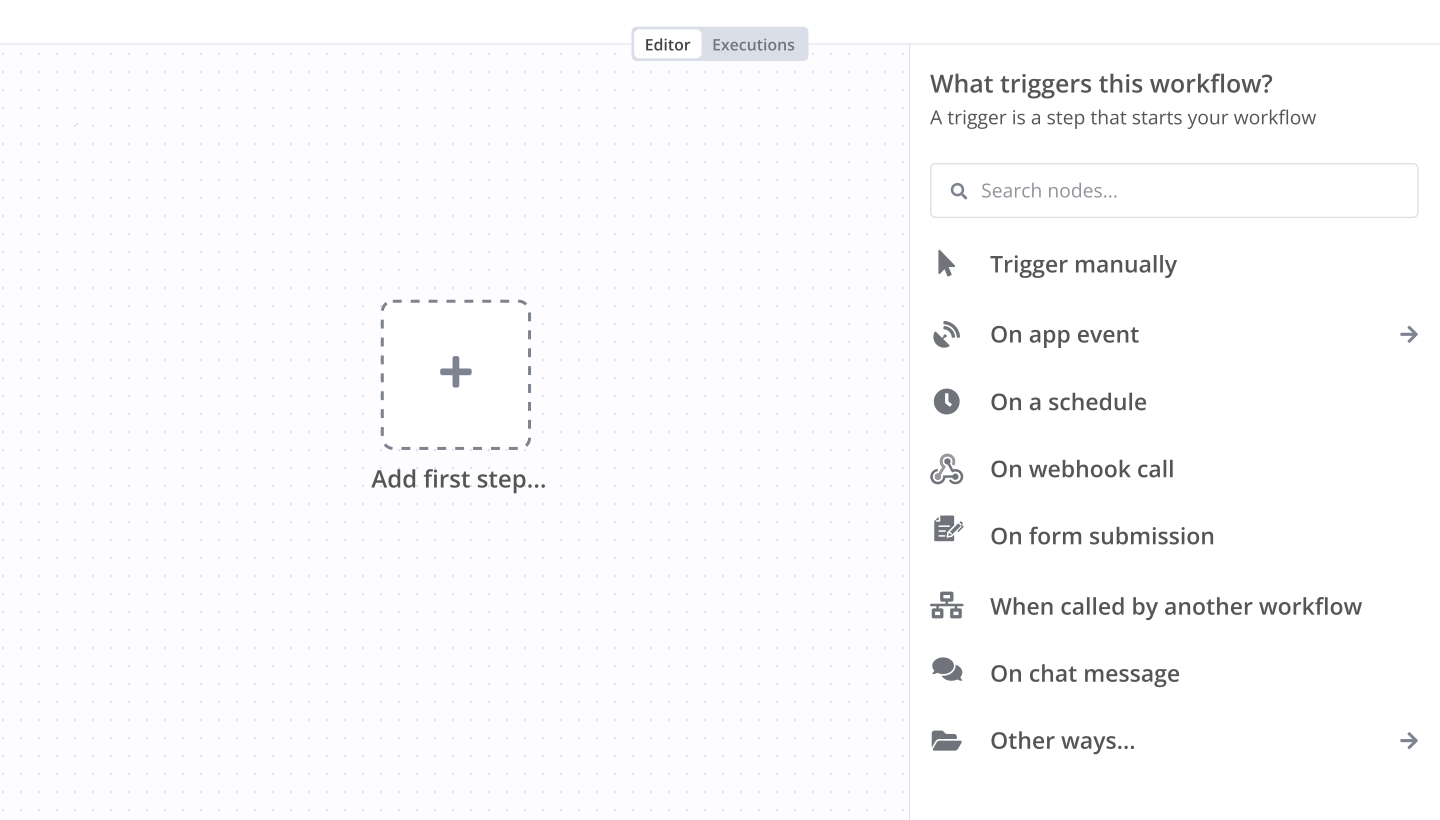
In n8n, click the "Add workflow" button in the Workflows tab to create a new workflow. Add the starting point – a trigger on when your workflow should run: an app event, a schedule, a webhook call, another workflow, an AI chat, or a manual trigger. Sometimes, the HTTP Request node might already serve as your starting point.

HTTP Request and Odoo integration: Create a new workflow and add the first step

Step 2: Add and configure HTTP Request and Odoo nodes

You can find HTTP Request and Odoo in the nodes panel. Drag them onto your workflow canvas, selecting their actions. Click each node, choose a credential, and authenticate to grant n8n access. Configure HTTP Request and Odoo nodes one by one: input data on the left, parameters in the middle, and output data on the right.

HTTP Request and Odoo integration: Add and configure HTTP Request and Odoo nodes

Step 3: Connect HTTP Request and Odoo

A connection establishes a link between HTTP Request and Odoo (or vice versa) to route data through the workflow. Data flows from the output of one node to the input of another. You can have single or multiple connections for each node.

HTTP Request and Odoo integration: Connect HTTP Request and Odoo

Step 4: Customize and extend your HTTP Request and Odoo integration

Use n8n's core nodes such as If, Split Out, Merge, and others to transform and manipulate data. Write custom JavaScript or Python in the Code node and run it as a step in your workflow. Connect HTTP Request and Odoo with any of n8n’s 1000+ integrations, and incorporate advanced AI logic into your workflows.

HTTP Request and Odoo integration: Customize and extend your HTTP Request and Odoo integration

Step 5: Test and activate your HTTP Request and Odoo workflow

Save and run the workflow to see if everything works as expected. Based on your configuration, data should flow from HTTP Request to Odoo or vice versa. Easily debug your workflow: you can check past executions to isolate and fix the mistake. Once you've tested everything, make sure to save your workflow and activate it.

HTTP Request and Odoo integration: Test and activate your HTTP Request and Odoo workflow

Bulk sync products from Google Sheets to Odoo with auto image upload

What Problem Does It Solve?

Manually entering hundreds of products from a spreadsheet into Odoo is slow, repetitive, and prone to human error.
Ensuring that barcodes are unique and products aren't duplicated during manual entry is a constant challenge.
Uploading product images one by one into Odoo's interface is a major bottleneck for inventory management.
This workflow solves these issues by:
Automatically importing new products from a Google Sheet to Odoo the moment they are added.
Performing a real-time duplicate check via Barcode to prevent redundant records.
Automatically fetching and attaching product images from URLs directly into the Odoo product template.
Updating the status in your spreadsheet to "Done" once the sync is successful.

How to Configure It

Google Sheets Setup
Connect your Google account and select your inventory spreadsheet.
Your sheet should have columns for: Name, Barcode, category, Sales Price, Cost, and Image URL (الصوره).
Odoo Setup
Connect your Odoo API credentials in n8n.
Ensure the category names in your sheet exactly match the existing "Product Categories" in Odoo for accurate mapping.
Image Processing
The "Download Image" node is configured to fetch the image file from the URL provided in your sheet. Ensure these are direct, publicly accessible image links.

How It Works

The workflow triggers automatically whenever a new row is added to your Google Sheet.
It loops over the items and first searches Odoo by Barcode to verify if the product already exists.
If it’s a new product, it searches Odoo to find the correct internal Category ID based on the sheet data.
It checks if an image URL is available. If so, it downloads the file, converts it to binary, and creates the product in Odoo with the image attached.
If no image is provided, it seamlessly creates the product template with basic details (Price, Cost, Barcode, Category).
Finally, it updates the status column in the spreadsheet to "Done" and includes a brief "Wait" to stay within Odoo and Google API rate limits.

Customization Ideas

Add a logic branch to update existing products (e.g., sync new prices) if the Barcode already exists in Odoo instead of just skipping them.
Integrate with a Telegram bot to send a confirmation photo and summary of the new product once it’s live in the ERP.
Add currency conversion nodes if your sheet prices are in a different currency than your Odoo default.

For more info Contact Me

Nodes used in this workflow

Popular HTTP Request and Odoo workflows

Bulk sync products from Google Sheets to Odoo with auto image upload

What Problem Does It Solve? Manually entering hundreds of products from a spreadsheet into Odoo is slow, repetitive, and prone to human error. Ensuring that barcodes are unique and products aren't duplicated during manual entry is a constant challenge. Uploading product images one by one into Odoo's interface is a major bottleneck for inventory management. This workflow solves these issues by: Automatically importing new products from a Google Sheet to Odoo the moment they are added. Performing a real-time duplicate check via Barcode to prevent redundant records. Automatically fetching and attaching product images from URLs directly into the Odoo product template. Updating the status in your spreadsheet to "Done" once the sync is successful. How to Configure It Google Sheets Setup Connect your Google account and select your inventory spreadsheet. Your sheet should have columns for: Name, Barcode, category, Sales Price, Cost, and Image URL (الصوره). Odoo Setup Connect your Odoo API credentials in n8n. Ensure the category names in your sheet exactly match the existing "Product Categories" in Odoo for accurate mapping. Image Processing The "Download Image" node is configured to fetch the image file from the URL provided in your sheet. Ensure these are direct, publicly accessible image links. How It Works The workflow triggers automatically whenever a new row is added to your Google Sheet. It loops over the items and first searches Odoo by Barcode to verify if the product already exists. If it’s a new product, it searches Odoo to find the correct internal Category ID based on the sheet data. It checks if an image URL is available. If so, it downloads the file, converts it to binary, and creates the product in Odoo with the image attached. If no image is provided, it seamlessly creates the product template with basic details (Price, Cost, Barcode, Category). Finally, it updates the status column in the spreadsheet to "Done" and includes a brief "Wait" to stay within Odoo and Google API rate limits. Customization Ideas Add a logic branch to update existing products (e.g., sync new prices) if the Barcode already exists in Odoo instead of just skipping them. Integrate with a Telegram bot to send a confirmation photo and summary of the new product once it’s live in the ERP. Add currency conversion nodes if your sheet prices are in a different currency than your Odoo default. For more info Contact Me

Sync Shopify products to Odoo in real time for create and update events

What Problem Does It Solve? Keeping product data consistent between Shopify and Odoo is a major operational challenge. Manually creating new products in Odoo every time they are added to Shopify is slow and leads to Barcode errors. Prices and titles change frequently; failing to sync these updates results in pricing discrepancies and customer confusion. This workflow solves these issues by: Automatically creating a new product in Odoo as soon as it's added to Shopify. Ensuring Barcode uniqueness by checking for existing products before creation. Syncing product images directly from Shopify to Odoo. Real-time updating of product names and prices in Odoo whenever they change in Shopify. How to Configure It Shopify Setup Connect your Shopify account using OAuth2. The workflow uses two triggers: "products/create" and "products/update". Odoo Setup Connect your Odoo API credentials in n8n. Ensure your Shopify "Vendors" match the "Product Categories" names in Odoo for accurate automated mapping. Image Handling The workflow automatically downloads the first image from Shopify and converts it to the format required by Odoo's "image_1920" field. How It Works Product Creation Path: Shopify triggers the "Product Created" node. The workflow checks Odoo for an existing product with the same Barcode. If not found, it retrieves the Odoo Category ID based on the Shopify Vendor name. It downloads the product image, extracts the file content, and creates the item in Odoo. Product Update Path: Shopify triggers the "Product Updated" node. The workflow finds the corresponding product in Odoo by Barcode. It instantly updates the Odoo record with the new Title and List Price from Shopify. Customization Ideas Add logic to sync "Inventory Levels" so Shopify and Odoo share the same stock count. Map multiple variants (Sizes/Colors) from Shopify to Odoo Product Variants. Integrate with a notification system to alert you if a Shopify Vendor doesn't have a matching Category in Odoo. For more info Contact Me

Send 10-day post-purchase WhatsApp offers with Odoo, OpenAI and Evolution API

What Problem Does It Solve? Generic, automated retention messages often feel like spam and fail to engage returning customers. Manually tracking which customers ordered exactly 10 days ago to send them tailored offers is extremely time-consuming. Sending bulk promotional WhatsApp messages too quickly can result in phone number bans. This workflow solves these issues by: Automatically fetching customers from Odoo whose invoices are exactly 10 days old. Using an AI Agent (OpenAI) to generate a highly personalized, warm Egyptian Arabic message for each customer. Offering a targeted 10% extra discount to encourage repeat purchases via social media platforms. Implementing a 1-minute "Wait" mechanism between messages to protect your WhatsApp account from being flagged. How to Configure It Odoo Setup Connect your Odoo credentials in n8n. The workflow fetches invoices starting from April 2026. Adjust the date filter in the "Fetch 10-Day Old Invoices" node if needed. OpenAI Setup Add your OpenAI API key to the "Generate AI Message" node. You can tweak the system prompt to match your specific brand voice or adjust the discount offer. WhatsApp API Setup This workflow uses the Evolution API. Update the URL and "apikey" in the "Send WhatsApp Discount" node with your specific instance details. How It Works Every day at 10:01 AM, the schedule node triggers the workflow automatically. It queries Odoo for all posted invoices exactly 10 days old and retrieves the corresponding customer contact details (Name and Phone). It processes the customers one by one through a loop (Split In Batches). For each customer, OpenAI generates a unique, friendly colloquial Arabic message calling them by their first name and offering a 10% discount. The message explicitly directs the customer to claim the offer via social media messages, completely avoiding formal "terms & conditions" jargon. The workflow sends the AI-generated text via WhatsApp and then pauses for 1 minute before processing the next customer. Customization Ideas Change the AI prompt to offer different discounts based on the total amount the customer spent in their last order. Add a condition to skip customers who have already made a new purchase within the last 10 days. Switch the AI model to Claude or Gemini depending on your preference for Arabic copywriting. For more info Contact Me

Create Bosta shipping orders from Odoo invoices using OpenAI GPT models

What Problem Does It Solve? Manual Data Entry Bottlenecks:** Moving shipping data from Odoo to Bosta manually is slow and prone to errors, especially during high-volume periods. Address Mismatches:** Odoo stores addresses as unstructured text, while Bosta requires strict Zone/District IDs. Mismatches lead to failed deliveries and returns. Messy Labels:** Long ERP product names look unprofessional on shipping labels. This workflow solves these by:** Instantly creating the shipping order in Bosta when an Odoo invoice is confirmed. Using an AI Agent to intelligently parse raw addresses and map them to the exact Bosta ID. Ensuring the high operational standards required by automating data cleaning and COD rounding. How to Configure It Odoo Setup Create an Automation Rule in Odoo that sends a POST request to this workflow's Webhook URL when an invoice state changes to "Confirmed". Credentials Connect your Odoo, OpenAI, and Telegram accounts in the respective n8n nodes. Add your Bosta API Key in the Header parameters of the Create Bosta Order node. Product Mapping Open the Summarize Items code node and update the NAME_MAP object to link your Odoo product names to short shipping labels. Data Table Ensure the Fetch Zones node is connected to your Bosta Zones/Districts data table in n8n. How It Works Trigger:** The workflow starts automatically when an invoice is confirmed in Odoo. Fetch & Process:** It pulls customer details and invoice items, then aggregates quantities (e.g., turning 3 lines of "Shampoo" into "Shampoo (3)"). AI Analysis:** The AI Agent cross-references the raw address with the official Bosta zones list to strictly select the correct IDs. Execution:** The order is created in Bosta. If successful, the process is complete. Error Handling:* If any step fails, a Telegram message is sent immediately with the invoice number to alert the operations team*. Customization Ideas Write Back:** Add a node to update the Odoo invoice with the generated Bosta tracking number. Multi-Courier:** Add a switch node to route orders to different couriers (e.g., Aramex, Mylerz) based on the city. Campaign Logging:** Log successful shipments to a spreadsheet to track fulfillment metrics. Notification Channels:** Change the error alert from Telegram to Slack or Email. If you need any help Get in Touch

Build your own HTTP Request and Odoo integration

Create custom HTTP Request and Odoo workflows by choosing triggers and actions. Nodes come with global operations and settings, as well as app-specific parameters that can be configured. You can also use the HTTP Request node to query data from any app or service with a REST API.

Odoo supported actions

Create
Create a new contact
Delete
Delete a contact
Get
Get a contact
Get Many
Get many contacts
Update
Update a contact
Create
Create a new item
Delete
Delete an item
Get
Get an item
Get Many
Get many items
Update
Update an item
Create
Create a new note
Delete
Delete a note
Get
Get a note
Get Many
Get many notes
Update
Update a note
Create
Create a new opportunity
Delete
Delete an opportunity
Get
Get an opportunity
Get Many
Get many opportunities
Update
Update an opportunity
Use case

Save engineering resources

Reduce time spent on customer integrations, engineer faster POCs, keep your customer-specific functionality separate from product all without having to code.

Learn more

FAQs

  • Can HTTP Request connect with Odoo?

  • Can I use HTTP Request’s API with n8n?

  • Can I use Odoo’s API with n8n?

  • Is n8n secure for integrating HTTP Request and Odoo?

  • How to get started with HTTP Request and Odoo integration in n8n.io?

Need help setting up your HTTP Request and Odoo integration?

Discover our latest community's recommendations and join the discussions about HTTP Request and Odoo integration.
Moiz Contractor
theo
Jon
Dan Burykin
Tony

Looking to integrate HTTP Request and Odoo in your company?

Over 3000 companies switch to n8n every single week

Why use n8n to integrate HTTP Request with Odoo

Build complex workflows, really fast

Build complex workflows, really fast

Handle branching, merging and iteration easily.
Pause your workflow to wait for external events.

Code when you need it, UI when you don't

Simple debugging

Your data is displayed alongside your settings, making edge cases easy to track down.

Use templates to get started fast

Use 1000+ workflow templates available from our core team and our community.

Reuse your work

Copy and paste, easily import and export workflows.

Implement complex processes faster with n8n

red iconyellow iconred iconyellow icon