Back to Integrations
integrationHTTP Request node
integrationSendGrid node

HTTP Request and SendGrid integration

Save yourself the work of writing custom integrations for HTTP Request and SendGrid and use n8n instead. Build adaptable and scalable Development, Core Nodes, Marketing, and Communication workflows that work with your technology stack. All within a building experience you will love.

How to connect HTTP Request and SendGrid

  • Step 1: Create a new workflow
  • Step 2: Add and configure nodes
  • Step 3: Connect
  • Step 4: Customize and extend your integration
  • Step 5: Test and activate your workflow

Step 1: Create a new workflow and add the first step

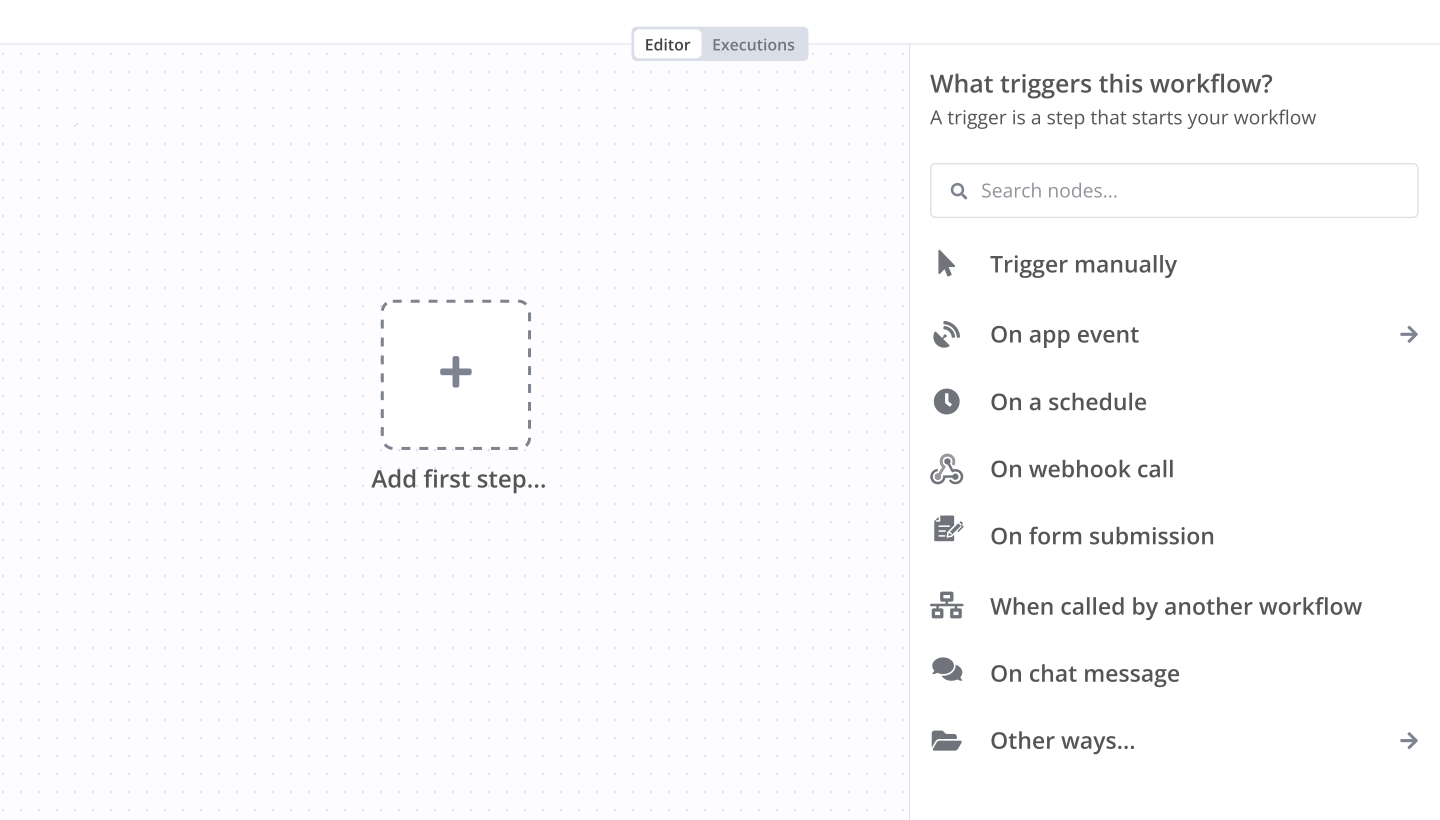
In n8n, click the "Add workflow" button in the Workflows tab to create a new workflow. Add the starting point – a trigger on when your workflow should run: an app event, a schedule, a webhook call, another workflow, an AI chat, or a manual trigger. Sometimes, the HTTP Request node might already serve as your starting point.

HTTP Request and SendGrid integration: Create a new workflow and add the first step

Step 2: Add and configure HTTP Request and SendGrid nodes

You can find HTTP Request and SendGrid in the nodes panel. Drag them onto your workflow canvas, selecting their actions. Click each node, choose a credential, and authenticate to grant n8n access. Configure HTTP Request and SendGrid nodes one by one: input data on the left, parameters in the middle, and output data on the right.

HTTP Request and SendGrid integration: Add and configure HTTP Request and SendGrid nodes

Step 3: Connect HTTP Request and SendGrid

A connection establishes a link between HTTP Request and SendGrid (or vice versa) to route data through the workflow. Data flows from the output of one node to the input of another. You can have single or multiple connections for each node.

HTTP Request and SendGrid integration: Connect HTTP Request and SendGrid

Step 4: Customize and extend your HTTP Request and SendGrid integration

Use n8n's core nodes such as If, Split Out, Merge, and others to transform and manipulate data. Write custom JavaScript or Python in the Code node and run it as a step in your workflow. Connect HTTP Request and SendGrid with any of n8n’s 1000+ integrations, and incorporate advanced AI logic into your workflows.

HTTP Request and SendGrid integration: Customize and extend your HTTP Request and SendGrid integration

Step 5: Test and activate your HTTP Request and SendGrid workflow

Save and run the workflow to see if everything works as expected. Based on your configuration, data should flow from HTTP Request to SendGrid or vice versa. Easily debug your workflow: you can check past executions to isolate and fix the mistake. Once you've tested everything, make sure to save your workflow and activate it.

HTTP Request and SendGrid integration: Test and activate your HTTP Request and SendGrid workflow

Track investments using Baserow and n8n

This workflow uses a number of technologies to track the value of ETFs, stocks and other exchange-traded products:

Baserow: To keep track of our investments
n8n’s Cron node: To trigger the workflow compiling our daily morning briefing
Webscraping: The HTTP Request & HTML Extract nodes to fetch up-to-date prices from the relevant stock exchange and structure this infromation
Javascript: We’ll use the Function node to build a custom HTML body with all the relevant information
Sendgrid: The Email Service Provider in this workflow to send out our email

Thanks to n8n, the steps in this workflow can easily be changed. Not a Sendgrid user? Simply remove the Sendgrid node and add a Gmail node instead. The stock exchange has a REST API? Just throw away the HTML Extract node.

Here’s how it works:

Data Source

In this scenario, our data source is Baserow. In our table, we’ll track all information needed to identify each investment product:

We have two text type columns (Name and ISIN) as well as two number type columns (Count and Purchase Price).

Workflow

Nodes

  1. Cron

The Cron node will trigger our workflow to run each work day in the morning hours.

  1. Baserow

The Baserow node will fetch our investments from the database table shown above.

  1. HTTP Request

Using the HTTP Request node we can fetch live data from the stock exchange of our choice based on the ISIN. This example uses Tradegate, which is used by many German fintechs. The basic approach should also work for other exchanges, as long as they provide the required data to the public.

  1. HTML Extract

Since our HTTP Request node fetches full websites, we’re using the HTML Extract node to extract the information we’re looking for from each website. If an exchange other than Tradegate is used, the selectors used in this node will most likely need to be updated.

      1. Set

The Set nodes helps with setting the exact columns we’ll use in our table. In this case we’re first formatting the results from our exchange, then calculate the changes based on the purchase price.

  1. Function

Here were using a bit of Javascript magic to build an HTML email. This is where any changes to the email content would have to be made.

  1. Sendgrid

Finally we send out the email built in the previous step. This is where you can configure sender and recipients.

Result

The basic email generated by this workflow will look like so:

Nodes used in this workflow

Popular HTTP Request and SendGrid workflows

+4

Recover Shopify Abandoned Carts with Email, SMS, WhatsApp & Facebook Retargeting

This workflow is a complete, production-ready solution for recovering abandoned carts in Shopify stores using a multi-channel, multi-touch approach. It automates personalized follow-ups via Email, SMS, and WhatsApp, tracks every customer interaction for multi-touch attribution, and enables advanced retargeting and analytics. Key features: Multi-step, timed recovery sequence (Email → SMS → Email → WhatsApp) Customer segmentation (new, returning, VIP) and A/B testing Dynamic discounting and personalized messaging Touchpoint logging to Google Sheets for attribution analysis Facebook Custom Audience retargeting for unrecovered carts Slack notifications for high-value cart recoveries What does this workflow do? Listens for abandoned cart events from Shopify (or any e-commerce platform) via webhook. Normalizes and enriches cart data by fetching full cart details and customer purchase history. Predicts the likely reason for abandonment (e.g., price sensitivity, checkout complexity, technical issues) using rule-based logic. Segments the customer (new, returning, VIP), assigns an A/B test group, and generates a personalized discount and checkout URL. Runs a timed, multi-channel recovery sequence: 1 hour after abandonment: Checks if the order is completed. If not, sends a personalized Email #1 and logs the touchpoint. 4 hours after abandonment: Checks again. If not recovered, sends an SMS with a discount code and logs the touchpoint. 24 hours after abandonment: Checks again. If not recovered, sends Email #2 (with social proof/urgency) and logs the touchpoint. 48 hours after abandonment: Final check. If not recovered, sends a WhatsApp reminder and logs the touchpoint. If the cart is still not recovered: Hashes customer identifiers and adds them to a Facebook Custom Audience for retargeting. Logs every touchpoint (email, SMS, WhatsApp) to a Google Sheet for multi-touch attribution analysis. Sends a Slack notification if a high-value cart is recovered. Why is this workflow useful? Boosts recovery rates:** By using multiple channels and personalized timing, you maximize the chance of recovering lost sales. Improves attribution:** Every customer interaction is logged, so you can analyze which channels and messages drive conversions. Enables advanced retargeting:** Unrecovered carts are automatically added to a Facebook Custom Audience for paid retargeting. Saves time:** Fully automated, with easy configuration for your store, messaging, and analytics. Scalable and extensible:** Easily adapt the sequence, add more channels, or integrate with other tools. How to install and configure Prerequisites n8n instance (v2.0.2+ recommended) Shopify store with API access Accounts and API credentials for: SendGrid (email) Twilio (SMS) WhatsApp Business API Google Sheets (service account) Facebook Graph API (for Custom Audiences) Slack (for notifications) Setup steps Import the workflow into your n8n instance. Configure the “Workflow Configuration” node: Set your Shopify domain, API URLs, Google Sheets ID, and high-value threshold. Connect all required credentials in the respective nodes: Shopify, SendGrid, Twilio, WhatsApp, Google Sheets, Facebook Graph API, Slack. Create a Google Sheet named “Touchpoints” with columns: cart_id, customer_id, touchpoint_type, timestamp, channel, ab_group. Set up the webhook in your Shopify store (or e-commerce platform) to trigger the workflow on cart abandonment. Test the workflow with a sample abandoned cart event to ensure emails, SMS, WhatsApp, and logging work as expected. Enable the workflow in n8n for live operation. Node-by-node breakdown Abandoned Cart Webhook:** Receives abandoned cart events. Workflow Configuration:** Stores global settings (API URLs, Shopify domain, Google Sheets ID, high-value threshold). Normalize Cart Data:** Cleans and standardizes incoming cart data. Fetch Cart Details / Fetch Customer History:** Enriches data with full cart and customer info. Predict Abandonment Reason:** Uses business logic to guess why the cart was abandoned. Personalization Engine:** Segments the customer, assigns A/B group, calculates discount, and builds checkout URL. Customer Segment Check / Device Type Check:** Applies routing logic for personalized messaging. Wait / Check Order Status / Generate & Send Messages:** Timed sequence for Email, SMS, and WhatsApp, with order status checks at each step. Log Touchpoint (Google Sheets):** Records every message sent for attribution. Attribution Merge:** Combines all touchpoints into a single journey for analysis. Hash Customer Data for Facebook / Add to Retargeting Audience:** Adds unrecovered carts to a Facebook Custom Audience. Check Cart Value Threshold / Notify High-Value Recovery:** Sends Slack alerts for high-value recoveries. Customization tips Adjust wait times and message content to fit your brand and audience. Add or remove channels (e.g., push notifications, phone calls) as needed. Expand the Google Sheet for deeper analytics (e.g., add UTM parameters, campaign IDs). Integrate with your CRM or analytics platform for end-to-end tracking. Troubleshooting Make sure all API credentials are set and tested. Check Google Sheets permissions for the service account. Test each channel (email, SMS, WhatsApp) individually before going live. Review the workflow execution logs in n8n for errors or failed steps.
+2

Auto-Schedule Demos for High-Intent Leads with Clearbit, Slack, and Calendly

This workflow automatically captures, enriches, scores, and routes website leads in real-time, scheduling high-intent prospects for demos within minutes instead of hours—dramatically improving conversion rates by eliminating response delays. What Makes This Different: Real-Time Lead Processing** - Captures and processes leads instantly from website forms with zero delay Intelligent Fit Scoring** - Automatically scores leads 0-100 based on company size, seniority, and revenue Dual-Track Routing** - High-intent leads (60+) get fast-track treatment, others follow standard nurture Live Calendar Integration** - Shows actual available Calendly slots, not fake placeholders Automated Sales Alerts** - Posts rich lead details to Slack with booking links instantly Smart Follow-Up** - Sends fallback email if sales team doesn't respond within 10 minutes Complete CRM Automation** - Creates HubSpot contacts and deals automatically with enriched data Full Audit Trail** - Logs everything to Google Sheets for analytics and reporting Key Benefits of Instant Lead Response: Speed** - Minutes from form submission to scheduled demo, not hours or days Conversion** - Respond while leads are hot, dramatically improving booking rates Automation** - Zero manual work—enrichment, scoring, routing, and follow-up all automatic Intelligence** - Data-driven scoring ensures sales focuses on best-fit prospects Accountability** - Complete logging shows response times and follow-up actions Scalability** - Handles unlimited lead volume without adding sales admin work Who's it for This template is designed for B2B SaaS companies, sales teams, and revenue operations professionals who need to convert website leads faster. It's perfect for organizations that lose deals due to slow response times, want to prioritize high-intent prospects, need to automate CRM data entry, or want to ensure no hot lead falls through the cracks while sales is busy. How it works / What it does This workflow creates an end-to-end lead-to-meeting pipeline that automatically processes inbound leads and schedules high-intent prospects for demos. The system: Receives lead submissions via webhook from website forms or chat widgets Normalizes data from different form providers into a standard format Enriches contact information using Clearbit to get company size, revenue, job title, and industry Calculates fit score (0-100) based on company metrics: size (40 pts), seniority (30 pts), revenue (30 pts) Routes intelligently - High-intent leads (60+) → fast track | Standard leads → nurture channel Creates CRM records - Automatically creates/updates HubSpot contact and deal with enriched data Fetches real availability - Gets actual available Calendly demo slots via API (next 7 days) Alerts sales team - Posts formatted message to Slack with lead details and booking links Monitors response - Waits 10 minutes and checks if sales replied in Slack thread Sends fallback email - Automatically emails lead with self-service booking link if no response Logs everything - Records all data to Google Sheets for reporting and analytics Key Innovation: Smart Follow-Up Automation - Unlike basic lead capture workflows, this system ensures accountability by automatically following up with leads if the sales team is unavailable, preventing lost opportunities while maintaining a professional response time. How to set up Configure API Credentials Add the following credentials in n8n: Clearbit (Lead Enrichment) Create account at clearbit.com Generate API key from Settings → API Add as "Clearbit API" credential in n8n HubSpot (CRM Integration) Create private app in HubSpot Settings → Integrations → Private Apps Grant scopes: crm.objects.contacts.write, crm.objects.deals.write Copy app token Add as "HubSpot App Token" credential in n8n Calendly (Calendar Availability) Create OAuth app at calendly.com/integrations/api_webhooks Configure OAuth2 credentials in n8n Set environment variable: CALENDLY_USER_URI with your user URI Get this from: https://api.calendly.com/users/me (returns your user URI) Slack (Team Notifications) Create Slack app at api.slack.com/apps Add Bot Token Scopes: channels:read, chat:write, channels:history Install app to workspace and copy Bot User OAuth Token Add as "Slack API" credential in n8n Update channel names in nodes: change "hot-leads" and "leads" to your actual channel names SendGrid (Email Fallback) Create account at sendgrid.com Generate API key from Settings → API Keys Verify sender email address Add as "SendGrid API" credential in n8n Update "from" email in "Send Fallback Email" node Google Sheets (Activity Logging) Create Google Cloud project and enable Sheets API Configure OAuth2 credentials in n8n Create a Google Sheet with columns matching the workflow Replace YOUR_GOOGLE_SHEET_ID in "Log to Google Sheets" node with your actual sheet ID Customize Fit Scoring Logic Edit the "Calculate Fit Score" node to match your ideal customer profile: Default Scoring: Company size 50-5,000 employees = 40 points Executive/Director seniority = 30 points Annual revenue ≥ $1M = 30 points Total possible:* 100 points | High-intent threshold:* 60+ points To Customize: Adjust company size ranges based on your target market Change seniority requirements (C-level, VP, Manager, etc.) Modify revenue thresholds Update the 60-point threshold for high-intent routing Set Up Webhook Endpoint Get Webhook URL: Activate the workflow Copy webhook URL from "Lead Form Webhook" node URL format: https://your-n8n-instance.com/webhook/demo-request Configure Form Provider: Point your website form POST request to the webhook URL Send JSON body with fields: email, name, company, phone, utm_source, utm_campaign, page_url, message Or map your existing form fields to these names in "Normalize Lead Data" node Example Form Integration: // HTML Form fetch('https://your-n8n.com/webhook/demo-request', { method: 'POST', headers: {'Content-Type': 'application/json'}, body: JSON.stringify({ email: '[email protected]', name: 'John Doe', company: 'Acme Inc', phone: '+1234567890', utm_source: 'google', page_url: window.location.href }) }) Test the Workflow Initial Test: Activate the workflow Submit test lead via webhook (use Postman or curl) Verify Clearbit enrichment returns data Check HubSpot for created contact and deal Confirm Slack notification appears in correct channel Verify Google Sheet receives log entry Response Test: Wait 10 minutes after Slack notification Check if "Check Slack Replies" detects no response Verify fallback email sends via SendGrid Confirm lead receives booking email with Calendly link Calendly Test: Verify "Get Calendly Event Types" finds your Demo event Check "Get Available Demo Slots" returns actual time slots Confirm booking URLs work and pre-fill time selection Monitor and Optimize Key Metrics to Track: Time from form submission to Slack notification (target: <30 seconds) Sales response rate within 10 minutes Fallback email send rate (lower is better) High-intent lead conversion rate (booked → closed) Average fit score of closed deals Optimization Tips: Adjust fit score weights based on actual conversion data Tune the 60-point threshold for high-intent routing Customize Slack message format for your team's workflow Modify wait time (10 minutes) based on team availability Add custom fields to Google Sheet for additional tracking Requirements n8n Instance: n8n Cloud or self-hosted (v1.0+) Code node execution enabled Webhook functionality active External Services: Clearbit** - Enrichment API (paid service, free trial available) HubSpot** - CRM with API access (free tier available) Calendly** - Scheduling platform with API access (paid plans) Slack** - Workspace with bot integration capability SendGrid** - Email API (free tier: 100 emails/day) Google Sheets** - Google account with Sheets API enabled Technical Requirements: Public webhook endpoint (HTTPS) Environment variable support for sensitive data OAuth2 authentication capability Minimum 256MB RAM for code node execution Data Privacy: Ensure GDPR/CCPA compliance for lead data storage Review data retention policies for all connected services Configure appropriate data handling in Google Sheets Add privacy policy link to email templates Tips and best practices Fit Scoring: Start with default scoring, then optimize based on actual conversion data Review monthly: which scores convert best? Adjust weights accordingly Consider adding industry filters for vertical-specific targeting Test different thresholds (50, 60, 70) to find optimal balance Lead Response: Keep 10-minute wait time during business hours Consider longer wait for after-hours leads (use schedule trigger) Customize Slack urgency based on fit score (🔥 for 80+, ⚡ for 60-79) Add @mentions in Slack for specific team members based on lead attributes Calendar Management: Use dedicated "Demo" event type in Calendly for consistent detection Ensure event name includes "demo" (case-insensitive) for workflow to find it Set appropriate buffer times between meetings in Calendly settings Review availability regularly to maintain high slot count Error Handling: All critical nodes have onError: continueRegularOutput to prevent workflow stops Monitor execution logs daily for failed enrichments or CRM errors Set up n8n error workflow to alert on consistent failures Keep fallback booking URL updated in case Calendly API fails Performance: Webhook responds immediately (within 2 seconds) even while processing continues Clearbit enrichment can take 3-5 seconds—this is expected Consider batching Google Sheets updates if processing >100 leads/day Monitor n8n resource usage; Code nodes can be memory-intensive Privacy and Compliance: Add unsubscribe link to fallback emails Include data handling disclosure in form Set Google Sheet permissions appropriately (team only) Review Clearbit's data sources for compliance requirements Configure data retention in HubSpot to match your policy Customization Ideas: Add SMS notification for ultra-high fit scores (90+) Integrate with territory routing (route to specific sales rep by region) Add lead source scoring (paid > organic > referral) Create separate tracks for different product lines Build competitor mention detection in form messages Add qualification questions that influence fit score
+2

Outreach for your product using Apollo, LinkedIn, GPT-4.1 and SendGrid

> 💛 Sticky Note: > This Hyperpersonalized Outreach n8n template automates AI‑powered B2B email campaigns by combining Apollo.io lead scraping, LinkedIn enrichment, GPT‑4 generation, and SendGrid delivery. Follow the setup steps below to get started in minutes! 🔥 TLDR Build a scalable, AI‑driven email outreach pipeline that: Scrapes up to 500 leads from Apify Enriches profiles with LinkedIn work history & posts Filters and scores leads via Apollo.io Generates personalized HTML emails with GPT‑4.1 . Sends via SendGrid and logs status in Supabase 👥 Who’s It For Sales teams, growth marketers, and founders who need: High‑touch cold outreach at scale Data‑driven personalisation using real profile insights Automated lead qualification and tracking ⚙️ How It Works / What It Does Apollo Scraper: Uses Apify HTTP nodes (no hard‑coded API keys) to pull lead data. Supabase Sink: Persists email, linkedin_url, and ingestion timestamp. LinkedIn Enrichment: Fetches career history and latest 5 posts via RapidAPI. Data Validation: Conditional nodes drop incomplete or irrelevant leads. Product Description Agent: Creates a customer profile based on the product and how it can help them. Story Agent: Has the persona, style of speech and rules to generate reply for the customer based on the pain points and solution found by the Product Description agent. HTML Modifier: Contains a fix format to keep the output format of each mail consistent and also generate a subject for the mail. SendGrid Dispatch: An SMTP service which delivers emails in large quantity and also keep your mail spam free otherwise if you use gmail node your mail will go staright to spam; updates status=true/false in Supabase. 🛠️ How to Set Up Clone the workflow JSON into your n8n instance. Configure environment variables for Apollo.io, RapidAPI, OpenAI, SendGrid, and Supabase. Rename credentials and test each HTTP node. Activate the workflow and monitor executions in n8n’s UI. ✅ Requirements n8n 0.300.0+ Accounts & API keys for Apollo.io, RapidAPI (LinkedIn), OpenAI, SendGrid, Supabase Supabase to store LinkedIn id and gmails of leads, also useful to eliminate the risk of having duplicate data. 🎨 How to Customize Adjust lead batch size in the Apollo HTTP node. Swap the HTML email template to match your brand. Add A/B subject‑line experiments by cloning the Email Agent. > 🔐 Security Reminder: All credentials must be stored in n8n’s credential manager—never hard‑code API keys in HTTP nodes.

Qualify and call back inbound leads with OpenAI, Bland AI, Airtable and SendGrid

Qualify and Call Back Inbound Leads with OpenAI, Bland AI, Airtable & SendGrid This n8n template demonstrates how to capture inbound leads from a form, qualify them with OpenAI, and route the hottest ones to a Bland AI voice agent that calls them back, books a meeting on Google Calendar, and confirms by email, all without a human touching the lead. Use cases are many: instant follow-up on paid-ad leads, voice qualification for high-ticket consulting inquiries, or replacing the "first response" SDR seat entirely! Good to know Each Bland AI call is billed per minute. The default max_duration in this template is 5 minutes; see Bland AI pricing for the current rate. OpenAI calls for qualification cost fractions of a cent per lead, but volume adds up; set a budget alert on your OpenAI account if you're running paid traffic. You can also use Claude. Outbound calling is regulated. Make sure you have consent on your form and check the rules for your country (TCPA in the US, PECR in the UK, etc.) before going live. How it works We capture the lead via a webhook; your form, quiz, or landing page posts the payload (name, email, phone, company, plus any qualification fields you collect). A code node normalises the payload, an IF node rejects anything missing required fields, and the lead is written to Airtable so you have a single source of truth. OpenAI is then used to qualify the lead. We give it the cleaned payload and ask it to return one of three next actions: nurture_email, priority_email, or ai_call. Low-intent leads get a SendGrid nurture email. Medium-intent leads get a priority email. High-intent leads continue down to the voice path. For the voice path, we pull free slots from Google Calendar, format them into a natural-speech sentence ("I have Tuesday at 2 or Thursday at 10…"), and POST to Bland AI with the script, the lead's number, and a callback URL. Bland AI calls the lead, runs the script, and posts the outcome back to the second webhook in this same workflow. If a slot was booked, we create the Google Calendar event, update the Airtable record, and send a SendGrid confirmation. If the call failed (no answer, declined, error), we update Airtable and send a priority follow-up email so a human can step in. How to use The webhook trigger is set up for a typical form payload, but feel free to swap it for a Typeform/Tally trigger, a Calendly cancellation, or any inbound source. Tune the prompt inside the AI Lead Qualification node to match your ICP; the routing logic only cares that the model returns one of the three action strings. Edit the voice script inside the Trigger AI Phone Call body to match your company name, agent name, and offer before going live. The Bland AI webhook field inside the request body must point to the production URL of the Call Outcome Webhook node in this same workflow so Bland can post back. Requirements OpenAI account for lead qualification Bland AI account for the outbound voice agent Airtable base with a Leads table SendGrid account for emails Google Calendar for availability and event creation Customising this workflow AI voice follow-up works for plenty of inbound flows beyond sales calls. Try it for booking demos, recovering abandoned checkout carts with a quick "is everything okay?" call, or as a re-engagement layer on stale leads in your CRM.

Automate B2B Lead Generation using Google Places API & SendGrid with Dashboard

This n8n workflow automates the entire lead generation pipeline from discovery to outreach: Location Grid Generation and Management Generates precise lat/lng grid points covering major US cities (New York, Texas, New Jersey, Atlanta, Miami) Uses 1.5km radius searches for optimal coverage Tracks searched locations to prevent duplicates Processes 50 points per day (customizable based on API quota) Automated Lead Discovery Daily scheduled searches using Google Places Nearby API Extracts business details: name, address, rating, status, place ID Fetches additional data via Google Places Details API (phone, website, hours) Smart filtering to focus only on businesses with websites Contact Information Extraction Scrapes business websites to find email addresses Advanced email filtering removes fake/placeholder emails Deduplicates by domain to ensure quality leads Tracks all discovered emails per business Intelligent Cold Email Outreach Two alternating email templates for variety and testing Personalized with business name, industry, and first name Rate-limited sending (30-second delays) to avoid spam flags Automated via SendGrid integration Marks sent emails in the database Real-Time Lead Dashboard Webhook-powered reporting endpoint Displays all discovered leads with full details Filters out fake/invalid emails automatically Clean, accessible data format for analysis What You Get: Automated daily lead collection from Google Places Email extraction from business websites Personalized cold email campaigns with A/B testing Lead tracking database in Google Sheets Real-time reporting dashboard via webhook Complete deduplication to maintain data quality Setup Requirements: Google Cloud Platform account (for Places API key) SendGrid account (for email sending) Google Sheets (2 templates provided) Basic n8n knowledge for configuration Included Templates: Location Grid Google Sheet - Tracks searched coordinates Leads Database Google Sheet - Stores all discovered leads Dashboard Webpage - Real-time lead reporting interface Customizable Features: Target locations (currently covers 5 major US cities) Daily batch size (default: 50 searches/day) Email templates and personalization Search radius (default: 1.5km) Industry filters and targeting Perfect For: Marketing agencies building client lead lists B2B sales teams prospecting locally Service providers finding new customers Anyone needing automated local business outreach Need help setting this up or want custom modifications? 📧 Connect with me on LinkedIn: Gilbert Onyebuchi 🌐 View live dashboard demo: Click here
+5

YouTube Video Optimization & Cross-Platform Distribution with GPT-4o

This workflow automates the post-publish process for YouTube videos, combining advanced SEO optimization, cross-platform promotion, and analytics reporting. It is designed for creators, marketers, and agencies who want to maximize the reach and performance of their YouTube content with minimal manual effort. Features SEO Automation** Fetches video metadata and analyzes competitor and trending data. Uses AI to generate SEO-optimized titles, descriptions, and tags. Calculates an SEO score and applies A/B testing logic to select the best title. Updates the video metadata on YouTube automatically. Cross-Platform Promotion** Generates platform-specific promotional content (LinkedIn, X/Twitter, Instagram, Facebook, etc.) using AI. Publishes posts to each connected social channel. Extracts video clips and analyzes thumbnails for enhanced promotion. Engagement Monitoring & Analytics** Monitors YouTube comments, detects negative sentiment, and drafts AI-powered replies. Logs all key data (videos, comments, analytics) to Google Sheets for tracking and reporting. Runs a weekly analytics job to aggregate performance, calculate engagement/viral indicators, and email a detailed report. Notifications & Alerts** Sends Slack alerts when a new video is published or when viral potential/negative comments are detected. How It Works Trigger The workflow starts automatically when a new YouTube video is published (via webhook) or on a weekly schedule for analytics. Video Intake & SEO Fetches video details (title, description, tags, stats). Gathers competitor and trending topic data. Uses AI to generate improved SEO assets and calculates an SEO score. Selects the best title (A/B test) and updates the video metadata. Clip & Thumbnail Processing If the video is long enough, runs thumbnail analysis and extracts short clips for social media. Cross-Platform Promotion Generates and formats promotional posts for each social platform. Publishes automatically to enabled channels. Engagement & Comment Monitoring Fetches comments, detects negative sentiment, and drafts AI-powered replies. Logs comments and responses to Google Sheets. Analytics & Reporting Aggregates weekly analytics, calculates engagement and viral indicators. Logs insights and sends a weekly report via email. Notifications Sends Slack alerts for new video publications and viral/negative comment detection. Setup Instructions Connect YouTube Set up YouTube API credentials and required IDs in the Workflow Configuration node. Connect OpenAI Add your OpenAI credentials for AI-powered content generation. Connect Slack Configure Slack credentials and specify alert channels. Connect Google Sheets Set up service account credentials for logging video, comment, and analytics data. Configure Social Platforms Add credentials for LinkedIn, Twitter (X), Instagram, and Facebook as needed. Test the Workflow Publish a test video and verify that metadata updates, social posts, logging, and weekly reports are working as expected. Use Cases YouTube Creators:** Automate SEO, promotion, and analytics to grow your channel faster. Marketing Teams:** Streamline multi-channel video campaigns and reporting. Agencies:** Deliver consistent, data-driven YouTube growth for multiple clients. Requirements YouTube API credentials OpenAI API key Slack API token Google Sheets service account (Optional) LinkedIn, Twitter, Instagram, Facebook API credentials Limitations Requires valid API credentials for all connected services. AI-powered features depend on OpenAI API access. Social posting is limited to platforms with available n8n nodes and valid credentials. Tip: You can easily customize prompts, scoring logic, and enabled platforms to fit your channel’s unique needs.

Build your own HTTP Request and SendGrid integration

Create custom HTTP Request and SendGrid workflows by choosing triggers and actions. Nodes come with global operations and settings, as well as app-specific parameters that can be configured. You can also use the HTTP Request node to query data from any app or service with a REST API.

SendGrid supported actions

Create or Update
Create a new contact, or update the current one if it already exists (upsert)
Delete
Delete a contact
Get
Get a contact by ID
Get Many
Get many contacts
Create
Create a list
Delete
Delete a list
Get
Get a list
Get Many
Get many lists
Update
Update a list
Send
Send an email
Use case

Save engineering resources

Reduce time spent on customer integrations, engineer faster POCs, keep your customer-specific functionality separate from product all without having to code.

Learn more
Use case

Automate lead management

Using too many marketing tools? n8n lets you orchestrate all your apps into one cohesive, automated workflow.

Learn more

FAQs

  • Can HTTP Request connect with SendGrid?

  • Can I use HTTP Request’s API with n8n?

  • Can I use SendGrid’s API with n8n?

  • Is n8n secure for integrating HTTP Request and SendGrid?

  • How to get started with HTTP Request and SendGrid integration in n8n.io?

Need help setting up your HTTP Request and SendGrid integration?

Discover our latest community's recommendations and join the discussions about HTTP Request and SendGrid integration.
Moiz Contractor
theo
Jon
Dan Burykin
Tony

Looking to integrate HTTP Request and SendGrid in your company?

Over 3000 companies switch to n8n every single week

Why use n8n to integrate HTTP Request with SendGrid

Build complex workflows, really fast

Build complex workflows, really fast

Handle branching, merging and iteration easily.
Pause your workflow to wait for external events.

Code when you need it, UI when you don't

Simple debugging

Your data is displayed alongside your settings, making edge cases easy to track down.

Use templates to get started fast

Use 1000+ workflow templates available from our core team and our community.

Reuse your work

Copy and paste, easily import and export workflows.

Implement complex processes faster with n8n

red iconyellow iconred iconyellow icon