Back to Integrations
integrationHubSpot node
integrationJira Software node

HubSpot and Jira Software integration

Save yourself the work of writing custom integrations for HubSpot and Jira Software and use n8n instead. Build adaptable and scalable Sales, Development, and Productivity workflows that work with your technology stack. All within a building experience you will love.

How to connect HubSpot and Jira Software

  • Step 1: Create a new workflow
  • Step 2: Add and configure nodes
  • Step 3: Connect
  • Step 4: Customize and extend your integration
  • Step 5: Test and activate your workflow

Step 1: Create a new workflow and add the first step

In n8n, click the "Add workflow" button in the Workflows tab to create a new workflow. Add the starting point – a trigger on when your workflow should run: an app event, a schedule, a webhook call, another workflow, an AI chat, or a manual trigger. Sometimes, the HTTP Request node might already serve as your starting point.
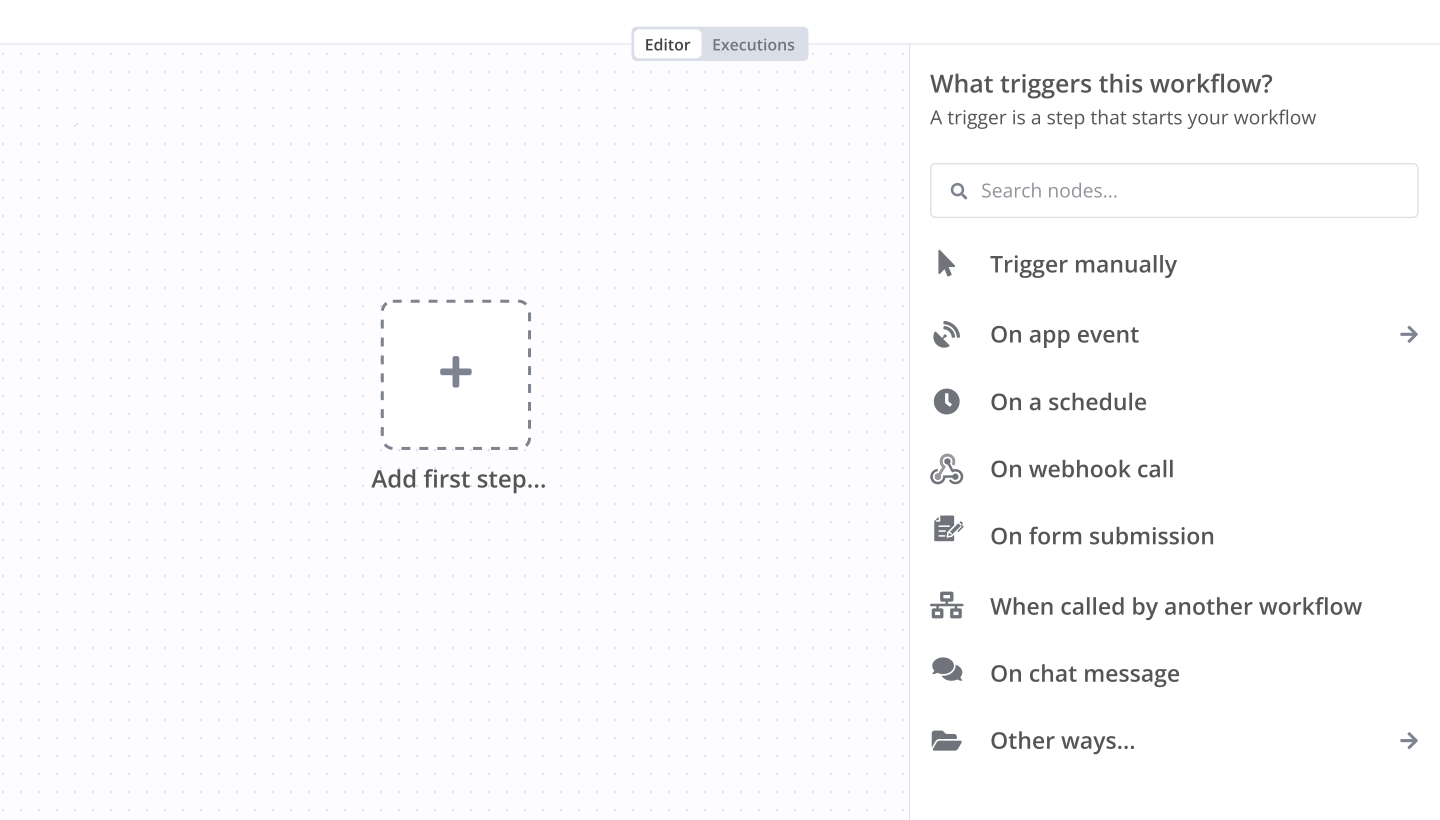
HubSpot and Jira Software integration: Create a new workflow and add the first step

Step 2: Add and configure HubSpot and Jira Software nodes

You can find HubSpot and Jira Software in the nodes panel. Drag them onto your workflow canvas, selecting their actions. Click each node, choose a credential, and authenticate to grant n8n access. Configure HubSpot and Jira Software nodes one by one: input data on the left, parameters in the middle, and output data on the right.

HubSpot and Jira Software integration: Add and configure HubSpot and Jira Software nodes

Step 3: Connect HubSpot and Jira Software

A connection establishes a link between HubSpot and Jira Software (or vice versa) to route data through the workflow. Data flows from the output of one node to the input of another. You can have single or multiple connections for each node.

HubSpot and Jira Software integration: Connect HubSpot and Jira Software

Step 4: Customize and extend your HubSpot and Jira Software integration

Use n8n's core nodes such as If, Split Out, Merge, and others to transform and manipulate data. Write custom JavaScript or Python in the Code node and run it as a step in your workflow. Connect HubSpot and Jira Software with any of n8n’s 1000+ integrations, and incorporate advanced AI logic into your workflows.

HubSpot and Jira Software integration: Customize and extend your HubSpot and Jira Software integration

Step 5: Test and activate your HubSpot and Jira Software workflow

Save and run the workflow to see if everything works as expected. Based on your configuration, data should flow from HubSpot to Jira Software or vice versa. Easily debug your workflow: you can check past executions to isolate and fix the mistake. Once you've tested everything, make sure to save your workflow and activate it.

HubSpot and Jira Software integration: Test and activate your HubSpot and Jira Software workflow

Automate employee onboarding with Slack, Jira, and Google Workspace integration

Who is this for?

This template is ideal for HR teams, startup founders, operations leads, remote-first companies, and freelancers managing onboarding manually or across multiple tools.

Whether you’re hiring your first intern or streamlining onboarding for dozens of new team members, this workflow automates the entire trigger → task creation → onboarding delivery process using no-code tools connected via n8n.

What problem does this solve?

Employee onboarding is often fragmented and error-prone — involving Jira tasks, Slack DMs, file sharing, and email templates spread across different apps.

This workflow connects it all, letting you create tasks, notify people, share folders, and message hires instantly — right when they’re marked as “Hired” in a Google Sheet or added to Slack.

No more bouncing between 5 tabs. This is onboarding as a system.

What this workflow does

✅ Watches a Google Sheet (or Slack trigger) for new hires
📋 Creates a Jira onboarding Epic with role-based subtasks
📂 Generates a Google Drive folder and shares it with the new hire
📬 Sends a personalized, HTML-formatted welcome email via Gmail
💬 Posts a Slack message in the #onboarding channel + DM to the hire
📊 Logs onboarding activity back to the Sheet (status, links, etc.)
🔁 Modular subtasks based on role/team (e.g. Dev vs Marketing vs Student)
🧠 Expressions, fallback logic, and Slack→Jira user ID mapping built-in

Setup

Create API credentials for:
Slack
Google Sheets
Google Drive
Jira Cloud
Gmail (API or SMTP)

Import the .json workflow into your n8n instance (Cloud or self-hosted)
Replace placeholder values (e.g. Project ID, Issue Type ID, folder path)
Customize onboarding messages, email HTML, and task logic
Test with included mock data (sample hire, Slack user, Jira user)
Activate your flow and start onboarding with one click

🗒 Color-coded workflow notes

This workflow uses Innovatio’s sticky note system to guide you visually:

🟩 Green Notes → Main automation steps
🟦 Blue Notes → What to customize (IDs, prompts, expressions)
🟨 Yellow Notes → Optional logic and future upgrades
🟫 Gray Notes → Welcome + final “next steps” CTA

Every group includes pre-filled nodes, dynamic expressions, and mock outputs so you can test quickly and scale confidently.

How to customize this workflow?

📂 Swap Google Sheets for Airtable (better for teams or approvals)
📅 Add 30/60/90-day check-ins via Google Calendar
🤖 Plug in OpenAI to generate onboarding subtasks by role
📬 Auto-assign mentors or SlackBot reminders after 7 days
📊 Push Sheet logs into Notion or your HR dashboard

Need custom logic? Email me at [email protected]

Final notes

This template was created by Velebit from Innovatio with modularity, scalability, and team experience in mind.

All links included are official. No affiliate tracking, no sponsored content.

📜 A separate commercial license applies to the purchase via Gumroad, which includes extended rights, usage for client work, and scaling strategies.

Nodes used in this workflow

Popular HubSpot and Jira Software workflows

+5

Automate B2B SaaS Renewal Risk Management with CRM, Support & Usage Data

Description This workflow is designed for B2B/SaaS teams who want to secure renewals before it’s too late. It runs every day, identifies all accounts whose licenses are up for renewal in J–30, enriches them with CRM, product usage and support data, computes an internal churn risk level, and then triggers the appropriate playbook: HIGH risk** → full escalation (tasks, alerts, emails) MEDIUM risk** → proactive follow-up by Customer Success LOW risk** → light renewal touchpoint / monitoring Everything is logged into a database table so that you can build dashboards, run analysis, or plug additional automations on top. How it works Daily detection (J–30 renewals) A scheduled trigger runs every morning and queries your database (Postgres / Supabase) to fetch all active subscriptions expiring in 30 days. Each row includes the account identifier, name, renewal date and basic commercial data. Data enrichment across tools For each account, the workflow calls several business systems to collect context: HubSpot → engagement history Salesforce → account profile and segment Pipedrive → deal activities and associated products Analytics API → product feature usage and activity trends Zendesk → recent support tickets and potential friction signals All of this is merged into a single, unified item. Churn scoring & routing An internal scoring step evaluates the risk for each account based on multiple signals (engagement, usage, support, timing). The workflow then categorizes each account into one of three risk levels: HIGH – strong churn signals → needs immediate attention MEDIUM – some warning signs → needs proactive follow-up LOW – looks healthy → light renewal reminder A Switch node routes each account to the relevant playbook. Automated playbooks 🔴 HIGH risk Create a Trello card on a dedicated “High-Risk Renewals” board/list Create a Jira ticket for the CS / AM team Send a Slack alert in a designated channel Send a detailed email to the CSM and/or account manager 🟠 MEDIUM risk Create a Trello card in a “Renewals – Follow-up” list Send a contextual email to the CSM to recommend a proactive check-in 🟢 LOW risk Send a soft renewal email / internal note to keep the account on the radar Logging & daily reporting For every processed account, the workflow prepares a structured log record (account, renewal date, risk level, basic context). A Postgres node is used to insert the data into a churn_logs table. At the end of each run, all processed accounts are aggregated and a daily summary email is sent (for example to the Customer Success leadership team), listing the renewals and their risk levels. Requirements Database A table named churn_logs (or equivalent) to store workflow decisions and history. Example fields: account_id, account_name, end_date, riskScore, riskLevel, playbook, trello_link, jira_link, timestamp. External APIs HubSpot (engagement data) Salesforce (account profile) Pipedrive (deals & products) Zendesk (support tickets) Optional: product analytics API for usage metrics Communication & task tools Gmail (emails to CSM / AM / summary recipients) Slack (alert channel for high-risk cases) Trello (task creation for CS follow-up) Jira (escalation tickets for high-risk renewals) Configuration variables Thresholds are configured in the Init config & thresholds node: days_before_renewal churn_threshold_high churn_threshold_medium These parameters let you adapt the detection window and risk sensitivity to your own business rules. Typical use cases Customer Success teams who want a daily churn watchlist without exporting spreadsheets. RevOps teams looking to standardize renewal playbooks across tools. SaaS companies who need to prioritize renewals based on real risk signals rather than gut feeling. Product-led organizations that want to combine usage data + CRM + support into one automated process. Tutorial video Watch the Youtube Tutorial video About me : I’m Yassin a Project & Product Manager Scaling tech products with data-driven project management. 📬 Feel free to connect with me on Linkedin
+3

Automate Employee Onboarding with Slack, Jira, and Google Workspace Integration

Who is this for? This template is ideal for HR teams, startup founders, operations leads, remote-first companies, and freelancers managing onboarding manually or across multiple tools. Whether you’re hiring your first intern or streamlining onboarding for dozens of new team members, this workflow automates the entire trigger → task creation → onboarding delivery process using no-code tools connected via n8n. What problem does this solve? Employee onboarding is often fragmented and error-prone — involving Jira tasks, Slack DMs, file sharing, and email templates spread across different apps. This workflow connects it all, letting you create tasks, notify people, share folders, and message hires instantly — right when they’re marked as “Hired” in a Google Sheet or added to Slack. No more bouncing between 5 tabs. This is onboarding as a system. What this workflow does ✅ Watches a Google Sheet (or Slack trigger) for new hires 📋 Creates a Jira onboarding Epic with role-based subtasks 📂 Generates a Google Drive folder and shares it with the new hire 📬 Sends a personalized, HTML-formatted welcome email via Gmail 💬 Posts a Slack message in the #onboarding channel + DM to the hire 📊 Logs onboarding activity back to the Sheet (status, links, etc.) 🔁 Modular subtasks based on role/team (e.g. Dev vs Marketing vs Student) 🧠 Expressions, fallback logic, and Slack→Jira user ID mapping built-in Setup Create API credentials for: Slack Google Sheets Google Drive Jira Cloud Gmail (API or SMTP) Import the .json workflow into your n8n instance (Cloud or self-hosted) Replace placeholder values (e.g. Project ID, Issue Type ID, folder path) Customize onboarding messages, email HTML, and task logic Test with included mock data (sample hire, Slack user, Jira user) Activate your flow and start onboarding with one click 🗒 Color-coded workflow notes This workflow uses Innovatio’s sticky note system to guide you visually: 🟩 Green Notes → Main automation steps 🟦 Blue Notes → What to customize (IDs, prompts, expressions) 🟨 Yellow Notes → Optional logic and future upgrades 🟫 Gray Notes → Welcome + final “next steps” CTA Every group includes pre-filled nodes, dynamic expressions, and mock outputs so you can test quickly and scale confidently. How to customize this workflow? 📂 Swap Google Sheets for Airtable (better for teams or approvals) 📅 Add 30/60/90-day check-ins via Google Calendar 🤖 Plug in OpenAI to generate onboarding subtasks by role 📬 Auto-assign mentors or SlackBot reminders after 7 days 📊 Push Sheet logs into Notion or your HR dashboard Need custom logic? Email me at [email protected] Final notes This template was created by Velebit from Innovatio with modularity, scalability, and team experience in mind. All links included are official. No affiliate tracking, no sponsored content. 📜 A separate commercial license applies to the purchase via Gumroad, which includes extended rights, usage for client work, and scaling strategies.

Triage and escalate HubSpot tickets to Jira with Slack SLA alerts

This workflow automates the prioritization and escalation of customer support tickets. It acts as an intelligent triage system that identifies high-value customers and potential churn risks in HubSpot, syncs them to Jira, and enforces response times via Slack alerts. Who’s it for This workflow is ideal for Customer Success (CS) teams, Support Leads, and Account Managers who need to ensure VIP clients and critical issues receive immediate engineering or support attention without manual monitoring. How it works The workflow runs on a schedule to process new tickets: Monitor: Checks HubSpot every 10 minutes for newly created tickets. Enrich: Retrieves the associated Contact’s data, specifically looking for Annual Revenue and Lifecycle Stage. Analyze: A Code node evaluates the ticket content and customer value. It assigns a "Severity" level (Critical/High/Normal) based on revenue thresholds (>10k) or churn-risk keywords (e.g., "refund," "lawyer," "cancel"). Action: Creates a formatted Jira task with all context included and notifies a Slack channel. SLA Check: Waits 15 minutes to allow for a response. Escalate: If the Jira ticket status hasn't changed to "In Progress" or "Done" after the wait period, it triggers a high-priority "Churn Risk Escalation" alert in Slack. Requirements HubSpot** account (CRM and Service Hub). Jira Software Cloud** account. Slack** workspace. How to set up Configure your credentials for HubSpot, Jira Software, and Slack. In the HubSpot: Get Associations and Get Contact Data nodes, ensure the properties match your internal naming conventions. In the Jira: Create Triage Ticket node, select your specific Project and Issue Type from the dropdown lists. In the Slack nodes, select the channel where you want alerts to be posted. How to customize the workflow Integrate other tools:** This system is modular and works with any other tool (contact us for help). You can easily replace the nodes to use your specific stack: CRM: Pipedrive, WeClapp Ticketing System: Zendesk, Intercom, FreshDesk Modify Logic:* Open the Code: Calculate Severity* node to change the revenue threshold (currently set to 10,000). You can also replace the manual keyword matching with an LLM (AI) node to intelligently analyze ticket sentiment and intent. Adjust SLA:* Change the duration in the Wait: Response Timer* node if your Service Level Agreement (SLA) differs from the default 15 minutes. Change Status Check:* Update the Check: Escalation Needed?* node if your team uses different Jira statuses (e.g., "Under Review" instead of "In Progress") to determine if a ticket is being handled.
+3

Automate Support Ticket Classification & Routing from HubSpot to Jira with GPT

Who is this for? This n8n workflow template is designed for customer support, CX, and ops teams that manage customer messages through HubSpot and use Jira for internal task management. It is especially useful for SaaS companies aiming to automate ticket triage, sentiment detection, and team assignment using AI agents. 🧩 What problem is this workflow solving? Customer service teams often struggle with manual message classification, delayed reactions to churn signals, and inefficiencies in routing support issues to the right internal teams. This workflow uses LLMs and automated profiling to: Detect churn risk or intent in customer messages Summarize issues Classify tickets into categories (e.g. fulfillment, technical, invoicing) Automatically create Jira tickets based on enriched insights 🤖 What this workflow does This AI-powered workflow processes HubSpot support tickets and routes them to Jira based on sentiment and topic. Here’s the full breakdown: Triggers: Either manually or on a schedule (via cron). Fetch HubSpot tickets: Retrieves new messages and their metadata. Run Orchestration Agent: Uses Sentinel Agent to detect emotional tone, churn risk, and purchase intent. Calls Profiler Agent to enrich customer profiles from HubSpot. Summarizes the message using OpenAI. Classifies the ticket using a custom classifier (technical, fulfillment, etc.). Generate a Jira ticket: Title and description are generated using GPT. The assignee and project are predefined. AI agents can be expanded (e.g. add Guide or Facilitator agents). ⚙️ Setup To use this template, you’ll need: HubSpot account** with OAuth2 credentials in n8n Jira Software Cloud account** and project ID OpenAI credentials** for GPT-based nodes Optional: Create sub-workflows for additional AI agents Steps: Clone the workflow in your n8n instance. Replace placeholder credentials for HubSpot, OpenAI, and Jira. Adjust Jira project/issue type IDs to match your setup. Test the workflow using the manual trigger or scheduled trigger node. 🛠️ How to customize this workflow to your needs Edit category logic In the “Category Classifier” node, modify categories and prompt structure to match your internal team structures (e.g., billing, account management, tech support). Refine AI prompts Customize the agent prompt definitions in: Sentinel_agent Profiler_agent Orchestrator to better align with your brand tone or service goals. Update Jira integration You can route tickets to different projects or team leads by adjusting the “Create an issue in Jira” node based on classification output. Add escalation paths Insert Slack, email, or webhook notifications for specific risk levels or customer segments. This workflow empowers your team with real-time message triage, automated decision-making, and AI-enhanced customer insight, turning every inbound ticket into a data-driven action item.

Build your own HubSpot and Jira Software integration

Create custom HubSpot and Jira Software workflows by choosing triggers and actions. Nodes come with global operations and settings, as well as app-specific parameters that can be configured. You can also use the HTTP Request node to query data from any app or service with a REST API.

HubSpot supported actions

Create
Create a company
Delete
Delete a company
Get
Get a company
Get Many
Get many companies
Get Recently Created/Updated
Get recently created/updated companies
Search
Search companies by their website domain
Update
Update a company
Create or Update
Create a new contact, or update the current one if it already exists (upsert)
Delete
Delete a contact
Get
Get a contact
Get Many
Get many contacts
Get Recently Created/Updated
Get recently created/updated contacts
Search
Search contacts
Add
Add contact to a list
Remove
Remove a contact from a list
Create
Create a deal
Delete
Delete a deal
Get
Get a deal
Get Many
Get many deals
Get Recently Created/Updated
Get recently created/updated deals
Search
Search deals
Update
Update a deal
Create
Create an engagement
Delete
Delete an engagement
Get
Get an engagement
Get Many
Get many engagements
Create
Create a ticket
Delete
Delete a ticket
Get
Get a ticket
Get Many
Get many tickets
Update
Update a ticket

Jira Software supported actions

Changelog
Get issue changelog
Create
Create a new issue
Delete
Delete an issue
Get
Get an issue
Get Many
Get many issues
Notify
Create an email notification for an issue and add it to the mail queue
Status
Return either all transitions or a transition that can be performed by the user on an issue, based on the issue's status
Update
Update an issue
Add
Add attachment to issue
Get
Get an attachment
Get Many
Get many attachments
Remove
Remove an attachment
Add
Add comment to issue
Get
Get a comment
Get Many
Get many comments
Remove
Remove a comment
Update
Update a comment
Create
Create a new user
Delete
Delete a user
Get
Retrieve a user
Use case

Supercharge your CRM

Need a more powerful integration with your CRM? n8n lets you go beyond standard integrations offered by popular CRMs!

Learn more
Use case

Save engineering resources

Reduce time spent on customer integrations, engineer faster POCs, keep your customer-specific functionality separate from product all without having to code.

Learn more

FAQs

  • Can HubSpot connect with Jira Software?

  • Can I use HubSpot’s API with n8n?

  • Can I use Jira Software’s API with n8n?

  • Is n8n secure for integrating HubSpot and Jira Software?

  • How to get started with HubSpot and Jira Software integration in n8n.io?

Looking to integrate HubSpot and Jira Software in your company?

Over 3000 companies switch to n8n every single week

Why use n8n to integrate HubSpot with Jira Software

Build complex workflows, really fast

Build complex workflows, really fast

Handle branching, merging and iteration easily.
Pause your workflow to wait for external events.

Code when you need it, UI when you don't

Simple debugging

Your data is displayed alongside your settings, making edge cases easy to track down.

Use templates to get started fast

Use 1000+ workflow templates available from our core team and our community.

Reuse your work

Copy and paste, easily import and export workflows.

Implement complex processes faster with n8n

red iconyellow iconred iconyellow icon