

Back to Integrations
integrationHunter node
integrationPostgres node

Hunter and Postgres integration

Save yourself the work of writing custom integrations for Hunter and Postgres and use n8n instead. Build adaptable and scalable Sales, Development, and Data & Storage workflows that work with your technology stack. All within a building experience you will love.

How to connect Hunter and Postgres

  • Step 1: Create a new workflow
  • Step 2: Add and configure nodes
  • Step 3: Connect
  • Step 4: Customize and extend your integration
  • Step 5: Test and activate your workflow

Step 1: Create a new workflow and add the first step

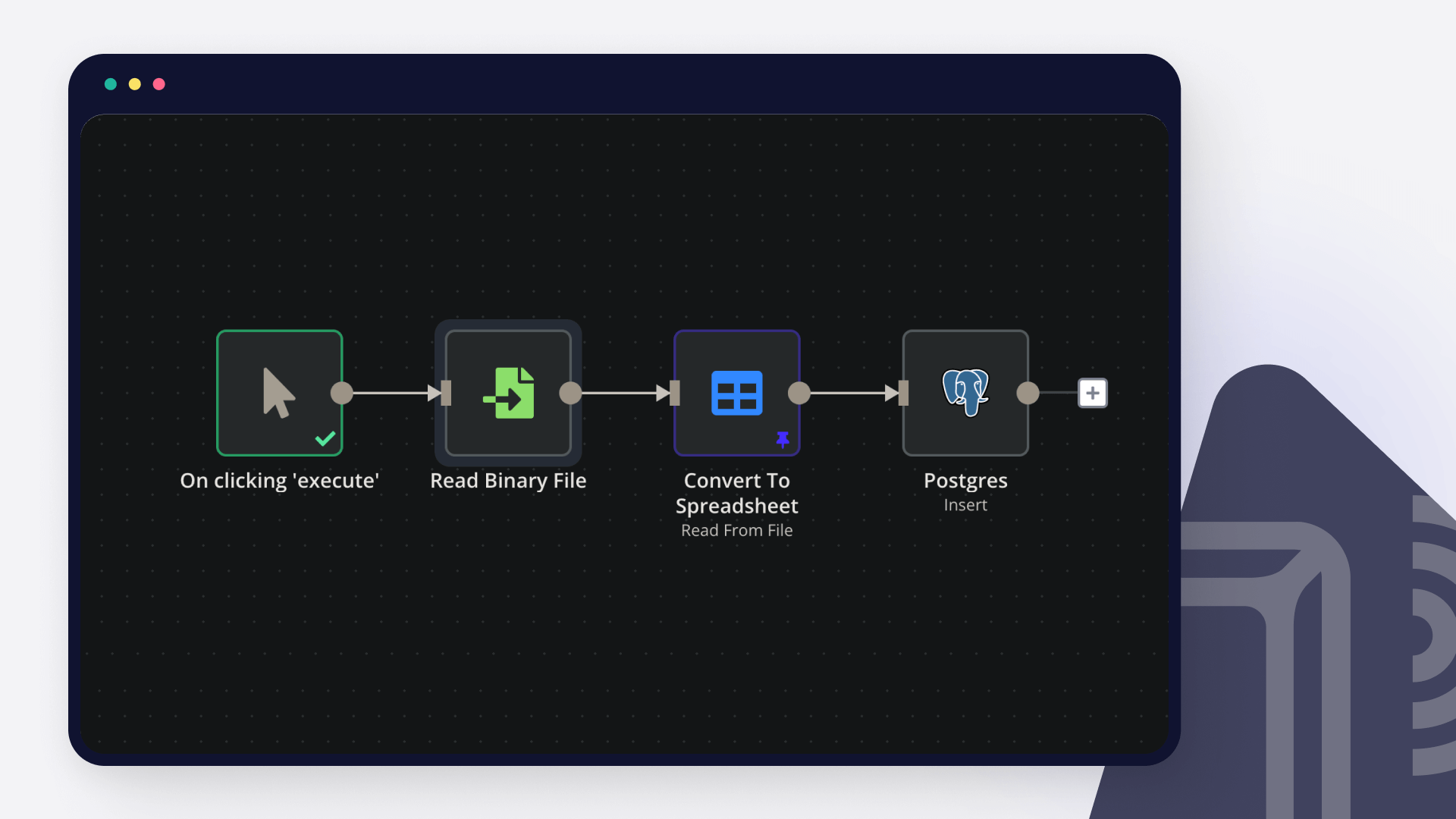
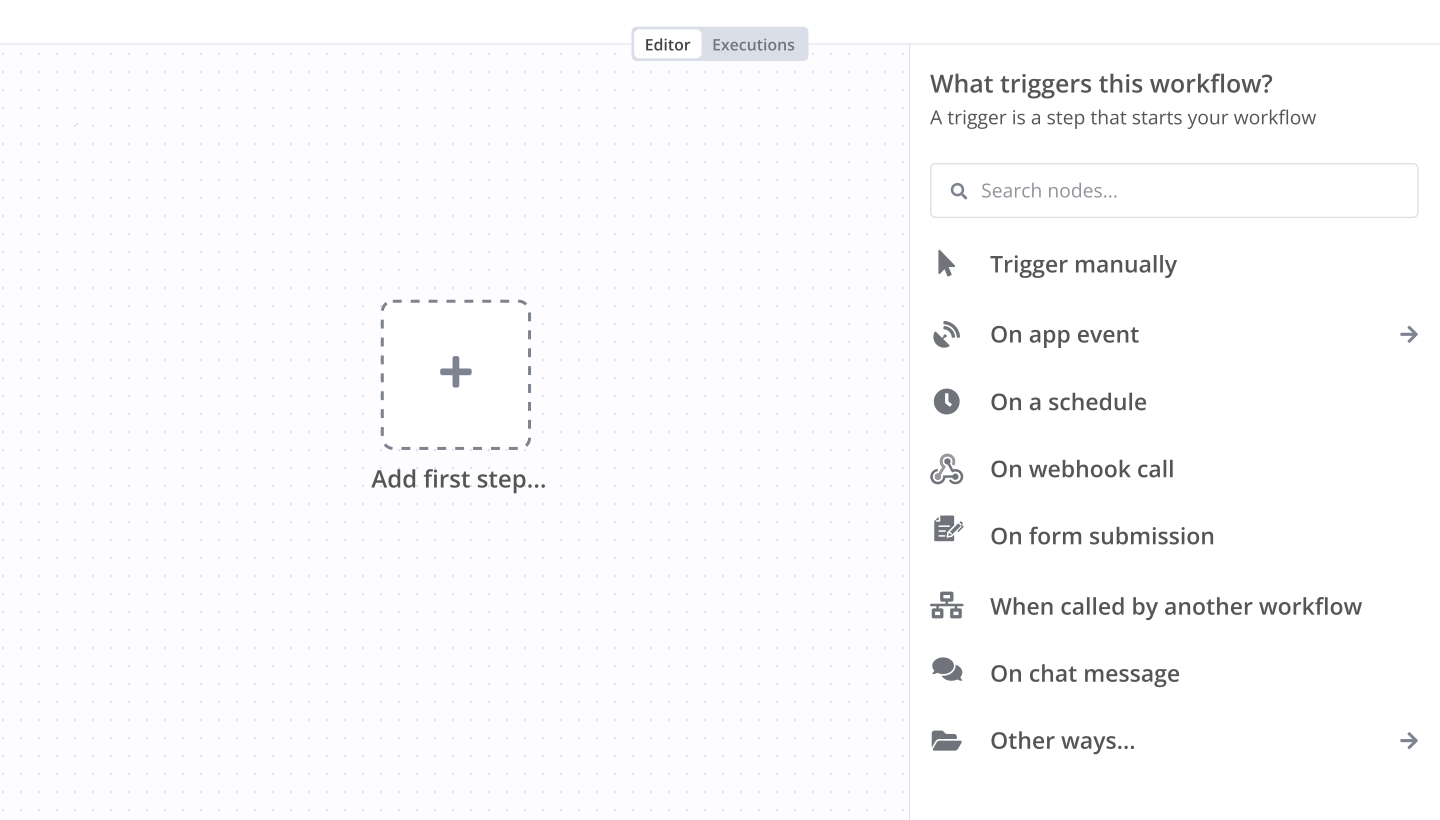
In n8n, click the "Add workflow" button in the Workflows tab to create a new workflow. Add the starting point – a trigger on when your workflow should run: an app event, a schedule, a webhook call, another workflow, an AI chat, or a manual trigger. Sometimes, the HTTP Request node might already serve as your starting point.

Hunter and Postgres integration: Create a new workflow and add the first step

Step 2: Add and configure Hunter and Postgres nodes

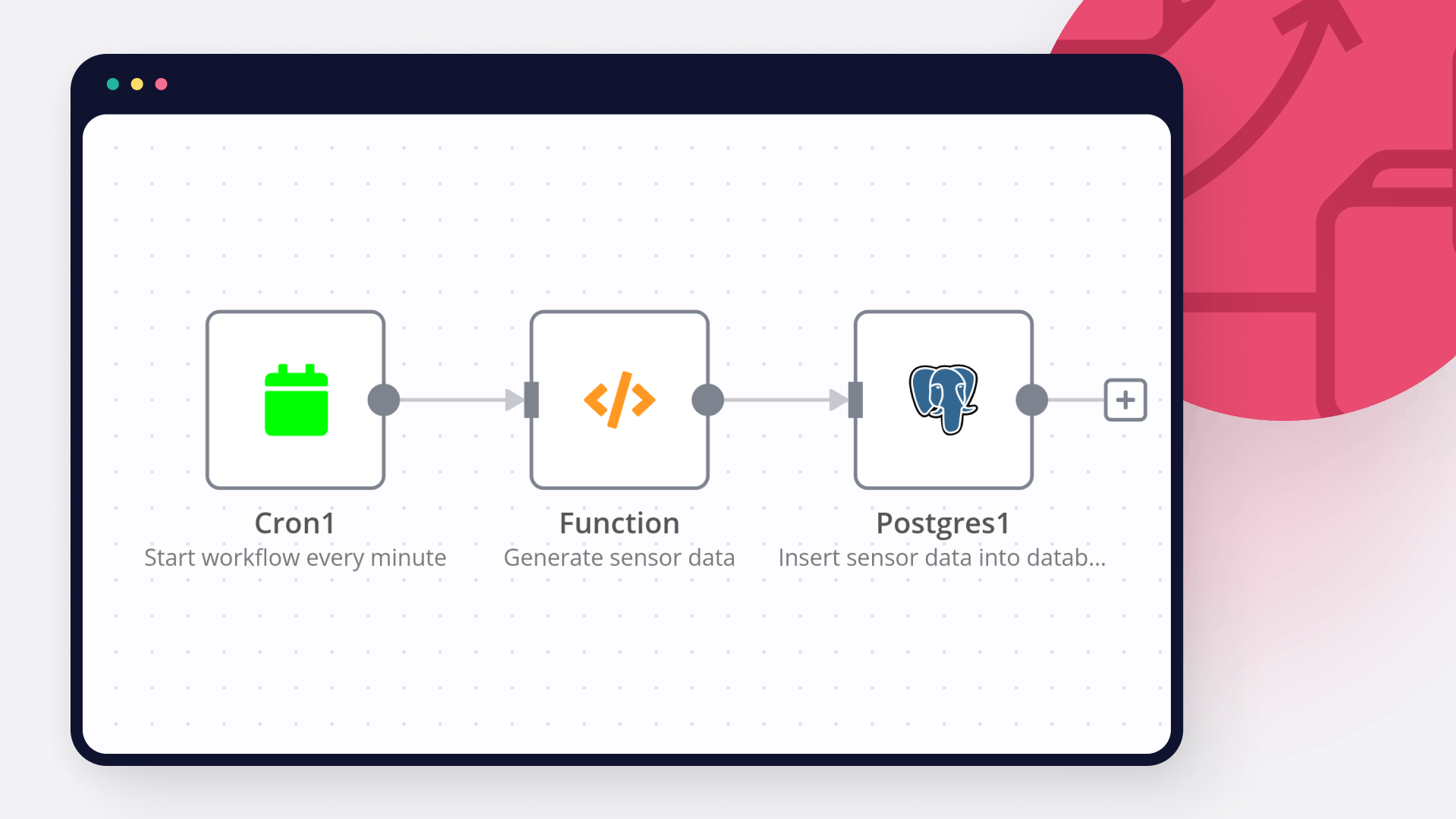
You can find Hunter and Postgres in the nodes panel. Drag them onto your workflow canvas, selecting their actions. Click each node, choose a credential, and authenticate to grant n8n access. Configure Hunter and Postgres nodes one by one: input data on the left, parameters in the middle, and output data on the right.

Hunter and Postgres integration: Add and configure Hunter and Postgres nodes

Step 3: Connect Hunter and Postgres

A connection establishes a link between Hunter and Postgres (or vice versa) to route data through the workflow. Data flows from the output of one node to the input of another. You can have single or multiple connections for each node.

Hunter and Postgres integration: Connect Hunter and Postgres

Step 4: Customize and extend your Hunter and Postgres integration

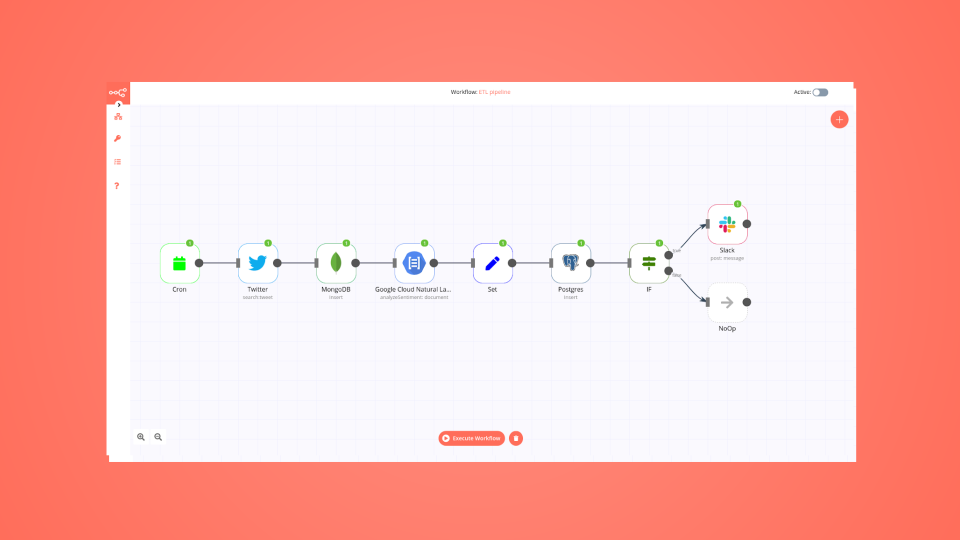
Use n8n's core nodes such as If, Split Out, Merge, and others to transform and manipulate data. Write custom JavaScript or Python in the Code node and run it as a step in your workflow. Connect Hunter and Postgres with any of n8n’s 1000+ integrations, and incorporate advanced AI logic into your workflows.

Hunter and Postgres integration: Customize and extend your Hunter and Postgres integration

Step 5: Test and activate your Hunter and Postgres workflow

Save and run the workflow to see if everything works as expected. Based on your configuration, data should flow from Hunter to Postgres or vice versa. Easily debug your workflow: you can check past executions to isolate and fix the mistake. Once you've tested everything, make sure to save your workflow and activate it.

Hunter and Postgres integration: Test and activate your Hunter and Postgres workflow

Generate product-aware B2B leads and outreach emails with Gemini, Pinecone and Gmail

How can you find your target market if you don't know what your product is.

This simple philosophy changes the way we think about automated sales agents. Context changes everything. In this 4-part workflow, we start by creating a knowledge base that will act as context across the workflow. This context will guide and provide our AI Agents across the workflow to locate better leads and perform market research based on what the product actually offers.

Use Case: Lead generation for Product-based Sales

Tech Required

Neon DB**: For storing Research and Lead Data. You can use Google sheets but it has a rate limiting problem.
Google Serper**: As a web search tool for our AI.
Google Drive**: For storing our knowledge base documents.
Pinecone**: Vector DB for converting our knowledge base into context for AI.
Hunter.io**: For finding emails for outreach.
Email Client**: An email client, maybe gmail or anything that can send an email on your behalf.
Gemini**: Our trusty AI LLM.

Good to know

All of the tools that I use in this workflow are either free or have an extremely generous free-tier.

How it works

We start by converting our knowledge base into context for AI. Take in the documents from Google drive and convert it into embeddings and store them in a vector store like Pinecone. This needs to be only run once, or whenever you have a new document in your knowledge base.
Then we pass this context to an AI agent and tell it to generate search queries for locating companies that actually need my services.
Then for each company that we've located, we determine the company staff that we need to reach out to for selling our product. This will be done by a combination of Google Serper and Hunter.io
Once we have the list of employees and their emails, we start creating personalized emails based on the data we've collected for each of the employee and send them outreach emails.

Nodes used in this workflow

Popular Hunter and Postgres workflows

+10

Generate product-aware B2B leads and outreach emails with Gemini, Pinecone and Gmail

How can you find your target market if you don't know what your product is. This simple philosophy changes the way we think about automated sales agents. Context changes everything. In this 4-part workflow, we start by creating a knowledge base that will act as context across the workflow. This context will guide and provide our AI Agents across the workflow to locate better leads and perform market research based on what the product actually offers. Use Case: Lead generation for Product-based Sales Tech Required Neon DB**: For storing Research and Lead Data. You can use Google sheets but it has a rate limiting problem. Google Serper**: As a web search tool for our AI. Google Drive**: For storing our knowledge base documents. Pinecone**: Vector DB for converting our knowledge base into context for AI. Hunter.io**: For finding emails for outreach. Email Client**: An email client, maybe gmail or anything that can send an email on your behalf. Gemini**: Our trusty AI LLM. Good to know All of the tools that I use in this workflow are either free or have an extremely generous free-tier. How it works We start by converting our knowledge base into context for AI. Take in the documents from Google drive and convert it into embeddings and store them in a vector store like Pinecone. This needs to be only run once, or whenever you have a new document in your knowledge base. Then we pass this context to an AI agent and tell it to generate search queries for locating companies that actually need my services. Then for each company that we've located, we determine the company staff that we need to reach out to for selling our product. This will be done by a combination of Google Serper and Hunter.io Once we have the list of employees and their emails, we start creating personalized emails based on the data we've collected for each of the employee and send them outreach emails.

Generate PDF documents from HTML with PDF Generator API, Gmail and Supabase

Who’s this for 💼 This template is designed for teams and developers who need to generate PDF documents automatically from HTML templates. It’s suitable for use cases such as invoices, confirmations, reports, certificates, or any custom document that needs to be created dynamically based on incoming data. What this workflow does ⚙️ This workflow automates the full lifecycle of document generation, from request validation to delivery and storage. It is triggered by a POST webhook that receives structured JSON data describing the requested document and client information. Before generating the document, the workflow validates the client’s email address using Hunter Email Verification to prevent invalid or mistyped emails. If the email is valid, the workflow loads the appropriate HTML template from a Postgres database, fills it with the incoming data, and converts it into a PDF using PDF Generator API. Once the PDF is generated, it is sent to the client via Gmail, uploaded to Supabase Storage, and the transaction is recorded in the database for tracking and auditing purposes. How it works 🛠️ Receives a document generation request via a POST webhook. Validates the client’s email address using Hunter. Generates a PDF document from an HTML template using PDF Generator API. Sends the PDF via Gmail and uploads it to Supabase Storage. Stores a document generation record in the database. How to set up 🖇️ Before activating the workflow, make sure all required services and connections are prepared and available in your n8n environment. Create a POST webhook endpoint that accepts structured JSON input. Add Hunter API credentials for email verification. Add PDF Generator API credentials for HTML to PDF conversion. Prepare a Postgres database with tables for HTML templates and document generation records. Set up Gmail or SMTP credentials for email delivery. Configure Supabase Storage for storing generated PDF files. Requirements ✅ PDF Generator API account Hunter account Postgres database Gmail or SMTP-compatible email provider Supabase project with Storage enabled How to customize the workflow 🤖 This workflow can be adapted to different document generation scenarios by extending or modifying its existing steps: Add extra validation steps before document generation if required. Extend delivery options by sending the generated PDF to additional services or webhooks. Enhance security by adding document encryption or access control. Add support for additional document types by storing more HTML templates in the database. Modify the database schema or queries to store additional metadata related to generated documents. Adjust the data mapping logic in the Code node to match your input structure.

Build your own Hunter and Postgres integration

Create custom Hunter and Postgres workflows by choosing triggers and actions. Nodes come with global operations and settings, as well as app-specific parameters that can be configured. You can also use the HTTP Request node to query data from any app or service with a REST API.

Hunter supported actions

Domain Search
Get every email address found on the internet using a given domain name, with sources
Email Finder
Generate or retrieve the most likely email address from a domain name, a first name and a last name
Email Verifier
Verify the deliverability of an email address

Postgres supported actions

Delete
Delete an entire table or rows in a table
Execute Query
Execute an SQL query
Insert
Insert rows in a table
Insert or Update
Insert or update rows in a table
Select
Select rows from a table
Update
Update rows in a table
Use case

Supercharge your CRM

Need a more powerful integration with your CRM? n8n lets you go beyond standard integrations offered by popular CRMs!

Learn more
Use case

Save engineering resources

Reduce time spent on customer integrations, engineer faster POCs, keep your customer-specific functionality separate from product all without having to code.

Learn more

FAQs

  • Can Hunter connect with Postgres?

  • Can I use Hunter’s API with n8n?

  • Can I use Postgres’s API with n8n?

  • Is n8n secure for integrating Hunter and Postgres?

  • How to get started with Hunter and Postgres integration in n8n.io?

Need help setting up your Hunter and Postgres integration?

Discover our latest community's recommendations and join the discussions about Hunter and Postgres integration.
Mikhail Savenkov
Honza Pav
Vyacheslav Karbovnichy
Dennis
Dennis

Looking to integrate Hunter and Postgres in your company?

Over 3000 companies switch to n8n every single week

Why use n8n to integrate Hunter with Postgres

Build complex workflows, really fast

Build complex workflows, really fast

Handle branching, merging and iteration easily.
Pause your workflow to wait for external events.

Code when you need it, UI when you don't

Simple debugging

Your data is displayed alongside your settings, making edge cases easy to track down.

Use templates to get started fast

Use 1000+ workflow templates available from our core team and our community.

Reuse your work

Copy and paste, easily import and export workflows.

Implement complex processes faster with n8n

red iconyellow iconred iconyellow icon