Back to Integrations
integrationJira Software node
integrationSendGrid node

Jira Software and SendGrid integration

Save yourself the work of writing custom integrations for Jira Software and SendGrid and use n8n instead. Build adaptable and scalable Development, Productivity, Marketing, and Communication workflows that work with your technology stack. All within a building experience you will love.

How to connect Jira Software and SendGrid

  • Step 1: Create a new workflow
  • Step 2: Add and configure nodes
  • Step 3: Connect
  • Step 4: Customize and extend your integration
  • Step 5: Test and activate your workflow

Step 1: Create a new workflow and add the first step

In n8n, click the "Add workflow" button in the Workflows tab to create a new workflow. Add the starting point – a trigger on when your workflow should run: an app event, a schedule, a webhook call, another workflow, an AI chat, or a manual trigger. Sometimes, the HTTP Request node might already serve as your starting point.
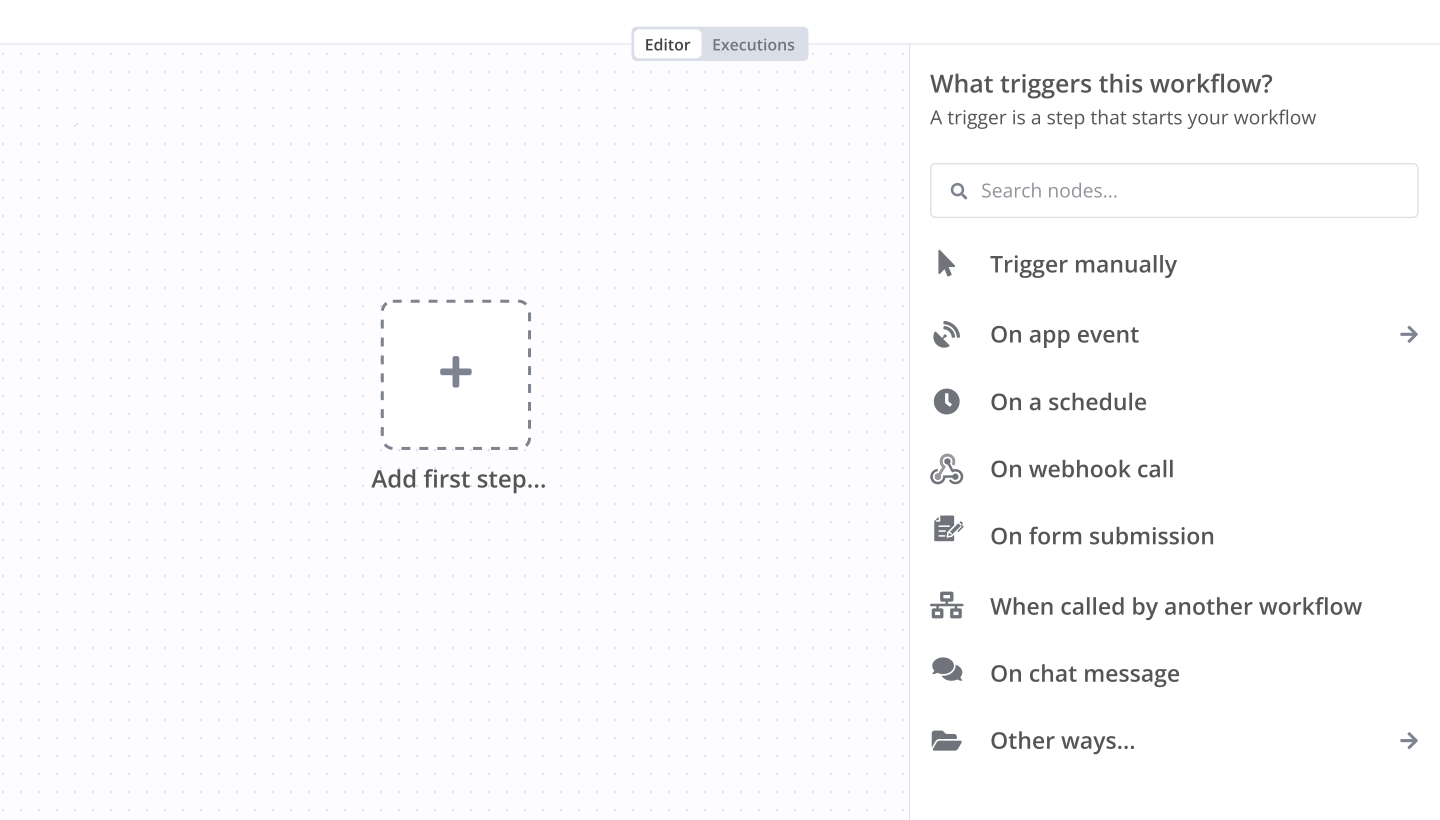
Jira Software and SendGrid integration: Create a new workflow and add the first step

Step 2: Add and configure Jira Software and SendGrid nodes

You can find Jira Software and SendGrid in the nodes panel. Drag them onto your workflow canvas, selecting their actions. Click each node, choose a credential, and authenticate to grant n8n access. Configure Jira Software and SendGrid nodes one by one: input data on the left, parameters in the middle, and output data on the right.

Jira Software and SendGrid integration: Add and configure Jira Software and SendGrid nodes

Step 3: Connect Jira Software and SendGrid

A connection establishes a link between Jira Software and SendGrid (or vice versa) to route data through the workflow. Data flows from the output of one node to the input of another. You can have single or multiple connections for each node.

Jira Software and SendGrid integration: Connect Jira Software and SendGrid

Step 4: Customize and extend your Jira Software and SendGrid integration

Use n8n's core nodes such as If, Split Out, Merge, and others to transform and manipulate data. Write custom JavaScript or Python in the Code node and run it as a step in your workflow. Connect Jira Software and SendGrid with any of n8n’s 1000+ integrations, and incorporate advanced AI logic into your workflows.

Jira Software and SendGrid integration: Customize and extend your Jira Software and SendGrid integration

Step 5: Test and activate your Jira Software and SendGrid workflow

Save and run the workflow to see if everything works as expected. Based on your configuration, data should flow from Jira Software to SendGrid or vice versa. Easily debug your workflow: you can check past executions to isolate and fix the mistake. Once you've tested everything, make sure to save your workflow and activate it.

Jira Software and SendGrid integration: Test and activate your Jira Software and SendGrid workflow

Automate IT support: Convert emails to Jira tickets with AI resolution

SmartSupport Flow: Auto-Handle IT Requests from Email to JIRA with Slack notification
Watch the demo video below:

Who’s it for
> This workflow is built for lean IT teams, office managers, and business operators who receive support requests via email and want to automate ticket creation, smart AI resolution advice, and seamless communication with both users and internal teams, all without lifting a finger.
If your team is tired of manually triaging inbox requests, this AI-powered flow will transform your support handling process.

How it works / What it does

Trigger on New Email: Uses Gmail Trigger to detect new support request emails.
Fetch Email Content: Retrieves the full message body and metadata.
Check for Duplication: Skips processing if the email has already been handled (based on READ/UNREAD label).
Mark as Read: Updates Gmail to mark the email as processed.
Extract Structured Request: Uses the Support Request Reader Agent powered by OpenAI to extract:
Request title
Request description
Requested by
Department
Category and priority
Create Jira Ticket: A main issue is created in Jira using the structured request.
Generate AI-Based Solution: Invokes the IT Support Advisor Agent to propose resolution(s).
Post Comment to Jira: Adds the suggested solution(s) to the issue as a comment.
Notify IT Team: Sends the ticket and context to a Slack channel for visibility and action.
(Optional) Send Email to Requester: Currently deactivated. Can be enabled to acknowledge receipt.

How to set up

Gmail Integration
Connect Gmail in the “Gmail Trigger” and “Get Email Content” nodes.
OpenAI Configuration
Use OpenAI API credentials in both the Reader and Advisor agent models.
Jira Integration
Authenticate your Jira account.
Set project key and issue fields in the “Create Main Issue” node.
Slack Notification
Configure Slack connection and select a target channel.
Set up Jira, Slack, Email
Set your company Jira based URL, IT Support slack channel and IT Support email in the Edit Fields (Set) node
(Optional) Email Acknowledgment
Provide SendGrid credentials and email template in the “Send email to requester” node if re-enabled.

Requirements

Gmail API access with appropriate permissions
OpenAI account with API access (for GPT-4 or GPT-3.5)
Jira instance with project and permission to create/comment on issues
Slack workspace and Webhook or OAuth setup
n8n instance running with all above integrations configured

How to customize the workflow

Enhance Email Deduplication**: Adjust the deduplication logic to use message-id, threadId, or custom headers.
Expand Reader Agent**: Configure the LLM to extract more details such as asset tags, urgency levels, or locations.
Tailor Advisor Agent**: Adjust prompt to generate multiple solutions, troubleshooting guides, or internal references.
Routing by Department**: Add logic to forward requests to different teams based on the request category or department.
Enable Email Acknowledgment**: Activate and customize the email notification step to inform requesters that their issue is being handled.

Nodes used in this workflow

Popular Jira Software and SendGrid workflows

+3

Automate IT Support: Convert Emails to Jira Tickets with AI Resolution

SmartSupport Flow: Auto-Handle IT Requests from Email to JIRA with Slack notification Watch the demo video below: Who’s it for > This workflow is built for lean IT teams, office managers, and business operators who receive support requests via email and want to automate ticket creation, smart AI resolution advice, and seamless communication with both users and internal teams, all without lifting a finger. If your team is tired of manually triaging inbox requests, this AI-powered flow will transform your support handling process. How it works / What it does Trigger on New Email: Uses Gmail Trigger to detect new support request emails. Fetch Email Content: Retrieves the full message body and metadata. Check for Duplication: Skips processing if the email has already been handled (based on READ/UNREAD label). Mark as Read: Updates Gmail to mark the email as processed. Extract Structured Request: Uses the Support Request Reader Agent powered by OpenAI to extract: Request title Request description Requested by Department Category and priority Create Jira Ticket: A main issue is created in Jira using the structured request. Generate AI-Based Solution: Invokes the IT Support Advisor Agent to propose resolution(s). Post Comment to Jira: Adds the suggested solution(s) to the issue as a comment. Notify IT Team: Sends the ticket and context to a Slack channel for visibility and action. (Optional) Send Email to Requester: Currently deactivated. Can be enabled to acknowledge receipt. How to set up Gmail Integration Connect Gmail in the “Gmail Trigger” and “Get Email Content” nodes. OpenAI Configuration Use OpenAI API credentials in both the Reader and Advisor agent models. Jira Integration Authenticate your Jira account. Set project key and issue fields in the “Create Main Issue” node. Slack Notification Configure Slack connection and select a target channel. Set up Jira, Slack, Email Set your company Jira based URL, IT Support slack channel and IT Support email in the Edit Fields (Set) node (Optional) Email Acknowledgment Provide SendGrid credentials and email template in the “Send email to requester” node if re-enabled. Requirements Gmail API access with appropriate permissions OpenAI account with API access (for GPT-4 or GPT-3.5) Jira instance with project and permission to create/comment on issues Slack workspace and Webhook or OAuth setup n8n instance running with all above integrations configured How to customize the workflow Enhance Email Deduplication**: Adjust the deduplication logic to use message-id, threadId, or custom headers. Expand Reader Agent**: Configure the LLM to extract more details such as asset tags, urgency levels, or locations. Tailor Advisor Agent**: Adjust prompt to generate multiple solutions, troubleshooting guides, or internal references. Routing by Department**: Add logic to forward requests to different teams based on the request category or department. Enable Email Acknowledgment**: Activate and customize the email notification step to inform requesters that their issue is being handled.

Build your own Jira Software and SendGrid integration

Create custom Jira Software and SendGrid workflows by choosing triggers and actions. Nodes come with global operations and settings, as well as app-specific parameters that can be configured. You can also use the HTTP Request node to query data from any app or service with a REST API.


Jira Software supported actions

Changelog
Get issue changelog
Create
Create a new issue
Delete
Delete an issue
Get
Get an issue
Get Many
Get many issues
Notify
Create an email notification for an issue and add it to the mail queue
Status
Return either all transitions or a transition that can be performed by the user on an issue, based on the issue's status
Update
Update an issue
Add
Add attachment to issue
Get
Get an attachment
Get Many
Get many attachments
Remove
Remove an attachment
Add
Add comment to issue
Get
Get a comment
Get Many
Get many comments
Remove
Remove a comment
Update
Update a comment
Create
Create a new user
Delete
Delete a user
Get
Retrieve a user

SendGrid supported actions

Create or Update
Create a new contact, or update the current one if it already exists (upsert)
Delete
Delete a contact
Get
Get a contact by ID
Get Many
Get many contacts
Create
Create a list
Delete
Delete a list
Get
Get a list
Get Many
Get many lists
Update
Update a list
Send
Send an email
Use case

Save engineering resources

Reduce time spent on customer integrations, engineer faster POCs, keep your customer-specific functionality separate from product all without having to code.

Learn more
Use case

Automate lead management

Using too many marketing tools? n8n lets you orchestrate all your apps into one cohesive, automated workflow.

Learn more

FAQs

  • Can Jira Software connect with SendGrid?

  • Can I use Jira Software’s API with n8n?

  • Can I use SendGrid’s API with n8n?

  • Is n8n secure for integrating Jira Software and SendGrid?

  • How to get started with Jira Software and SendGrid integration in n8n.io?

Looking to integrate Jira Software and SendGrid in your company?

Over 3000 companies switch to n8n every single week

Why use n8n to integrate Jira Software with SendGrid

Build complex workflows, really fast

Build complex workflows, really fast

Handle branching, merging and iteration easily.
Pause your workflow to wait for external events.

Code when you need it, UI when you don't

Simple debugging

Your data is displayed alongside your settings, making edge cases easy to track down.

Use templates to get started fast

Use 1000+ workflow templates available from our core team and our community.

Reuse your work

Copy and paste, easily import and export workflows.

Implement complex processes faster with n8n

red iconyellow iconred iconyellow icon