Back to Integrations
integrationLinkedIn node
integrationWordpress node

LinkedIn and Wordpress integration

Save yourself the work of writing custom integrations for LinkedIn and Wordpress and use n8n instead. Build adaptable and scalable Marketing, and Communication workflows that work with your technology stack. All within a building experience you will love.

How to connect LinkedIn and Wordpress

  • Step 1: Create a new workflow
  • Step 2: Add and configure nodes
  • Step 3: Connect
  • Step 4: Customize and extend your integration
  • Step 5: Test and activate your workflow

Step 1: Create a new workflow and add the first step

In n8n, click the "Add workflow" button in the Workflows tab to create a new workflow. Add the starting point – a trigger on when your workflow should run: an app event, a schedule, a webhook call, another workflow, an AI chat, or a manual trigger. Sometimes, the HTTP Request node might already serve as your starting point.
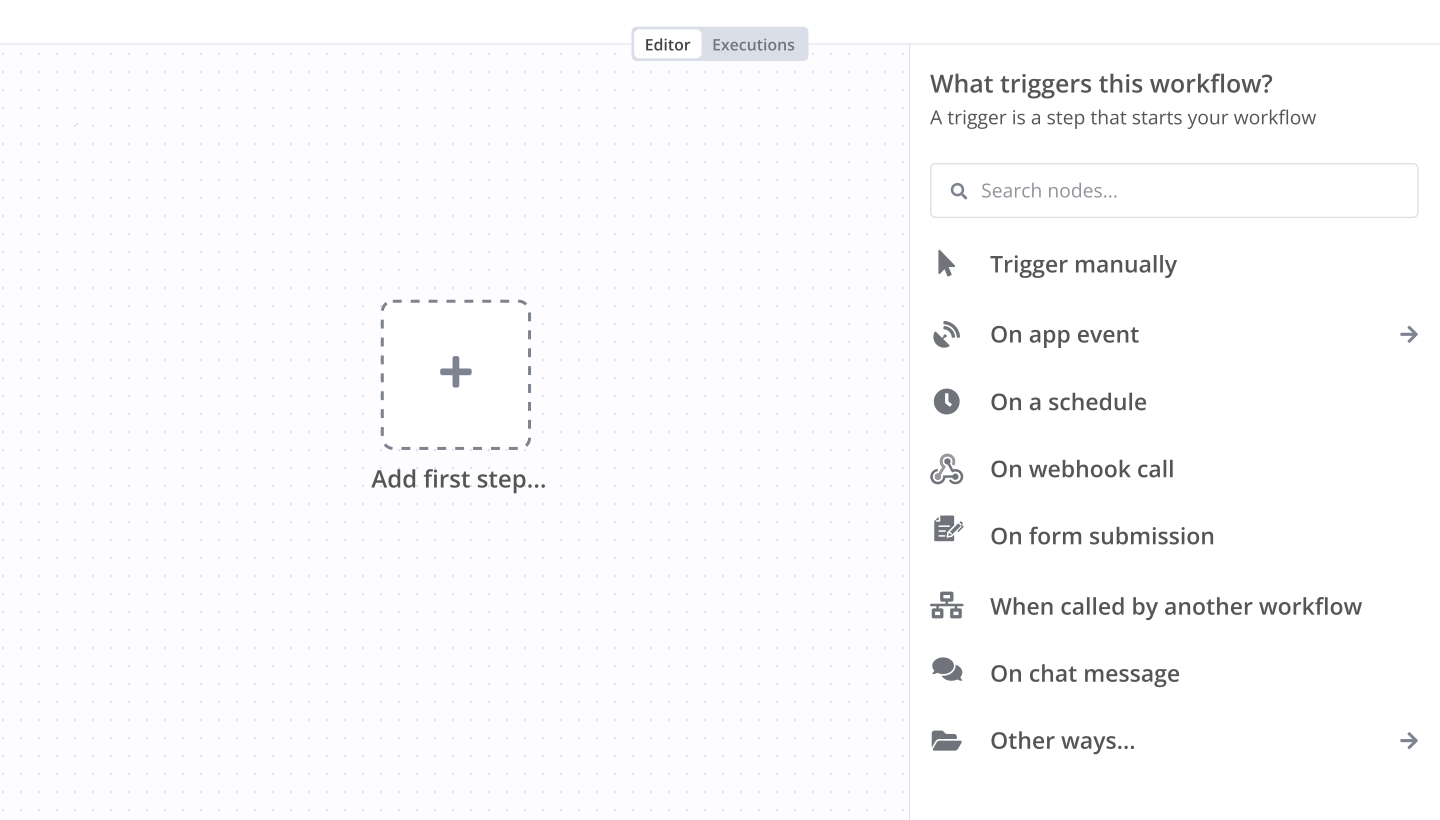
LinkedIn and Wordpress integration: Create a new workflow and add the first step

Step 2: Add and configure LinkedIn and Wordpress nodes

You can find LinkedIn and Wordpress in the nodes panel. Drag them onto your workflow canvas, selecting their actions. Click each node, choose a credential, and authenticate to grant n8n access. Configure LinkedIn and Wordpress nodes one by one: input data on the left, parameters in the middle, and output data on the right.

LinkedIn and Wordpress integration: Add and configure LinkedIn and Wordpress nodes

Step 3: Connect LinkedIn and Wordpress

A connection establishes a link between LinkedIn and Wordpress (or vice versa) to route data through the workflow. Data flows from the output of one node to the input of another. You can have single or multiple connections for each node.

LinkedIn and Wordpress integration: Connect LinkedIn and Wordpress

Step 4: Customize and extend your LinkedIn and Wordpress integration

Use n8n's core nodes such as If, Split Out, Merge, and others to transform and manipulate data. Write custom JavaScript or Python in the Code node and run it as a step in your workflow. Connect LinkedIn and Wordpress with any of n8n’s 1000+ integrations, and incorporate advanced AI logic into your workflows.

LinkedIn and Wordpress integration: Customize and extend your LinkedIn and Wordpress integration

Step 5: Test and activate your LinkedIn and Wordpress workflow

Save and run the workflow to see if everything works as expected. Based on your configuration, data should flow from LinkedIn to Wordpress or vice versa. Easily debug your workflow: you can check past executions to isolate and fix the mistake. Once you've tested everything, make sure to save your workflow and activate it.

LinkedIn and Wordpress integration: Test and activate your LinkedIn and Wordpress workflow

Publish WordPress posts to social media X, Facebook, LinkedIn, Instagram with AI

Workflow Description for n8n: Social Media Post from Ideas Copy

This workflow automates the process of creating and publishing social media posts across multiple platforms (Twitter/X, Facebook, LinkedIn, and Instagram) based on content from a WordPress post. It uses AI models to generate platform-specific captions and images, and integrates with Google Sheets, WordPress, and various social media APIs.

Is a powerful tool for automating social media post creation and publishing, saving time and ensuring consistent, platform-optimized content across multiple channels.

Below is a breakdown of the workflow:

  1. How It Works
    The workflow is designed to streamline the creation and publishing of social media posts. Here's how it works:

Trigger:
The workflow starts with a Manual Trigger node, which initiates the process when the user clicks "Test workflow."

Fetch Data:
The Google Sheets node retrieves the WordPress Post ID from a predefined Google Sheet.
The Get Post node fetches the corresponding WordPress post content using the retrieved Post ID.

Generate Social Media Content:
The Social Media Manager node uses an AI model (OpenRouter) to analyze the WordPress post and generate platform-specific captions for Twitter/X, Facebook, LinkedIn, and Instagram.
The AI ensures that each caption is tailored to the platform's audience, tone, and style, including hashtags and calls to action.

Generate Images:
The Image Instagram and Image Facebook e Linkedin nodes use OpenAI to generate platform-specific images for Instagram, Facebook, and LinkedIn posts.

Publish on Social Media:
The workflow publishes the generated content and images on the respective platforms:
Publish on X: Posts the caption on Twitter/X.
Publish on LinkedIn: Posts the caption and image on LinkedIn.
Publish on Facebook: Posts the caption and image on Facebook.
Publish on Instagram: Posts the caption and image on Instagram.

Update Google Sheets:
The workflow updates the Google Sheet to mark the posts as published (e.g., "X OK," "Facebook OK," "LinkedIn OK," "Instagram OK").

  1. Set Up Steps
    To set up and use this workflow in n8n, follow these steps:

Google Sheets Setup:
Create (or clone) a Google Sheet with columns for POST ID, TEXT, TWITTER, FACEBOOK, INSTAGRAM, and LINKEDIN.
Link the Google Sheet to the Google Sheets node by providing the Document ID and Sheet Name.

WordPress Integration:
Set up WordPress credentials in n8n for the Get Post node.
Ensure the WordPress site is accessible via its REST API.

AI Model Configuration:
Configure the OpenRouter credentials in n8n for the Social Media Manager node.
Ensure the AI model is set up to generate platform-specific captions.

Image Generation:
Set up OpenAI credentials for the Image Instagram and Image Facebook e Linkedin nodes to generate images.

Social Media API Integration:
Set up credentials for each social media platform:
Twitter/X: Configure the Publish on X node with Twitter OAuth2 credentials.
LinkedIn: Configure the Publish on LinkedIn node with LinkedIn OAuth2 credentials.
Facebook: Configure the Publish on Facebook and Publish on Instagram nodes with Facebook Graph API credentials.

Test the Workflow:
Click the "Test workflow" button in n8n to trigger the workflow.
The workflow will:
Fetch the WordPress post content.
Generate platform-specific captions and images.
Publish the posts on Twitter/X, Facebook, LinkedIn, and Instagram.
Update the Google Sheet to mark the posts as published.

Optional Customization:
Modify the workflow to include additional platforms or customize the AI-generated content further.

Need help customizing?
Contact me for consulting and support or add me on Linkedin.

Nodes used in this workflow

Popular LinkedIn and Wordpress workflows

+5

Publish WordPress Posts to Social Media X, Facebook, LinkedIn, Instagram with AI

Workflow Description for n8n: Social Media Post from Ideas Copy This workflow automates the process of creating and publishing social media posts across multiple platforms (Twitter/X, Facebook, LinkedIn, and Instagram) based on content from a WordPress post. It uses AI models to generate platform-specific captions and images, and integrates with Google Sheets, WordPress, and various social media APIs. Is a powerful tool for automating social media post creation and publishing, saving time and ensuring consistent, platform-optimized content across multiple channels. Below is a breakdown of the workflow: How It Works The workflow is designed to streamline the creation and publishing of social media posts. Here's how it works: Trigger: The workflow starts with a Manual Trigger node, which initiates the process when the user clicks "Test workflow." Fetch Data: The Google Sheets node retrieves the WordPress Post ID from a predefined Google Sheet. The Get Post node fetches the corresponding WordPress post content using the retrieved Post ID. Generate Social Media Content: The Social Media Manager node uses an AI model (OpenRouter) to analyze the WordPress post and generate platform-specific captions for Twitter/X, Facebook, LinkedIn, and Instagram. The AI ensures that each caption is tailored to the platform's audience, tone, and style, including hashtags and calls to action. Generate Images: The Image Instagram and Image Facebook e Linkedin nodes use OpenAI to generate platform-specific images for Instagram, Facebook, and LinkedIn posts. Publish on Social Media: The workflow publishes the generated content and images on the respective platforms: Publish on X: Posts the caption on Twitter/X. Publish on LinkedIn: Posts the caption and image on LinkedIn. Publish on Facebook: Posts the caption and image on Facebook. Publish on Instagram: Posts the caption and image on Instagram. Update Google Sheets: The workflow updates the Google Sheet to mark the posts as published (e.g., "X OK," "Facebook OK," "LinkedIn OK," "Instagram OK"). Set Up Steps To set up and use this workflow in n8n, follow these steps: Google Sheets Setup: Create (or clone) a Google Sheet with columns for POST ID, TEXT, TWITTER, FACEBOOK, INSTAGRAM, and LINKEDIN. Link the Google Sheet to the Google Sheets node by providing the Document ID and Sheet Name. WordPress Integration: Set up WordPress credentials in n8n for the Get Post node. Ensure the WordPress site is accessible via its REST API. AI Model Configuration: Configure the OpenRouter credentials in n8n for the Social Media Manager node. Ensure the AI model is set up to generate platform-specific captions. Image Generation: Set up OpenAI credentials for the Image Instagram and Image Facebook e Linkedin nodes to generate images. Social Media API Integration: Set up credentials for each social media platform: Twitter/X: Configure the Publish on X node with Twitter OAuth2 credentials. LinkedIn: Configure the Publish on LinkedIn node with LinkedIn OAuth2 credentials. Facebook: Configure the Publish on Facebook and Publish on Instagram nodes with Facebook Graph API credentials. Test the Workflow: Click the "Test workflow" button in n8n to trigger the workflow. The workflow will: Fetch the WordPress post content. Generate platform-specific captions and images. Publish the posts on Twitter/X, Facebook, LinkedIn, and Instagram. Update the Google Sheet to mark the posts as published. Optional Customization: Modify the workflow to include additional platforms or customize the AI-generated content further. Need help customizing? Contact me for consulting and support or add me on Linkedin.
+3

AI Agent Creates Content to Be Picked by ChatGPT, Gemini, Google

🧠 Who is this for? Marketing teams, content creators, solopreneurs, and agencies who want to generate emotionally-resonant, SEO-optimized content tailored to audience psychology and buyer journey stages — and get picked up by AI discovery engines like ChatGPT, Gemini, and Perplexity. How it works: ✅ Decodes why people buy (using buyer psychology) ✅ Creates SEO + emotionally resonant content for 4 formats: → Blog Posts, Newsletters, Landing Pages, Social Media ✅ Structures the content to be picked up by ChatGPT, Gemini, Perplexity & Google ✅ Automatically routes it to Google Sheets, Gmail, or even WordPress This isn’t just about writing better content — it’s about getting seen by the tools that shape the internet. How long does it take to set-up: 30 Mins
+18

💅 AI Agents Generate Content & Automate Posting for Beauty Salon Social Media 📲

💅 AI Agents Generate Content & Automate Posting for Beauty Salon Social Media 📲 Who Is This For? This workflow is for beauty salons who want consistent, high‑quality social media content without writing every post manually. It also suits agencies and automation builders who manage multiple beauty brands and want a reusable, AI‑driven posting system they can adapt per client. What Problem Is This Workflow Solving? Many beauty businesses struggle to post regularly because research, copywriting, and design all take time and marketing skills. This workflow automates research, writing, image creation, and posting, so your channels stay active and relevant while you focus on clients and services. What This Workflow Does Generates short, engaging posts tailored to a beauty‑salon audience (hair, nails, skincare, make‑up, self‑care) using an AI agent. Uses Tavily Internet Search to pull up‑to‑date information and trends based on a reference link or topic. Turns each post into a detailed, photorealistic image prompt and creates a matching visual with an AI image model (for example, gpt‑image‑1 or other connected providers). Automatically sends the final text and image to Telegram, and can be extended to other social platforms from the Split Out node. How It Works Trigger the workflow Scheduled automatic generation:** Run the parent workflow on a schedule (for example, once per day at 9 AM) to publish new content regularly. Google Sheets trigger:** Generate content when a new row with a reference link or topic is added to your sheet. Use it when you manage ideas or briefs in Google Sheets and want the workflow to react as soon as a new idea appears. RSS Feed trigger:** Start the workflow when new items appear in a selected RSS feed. Ideal for turning fresh blog posts, news, or industry updates into social media content or automated summaries. Meta (Facebook/Instagram) webhook:** Use the Meta Reference trigger to fire the workflow on incoming webhooks from Meta (for example, new comments, messages, or events). Helpful when you want to auto‑respond, log activity, or generate follow‑up content from Meta activity. Airtable trigger:** Start the workflow when records in a selected Airtable base/table change (for example, a new idea, brief, or status update), so your posts react instantly to updates in your Airtable content board. Postgres trigger:** Fire the workflow when new rows are inserted or existing rows are updated in a connected PostgreSQL table, letting you drive content generation from events in your app database or Supabase‑style back end. Manual start:* Hit Execute workflow* whenever you want to spin up a batch of posts on demand, test new prompt settings, or debug the flow step by step. Research and generate copy The GENERATE TEXT agent calls Tavily to gather fresh information on the topic. It writes a post under 1024 characters with a hook, practical tips, relevant hashtags, and a closing line with your salon address and contact. Create the visual The GENERATE PROMPT agent converts the post into a single, clear description of the scene (client, service, salon interior, lighting, mood) with a strict “no text on image” rule. An image model such as gpt‑image‑1 or one of the HTTP image APIs renders a matching beauty visual. Distribute the content The Split Out node fans out the result so Telegram receives a photo post with the generated caption. Additional social or content nodes (for example Facebook, LinkedIn, X, template tools) can be wired after this step for multi‑channel posting. How to Customize This Workflow to Your Needs Brand voice** Edit the system message in the GENERATE TEXT node to adjust tone (luxury, friendly, clinical, playful), language, services, and city. Update the final address and phone line to match your salon details. Topics and triggers** Point the Google Sheets Trigger to your own document ID, sheet, and columns for ideas, links, or campaign themes. Use the Schedule Trigger for fully automatic posting or rely on the Manual Trigger for controlled, batch generation sessions. Models and providers** Swap GPT‑5 llm and the default image model for alternatives such as Mistral, Gemini, Anthropic, DeepSeek, or custom HTTP image APIs by enabling the corresponding nodes and adding credentials. Channels and outputs** Connect or remove social nodes after Split Out depending on which platforms you actively use. Add extra processing steps (for example resizing images or adding UTM parameters) before each channel if needed. Visual style** Tweak the GENERATE PROMPT instructions to control composition (close‑up vs. full‑body), color palette, lighting, and overall salon aesthetic, while keeping the constraint of no text or logos in the image.
+5

Automate RSS Content to Blog Posts with GPT-4o, WordPress & LinkedIn Publishing

Automated Blog Post Review and Multi-Platform Publishing Workflow with RSS Feeds Description This workflow automates the process of generating, reviewing, and publishing blog posts across multiple platforms, now enhanced with support for RSS Feeds as a content source. It streamlines the management of blog posts by fetching content from RSS Feeds, formatting, storing, reviewing, templating, and publishing to platforms like LinkedIn and WordPress. The workflow is split into three key flows: Initial Flow**: Fetches content from RSS Feeds, prepares and stores blog post data, sends a review email with approval/rejection links. Approval Flow**: Handles review actions via a webhook to update the status in Google Sheets. Status Update Flow**: Monitors status changes and publishes approved posts. Target Audience Content creators, bloggers, and digital marketers. Teams managing multi-platform content publishing. Users familiar with n8n, Google Sheets, LinkedIn, and RSS Feeds. Problem Solved Manually managing blog posts, especially when sourcing content from RSS Feeds, can be time-consuming and error-prone This workflow addresses: Content Sourcing**: Fetches blog posts from RSS Feeds for automated processing Content Formatting**: Automatically formats and stores blog posts. Review Process**: Simplifies approval with email notifications and webhook triggers. Multi-Platform Publishing**: Publishes to LinkedIn, WordPress and optionally Medium) with delays to avoid rate limits Status Tracking**: Tracks approval and publishing status in Google Sheets. Setup Instructions Prerequisites n8n Instance**: Ensure you have an active n8n instance RSS Feed URL**: Identify an RSS Feed URL (e.g., a blog’s feed like https://example.com/feed) Google Sheets**: Create a spreadsheet with columns: Title, Blogpost, Publication Date, Keywords, Status, Published, Featured Image, articleUrl, Rendered Blog. Sheet Name: Posts Initial Add a dropdown for Status: Pending, Approved, Rejected. Gmail Account**: For sending review and notification emails. LinkedIn Account**: For publishing posts (OAuth credentials needed). Optional**: WordPress.com or Medium account for additional publishing. Customization Guidance Below is a detailed breakdown of each flow and node, including setup instructions. 🔹 Initial Flow: Fetch from RSS Feeds, Prepare, and Send for Review. Purpose: Fetches blog posts from an RSS Feed, formats them, extracts images, stores data, and sends a review email. Fetch from RSS Feed Type: RSS Feed Purpose: Retrieves blog posts from an RSS Feed Configuration: URL: https://example.com/feed (replace with your RSS Feed URL) Limit: 1 (or adjust based on your needs) Setup: Ensure the RSS Feed URL is valid and accessible; test the node to verify it fetches posts Set Fields Type: Set Purpose: Maps RSS Feed data to blog post fields Setup: Adjust field mappings based on your RSS Feed’s structure Format Blog Post for Storage Type: Code Purpose: Cleans up the blog post content. Extract Featured Image Type: Code Purpose: Extracts or generates a featured image URL. Setup: Ensure originalHtml contains image data; otherwise, it uses a placeholder. Store Blog Posts Initial Type: Google Sheets Purpose: Stores initial blog post data Setup: Ensure Google Sheets credentials are set up and the spreadsheet has the required columns. Set Fields for Email Type: Set Purpose: Prepares fields for the review email. Setup: Replace https://your-n8n-instance with your n8n instance URL. Prepare Email HTML Type: Code Purpose: Generates HTML email content with conditional image display Setup: No additional configuration needed Notify for Review (Gmail) Type: Gmail Purpose: Sends a review email with approval/rejection links 🔹 Approval Flow: Handle Review Actions Purpose: Updates the blog post status based on approval/rejection Webhook Trigger Type: Webhook Purpose: Triggers on approval/rejection link clicks Configuration: HTTP Method: GET Path: approve-post Response Code: 200 Response Data: {"message": "Status updated"} Setup: Ensure the webhook URL matches the one in Set Fields for Email Find Row to Update Type: Google Sheets Purpose: Retrieves all rows to find the matching blog post Filter Row by Title Type: Code Purpose: Filters the row matching the blog post title Setup: No additional configuration needed Update Status on Approval Type: Google Sheets Purpose: Updates the status to Approved or Rejected 🔹 Status Update Flow: Publish Approved Posts Purpose: Monitors status changes and publishes approved posts Google Sheets Trigger (Fetch Row) Type: Google Sheets Trigger Purpose: Triggers when a row’s status is updated Configuration: Event: Update Sheet Name: Posts Initial Output Fields: title, status, published, featuredImage, articleUrl Setup: Ensure Google Sheets credentials are set up Router (Check Status) Type: Router Purpose: Routes based on status and published state Configuration: Route 1: Approved and Not Published Condition: status equals Approved AND published equals NO Route 2: Rejected Condition: status equals Rejected Route 3: Pending Condition: status equals Pending Setup: No additional configuration needed Apply Blog Template Store Blog Posts Final Type: Google Sheets Purpose: Stores the final HTML content Configuration: Operation: Update Row Setup: Ensure the Rendered Blog column exists Loop Over Blog Posts Type: Split in Batches Purpose: Processes each blog post individually Configuration: Default settings Setup: No additional configuration needed Delay Between Posts Type: Wait Purpose: Adds a delay to avoid rate limits Configuration: Wait Type: Delay Amount: 1 second Setup: Adjust delay as needed for LinkedIn rate limits Publish to LinkedIn Type: LinkedIn Purpose: Publishes the blog post to LinkedIn Configuration: Operation: Share Post Author: urn:li:person:YOUR_PERSONAL_URN Setup: Set up LinkedIn OAuth credentials and replace YOUR_PERSONAL_URN with your LinkedIn URN Update Published State Type: Google Sheets Purpose: Updates the published status Configuration: Operation: Update Row Setup: Ensure the Published column exists Notify Team Type: Gmail Purpose: Notifies the team of successful publishing Configuration: The blog post "{{ $json.title }}" has been successfully published Setup: Set up Gmail credentials; replace [Link] with the LinkedIn URL if captured Notify Rejection (Gmail) (Route 2) Type: Gmail Purpose: Notifies on rejection The blog post "{{ $json.title }}" has been rejected Suggestions: Rewrite with more engaging content, adjust keywords, or verify facts Please update the status in Google Sheets if you wish to revise and resubmit Setup: Set up Gmail credentials Wait for Status Update (Route 3) Type: Wait Purpose: Delays for status recheck Configuration: Wait Type: Delay Duration: 24h Setup: Adjust delay as needed Conclusion This workflow streamlines blog post management with RSS Feeds, making it ideal for busy content creators and teams. Customize it by adding more platforms adjusting delays, or enhancing notifications. Share your feedback in the n8n community to help others benefit from this automation.
+19

💾 Generate Blog Posts on Autopilot with GPT‑5, Tavily and WordPress

Who Is This For? This workflow is designed for marketers, content creators, agencies, and solo founders who want to publish long‑form posts with visuals on autopilot using n8n and AI agents. ​ Whether you run a blog, SaaS, personal brand, newsletter, or client accounts, this tool helps you keep a consistent content pipeline without manually writing every article, creating images, and posting to each platform one by one. ​ ​ 💪🏼 While the template is wired around classic blog + social media distribution, the underlying logic is universal. You can easily adapt it to any niche by editing prompts, swapping models, and re‑wiring nodes. You can plug in any LLM you like, from ChatGPT to Claude, Gemini, Mistral, DeepSeek, OpenRouter, or even local models through Ollama. ​ What Problem Is This Workflow Solving? 🤯 Most teams waste hours on the same repetitive loop: research a topic, gather links, write a blog post, craft social captions, generate visuals, upload everything to multiple platforms, and archive assets. ​ ​ 💎 This workflow solves that by automating the full content chain—from research and blog‑post generation to image creation, publishing across channels, and logging everything in your content database—so your feeds stay active while you focus on strategy, not busywork. ​ What This Workflow Does ✨ Generates in‑depth blog posts tailored to your topic and target audience, enriched with fresh references from the web via Tavily/SerpAPI search tools. ​ ✨ Creates an image prompt and title from the article, generates the visual with OpenAI Images (gpt-image-1), and converts it into a ready‑to‑use image file. ​ ✨ Automatically publishes content to your connected platforms (WordPress for blog posts, Telegram, X/Twitter, Facebook, LinkedIn) while saving images to Google Drive and logging each publication in Google Sheets for tracking. ​ How It Works? Surprisingly simple ☺️ The workflow is triggered by another n8n workflow or by one of several triggers (Facebook, RSS, Google Sheets, Airtable, Postgres) that pass in the blogTopic, targetAudience, and Telegram chatID. ​ ​ The Blog Post Agent (LLM with access to Tavily/SerpAPI) researches the topic, writes a structured article for the specified audience, and sends its output to the Image Prompt Agent, which turns the content into a visual prompt and title. ​ 🎯 The end result: you provide a topic, run the workflow, and receive a complete blog post, matching image, and ready‑made social posts shipped directly to your channels and archives—no manual copy‑paste. ​ How to Customize This Workflow to Your Needs 🎨 Switch AI models and fine‑tune prompts so the agent can handle your exact formats: tutorials, case studies, listicles, product updates, thought‑leadership pieces, or campaign landing posts. 🔍 Refine research sources inside Tavily/SerpAPI to prioritize the domains, blogs, and docs your audience trusts, keeping posts accurate and up to date. ⏰ Adjust posting cadence and schedules to align with peak engagement for your audience, mixing automated slots with manual “launch” runs for special announcements. 📱 Expand or trim channels as needed: keep just WordPress + LinkedIn, add Telegram as a content feed, or plug the workflow into additional automations like email campaigns or RSS feeds. 📊 Use Google Sheets as your content hub to store ideas, angles, CTAs, references, and performance notes so you can double‑down on topics and formats that perform best. 🎬 Swap images for video by replacing the image generation node with video tools (for example, Runway‑style APIs) if your strategy is video‑first while keeping the same prompt pipeline. 💾 Build a reusable prompt library in Sheets, Notion, or Airtable so you can rotate proven prompt patterns each month and keep quality high without reinventing the wheel. 🤖 The system will continuously generate blog posts, visuals, and social updates and publish them across your selected platforms while archiving everything in Drive and Sheets—keeping your brand visible, consistent, and professional with minimal ongoing effort.
+8

Summarize RSS articles and publish AI images to WordPress and social media

Who it's for This n8n workflow is designed for content creators, bloggers, digital marketers, and social media managers who want to fully automate their content distribution pipeline. The workflow creates an end-to-end multi-channel publishing system that fetches new articles from an RSS feed (e.g., Paul Graham's essays), extracts and AI-summarizes the content, generates ultra-realistic visual prompts, creates stunning images via OpenAI (DALL-E), and instantly publishes the article along with the generated image across WordPress, Facebook, Instagram, LinkedIn, Telegram, and Discord simultaneously. Features Automatically fetches new articles via RSS feeds Filters irrelevant items using regex rules Extracts full article content (title + body text) Splits long articles and generates AI-powered summaries (GPT-4.1-mini) Combines original titles with clean summaries Converts summaries into detailed image generation prompts Creates images using OpenAI DALL·E Publishes full posts directly to WordPress Generates SEO-optimized featured images with metadata Downloads, resizes (5000×5000), and uploads images to WordPress media library with alt text and captions Posts images with captions to Facebook Pages via Graph API Publishes Instagram posts using the 2-step Graph API process Sends formatted posts to Telegram channels Publishes to LinkedIn personal profiles and company pages Shares rich media posts to Discord channels Requirements OpenAI API**: Generates summaries, image prompts, and DALL·E images WordPress API**: Creates posts, uploads media, and sets featured images Facebook Graph API**: Publishes to Facebook Pages and Instagram (2-step process) LinkedIn API**: Posts to personal profiles and company pages Telegram Bot API**: Sends images with captions to channels Discord Bot API**: Sends rich embed posts with title, summary, and imag Important Notes The workflow processes items one by one using a loop; the top output must remain connected to ensure continuous iteration. A regex filter is used to allow only valid article URLs and prevent malformed links. WordPress image flow must stay in order: Create Post → Download Image → Resize (5000×5000) → Upload Media → Update Metadata → Set Featured Image. Instagram publishing requires a two-step Graph API process: create media object → publish using returned ID. Dynamic expressions (e.g., {{ $('Loop Over Items').item.json.title }}) must remain unchanged for proper data mapping. WordPress automatically generates a URL-safe slug from the article title to handle special characters. Support & Help WhatsApp**: Chat on WhatsApp Discord**: SpaGreen Community Facebook Group**: SpaGreen Support Website**: spagreen.net Developer Portfolio**: Codecanyon SpaGreen

Build your own LinkedIn and Wordpress integration

Create custom LinkedIn and Wordpress workflows by choosing triggers and actions. Nodes come with global operations and settings, as well as app-specific parameters that can be configured. You can also use the HTTP Request node to query data from any app or service with a REST API.

LinkedIn supported actions

Create
Create a new post

Wordpress supported actions

Create
Create a post
Get
Get a post
Get Many
Get many posts
Update
Update a post
Create
Create a page
Get
Get a page
Get Many
Get many pages
Update
Update a page
Create
Create a user
Get
Get a user
Get Many
Get many users
Update
Update a user

FAQs

  • Can LinkedIn connect with Wordpress?

  • Can I use LinkedIn’s API with n8n?

  • Can I use Wordpress’s API with n8n?

  • Is n8n secure for integrating LinkedIn and Wordpress?

  • How to get started with LinkedIn and Wordpress integration in n8n.io?

Looking to integrate LinkedIn and Wordpress in your company?

Over 3000 companies switch to n8n every single week

Why use n8n to integrate LinkedIn with Wordpress

Build complex workflows, really fast
Build complex workflows, really fast

Handle branching, merging and iteration easily.
Pause your workflow to wait for external events.

Code when you need it, UI when you don't

Simple debugging

Your data is displayed alongside your settings, making edge cases easy to track down.

Use templates to get started fast

Use 1000+ workflow templates available from our core team and our community.

Reuse your work

Copy and paste, easily import and export workflows.

Implement complex processes faster with n8n

red iconyellow iconred iconyellow icon