Back to Integrations
integrationMailgun node
integrationMongoDB node

Mailgun and MongoDB integration

Save yourself the work of writing custom integrations for Mailgun and MongoDB and use n8n instead. Build adaptable and scalable Communication, Development, and Data & Storage workflows that work with your technology stack. All within a building experience you will love.

How to connect Mailgun and MongoDB

  • Step 1: Create a new workflow
  • Step 2: Add and configure nodes
  • Step 3: Connect
  • Step 4: Customize and extend your integration
  • Step 5: Test and activate your workflow

Step 1: Create a new workflow and add the first step

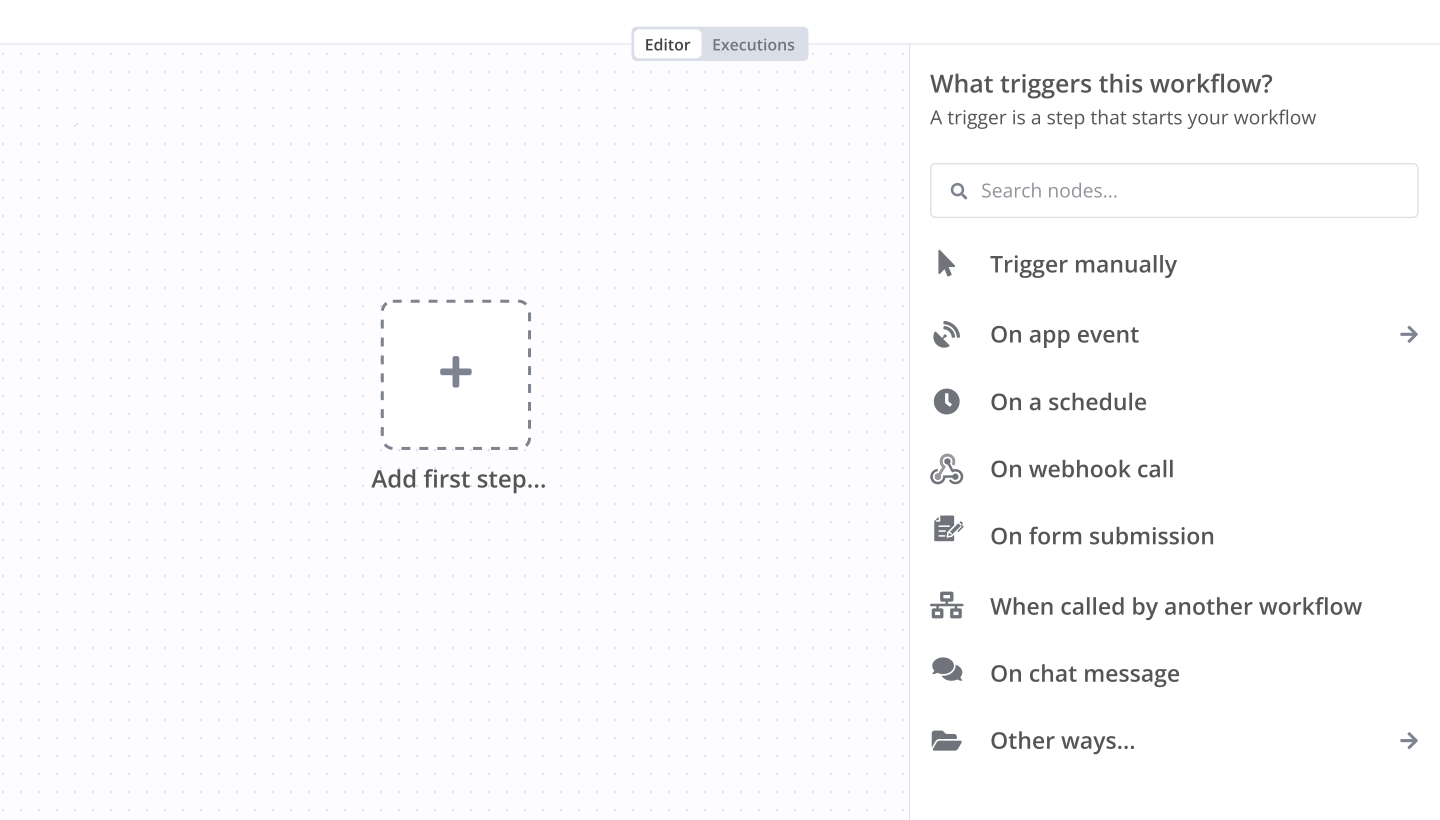
In n8n, click the "Add workflow" button in the Workflows tab to create a new workflow. Add the starting point – a trigger on when your workflow should run: an app event, a schedule, a webhook call, another workflow, an AI chat, or a manual trigger. Sometimes, the HTTP Request node might already serve as your starting point.

Mailgun and MongoDB integration: Create a new workflow and add the first step

Step 2: Add and configure Mailgun and MongoDB nodes

You can find Mailgun and MongoDB in the nodes panel. Drag them onto your workflow canvas, selecting their actions. Click each node, choose a credential, and authenticate to grant n8n access. Configure Mailgun and MongoDB nodes one by one: input data on the left, parameters in the middle, and output data on the right.

Mailgun and MongoDB integration: Add and configure Mailgun and MongoDB nodes

Step 3: Connect Mailgun and MongoDB

A connection establishes a link between Mailgun and MongoDB (or vice versa) to route data through the workflow. Data flows from the output of one node to the input of another. You can have single or multiple connections for each node.

Mailgun and MongoDB integration: Connect Mailgun and MongoDB

Step 4: Customize and extend your Mailgun and MongoDB integration

Use n8n's core nodes such as If, Split Out, Merge, and others to transform and manipulate data. Write custom JavaScript or Python in the Code node and run it as a step in your workflow. Connect Mailgun and MongoDB with any of n8n’s 1000+ integrations, and incorporate advanced AI logic into your workflows.

Mailgun and MongoDB integration: Customize and extend your Mailgun and MongoDB integration

Step 5: Test and activate your Mailgun and MongoDB workflow

Save and run the workflow to see if everything works as expected. Based on your configuration, data should flow from Mailgun to MongoDB or vice versa. Easily debug your workflow: you can check past executions to isolate and fix the mistake. Once you've tested everything, make sure to save your workflow and activate it.

Mailgun and MongoDB integration: Test and activate your Mailgun and MongoDB workflow

E-commerce price tracker with ScrapeGraphAI, MongoDB, and Mailgun alerts

Product Price Monitor with Mailgun and MongoDB

⚠️ COMMUNITY TEMPLATE DISCLAIMER: This is a community-contributed template that uses ScrapeGraphAI (a community node). Please ensure you have the ScrapeGraphAI community node installed in your n8n instance before using this template.

This workflow automatically scrapes multiple e-commerce sites, records weekly product prices in MongoDB, analyzes seasonal trends, and emails a concise report to retail stakeholders via Mailgun. It helps retailers make informed inventory and pricing decisions by providing up-to-date pricing intelligence.

Pre-conditions/Requirements

Prerequisites
n8n instance (self-hosted, desktop, or n8n.cloud)
ScrapeGraphAI community node installed and activated
MongoDB database (Atlas or self-hosted)
Mailgun account with a verified domain
Publicly reachable n8n Webhook URL (if self-hosted)

Required Credentials
ScrapeGraphAI API Key** – Enables web scraping across target sites
MongoDB Credentials** – Connection string (MongoDB URI) with read/write access
Mailgun API Key & Domain** – To send summary emails

MongoDB Collection Schema

Field Type Example Value Notes
productId String SKU-12345 Unique identifier you define
productName String Women's Winter Jacket Human-readable name
timestamp Date 2024-09-15T00:00:00Z Ingest date (automatically added)
price Number 79.99 Scraped price
source String example-shop.com Domain where price was scraped

How it works

This workflow automatically scrapes multiple e-commerce sites, records weekly product prices in MongoDB, analyzes seasonal trends, and emails a concise report to retail stakeholders via Mailgun. It helps retailers make informed inventory and pricing decisions by providing up-to-date pricing intelligence.

Key Steps:
Webhook Trigger**: Starts the workflow on a scheduled HTTP call or manual trigger.
Code (Prepare Products): Defines the list of SKUs/URLs to monitor.
Split In Batches
: Processes products in manageable chunks to respect rate limits.
ScrapeGraphAI (Scrape Price): Extracts price, availability, and currency from each product URL.
Merge (Combine Results)
: Re-assembles all batch outputs into one dataset.
MongoDB (Upsert Price History): Stores each price point for historical analysis.
If (Seasonal Trend Check)
: Compares current price against historical average to detect anomalies.
Set (Email Payload): Formats the trend report for email.
Mailgun (Send Email)
: Emails weekly summary to specified recipients.
Respond to Webhook**: Returns “200 OK – Report Sent” response for logging.

Set up steps

Setup Time: 15-20 minutes

Install Community Node
In n8n, go to “Settings → Community Nodes” and install @n8n-community/nodes-scrapegraphai.
Create Credentials
Add ScrapeGraphAI API key under Credentials.
Add MongoDB credentials (type: MongoDB).
Add Mailgun credentials (type: Mailgun).
Import Workflow
Download the JSON template, then in n8n click “Import” and select the file.
Configure Product List
Open the Code (Prepare Products) node and replace the example array with your product objects { id, name, url }.
Adjust Cron/Schedule
If you prefer a fully automated schedule, replace the Webhook with a Cron node (e.g., every Monday at 09:00).
Verify MongoDB Collection
Ensure the collection (default: productPrices) exists or let n8n create it on first run.
Set Recipients
In the Mailgun node, update the to, from, and subject fields.
Execute Test Run
Manually trigger the Webhook URL or run the workflow once to verify data flow and email delivery.
Activate
Toggle the workflow to “Active” so it runs automatically each week.

Node Descriptions

Core Workflow Nodes:
Webhook** – Entry point that accepts a GET/POST call to start the job.
Code (Prepare Products)** – Outputs an array of products to monitor.
Split In Batches** – Limits scraping to N products per request to avoid banning.
ScrapeGraphAI** – Scrapes the HTML of a product page and parses pricing data.
Merge** – Re-combines batch results for streamlined processing.
MongoDB** – Inserts or updates each product’s price history document.
If** – Determines whether price deviates > X% from the season average.
Set** – Builds an HTML/text email body containing the findings.
Mailgun** – Sends the email via Mailgun REST API.
Respond to Webhook** – Returns an HTTP response for logging/monitoring.
Sticky Notes** – Provide in-workflow documentation (no execution).

Data Flow:
Webhook → Code → Split In Batches
Split In Batches → ScrapeGraphAI → Merge
Merge → MongoDB → If
If (true) → Set → Mailgun → Respond to Webhook

Customization Examples

Change Scraping Frequency (Cron)
// Cron node settings
{
"mode": "custom",
"cronExpression": "0 6 * * 1,4" // Monday & Thursday 06:00
}

Extend Data Points (Reviews Count, Stock)
// In ScrapeGraphAI extraction config
{
"price": "css:span.price",
"inStock": "css:div.availability",
"reviewCount": "regex:"(\d+) reviews""
}

Data Output Format

The workflow outputs structured JSON data:

{
"productId": "SKU-12345",
"productName": "Women's Winter Jacket",
"timestamp": "2024-09-15T00:00:00Z",
"price": 79.99,
"currency": "USD",
"source": "example-shop.com",
"trend": "5% below 3-month average"
}

Troubleshooting

Common Issues
ScrapeGraphAI returns empty data – Confirm selectors/XPath are correct; test with ScrapeGraphAI playground.
MongoDB connection fails – Verify IP-whitelisting for Atlas or network connectivity for self-hosted instance.
Mail not delivered – Check Mailgun logs for bounce or spam rejection, and ensure from domain is verified.

Performance Tips
Use smaller batch sizes (e.g., 5 URLs) to avoid target site rate-limit blocks.
Cache static product info; scrape only fields that change (price, stock).

Pro Tips:
Integrate the IF node with n8n’s Slack node to push urgent price drops to a channel.
Add a Function node to calculate moving averages for deeper analysis.
Store raw HTML snapshots in S3/MinIO for auditability and debugging.
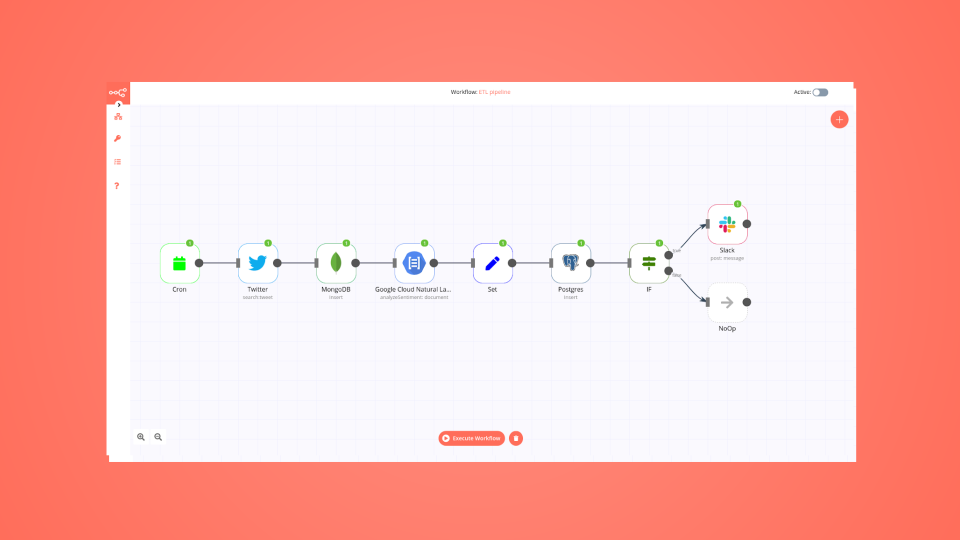

Nodes used in this workflow

Popular Mailgun and MongoDB workflows

E-commerce Price Tracker with ScrapeGraphAI, MongoDB, and Mailgun Alerts

Product Price Monitor with Mailgun and MongoDB ⚠️ COMMUNITY TEMPLATE DISCLAIMER: This is a community-contributed template that uses ScrapeGraphAI (a community node). Please ensure you have the ScrapeGraphAI community node installed in your n8n instance before using this template. This workflow automatically scrapes multiple e-commerce sites, records weekly product prices in MongoDB, analyzes seasonal trends, and emails a concise report to retail stakeholders via Mailgun. It helps retailers make informed inventory and pricing decisions by providing up-to-date pricing intelligence. Pre-conditions/Requirements Prerequisites n8n instance (self-hosted, desktop, or n8n.cloud) ScrapeGraphAI community node installed and activated MongoDB database (Atlas or self-hosted) Mailgun account with a verified domain Publicly reachable n8n Webhook URL (if self-hosted) Required Credentials ScrapeGraphAI API Key** – Enables web scraping across target sites MongoDB Credentials** – Connection string (MongoDB URI) with read/write access Mailgun API Key & Domain** – To send summary emails MongoDB Collection Schema | Field | Type | Example Value | Notes | |-----------------|----------|---------------------------|---------------------------------------------| | productId | String | SKU-12345 | Unique identifier you define | | productName | String | Women's Winter Jacket | Human-readable name | | timestamp | Date | 2024-09-15T00:00:00Z | Ingest date (automatically added) | | price | Number | 79.99 | Scraped price | | source | String | example-shop.com | Domain where price was scraped | How it works This workflow automatically scrapes multiple e-commerce sites, records weekly product prices in MongoDB, analyzes seasonal trends, and emails a concise report to retail stakeholders via Mailgun. It helps retailers make informed inventory and pricing decisions by providing up-to-date pricing intelligence. Key Steps: Webhook Trigger**: Starts the workflow on a scheduled HTTP call or manual trigger. Code (Prepare Products)**: Defines the list of SKUs/URLs to monitor. Split In Batches**: Processes products in manageable chunks to respect rate limits. ScrapeGraphAI (Scrape Price)**: Extracts price, availability, and currency from each product URL. Merge (Combine Results)**: Re-assembles all batch outputs into one dataset. MongoDB (Upsert Price History)**: Stores each price point for historical analysis. If (Seasonal Trend Check)**: Compares current price against historical average to detect anomalies. Set (Email Payload)**: Formats the trend report for email. Mailgun (Send Email)**: Emails weekly summary to specified recipients. Respond to Webhook**: Returns “200 OK – Report Sent” response for logging. Set up steps Setup Time: 15-20 minutes Install Community Node In n8n, go to “Settings → Community Nodes” and install @n8n-community/nodes-scrapegraphai. Create Credentials Add ScrapeGraphAI API key under Credentials. Add MongoDB credentials (type: MongoDB). Add Mailgun credentials (type: Mailgun). Import Workflow Download the JSON template, then in n8n click “Import” and select the file. Configure Product List Open the Code (Prepare Products) node and replace the example array with your product objects { id, name, url }. Adjust Cron/Schedule If you prefer a fully automated schedule, replace the Webhook with a Cron node (e.g., every Monday at 09:00). Verify MongoDB Collection Ensure the collection (default: productPrices) exists or let n8n create it on first run. Set Recipients In the Mailgun node, update the to, from, and subject fields. Execute Test Run Manually trigger the Webhook URL or run the workflow once to verify data flow and email delivery. Activate Toggle the workflow to “Active” so it runs automatically each week. Node Descriptions Core Workflow Nodes: Webhook** – Entry point that accepts a GET/POST call to start the job. Code (Prepare Products)** – Outputs an array of products to monitor. Split In Batches** – Limits scraping to N products per request to avoid banning. ScrapeGraphAI** – Scrapes the HTML of a product page and parses pricing data. Merge** – Re-combines batch results for streamlined processing. MongoDB** – Inserts or updates each product’s price history document. If** – Determines whether price deviates > X% from the season average. Set** – Builds an HTML/text email body containing the findings. Mailgun** – Sends the email via Mailgun REST API. Respond to Webhook** – Returns an HTTP response for logging/monitoring. Sticky Notes** – Provide in-workflow documentation (no execution). Data Flow: Webhook → Code → Split In Batches Split In Batches → ScrapeGraphAI → Merge Merge → MongoDB → If If (true) → Set → Mailgun → Respond to Webhook Customization Examples Change Scraping Frequency (Cron) // Cron node settings { "mode": "custom", "cronExpression": "0 6 * * 1,4" // Monday & Thursday 06:00 } Extend Data Points (Reviews Count, Stock) // In ScrapeGraphAI extraction config { "price": "css:span.price", "inStock": "css:div.availability", "reviewCount": "regex:\"(\\d+) reviews\"" } Data Output Format The workflow outputs structured JSON data: { "productId": "SKU-12345", "productName": "Women's Winter Jacket", "timestamp": "2024-09-15T00:00:00Z", "price": 79.99, "currency": "USD", "source": "example-shop.com", "trend": "5% below 3-month average" } Troubleshooting Common Issues ScrapeGraphAI returns empty data – Confirm selectors/XPath are correct; test with ScrapeGraphAI playground. MongoDB connection fails – Verify IP-whitelisting for Atlas or network connectivity for self-hosted instance. Mail not delivered – Check Mailgun logs for bounce or spam rejection, and ensure from domain is verified. Performance Tips Use smaller batch sizes (e.g., 5 URLs) to avoid target site rate-limit blocks. Cache static product info; scrape only fields that change (price, stock). Pro Tips: Integrate the IF node with n8n’s Slack node to push urgent price drops to a channel. Add a Function node to calculate moving averages for deeper analysis. Store raw HTML snapshots in S3/MinIO for auditability and debugging.

Build your own Mailgun and MongoDB integration

Create custom Mailgun and MongoDB workflows by choosing triggers and actions. Nodes come with global operations and settings, as well as app-specific parameters that can be configured. You can also use the HTTP Request node to query data from any app or service with a REST API.

MongoDB supported actions

Create
Drop
List
Update
Aggregate
Aggregate documents
Delete
Delete documents
Find
Find documents
Find And Replace
Find and replace documents
Find And Update
Find and update documents
Insert
Insert documents
Update
Update documents

FAQs

  • Can Mailgun connect with MongoDB?

  • Can I use Mailgun’s API with n8n?

  • Can I use MongoDB’s API with n8n?

  • Is n8n secure for integrating Mailgun and MongoDB?

  • How to get started with Mailgun and MongoDB integration in n8n.io?

Need help setting up your Mailgun and MongoDB integration?

Discover our latest community's recommendations and join the discussions about Mailgun and MongoDB integration.
João Textor

Looking to integrate Mailgun and MongoDB in your company?

Over 3000 companies switch to n8n every single week

Why use n8n to integrate Mailgun with MongoDB

Build complex workflows, really fast

Build complex workflows, really fast

Handle branching, merging and iteration easily.
Pause your workflow to wait for external events.

Code when you need it, UI when you don't

Simple debugging

Your data is displayed alongside your settings, making edge cases easy to track down.

Use templates to get started fast

Use 1000+ workflow templates available from our core team and our community.

Reuse your work

Copy and paste, easily import and export workflows.

Implement complex processes faster with n8n

red iconyellow iconred iconyellow icon