Back to Integrations
integrationMongoDB node
integrationWordpress node

MongoDB and Wordpress integration

Save yourself the work of writing custom integrations for MongoDB and Wordpress and use n8n instead. Build adaptable and scalable Development, Data & Storage, and Marketing workflows that work with your technology stack. All within a building experience you will love.

How to connect MongoDB and Wordpress

  • Step 1: Create a new workflow
  • Step 2: Add and configure nodes
  • Step 3: Connect
  • Step 4: Customize and extend your integration
  • Step 5: Test and activate your workflow

Step 1: Create a new workflow and add the first step

In n8n, click the "Add workflow" button in the Workflows tab to create a new workflow. Add the starting point – a trigger on when your workflow should run: an app event, a schedule, a webhook call, another workflow, an AI chat, or a manual trigger. Sometimes, the HTTP Request node might already serve as your starting point.
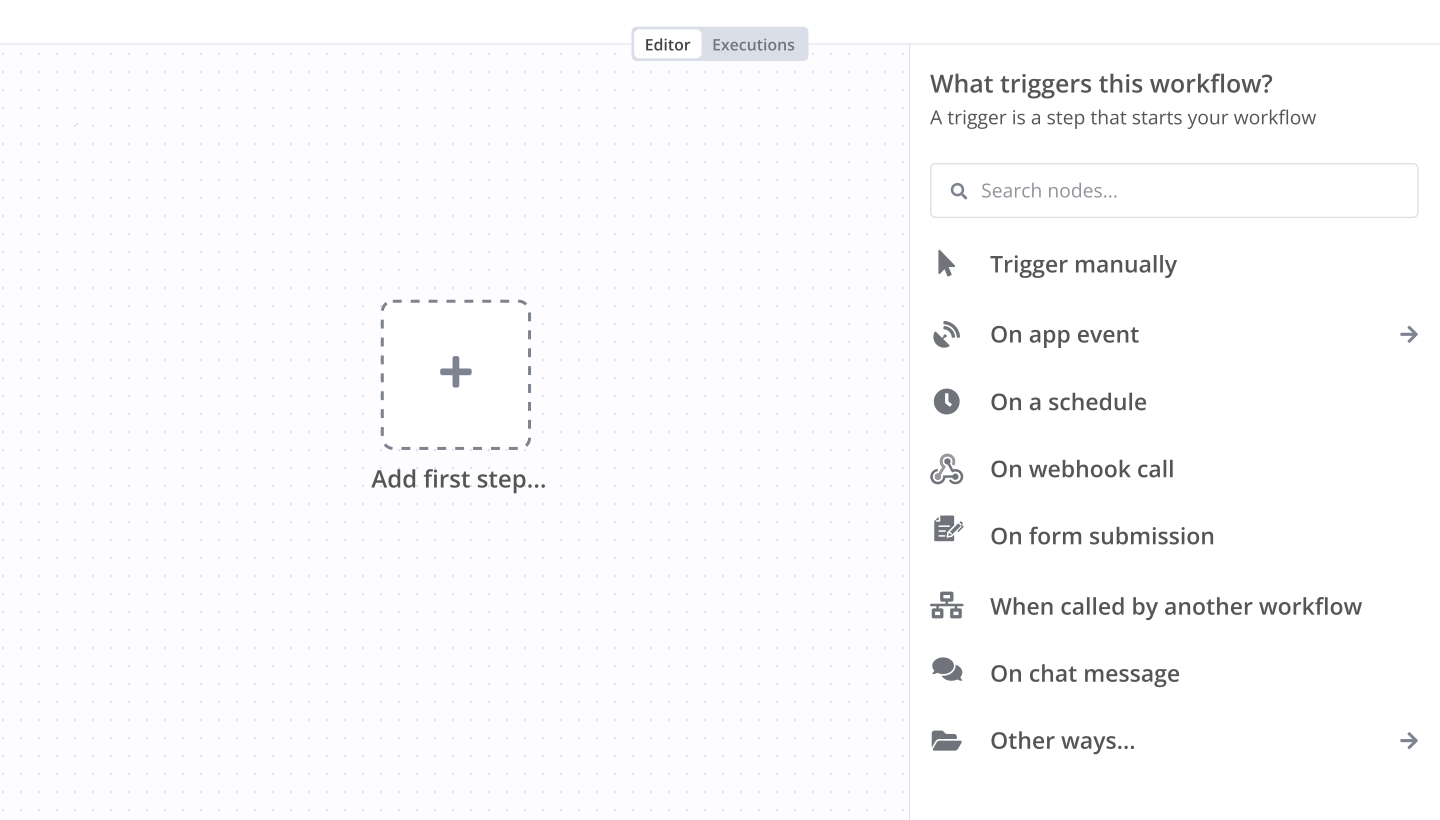
MongoDB and Wordpress integration: Create a new workflow and add the first step

Step 2: Add and configure MongoDB and Wordpress nodes

You can find MongoDB and Wordpress in the nodes panel. Drag them onto your workflow canvas, selecting their actions. Click each node, choose a credential, and authenticate to grant n8n access. Configure MongoDB and Wordpress nodes one by one: input data on the left, parameters in the middle, and output data on the right.

MongoDB and Wordpress integration: Add and configure MongoDB and Wordpress nodes

Step 3: Connect MongoDB and Wordpress

A connection establishes a link between MongoDB and Wordpress (or vice versa) to route data through the workflow. Data flows from the output of one node to the input of another. You can have single or multiple connections for each node.

MongoDB and Wordpress integration: Connect MongoDB and Wordpress

Step 4: Customize and extend your MongoDB and Wordpress integration

Use n8n's core nodes such as If, Split Out, Merge, and others to transform and manipulate data. Write custom JavaScript or Python in the Code node and run it as a step in your workflow. Connect MongoDB and Wordpress with any of n8n’s 1000+ integrations, and incorporate advanced AI logic into your workflows.

MongoDB and Wordpress integration: Customize and extend your MongoDB and Wordpress integration

Step 5: Test and activate your MongoDB and Wordpress workflow

Save and run the workflow to see if everything works as expected. Based on your configuration, data should flow from MongoDB to Wordpress or vice versa. Easily debug your workflow: you can check past executions to isolate and fix the mistake. Once you've tested everything, make sure to save your workflow and activate it.

MongoDB and Wordpress integration: Test and activate your MongoDB and Wordpress workflow

Content farming - : AI-powered blog automation for WordPress

==🔥 Upgrade to V4==
We’ve released Version 4 of our AI Powered Blog Automation workflow. We heard your complains and made a complete redesign built for serious content creators.

ChatGPT 5, Inbound Links, Verified Outbound Links,YOAST seo integration, Company profile, higher SEO ranking, banner images using companys mascot, FAQ sections and conclusions, 35% cost reduction,

📝 Read the New Articles published by Content Farming v4

🛒 View the updated and improved v4 workflow

👻 No technical experience ? use Ghost.Blog

Content Farming V2
AI Powered Blog Automation for WordPress

This workflow automatically generates and publishes 10 blog posts per day to a WordPress site. It collects tech-related news articles, filters and analyzes them for relevance, expands them with research, generates SEO-optimized long-form articles using AI, creates a matching image using Leonardo AI, and publishes them via the WordPress REST API. Every step is tracked and stored in MongoDB for reference and performance tracking.

You can see the demo results for the AI based articles here: Emp0 Articles

How it works

A scheduler runs daily to fetch the latest news from RSS feeds including BBC, TechCrunch, Wired, MIT Tech Review, HackerNoon, and others.
The RSS data is normalized and filtered to include only articles published within the past 24 hours.
Each article is passed through an OpenAI-powered classifier to check for relevance to predefined user topics like AI, robotics, or tech policy.
Relevant articles are then aggregated, researched, and summarized with supporting sources and citations.
An AI agent generates five long-tail SEO blog title ideas, ranks them by uniqueness and performance score, and selects the top one.
A blog outline is created including H1 and H2 headers, keyword targeting, content structure, and featured snippet optimization.
A full-length article (1000 to 1500 words) is generated based on the outline, with analogies, citations, examples, and keyword density maintained.
SEO metadata is produced including meta title, description, image alt text, slug, and a readability audit.
An AI-generated image is created based on the blog theme using Leonardo AI, enhanced for emotional storytelling and visual consistency.
The blog article, metadata, and image are uploaded to WordPress as a draft, the image is attached, Yoast SEO metadata is set, and the article is published.

All outputs including article versions, metadata, generation steps, and final blog URLs are stored in MongoDB to allow for future analytics and feedback.

Requirements

To run this project, you need accounts and API access for the following:

Tool Purpose Notes
OpenAI Used for blog classification, generation, summarization, SEO Around $0.20 per day, using GPT-4o-mini. Estimated monthly: $6
MongoDB Stores data flexibly including drafts, titles, metadata, logs Free tier on MongoDB Atlas offers 512 MB, enough for 64,000 articles
Leonardo AI Generates featured images for blog articles $9 for 3500 credits, $5 monthly top-up needed for 300 images
WordPress Final publishing platform via REST API Hosted on Hostinger for $15/year including domain

Setup Instructions

Import the provided JSON file into your n8n instance.
Configure these credentials in n8n:
OpenAI API key
MongoDB Atlas connection string
HTTP Header Auth for Leonardo AI
WordPress REST API credentials
Modify the classifier and prompt nodes to reflect your preferred content themes.
Adjust scheduler nodes if you want to change post frequency or publishing times.
Run the n8n instance continuously using Docker, PM2, or hosted automation platform.

Cost Estimate

Component Daily Usage Monthly Cost Estimate
OpenAI 10 posts per day ~$6
Leonardo AI 10 images per day (15 credits each) ~$14 (9 base + 5 top-up)
MongoDB Free up to 512 MB $0
WordPress Hosting and domain ~$1.25
Total ~$21/month

Observations and Learnings

This system can scale daily article publishing with zero manual effort. However, current limitations include inconsistent blog length and occasional coherence issues. To address this, I plan to build a feedback loop within the workflow:

An SEO Commentator Agent will assess keyword strength, structure, and discoverability.
An Editor-in-Chief Agent will review tone, clarity, and narrative structure.
Both agents will loop back suggestions to the content generator, improving each draft until it meets human-level standards.

The final goal is to consistently produce high-quality, readable, SEO-optimized content that is indistinguishable from human writing.

Nodes used in this workflow

Popular MongoDB and Wordpress workflows

+5

Content farming - : AI-powered blog automation for WordPress

==🔥 Upgrade to V4== We’ve released Version 4 of our AI Powered Blog Automation workflow. We heard your complains and made a complete redesign built for serious content creators. ChatGPT 5, Inbound Links, Verified Outbound Links,YOAST seo integration, Company profile, higher SEO ranking, banner images using companys mascot, FAQ sections and conclusions, 35% cost reduction, 📝 Read the New Articles published by Content Farming v4 🛒 View the updated and improved v4 workflow 👻 No technical experience ? use Ghost.Blog Content Farming V2 AI Powered Blog Automation for WordPress This workflow automatically generates and publishes 10 blog posts per day to a WordPress site. It collects tech-related news articles, filters and analyzes them for relevance, expands them with research, generates SEO-optimized long-form articles using AI, creates a matching image using Leonardo AI, and publishes them via the WordPress REST API. Every step is tracked and stored in MongoDB for reference and performance tracking. You can see the demo results for the AI based articles here: Emp0 Articles How it works A scheduler runs daily to fetch the latest news from RSS feeds including BBC, TechCrunch, Wired, MIT Tech Review, HackerNoon, and others. The RSS data is normalized and filtered to include only articles published within the past 24 hours. Each article is passed through an OpenAI-powered classifier to check for relevance to predefined user topics like AI, robotics, or tech policy. Relevant articles are then aggregated, researched, and summarized with supporting sources and citations. An AI agent generates five long-tail SEO blog title ideas, ranks them by uniqueness and performance score, and selects the top one. A blog outline is created including H1 and H2 headers, keyword targeting, content structure, and featured snippet optimization. A full-length article (1000 to 1500 words) is generated based on the outline, with analogies, citations, examples, and keyword density maintained. SEO metadata is produced including meta title, description, image alt text, slug, and a readability audit. An AI-generated image is created based on the blog theme using Leonardo AI, enhanced for emotional storytelling and visual consistency. The blog article, metadata, and image are uploaded to WordPress as a draft, the image is attached, Yoast SEO metadata is set, and the article is published. All outputs including article versions, metadata, generation steps, and final blog URLs are stored in MongoDB to allow for future analytics and feedback. Requirements To run this project, you need accounts and API access for the following: | Tool | Purpose | Notes | |--------------|------------------------------------------------------------------|-----------------------------------------------------------------------| | OpenAI | Used for blog classification, generation, summarization, SEO | Around $0.20 per day, using GPT-4o-mini. Estimated monthly: $6 | | MongoDB | Stores data flexibly including drafts, titles, metadata, logs | Free tier on MongoDB Atlas offers 512 MB, enough for 64,000 articles | | Leonardo AI | Generates featured images for blog articles | $9 for 3500 credits, $5 monthly top-up needed for 300 images | | WordPress | Final publishing platform via REST API | Hosted on Hostinger for $15/year including domain | Setup Instructions Import the provided JSON file into your n8n instance. Configure these credentials in n8n: OpenAI API key MongoDB Atlas connection string HTTP Header Auth for Leonardo AI WordPress REST API credentials Modify the classifier and prompt nodes to reflect your preferred content themes. Adjust scheduler nodes if you want to change post frequency or publishing times. Run the n8n instance continuously using Docker, PM2, or hosted automation platform. Cost Estimate | Component | Daily Usage | Monthly Cost Estimate | |---------------|------------------------------|------------------------| | OpenAI | 10 posts per day | ~$6 | | Leonardo AI | 10 images per day (15 credits each) | ~$14 (9 base + 5 top-up) | | MongoDB | Free up to 512 MB | $0 | | WordPress | Hosting and domain | ~$1.25 | | Total | | ~$21/month | Observations and Learnings This system can scale daily article publishing with zero manual effort. However, current limitations include inconsistent blog length and occasional coherence issues. To address this, I plan to build a feedback loop within the workflow: An SEO Commentator Agent will assess keyword strength, structure, and discoverability. An Editor-in-Chief Agent will review tone, clarity, and narrative structure. Both agents will loop back suggestions to the content generator, improving each draft until it meets human-level standards. The final goal is to consistently produce high-quality, readable, SEO-optimized content that is indistinguishable from human writing.
+13

Content Farming v4 - Blog Automation for Wordpress using ChatGPT 5 and Gemini

AI Powered Blog Automation Workflow for WordPress and Twitter - v4 Revolution > Watch the Youtube Tutorial video This is the most advanced AI-powered blog content generation and distribution workflow ever built for the n8n automation platform. Version 4 introduces groundbreaking improvements including GPT-5 model integration, 50-70% cost reduction, intelligent internal linking, automatic FAQ generation, and enterprise-grade content validation. It's designed for solo founders, creators, indie hackers, marketers, SEO consultants, or lean startup teams who want to dominate their niche with high-quality, search-optimized articles that drive traffic and conversions. > No technical experience ? use Ghost.Blog Running a blog is essential to drive traffic, build authority, and rank on Google, but it's time consuming and expensive to manage. This workflow turns your blog into a self-optimizing content engine that generates, enhances, validates, and publishes articles every day using a team of autonomous AI agents powered by the latest GPT-5 models. If you want to boost your site's visibility, improve your internal linking structure, and promote content across multiple channels like WordPress, Twitter, and Dev.to, this is the most powerful solution available. Important links ✨ V3 workflow on n8n - Previous version 📚 See articles generated with V4 - Live examples from this workflow 📊 Google Sheets Configuration Template - Copy and customize for your blog 🛒 V4 Available Now: Contact us for pricing and access 🔄 V3 Upgrade Path: Existing V3 customers get discounted V4 upgrade Before You Start To get the most out of this workflow, prepare the following: Copy the Google Sheets Template** - Make a copy here and fill in your: Content categories with WordPress IDs Brand customization data Brand customization data Prepare your WordPress site** with existing content for internal linking (the more posts, the better) Set up Yoast SEO plugin** (optional but recommended for maximum SEO integration) Know your audience** - Developers? Founders? Investors? Enterprises? How It Works Step 1**: Topic Discovery \+ Web Search \+ Vectorization Step 2**: Topic Generation with Advanced Semantic Clustering Step 3**: Article Intelligence + Keyword Extraction Step 4**: Content Generation (Enhanced Multi-Agent Loop with Memory) Step 5**: Blog Title Optimization with CTR Scoring Step 6**: Yoast SEO Metadata Generation Step 7**: AI Image Generation with Gemini (Gemini node/API) Step 8**: WordPress Draft Creation with Internal Links Step 9**: Multi-Platform Distribution (Twitter, Dev.to) Read the complete technical architecture and setup guide Google Sheets Configuration (NEW in V4) V4 introduces centralized configuration via Google Sheets, making it easy to manage multiple blogs and customize your content strategy without editing the workflow. 📊 Configuration Template Structure Make a copy of the template here The template contains 2 sheets: Sheet 1: category Define your content pillars and map them to WordPress categories: Sheet 2: data Customize your brand and workflow behavior: Sheet 3: rss feed List out websites you would like to use as reference Why Google Sheets? ✅ No workflow editing needed - Update categories and brand settings without touching n8n ✅ Multi-site management - One sheet per blog, easily switch between configurations ✅ Team collaboration - Share with your content team for easy updates ✅ Version control - Google Sheets tracks all changes automatically ✅ Centralized control - Manage all content pillars from one place Clone the Google Sheets Configuration Example See Technical Setup.md for complete Google Sheets integration instructions. What's New in V4? Revolutionary Upgrades from V3 GPT-5 Model Integration (MASSIVE Performance Boost) Version 4 leverages OpenAI's latest GPT-5 model family for unprecedented quality and efficiency: GPT-5-nano**: Ultra-fast reasoning for decision-making tasks GPT-5-mini**: Standard content generation with 3x speed improvement GPT-4.1-mini**: Title optimization and metadata GPT-4o**: Complex multi-step reasoning for content writing Impact: 40-50% faster execution, improved coherence, better SEO optimization 50-70% Cost Reduction on Images V3**: Leonardo AI ($0.10-0.15 per image) V4**: Gemini Flash 2.5 Nano Banana ($0.03 per image) Bonus**: Brand mascot (cat-themed) images for higher engagement and memorability Quality**: Consistent professional quality with improved WordPress rendering (no more broken/weird images) Savings: $300-500 per month for high-volume blogs Intelligent Internal Linking System The Game-Changer for SEO: V4 automatically fetches your existing WordPress posts and intelligently weaves internal links throughout your content: Fetches posts with Yoast SEO metadata (og_url, og_title) Content Writer Agent uses MongoDB Memory to track link usage Maximum 3 inbound links per article (configurable) Smart placement in relevant paragraphs Memory prevents duplicate link usage across sections Impact: Dramatically improved site structure, better crawlability, higher page authority distribution Automatic FAQ Schema Generation Every article includes a professionally styled FAQ section: 5 targeted questions** based on search intent Custom HTML/CSS accordion** with black background and lime green accents First FAQ item expanded by default Optimized for Google Featured Snippets Direct WordPress Custom HTML block compatibility Impact: 3-5x higher chance of featured snippet ranking, improved dwell time Advanced Link Validation System Zero broken links, guaranteed: New "check link status" MCP tool validates every URL before insertion Content Writer Agent instructed: "Test all the urls you want to add to the article is valid or not before writing. If it's not valid Replace it or Remove that link" Automatic fallback to alternative sources Explicit ban on placeholder URLs (example.com, placeholder.com) Impact: Perfect link hygiene, improved user experience, better SEO Dual Vector Database Architecture Optimized for performance and cost: V3**: Single collection for all data (expensive, slower) V4**: Separated architecture: news articles - Full metadata storage news chunks - Vectorized text for semantic search Deduplication with SHA256 content fingerprints Automatic cleanup operations Improved query performance (50% faster) Savings: 40-60% storage cost reduction Enhanced Agent System with Memory 9 Specialized AI Agents (upgraded from 3): Topic Generation Agent - Semantic clustering with GPT-5-mini Article Intelligence Agent - Entity extraction, fact gathering Task Definition Agent - Content structure planning Content Writer Agent (GPT-4o) - Section generation with MCP tools: Web Search (outbound links) Image Generator (Gemini Flash 2.5 Nano Banana) Chart Generator (QuickChart) Link Validator Think Tool (reasoning) Memory Tool (tracks inbound link usage) Quality Check Agent - SEO validation and scoring Blog Title Generator - CTR-optimized titles Metadata Generator - Yoast SEO integration Markdown to HTML Agent - Content conversion Image Prompt Agent - Featured image generation Memory System: MongoDB Chat Memory with 25-message context window ensures consistency across agent interactions Direct Yoast SEO Integration Automatic yoast_description and yoast_keyword injection WordPress REST API PUT requests to update meta fields Focus keyword optimization Meta description targeting Impact: Seamless SEO workflow, no manual Yoast configuration needed Brand Integration in Conclusions Every article includes your customized brand signature and call-to-action in the conclusion: Smarter Content Quality Rules Flesch Reading Ease**: 60+ (college reading level) Sentence length**: Under 20 words average Transition words**: 30% minimum Active voice**: Mandatory preference Paragraph length**: 3-5 sentences maximum Word count**: 1200 words (optimized from V3's 1500 for better engagement) Visual content**: Exactly 1 image + 1 table per article No back-to-back visuals**: Images/tables separated by text Enhanced Slug and Title Optimization Slug Generation: Must include main keyword Maximum 5 words Regex validated: ^[a-z0-9]+(?:-[a-z0-9]+)*$ Title Optimization: Preference for question format ("How to...", "What are...") Maximum 10 words Scored on 4 metrics: Emotional Impact (1-10) Clarity & Relevance (1-10) SEO Strength (1-10) Clickability (1-10) Highest average score wins What makes this flow unique? This isn't just automation. It's AI orchestration at scale. You get a full-scale, enterprise-grade content team simulated by multi-agent communication with persistent memory. Multi-Agent Architecture with Memory Unlike simple AI workflows that use a single prompt, V4 uses 9 specialized agents that collaborate through shared memory and JSON state: Task Manager** defines objectives and assigns sections Content Generator** (GPT-4o) equipped with 6 MCP tools Quality Control** validates SEO metrics, readability, and structure Memory System** ensures no duplicate links or repetitive content Each agent operates on specific content blocks, reducing token usage by 40% while improving output quality. MCP Tools for Professional Content The Content Writer Agent has access to enterprise-grade tools: Web Search Tool - Real-time internet search for factual support and outbound links Image Generation - Gemini Flash 2.5 Nano Banana (brand mascot cat images) Chart Generator - QuickChart for data visualization Table Generator - Structured HTML tables Link Validator - Real-time URL health checking Think Tool - Allows agents to reason before acting Memory Tool - Tracks inbound link usage to prevent duplicates Example Article Generated by V4 See the complete article structure with all V4 features in action: Revenue Potential & Monetization Use Cases This workflow can generate substantial revenue if deployed strategically. 💸 Monetization Strategies Affiliate Blog Empire** Generate 10-20 long-form articles daily optimized for affiliate products, SaaS tools, or service reviews. With intelligent internal linking, each new article strengthens your entire site's authority. Insert CTAs and affiliate links to Amazon, Gumroad, Impact, or commission-based platforms. Lead Generation Machine** Target high-intent SEO keywords (e.g., "best CRM for freelancers", "how to automate Instagram"). V4's FAQ schema increases featured snippet chances by 3-5x. Capture emails via lead forms and nurture through ConvertKit or Substack—all automated. Agency/Client Work** White-label this workflow for SEO clients. Charge $500-2000/month per client for automated content generation. Your costs: ~$150/month. Profit margin: 70-90%. Scale to 10 clients = $5k-20k MRR. Niche Authority Sites** Build topical authority sites in lucrative niches (fintech, healthtech, SaaS, Web3). V4's internal linking builds a content web that Google rewards. Monetize via programmatic ads, sponsored content, or exits ($30-50k per site). 📈 Expected Traffic Results Based on V3 real-world data and V4 improvements: Daily traffic increase**: 30-50 visitors/day (50% improvement over V3) Monthly cost**: ~$150 (50% reduction from V3's $250) Content output**: 10-15 SEO-rich posts/day Time to first 1k monthly visitors**: 2-3 months Featured snippet chances**: 3-5x higher with FAQ schema With V4's GPT-5 models, FAQ generation, internal linking, and link validation, expect higher engagement, lower bounce rate, better SERP visibility, and significantly improved conversion rates. Cost Comparison: V3 vs V4 V3 Monthly Costs OpenAI API (GPT-4): ~$100 Leonardo AI: ~$20 MongoDB Atlas: Free (M0) n8n hosting: ~$20 Total**: ~$140-150/month V4 Monthly Costs OpenAI API (GPT-5 family): ~$60-80 (40% reduction) Gemini Flash 2.5 Nano Banana: ~$10 (50% reduction) MongoDB Atlas: Free (M0) n8n hosting: ~$20 Total**: ~$90-110/month V4 Savings: $40-50/month (35% cost reduction) while producing higher quality content ROI: If generating 10 articles/day at market rate of $50/article = $15k/month value for $100/month cost Need Help or Customization? Need to customize this workflow for your niche? Or need help setting it up? We offer: Free Setup Support**: Email assistance for V4 purchasers Custom Integration**: Tailored modifications for your tech stack Enterprise Deployment**: Multi-site, white-label solutions Training & Consulting**: 1-on-1 workflow optimization sessions ⭐ Read Customer Reviews (V3 reviews - V4 reviews coming soon) ✍️ Write to us: [email protected] ?? Join AI + Automation Discord: https://discord.gg/qg3qVfFchV Join the community Other free n8n workflows GitHub repository Join AI + Automation Discord Official website Changelog: V3 to V4 Revolution What's Changed? ✅ Upgraded to GPT-5 - 40-50% cost reduction + 3x speed improvement + better reasoning across all agents ✅ Switched to Gemini Flash 2.5 Nano Banana for image generation - 50-70% cheaper than Leonardo AI ✅ Google Sheets category tracking - Centralized content pillar management for easier configuration across multiple sites ✅ Fixed weird and broken images inside blog posts - improved rendering and WordPress compatibility ✅ Brand mascot images (cat-themed) to make content more catchy and engaging ✅ Separated news vector database into news articles and news chunks collections to reduce storage size by 40-60% ✅ Auto-delete news chunks after article generation to keep storage costs minimal ✅ MongoDB chat history integration - seamless agent coordination and memory for tracking inbound link usage ✅ WordPress data fetching to automatically add intelligent inbound links (max 3 per article) ✅ Removed redundant content blocks - cleaner article structure and better readability ✅ Direct Yoast SEO field integration - sends yoast_description and yoast_keyword to WordPress via REST API ✅ Optimized quality check loops - reduced iterations to increase accuracy and decrease token costs ✅ Link validator tool - checks if links are broken before insertion, guaranteeing zero 404s ✅ Reduced scheduler nodes - fewer execution counts for cheaper costs on n8n Cloud (optimized for cost efficiency) V3 Limitations (All Solved in V4) ❌ No internal linking → weak site structure ❌ Expensive Leonardo AI → high image costs ❌ No FAQ sections → missed featured snippets ❌ Basic GPT-4 models → slower, more expensive ❌ No link validation → occasional broken links ❌ Single vector collection → high storage costs ❌ No memory system → inconsistent agent behavior ❌ Generic image prompts → lower engagement ❌ Broken/weird images → poor WordPress rendering ❌ Manual category management → hard to scale ❌ Redundant content blocks → bloated articles ❌ Too many scheduler nodes → expensive n8n Cloud costs Comparison: V2 vs V3 vs V4 | Feature | V2 (Free) | V3 ($29) | V4 (Available Now) | |---------|-----------|----------|------------------| | AI Models | GPT-4 | GPT-4, GPT-4o | GPT-5, GPT-4.1, GPT-4o | | Word Count | 600-800 | 1500 | 1200 (optimized) | | Images | None | Leonardo AI | Gemini Flash 2.5 (50% cheaper) | | Tables/Charts | None | Yes | Yes | | Outbound Links | Limited | Yes | Yes (validated) | | Internal Links | None | None | Yes (intelligent) | | FAQ Section | None | None | Yes (schema optimized) | | Link Validation | None | None | Yes | | Memory System | None | None | Yes | | Yoast Integration | None | Basic | Advanced | | Vector DB | None | Single collection | Dual collection | | Monthly Cost | $20 | $150 | ~$100 | | Articles/Day | 5-10 | 10-15 | 10-15 | | SEO Quality | Basic | Advanced | Enterprise | | Featured Snippets | Low chance | Medium chance | 3-5x higher | Technical Requirements n8n instance** (Cloud or self-hosted on Railway/Hostinger) For n8n Cloud, the standard plan ($20/month) is sufficient — V4 reduces scheduler nodes and execution frequency. OpenAI API** account with GPT-5 access MongoDB Atlas** account (free M0 tier sufficient to start) WordPress* site with REST API enabled with Yoast SEO plugin* (optional but recommended) Google account** (for Google Sheets categories) Twitter Developer** account (for Twitter distribution) OPTIONAL Dev.to** account (for cross-posting) OPTIONAL See Technical Setup.md for complete installation guide.
+11

AI blog automation: Publish hourly SEO articles to WordPress & Twitter v3

==🔥 Upgrade to V4== We’ve released Version 4 of our AI Powered Blog Automation workflow. We heard your complains and made a complete redesign built for serious content creators. ChatGPT 5, Inbound Links, Verified Outbound Links,YOAST seo integration, Company profile, higher SEO ranking, banner images using companys mascot, FAQ sections and conclusions, 35% cost reduction, 📝 Read the New Articles published by Content Farming v4 🛒 View the updated and improved v4 workflow 👻 No technical experience ? use Ghost.Blog AI Powered Blog Automation Workflow for Wordpress and Twitter - v3 Introduction This is a fully automated AI powered blog content generation and distribution workflow built for the n8n automation platform. It's designed for solo founders, creators, indie hackers, marketers, SEO consultants, or lean startup teams who run multiple projects and want to consistently publish high quality, search optimized articles without relying on a human marketing team. Buy Now for only $29 and get instant traffic to your blog / wordpress site Running a blog is essential to drive traffic, build authority, and rank on Google, but it’s time consuming and expensive to manage. This workflow turns your blog into a living, breathing content engine that generates, enhances, and publishes articles every day using a team of autonomous AI agents. If you want to boost your site’s visibility and promote it across multiple channels like WordPress, Twitter, and Dev.to, this workflow is for you. Checkout the articles generated with this workflow Before You Start To get the most out of this workflow, prepare the following: Define your content pillars** e.g., AI, business, automation, developer tools, healthtech, etc. List your RSS or news sources** like TechCrunch, Wired, CNN Tech, The Verge, etc. Know your audience** Who are you trying to attract? Developers? Founders? Investors? Enterprises? How It Works Step 1: Ingest Recent News via RSS + Vectorization Step 2: Topic Generation with Semantic Clustering Step 3: Research + Data Enrichment Step 4: Content Generation (3 Agent Loop) Step 5: Blog Title Optimization Step 6: Metadata Generation Step 7: Featured Image Generation Step 8: WordPress Draft Creation Step 9: Distribute to Twitter and Dev.to Read the complete technical architecture and cost structure What makes this flow unique ? This isn’t just automation. It’s AI workflow orchestration. You get a full scale, modular content team simulated by multi agent communication using the following architecture: 3-Agent System Agent 1: Task Manager** Defines objectives Assigns sections and goals Agent 2: Content Generator** Equipped with MCP plugins: Web Search Image Generator Graph/Chart Generator Section Optimizer Agent 3: Quality Control** Checks SEO metrics, flow, clarity, link strategy Gives detailed recommendations back to Agent 1 Each agent talks via shared JSON memory and only modifies content blocks relevant to their scope, reducing token usage and preserving structure. This modularity mimics how a marketing team operates. The agents operate in a looped chain of thought format using n8n loops and memory iterating until the article crosses an 80% quality threshold or max loop limit. MCP tools for visuals The article is generated in a loop involving: Internet search to generate outbound links (via MCP tool) Image generation (Leonardo or DALL·E via MCP) Chart/graph generation (via QuickChart ) Table generation (via AI agent and HTML blocks) Revenue Potential & Monetization Use Cases This workflow can generate revenue if deployed strategically. 💸 Monetization Strategies Affiliate Blog Engine** Populate your WordPress with long form articles optimized for affiliate products, SaaS tools, or service reviews. Insert call-to-actions and outbound links to affiliate platforms like Amazon, Gumroad, or Impact. Lead Magnet Factory** Target SEO keywords for high-intent leads in your niche (e.g., “best CRM for freelancers”). Capture emails via lead forms in every article and nurture via outbound marketing. Drive subscribers into your Substack or ConvertKit funnel—without writing anything manually. Agency/Client Work** Use the workflow to generate blog content for your SEO clients or sell content automation as a service. Deliver consistent value at scale while reducing human cost. 📈 Traffic Results (v2 Example) Daily traffic increase: ~10–30 visitors/day Monthly cost: ~$21 for OpenAI tokens Content output: 10 SEO-rich posts/day With the v3 upgrade, including charts, images, and outbound links, expect higher engagement, lower bounce rate, and better SERP visibility. Need Help or Customization? Need to customize this workflow for your niche? Or need some help setting it up? Reach out to us and we can help ⭐ Read Customer Reviews and how they scaled their blog traffic using this workflow ✍️ Write to us via Email: [email protected] 💬 Chat with us: Discord @jym.god Join the community Other free n8n workflows Github repository Discord Community Official website Changelog: From v2 to v3 I have previously posted a free version of this content generator. You can find FREE v2 on the n8n official website Here is the visual difference of the content length and visual components Problems with v2 RSS links broke when source URLs changed → HTTP 404 Target length 1500 words never met → hallucinations capped around 600–800 Content lacked media → zero images/tables/graphs, was very boring to read Low SEO score due to minimal outbound links and broken links No content repurposing → missed visibility on Dev.to, Twitter for backlinking and gaining traffic Single topic limitation → no support for multi pillar blogs v3 Upgrades Vector DB Integration Store full text and embeddings. Enables multiple content pillar filtering and prevents broken links. Making it customizable per topic 3-Agent AI Architecture Task Manager → Content Writer → QC Loop AI agents loop until threshold met Dynamic sections Visual generation tools built in See architecture image Modular Content Blocks Content is saved per section → you can modify one section without touching the rest. Saves tokens and cost. MCP Tools (included) Generate images. Find the tool here Generate graphs. Find the tool here Search web for factual support. Generate tables Improve outbound linking and reader engagement Improved Twitter Integration Media rich tweets Auto hashtag generation 10x better impressions than plain-text tweets Checkout our Automated Twitter Account Dev.to Posting with Signature Example Dev.to article ✍️ Written by Emp0.com 🧠 AI Workflows on GitHub: github.com/Jharilela 💬 Chat with us: Discord @jym.god `

Build your own MongoDB and Wordpress integration

Create custom MongoDB and Wordpress workflows by choosing triggers and actions. Nodes come with global operations and settings, as well as app-specific parameters that can be configured. You can also use the HTTP Request node to query data from any app or service with a REST API.

MongoDB supported actions

Create
Drop
List
Update
Aggregate
Aggregate documents
Delete
Delete documents
Find
Find documents
Find And Replace
Find and replace documents
Find And Update
Find and update documents
Insert
Insert documents
Update
Update documents

Wordpress supported actions

Create
Create a post
Get
Get a post
Get Many
Get many posts
Update
Update a post
Create
Create a page
Get
Get a page
Get Many
Get many pages
Update
Update a page
Create
Create a user
Get
Get a user
Get Many
Get many users
Update
Update a user
Use case

Save engineering resources

Reduce time spent on customer integrations, engineer faster POCs, keep your customer-specific functionality separate from product all without having to code.

Learn more
Use case

Automate lead management

Using too many marketing tools? n8n lets you orchestrate all your apps into one cohesive, automated workflow.

Learn more

FAQs

  • Can MongoDB connect with Wordpress?

  • Can I use MongoDB’s API with n8n?

  • Can I use Wordpress’s API with n8n?

  • Is n8n secure for integrating MongoDB and Wordpress?

  • How to get started with MongoDB and Wordpress integration in n8n.io?

Need help setting up your MongoDB and Wordpress integration?

Discover our latest community's recommendations and join the discussions about MongoDB and Wordpress integration.
João Textor

Looking to integrate MongoDB and Wordpress in your company?

Over 3000 companies switch to n8n every single week

Why use n8n to integrate MongoDB with Wordpress

Build complex workflows, really fast

Build complex workflows, really fast

Handle branching, merging and iteration easily.
Pause your workflow to wait for external events.

Code when you need it, UI when you don't

Simple debugging

Your data is displayed alongside your settings, making edge cases easy to track down.

Use templates to get started fast

Use 1000+ workflow templates available from our core team and our community.

Reuse your work

Copy and paste, easily import and export workflows.

Implement complex processes faster with n8n

red iconyellow iconred iconyellow icon