Back to Integrations
integrationNocoDB node
integrationOpenAI node

NocoDB and OpenAI integration

Save yourself the work of writing custom integrations for NocoDB and OpenAI and use n8n instead. Build adaptable and scalable Data & Storage, AI, and Langchain workflows that work with your technology stack. All within a building experience you will love.

How to connect NocoDB and OpenAI

  • Step 1: Create a new workflow
  • Step 2: Add and configure nodes
  • Step 3: Connect
  • Step 4: Customize and extend your integration
  • Step 5: Test and activate your workflow

Step 1: Create a new workflow and add the first step

In n8n, click the "Add workflow" button in the Workflows tab to create a new workflow. Add the starting point – a trigger on when your workflow should run: an app event, a schedule, a webhook call, another workflow, an AI chat, or a manual trigger. Sometimes, the HTTP Request node might already serve as your starting point.
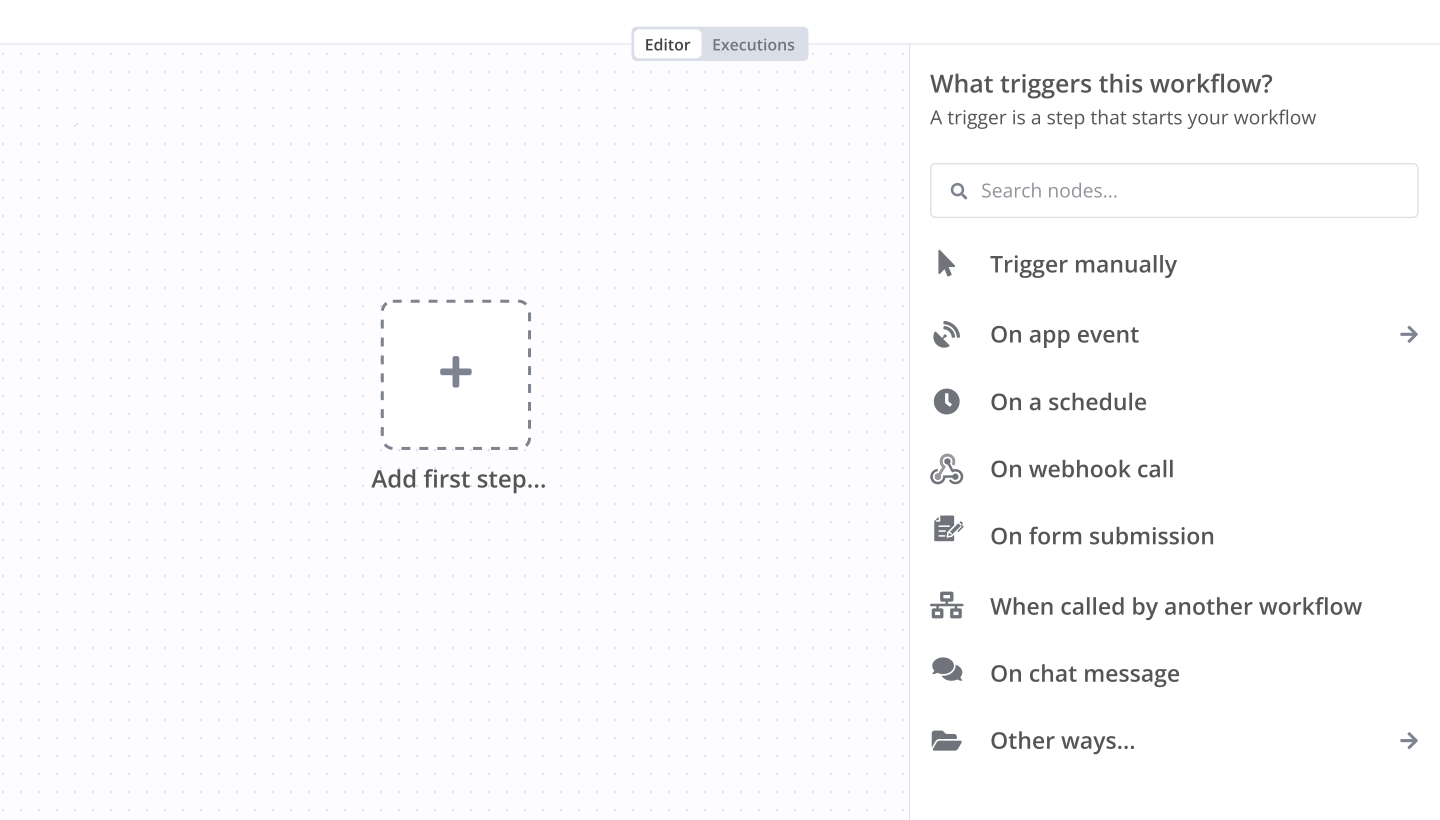
NocoDB and OpenAI integration: Create a new workflow and add the first step

Step 2: Add and configure NocoDB and OpenAI nodes

You can find NocoDB and OpenAI in the nodes panel. Drag them onto your workflow canvas, selecting their actions. Click each node, choose a credential, and authenticate to grant n8n access. Configure NocoDB and OpenAI nodes one by one: input data on the left, parameters in the middle, and output data on the right.

NocoDB and OpenAI integration: Add and configure NocoDB and OpenAI nodes

Step 3: Connect NocoDB and OpenAI

A connection establishes a link between NocoDB and OpenAI (or vice versa) to route data through the workflow. Data flows from the output of one node to the input of another. You can have single or multiple connections for each node.

NocoDB and OpenAI integration: Connect NocoDB and OpenAI

Step 4: Customize and extend your NocoDB and OpenAI integration

Use n8n's core nodes such as If, Split Out, Merge, and others to transform and manipulate data. Write custom JavaScript or Python in the Code node and run it as a step in your workflow. Connect NocoDB and OpenAI with any of n8n’s 1000+ integrations, and incorporate advanced AI logic into your workflows.

NocoDB and OpenAI integration: Customize and extend your NocoDB and OpenAI integration

Step 5: Test and activate your NocoDB and OpenAI workflow

Save and run the workflow to see if everything works as expected. Based on your configuration, data should flow from NocoDB to OpenAI or vice versa. Easily debug your workflow: you can check past executions to isolate and fix the mistake. Once you've tested everything, make sure to save your workflow and activate it.

NocoDB and OpenAI integration: Test and activate your NocoDB and OpenAI workflow

Create LinkedIn contributions with AI and notify users on Slack

This workflow automates the process of gathering LinkedIn advice articles, extracting their content, and generating unique contributions for each article using an AI model. The contributions are then posted to a Slack channel and a NocoDB database for record-keeping. The workflow is triggered weekly to ensure new articles are continuously collected and responded to.

Who is this for?
This workflow is designed for professionals, marketers, and content creators looking to boost their LinkedIn presence by regularly engaging with LinkedIn advice articles. It’s especially useful for those who want to be seen as a "thought leader" or "top voice" in their niche by contributing relevant and unique advice to trending topics.

What problem is this workflow solving?
Manually searching for relevant LinkedIn articles, reading through them, and crafting thoughtful contributions can be time-consuming. This workflow solves that by automating the process of finding new articles, extracting key content, and generating AI-powered contributions. It helps users stay consistently active on LinkedIn, contributing value to trending discussions.

What this workflow does
Triggers Weekly: The workflow is set to run every Monday at 8:00 AM.
Search Google for LinkedIn Advice Articles: Uses a predefined Google search URL to find the latest LinkedIn advice articles based on the user's area of expertise.
Extract LinkedIn Article Links: A code node extracts all LinkedIn advice article links from the search results.
Retrieve Article Content: For each article link, the workflow retrieves the HTML content and extracts the article title, topics, and existing contributions.
Generate AI-Powered Contributions: The workflow sends the extracted article content to an AI model, which generates unique, helpful advice for each topic within the article.
Post to Slack & NocoDB: The AI-generated contributions, along with the article links, are posted to a designated Slack channel and stored in a NocoDB database for future reference.

Setup
Google Search URL: Update the Google search URL with the relevant LinkedIn advice query for your field (e.g., "site:linkedin.com/advice 'marketing automation'").
Slack Integration: Connect your Slack account and specify the Slack channel where you want the contributions to be posted.
NocoDB Integration: Set up your NocoDB project to store the generated contributions along with the article titles and links.

How to customize this workflow
Change Search Terms**: Modify the Google search URL to focus on a different LinkedIn topic or expertise area.
Adjust Trigger Frequency**: The workflow is set to run weekly, but you can adjust the frequency by changing the schedule trigger.
Enhance Contribution Quality**: Customize the AI model's prompt to generate contributions that align with your brand voice or content strategy.

Workflow Summary
This workflow helps users maintain a consistent presence on LinkedIn by automating the discovery of new advice articles and generating unique contributions using AI. It is ideal for professionals who want to engage with LinkedIn content regularly without spending too much time manually searching and drafting responses.

Nodes used in this workflow

Popular NocoDB and OpenAI workflows

+3

Auto-Generate & Approve Social Media Posts from RSS Feeds with OpenAI & Telegram

Overview This workflow automates the process of converting RSS feed articles into ready-to-publish social media posts using OpenAI, NocoDB, and Telegram. It's ideal for content teams, marketing managers, or news portals seeking to automate content curation while maintaining control through a human approval system. Features RSS Feed Monitoring Polls a specified RSS feed every 20 minutes. Detects new articles automatically. AI-Powered Content Processing Summarizes the full article using OpenAI's Assistant API. Creates an image prompt based on the article summary. Generates a platform-specific post for Facebook and LinkedIn using AI. Image Generation Leverages OpenAI's image model to generate a relevant image from the prompt. Retrieves and stores the featured image from the original article (via custom code node). Post Management with NocoDB Stores all content in NocoDB including: Article URL AI-generated summary Image prompt Post content per platform Generated image URL Post status (Pending, Approved, Declined) Human Approval via Telegram Sends post preview to a Telegram group or channel with inline buttons: ✅ Approve ❌ Decline On approval: Posts to Facebook, LinkedIn, and optionally Twitter. On rejection: Marks the NocoDB record as "Declined". Conditional Twitter (X) Posting Asks user whether to post with or without a link. Posts accordingly based on user’s Telegram response. No-Code Backend NocoDB acts as a lightweight CMS to manage, edit, and review AI-generated content before publishing. Setup Instructions Clone the workflow in your n8n instance. Configure the following credentials under Credentials > New: OpenAI API Key Facebook Graph API LinkedIn Access Token Twitter (X) OAuth credentials Telegram Bot Token and Chat ID NocoDB API Token and Base URL Set the RSS feed URL in the trigger node to your preferred news source. Adjust the NocoDB API node with your table and field names (see below). Deploy the workflow on an interval trigger (20-minute polling recommended). NocoDB Database Structure Column Name Description url Original article URL summary AI-generated summary image_prompt Prompt used for generating image image_url Final image URL (from OpenAI) post_content Formatted social media post platform Social platform (Facebook, LinkedIn, etc.) status Current status (Pending, Approved, Declined) date_created Date article was fetched Requirements An active n8n instance (cloud or self-hosted). API credentials for: OpenAI Telegram Bot Facebook Graph API LinkedIn Developer App Twitter/X Developer App NocoDB (self-hosted or cloud) A Telegram chat (group or user) where the bot is added. Customization Guidance Add more platforms: Extend the logic to other platforms like Instagram, Threads, or Mastodon. Customize AI tone: Adjust the prompt to OpenAI for a specific writing style (e.g., formal, casual, humorous). Adjust scheduling: Modify interval time or RSS feed frequency as needed. Add post delay: Schedule posts using a delay node to spread them over time. Use Cases Auto-publish summarized news articles to multiple social platforms. Reduce effort for social teams by automating draft creation and media. Maintain editorial control using the Telegram approval step. Repurpose blog or article content into engaging posts with minimal effort. Integrations Used OpenAI (Assistants & DALL·E Image Generation) Telegram Bot (Inline approval workflow) Facebook Graph API (Post publishing) LinkedIn API (Company or personal posts) Twitter/X API (Optional conditional post publishing) RSS Feed Reader (Article fetching) NocoDB (Content repository and status manager)

AI-Powered Telegram Trivia Bot with Auto Question Generation & User Management

Complete Telegram Trivia Bot with AI Question Generation Build a fully-featured Telegram trivia bot that automatically generates fresh questions daily using OpenAI and tracks user progress with NocoDB. Perfect for communities, education, or entertainment! Get Started with n8n now! ✨ Key Features 🤖 AI Question Generation: Automatically creates 40+ new trivia questions daily across 8 categories 📊 Smart User Management: Tracks scores, prevents question repeats, maintains leaderboards 🎮 Game Mechanics: Star-based difficulty scoring, answer history, progress tracking 🏆 Competitive Elements: Real-time leaderboards with emoji rankings and user positioning 🛡️ Robust Architecture: Error handling, state management, and data validation 🚀 Perfect For Community Engagement**: Keep Telegram groups active with daily trivia challenges Educational Content**: Create learning experiences with categorized questions Business Applications**: Employee training, customer engagement, lead generation Personal Projects**: Learn n8n automation while building something fun 📱 Supported Commands /start - Welcome new users with setup instructions /question - Get personalized trivia questions (never repeats correctly answered ones) /score - View current points and statistics /leaderboard - See top 10 players with rankings /stats - Detailed accuracy and performance metrics /help - Complete command reference 🔧 How It Works User Journey: User sends /question command to bot System checks their answer history to avoid repeats Displays fresh question with multiple choice options Processes answer, updates score based on difficulty stars Saves complete answer history for future filtering AI Content Pipeline: Daily scheduler triggers question generation OpenAI creates 5 questions per category (8 categories total) Questions automatically saved to NocoDB with difficulty ratings Content includes explanations and proper formatting 🛠️ Set Up Steps Prerequisites: n8n instance (cloud or self-hosted) NocoDB database (free tier works) OpenAI API key (Not required if you want to add questions yourself) Telegram bot token Database Setup: Create 3 NocoDB tables with the exact field specifications provided in the sticky notes. The workflow includes complete schema documentation. Configuration Time: ~15 minutes for database setup + API keys Detailed Setup Instructions: All setup steps, database schemas, and configuration details are documented in the workflow's sticky notes for easy implementation. 📈 Advanced Features Question History Tracking**: Users never see correctly answered questions again Difficulty-Based Scoring**: 1-5 star rating system with corresponding points Category Management**: 8 different trivia categories for variety State Management**: Proper game flow with idle/waiting states Error Handling**: Graceful fallbacks for all edge cases Scalable Architecture**: Supports unlimited concurrent users 🎯 Business Applications Lead Generation**: Capture user data through engaging trivia Employee Training**: Create custom questions for onboarding Customer Engagement**: Keep users active in your Telegram community Educational Tools**: Subject-specific learning with progress tracking Event Activation**: Conferences, workshops, or team building 💡 Customization Options Modify question categories for your niche Adjust scoring systems and difficulty levels Add custom commands and features Integrate with other platforms or APIs Create specialized question sets 🔗 Get Started Ready to build your own AI-powered trivia bot? Start with n8n and follow the comprehensive setup guide included in this workflow template. Next Steps: Import this workflow template Follow the database setup instructions in sticky notes Configure your API credentials Test with sample questions Launch your trivia bot! Turn your friend group into trivia champions with AI-generated questions that spark friendly competition!

Collect LinkedIn Profiles with AI Processing using SerpAPI, OpenAI, and NocoDB

What problem does this solve? It fetches LinkedIn profiles for a multitude of purposes based on a keyword and location via Google search and stores them in an Excel file for download and in a NocoDB database. It tries to avoid using costly services and should be n8n beginner friendly. It uses the serpapi.com to avoid being blocked by Google Search and to process the data in an easier way. What does it do? Based on criteria input, it searches LinkedIn profiles It discards unnecessary data and turns the follower count into a real number The output is provided as an Excel table for download and in a NocoDB database How does it do it? Based on criteria input, it uses serpAPI.com to conduct Google search of the respective LinkedI profiles With OpenAI.com the name of the respective company is being added With OpenAI.com the follower number e.g., 300+ is turned into a real number: 300 All unnecessary metadata is being discarded As an output an Excel file is being created The output is stored in a nocodb.com table Step-by-step instruction Import the Workflow: Copy the workflow JSON from the "Template Code" section below. Import it into n8n via "Import from File" or "Import from URL". Set up a free account at serpapi.com and get API credentials to enable good Google search results Set up an API account at openai.com and get API key Set up a nocodb.com account (or self-host) and get the API credentials Create the credentials for serpapi.com, opemnai.com and nocodb.com in n8n. Set up a table in NocoDB with the fields indicated in the note above the NocoDB node Follow the instructions as detailed in the notes above individual nodes When the workflow is finished, open the Excel node and click download if you need the Excel file

AI Sales Agent — Fully Automated Email Handling & Lead Scoring System

🤖 AI Sales Agent — Fully Automated Email Handling & Lead Scoring System Automate lead outreach, analyze replies with AI, and keep your CRM always in sync — hands-free. This workflow acts as a 24/7 intelligent sales assistant that not only sends personalized cold emails but also reads and interprets replies, updates your CRM, and even writes contextual responses — just like a real sales rep would. Ideal for founders, growth teams, and agencies who want to automate outreach and follow-ups without losing the human touch. 🧩 What This Workflow Does 🔹 1. Smart AI Email Analysis Every incoming email is parsed and sent to GPT-4o for structured classification: Detects unsubscribe requests, automated replies, or manual responses Extracts intent, sentiment, urgency, and key points Determines the next best action — follow-up, escalate, or close 🔹 2. Personalized AI Replies When appropriate, the workflow automatically drafts replies that: Match the sender’s tone and intent Address objections using feel-felt-found logic Suggest the most relevant product or resource Sign off naturally (e.g. “Sofia from Tech Powered Growth”) 🔹 3. Lead Scoring & CRM Sync (NocoDB) Leads are continuously enriched and scored based on activity: +5 points for interested replies, +2 for clicks, –10 for unsubscribes Status automatically transitions between cold → warm → hot Daily maintenance updates decay inactive leads and schedule re-engagement 🔹 4. Engagement Tracking & Insights The workflow tracks opens, clicks, bounces, spam, and unsubscribes from Brevo (Sendinblue), updating CRM records instantly. Each day, it generates a performance report with lead distribution, score changes, and actionable recommendations. ⚙️ Integrations Used OpenAI GPT-4o-mini** — intent classification & reply generation Brevo (Sendinblue)** — email sending & webhook event tracking Gmail** — real-time incoming replies & outbound responses NocoDB** — lead management, scoring, and analytics n8n Code Nodes** — smart logic for scoring, decay, and decision flow 🚀 Key Benefits ✅ Save hours of manual email triage and follow-ups 💬 Maintain human-sounding conversations with prospects 📊 Keep lead data accurate and always up-to-date ⚡ Automatically nurture, score, and re-engage leads 📈 Get daily actionable analytics for your sales pipeline 🛠️ Setup Instructions Connect your NocoDB, Brevo, Gmail, and OpenAI credentials Adjust your NocoDB table structure or use the sample schema provided Set your sender details in the “Send Initial Outreach Email” node Customize the AI response prompt with your brand tone or offer Turn on the triggers — and watch your AI sales assistant go to work 💡 Ideal For Solo founders automating outreach B2B agencies handling multiple clients Growth engineers and sales ops teams SaaS companies with inbound or outbound funnels 🧠 Pro Tip Pair this workflow with your lead scraping or enrichment flow to create a fully autonomous sales system — from discovery to closed deal.

Automate Lead Generation with Apollo, AI Scoring and Brevo Email Outreach

AI Scoring, Personalized Email Creation and Outreach Overview This comprehensive automation flow helps you scale your outreach to potential customers through intelligent personalized email campaigns. The system combines web scraping, AI-powered lead scoring, and automated email sequences to maximize your conversion rates. Key Features Intelligent Website Analysis** with automated scraping AI-Powered Lead Scoring** for prioritization Personalized Email Generation** using AI Automated Email Outreach** with tracking Real-time Event Monitoring** via Brevo webhooks Centralized Data Management** with NocoDB System Architecture The workflow integrates multiple platforms to create a seamless lead generation pipeline: NocoDB** - Central database and CRM Crawl4AI** - Website content analysis OpenAI** - Lead scoring and email personalization Brevo** - Email delivery and tracking Setup Requirements Prerequisites Before starting, ensure you have accounts for the following services: NocoDB (Database & CRM) Apify (Web scraping platform) OpenAI (AI processing) Brevo (Email delivery service) > 💡 Pro Tip: For advanced users, consider self-hosting NocoDB and Crawl4AI to significantly reduce operational costs. Step-by-Step Setup NocoDB Database Configuration Create Your NocoDB Account Sign up at nocodb.com Create a new workspace Set up your first base (database) Database Schema Setup Create a new table with the following field structure: | Field Name | Field Type | Configuration | |------------|------------|---------------| | first_name | Single Line Text | - | | last_name | Single Line Text | - | | email | Email | - | | headline | Single Line Text | - | | linkedin_url | URL | - | | industry | Single Line Text | - | | organization_name | Single Line Text | - | | organization_website | URL | - | | organization_size | Number | - | | organization_linkedin_url | URL | - | | organization_facebook_url | URL | - | | market_cap | Single Line Text | - | | job_title | Single Line Text | - | | country | Single Line Text | - | | city | Single Line Text | - | | lead_status | Single Select | Options: entered(make it default!), processed, email_created, contacted, trash, failed_to_process, opened_email, warm | Default Value: entered | website_summary | Long Text | - | | score | Number | Default: 0 | | organization_description | Long Text | - | | primary_phone | Phone Number | - | | keywords | Single Line Text | - | | email_subject | Single Line Text | - | | email_body | Long Text | - | | email_opened_times | Number | Default: 0 | | personal_email | Single Line Text | - | External Service Setup Apify Configuration Create account at apify.com Navigate to Settings → API tokens Generate new API token Save token securely for automation setup OpenAI API Setup Visit platform.openai.com Go to API Keys section Create new secret key Store API key securely Ensure billing is configured for API usage Brevo Email Service Sign up at brevo.com Complete account verification Navigate to SMTP & API settings Generate API key for integration Configure sender authentication (SPF/DKIM) Workflow Process Phase 1: Lead Discovery & Data Collection Data Import - Populate NocoDB with lead information Status Update - Mark leads as entered Phase 2: Website Analysis & Lead Scoring Website Scraping - Analyze company websites using Crawl4AI Content Processing - Extract key business information AI Scoring - Evaluate lead quality using OpenAI Database Update - Store analysis results and scores Phase 3: Email Personalization & Outreach Content Generation - Create personalized email content Email Preparation - Format messages for delivery Automated Sending - Deploy via Brevo Status Tracking - Monitor delivery and engagement Phase 4: Performance Monitoring Webhook Processing - Capture Brevo email events Engagement Tracking - Update open/click metrics Lead Qualification - Adjust lead status based on engagement Pipeline Management - Maintain lead progression Lead Status Workflow entered → processed → email_created → contacted → opened_email → warm ↓ failed_to_process / trash (for low-quality leads) Status Definitions entered**: Initial lead data captured processed**: Website analyzed and scored email_created**: Personalized email generated contacted**: Email successfully sent opened_email**: Recipient opened the email warm**: High engagement, ready for follow-up failed_to_process**: Technical issues during processing trash**: Low-quality lead, removed from active pipeline Best Practices Data Quality Regularly clean and deduplicate your lead database Monitor lead scores to refine your targeting criteria Archive or remove inactive leads to maintain performance Email Deliverability Warm up your sending domain before high-volume campaigns Monitor bounce rates and adjust list quality Implement proper SPF, DKIM, and DMARC records Compliance Ensure GDPR/CAN-SPAM compliance in all communications Provide clear unsubscribe mechanisms Respect recipient preferences and opt-outs Performance Optimization A/B test email subject lines and content Analyze open rates and adjust sending times Segment leads based on engagement levels for targeted follow-up Next Steps Once your setup is complete, you'll have a powerful, automated lead generation system that can: Process hundreds of leads simultaneously Provide intelligent lead prioritization Generate personalized outreach at scale Track and optimize campaign performance Ready to transform your lead generation process? Start with the NocoDB setup and work through each integration step by step.
+3

Create LinkedIn Contributions with AI and Notify Users On Slack

This workflow automates the process of gathering LinkedIn advice articles, extracting their content, and generating unique contributions for each article using an AI model. The contributions are then posted to a Slack channel and a NocoDB database for record-keeping. The workflow is triggered weekly to ensure new articles are continuously collected and responded to. Who is this for? This workflow is designed for professionals, marketers, and content creators looking to boost their LinkedIn presence by regularly engaging with LinkedIn advice articles. It’s especially useful for those who want to be seen as a "thought leader" or "top voice" in their niche by contributing relevant and unique advice to trending topics. What problem is this workflow solving? Manually searching for relevant LinkedIn articles, reading through them, and crafting thoughtful contributions can be time-consuming. This workflow solves that by automating the process of finding new articles, extracting key content, and generating AI-powered contributions. It helps users stay consistently active on LinkedIn, contributing value to trending discussions. What this workflow does Triggers Weekly: The workflow is set to run every Monday at 8:00 AM. Search Google for LinkedIn Advice Articles: Uses a predefined Google search URL to find the latest LinkedIn advice articles based on the user's area of expertise. Extract LinkedIn Article Links: A code node extracts all LinkedIn advice article links from the search results. Retrieve Article Content: For each article link, the workflow retrieves the HTML content and extracts the article title, topics, and existing contributions. Generate AI-Powered Contributions: The workflow sends the extracted article content to an AI model, which generates unique, helpful advice for each topic within the article. Post to Slack & NocoDB: The AI-generated contributions, along with the article links, are posted to a designated Slack channel and stored in a NocoDB database for future reference. Setup Google Search URL: Update the Google search URL with the relevant LinkedIn advice query for your field (e.g., "site:linkedin.com/advice 'marketing automation'"). Slack Integration: Connect your Slack account and specify the Slack channel where you want the contributions to be posted. NocoDB Integration: Set up your NocoDB project to store the generated contributions along with the article titles and links. How to customize this workflow Change Search Terms**: Modify the Google search URL to focus on a different LinkedIn topic or expertise area. Adjust Trigger Frequency**: The workflow is set to run weekly, but you can adjust the frequency by changing the schedule trigger. Enhance Contribution Quality**: Customize the AI model's prompt to generate contributions that align with your brand voice or content strategy. Workflow Summary This workflow helps users maintain a consistent presence on LinkedIn by automating the discovery of new advice articles and generating unique contributions using AI. It is ideal for professionals who want to engage with LinkedIn content regularly without spending too much time manually searching and drafting responses.

Build your own NocoDB and OpenAI integration

Create custom NocoDB and OpenAI workflows by choosing triggers and actions. Nodes come with global operations and settings, as well as app-specific parameters that can be configured. You can also use the HTTP Request node to query data from any app or service with a REST API.

NocoDB supported actions

Create
Create a row
Delete
Delete a row
Get
Retrieve a row
Get Many
Retrieve many rows
Update
Update a row

OpenAI supported actions

Message a Model
Generate a model response with GPT 3, 4, 5, etc. using Responses API
Classify Text for Violations
Check whether content complies with usage policies
Analyze Image
Take in images and answer questions about them
Generate an Image
Creates an image from a text prompt
Edit Image
Edit an image
Generate Audio
Creates audio from a text prompt
Transcribe a Recording
Transcribes audio into text
Translate a Recording
Translates audio into text in English
Delete a File
Delete a file from the server
List Files
Returns a list of files that belong to the user's organization
Upload a File
Upload a file that can be used across various endpoints
Create
Create a conversation
Get
Get a conversation
Remove
Remove a conversation
Update
Update a conversation
Generate
Creates a video from a text prompt

NocoDB and OpenAI integration details

FAQs

  • Can NocoDB connect with OpenAI?

  • Can I use NocoDB’s API with n8n?

  • Can I use OpenAI’s API with n8n?

  • Is n8n secure for integrating NocoDB and OpenAI?

  • How to get started with NocoDB and OpenAI integration in n8n.io?

Need help setting up your NocoDB and OpenAI integration?

Discover our latest community's recommendations and join the discussions about NocoDB and OpenAI integration.
Artem
Alex Kim
sérgio eduardo floresta filho
Andrew adawdad
JOduMonT

Looking to integrate NocoDB and OpenAI in your company?

Over 3000 companies switch to n8n every single week

Why use n8n to integrate NocoDB with OpenAI

Build complex workflows, really fast

Build complex workflows, really fast

Handle branching, merging and iteration easily.
Pause your workflow to wait for external events.

Code when you need it, UI when you don't

Simple debugging

Your data is displayed alongside your settings, making edge cases easy to track down.

Use templates to get started fast

Use 1000+ workflow templates available from our core team and our community.

Reuse your work

Copy and paste, easily import and export workflows.

Implement complex processes faster with n8n

red iconyellow iconred iconyellow icon