Back to Integrations
integrationOpenAI node
integrationOpenWeatherMap node

OpenAI and OpenWeatherMap integration

Save yourself the work of writing custom integrations for OpenAI and OpenWeatherMap and use n8n instead. Build adaptable and scalable AI, Langchain, Miscellaneous, and Utility workflows that work with your technology stack. All within a building experience you will love.

How to connect OpenAI and OpenWeatherMap

  • Step 1: Create a new workflow
  • Step 2: Add and configure nodes
  • Step 3: Connect
  • Step 4: Customize and extend your integration
  • Step 5: Test and activate your workflow

Step 1: Create a new workflow and add the first step

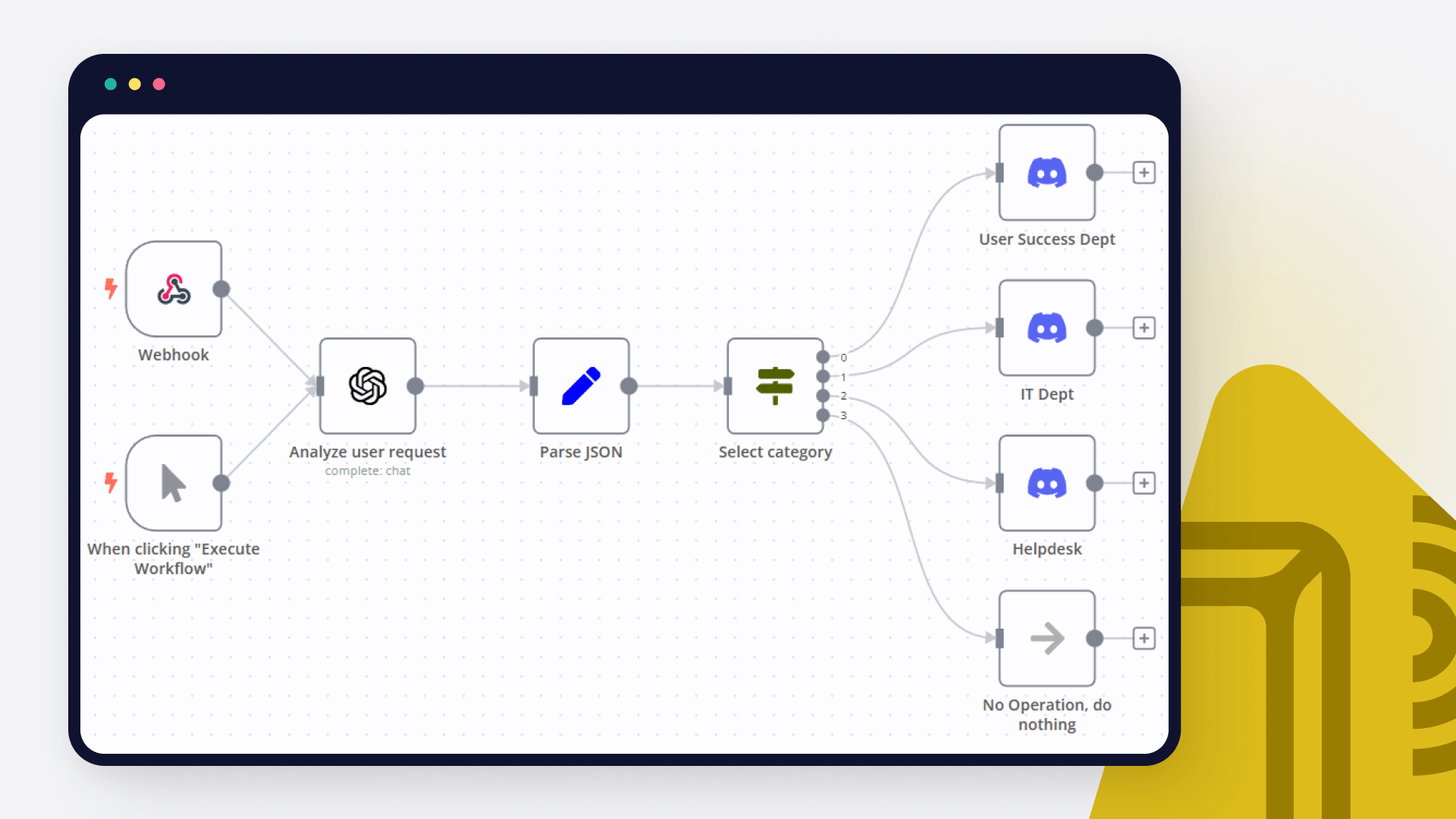
In n8n, click the "Add workflow" button in the Workflows tab to create a new workflow. Add the starting point – a trigger on when your workflow should run: an app event, a schedule, a webhook call, another workflow, an AI chat, or a manual trigger. Sometimes, the HTTP Request node might already serve as your starting point.
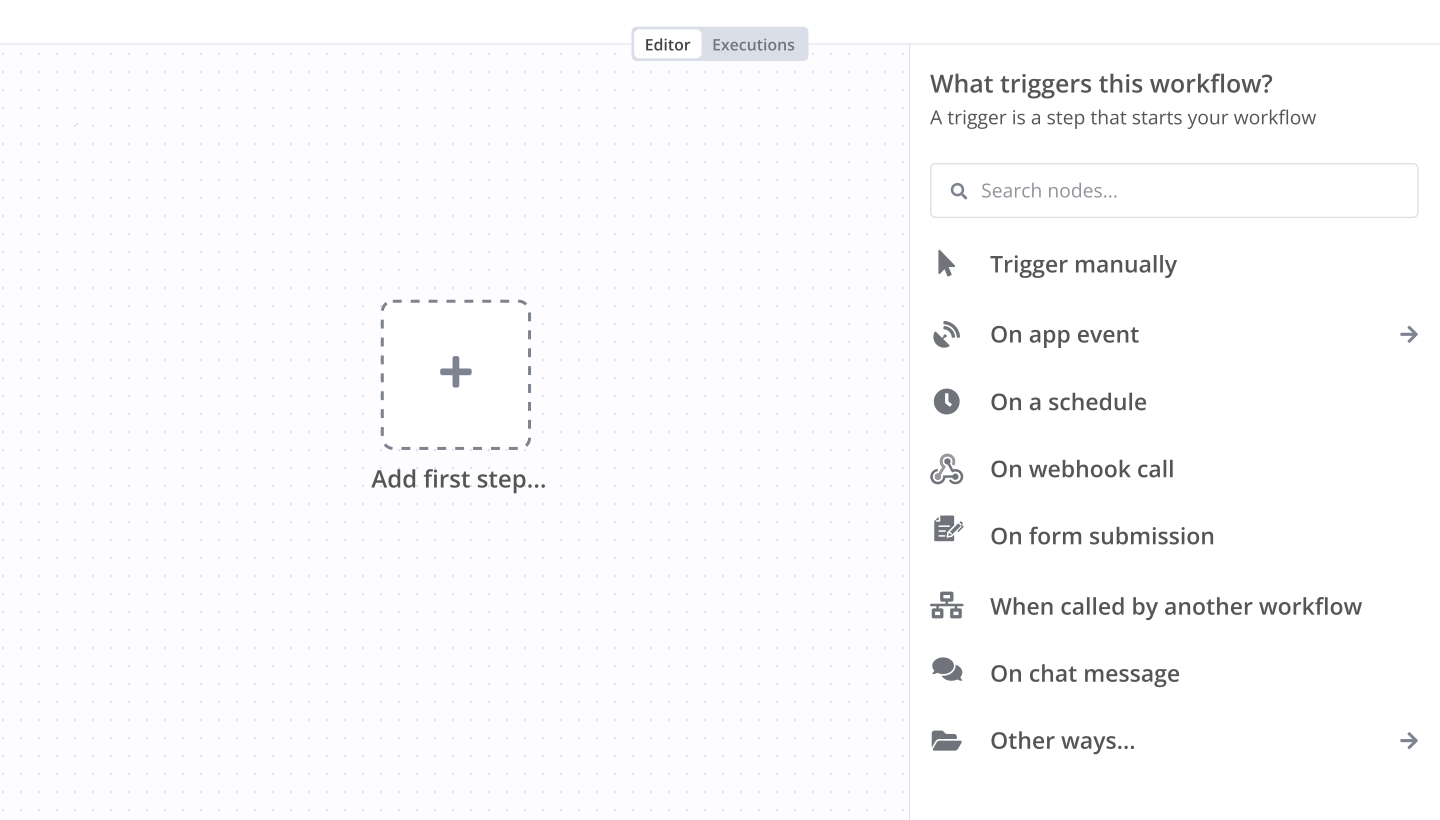
OpenAI and OpenWeatherMap integration: Create a new workflow and add the first step

Step 2: Add and configure OpenAI and OpenWeatherMap nodes

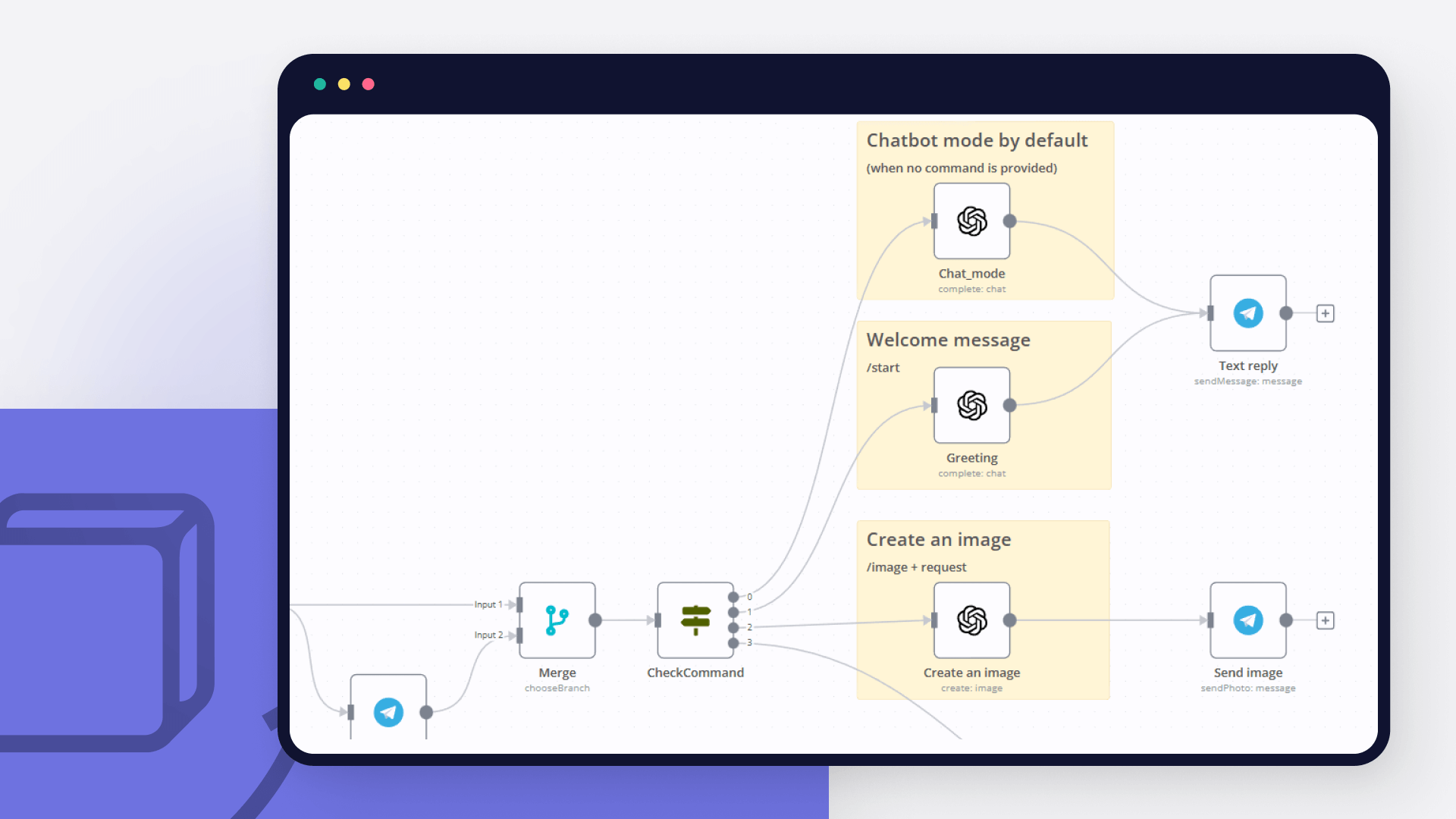
You can find OpenAI and OpenWeatherMap in the nodes panel. Drag them onto your workflow canvas, selecting their actions. Click each node, choose a credential, and authenticate to grant n8n access. Configure OpenAI and OpenWeatherMap nodes one by one: input data on the left, parameters in the middle, and output data on the right.

OpenAI and OpenWeatherMap integration: Add and configure OpenAI and OpenWeatherMap nodes

Step 3: Connect OpenAI and OpenWeatherMap

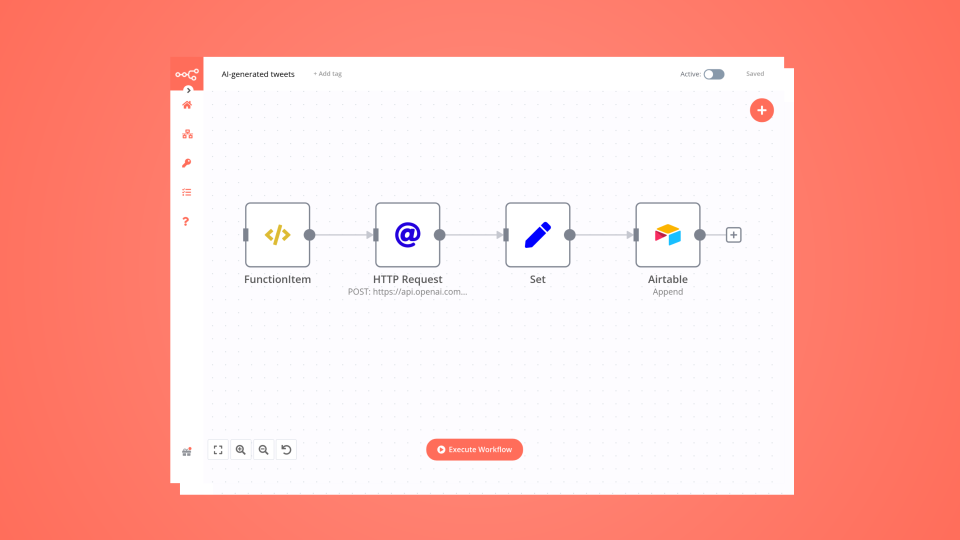
A connection establishes a link between OpenAI and OpenWeatherMap (or vice versa) to route data through the workflow. Data flows from the output of one node to the input of another. You can have single or multiple connections for each node.

OpenAI and OpenWeatherMap integration: Connect OpenAI and OpenWeatherMap

Step 4: Customize and extend your OpenAI and OpenWeatherMap integration

Use n8n's core nodes such as If, Split Out, Merge, and others to transform and manipulate data. Write custom JavaScript or Python in the Code node and run it as a step in your workflow. Connect OpenAI and OpenWeatherMap with any of n8n’s 1000+ integrations, and incorporate advanced AI logic into your workflows.

OpenAI and OpenWeatherMap integration: Customize and extend your OpenAI and OpenWeatherMap integration

Step 5: Test and activate your OpenAI and OpenWeatherMap workflow

Save and run the workflow to see if everything works as expected. Based on your configuration, data should flow from OpenAI to OpenWeatherMap or vice versa. Easily debug your workflow: you can check past executions to isolate and fix the mistake. Once you've tested everything, make sure to save your workflow and activate it.

OpenAI and OpenWeatherMap integration: Test and activate your OpenAI and OpenWeatherMap workflow

Send multi-city weather forecasts with AI-enhanced formatting from OpenWeatherMap to Gmail

Overview

This workflow automates weather forecast delivery by collecting city names, fetching 5-day forecasts from OpenWeatherMap, and generating professionally formatted HTML emails using GPT-4. The AI creates condition-based color-coded reports with safety precautions and sends them via Gmail.

How It Works

A form trigger collects up to three city names, which are geocoded via OpenWeatherMap API to retrieve coordinates and 5-day forecasts.

JavaScript nodes process the raw weather data into daily summaries, calculating temperature ranges, precipitation levels, wind speeds, and dominant weather conditions.

GPT-4 then generates professionally formatted HTML emails with condition-based color coding: The AI intelligently adds contextual safety warnings for heavy rain, extreme heat, high winds, and thunderstorms.

A validation node ensures proper JSON formatting before Gmail sends the final briefing.

Use Cases

• Field ops & construction crew briefings
• Travel planning and itinerary preparation
• Outdoor event planning & coordination
• Logistics and transportation route planning
• Real estate property viewing scheduling
• Sports and recreational activity planning

Setup Requirements

  1. OpenWeatherMap API credentials
  2. OpenAI API key
  3. Gmail OAuth2 authentication

Need Help?

Join the Discord or ask in the Forum!
README file available at https://tinyurl.com/MulticityWeatherForecast

Nodes used in this workflow

Popular OpenAI and OpenWeatherMap workflows

Send Multi-City Weather Forecasts with AI-Enhanced Formatting from OpenWeatherMap to Gmail

Overview This workflow automates weather forecast delivery by collecting city names, fetching 5-day forecasts from OpenWeatherMap, and generating professionally formatted HTML emails using GPT-4. The AI creates condition-based color-coded reports with safety precautions and sends them via Gmail. How It Works A form trigger collects up to three city names, which are geocoded via OpenWeatherMap API to retrieve coordinates and 5-day forecasts. JavaScript nodes process the raw weather data into daily summaries, calculating temperature ranges, precipitation levels, wind speeds, and dominant weather conditions. GPT-4 then generates professionally formatted HTML emails with condition-based color coding: The AI intelligently adds contextual safety warnings for heavy rain, extreme heat, high winds, and thunderstorms. A validation node ensures proper JSON formatting before Gmail sends the final briefing. Use Cases • Field ops & construction crew briefings • Travel planning and itinerary preparation • Outdoor event planning & coordination • Logistics and transportation route planning • Real estate property viewing scheduling • Sports and recreational activity planning Setup Requirements 1) OpenWeatherMap API credentials 2) OpenAI API key 3) Gmail OAuth2 authentication Need Help? Join the Discord or ask in the Forum! README file available at https://tinyurl.com/MulticityWeatherForecast

Build your own OpenAI and OpenWeatherMap integration

Create custom OpenAI and OpenWeatherMap workflows by choosing triggers and actions. Nodes come with global operations and settings, as well as app-specific parameters that can be configured. You can also use the HTTP Request node to query data from any app or service with a REST API.

OpenAI supported actions

Message a Model
Generate a model response with GPT 3, 4, 5, etc. using Responses API
Classify Text for Violations
Check whether content complies with usage policies
Analyze Image
Take in images and answer questions about them
Generate an Image
Creates an image from a text prompt
Edit Image
Edit an image
Generate Audio
Creates audio from a text prompt
Transcribe a Recording
Transcribes audio into text
Translate a Recording
Translates audio into text in English
Delete a File
Delete a file from the server
List Files
Returns a list of files that belong to the user's organization
Upload a File
Upload a file that can be used across various endpoints
Create
Create a conversation
Get
Get a conversation
Remove
Remove a conversation
Update
Update a conversation
Generate
Creates a video from a text prompt

OpenWeatherMap supported actions

Current Weather
Returns the current weather data
5 Day Forecast
Returns the weather data for the next 5 days

OpenAI and OpenWeatherMap integration details

FAQs

  • Can OpenAI connect with OpenWeatherMap?

  • Can I use OpenAI’s API with n8n?

  • Can I use OpenWeatherMap’s API with n8n?

  • Is n8n secure for integrating OpenAI and OpenWeatherMap?

  • How to get started with OpenAI and OpenWeatherMap integration in n8n.io?

Need help setting up your OpenAI and OpenWeatherMap integration?

Discover our latest community's recommendations and join the discussions about OpenAI and OpenWeatherMap integration.
Artem
sérgio eduardo floresta filho
Andrew adawdad
PinkFloyd
Steve Warburton

Looking to integrate OpenAI and OpenWeatherMap in your company?

Over 3000 companies switch to n8n every single week

Why use n8n to integrate OpenAI with OpenWeatherMap

Build complex workflows, really fast
Build complex workflows, really fast

Handle branching, merging and iteration easily.
Pause your workflow to wait for external events.

Code when you need it, UI when you don't

Simple debugging

Your data is displayed alongside your settings, making edge cases easy to track down.

Use templates to get started fast

Use 1000+ workflow templates available from our core team and our community.

Reuse your work

Copy and paste, easily import and export workflows.

Implement complex processes faster with n8n

red iconyellow iconred iconyellow icon