Back to Integrations
integrationPipedrive node
integrationPostgres node

Pipedrive and Postgres integration

Save yourself the work of writing custom integrations for Pipedrive and Postgres and use n8n instead. Build adaptable and scalable Sales, Development, and Data & Storage workflows that work with your technology stack. All within a building experience you will love.

How to connect Pipedrive and Postgres

  • Step 1: Create a new workflow
  • Step 2: Add and configure nodes
  • Step 3: Connect
  • Step 4: Customize and extend your integration
  • Step 5: Test and activate your workflow

Step 1: Create a new workflow and add the first step

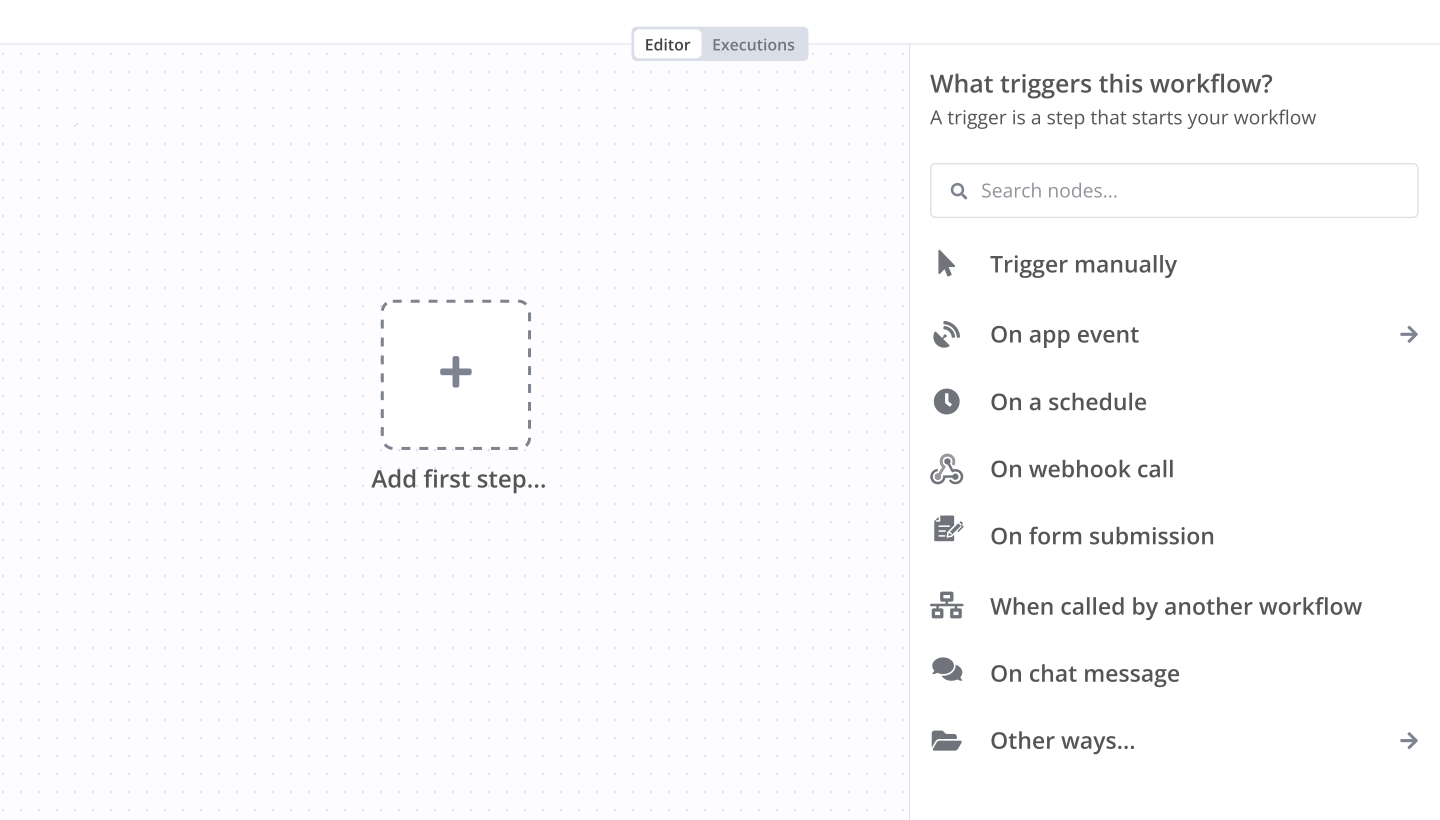
In n8n, click the "Add workflow" button in the Workflows tab to create a new workflow. Add the starting point – a trigger on when your workflow should run: an app event, a schedule, a webhook call, another workflow, an AI chat, or a manual trigger. Sometimes, the HTTP Request node might already serve as your starting point.

Pipedrive and Postgres integration: Create a new workflow and add the first step

Step 2: Add and configure Pipedrive and Postgres nodes

You can find Pipedrive and Postgres in the nodes panel. Drag them onto your workflow canvas, selecting their actions. Click each node, choose a credential, and authenticate to grant n8n access. Configure Pipedrive and Postgres nodes one by one: input data on the left, parameters in the middle, and output data on the right.

Pipedrive and Postgres integration: Add and configure Pipedrive and Postgres nodes

Step 3: Connect Pipedrive and Postgres

A connection establishes a link between Pipedrive and Postgres (or vice versa) to route data through the workflow. Data flows from the output of one node to the input of another. You can have single or multiple connections for each node.

Pipedrive and Postgres integration: Connect Pipedrive and Postgres

Step 4: Customize and extend your Pipedrive and Postgres integration

Use n8n's core nodes such as If, Split Out, Merge, and others to transform and manipulate data. Write custom JavaScript or Python in the Code node and run it as a step in your workflow. Connect Pipedrive and Postgres with any of n8n’s 1000+ integrations, and incorporate advanced AI logic into your workflows.

Pipedrive and Postgres integration: Customize and extend your Pipedrive and Postgres integration

Step 5: Test and activate your Pipedrive and Postgres workflow

Save and run the workflow to see if everything works as expected. Based on your configuration, data should flow from Pipedrive to Postgres or vice versa. Easily debug your workflow: you can check past executions to isolate and fix the mistake. Once you've tested everything, make sure to save your workflow and activate it.

Pipedrive and Postgres integration: Test and activate your Pipedrive and Postgres workflow

Automate B2B SaaS renewal risk management with CRM, support & usage data

Description

This workflow is designed for B2B/SaaS teams who want to secure renewals before it’s too late.

It runs every day, identifies all accounts whose licenses are up for renewal in J–30, enriches them with CRM, product usage and support data, computes an internal churn risk level, and then triggers the appropriate playbook:

HIGH risk** → full escalation (tasks, alerts, emails)
MEDIUM risk** → proactive follow-up by Customer Success
LOW risk** → light renewal touchpoint / monitoring

Everything is logged into a database table so that you can build dashboards, run analysis, or plug additional automations on top.

How it works

Daily detection (J–30 renewals)
A scheduled trigger runs every morning and queries your database (Postgres / Supabase) to fetch all active subscriptions expiring in 30 days. Each row includes the account identifier, name, renewal date and basic commercial data.

Data enrichment across tools
For each account, the workflow calls several business systems to collect context:
HubSpot → engagement history
Salesforce → account profile and segment
Pipedrive → deal activities and associated products
Analytics API → product feature usage and activity trends
Zendesk → recent support tickets and potential friction signals

All of this is merged into a single, unified item.

Churn scoring & routing
An internal scoring step evaluates the risk for each account based on multiple signals (engagement, usage, support, timing).
The workflow then categorizes each account into one of three risk levels:

HIGH – strong churn signals → needs immediate attention
MEDIUM – some warning signs → needs proactive follow-up
LOW – looks healthy → light renewal reminder

A Switch node routes each account to the relevant playbook.

Automated playbooks

🔴 HIGH risk
Create a Trello card on a dedicated “High-Risk Renewals” board/list
Create a Jira ticket for the CS / AM team
Send a Slack alert in a designated channel
Send a detailed email to the CSM and/or account manager

🟠 MEDIUM risk
Create a Trello card in a “Renewals – Follow-up” list
Send a contextual email to the CSM to recommend a proactive check-in

🟢 LOW risk
Send a soft renewal email / internal note to keep the account on the radar

Logging & daily reporting
For every processed account, the workflow prepares a structured log record (account, renewal date, risk level, basic context).
A Postgres node is used to insert the data into a churn_logs table.

At the end of each run, all processed accounts are aggregated and a daily summary email is sent (for example to the Customer Success leadership team), listing the renewals and their risk levels.

Requirements

Database
A table named churn_logs (or equivalent) to store workflow decisions and history.
Example fields: account_id, account_name, end_date, riskScore, riskLevel, playbook, trello_link, jira_link, timestamp.

External APIs
HubSpot (engagement data)
Salesforce (account profile)
Pipedrive (deals & products)
Zendesk (support tickets)
Optional: product analytics API for usage metrics

Communication & task tools
Gmail (emails to CSM / AM / summary recipients)
Slack (alert channel for high-risk cases)
Trello (task creation for CS follow-up)
Jira (escalation tickets for high-risk renewals)

Configuration variables
Thresholds are configured in the Init config & thresholds node:
days_before_renewal
churn_threshold_high
churn_threshold_medium
These parameters let you adapt the detection window and risk sensitivity to your own business rules.

Typical use cases

Customer Success teams who want a daily churn watchlist without exporting spreadsheets.
RevOps teams looking to standardize renewal playbooks across tools.
SaaS companies who need to prioritize renewals based on real risk signals rather than gut feeling.
Product-led organizations that want to combine usage data + CRM + support into one automated process.

Tutorial video
Watch the Youtube Tutorial video

About me :
I’m Yassin a Project & Product Manager Scaling tech products with data-driven project management.
📬 Feel free to connect with me on Linkedin

Nodes used in this workflow

Popular Pipedrive and Postgres workflows

+5

Automate B2B SaaS Renewal Risk Management with CRM, Support & Usage Data

Description This workflow is designed for B2B/SaaS teams who want to secure renewals before it’s too late. It runs every day, identifies all accounts whose licenses are up for renewal in J–30, enriches them with CRM, product usage and support data, computes an internal churn risk level, and then triggers the appropriate playbook: HIGH risk** → full escalation (tasks, alerts, emails) MEDIUM risk** → proactive follow-up by Customer Success LOW risk** → light renewal touchpoint / monitoring Everything is logged into a database table so that you can build dashboards, run analysis, or plug additional automations on top. How it works Daily detection (J–30 renewals) A scheduled trigger runs every morning and queries your database (Postgres / Supabase) to fetch all active subscriptions expiring in 30 days. Each row includes the account identifier, name, renewal date and basic commercial data. Data enrichment across tools For each account, the workflow calls several business systems to collect context: HubSpot → engagement history Salesforce → account profile and segment Pipedrive → deal activities and associated products Analytics API → product feature usage and activity trends Zendesk → recent support tickets and potential friction signals All of this is merged into a single, unified item. Churn scoring & routing An internal scoring step evaluates the risk for each account based on multiple signals (engagement, usage, support, timing). The workflow then categorizes each account into one of three risk levels: HIGH – strong churn signals → needs immediate attention MEDIUM – some warning signs → needs proactive follow-up LOW – looks healthy → light renewal reminder A Switch node routes each account to the relevant playbook. Automated playbooks 🔴 HIGH risk Create a Trello card on a dedicated “High-Risk Renewals” board/list Create a Jira ticket for the CS / AM team Send a Slack alert in a designated channel Send a detailed email to the CSM and/or account manager 🟠 MEDIUM risk Create a Trello card in a “Renewals – Follow-up” list Send a contextual email to the CSM to recommend a proactive check-in 🟢 LOW risk Send a soft renewal email / internal note to keep the account on the radar Logging & daily reporting For every processed account, the workflow prepares a structured log record (account, renewal date, risk level, basic context). A Postgres node is used to insert the data into a churn_logs table. At the end of each run, all processed accounts are aggregated and a daily summary email is sent (for example to the Customer Success leadership team), listing the renewals and their risk levels. Requirements Database A table named churn_logs (or equivalent) to store workflow decisions and history. Example fields: account_id, account_name, end_date, riskScore, riskLevel, playbook, trello_link, jira_link, timestamp. External APIs HubSpot (engagement data) Salesforce (account profile) Pipedrive (deals & products) Zendesk (support tickets) Optional: product analytics API for usage metrics Communication & task tools Gmail (emails to CSM / AM / summary recipients) Slack (alert channel for high-risk cases) Trello (task creation for CS follow-up) Jira (escalation tickets for high-risk renewals) Configuration variables Thresholds are configured in the Init config & thresholds node: days_before_renewal churn_threshold_high churn_threshold_medium These parameters let you adapt the detection window and risk sensitivity to your own business rules. Typical use cases Customer Success teams who want a daily churn watchlist without exporting spreadsheets. RevOps teams looking to standardize renewal playbooks across tools. SaaS companies who need to prioritize renewals based on real risk signals rather than gut feeling. Product-led organizations that want to combine usage data + CRM + support into one automated process. Tutorial video Watch the Youtube Tutorial video About me : I’m Yassin a Project & Product Manager Scaling tech products with data-driven project management. 📬 Feel free to connect with me on Linkedin

Build your own Pipedrive and Postgres integration

Create custom Pipedrive and Postgres workflows by choosing triggers and actions. Nodes come with global operations and settings, as well as app-specific parameters that can be configured. You can also use the HTTP Request node to query data from any app or service with a REST API.

Pipedrive supported actions

Create
Create an activity
Delete
Delete an activity
Get
Get data of an activity
Get Many
Get data of many activities
Update
Update an activity
Create
Create a deal
Delete
Delete a deal
Duplicate
Duplicate a deal
Get
Get data of a deal
Get Many
Get data of many deals
Search
Search a deal
Update
Update a deal
Get Many
Get many activities of a deal
Add
Add a product to a deal
Get Many
Get many products in a deal
Remove
Remove a product from a deal
Update
Update a product in a deal
Create
Create a file
Delete
Delete a file
Download
Download a file
Get
Get data of a file
Update
Update file details
Create
Create a lead
Delete
Delete a lead
Get
Get data of a lead
Get Many
Get data of many leads
Update
Update a lead
Create
Create a note
Delete
Delete a note
Get
Get data of a note
Get Many
Get data of many notes
Update
Update a note
Create
Create an organization
Delete
Delete an organization
Get
Get data of an organization
Get Many
Get data of many organizations
Search
Search organizations
Update
Update an organization
Create
Create a person
Delete
Delete a person
Get
Get data of a person
Get Many
Get data of many persons
Search
Search all persons
Update
Update a person
Get Many
Get data of many products

Postgres supported actions

Delete
Delete an entire table or rows in a table
Execute Query
Execute an SQL query
Insert
Insert rows in a table
Insert or Update
Insert or update rows in a table
Select
Select rows from a table
Update
Update rows in a table

Pipedrive and Postgres integration tutorials

featured image

Getting started with CRM automation: Essential guide & templates included

Discover how to streamline your sales & marketing with our CRM automation guide. Access customizable templates to jumpstart your automation process!

featured image

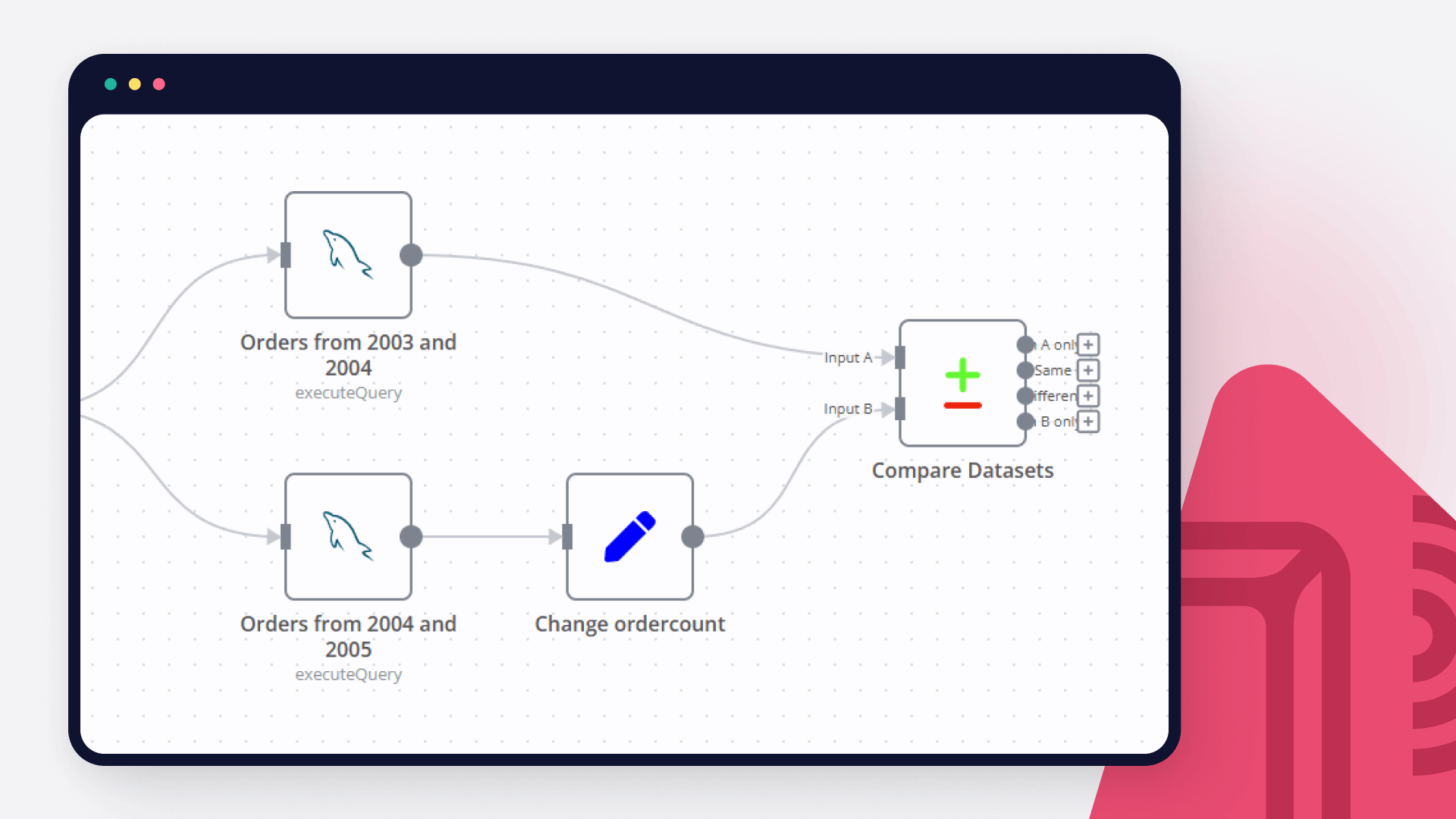
How to compare databases via the Compare Datasets node: a step-by-step tutorial

Learn to compare databases automatically, be it SQL tables or data from your favorite CRM. Grab this step-by-step tutorial with a free customizable workflow!
featured image

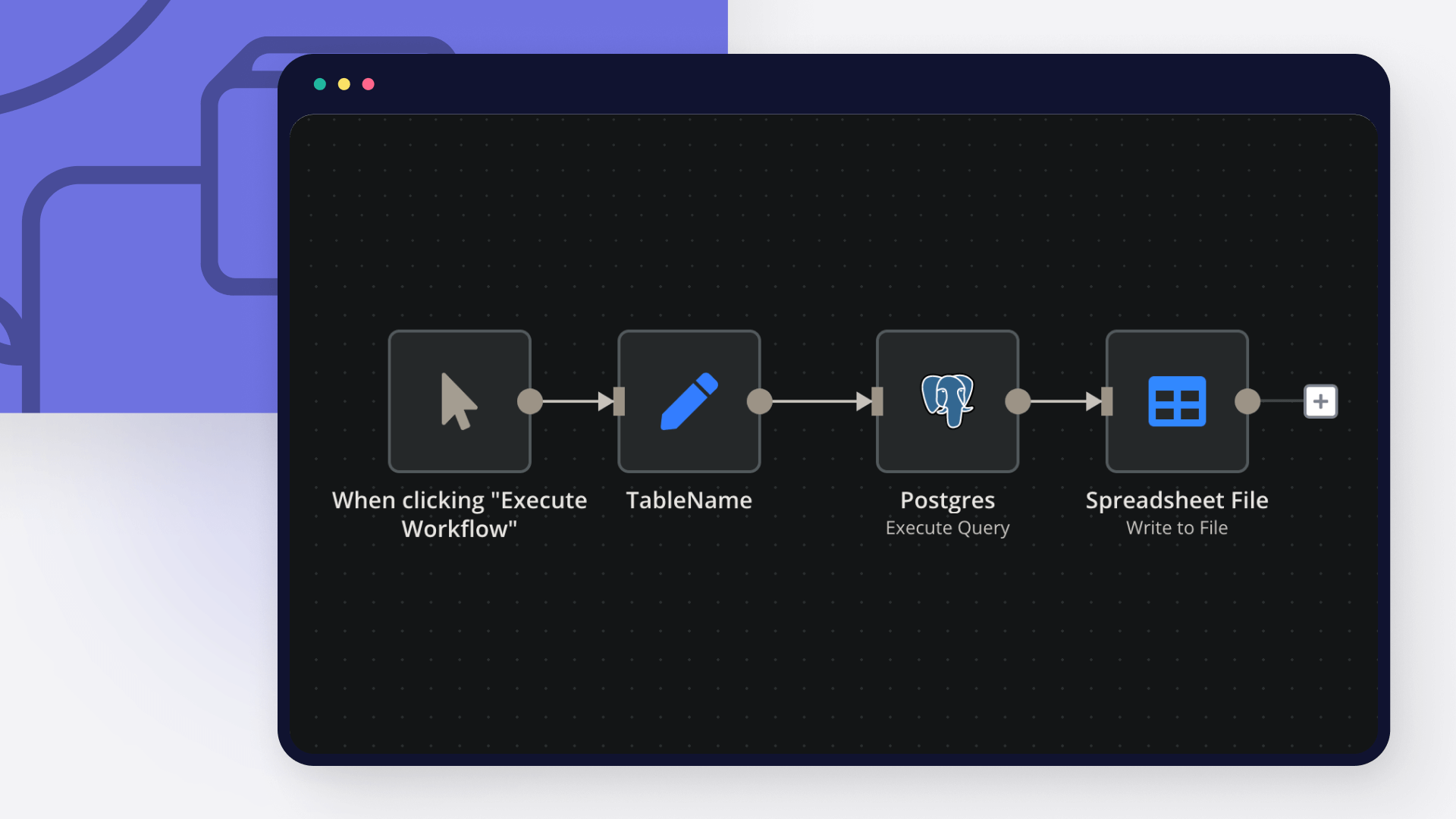
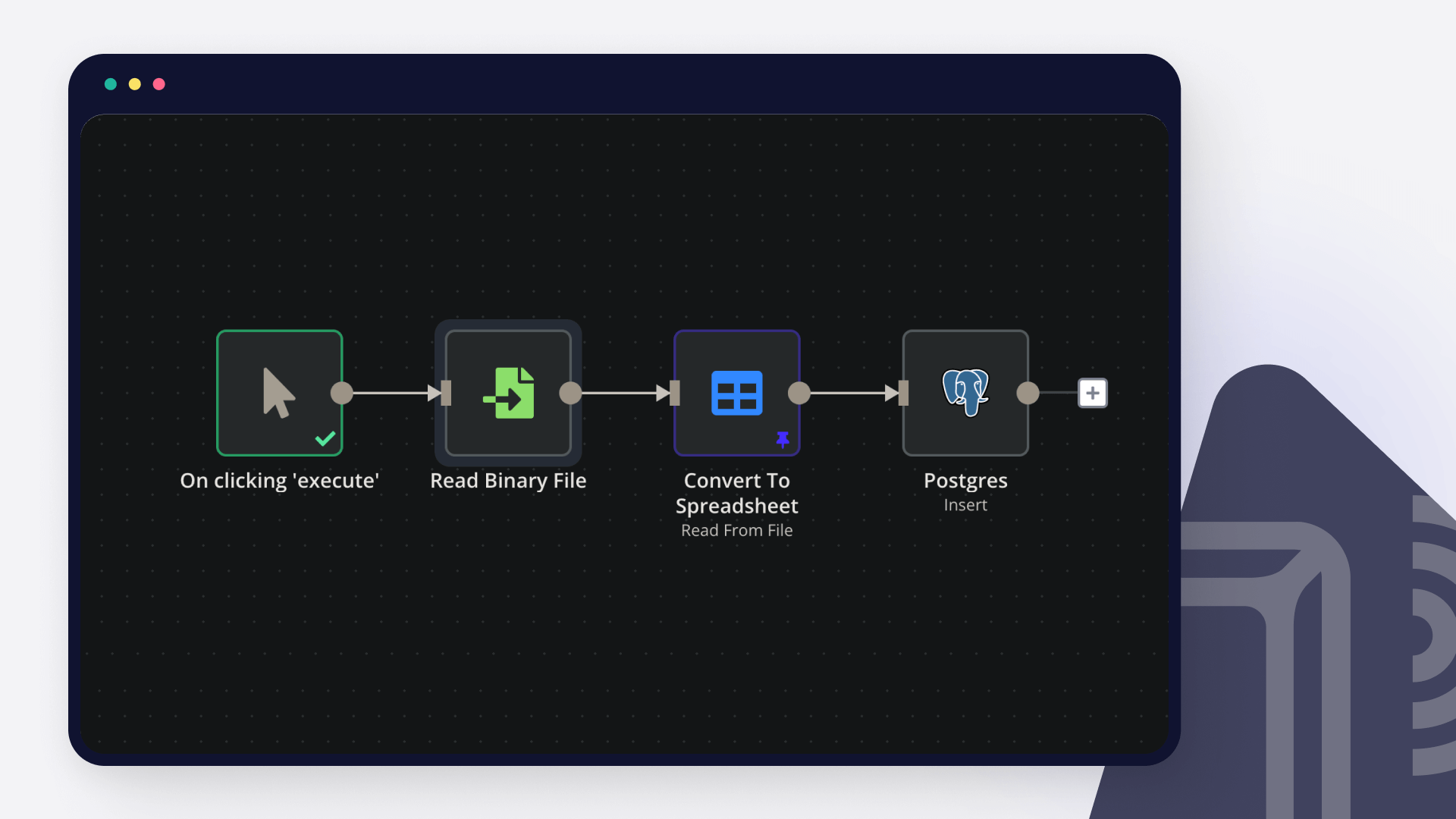
How to export data from PostgreSQL to CSV

CSV is a universally accepted and easy-to-read format to interpret data, and PostgreSQL is one of the most popular relational databases. Read on to learn how to export PostgreSQL as a CSV file using the COPY command, \copy command, and n8n.
featured image

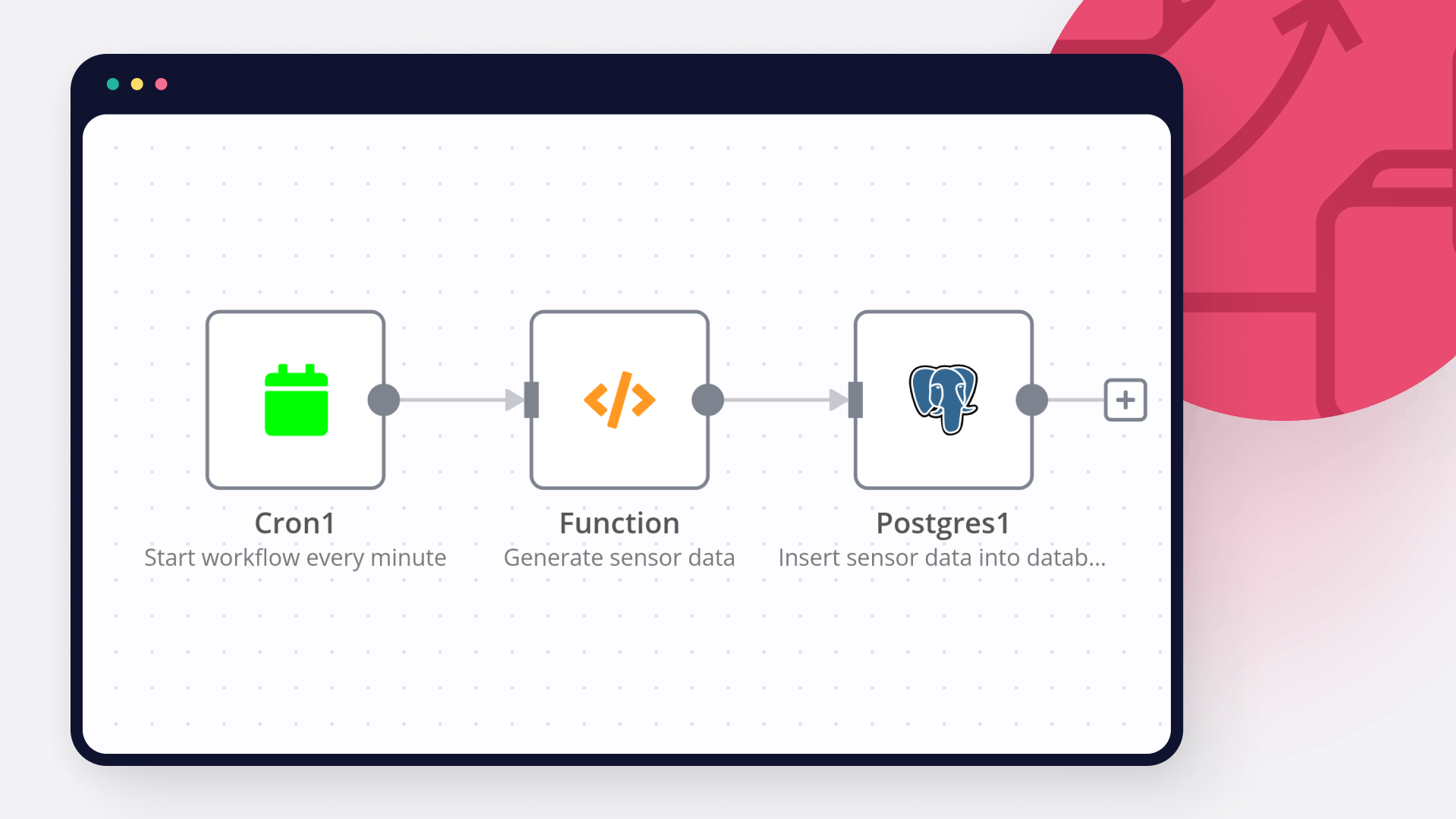
How to import CSV into PostgreSQL

PostgreSQL remains one of the most popular relational database options among data enthusiasts. Read on to learn how to import a CSV file into PostgreSQL using pgAdmin, SQL statements, and n8n.
featured image

Database activity monitoring: How to automatically monitor and set alerts for a database

Learn what database activity monitoring is, why it's important, and how to automatically monitor a Postgres database containing IoT data with n8n workflows.
featured image

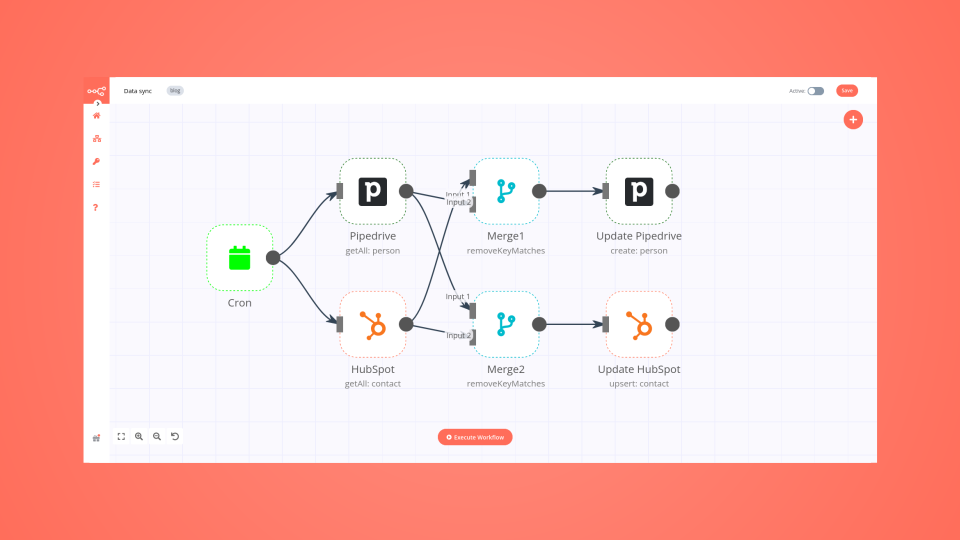
How to synchronize data between two systems (one-way vs. two-way sync)

Learn how to build no-code workflows that automatically synchronize data between your CRMs.

FAQs

  • Can Pipedrive connect with Postgres?

  • Can I use Pipedrive’s API with n8n?

  • Can I use Postgres’s API with n8n?

  • Is n8n secure for integrating Pipedrive and Postgres?

  • How to get started with Pipedrive and Postgres integration in n8n.io?

Need help setting up your Pipedrive and Postgres integration?

Discover our latest community's recommendations and join the discussions about Pipedrive and Postgres integration.
Mikhail Savenkov
Honza Pav
Vyacheslav Karbovnichy
Dennis
Dennis

Looking to integrate Pipedrive and Postgres in your company?

Over 3000 companies switch to n8n every single week

Why use n8n to integrate Pipedrive with Postgres

Build complex workflows, really fast

Build complex workflows, really fast

Handle branching, merging and iteration easily.
Pause your workflow to wait for external events.

Code when you need it, UI when you don't

Simple debugging

Your data is displayed alongside your settings, making edge cases easy to track down.

Use templates to get started fast

Use 1000+ workflow templates available from our core team and our community.

Reuse your work

Copy and paste, easily import and export workflows.

Implement complex processes faster with n8n

red iconyellow iconred iconyellow icon