Back to Integrations
integrationPostgres node
integrationWhatsApp Business Cloud node

Postgres and WhatsApp Business Cloud integration

Save yourself the work of writing custom integrations for Postgres and WhatsApp Business Cloud and use n8n instead. Build adaptable and scalable Development, Data & Storage, Communication, and HITL workflows that work with your technology stack. All within a building experience you will love.

How to connect Postgres and WhatsApp Business Cloud

  • Step 1: Create a new workflow
  • Step 2: Add and configure nodes
  • Step 3: Connect
  • Step 4: Customize and extend your integration
  • Step 5: Test and activate your workflow

Step 1: Create a new workflow and add the first step

In n8n, click the "Add workflow" button in the Workflows tab to create a new workflow. Add the starting point – a trigger on when your workflow should run: an app event, a schedule, a webhook call, another workflow, an AI chat, or a manual trigger. Sometimes, the HTTP Request node might already serve as your starting point.
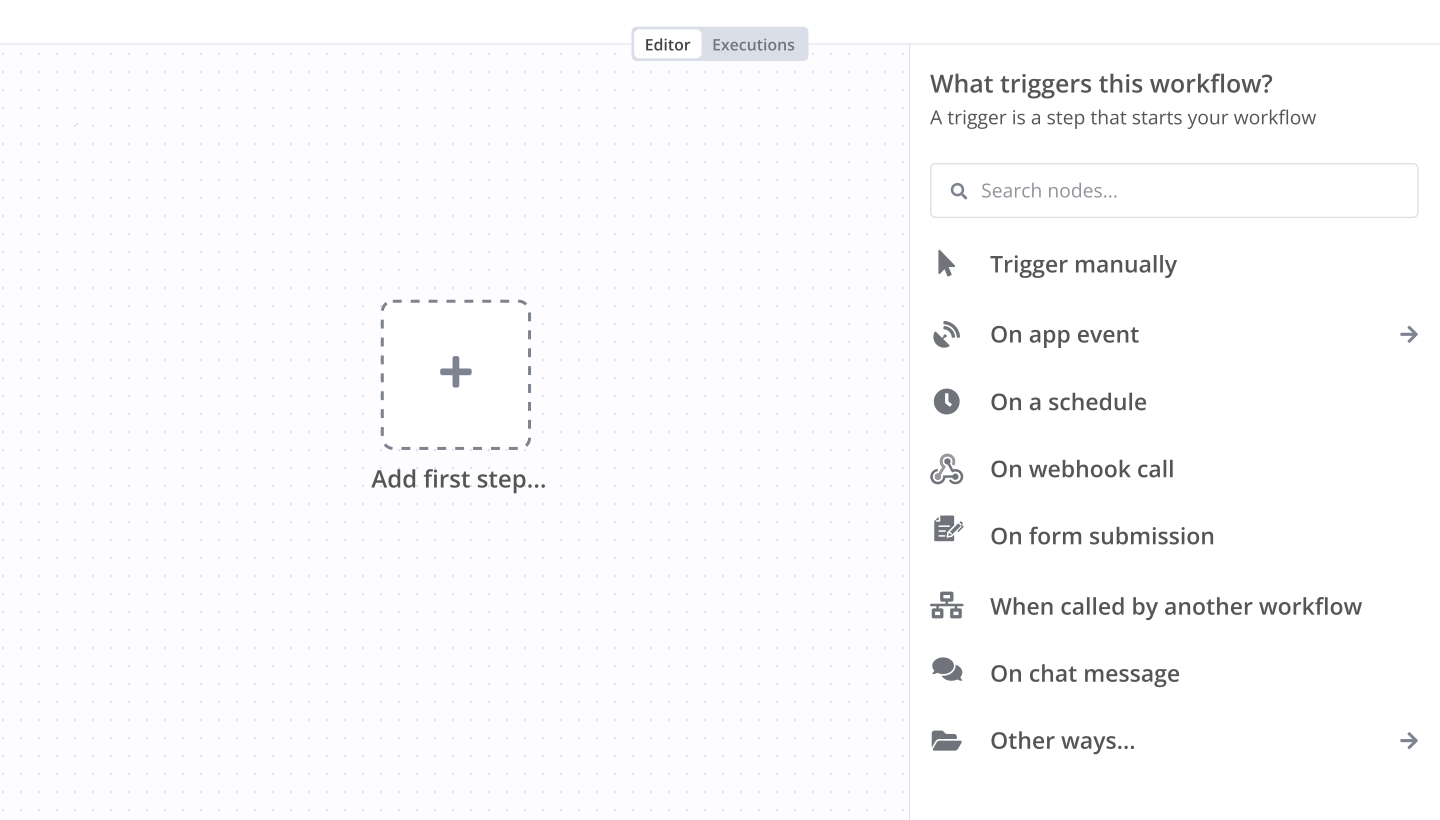
Postgres and WhatsApp Business Cloud integration: Create a new workflow and add the first step

Step 2: Add and configure Postgres and WhatsApp Business Cloud nodes

You can find Postgres and WhatsApp Business Cloud in the nodes panel. Drag them onto your workflow canvas, selecting their actions. Click each node, choose a credential, and authenticate to grant n8n access. Configure Postgres and WhatsApp Business Cloud nodes one by one: input data on the left, parameters in the middle, and output data on the right.

Postgres and WhatsApp Business Cloud integration: Add and configure Postgres and WhatsApp Business Cloud nodes

Step 3: Connect Postgres and WhatsApp Business Cloud

A connection establishes a link between Postgres and WhatsApp Business Cloud (or vice versa) to route data through the workflow. Data flows from the output of one node to the input of another. You can have single or multiple connections for each node.

Postgres and WhatsApp Business Cloud integration: Connect Postgres and WhatsApp Business Cloud

Step 4: Customize and extend your Postgres and WhatsApp Business Cloud integration

Use n8n's core nodes such as If, Split Out, Merge, and others to transform and manipulate data. Write custom JavaScript or Python in the Code node and run it as a step in your workflow. Connect Postgres and WhatsApp Business Cloud with any of n8n’s 1000+ integrations, and incorporate advanced AI logic into your workflows.

Postgres and WhatsApp Business Cloud integration: Customize and extend your Postgres and WhatsApp Business Cloud integration

Step 5: Test and activate your Postgres and WhatsApp Business Cloud workflow

Save and run the workflow to see if everything works as expected. Based on your configuration, data should flow from Postgres to WhatsApp Business Cloud or vice versa. Easily debug your workflow: you can check past executions to isolate and fix the mistake. Once you've tested everything, make sure to save your workflow and activate it.

Postgres and WhatsApp Business Cloud integration: Test and activate your Postgres and WhatsApp Business Cloud workflow

WhatsApp expense tracker with PostgreSQL database & AI-powered reports

Track Personal Finances with WhatsApp and AI Assistant

Transform your WhatsApp into a powerful personal finance command center. This AI-powered workflow converts natural language messages into structured financial data, automates record-keeping, and delivers instant insights—all within your favorite messaging app.

Who is this for?

This template is perfect for:
Personal finance enthusiasts** who want effortless expense tracking
Small business owners** managing personal and business expenses
Freelancers** tracking income and expenses across projects
Anyone** who prefers messaging over complex finance apps
Users seeking privacy** with self-hosted financial data

What problem is this workflow solving?

Traditional expense tracking requires switching between apps, manual data entry, and complex spreadsheets. Most people abandon these systems within weeks. This workflow solves the friction by:
Eliminating app-switching—everything happens in WhatsApp
Converting natural language to structured data automatically
Providing instant confirmations and reports
Requiring zero learning curve or behavior change

What this workflow does

Smart Transaction Processing
Send natural messages like Spent 300 on groceries at Walmart and the AI automatically extracts:
Date**: Today's date (or specified date)
Category**: Groceries
Type**: Expense/Income/Debt
Amount**: 300
Person/Company**: Walmart

Intelligent Message Classification
The workflow automatically routes messages to three processing branches:
Branch 1**: Reports and analytics (show March expenses)
Branch 2**: Transaction logging (spent 50 on coffee)
Branch 3**: General financial chat (how can I save money?)

Advanced Reporting
Generate instant reports by messaging:
today's report → Daily income/expense summary
March vs April report → Monthly comparisons with percentages
show groceries spending → Category-specific analysis
Automatic daily summaries at your preferred time

Database Integration
All transactions are stored in PostgreSQL with proper schema:
CREATE TABLE financial_transactions (
date DATE NOT NULL,
category TEXT NOT NULL,
type TEXT NOT NULL,
amount NUMERIC(12,2) NOT NULL,
person TEXT
);

Setup

Prerequisites

n8n instance** (self-hosted or n8n.cloud)
WhatsApp Business Cloud API** credentials
PostgreSQL database** (version 12+)
OpenRouter API key** for AI processing

Quick Setup Steps

Import the workflow template into your n8n instance
Configure credentials:
WhatsApp Business Cloud API (App Token + Phone Number ID)
PostgreSQL connection details
OpenRouter API key for AI processing
Create database table using the provided SQL schema
Test the connection by sending a sample message
Customize the scheduled report timing (default: 8 AM daily)

Verification Checklist

[ ] WhatsApp webhook receives messages
[ ] AI correctly parses transaction messages
[ ] Database insertions work properly
[ ] Confirmation messages are sent back
[ ] Reports generate with accurate data

How to customize this workflow to your needs

AI Model Configuration

Default**: Uses OpenRouter with GPT-3.5-turbo for cost efficiency
Upgrade**: Switch to GPT-4 or Claude for better accuracy
Local**: Replace with self-hosted Ollama for complete privacy

Database Options

PostgreSQL**: Recommended for production use
Google Sheets**: Alternative for simpler setups (nodes included)
MySQL/SQLite**: Easily adaptable with minor SQL modifications

Message Classification

Customize the classification system:
0**: Reports (modify SQL queries for different analytics)
1**: Transactions (adjust parsing rules for your language/currency)
2**: Chat (customize AI responses for financial advice)

Reporting Customization

Scheduled reports**: Change timing, format, and recipients
Custom periods**: Add quarterly, yearly, or custom date ranges
Categories**: Modify auto-categorization rules for your spending patterns
Currency**: Update formatting for your local currency

Advanced Features

Multi-user support**: Add user identification for family/team use
Receipt photos**: Extend workflow to process image receipts via OCR
Budgets**: Add budget tracking and overspend alerts
Integrations**: Connect to banks via Plaid or other financial APIs

Complete Package Included

When you download this template, you get everything needed for immediate implementation:

Ready-to-Use n8n Workflow

Fully configured nodes** with descriptive names explaining each step
Color-coded sticky notes** throughout the workflow explaining:
What each branch does (Reports/Transactions/Chat)
How the AI classification works
Database connection requirements
Error handling and troubleshooting tips

Comprehensive Documentation Bundle

Quick Start Guide**: Get running in under 10 minutes
Detailed Setup Guide**: Complete configuration walkthrough with screenshots
Branch Explanation Guide**: Deep dive into each processing branch:
Branch 0: Reports & Analytics - SQL queries and formatting
Branch 1: Transaction Processing - AI parsing and database insertion
Branch 2: Financial Chat - AI responses and conversation handling

Built-in Workflow Documentation

Sticky notes at every major step** explaining the logic
Node descriptions** that clarify what each component does
Visual flow indicators** showing message routing paths
Dependency callouts** highlighting required credentials and connections

Technical Implementation Details

Database schema** with complete SQL commands
API configuration examples** for all external services
Troubleshooting checklist** for common setup issues
Performance optimization** recommendations

Bonus Resources

Example message templates** to test each workflow branch
Sample data** for testing reports and analytics
Customization recipes** for common modifications
Integration patterns** for extending functionality

Example Usage

Log Expenses:

Spent 1200 on rent this month
Paid 45 for gas at Shell
Coffee 5.50 at Starbucks

Log Income:

Received 5000 salary from Company ABC
Freelance payment 800 from Client XYZ

Generate Reports:

today's summary
show this week's expenses
compare March vs April spending
how much on food this month?

Expected Responses:
✅ Logged: expense | Rent | ₹1,200.00 | Landlord
✅ Logged: income | salary |₹12,000.00|company

📊 Today's Summary:
Income: ₹0.00
Expenses: ₹1,245.50
Savings: -₹1,245.50

📈 March vs April:
Expenses: ₹15,000 vs ₹12,500 (-16.7%)
Top categories: Rent, Food, Transport

Nodes used in this workflow

Popular Postgres and WhatsApp Business Cloud workflows

Automate Restaurant Customer Service with WhatsApp and Llama AI Chatbot

An intelligent WhatsApp-based chatbot designed for restaurants to automate customer interactions related to table bookings, menu inquiries, opening hours, services, and offers. Built using the n8n automation platform and powered by an AI language model, this solution streamlines communication, boosts efficiency, and improves customer satisfaction. Objectives Automate replies to common customer queries on WhatsApp Handle table booking requests with confirmation Provide menu item details, pricing, and dietary information Share restaurant timing, location, and service availability Promote offers and handle promotional queries Operate 24/7 without manual intervention Store bookings and conversations for reporting and analytics Workflow Summary Step 1: Message Reception Node: WhatsApp Trigger (Webhook or API-based) Function: Listens for incoming customer messages. Step 2: Intent Recognition Node: AI Query Processor (e.g., OpenAI API) Function: Detects customer intent (e.g., booking, menu, timing). Step 3: Conditional Routing Node: Switch or IF Node Function: Routes flow based on detected intent: General information (menu, timing, services) Table booking Step 4A: Respond to General Info Queries Node: AI Response or Static Reply Node Function: Returns relevant information (menu, timing, address, etc.). Step 4B: Process Booking Requests Nodes: Collect Booking Details** (via chatbot interactions) Store Booking Info** (to DB or Google Sheets) Send Booking Confirmation** (to customer) Step 5: Context Management Node: Set/Update Customer Data Function: Maintains conversation state and tracks follow-up messages. Database or Google Sheet Columns for Table Booking | Column Name | Description | | ----------------- | ----------------------------------------------- | | reservation\_id | Unique reservation identifier | | guest\_name | Full name of the guest | | contact\_number | Customer’s WhatsApp or mobile number | | email | (Optional) Email address | | booking\_date | Reservation date (YYYY-MM-DD format) | | booking\_time | Reservation time (HH\:MM format) | | party\_size | Number of guests | | table\_id | (Optional) Table number or identifier | | special\_requests | Allergies, seating preferences, etc. | | status | Booking status: Confirmed / Cancelled / Pending | | created\_at | Timestamp when booking was made | | updated\_at | Timestamp when booking was last modified | Prerequisites Verified WhatsApp Business Account with API access n8n instance (Cloud or self-hosted) Access to an AI service (e.g., OpenAI, Claude) Google Sheets, Airtable, MySQL, or other DB integration Setup Instructions Connect WhatsApp API using webhook or third-party WhatsApp provider (e.g., 360Dialog, Twilio). Integrate AI using HTTP Request or OpenAI node for response generation. Create Data Store (Google Sheet, Airtable, or MySQL) with defined booking columns. Design Workflow in n8n with intent detection, conditional logic, and response nodes. Test End-to-End by sending different WhatsApp queries and checking logs and stored data. Example Conversation Customer: “Can I book a table for 2 people tomorrow at 8 PM?” Bot: “Sure. Please provide your name and contact number to confirm the reservation for 2 people at 8:00 PM tomorrow.” \[Booking details are saved, and a confirmation is sent.] Benefits Fully automated customer interaction Supports real-time table reservations Accurate and quick responses Scales without increasing staff effort Operates 24/7 Centralized booking data for analytics Analytics and Reporting Track key performance metrics such as: Number of bookings per day/week Average response time Customer satisfaction scores (via feedback node) Popular menu items or query types Booking conversion rates Security and Compliance End-to-end encrypted WhatsApp messages Role-based access to sensitive data Compliance with data protection regulations (e.g., GDPR) Secure API integrations and storage solutions Conclusion This WhatsApp chatbot serves as a reliable, AI-powered digital front desk for restaurants. Built using n8n and scalable components, it automates customer support, manages bookings, and enhances operational efficiency while offering a seamless customer experience.
+3

WhatsApp Expense Tracker with PostgreSQL Database & AI-Powered Reports

Track Personal Finances with WhatsApp and AI Assistant Transform your WhatsApp into a powerful personal finance command center. This AI-powered workflow converts natural language messages into structured financial data, automates record-keeping, and delivers instant insights—all within your favorite messaging app. Who is this for? This template is perfect for: Personal finance enthusiasts** who want effortless expense tracking Small business owners** managing personal and business expenses Freelancers** tracking income and expenses across projects Anyone** who prefers messaging over complex finance apps Users seeking privacy** with self-hosted financial data What problem is this workflow solving? Traditional expense tracking requires switching between apps, manual data entry, and complex spreadsheets. Most people abandon these systems within weeks. This workflow solves the friction by: Eliminating app-switching—everything happens in WhatsApp Converting natural language to structured data automatically Providing instant confirmations and reports Requiring zero learning curve or behavior change What this workflow does Smart Transaction Processing Send natural messages like Spent 300 on groceries at Walmart and the AI automatically extracts: Date**: Today's date (or specified date) Category**: Groceries Type**: Expense/Income/Debt Amount**: 300 Person/Company**: Walmart Intelligent Message Classification The workflow automatically routes messages to three processing branches: Branch 1**: Reports and analytics (show March expenses) Branch 2**: Transaction logging (spent 50 on coffee) Branch 3**: General financial chat (how can I save money?) Advanced Reporting Generate instant reports by messaging: today's report → Daily income/expense summary March vs April report → Monthly comparisons with percentages show groceries spending → Category-specific analysis Automatic daily summaries at your preferred time Database Integration All transactions are stored in PostgreSQL with proper schema: CREATE TABLE financial_transactions ( date DATE NOT NULL, category TEXT NOT NULL, type TEXT NOT NULL, amount NUMERIC(12,2) NOT NULL, person TEXT ); Setup Prerequisites n8n instance** (self-hosted or n8n.cloud) WhatsApp Business Cloud API** credentials PostgreSQL database** (version 12+) OpenRouter API key** for AI processing Quick Setup Steps Import the workflow template into your n8n instance Configure credentials: WhatsApp Business Cloud API (App Token + Phone Number ID) PostgreSQL connection details OpenRouter API key for AI processing Create database table using the provided SQL schema Test the connection by sending a sample message Customize the scheduled report timing (default: 8 AM daily) Verification Checklist [ ] WhatsApp webhook receives messages [ ] AI correctly parses transaction messages [ ] Database insertions work properly [ ] Confirmation messages are sent back [ ] Reports generate with accurate data How to customize this workflow to your needs AI Model Configuration Default**: Uses OpenRouter with GPT-3.5-turbo for cost efficiency Upgrade**: Switch to GPT-4 or Claude for better accuracy Local**: Replace with self-hosted Ollama for complete privacy Database Options PostgreSQL**: Recommended for production use Google Sheets**: Alternative for simpler setups (nodes included) MySQL/SQLite**: Easily adaptable with minor SQL modifications Message Classification Customize the classification system: 0**: Reports (modify SQL queries for different analytics) 1**: Transactions (adjust parsing rules for your language/currency) 2**: Chat (customize AI responses for financial advice) Reporting Customization Scheduled reports**: Change timing, format, and recipients Custom periods**: Add quarterly, yearly, or custom date ranges Categories**: Modify auto-categorization rules for your spending patterns Currency**: Update formatting for your local currency Advanced Features Multi-user support**: Add user identification for family/team use Receipt photos**: Extend workflow to process image receipts via OCR Budgets**: Add budget tracking and overspend alerts Integrations**: Connect to banks via Plaid or other financial APIs Complete Package Included When you download this template, you get everything needed for immediate implementation: Ready-to-Use n8n Workflow Fully configured nodes** with descriptive names explaining each step Color-coded sticky notes** throughout the workflow explaining: What each branch does (Reports/Transactions/Chat) How the AI classification works Database connection requirements Error handling and troubleshooting tips Comprehensive Documentation Bundle Quick Start Guide**: Get running in under 10 minutes Detailed Setup Guide**: Complete configuration walkthrough with screenshots Branch Explanation Guide**: Deep dive into each processing branch: Branch 0: Reports & Analytics - SQL queries and formatting Branch 1: Transaction Processing - AI parsing and database insertion Branch 2: Financial Chat - AI responses and conversation handling Built-in Workflow Documentation Sticky notes at every major step** explaining the logic Node descriptions** that clarify what each component does Visual flow indicators** showing message routing paths Dependency callouts** highlighting required credentials and connections Technical Implementation Details Database schema** with complete SQL commands API configuration examples** for all external services Troubleshooting checklist** for common setup issues Performance optimization** recommendations Bonus Resources Example message templates** to test each workflow branch Sample data** for testing reports and analytics Customization recipes** for common modifications Integration patterns** for extending functionality Example Usage Log Expenses: Spent 1200 on rent this month Paid 45 for gas at Shell Coffee 5.50 at Starbucks Log Income: Received 5000 salary from Company ABC Freelance payment 800 from Client XYZ Generate Reports: today's summary show this week's expenses compare March vs April spending how much on food this month? Expected Responses: ✅ Logged: expense | Rent | ₹1,200.00 | Landlord ✅ Logged: income | salary |₹12,000.00|company 📊 Today's Summary: Income: ₹0.00 Expenses: ₹1,245.50 Savings: -₹1,245.50 📈 March vs April: Expenses: ₹15,000 vs ₹12,500 (-16.7%) Top categories: Rent, Food, Transport
+4

WhatsApp Expense Tracker with Multi-Input (Text, Image & Audio)

Description CashMate – Your AI-Powered WhatsApp Finance Agent Turn WhatsApp into a smart finance assistant that auto-registers you, logs transactions in natural language, extracts data from receipts and voice notes, and delivers instant report summaries—no apps, no charts, just lightning-fast insights in chat. Who is this for? Personal finance enthusiasts wanting effortless expense tracking Freelancers & solopreneurs juggling multiple incomes and expenses Small business owners needing quick bookkeeping on the go Busy professionals who prefer messaging over apps Privacy-minded users who host data on their own PostgreSQL What problem does this solve? Zero onboarding friction: Just send "Hi"—no forms, no sign-ups No app switching: Track everything right inside WhatsApp Manual entry eliminated: Natural-language, image, and voice input all auto-parsed Instant summaries: On-demand report requests—no dashboards to navigate How it works Auto-Registration New users: "Hi" → Creates your profile in PostgreSQL Returning users: Bypasses creation if your number already exists Intent Classification routes every message into one of five branches: Reports & Summaries Triggers on keywords like "today's report," "show May vs June," or "summary." Returns concise text summary of income, expenses, and net balance. Natural-Language Transactions Messages like "Give 200 to Mukesh for car repair" → AI extracts date, category, amount, payee → logs it. Receipt OCR Attach a receipt image → Gemini OCR node reads line-items → AI categorizes and logs. Voice-Driven Logging Send a voice note → Deepgram node transcribes → AI logs transaction. General Chat & Greetings "Hi," "Hello," or casual finance questions → Routed to chat branch for greetings or tips. Setup Prerequisites n8n instance (self-hosted or n8n.cloud, v1.0+) WhatsApp Business Cloud API credentials PostgreSQL database (host, port, user, password) OpenRouter/OpenAI API key for NLP Gemini API key for OCR Deepgram API key for voice transcription Quick Start Import CashMate.n8n.json into n8n. Rename nodes to suit your environment. Configure Credentials in n8n's Credentials section—avoid hard-coding keys. Activate workflow and message "Hi" from WhatsApp. Test by sending a sample expense text, image receipt, or voice note. > Note: All detailed setup instructions and deep configuration steps are provided in the sticky notes within the template. How to Customize Categories & Currencies:** Edit parsing logic in the Function nodes. AI Models:** Swap OpenAI/OpenRouter for GPT-4, Claude, or self-hosted alternatives. Multi-User Support:** Extend registration logic to tag team or family accounts. Additional Features:** Add budget alerts, multi-currency support, or bank integrations via Plaid. Example Interactions Text Transaction User: 300 given to James for the coffee CashMate: ✅ Transaction Added: • Date: 2025-06-24 • Category: Coffee & Beverages • Type: Expense • Amount: ₹300.00 • Counterparty: James Receipt Image (OCR) User: [sends image of café bill totaling ₹450] CashMate: ✅ Transaction Added: • Date: 2025-06-24 • Category: Coffee & Beverages • Type: Expense • Amount: ₹450.00 • Counterparty: Café Aroma Voice Transaction User: [voice note: "Paid 650 rupees for office stationery"] CashMate: ✅ Transaction Added: • Date: 2025-06-24 • Category: Office Supplies • Type: Expense • Amount: ₹650.00 • Counterparty: (none) `

WhatsApp Appointment Scheduling with Google Calendar

Who is this for? This workflow is for service-based businesses and freelancers who want to automate booking appointments via WhatsApp without relying on third-party scheduling tools. It's perfect for small teams who want full control over the reservation system and calendar integration. What problem is this workflow solving? Manually coordinating bookings through messages can be inefficient and error-prone. This workflow streamlines the entire scheduling process-from user input to calendar event creation-saving time and avoiding double-bookings. It ensures users only choose from available time slots and automatically records the meeting in your Google Calendar. What this workflow does Sends a WhatsApp message with a reservation link. Collects the user's name and preferred date. Checks availability and shows only free time slots. Allows the user to choose a time slot. Automatically creates a Google Calendar event with the selected details. Saves all data to a Postgres database for future reference. Setup Create Tables in Postgres DB Open the provided SQL script and replace "n8n" with your Postgres schema name. Execute the script to create the required tables. Add Credentials WhatsApp: Set up your WhatsApp Business API credentials using OAuth and API keys. Postgres: Connect your database where the booking data will be stored. Google Calendar: Authorize access to your calendar for event creation.

WhatsApp Product Catalog Bot with PostgreSQL Database

Who is this for? This workflow is designed for businesses or developers who want to integrate product information into a WhatsApp bot and allow users to retrieve details about products from a database. What problem is this workflow solving? This workflow automates the process of managing and retrieving product information via WhatsApp, allowing businesses to easily share product details with customers without manual interaction. What this workflow does Basis version: It adds product data to a Postgres database. It enables a WhatsApp bot to retrieve a list of products. Users can select a product to receive detailed information about it. Additional version: All features from Basis Version. Get a list of product categories. Get a list of products in a category. Add product to cart. Go to the cart or select more products. Remove unnecessary items in the cart or clear the entire cart. When all the desired items are in the cart, click Buy. The bot will send you a payment link. Setup Create Tables in Postgres DB Modify the SQL script to replace "n8n" with your schema name. Run the provided SQL script in your database (available in the workflow). Add Credentials Add WhatsApp credentials (OAuth, Account). Add Postgres credentials to connect the bot to your database. How to customize this workflow to your needs Update the database schema or table structure if you need additional product information. Modify the bot interaction to suit your specific product listing and display preferences.

Automated Customer Reservations via Telegram and PostgreSQL (Module "Booking")

Who is this for? This workflow is for businesses or services that require managing customer reservations or appointments through a Telegram bot and storing reservation details in a PostgreSQL database. What problem is this workflow solving? This workflow automates the process of capturing reservation data via a Telegram bot and storing it in a PostgreSQL database. It eliminates the need for manual entry and reduces errors, improving efficiency in managing bookings. What this workflow does The workflow allows customers to select a day and time for their reservation through a Telegram bot. Customers provide their phone number and name, which are then added to the reservation table in the PostgreSQL database. Successfully added reservations are confirmed via the bot, ensuring both the business and customer are updated. Setup Create tables in Postgres DB Replace "n8n" in the provided SQL script with the name of your schema in the database. Execute the SQL script to set up the required tables. Add Credentials Add your Telegram bot credentials. Add your PostgreSQL database credentials to the workflow for seamless integration. How to customize this workflow to your needs Modify the available days and times in the Telegram bot according to your business hours or schedule. Adjust the database schema or add additional fields for customer preferences, special requests, or payment information as needed.

Build your own Postgres and WhatsApp Business Cloud integration

Create custom Postgres and WhatsApp Business Cloud workflows by choosing triggers and actions. Nodes come with global operations and settings, as well as app-specific parameters that can be configured. You can also use the HTTP Request node to query data from any app or service with a REST API.

Postgres supported actions

Delete
Delete an entire table or rows in a table
Execute Query
Execute an SQL query
Insert
Insert rows in a table
Insert or Update
Insert or update rows in a table
Select
Select rows from a table
Update
Update rows in a table

WhatsApp Business Cloud supported actions

Send
Send and Wait for Response
Send Template
Upload
Download
Delete

FAQs

  • Can Postgres connect with WhatsApp Business Cloud?

  • Can I use Postgres’s API with n8n?

  • Can I use WhatsApp Business Cloud’s API with n8n?

  • Is n8n secure for integrating Postgres and WhatsApp Business Cloud?

  • How to get started with Postgres and WhatsApp Business Cloud integration in n8n.io?

Need help setting up your Postgres and WhatsApp Business Cloud integration?

Discover our latest community's recommendations and join the discussions about Postgres and WhatsApp Business Cloud integration.
Mikhail Savenkov
Honza Pav
Vyacheslav Karbovnichy
Dennis
Dennis

Looking to integrate Postgres and WhatsApp Business Cloud in your company?

Over 3000 companies switch to n8n every single week

Why use n8n to integrate Postgres with WhatsApp Business Cloud

Build complex workflows, really fast

Build complex workflows, really fast

Handle branching, merging and iteration easily.
Pause your workflow to wait for external events.

Code when you need it, UI when you don't

Simple debugging

Your data is displayed alongside your settings, making edge cases easy to track down.

Use templates to get started fast

Use 1000+ workflow templates available from our core team and our community.

Reuse your work

Copy and paste, easily import and export workflows.

Implement complex processes faster with n8n

red iconyellow iconred iconyellow icon