Back to Integrations
integrationQuickBooks Online node
integrationGmail node

QuickBooks Online and Gmail integration

Save yourself the work of writing custom integrations for QuickBooks Online and Gmail and use n8n instead. Build adaptable and scalable Finance & Accounting, Communication, and HITL workflows that work with your technology stack. All within a building experience you will love.

How to connect QuickBooks Online and Gmail

  • Step 1: Create a new workflow
  • Step 2: Add and configure nodes
  • Step 3: Connect
  • Step 4: Customize and extend your integration
  • Step 5: Test and activate your workflow

Step 1: Create a new workflow and add the first step

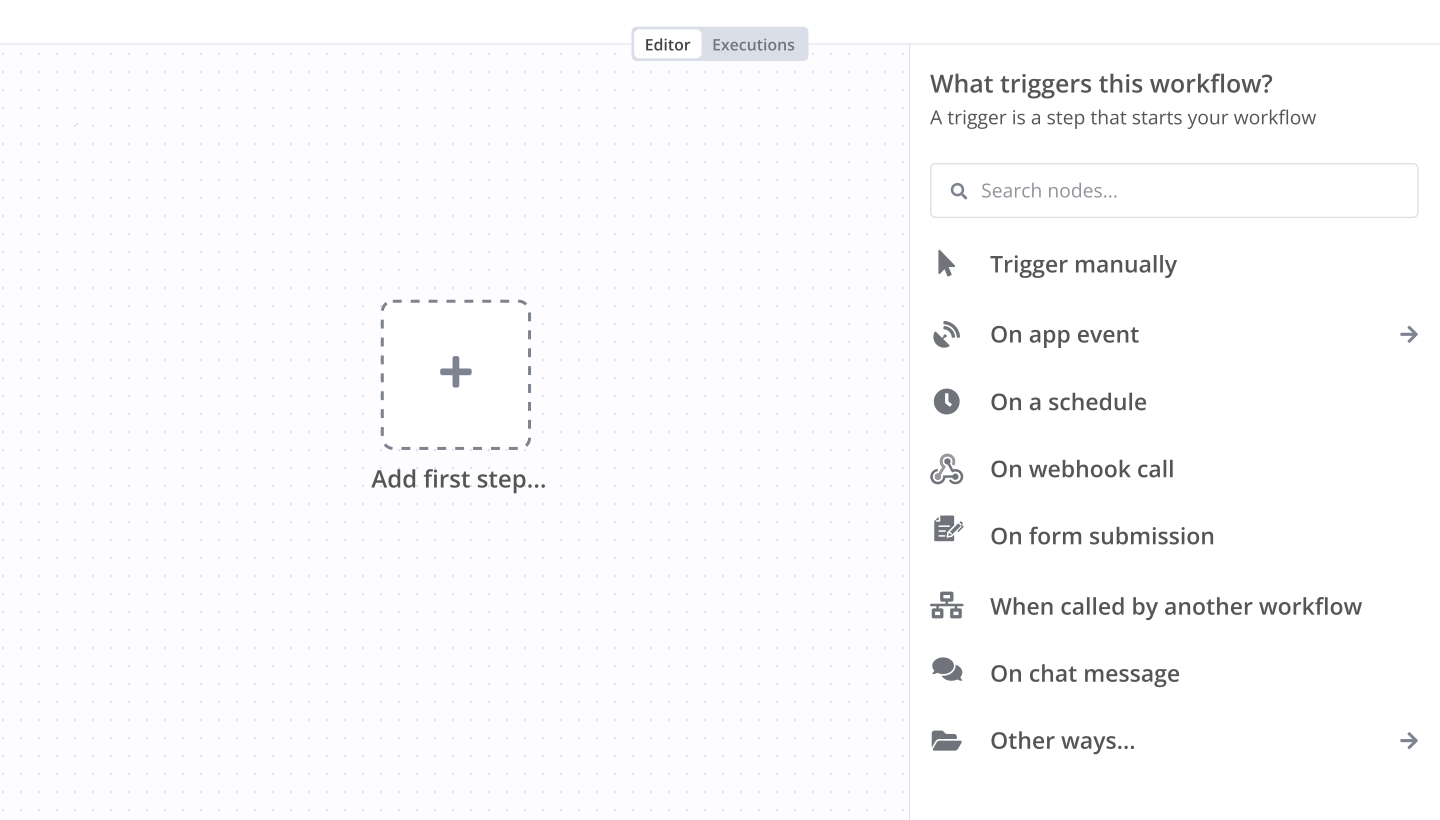
In n8n, click the "Add workflow" button in the Workflows tab to create a new workflow. Add the starting point – a trigger on when your workflow should run: an app event, a schedule, a webhook call, another workflow, an AI chat, or a manual trigger. Sometimes, the HTTP Request node might already serve as your starting point.

QuickBooks Online and Gmail integration: Create a new workflow and add the first step

Step 2: Add and configure QuickBooks Online and Gmail nodes

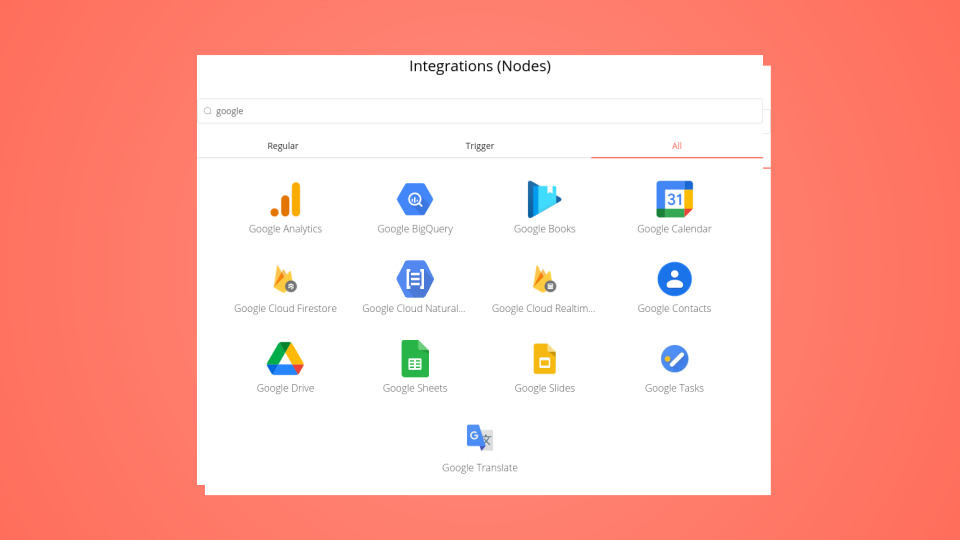
You can find QuickBooks Online and Gmail in the nodes panel. Drag them onto your workflow canvas, selecting their actions. Click each node, choose a credential, and authenticate to grant n8n access. Configure QuickBooks Online and Gmail nodes one by one: input data on the left, parameters in the middle, and output data on the right.

QuickBooks Online and Gmail integration: Add and configure QuickBooks Online and Gmail nodes

Step 3: Connect QuickBooks Online and Gmail

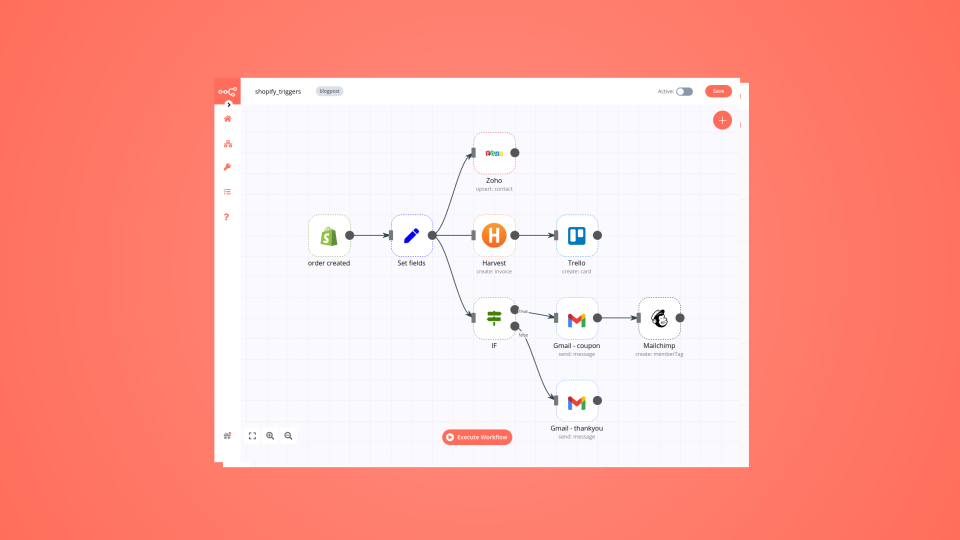
A connection establishes a link between QuickBooks Online and Gmail (or vice versa) to route data through the workflow. Data flows from the output of one node to the input of another. You can have single or multiple connections for each node.

QuickBooks Online and Gmail integration: Connect QuickBooks Online and Gmail

Step 4: Customize and extend your QuickBooks Online and Gmail integration

Use n8n's core nodes such as If, Split Out, Merge, and others to transform and manipulate data. Write custom JavaScript or Python in the Code node and run it as a step in your workflow. Connect QuickBooks Online and Gmail with any of n8n’s 1000+ integrations, and incorporate advanced AI logic into your workflows.

QuickBooks Online and Gmail integration: Customize and extend your QuickBooks Online and Gmail integration

Step 5: Test and activate your QuickBooks Online and Gmail workflow

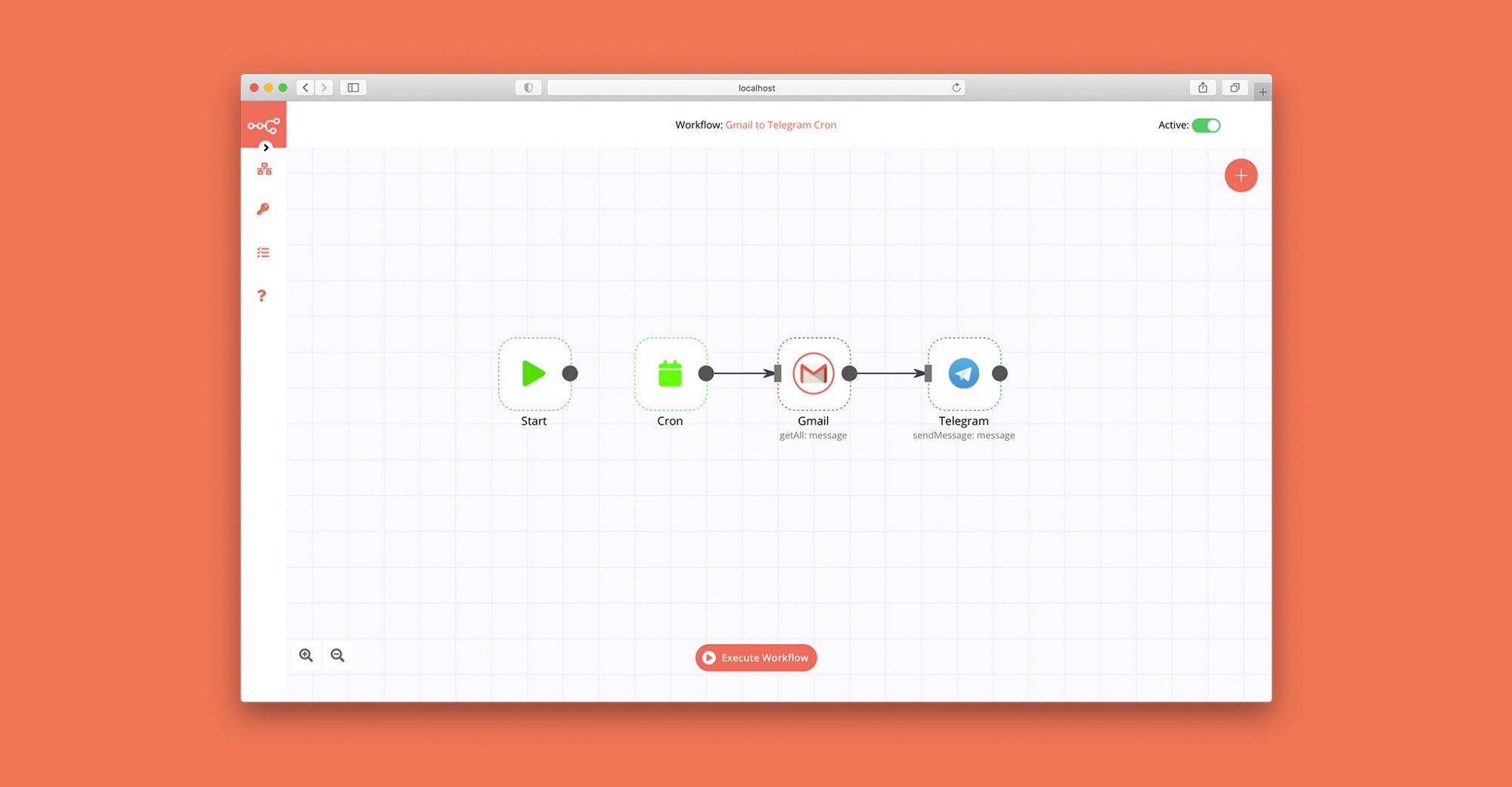
Save and run the workflow to see if everything works as expected. Based on your configuration, data should flow from QuickBooks Online to Gmail or vice versa. Easily debug your workflow: you can check past executions to isolate and fix the mistake. Once you've tested everything, make sure to save your workflow and activate it.

QuickBooks Online and Gmail integration: Test and activate your QuickBooks Online and Gmail workflow

Convert emailed timesheets into QuickBooks invoices with OCR, AI, Gmail and Sheets

AI-Powered Timesheet → Invoice Automation (Gmail + OCR + AI + Google Sheets + QuickBooks)

> Note: This workflow uses sticky notes extensively to document each logical section of the automation. Sticky notes are mandatory and already included to explain OCR, AI parsing, folder logic, duplicate handling, and QuickBooks steps.

This workflow automates the full lifecycle of timesheet-based invoicing — from emailed timesheets to structured Google Sheets records and finalized invoices in QuickBooks Online.

It is designed for real-world billing scenarios, including split weeks across months, zero-hour months, duplicate prevention, and first-week-of-year edge cases.

What This Workflow Does

Listens to Gmail for timesheet emails with attachments
Splits and processes each attachment independently
Extracts text using OCR (no hardcoded API keys)
Uses AI to parse month-wise billable hours
Correctly splits weeks spanning multiple months
Looks up Customer and PO details from Google Sheets
Organizes files in Client → Employee → Year folders in Google Drive
Reuses existing invoice sheets or creates new ones
Prevents duplicate invoice rows
Automatically finds or creates customers in QuickBooks
Creates invoices in QuickBooks using validated data

High-Level Workflow Stages

Gmail Intake and Attachment Loop
OCR Text Extraction
AI-Based Timesheet Parsing
Month Normalization and Validation
Customer & PO Lookup
Drive Folder Discovery and Creation
Invoice Sheet Reuse or Creation
Duplicate and Edge-Case Handling
Append Invoice Rows to Google Sheets
Create / Update Customers in QuickBooks
Create Invoices in QuickBooks

Each of these stages is clearly documented with sticky notes inside the workflow canvas.

Quick Setup Instructions

Import the workflow JSON into your n8n instance
Configure credentials for:
Gmail
Google Drive
Google Sheets
OpenAI or Google Gemini
QuickBooks Online
Verify the OCR HTTP node:
Default URL: https://universal-file-to-text-extractor.vercel.app/extract
No hardcoded API keys are used
Configure Get Customer Info From PO Sheet:
Spreadsheet ID
Sheet name and column mappings
Ensure the Client Invoices root folder exists in Google Drive
Send a test timesheet email
Execute the workflow once manually
Activate the workflow

Who This Workflow Is For

Agencies and consultancies billing from emailed timesheets
Finance and operations teams using Google Workspace + QuickBooks
Staffing firms with monthly or bi-weekly contractor billing
Teams that want a fully auditable, zero-manual invoice process

Requirements

n8n instance
Gmail account receiving timesheet emails
Google Drive and Google Sheets
OpenAI or Google Gemini API
OCR API endpoint (configurable)
QuickBooks Online account
Customer PO Google Sheet containing:
Email
Customer Name
Company Name
Customer Account Number
PO Number
Item
Folder Name
Invoice range
Due Date Calculation

How It Works (Detailed)

  1. Email Intake and Attachment Loop

Gmail Trigger polls for timesheet emails
Attachments are split so each file is processed independently
Sticky notes explain the intake and loop logic

  1. OCR Extraction

Each attachment is sent to the OCR API
PDFs and images are converted to plain text
OCR logic is documented via sticky notes

  1. AI Timesheet Parsing (Month-Wise)

AI extracts data only from BILLABLE HOURS sections
Outputs strict JSON:
Employee Name
Client Name
Month
Year
Week Start Date
Week End Date
Total Billable Hours

Special handling included:
Split weeks across months
Zero-hour months still included
No guessed or inferred dates

  1. Month Normalization and Validation

AI output is normalized into a month array
Each month is processed independently
Invalid or zero-hour entries are skipped

  1. Customer and PO Lookup

Sender email is matched in the PO sheet
Retrieved values drive:
Folder structure
Invoice logic
Due date calculation

  1. Google Drive Folder Structure

The workflow enforces a strict hierarchy:

Client Invoices
└── Client
└── Employee
└── Year

Missing folders are created automatically.

  1. Invoice Sheet Naming and Search

Sheet names are generated using:
Employee Name
Month
Year
Existing sheets are reused when found
Supports monthly and 15-day billing cycles

  1. Duplicate Prevention and Edge Cases

Duplicate invoice rows are detected and skipped
January first-week edge case is handled explicitly
Safe re-runs are supported

  1. Google Sheets Invoice Rows

Each appended row includes:

Customer Account Number
Invoice Date
Due Date
PO Number
Item Name
Quantity (Total Hours)
Period description

  1. QuickBooks Integration

Searches for existing customers in QuickBooks
Creates customers automatically if missing
Creates invoices using:
Customer reference
Item
Quantity
Invoice date
Due date

All QuickBooks logic is documented with sticky notes.

How To Customize

Swap AI model (OpenAI ↔ Gemini)
Extend prompts to extract:
Project
Cost center
Approval status
Add tax codes, currency, or unit pricing
Modify folder naming rules
Insert approval steps before invoice creation

Common Use Cases

Monthly contractor invoicing
Agency billing across multiple clients
Finance automation with audit-ready records
Eliminating manual timesheet-to-invoice work

Troubleshooting

Issue Likely Cause
No invoices created Gmail filter mismatch or email already read
OCR output empty Unsupported file or OCR endpoint issue
Wrong month split Review AI prompt and month logic
Duplicate rows Duplicate detection conditions
Invoice missing in QuickBooks Customer or item configuration issue

Notes on Community Guidelines

Sticky notes are used throughout the workflow
No hardcoded API keys are present
Markdown is used (no HTML tags)
This workflow is original and not copied

Need Help or Customization?

Digital Biz Tech can help tailor this workflow to your business.

We offer free setup support, including credential configuration and deployment.

Contact: [email protected]
Website: https://www.digitalbiz.tech
LinkedIn: https://www.linkedin.com/company/digital-biz-tech/
You can also DM us on LinkedIn for any help.

You can also DM us on LinkedIn.

Nodes used in this workflow

Popular QuickBooks Online and Gmail workflows

Process emailed PDF invoices into QuickBooks bills with OpenAI

AI Invoice Processor for QuickBooks - Email to Bill with PDF Attachment Automatically processes vendor invoices received by email, creates QuickBooks bills with full details, and attaches the original PDF. Who is this for? Small/medium businesses using QuickBooks Online Bookkeepers processing 20+ invoices/month Accounting firms managing multiple clients Anyone tired of manually entering invoice data into QuickBooks What it does Monitors Gmail for new emails with PDF attachments (every 15 minutes) Extracts text from the PDF using n8n's built-in PDF parser AI classification - determines if the PDF is actually an invoice (skips receipts, contracts, etc.) AI data extraction - pulls structured data: vendor name, invoice number, amount, currency, dates, and line items Vendor lookup - searches QuickBooks for the vendor by name Creates a Bill in QuickBooks with all extracted data (amount, description, dates) Attaches the original PDF to the bill for reference Sends confirmation email back to the sender with bill details Error handling Not an invoice?** Silently skipped - no noise AI can't extract valid data?** Email sent to AP team with error details Vendor not found in QuickBooks?** Email sent to AP team with vendor name and action steps Setup (5 minutes) Prerequisites Gmail account (OAuth2) OpenAI API key QuickBooks Online account (OAuth2) Steps Import the workflow into your n8n instance Connect credentials: Gmail OAuth2 OpenAI API QuickBooks OAuth2 Edit the Config node with your values: realmId - your QuickBooks Company ID (Settings → Account) apTeamEmail - where error notifications go defaultExpenseAccountId - your QB expense account ID (see below) Activate the workflow How to find your Expense Account ID Log in to QuickBooks Online Go to Settings (gear icon) → Chart of Accounts Find an expense account (e.g. "Office Supplies", "Professional Services") Hover → click View register (or Run report) Look at the URL for accountId=XX or account=XX That number is your defaultExpenseAccountId Sandbox vs Production If using QuickBooks Sandbox, update the Upload PDF to Bill node URL from: https://quickbooks.api.intuit.com/v3/company/... to: https://sandbox-quickbooks.api.intuit.com/v3/company/... Technical details AI extraction schema The AI extracts these fields from each invoice PDF: | Field | Type | Example | |-------|------|---------| | is_invoice | boolean | true | | vendor_name | string | "Acme Corp" | | invoice_number | string | "INV-2024-001" | | amount | number | 1500.00 | | currency | string | "USD" | | due_date | string | "2024-12-31" | | txn_date | string | "2024-12-01" | | line_items | array | [{description, amount, quantity}] | Binary data flow PDF binary data is lost after the AI extraction step (LangChain nodes don't preserve binary). The attachment pipeline solves this by referencing the binary from the Config node using $('Config').item.binary.attachment_0 - a named reference that works regardless of the connection path. Force Inline Binary (n8n v2 quirk) n8n v2 stores binary data as database streams. QuickBooks' /upload API requires Content-Length in multipart uploads, which streams can't provide. A Code node converts binary streams to inline base64 before upload. Nodes used Gmail Trigger (polling) Extract from File (PDF) Information Extractor (LangChain + OpenAI) QuickBooks Online (vendor search, bill creation) HTTP Request (PDF upload to bill) Gmail (confirmation & error emails) Code nodes (data transformation) IF nodes (routing logic) Limitations Single line item per bill** - the native QuickBooks node supports only one line item. All extracted line items are combined into the description field with invoice number.
+3

Process email invoices with OCR, GPT-4, Slack, QuickBooks and Google Sheets

Overview This workflow automates invoice processing directly from your email inbox. It captures invoice attachments, extracts structured data using OCR and AI, validates totals, and securely processes invoices. If issues are detected, it routes them for human review. Approved invoices are recorded in QuickBooks and logged for auditing. How It Works Email Trigger Monitors a Gmail label and downloads invoice attachments automatically. Configuration & Metadata Sets OCR API, thresholds, and captures invoice details like vendor, timestamp, and file hash. File Processing Routes PDFs to a text extractor and images to an OCR API. AI Data Extraction AI converts raw text into structured invoice data with confidence scores. Validation Recalculates totals and verifies subtotal, tax, and final amounts. Data Privacy Masks sensitive fields like PAN, GST, and bank account details. Review Decision Flags invoices for review if validation fails or confidence is low. Human Review (if needed) Sends Slack alert and waits for approval before proceeding. Accounting Integration Creates a bill in QuickBooks for approved invoices. Audit Logging Stores processing details in Google Sheets for traceability. Notifications Sends a success message after processing is complete. Setup Instructions Connect Gmail trigger and configure the invoice label (e.g., "AP Inbox") Add OCR API endpoint in the configuration node Connect OpenAI credentials for data extraction Connect Slack for alerts and notifications Connect QuickBooks for bill creation Add Google Sheets ID for audit logging Configure: Validation tolerance Confidence threshold Test with sample invoice emails Activate the workflow Use Cases Automating accounts payable workflows Reducing manual invoice data entry Validating invoices before accounting entry Handling invoice approvals with human-in-the-loop Maintaining audit logs for compliance Requirements Gmail account (with label setup) OpenAI API credentials OCR API (e.g., OCR.space or Google Vision) Slack workspace QuickBooks account Google Sheets (for audit logs) n8n instance with file handling enabled Notes You can adjust validation tolerance and confidence thresholds based on your needs. Extend validation logic in the Code node for stricter financial checks. Replace QuickBooks or Google Sheets with your preferred tools if needed. Ensure secure handling of sensitive financial data in production environments.
+3

Convert emailed timesheets into QuickBooks invoices with OCR, AI, Gmail and Sheets

AI-Powered Timesheet → Invoice Automation (Gmail + OCR + AI + Google Sheets + QuickBooks) > Note: This workflow uses sticky notes extensively to document each logical section of the automation. Sticky notes are mandatory and already included to explain OCR, AI parsing, folder logic, duplicate handling, and QuickBooks steps. This workflow automates the full lifecycle of timesheet-based invoicing — from emailed timesheets to structured Google Sheets records and finalized invoices in QuickBooks Online. It is designed for real-world billing scenarios, including split weeks across months, zero-hour months, duplicate prevention, and first-week-of-year edge cases. What This Workflow Does Listens to Gmail for timesheet emails with attachments Splits and processes each attachment independently Extracts text using OCR (no hardcoded API keys) Uses AI to parse month-wise billable hours Correctly splits weeks spanning multiple months Looks up Customer and PO details from Google Sheets Organizes files in Client → Employee → Year folders in Google Drive Reuses existing invoice sheets or creates new ones Prevents duplicate invoice rows Automatically finds or creates customers in QuickBooks Creates invoices in QuickBooks using validated data High-Level Workflow Stages Gmail Intake and Attachment Loop OCR Text Extraction AI-Based Timesheet Parsing Month Normalization and Validation Customer & PO Lookup Drive Folder Discovery and Creation Invoice Sheet Reuse or Creation Duplicate and Edge-Case Handling Append Invoice Rows to Google Sheets Create / Update Customers in QuickBooks Create Invoices in QuickBooks Each of these stages is clearly documented with sticky notes inside the workflow canvas. Quick Setup Instructions Import the workflow JSON into your n8n instance Configure credentials for: Gmail Google Drive Google Sheets OpenAI or Google Gemini QuickBooks Online Verify the OCR HTTP node: Default URL: https://universal-file-to-text-extractor.vercel.app/extract No hardcoded API keys are used Configure Get Customer Info From PO Sheet: Spreadsheet ID Sheet name and column mappings Ensure the Client Invoices root folder exists in Google Drive Send a test timesheet email Execute the workflow once manually Activate the workflow Who This Workflow Is For Agencies and consultancies billing from emailed timesheets Finance and operations teams using Google Workspace + QuickBooks Staffing firms with monthly or bi-weekly contractor billing Teams that want a fully auditable, zero-manual invoice process Requirements n8n instance Gmail account receiving timesheet emails Google Drive and Google Sheets OpenAI or Google Gemini API OCR API endpoint (configurable) QuickBooks Online account Customer PO Google Sheet containing: Email Customer Name Company Name Customer Account Number PO Number Item Folder Name Invoice range Due Date Calculation How It Works (Detailed) Email Intake and Attachment Loop Gmail Trigger polls for timesheet emails Attachments are split so each file is processed independently Sticky notes explain the intake and loop logic OCR Extraction Each attachment is sent to the OCR API PDFs and images are converted to plain text OCR logic is documented via sticky notes AI Timesheet Parsing (Month-Wise) AI extracts data only from BILLABLE HOURS sections Outputs strict JSON: Employee Name Client Name Month Year Week Start Date Week End Date Total Billable Hours Special handling included: Split weeks across months Zero-hour months still included No guessed or inferred dates Month Normalization and Validation AI output is normalized into a month array Each month is processed independently Invalid or zero-hour entries are skipped Customer and PO Lookup Sender email is matched in the PO sheet Retrieved values drive: Folder structure Invoice logic Due date calculation Google Drive Folder Structure The workflow enforces a strict hierarchy: Client Invoices └── Client └── Employee └── Year Missing folders are created automatically. Invoice Sheet Naming and Search Sheet names are generated using: Employee Name Month Year Existing sheets are reused when found Supports monthly and 15-day billing cycles Duplicate Prevention and Edge Cases Duplicate invoice rows are detected and skipped January first-week edge case is handled explicitly Safe re-runs are supported Google Sheets Invoice Rows Each appended row includes: Customer Account Number Invoice Date Due Date PO Number Item Name Quantity (Total Hours) Period description QuickBooks Integration Searches for existing customers in QuickBooks Creates customers automatically if missing Creates invoices using: Customer reference Item Quantity Invoice date Due date All QuickBooks logic is documented with sticky notes. How To Customize Swap AI model (OpenAI ↔ Gemini) Extend prompts to extract: Project Cost center Approval status Add tax codes, currency, or unit pricing Modify folder naming rules Insert approval steps before invoice creation Common Use Cases Monthly contractor invoicing Agency billing across multiple clients Finance automation with audit-ready records Eliminating manual timesheet-to-invoice work Troubleshooting | Issue | Likely Cause | |------|-------------| | No invoices created | Gmail filter mismatch or email already read | | OCR output empty | Unsupported file or OCR endpoint issue | | Wrong month split | Review AI prompt and month logic | | Duplicate rows | Duplicate detection conditions | | Invoice missing in QuickBooks | Customer or item configuration issue | Notes on Community Guidelines Sticky notes are used throughout the workflow No hardcoded API keys are present Markdown is used (no HTML tags) This workflow is original and not copied Need Help or Customization? Digital Biz Tech can help tailor this workflow to your business. We offer free setup support, including credential configuration and deployment. Contact: [email protected] Website: https://www.digitalbiz.tech LinkedIn: https://www.linkedin.com/company/digital-biz-tech/ You can also DM us on LinkedIn for any help. You can also DM us on LinkedIn.

Automated Invoice Generation & Payment Reminders with QuickBooks, Jotform & GPT-4o

Generate Invoices and Send Reminders for Customers with Jotform, QuickBooks and Gmail This workflow automates the entire process of receiving a product/service order, checking or creating a customer in QuickBooks Online (QBO), generating an invoice, emailing it — all triggered by a form submission (via Jotform), and sending invoice reminders. How It Works Receive Submission Triggered when a user submits a form. Collects data like customer details, selected product/service, etc. Check If Customer Exists Searches QBO to determine if the customer already exists. If Customer Exists:* Update* customer details (e.g., billing address). If Customer Doesn’t Exist:* Create* a new customer in QBO. Get The Item Retrieves the selected product or service from QBO. Create The Invoice Generates a new invoice for the customer using the item selected. Send The Invoice Automatically sends the invoice via email to the customer. Store The Invoice In DB Stores the needed invoice details in the DB. Send Reminders Every day at 8 AM, the automation checks each invoice to decide whether to: send a reminder email, skip and send it later, or delete the invoice from the DB (if it's paid or all reminders have been sent). Who Can Benefit from This Workflow? Freelancers** Service Providers** Consultants & Coaches** Small Businesses** E-commerce or Custom Product Sellers** Requirements Jotform webhook setup, more info here QuickBooks Online credentials, more info here Email setup, update email nodes (Send reminder email & Send reminders sent summary), more info about Gmail setup here Create data table with the following columns: invoiceId (string) remainingAmount (number) currency (string) remindersSent (number) lastSentAt (date time) Update Add reminders config node so update the data table id and intervals in days (default is after 2 days, then after 3 days and finally after 5 days ) LLM model credentials
+4

Auto-Extract & Approve Invoices with OpenAI, Jotform - Fraud Detection

Transform accounts payable from a manual bottleneck into an intelligent, automated system that reads invoices, detects fraud, and processes payments automatically—saving 20+ hours per week while preventing costly fraudulent payments. 🎯 What This Workflow Does Automates the complete invoice-to-payment cycle with advanced AI: 📧 Check Invoices from Jotform - Monitor Jotform for Invoice Submission 🤖 AI-Powered OCR - Extracts ALL data from PDFs and images (vendor, amounts, line items, dates, tax) 🚨 Fraud Detection Engine - Analyzes 15+ fraud patterns: duplicates, anomalies, suspicious vendors, document quality 🚦 Intelligent Routing - Auto-routes based on AI risk assessment: Critical Fraud (Risk 80-100): Block → Slack alert → CFO investigation Manager Review (>$5K or Medium Risk): Approval workflow with full analysis Auto-Approve (<$5K + Low Risk): Instant → QuickBooks → Vendor notification 📊 Complete Audit Trail - Every decision logged to Google Sheets with AI reasoning ✨ Key Features Advanced AI Capabilities Vision-Based OCR**: Reads any invoice format—PDF, scanned images, smartphone photos 99% Extraction Accuracy**: Vendor details, line items, amounts, dates, tax calculations, payment terms Multi-Dimensional Fraud Detection**: Duplicate invoice identification (same number, similar amounts) Amount anomalies (round numbers, threshold gaming, unusually high) Vendor verification (new vendors, mismatched domains, missing tax IDs) Document quality scoring (OCR confidence, missing fields, calculation errors) Timing anomalies (future dates, expired invoices, weekend submissions) Pattern-based detection (frequent small amounts, vague descriptions, no PO references) Intelligent Processing Risk-Based Scoring**: 0-100 risk score with detailed reasoning Vendor Trust Ratings**: Build vendor reputation over time Category Classification**: Auto-categorizes (software, consulting, office supplies, utilities, etc.) Amount Thresholds**: Configurable auto-approve limits Human-in-the-Loop**: Critical decisions escalated appropriately Fast-Track Low Risk**: Process safe invoices in under 60 seconds Security & Compliance Fraud Prevention**: Catch fraudulent invoices before payment Duplicate Detection**: Prevent double payments automatically Complete Audit Trail**: Every decision logged with timestamp and reasoning Role-Based Approvals**: Route to correct approver based on amount and risk Document Verification**: Quality checks on every invoice 💼 Perfect For Finance Teams**: Processing 50-500 invoices per week CFOs**: Need fraud prevention and spending visibility Controllers**: Want automated AP with audit compliance Growing Companies**: Scaling without adding AP headcount Multi-Location Businesses**: Centralized invoice processing across offices Fraud-Conscious Organizations**: Healthcare, legal, financial services, government contractors 💰 ROI & Business Impact Time Savings 90% reduction** in manual data entry time 20-25 hours saved per week** on invoice processing Same-day turnaround** on all legitimate invoices Zero data entry errors** with AI extraction No more lost invoices** - complete tracking Fraud Prevention 100% duplicate detection** before payment Catch suspicious patterns** automatically Prevent invoice splitting** (gaming approval thresholds) Identify fake vendors** before payment Average savings: $50K-$200K annually** in prevented fraud losses Process Improvements 24-hour vendor response times** (vs 7-10 days manual) 95%+ payment accuracy** with AI validation Better cash flow management** via due date tracking Vendor satisfaction** from transparent, fast processing Audit-ready** with complete decision trail 🔧 Required Integrations Core Services Jotform** - Invoice Submissions Create your form for free on Jotform using this link OpenAI API** - GPT-4o-mini for OCR & fraud detection (~$0.03/invoice) Google Sheets** - Invoice database and analytics (free) Accounting System** - QuickBooks, Xero, NetSuite, or Sage (via API) Optional Add-Ons Slack** - Real-time fraud alerts and approval requests Bill.com** - Payment processing automation Linear/Asana** - Task creation for manual reviews Expensify/Ramp** - Expense management integration 🚀 Quick Setup Guide Step 1: Import Template Copy JSON from artifact In n8n: Workflows → Import from File → Paste JSON Template imports with all nodes and sticky notes Step 2: Configure Email Monitoring Connect Gmail or Outlook account Update filter: [email protected] (or your AP email) Test: Send yourself a sample invoice Step 3: Add OpenAI API Get API key: https://platform.openai.com/api-keys Add to both AI nodes (OCR + Fraud Detection) Cost: ~$0.03 per invoice processed Step 4: Connect Accounting System Get API credentials from QuickBooks/Xero/NetSuite Configure HTTP Request node with your endpoint Map invoice fields to your GL codes Step 5: Setup Approval Workflows Update email addresses ([email protected]) Configure Slack webhook (optional) Set approval thresholds ($5K default, customize as needed) Step 6: Create Google Sheet Database Create spreadsheet with columns:

Client Billing Detail Collection & Invoice Generation with Gmail and QuickBooks

What It Does This workflow allows you to quickly generate and send invoices by collecting missing billing details from clients through an automated form and email sequence. It integrates Gmail and QuickBooks Online to handle the full billing flow: from request to invoice, reducing manual data entry and time wasted switching between apps. Perfect for freelancers, service providers, or teams that want to streamline invoicing without going back and forth with clients. Prerequisites Gmail OAuth2 credential QuickBooks Online OAuth2 credential How It Works Trigger: Manually start the workflow by filling out a form with the client’s email, invoice amount, description, and product. Send Request Email: A pre-written email is sent to the client asking them to provide their billing details. Collect Info: The client submits their billing name and address via a hosted form. Add/Find Client in QuickBooks: If the client doesn't exist, a new record is created; otherwise, the existing client is used. Generate Invoice: A QuickBooks invoice is created using the submitted info and selected product. Send Invoice: The invoice is automatically emailed to the client using QuickBooks' native interface. Example Use Cases Freelancers requesting billing info before sending an invoice Small businesses invoicing new clients without manual QuickBooks entry Sales or ops teams who want to request billing info via email with just a few clicks Automating follow-up for new customer onboarding or service requests Setup Instructions Connect your Gmail and QuickBooks credentials Add your products to the dropdown list in the Enter Client Details node ⚠️ Make sure the product names exactly match the items in QuickBooks Select the tax code in the Create A New Invoice node Customize the email message in the Send Invoice Request Gmail node to reflect your brand voice How to Use Copy the public URL from the Enter Client Details node (this way you don't have to trigger the workflow manually inside n8n) Each time you need to invoice a client, open the form and fill in: Client’s email Product/service name Invoice amount and description The client receives an email prompting them to fill in their billing info Once submitted, the system creates and sends a QuickBooks invoice automatically Customization Options Add support for multiple line items Automatically send reminder emails if the form isn't completed within a day Add internal logging (Google Sheets, Airtable, etc.) for sent/paid invoices Why It's Useful This workflow removes friction from your billing process. Instead of chasing clients for info and copying data into QuickBooks, you send one email and automation does the rest. It saves time, reduces errors, and makes invoicing feel seamless — while still keeping you in control.

Build your own QuickBooks Online and Gmail integration

Create custom QuickBooks Online and Gmail workflows by choosing triggers and actions. Nodes come with global operations and settings, as well as app-specific parameters that can be configured. You can also use the HTTP Request node to query data from any app or service with a REST API.

QuickBooks Online supported actions

Create
Delete
Get
Get Many
Update
Create
Get
Get Many
Update
Create
Get
Get Many
Update
Create
Delete
Get
Get Many
Send
Update
Create
Delete
Get
Get Many
Send
Update
Void
Get
Get Many
Create
Delete
Get
Get Many
Send
Update
Void
Get
Get Many
Get Report
Create
Get
Get Many
Update

Gmail supported actions

Add Label
Delete
Get
Get Many
Mark as Read
Mark as Unread
Remove Label
Reply
Send
Send and Wait for Response
Create
Delete
Get
Get Many
Create
Delete
Get
Get Many
Add Label
Delete
Get
Get Many
Remove Label
Reply
Trash
Untrash

FAQs

  • Can QuickBooks Online connect with Gmail?

  • Can I use QuickBooks Online’s API with n8n?

  • Can I use Gmail’s API with n8n?

  • Is n8n secure for integrating QuickBooks Online and Gmail?

  • How to get started with QuickBooks Online and Gmail integration in n8n.io?

Need help setting up your QuickBooks Online and Gmail integration?

Discover our latest community's recommendations and join the discussions about QuickBooks Online and Gmail integration.

jake chard
Jan Koch
Paul Kennard

Looking to integrate QuickBooks Online and Gmail in your company?

Over 3000 companies switch to n8n every single week

Why use n8n to integrate QuickBooks Online with Gmail

Build complex workflows, really fast

Build complex workflows, really fast

Handle branching, merging and iteration easily.

Pause your workflow to wait for external events.

Code when you need it, UI when you don't

Simple debugging

Your data is displayed alongside your settings, making edge cases easy to track down.

Use templates to get started fast

Use 1000+ workflow templates available from our core team and our community.

Reuse your work

Copy and paste, easily import and export workflows.

Implement complex processes faster with n8n

red iconyellow iconred iconyellow icon