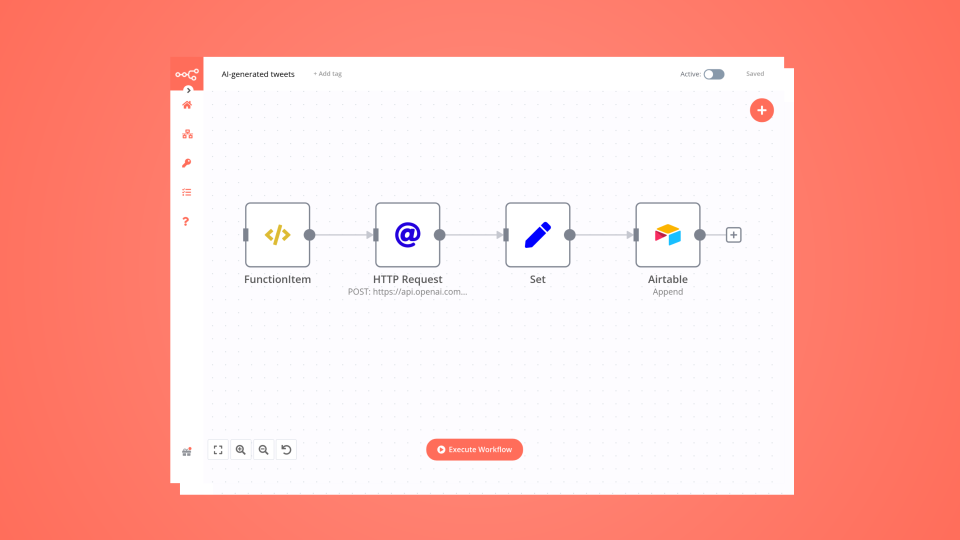
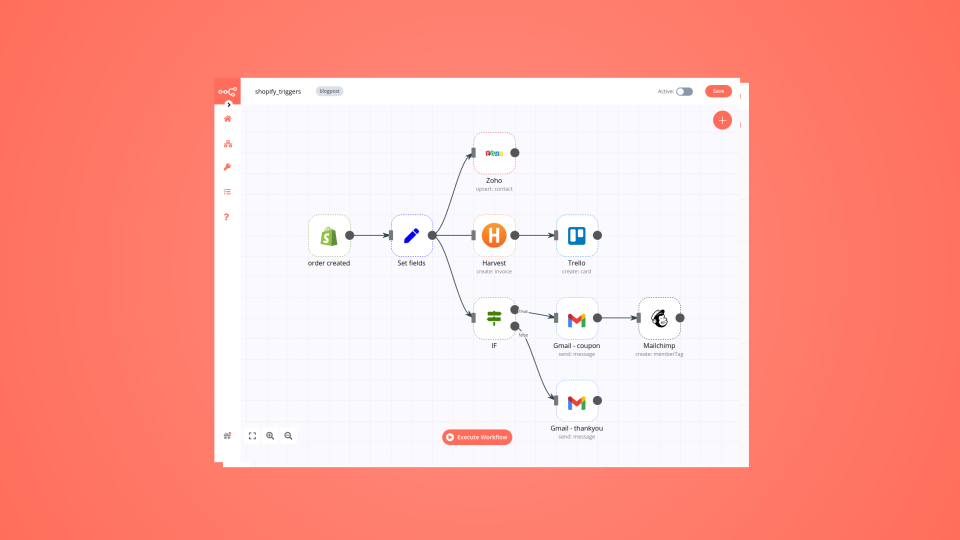
Back to Integrations
integrationShopify node
integrationAirtable node

Shopify and Airtable integration

Save yourself the work of writing custom integrations for Shopify and Airtable and use n8n instead. Build adaptable and scalable Sales, and Data & Storage workflows that work with your technology stack. All within a building experience you will love.

How to connect Shopify and Airtable

  • Step 1: Create a new workflow
  • Step 2: Add and configure nodes
  • Step 3: Connect
  • Step 4: Customize and extend your integration
  • Step 5: Test and activate your workflow

Step 1: Create a new workflow and add the first step

In n8n, click the "Add workflow" button in the Workflows tab to create a new workflow. Add the starting point – a trigger on when your workflow should run: an app event, a schedule, a webhook call, another workflow, an AI chat, or a manual trigger. Sometimes, the HTTP Request node might already serve as your starting point.
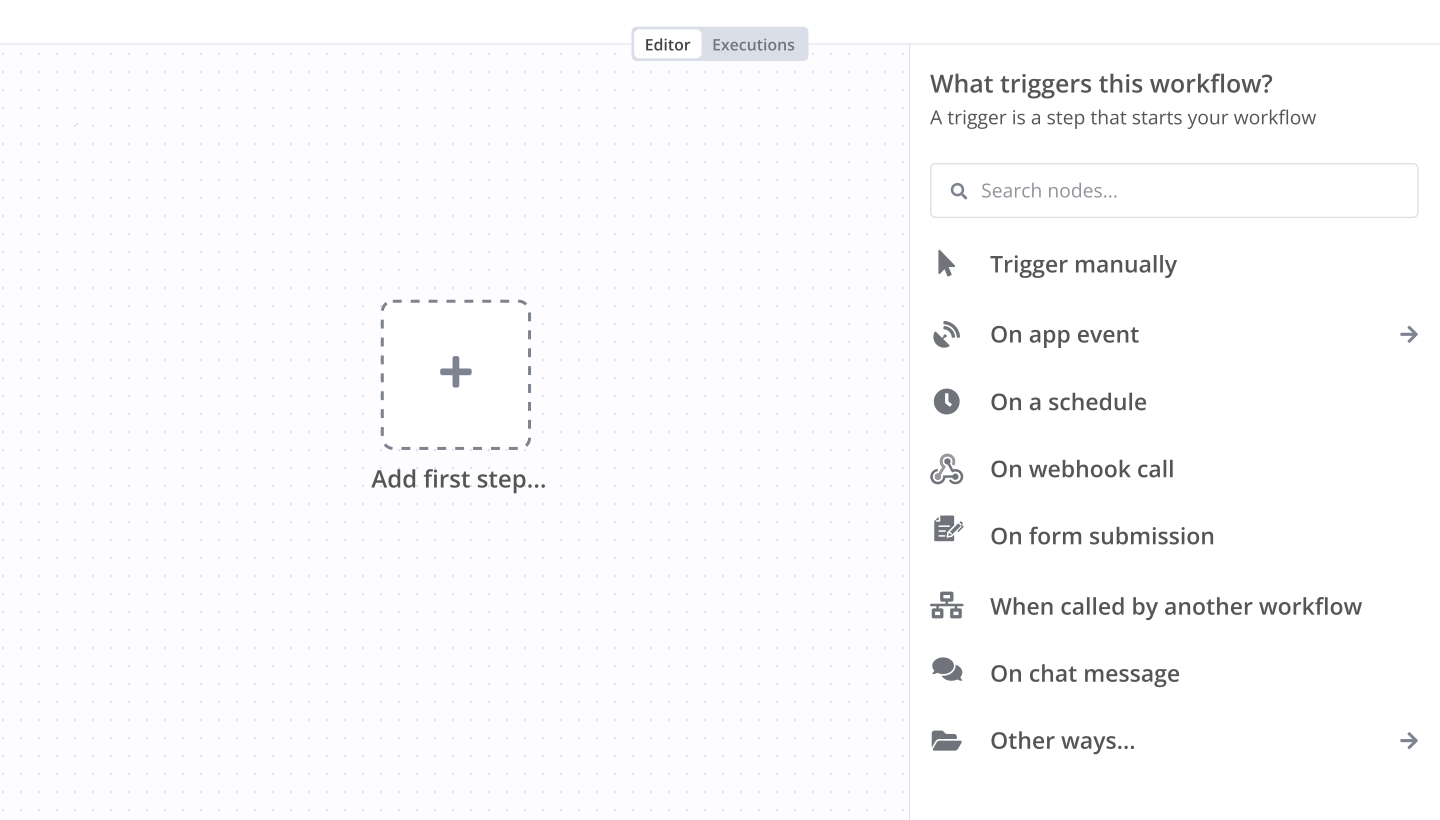
Shopify and Airtable integration: Create a new workflow and add the first step

Step 2: Add and configure Shopify and Airtable nodes

You can find Shopify and Airtable in the nodes panel. Drag them onto your workflow canvas, selecting their actions. Click each node, choose a credential, and authenticate to grant n8n access. Configure Shopify and Airtable nodes one by one: input data on the left, parameters in the middle, and output data on the right.

Shopify and Airtable integration: Add and configure Shopify and Airtable nodes

Step 3: Connect Shopify and Airtable

A connection establishes a link between Shopify and Airtable (or vice versa) to route data through the workflow. Data flows from the output of one node to the input of another. You can have single or multiple connections for each node.

Shopify and Airtable integration: Connect Shopify and Airtable

Step 4: Customize and extend your Shopify and Airtable integration

Use n8n's core nodes such as If, Split Out, Merge, and others to transform and manipulate data. Write custom JavaScript or Python in the Code node and run it as a step in your workflow. Connect Shopify and Airtable with any of n8n’s 1000+ integrations, and incorporate advanced AI logic into your workflows.

Shopify and Airtable integration: Customize and extend your Shopify and Airtable integration

Step 5: Test and activate your Shopify and Airtable workflow

Save and run the workflow to see if everything works as expected. Based on your configuration, data should flow from Shopify to Airtable or vice versa. Easily debug your workflow: you can check past executions to isolate and fix the mistake. Once you've tested everything, make sure to save your workflow and activate it.

Shopify and Airtable integration: Test and activate your Shopify and Airtable workflow

Abandoned cart recovery for Shopify via Gmail, Google Sheets & Twilio (no-code)

Who is this for?

This template is ideal for solo store owners, eCommerce marketers, automation beginners, or anyone using Shopify and Gmail who wants to recover lost revenue without coding.

What problem does this solve?

Customers often leave items in their cart without completing the purchase. Manually chasing those sales is inefficient and inconsistent. This workflow automates the recovery process by sending emails (and optionally SMS) based on Shopify checkout activity.

What this workflow does:

✅ Detects when a Shopify checkout is created but not completed,
⏳ Waits 1 hour, then checks if the cart was abandoned,
🧾 Pulls cart contents and applies a fallback discount,
📧 Sends a recovery email via Gmail,
🕓 After 24 hours, you can optionally send an SMS or WhatsApp reminder via Twilio,
📊 Logs each interaction to Google Sheets for tracking.

Setup:

Create Shopify, Gmail, Google Sheets, and Twilio credentials in your n8n instance,
Import the JSON workflow file
Replace the Shopify trigger with your store's webhook (set to “Checkout Create”),
Set your wait time (default: 1 hour),
Link your Gmail account and customize the email message,
(Optional) Link Twilio to add a multi-channel reminder,
Update the Google Sheets node with your own Sheet ID and headers.

🗒 Color-coded workflow notes:

To make customization easier, this template includes a visual sticky note system inside the n8n canvas.

You’ll find:

🟩 Green Notes → Main Steps
Clear, essential stages of the automation (e.g. wait, check cart status, send email),

🟦 Blue Notes → Personalization Tips
Small tweaks you can make to match your tone, store brand, or logic (e.g. email copy, discount logic),

🟨 Yellow Notes → Optional / Advanced
Features that you can explore setting up:
Twilio SMS, Airtable logging, human approval steps, etc.

👉 Look around each key node for quick tips, setup instructions, and TO-DO items.

This system helps you understand and modify the workflow at a glance — whether you're a beginner or scaling a pro setup.

How to customize this workflow?

🎯 Swap Shopify for WooCommerce or Stripe by replacing the trigger and cart-check logic,
💬 Localize and personalize each email message or add multilingual support via AI,
📈 Upgrade logging from Google Sheets to Airtable for CRM-style features,
🤝 Add manual approval steps for high-value discounts,
💡 Want a one-time unique code per user? Let us build that logic for you → [email protected]

Final notes

This template was designed by Velebit from Innovatio. External links in the workflow (e.g. support or upgrade options) are optional and purely informative, while only leading to the official company webiste with no affiliate or similar links included in the template itself.

A separate license applies to the paid version on Gumroad, which includes additional modules and commercial use rights.

Nodes used in this workflow

Popular Shopify and Airtable workflows

+5

Generate Shopify Product Listings from Images with Gemini AI and Airtable

Shopify Digital Product Automation (from just and image to complete Shopify product page.) This Shopify Digital Product Automation is an advanced n8n-powered workflow that leverages AI (Google Gemini), Airtable, and Shopify API to generate product details from images and automatically post them to Shopify. It fully automates the process — from uploading images to publishing Shopify products — with minimal manual effort. 💡 Key Advantages Our Shopify Digital Product Automation offers five core advantages: 🔗 Shopify Product Sync — Automatically posts product details including title, description, SEO fields, and matched category to Shopify. ✍️ AI-Powered Product Generation — Gemini analyzes uploaded images and generates engaging, SEO-friendly product titles, descriptions, and metadata. 🗂️ Structured Output — Outputs JSON-ready product data compatible with Shopify, ensuring smooth automation. 📄 Airtable Integration — Tracks uploaded images, analyzed data, and generated products to prevent duplication. 📤 End-to-End Automation — Handles the complete workflow from image upload to Shopify posting without manual intervention. ⚙️ How It Works The workflow follows a step-by-step automated process: Step-by-Step Process Upload Images – Add your digital artwork or poster images to Google Drive and record them in Airtable. Image Analysis – AI fetches new images and analyzes visual elements like characters, series, poster text, and style. Store Analysis Results – Updates analyzed data in Airtable and marks images as Used. Fetch Shopify Collections – Retrieves current collections from your Shopify store for category matching. Generate Product Details – Gemini generates product title, description, matched category, SEO page title, meta description, and URL handle. Save Generated Products – Stores generated product details in Airtable and marks them as generated. Post Products to Shopify – Automatically creates new products in Shopify using the API. Update Status – Marks products as posted in Airtable after successful posting. 🛠️ Setup Steps Required Node Configuration To implement this workflow, configure the following n8n nodes: Trigger Node** – Start workflow manually or via scheduler. Airtable Node** – Fetch raw images and store processed product details. Google Drive Node** – Access image files. HTTP Request Node** – Fetch Shopify collections. Code Node** – Refine AI outputs and format product data. Split & Limit Nodes** – Process images and products in batches. LangChain / Gemini Node** – Generate product titles, descriptions, and SEO data. Shopify Node** – Create products via Shopify API. Status Update Node** – Update Airtable with processing and posting status. 🔐 Credentials Required Before running the workflow, ensure you have the following credentials configured: Shopify Access Token** – For posting products and fetching collections. Gemini API Key** – For AI-powered product generation. Airtable API Key** – For storing and tracking workflow data. Google Drive OAuth** – To access image files. 👤 Ideal For This automation workflow is designed for: Shopify store owners managing hundreds of digital products Ecommerce teams automating product listings Marketing teams needing scalable, AI-driven product content workflows 💬 Bonus Tip The workflow is fully modular and customizable. You can extend it to: Automatically assign prices or discounts Multi-language product description generation Social media promotion of new products Email campaign integration All extensions can be implemented within the same n8n flow, making it a complete digital product automation solution.

Abandoned cart recovery for Shopify via Gmail, Google Sheets & Twilio (no-code)

Who is this for? This template is ideal for solo store owners, eCommerce marketers, automation beginners, or anyone using Shopify and Gmail who wants to recover lost revenue without coding. What problem does this solve? Customers often leave items in their cart without completing the purchase. Manually chasing those sales is inefficient and inconsistent. This workflow automates the recovery process by sending emails (and optionally SMS) based on Shopify checkout activity. What this workflow does: ✅ Detects when a Shopify checkout is created but not completed, ⏳ Waits 1 hour, then checks if the cart was abandoned, 🧾 Pulls cart contents and applies a fallback discount, 📧 Sends a recovery email via Gmail, 🕓 After 24 hours, you can optionally send an SMS or WhatsApp reminder via Twilio, 📊 Logs each interaction to Google Sheets for tracking. Setup: Create Shopify, Gmail, Google Sheets, and Twilio credentials in your n8n instance, Import the JSON workflow file Replace the Shopify trigger with your store's webhook (set to “Checkout Create”), Set your wait time (default: 1 hour), Link your Gmail account and customize the email message, (Optional) Link Twilio to add a multi-channel reminder, Update the Google Sheets node with your own Sheet ID and headers. 🗒 Color-coded workflow notes: To make customization easier, this template includes a visual sticky note system inside the n8n canvas. You’ll find: 🟩 Green Notes → Main Steps Clear, essential stages of the automation (e.g. wait, check cart status, send email), 🟦 Blue Notes → Personalization Tips Small tweaks you can make to match your tone, store brand, or logic (e.g. email copy, discount logic), 🟨 Yellow Notes → Optional / Advanced Features that you can explore setting up: Twilio SMS, Airtable logging, human approval steps, etc. 👉 Look around each key node for quick tips, setup instructions, and TO-DO items. This system helps you understand and modify the workflow at a glance — whether you're a beginner or scaling a pro setup. How to customize this workflow? 🎯 Swap Shopify for WooCommerce or Stripe by replacing the trigger and cart-check logic, 💬 Localize and personalize each email message or add multilingual support via AI, 📈 Upgrade logging from Google Sheets to Airtable for CRM-style features, 🤝 Add manual approval steps for high-value discounts, 💡 Want a one-time unique code per user? Let us build that logic for you → [email protected] Final notes This template was designed by Velebit from Innovatio. External links in the workflow (e.g. support or upgrade options) are optional and purely informative, while only leading to the official company webiste with no affiliate or similar links included in the template itself. A separate license applies to the paid version on Gumroad, which includes additional modules and commercial use rights.

Automate Shopify orders from Airtable with Gmail confirmations

This n8n template from Intuz provides a complete solution to automate your order creation process. It seamlessly syncs order data from an Airtable base directly to your Shopify store, creates the official order, and automatically sends a beautiful confirmation email to the customer, closing the loop by updating the status in Airtable. Who's this workflow for? E-commerce Managers Operations Teams Businesses with Custom Order Processes (e.g., B2B, phone orders, quotes) Shopify Store Owners using Airtable as a CRM How it works Triggered from Airtable: The workflow starts instantly when an Airtable Automation sends a signal via a webhook. This happens when you mark an order as ready to be processed in your Airtable base. Fetch Order Details: n8n receives the record ID from Airtable and fetches the complete order details, including customer information and the specific line items for that order. Create Order in Shopify: All the gathered information is used to create a new, official order directly in your Shopify store. Send Confirmation Email: Once the order is successfully created in Shopify, a professionally formatted HTML order confirmation email is sent to the customer via Gmail. Update Airtable Status: Finally, the workflow updates the original order record in Airtable, marking its status as "Done" to prevent duplicate processing and keep your records in sync. Key Requirements to Use This Template n8n Instance: An active n8n account (Cloud or self-hosted). Airtable Base: An Airtable base on a "Pro" plan or higher (required for Airtable Automations). It should contain tables for Orders and Order Line Items. Shopify Store: An active Shopify store with API access permissions. Gmail Account: A Gmail account to send confirmation emails. Setup Instructions Configure the n8n Workflow: Webhook Node: Activate the workflow to get the Production URL from the "Webhook" node. Copy this URL. Airtable Nodes: In the Get a record and Update record nodes, connect your Airtable credentials and select the correct Base and Table IDs. Shopify Node: In the Create an order node, connect your Shopify store using OAuth2 credentials. Gmail Node: In the Send a message node, connect your Gmail account. Set Up the Airtable Automation (Crucial Step): Go to your Airtable base and click on "Automations". Create a new automation. For the trigger, select "When a record meets conditions". Choose your Orders table and set a condition that makes sense for you (e.g., When "Shopify Ordered" is "Pending"). For the action, choose "Run a script". Paste the code below into the script editor: JavaScript const inputConfig = input.config(); const recordId = inputConfig.recordId; const webhookUrl = 'PASTE_YOUR_N8N_PRODUCTION_URL_HERE'; await fetch(webhookUrl, { method: 'POST', headers: { 'Content-Type': 'application/json' }, body: JSON.stringify({ recordId: recordId }), }); ReplacePASTE_YOUR_N8N_PRODUCTION_URL_HERE with the Production URL you copied from n8n. Add an input variable to the script named recordId and set its value to the "Airtable record ID" from the trigger step. Test the script and turn your Airtable Automation ON. Connect with us Website: https://www.intuz.com/n8n-workflow-automation-templates Email: [email protected] LinkedIn: https://www.linkedin.com/company/intuz Get Started: https://n8n.partnerlinks.io/intuz For Custom Workflow Automation Click here- Get Started
+6

Automate Shopify SEO Content Creation with GPT-4o & Claude Multi-Agent System

The AI-Powered Shopify SEO Content Automation is an enterprise-grade workflow that transforms product content creation for e-commerce stores. This sophisticated multi-agent system integrates GPT-4o, Claude Sonnet 4, Claude 3.5, Perplexity AI, and Haloscan keyword research to generate SEO-optimized product descriptions, metafields, and meta descriptions with zero manual intervention and built-in cannibalization prevention. To see the demo connect via my profile profile 💡 Key Advantages 🎯 Multi-Agent AI Orchestration Central Orchestrator manages complex workflows with specialized agents for descriptions, metafields, and SEO, each optimized for specific content types. 🔍 Advanced Keyword Research & Cannibalization Prevention Integrates Haloscan API for premium keyword discovery and SERP overlap analysis to prevent keyword cannibalization across your product catalog. 📊 Enterprise SEO Optimization Specialized for e-commerce with semantic alignment, TF-IDF optimization, and compliance with industry regulations and best practices. 🧠 Intelligent Content Strategy Perplexity AI provides market intelligence, search intent analysis, and trending keyword discovery for data-driven content decisions. 🏗️ Comprehensive Content Generation Creates product descriptions, 6 specialized metafields, SEO meta descriptions, and rich text formatting for complete Shopify integration. 📋 Automated Workflow Management Airtable integration tracks content creation status, manages keyword databases, and provides centralized workflow control. ⚙️ How It Works Content Type Selection Form-based trigger allows selection of content types: create_product_description, create_product_meta, or create_product_seo. Product Data Collection Retrieves comprehensive product information from Shopify and Airtable, including titles, descriptions, handles, and vendor details. Premium Keyword Discovery Haloscan API analyzes product titles for keyword opportunities Extracts search metrics, competitor keywords, and SERP data Perplexity provides market intelligence and search intent analysis SEO Compliance Checking Performs SERP overlap analysis to identify existing rankings Filters keywords to prevent cannibalization Updates Airtable with curated keyword lists Generates actionable SEO content strategies Multi-Agent Content Generation Product Description Agent (Claude Sonnet 4): Generates SEO-optimized product descriptions with verified facts Implements strict HTML structure with proper heading hierarchy Ensures compliance with e-commerce regulations and best practices Meta Fields Agent (Claude Sonnet 4): Creates 6 specialized metafields: ingredients, recommendations, nutritional values, warnings, short descriptions, and client arguments Enforces strict formatting rules and regulatory compliance Generates clean HTML compatible with Shopify themes SEO Fields Agent (Claude Sonnet 4): Produces optimized meta descriptions for search engines Integrates keyword research data for maximum organic visibility Applies current year SEO best practices and anti-keyword stuffing techniques Shopify Integration & Updates Updates product descriptions via Shopify API Uploads metafields using GraphQL mutations Converts HTML to Shopify Rich Text format Tracks completion status in Airtable 🛠️ Setup Steps Core Integrations Shopify Access Token – For product data retrieval and content updates OpenRouter API – For GPT-4o and Claude model access Haloscan API – For keyword research and SERP analysis Perplexity API – For market intelligence and content strategy Airtable OAuth – For workflow management and keyword tracking Agent Configuration Orchestrator Agent – Central workflow management with routing logic Product Description Agent – SEO content generation with fact verification Meta Fields Agent – Structured metafield creation with compliance rules SEO Fields Agent – Meta description optimization with keyword integration Premium Keyword Discovery – Automated keyword research and analysis -SEO Compliance Checker – Cannibalization prevention and strategy generation Workflow Tools MCP Server Integration – Airtable data management HTTP Request Tools – Haloscan API communication Structured Output Parsers – Data validation and formatting Memory Buffer Windows – Conversation context management Rich Text Converters – Shopify-compatible content formatting 🎯 Workflow Capabilities Product Description Generation Length Control: 150-300 words with hard limits SEO Structure: Optimized heading hierarchy and keyword placement Fact Verification: Zero-invention policy with source validation Brand Compliance: Controlled brand mentions and positioning Metafield Creation 6 Specialized Fields: Arguments, ingredients, recommendations, nutrition, warnings, descriptions HTML Formatting: Clean structure with allowed tags only Regulatory Compliance: Industry-specific warnings and disclaimers Dynamic Content: Adapts to different product categories automatically Advanced SEO Features Keyword Research: Automated discovery with search volume analysis Cannibalization Prevention: SERP overlap detection and filtering Meta Optimization: Character-limited descriptions with CTR focus Content Strategy: AI-generated SEO roadmaps based on market data 🔐 Credentials Required Shopify Access Token – Product management and content publishing OpenRouter API Key – Multi-model AI access (GPT-4o, Claude variants) Haloscan API Key – Keyword research and SERP analysis Perplexity API Key – Market intelligence and content strategy Airtable OAuth – Database management and workflow tracking 👤 Ideal For E-commerce Teams scaling content creation across hundreds of products SEO Specialists implementing advanced cannibalization prevention strategies Shopify Store Owners seeking enterprise-level content automation Marketing Agencies building scalable, multi-client SEO workflows Product Managers requiring compliance-focused content generation 💬 Advanced Features Multi-Language Ready Workflow architecture supports easy extension to multiple markets and languages with minimal configuration changes. Compliance Framework Built-in regulatory compliance checking ensures content meets industry standards and legal requirements. Scalable Architecture Modular design allows adding new content types, AI models, or integration points without workflow restructuring. Error Handling & Retries Comprehensive error management with automatic retries and fallback mechanisms ensures reliable content generation. 💡 Pro Tip: This workflow represents a complete SEO content factory that can process hundreds of products daily while maintaining quality, compliance, and search engine optimization standards.

Build your own Shopify and Airtable integration

Create custom Shopify and Airtable workflows by choosing triggers and actions. Nodes come with global operations and settings, as well as app-specific parameters that can be configured. You can also use the HTTP Request node to query data from any app or service with a REST API.

Shopify supported actions

Create
Create an order
Delete
Delete an order
Get
Get an order
Get Many
Get many orders
Update
Update an order
Create
Create a product
Delete
Delete a product
Get
Get a product
Get Many
Get many products
Update
Update a product

Airtable supported actions

Get Many
List all the bases
Get Schema
Get the schema of the tables in a base
Create
Create a new record in a table
Create or Update
Create a new record, or update the current one if it already exists (upsert)
Delete
Delete a record from a table
Get
Retrieve a record from a table
Search
Search for specific records or list all
Update
Update a record in a table

FAQs

  • Can Shopify connect with Airtable?

  • Can I use Shopify’s API with n8n?

  • Can I use Airtable’s API with n8n?

  • Is n8n secure for integrating Shopify and Airtable?

  • How to get started with Shopify and Airtable integration in n8n.io?

Need help setting up your Shopify and Airtable integration?

Discover our latest community's recommendations and join the discussions about Shopify and Airtable integration.
Michael Wells
Driss Talainte
Adriano Cantele

Looking to integrate Shopify and Airtable in your company?

Over 3000 companies switch to n8n every single week

Why use n8n to integrate Shopify with Airtable

Build complex workflows, really fast

Build complex workflows, really fast

Handle branching, merging and iteration easily.
Pause your workflow to wait for external events.

Code when you need it, UI when you don't

Simple debugging

Your data is displayed alongside your settings, making edge cases easy to track down.

Use templates to get started fast

Use 1000+ workflow templates available from our core team and our community.

Reuse your work

Copy and paste, easily import and export workflows.

Implement complex processes faster with n8n

red iconyellow iconred iconyellow icon