Back to Integrations
integrationShopify node
integrationTelegram node

Shopify and Telegram integration

Save yourself the work of writing custom integrations for Shopify and Telegram and use n8n instead. Build adaptable and scalable Sales, Communication, and HITL workflows that work with your technology stack. All within a building experience you will love.

How to connect Shopify and Telegram

  • Step 1: Create a new workflow
  • Step 2: Add and configure nodes
  • Step 3: Connect
  • Step 4: Customize and extend your integration
  • Step 5: Test and activate your workflow

Step 1: Create a new workflow and add the first step

In n8n, click the "Add workflow" button in the Workflows tab to create a new workflow. Add the starting point – a trigger on when your workflow should run: an app event, a schedule, a webhook call, another workflow, an AI chat, or a manual trigger. Sometimes, the HTTP Request node might already serve as your starting point.
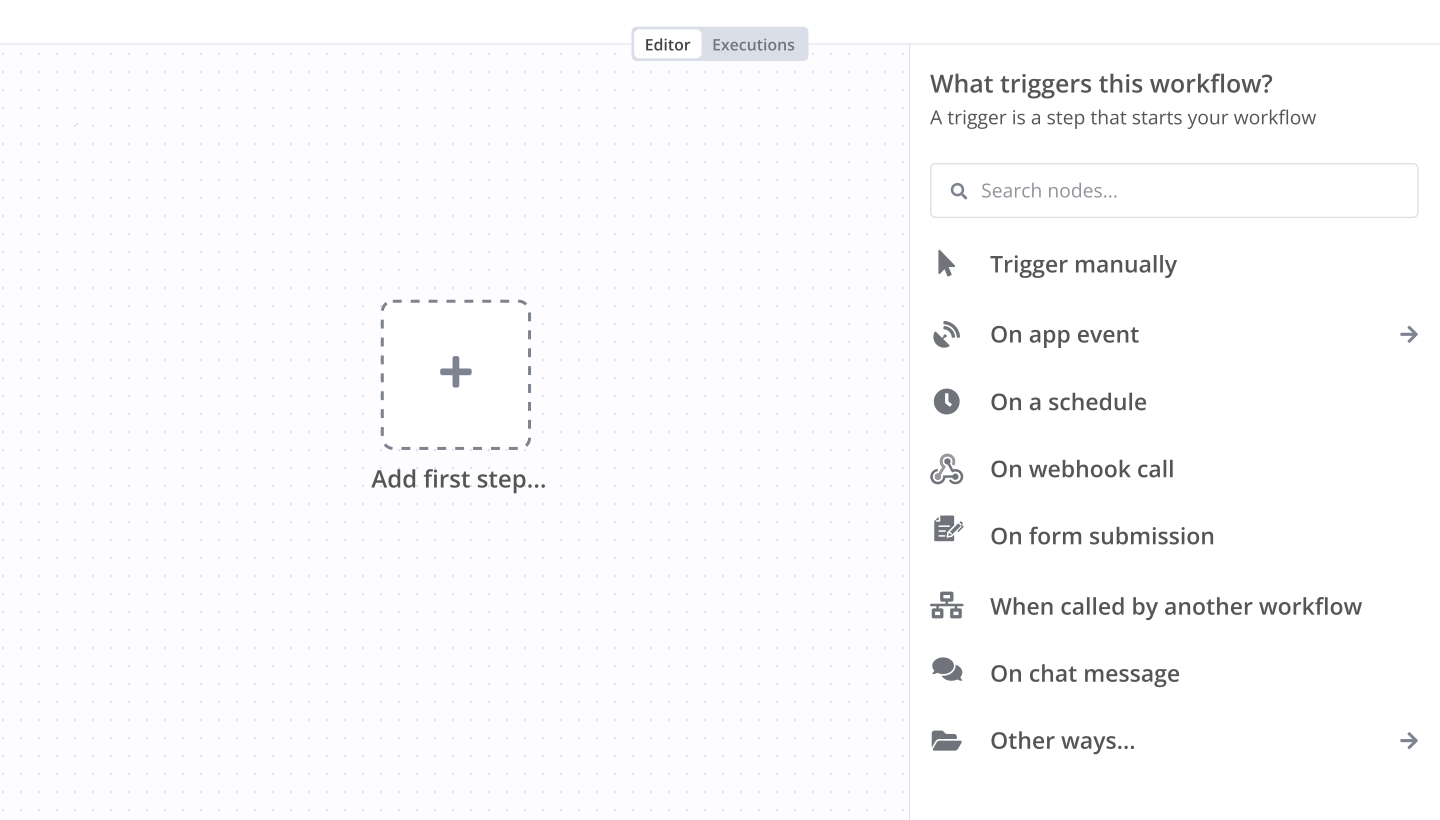
Shopify and Telegram integration: Create a new workflow and add the first step

Step 2: Add and configure Shopify and Telegram nodes

You can find Shopify and Telegram in the nodes panel. Drag them onto your workflow canvas, selecting their actions. Click each node, choose a credential, and authenticate to grant n8n access. Configure Shopify and Telegram nodes one by one: input data on the left, parameters in the middle, and output data on the right.

Shopify and Telegram integration: Add and configure Shopify and Telegram nodes

Step 3: Connect Shopify and Telegram

A connection establishes a link between Shopify and Telegram (or vice versa) to route data through the workflow. Data flows from the output of one node to the input of another. You can have single or multiple connections for each node.

Shopify and Telegram integration: Connect Shopify and Telegram

Step 4: Customize and extend your Shopify and Telegram integration

Use n8n's core nodes such as If, Split Out, Merge, and others to transform and manipulate data. Write custom JavaScript or Python in the Code node and run it as a step in your workflow. Connect Shopify and Telegram with any of n8n’s 1000+ integrations, and incorporate advanced AI logic into your workflows.

Shopify and Telegram integration: Customize and extend your Shopify and Telegram integration

Step 5: Test and activate your Shopify and Telegram workflow

Save and run the workflow to see if everything works as expected. Based on your configuration, data should flow from Shopify to Telegram or vice versa. Easily debug your workflow: you can check past executions to isolate and fix the mistake. Once you've tested everything, make sure to save your workflow and activate it.

Shopify and Telegram integration: Test and activate your Shopify and Telegram workflow

Promote new Shopify products on Twitter and Telegram

This workflow automatically promotes your new Shopify products on Twitter and Telegram. This workflow is also featured in the blog post 6 e-commerce workflows to power up your Shopify store.

Prerequisites

A Shopify account and credentials
A Twitter account and credentials
A Telegram account and credentials for the channel you want to send messages to.

Nodes

Shopify Trigger node triggers the workflow when you create a new product in Shopify.
Twitter node posts a tweet with the text "Hey there, my design is now on a new product! Visit my {shop name} to get this cool {product title} (and check out more {product type})".
Telegram node posts a message with the same text as above in a Telegram channel.

Nodes used in this workflow

Popular Shopify and Telegram workflows

Query and Monitor Shopify Orders via Telegram Bot Commands

This n8n workflow integrates Shopify order management with Telegram, allowing you to query open orders and order details directly through Telegram chat commands. It provides an interactive way to monitor your Shopify store orders using Telegram as an interface. Key Features Telegram Trigger: Listens for messages and callback queries from your Telegram bot. Switch Node: Routes incoming Telegram messages to different flows based on message content: /orders command to fetch all open orders Callback queries starting with /order_ to fetch details of a specific order Shopify Get Orders: Retrieves all open orders from your Shopify store using your Shopify API credentials. Conditional Check (If Node): Determines if there are any open orders; branches accordingly: If orders exist, prepare an interactive Telegram message with a list of orders.1 If no orders exist, send a “No Order” message. Orders Code Node: Formats the list of open orders into a Telegram message with inline buttons. Each button corresponds to an order and sends a callback data containing the order ID. Get Order Details: When a user selects an order button, the workflow extracts the order ID from the callback data, fetches detailed order information from Shopify, and formats the order items into a readable message. Send Messages to Telegram: Sends formatted messages back to Telegram: The list of open orders with clickable buttons. Detailed information about a selected order. “No Order” notification if there are no open orders. How It Works A Telegram user sends /orders to the bot. The workflow fetches open orders from Shopify and sends a message with buttons listing each order. When a user clicks an order button, the workflow fetches and displays detailed information about that specific order in Telegram. If there are no open orders, the bot replies accordingly. Setup Instructions Create a Telegram Bot: Use @BotFather on Telegram to create a bot and get the bot token. Obtain Shopify API Credentials: Create a private app in your Shopify admin dashboard with permission to read orders. Obtain the API key and access token. Configure n8n Credentials: Add your Telegram bot token as Telegram API credentials in n8n. Add your Shopify API credentials in n8n Shopify credentials. Import the Workflow: Import this workflow into your n8n instance. Update the Telegram and Shopify credential nodes to use your credentials. Set Webhook URLs: Ensure your Telegram bot webhook is set correctly to receive messages. n8n webhook URLs should be publicly accessible. Test the Workflow: Send /orders to your Telegram bot to verify it retrieves and lists open orders. Customization Guidance Modify Commands: Update the Switch node to add more Telegram commands or change existing ones. Change Message Formats: Edit the Code nodes to customize how order lists and details appear. Expand Shopify Integration: Add nodes to handle other Shopify operations like updating orders, managing products, etc. Multi-User Support: Adapt the workflow to handle multiple Telegram chat IDs dynamically. Security and Implementation Notes The native Telegram node in n8n has limitations: it does not support sending dynamic inline keyboard arrays in JSON format, which is essential for displaying a variable number of buttons depending on how many orders are retrieved from Shopify. To overcome this, this workflow uses the HTTP Request node to call Telegram’s API directly, allowing full flexibility to send dynamic inline keyboards as JSON objects. (I will make an update once Telegram Node support dynamic inline keyboards). Security Considerations:** Always store your Telegram bot token securely in n8n credentials and never expose it in the HTTP Request node’s URL or body directly. Use environment variables or n8n credentials to inject tokens safely. Be mindful of Telegram API rate limits and add error handling in your workflow. While using HTTP Request nodes increases flexibility, it also requires careful management of request payloads and authentication, as opposed to the built-in Telegram node which abstracts much of this complexity. Benefits Quickly access Shopify order data without leaving Telegram. Interactive inline buttons improve user experience. Automated, real-time integration between Shopify and Telegram.
+6

Automatically Share Shopify New Products Across All Social Media Platforms

Who it's for This n8n workflow is designed for Shopify store owners, e-commerce managers, and digital marketers who want to automate their product promotion across multiple platforms. The workflow automatically creates promotional content for new products and distributes them across various social media and content management platforms. Key Features Automatically detects new Shopify products AI converts product descriptions into clear bullet points Optimizes images for each platform Publishes formatted posts to WordPress Shares content across multiple social platforms Sends notifications after successful posts Requirements Shopify Access Token**: For detecting new products in your store OpenAI API Credentials**: For enhancing product descriptions WordPress API Credentials**: For creating posts and uploading media Social Media Platform Credentials**: Facebook Graph API Telegram Bot API LinkedIn OAuth2 API Discord Bot API Notification Service Credentials**: Gmail OAuth2 Rapiwa API (for WhatsApp) Workflow Steps Shopify Trigger: Detects when a new product is created in your Shopify store Image Processing: Extracts and processes product images from the Shopify data Content Enhancement: Uses OpenAI to convert HTML product descriptions into concise, customer-friendly bullet points WordPress Integration: Creates a blog post on your WordPress site with the product information Multi-Platform Sharing: Automatically shares the product on: Facebook page, Telegram channel, LinkedIn profile and page, Discord channel, Instagram Notification System: Sends completion notifications through multiple channels (Telegram, Gmail, Discord, WhatsApp) Support & Help WhatsApp**: Chat on WhatsApp Discord**: SpaGreen Community Facebook Group**: SpaGreen Support Website**: https://spagreen.net Developer Portfolio**: Codecanyon SpaGreen

Transform chatbots into AI advisors with memory and real-time context

How it works • Receives a user message from a chat • Uses an LLM node to understand user intent and generate a response • Retrieves and stores conversation memory in a database (Supabase) • Fetches real-time product or business data from an external API (e.g. Shopify) • Applies custom logic to ensure a consistent, human-like tone • Sends a contextual response back to the user Set up steps • Import the workflow into n8n • Create and connect the required credentials (LLM, database, API) • Configure environment variables and placeholders • Adjust the prompt and logic to your specific business needs • Test the workflow using sample user messages

Import Faire products to Shopify using BrowserAct, Gemini, and Telegram

Import products from Faire to Shopify using BrowserAct, Gemini and Telegram This workflow acts as an automated dropshipping assistant. It allows you to send product links from Faire.com to a Telegram bot, which then scrapes the product data, rewrites it for SEO using AI, and imports it directly into your Shopify store—handling images, pricing, and descriptions automatically. Target Audience Dropshippers, e-commerce store owners, and inventory managers sourcing products from Faire. How it works Receive Link: You send a Faire product URL to your Telegram bot. Analyze Input: An AI Agent classifies your message to determine if it's a product import request or just a chat. Scrape Product: BrowserAct executes a background task to scrape the product's title, description, price, and images from the provided URL. Human Verification (CAPTCHA): If the scraper hits a CAPTCHA, the workflow pauses and alerts you on Telegram. Once you solve it, the workflow resumes automatically. AI Enhancement: A second AI Agent (using Google Gemini) rewrites the product title and description to be SEO-friendly and sales-oriented, formatting it in HTML. Sync to Shopify: The workflow creates the product in Shopify, adds the correct variant pricing/SKU, and uploads all scraped images. How to set up Configure Credentials: Connect your Telegram, Shopify, BrowserAct, and Google Gemini accounts in n8n. Prepare BrowserAct: Ensure the Product Importer Bot for Shopify template is saved in your BrowserAct account. Configure Telegram: Ensure your bot is created via BotFather and the API token is added to the Telegram credentials. Activate: Turn on the workflow. Test: Send a Faire product link to your bot to start the import process. Requirements BrowserAct* account with the Product Importer Bot for Shopify* template. Shopify** account (Access Token with write_products permission). Telegram** account (Bot Token). Google Gemini** account. How to customize the workflow Change Pricing Logic: Add a Set node before the "Add Price" node to increase the scraped price by a percentage (markup) before importing. Translate Content: Modify the system prompt in the Analyzing Products agent to translate the description into another language during the rewrite. Add More Fields: Update the Analyzing Products agent to extract additional data like "Material" or "Dimensions" and map them to Shopify Metafields. Need Help? How to Find Your BrowserAct API Key & Workflow ID How to Connect n8n to BrowserAct How to Use & Customize BrowserAct Templates Workflow Guidance and Showcase Video How to Build a Shopify Product Importer with n8n & BrowserAct (No-Code)

Promote new Shopify products on Twitter and Telegram

This workflow automatically promotes your new Shopify products on Twitter and Telegram. This workflow is also featured in the blog post 6 e-commerce workflows to power up your Shopify store. Prerequisites A Shopify account and credentials A Twitter account and credentials A Telegram account and credentials for the channel you want to send messages to. Nodes Shopify Trigger node triggers the workflow when you create a new product in Shopify. Twitter node posts a tweet with the text "Hey there, my design is now on a new product! Visit my {shop name} to get this cool {product title} (and check out more {product type})". Telegram node posts a message with the same text as above in a Telegram channel.

Build your own Shopify and Telegram integration

Create custom Shopify and Telegram workflows by choosing triggers and actions. Nodes come with global operations and settings, as well as app-specific parameters that can be configured. You can also use the HTTP Request node to query data from any app or service with a REST API.

Shopify supported actions

Create
Create an order
Delete
Delete an order
Get
Get an order
Get Many
Get many orders
Update
Update an order
Create
Create a product
Delete
Delete a product
Get
Get a product
Get Many
Get many products
Update
Update a product

Telegram supported actions

Get
Get up to date information about a chat
Get Administrators
Get the Administrators of a chat
Get Member
Get the member of a chat
Leave
Leave a group, supergroup or channel
Set Description
Set the description of a chat
Set Title
Set the title of a chat
Answer Query
Send answer to callback query sent from inline keyboard
Answer Inline Query
Send answer to callback query sent from inline bot
Get
Get a file
Delete Chat Message
Delete a chat message
Edit Message Text
Edit a text message
Pin Chat Message
Pin a chat message
Send Animation
Send an animated file
Send Audio
Send a audio file
Send Chat Action
Send a chat action
Send Document
Send a document
Send Location
Send a location
Send Media Group
Send group of photos or videos to album
Send Message
Send a text message
Send and Wait for Response
Send a message and wait for response
Send Photo
Send a photo
Send Sticker
Send a sticker
Send Video
Send a video
Unpin Chat Message
Unpin a chat message

FAQs

  • Can Shopify connect with Telegram?

  • Can I use Shopify’s API with n8n?

  • Can I use Telegram’s API with n8n?

  • Is n8n secure for integrating Shopify and Telegram?

  • How to get started with Shopify and Telegram integration in n8n.io?

Need help setting up your Shopify and Telegram integration?

Discover our latest community's recommendations and join the discussions about Shopify and Telegram integration.
Trigi Digital
Driss Talainte
Adriano Cantele

Looking to integrate Shopify and Telegram in your company?

Over 3000 companies switch to n8n every single week

Why use n8n to integrate Shopify with Telegram

Build complex workflows, really fast

Build complex workflows, really fast

Handle branching, merging and iteration easily.
Pause your workflow to wait for external events.

Code when you need it, UI when you don't

Simple debugging

Your data is displayed alongside your settings, making edge cases easy to track down.

Use templates to get started fast

Use 1000+ workflow templates available from our core team and our community.

Reuse your work

Copy and paste, easily import and export workflows.

Implement complex processes faster with n8n

red iconyellow iconred iconyellow icon