Back to Integrations
integrationShopify node
integrationWooCommerce node

Shopify and WooCommerce integration

Save yourself the work of writing custom integrations for Shopify and WooCommerce and use n8n instead. Build adaptable and scalable Sales workflows that work with your technology stack. All within a building experience you will love.

How to connect Shopify and WooCommerce

  • Step 1: Create a new workflow
  • Step 2: Add and configure nodes
  • Step 3: Connect
  • Step 4: Customize and extend your integration
  • Step 5: Test and activate your workflow

Step 1: Create a new workflow and add the first step

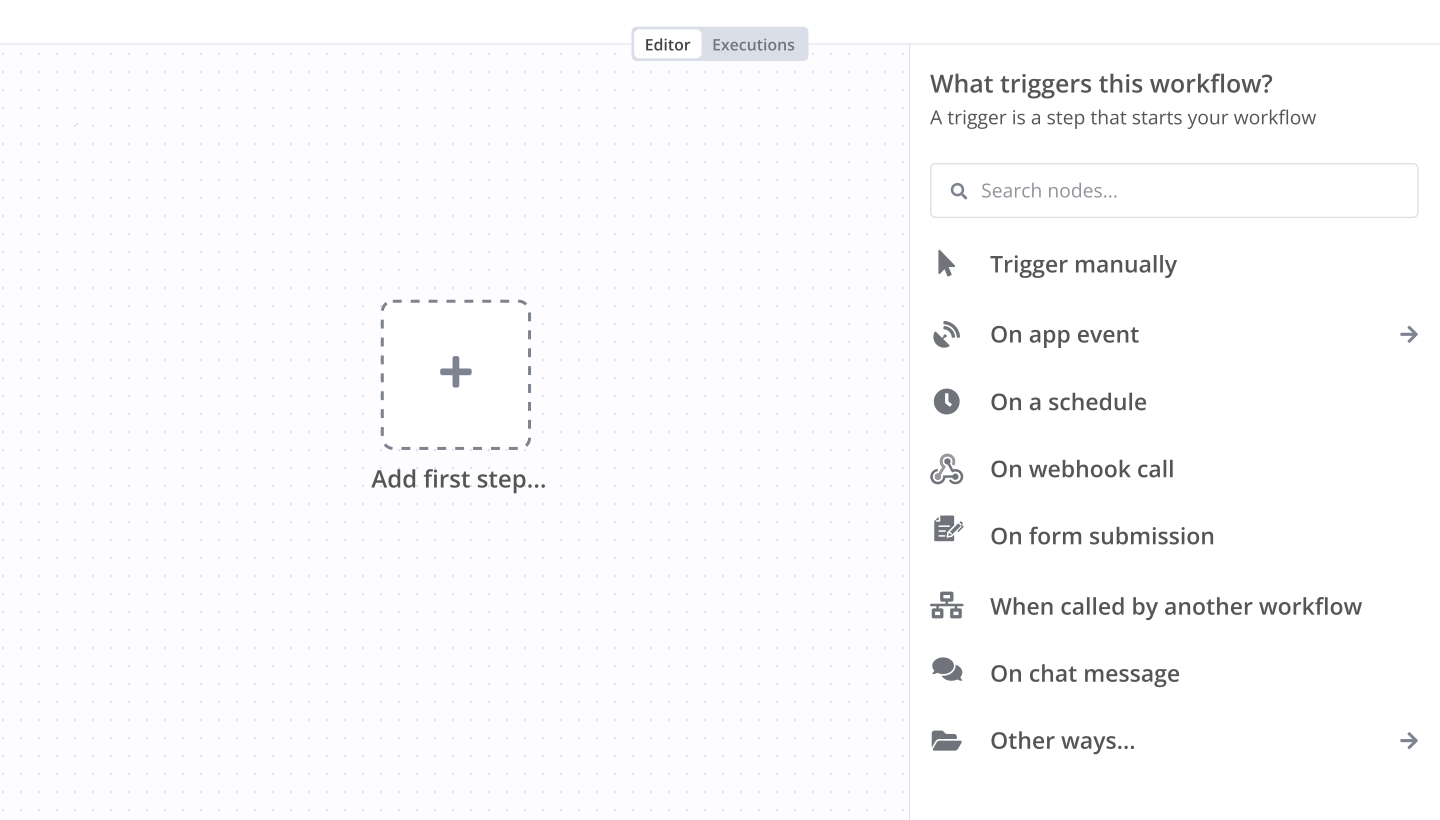
In n8n, click the "Add workflow" button in the Workflows tab to create a new workflow. Add the starting point – a trigger on when your workflow should run: an app event, a schedule, a webhook call, another workflow, an AI chat, or a manual trigger. Sometimes, the HTTP Request node might already serve as your starting point.

Shopify and WooCommerce integration: Create a new workflow and add the first step

Step 2: Add and configure Shopify and WooCommerce nodes

You can find Shopify and WooCommerce in the nodes panel. Drag them onto your workflow canvas, selecting their actions. Click each node, choose a credential, and authenticate to grant n8n access. Configure Shopify and WooCommerce nodes one by one: input data on the left, parameters in the middle, and output data on the right.

Shopify and WooCommerce integration: Add and configure Shopify and WooCommerce nodes

Step 3: Connect Shopify and WooCommerce

A connection establishes a link between Shopify and WooCommerce (or vice versa) to route data through the workflow. Data flows from the output of one node to the input of another. You can have single or multiple connections for each node.

Shopify and WooCommerce integration: Connect Shopify and WooCommerce

Step 4: Customize and extend your Shopify and WooCommerce integration

Use n8n's core nodes such as If, Split Out, Merge, and others to transform and manipulate data. Write custom JavaScript or Python in the Code node and run it as a step in your workflow. Connect Shopify and WooCommerce with any of n8n’s 1000+ integrations, and incorporate advanced AI logic into your workflows.

Shopify and WooCommerce integration: Customize and extend your Shopify and WooCommerce integration

Step 5: Test and activate your Shopify and WooCommerce workflow

Save and run the workflow to see if everything works as expected. Based on your configuration, data should flow from Shopify to WooCommerce or vice versa. Easily debug your workflow: you can check past executions to isolate and fix the mistake. Once you've tested everything, make sure to save your workflow and activate it.

Shopify and WooCommerce integration: Test and activate your Shopify and WooCommerce workflow

Sync retail product prices between Shopify and WooCommerce with alerts

Retail Price Sync Automation for Shopify & WooCommerce

This workflow automates the synchronization of product prices across Shopify and WooCommerce platforms to ensure retail consistency. It triggers when a price change is detected in either system, applies platform-specific pricing rules (such as psychological rounding) and updates the secondary platform. The workflow also includes a threshold-based alerting system via Gmail for major price drops and logs every change to a Google Sheets master file for auditing.

Quick Implementation Steps

Set the priceChangeThreshold in the Shopify Configuration and WooCommerce Configuration nodes.
Connect your Shopify Access Token credentials to the Shopify trigger and update nodes.
Connect your WooCommerce API credentials to the WooCommerce trigger and update nodes.
Link your Google Sheets OAuth2 and Gmail OAuth2 credentials for logging and notifications.
Specify the documentId for your pricing log in the Log Price Changes node.

What It Does

This workflow acts as a bridge between two major e-commerce platforms, ensuring that a price update in one is intelligently reflected in the other. It goes beyond simple mirroring by:

Threshold Monitoring: Detecting if a price change exceeds a set limit (e.g., $150 or $500) to trigger immediate management alerts.
Platform-Specific Logic: Automatically formatting prices for different environments—for example, rounding WooCommerce prices to the nearest .99 for psychological pricing while using standard rounding for Shopify.
Audit Trail Creation: Maintaining a centralized record of all price migrations in Google Sheets, including SKUs, old vs. new prices and timestamps.
Team Communication: Sending automated email notifications to ensure the team is aware of successful syncs or critical price volatility.

Who’s It For

Multi-Channel Retailers who need to keep pricing in sync across Shopify and WooCommerce storefronts.
Inventory Managers looking to automate price adjustments without manual data entry.
Finance & Operations Teams requiring an automated audit log of all pricing modifications.

Technical Workflow Breakdown

Entry Points (Triggers)

Shopify Price Update: Triggers on the orders/updated topic (or product updates) to capture new price data from Shopify.
WooCommerce Price Update: Triggers on product.updated to capture changes originating from the WooCommerce store.

Processing & Logic

Configuration Nodes: Define the source system and set the specific threshold for what constitutes a "major" price change.
Apply Platform-Specific Rules: A custom code block that calculates psychological pricing (e.g., forcing a .99 ending) and ensures prices never drop below a minimum safety floor (e.g., $1.00).
Check Price Change Threshold: An internal filter that routes the workflow based on the magnitude of the price shift.

Output & Integrations

Update Nodes: Pushes the formatted price data to the target platform (Shopify or WooCommerce).
Log Price Changes: Appends a new row to a Google Sheet with detailed metadata.
Notifications: Uses Gmail to send high-priority alerts for major drops and routine confirmations for successful syncs.

Customization

Adjust Pricing Strategy

Modify the Apply Platform-Specific Rules (Code Node) to change rounding logic, add currency conversion factors or implement different psychological pricing tiers.

Change Alert Thresholds

Update the priceChangeThreshold value in the Shopify Configuration or WooCommerce Configuration nodes to make alerts more or less sensitive.

Expand Logging

The Log Price Changes node is set to autoMapInputData. You can add custom columns to your Google Sheet and the workflow will automatically attempt to fill them if the data exists in the workflow.

Troubleshooting Guide

Issue Possible Cause Solution
Sync Not Triggering Webhook not registered correctly. Check the webhookId in the Shopify/WooCommerce trigger nodes and ensure the apps have permission to send events.
Google Sheets Error Sheet ID or Column names mismatched. Verify the documentId and ensure the id column exists in your Sheet for matching.
Prices Not Rounding Correct/Expected Code node logic error. Review the JavaScript in Apply Platform-Specific Rules to ensure the Math functions match your strategy.
Emails Not Sending Gmail OAuth2 expired. Re-authenticate your Gmail credentials in the n8n settings.

Need Help?

If you need assistance adjusting the psychological pricing code, adding more platforms (like Amazon or eBay) or setting up advanced Slack notifications, please reach out to our n8n automation experts at WeblineIndia. We can help scale this workflow to manage thousands of SKUs with high precision.

Nodes used in this workflow

Popular Shopify and WooCommerce workflows

Sync Shopify and WooCommerce sales into a Google Sheets accounting ledger

(Retail) Auto-Sync Transactions to Accounting Tools This workflow automates the collection and standardization of sales data from Shopify and WooCommerce into a centralized Google Sheets ledger. It triggers on new orders, normalizes disparate platform data, distinguishes between sales and refunds, and formats the information for accounting readiness. This eliminates manual data entry and ensures real-time financial tracking across multiple storefronts. Quick Implementation Steps Connect Triggers:** Authenticate your Shopify and WooCommerce accounts in the respective "Order Events" nodes. Set Webhooks:** Add the generated n8n Webhook URLs to your Shopify and WooCommerce notification settings. Configure Sheets:** Select your target spreadsheet and sheet name in the "Log to Google Sheets" node. Map Credentials:** Ensure Google Sheets OAuth2 is connected to authorize the "Append or Update" action. Verify Fields:** Test the workflow to ensure platform-specific keys map correctly to your sheet columns. What It Does The workflow acts as a bridge between e-commerce storefronts and financial reporting tools: Multi-Source Ingestion:** Listens for real-time webhooks from both Shopify (orders/create) and WooCommerce (order.created). Data Normalization:** Translates platform-specific JSON (like current_total_price vs total) into a single internal schema. Smart Routing:** Evaluates the transaction type to determine if the record is a standard sale or a refund. Accounting Formatting:** Structures data into financial-ready blocks, including calculated line items, tax details, and audit notes. Centralized Logging:** Records all activity in Google Sheets, using an "Append or Update" logic to prevent duplicate entries. Who's It For E-commerce Business Owners managing multiple stores who need a single "source of truth" for daily revenue. Accountants & Bookkeepers who require standardized transaction data without manual export/import tasks. Operations Managers looking to monitor multi-platform sales performance in real-time within a shared spreadsheet. Technical Workflow Breakdown Entry Points (Triggers) Shopify Order Events:** Listens for the orders/create topic to capture new Shopify transactions. WooCommerce Order Events:** Monitors the order.created event for new WooCommerce sales. Processing & Logic Platform Configuration:** Separate nodes for Shopify and WooCommerce that map native fields to standardized internal keys. Merge Platform Data:** Consolidates the two distinct platform paths into a single unified stream. Format Transaction Data:** A "Set" node that builds the final data object, creating a "description" string and assigning global statuses. Check Transaction Type:** An "If" node that routes data based on whether the transactionType equals "sale". Output & Integrations Format Sale/Refund Entry:** Logic-specific nodes that prepare line-item details (e.g., setting ItemRef to "Sales" or "Refund") and handle currency formatting. Google Sheets (Log Data):** Appends the final formatted record to the "Price_Changes_Log" spreadsheet, including date, customer, amount, and document numbers. Customization Add New Platforms You can extend this workflow by adding a new Trigger node (e.g., Magento or Amazon) and connecting it to a new Configuration node before the Merge node. Adjust Tax/Fee Logic Modify the "Format Sale Entry" node expressions to calculate net revenue after marketplace fees or to separate regional tax codes into different columns. Change Log Destination Swap the Google Sheets node for an ERP or Accounting node (like QuickBooks or Xero) to push data directly into professional accounting software. Troubleshooting Guide | Issue | Possible Cause | Solution | | :--------------------- | :--------------------------------------- | :------------------------------------------------------------------------------------------------- | | Webhook Not Triggering | Incorrect Webhook URL in Store settings. | Copy the Production Webhook URL from n8n and update your Shopify/WooCommerce settings. | | Missing Data Fields | Platform API version mismatch. | Check the "Configuration" nodes to ensure JSON keys match the current platform payload. | | Sheets Sync Failure | Column headers don't match. | Ensure your Google Sheet has headers matching the keys in the "Log to Google Sheets" node. | | Duplicate Records | "Append" mode used instead of "Update". | Set the Google Sheets operation to "Append or Update" and select a unique identifier like orderId. | Need Help? If you need help mapping additional custom fields from your store or connecting this to a professional accounting suite like QuickBooks, we're here to help. Feel free to contact our n8n developers at WeblineIndia.

Sync retail product prices between Shopify and WooCommerce with alerts

Retail Price Sync Automation for Shopify & WooCommerce This workflow automates the synchronization of product prices across Shopify and WooCommerce platforms to ensure retail consistency. It triggers when a price change is detected in either system, applies platform-specific pricing rules (such as psychological rounding) and updates the secondary platform. The workflow also includes a threshold-based alerting system via Gmail for major price drops and logs every change to a Google Sheets master file for auditing. Quick Implementation Steps Set the priceChangeThreshold in the Shopify Configuration and WooCommerce Configuration nodes. Connect your Shopify Access Token credentials to the Shopify trigger and update nodes. Connect your WooCommerce API credentials to the WooCommerce trigger and update nodes. Link your Google Sheets OAuth2 and Gmail OAuth2 credentials for logging and notifications. Specify the documentId for your pricing log in the Log Price Changes node. What It Does This workflow acts as a bridge between two major e-commerce platforms, ensuring that a price update in one is intelligently reflected in the other. It goes beyond simple mirroring by: Threshold Monitoring: Detecting if a price change exceeds a set limit (e.g., $150 or $500) to trigger immediate management alerts. Platform-Specific Logic: Automatically formatting prices for different environments—for example, rounding WooCommerce prices to the nearest .99 for psychological pricing while using standard rounding for Shopify. Audit Trail Creation: Maintaining a centralized record of all price migrations in Google Sheets, including SKUs, old vs. new prices and timestamps. Team Communication: Sending automated email notifications to ensure the team is aware of successful syncs or critical price volatility. Who’s It For Multi-Channel Retailers who need to keep pricing in sync across Shopify and WooCommerce storefronts. Inventory Managers looking to automate price adjustments without manual data entry. Finance & Operations Teams requiring an automated audit log of all pricing modifications. Technical Workflow Breakdown Entry Points (Triggers) Shopify Price Update: Triggers on the orders/updated topic (or product updates) to capture new price data from Shopify. WooCommerce Price Update: Triggers on product.updated to capture changes originating from the WooCommerce store. Processing & Logic Configuration Nodes: Define the source system and set the specific threshold for what constitutes a "major" price change. Apply Platform-Specific Rules: A custom code block that calculates psychological pricing (e.g., forcing a .99 ending) and ensures prices never drop below a minimum safety floor (e.g., $1.00). Check Price Change Threshold: An internal filter that routes the workflow based on the magnitude of the price shift. Output & Integrations Update Nodes: Pushes the formatted price data to the target platform (Shopify or WooCommerce). Log Price Changes: Appends a new row to a Google Sheet with detailed metadata. Notifications: Uses Gmail to send high-priority alerts for major drops and routine confirmations for successful syncs. Customization Adjust Pricing Strategy Modify the Apply Platform-Specific Rules (Code Node) to change rounding logic, add currency conversion factors or implement different psychological pricing tiers. Change Alert Thresholds Update the priceChangeThreshold value in the Shopify Configuration or WooCommerce Configuration nodes to make alerts more or less sensitive. Expand Logging The Log Price Changes node is set to autoMapInputData. You can add custom columns to your Google Sheet and the workflow will automatically attempt to fill them if the data exists in the workflow. Troubleshooting Guide | Issue | Possible Cause | Solution | | :--------------------------------------- | :----------------------------------- | :----------------------------------------------------------------------------------------------------------------- | | Sync Not Triggering | Webhook not registered correctly. | Check the webhookId in the Shopify/WooCommerce trigger nodes and ensure the apps have permission to send events. | | Google Sheets Error | Sheet ID or Column names mismatched. | Verify the documentId and ensure the id column exists in your Sheet for matching. | | Prices Not Rounding Correct/Expected | Code node logic error. | Review the JavaScript in Apply Platform-Specific Rules to ensure the Math functions match your strategy. | | Emails Not Sending | Gmail OAuth2 expired. | Re-authenticate your Gmail credentials in the n8n settings. | Need Help? If you need assistance adjusting the psychological pricing code, adding more platforms (like Amazon or eBay) or setting up advanced Slack notifications, please reach out to our n8n automation experts at WeblineIndia. We can help scale this workflow to manage thousands of SKUs with high precision.

Sync Shopify products to WooCommerce with Gemini, BrowserAct and Slack

Sync Shopify products to WooCommerce with AI enhancement This workflow automates the process of synchronizing your Shopify catalog to WooCommerce, enriching product data along the way. It uses AI to identify the best external sources (like Amazon or G2) for additional product details, scrapes that data using BrowserAct, synthesizes a high-converting description, and then pushes the enhanced product to your WooCommerce store. Target Audience Dropshippers, e-commerce store owners managing multiple storefronts, and digital marketers looking to automate product data enrichment. How it works Fetch Products: The workflow starts by retrieving all products from your Shopify store. Classify & Research: An AI Agent analyzes each product title to determine the best source for external data (e.g., physical goods -> Amazon, software -> G2). Scrape Data: BrowserAct executes a background task to scrape the target site for specifications, reviews, and images. Enhance Content: A second AI Agent (acting as a copywriter) processes the scraped data to write a compelling HTML description, generate a logical SKU, and format image lists. Sync to WooCommerce: The workflow checks if the product already exists in WooCommerce via SKU check. If not, it creates a new product with the enriched data. Error Handling: If product creation fails, a notification is sent to Slack. How to set up Configure Credentials: Connect your Shopify, WooCommerce, Slack, BrowserAct, and Google Gemini accounts in n8n. Prepare BrowserAct: Ensure the Shopify to WooCommerce Multi-Store Sync template is saved in your BrowserAct account. Configure Notifications: Open the Notify user and Send Error nodes to select your preferred Slack channel. Activate: Run the workflow manually to start the sync. Requirements BrowserAct* account with the Shopify to WooCommerce Multi-Store Sync* template. Shopify** account (Access Token). WooCommerce** account (API Key/Secret). Google Gemini** account. Slack** account. How to customize the workflow Filter Products: Add logic after the "Get many products" node to only sync specific collections or tags. Change AI Persona: Modify the system prompt in the Create Product agent to change the tone of the product descriptions (e.g., more technical vs. more salesy). Add More Sources: Update the Analyze the Products agent to include other data sources like eBay or Best Buy. Need Help? How to Find Your BrowserAct API Key & Workflow ID How to Connect n8n to BrowserAct How to Use & Customize BrowserAct Templates Workflow Guidance and Showcase Video One-Click Shopify to WooCommerce Sync with n8n & AI 🛒

Build your own Shopify and WooCommerce integration

Create custom Shopify and WooCommerce workflows by choosing triggers and actions. Nodes come with global operations and settings, as well as app-specific parameters that can be configured. You can also use the HTTP Request node to query data from any app or service with a REST API.

Shopify supported actions

Create
Create an order
Delete
Delete an order
Get
Get an order
Get Many
Get many orders
Update
Update an order
Create
Create a product
Delete
Delete a product
Get
Get a product
Get Many
Get many products
Update
Update a product

WooCommerce supported actions

Create
Create a customer
Delete
Delete a customer
Get
Retrieve a customer
Get Many
Retrieve many customers
Update
Update a customer
Create
Create a order
Delete
Delete a order
Get
Get a order
Get Many
Get many orders
Update
Update a order
Create
Create a product
Delete
Delete a product
Get
Get a product
Get Many
Get many products
Update
Update a product

FAQs

  • Can Shopify connect with WooCommerce?

  • Can I use Shopify’s API with n8n?

  • Can I use WooCommerce’s API with n8n?

  • Is n8n secure for integrating Shopify and WooCommerce?

  • How to get started with Shopify and WooCommerce integration in n8n.io?

Need help setting up your Shopify and WooCommerce integration?

Discover our latest community's recommendations and join the discussions about Shopify and WooCommerce integration.
Driss Talainte
Adriano Cantele

Looking to integrate Shopify and WooCommerce in your company?

Over 3000 companies switch to n8n every single week

Why use n8n to integrate Shopify with WooCommerce

Build complex workflows, really fast

Build complex workflows, really fast

Handle branching, merging and iteration easily.
Pause your workflow to wait for external events.

Code when you need it, UI when you don't

Simple debugging

Your data is displayed alongside your settings, making edge cases easy to track down.

Use templates to get started fast

Use 1000+ workflow templates available from our core team and our community.

Reuse your work

Copy and paste, easily import and export workflows.

Implement complex processes faster with n8n

red iconyellow iconred iconyellow icon